Easter Time In Mediterranean Hotspots
Easter Time In Mediterranean Hotspots
Cruise overview
WHY BOOK WITH US?
- ✔ The Deluxe Cruises’ team has extensive experience in ultra-luxury cruising.
- ✔ Call now to speak to our helpful and experienced Cruise Concierge team.
- ✔ Enjoy our Unique Deluxe Cruises Bonus for substantial savings.
- ✔ Our team will tailor your holiday to your exacting requirements.
- ✔ As agents, we work under the protection of each cruise lines ABTA / ATOL licences
About Nice
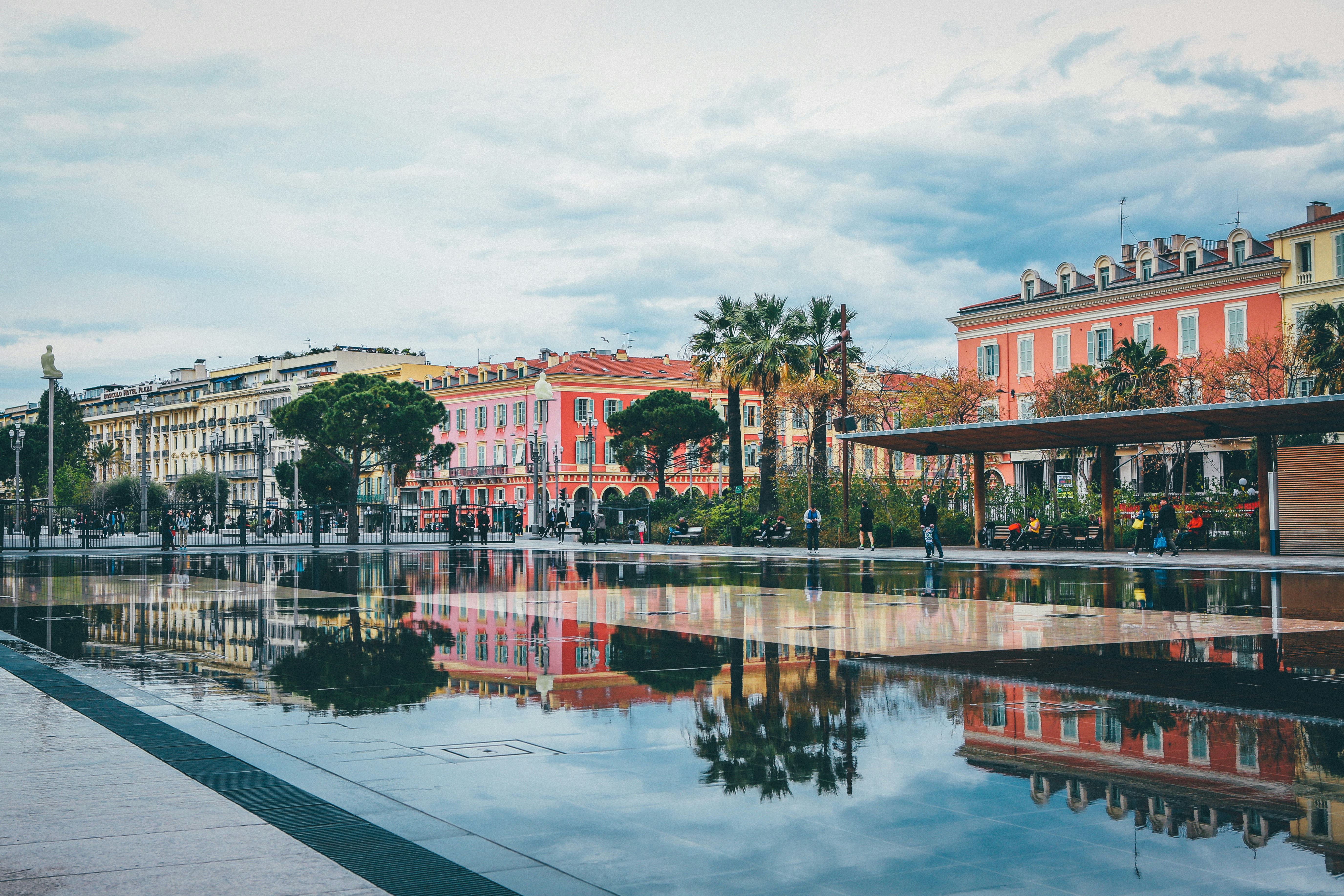
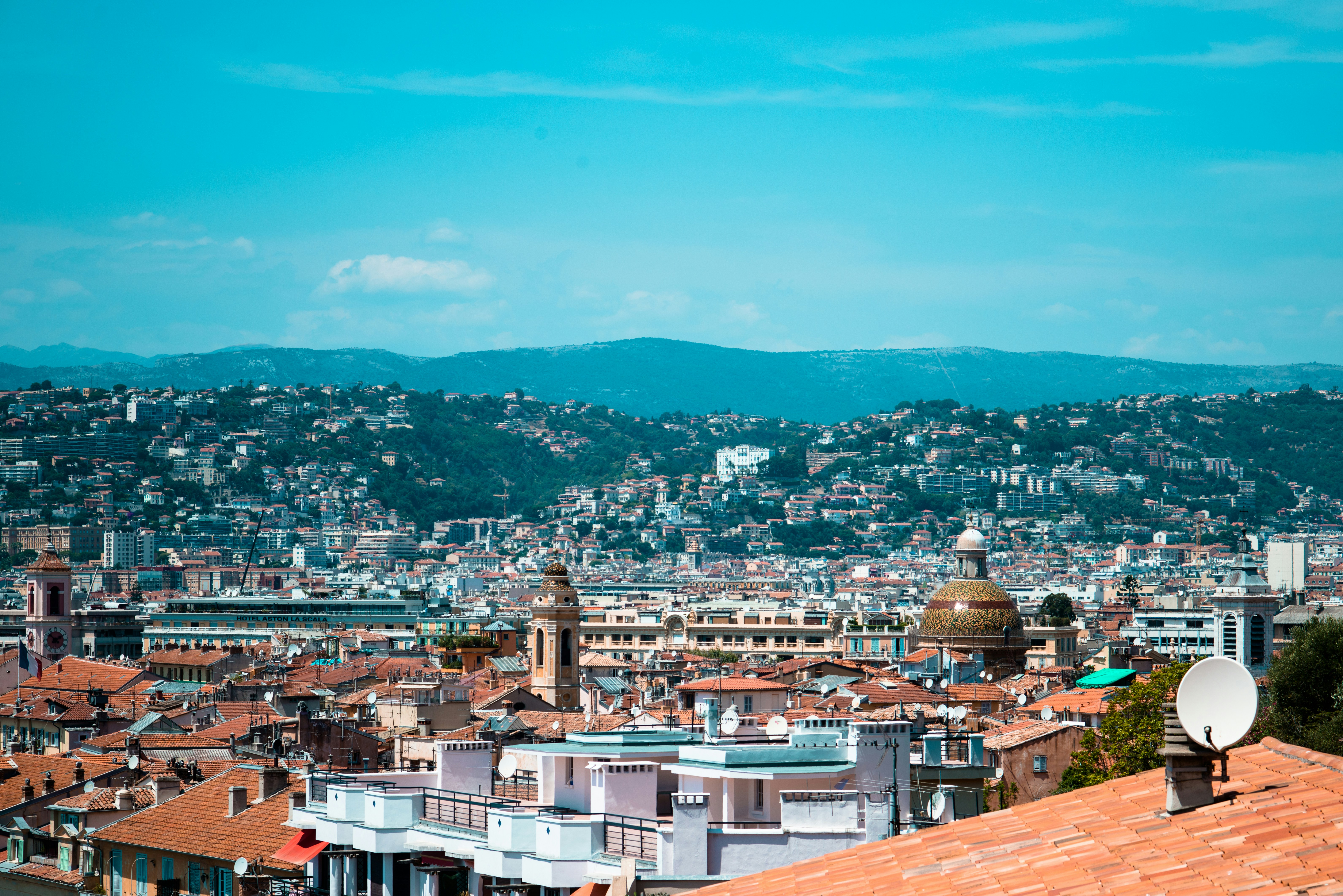
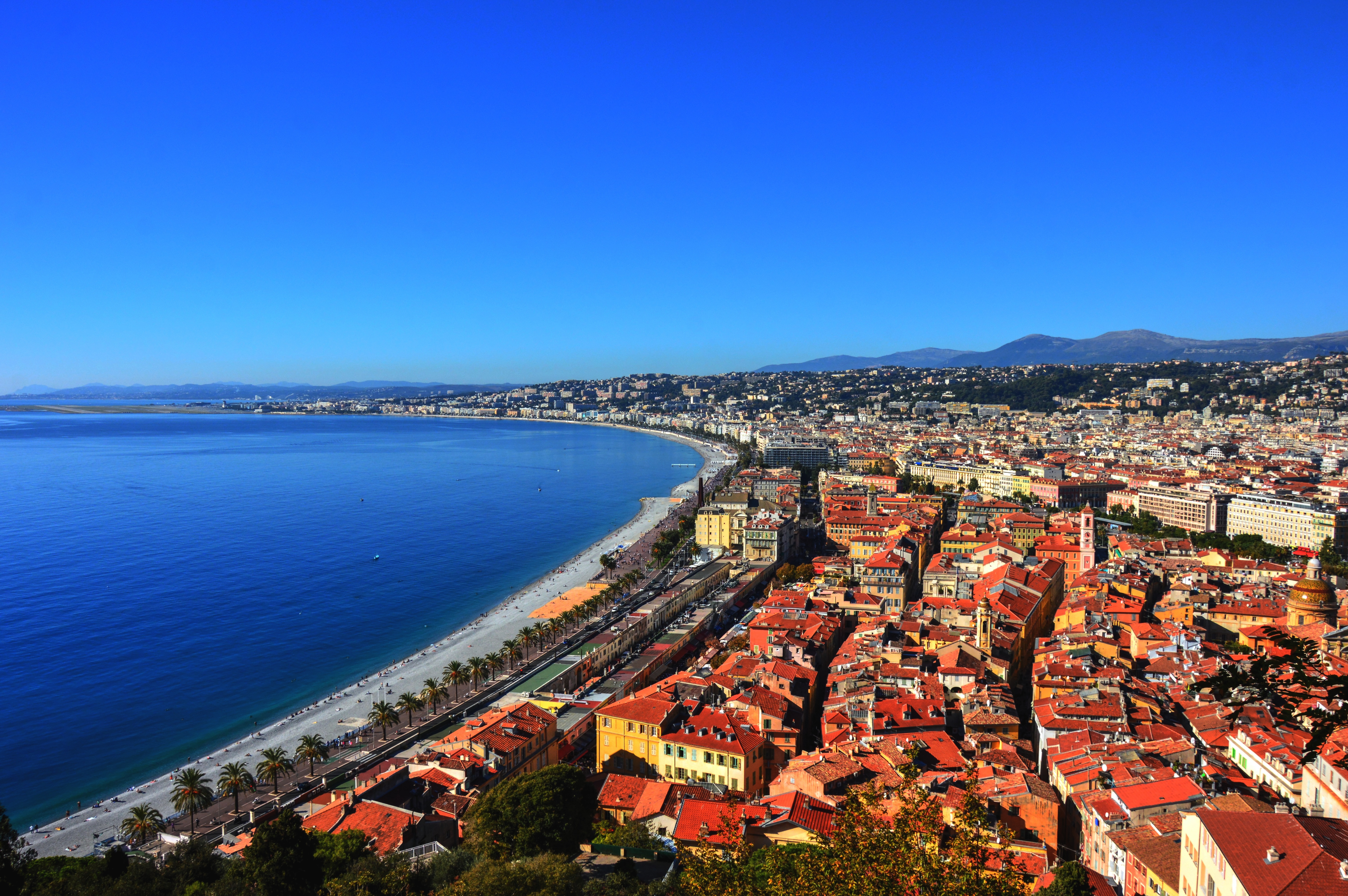
United with France only since 1860, Nice has its own history and atmosphere, which dates back 230,000 years. It was on Colline du Château (now château-less) and at the Plage des Ponchettes, in front of the Old Town, that the Greeks established a market-port in 350 BC and named it Nikaia, which would become Marseilles' chief coastal rival. The Romans established themselves a little later on the hills of Cimiez (Cemenelum), already previously occupied by Ligurians and Celts, and quickly overshadowed the waterfront port. After falling to the Saracen invasions, Nice regained power as an independent state, becoming an important port in the early Middle Ages.So cocksure did it become that in 1388, Nice, along with the hill towns behind, effectively seceded from the county of Provence, under Louis d'Anjou, and allied itself with Savoie. Thus began its liaison with the House of Savoy, and through it with Piedmont and Sardinia, it was the Comté de Nice (Nice County). This relationship lasted some 500 years, tinting the culture, architecture, and dialect in rich Italian hues.By the 19th century Nice was flourishing commercially, locked in rivalry with the neighboring shipping port of Genoa. Another source of income: the dawning of tourism, as first the English, then the Russian nobility, discovered its extraordinary climate and superb waterfront position. A parade of fine stone mansions and hotels closed into a nearly solid wall of masonry, separated from the smooth-round rocks of the beach by what was originally named Camin deis Anglés (the English Way), which of course is now the famous Promenade des Anglais. This magnificent crescent, which is seeking UNESCO recognition, is one of the noblest in France. Many of Nice's most delightful attractions—the Cours Saleya market, the Old Town streets, the Hotel Negresco, and the Palais Masséna—are on or close to this 10-km (6-mile) waterfront, making it the first stop for most visitors, while the redevelopment of Nice's port, around the other side of the Colline du Château, makes it easier for amblers who want to take in the Genoese architecture or peruse the antiques at the Puces de Nice, now part of the Promenade des 100 Antiquaires, along Quai Papacino. Nice also has the distinction of the "Family Plus" label, with free strollers, play areas, and restaurants with child-friendly activities.
About Cannes
Cannes is pampered with the luxurious year-round climate that has made it one of the most popular resorts in Europe. Cannes was an important sentinel site for the monks who established themselves on Île St-Honorat in the Middle Ages. Its bay served as nothing more than a fishing port until in 1834 an English aristocrat, Lord Brougham, fell in love with the site during an emergency stopover with a sick daughter. He had a home built here and returned every winter for a sun cure—a ritual quickly picked up by his peers. Between the popularity of Le Train Blue transporting wealthy passengers from Calais, and the introduction in 1936 of France's first paid holidays, Cannes became the destination, a tasteful and expensive breeding ground for the upper-upscale.Cannes has been further glamorized by the ongoing success of its annual film festival, as famous as Hollywood's Academy Awards. About the closest many of us will get to feeling like a film star is a stroll here along La Croisette, the iconic promenade that gracefully curves the wave-washed sand coastline, peppered with chic restaurants and prestigious private beaches. This is precisely the sort of place for which the French invented the verb flâner (to dawdle, saunter): strewn with palm trees and poseurs, its fancy boutiques and status-symbol grand hotels—including the Carlton, the legendary backdrop to Grace Kelly in To Catch a Thief —all vying for the custom of the Louis Vuitton set. This legend is, to many, the heart and soul of the Côte d'Azur.
About Livorno
Livorno is a gritty city with a long and interesting history. In the early Middle Ages it alternately belonged to Pisa and Genoa. In 1421 Florence, seeking access to the sea, bought it. Cosimo I (1519–74) started construction of the harbor in 1571, putting Livorno on the map. After Ferdinando I de' Medici (1549–1609) proclaimed Livorno a free city, it became a haven for people suffering from religious persecution; Roman Catholics from England and Jews and Moors from Spain and Portugal, among others, settled here. The Quattro Mori (Four Moors), also known as the Monument to Ferdinando I, commemorates this. (The statue of Ferdinando I dates from 1595, the bronze Moors by Pietro Tacca from the 1620s.)In the following centuries, and particularly in the 18th, Livorno boomed as a port. In the 19th century the town drew a host of famous Britons passing through on their grand tours. Its prominence continued up to World War II, when it was heavily bombed. Much of the town's architecture, therefore, postdates the war, and it's somewhat difficult to imagine what it might have looked like before. Livorno has recovered from the war, however, as it's become a huge point of departure for container ships, as well as the only spot in Tuscany for cruise ships to dock for the day.Most of Livorno's artistic treasures date from the 17th century and aren't all that interesting unless you dote on obscure baroque artists. Livorno's most famous native artist, Amedeo Modigliani (1884–1920), was of much more recent vintage. Sadly, there's no notable work by him in his hometown.There may not be much in the way of art, but it's still worth strolling around the city. The Mercato Nuovo, which has been around since 1894, sells all sorts of fruits, vegetables, grains, meat, and fish. Outdoor markets nearby are also chock-full of local color. The presence of Camp Darby, an American military base just outside town, accounts for the availability of many American products.If you have time, Livorno is worth a stop for lunch or dinner at the very least.
About Portoferraio
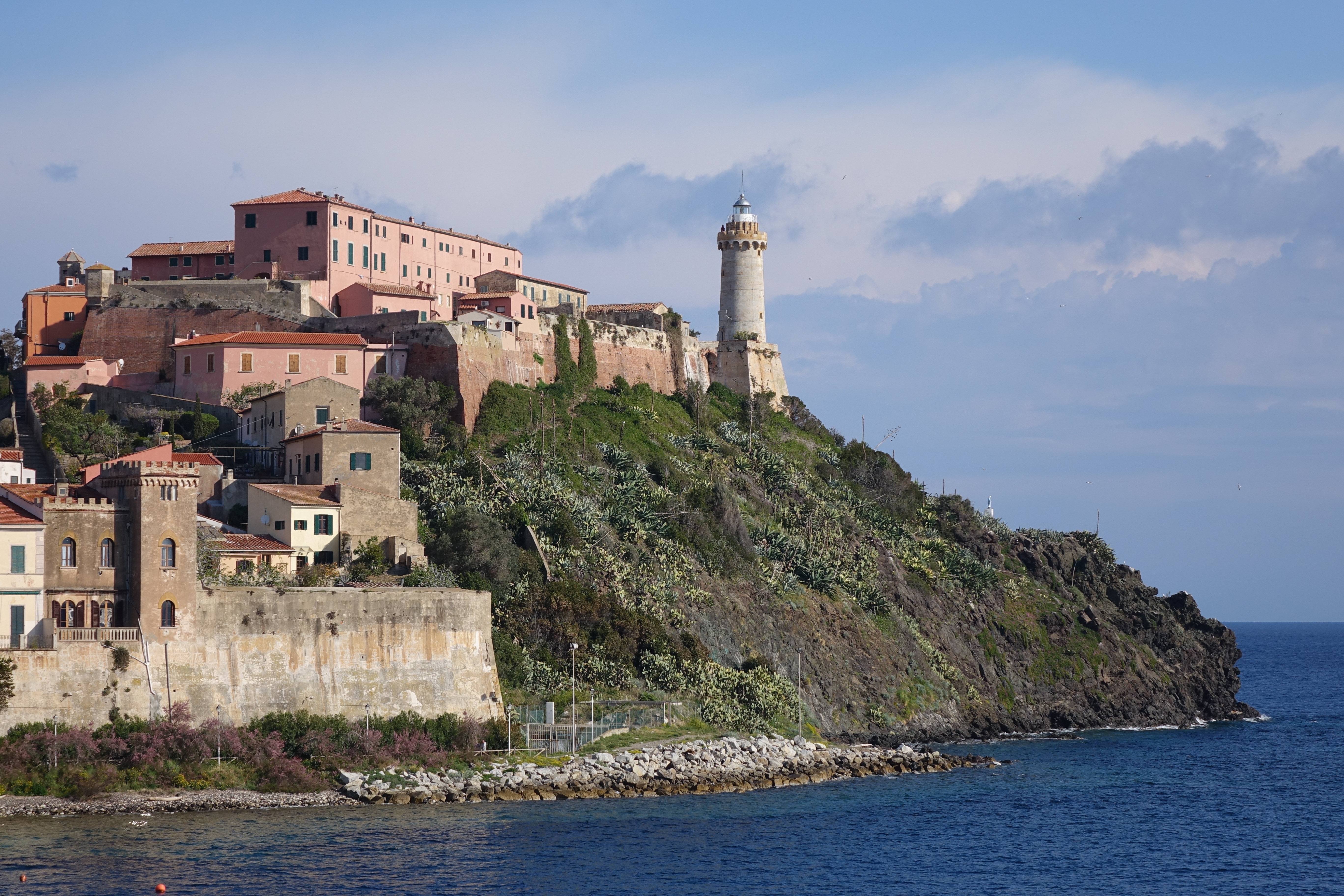
Elba is the Tuscan archipelago's largest island, but it resembles nearby verdant Corsica more than it does its rocky Italian sisters, thanks to a network of underground springs that keep it lush and green. It's this combination of semitropical vegetation and dramatic mountain scenery—unusual in the Mediterranean—that has made Elba so prized for so long, and the island's uniqueness continues to draw boatloads of visitors throughout the warm months. A car is very useful for getting around the island, but public buses stop at most towns several times a day; the tourist office has timetables.
About Civitavecchia
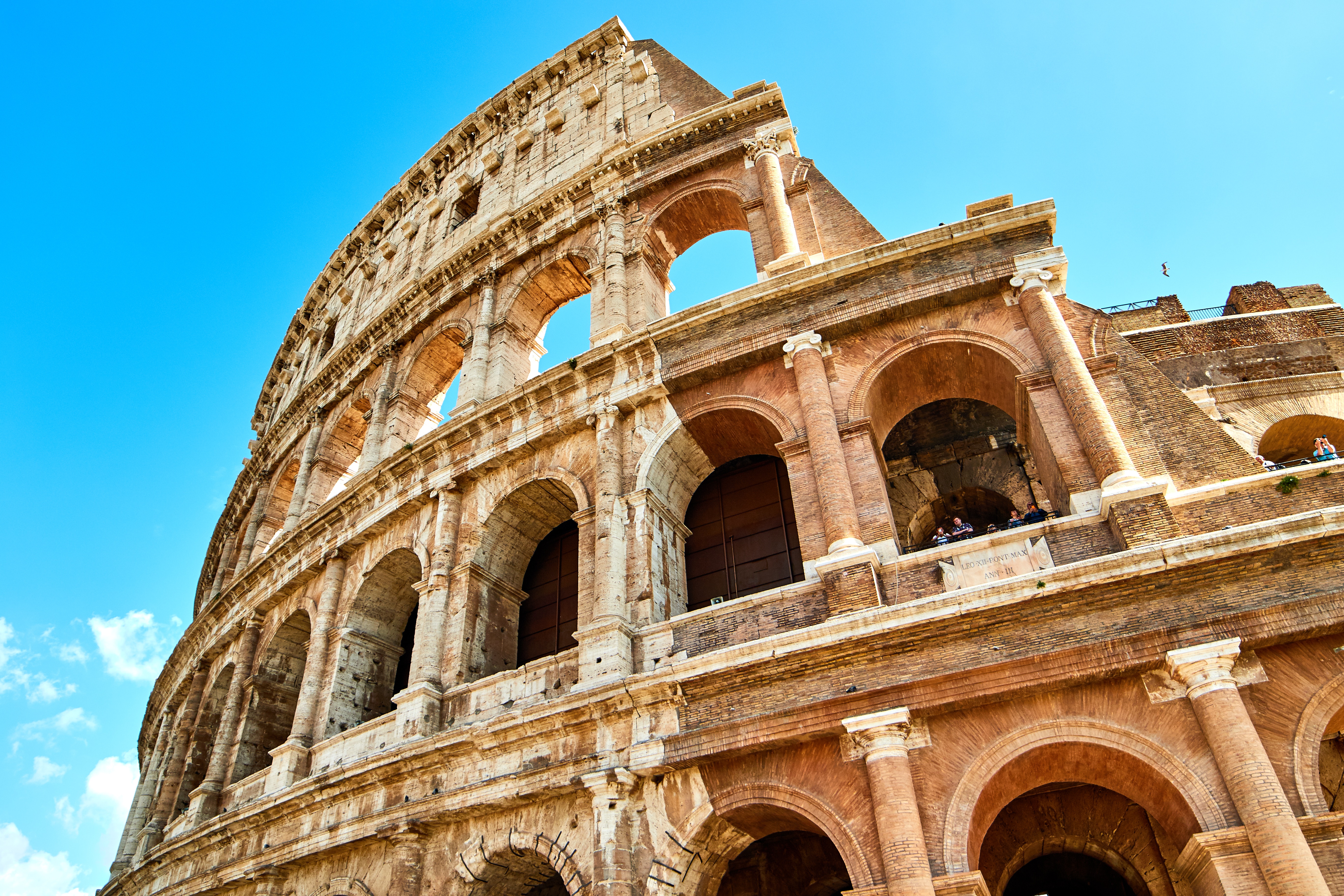
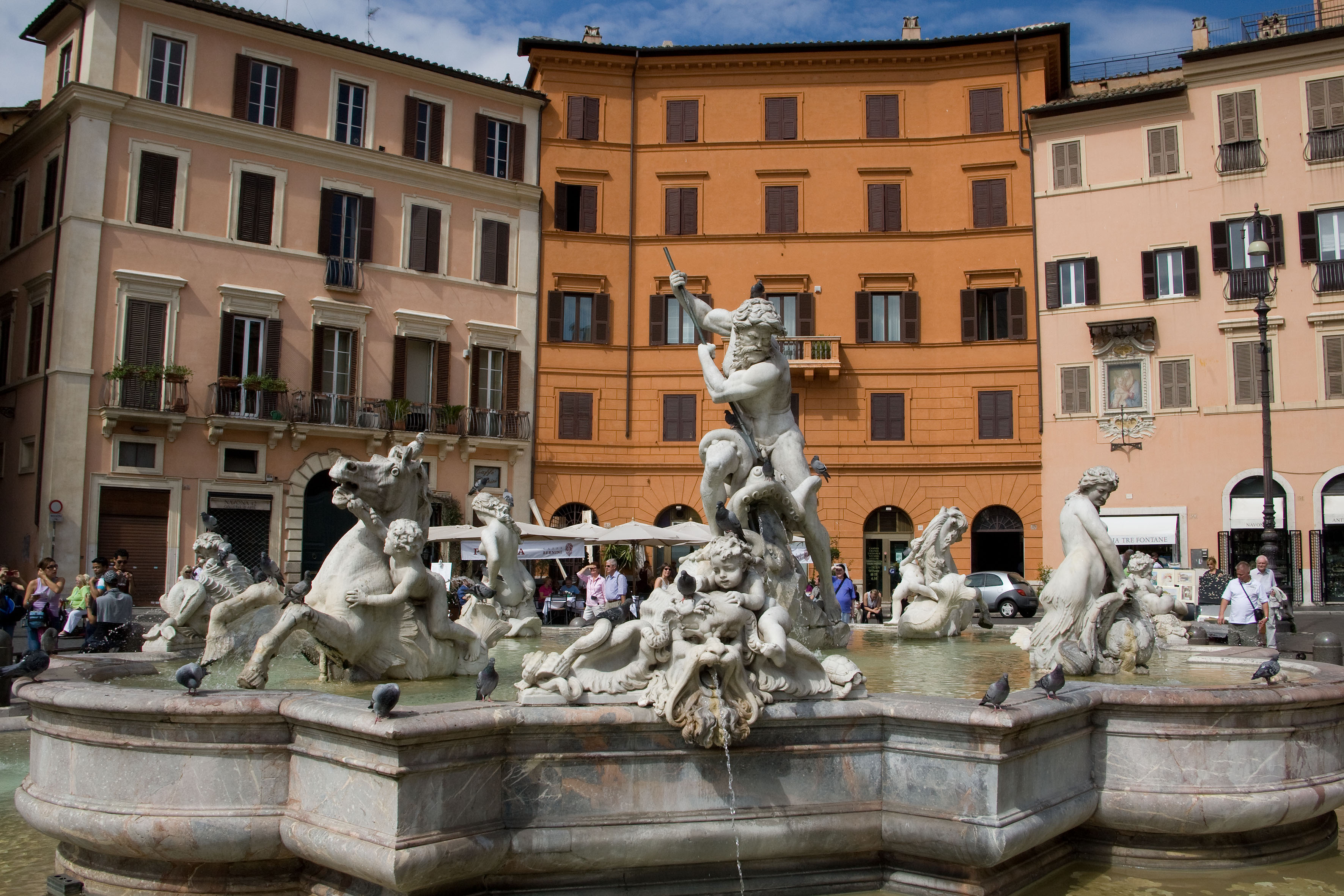
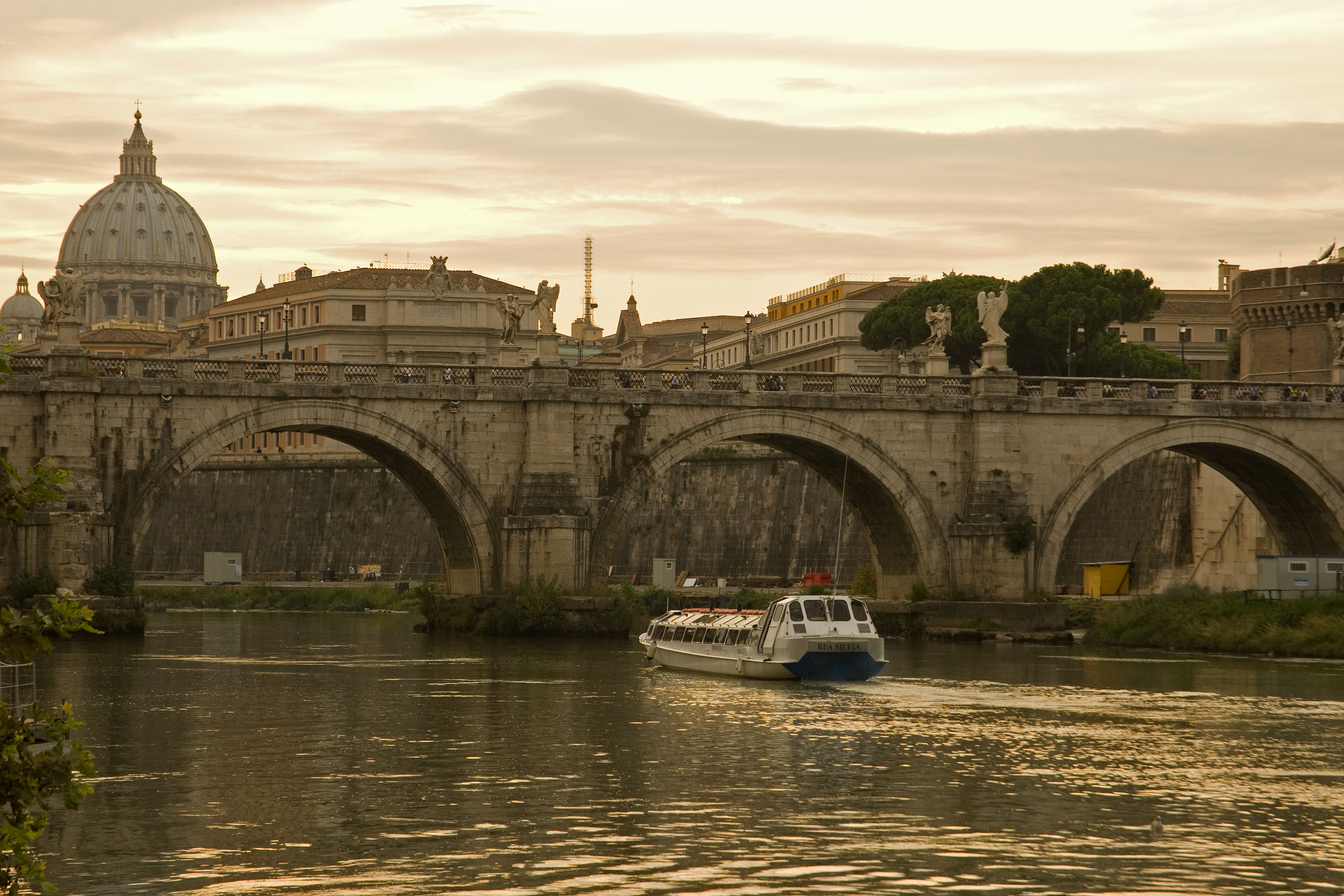
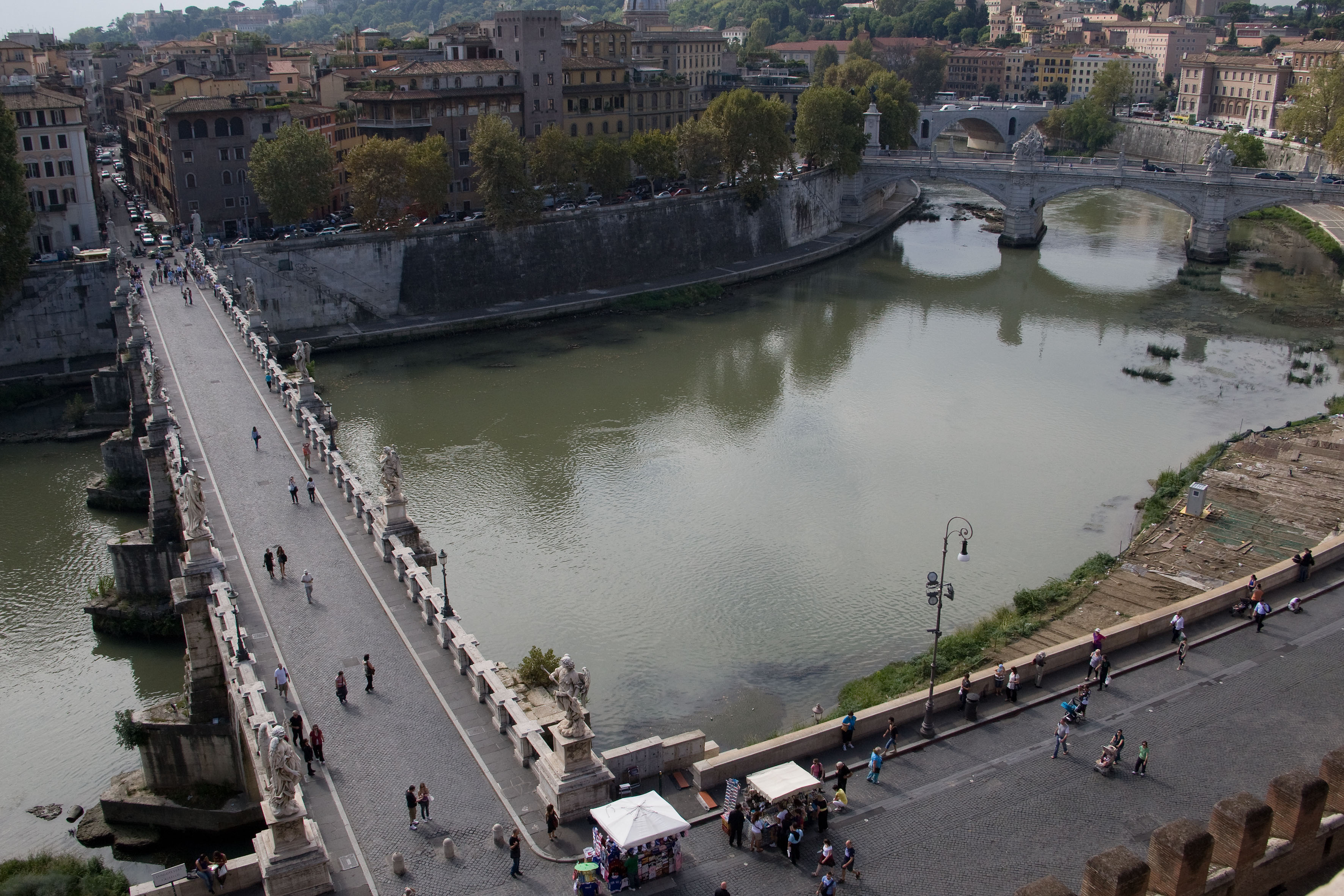
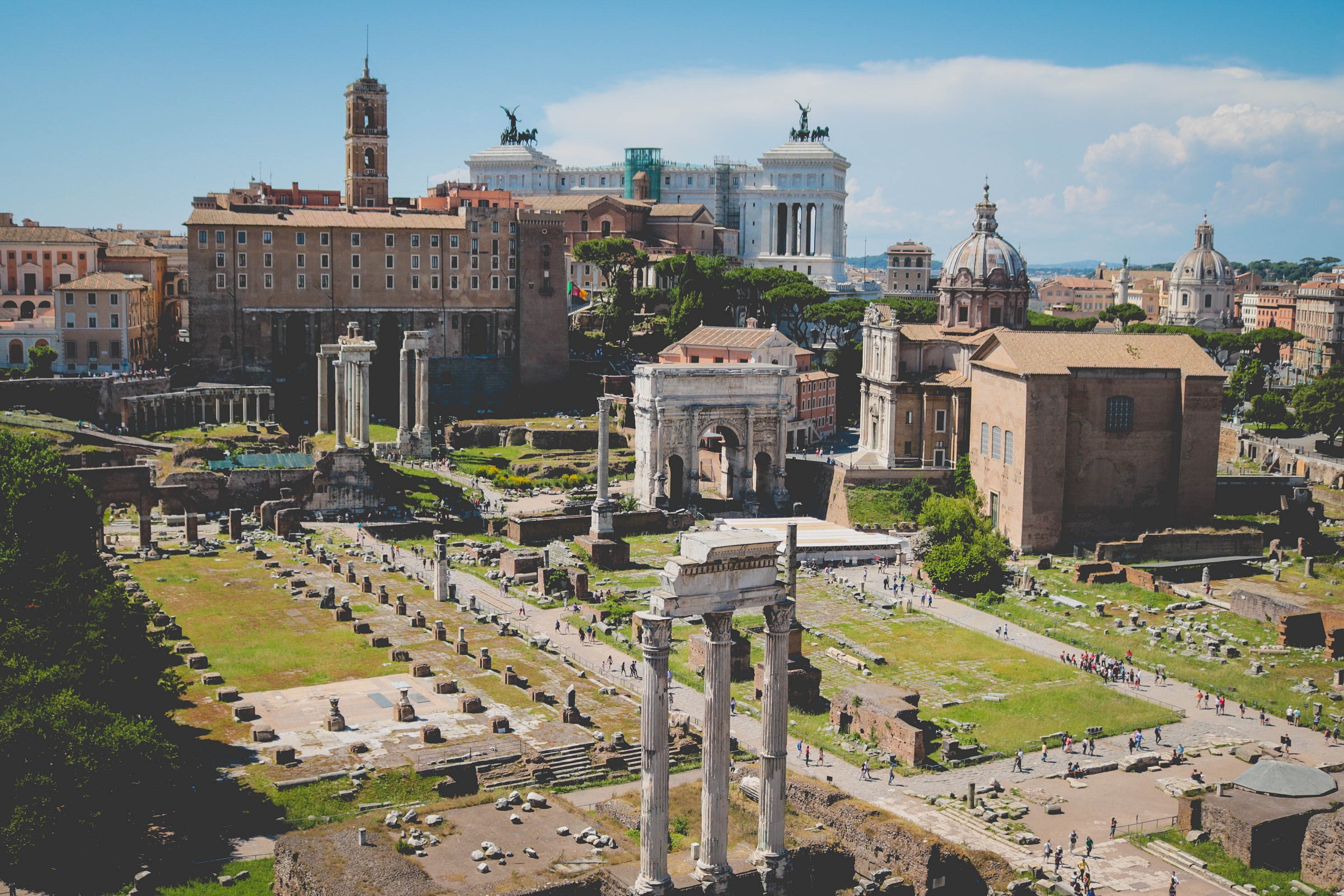
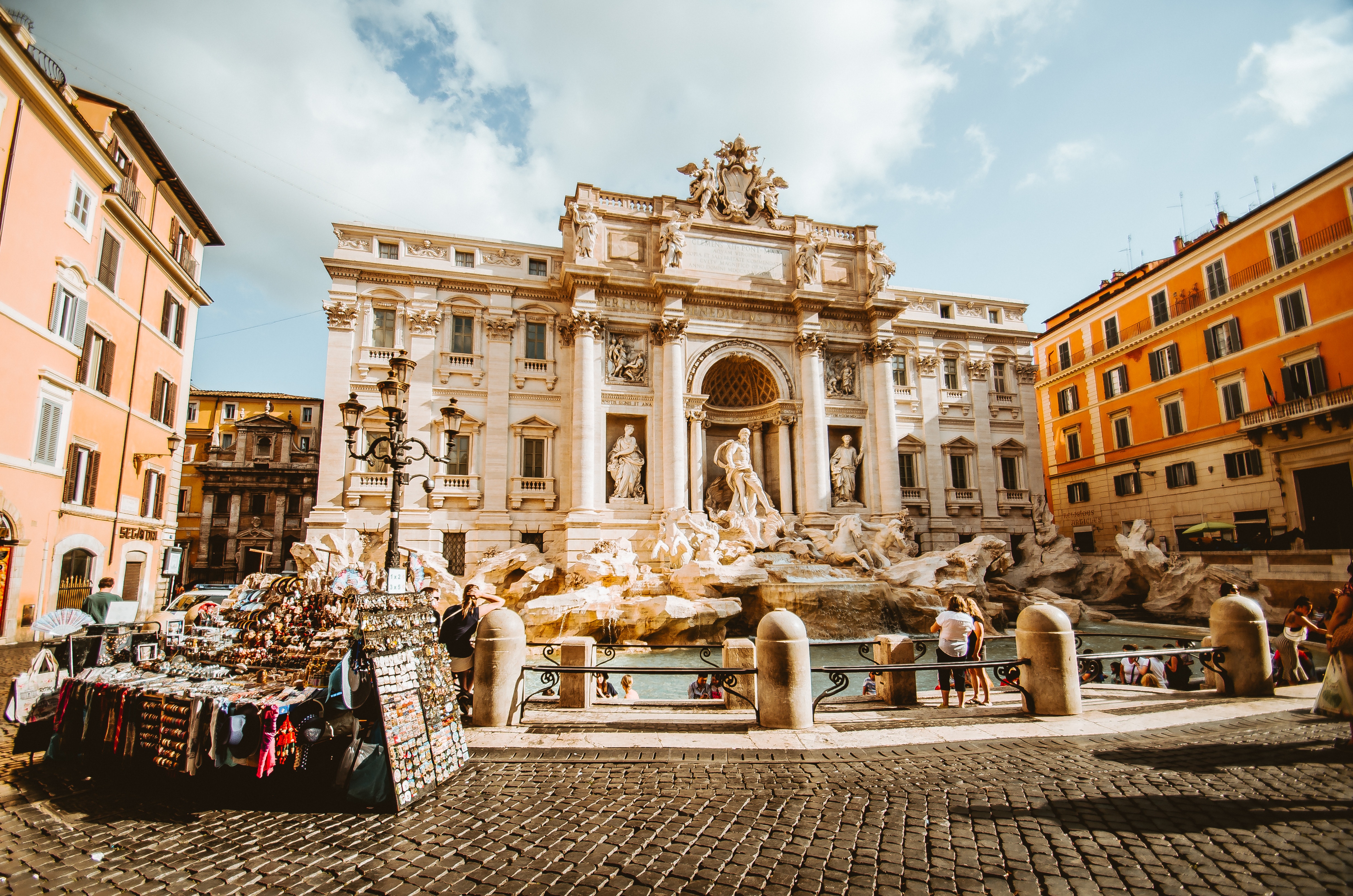
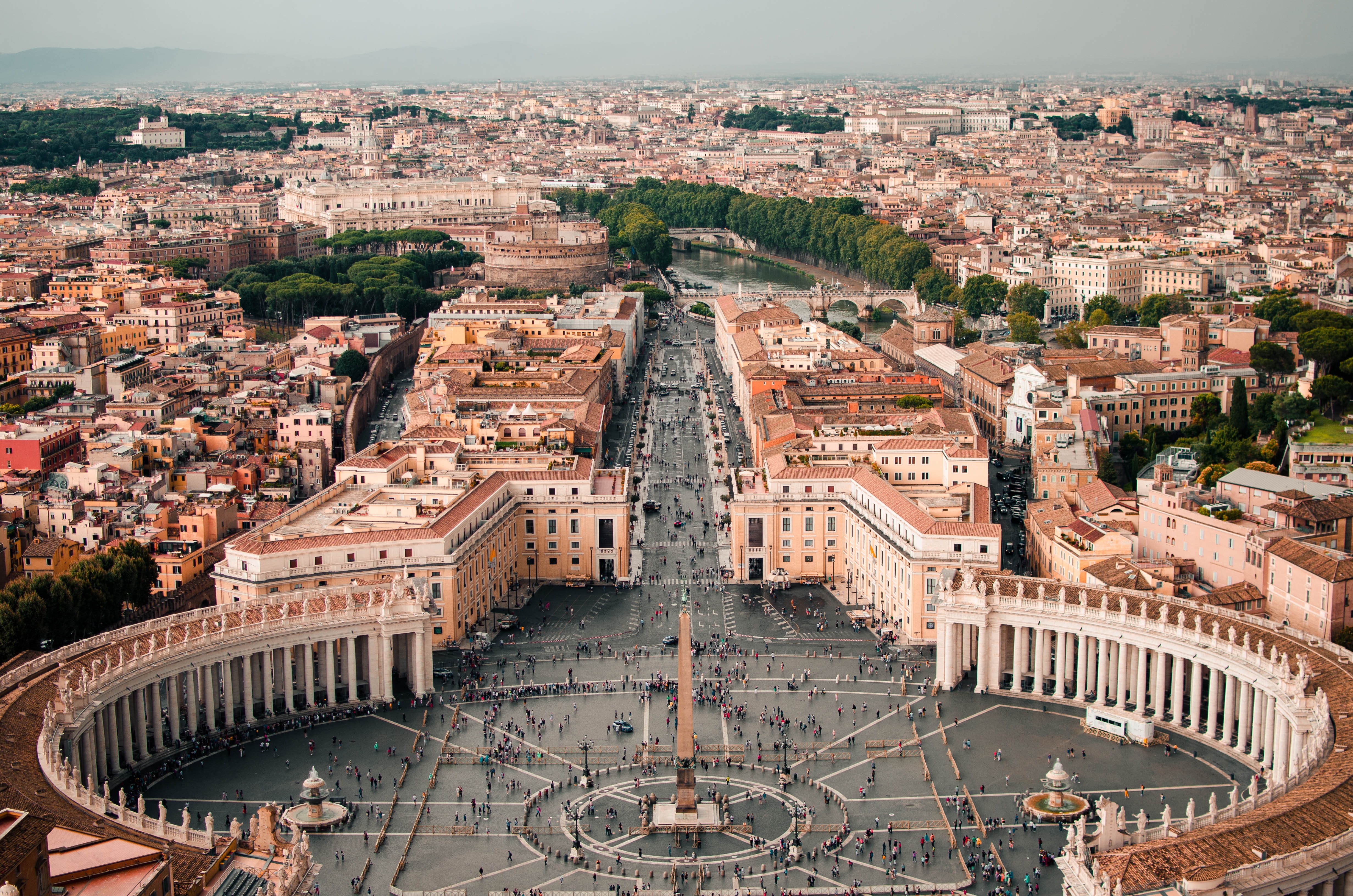
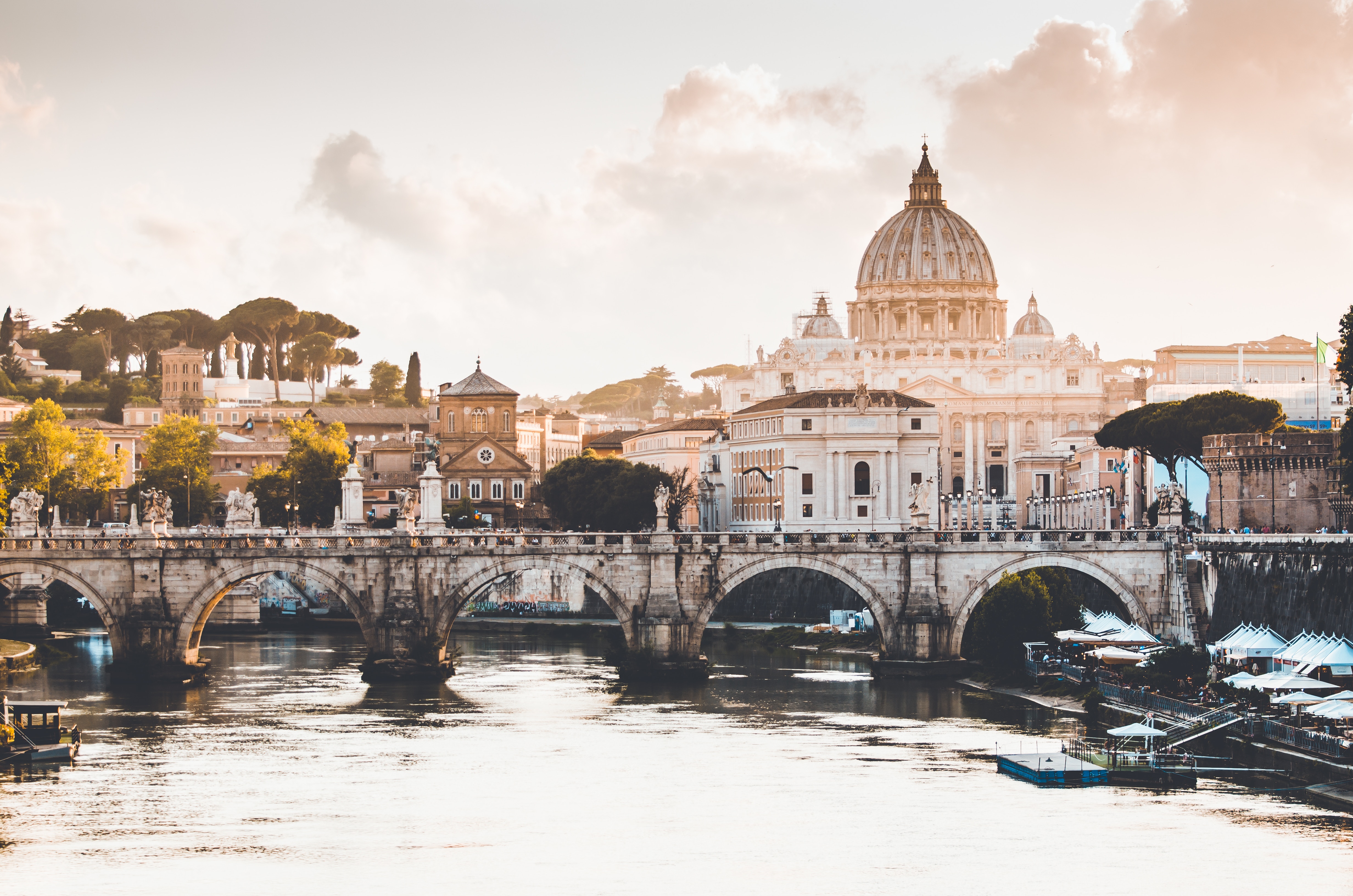
Italy's vibrant capital lives in the present, but no other city on earth evokes its past so powerfully. For over 2,500 years, emperors, popes, artists, and common citizens have left their mark here. Archaeological remains from ancient Rome, art-stuffed churches, and the treasures of Vatican City vie for your attention, but Rome is also a wonderful place to practice the Italian-perfected il dolce far niente, the sweet art of idleness. Your most memorable experiences may include sitting at a caffè in the Campo de' Fiori or strolling in a beguiling piazza.
About Palermo
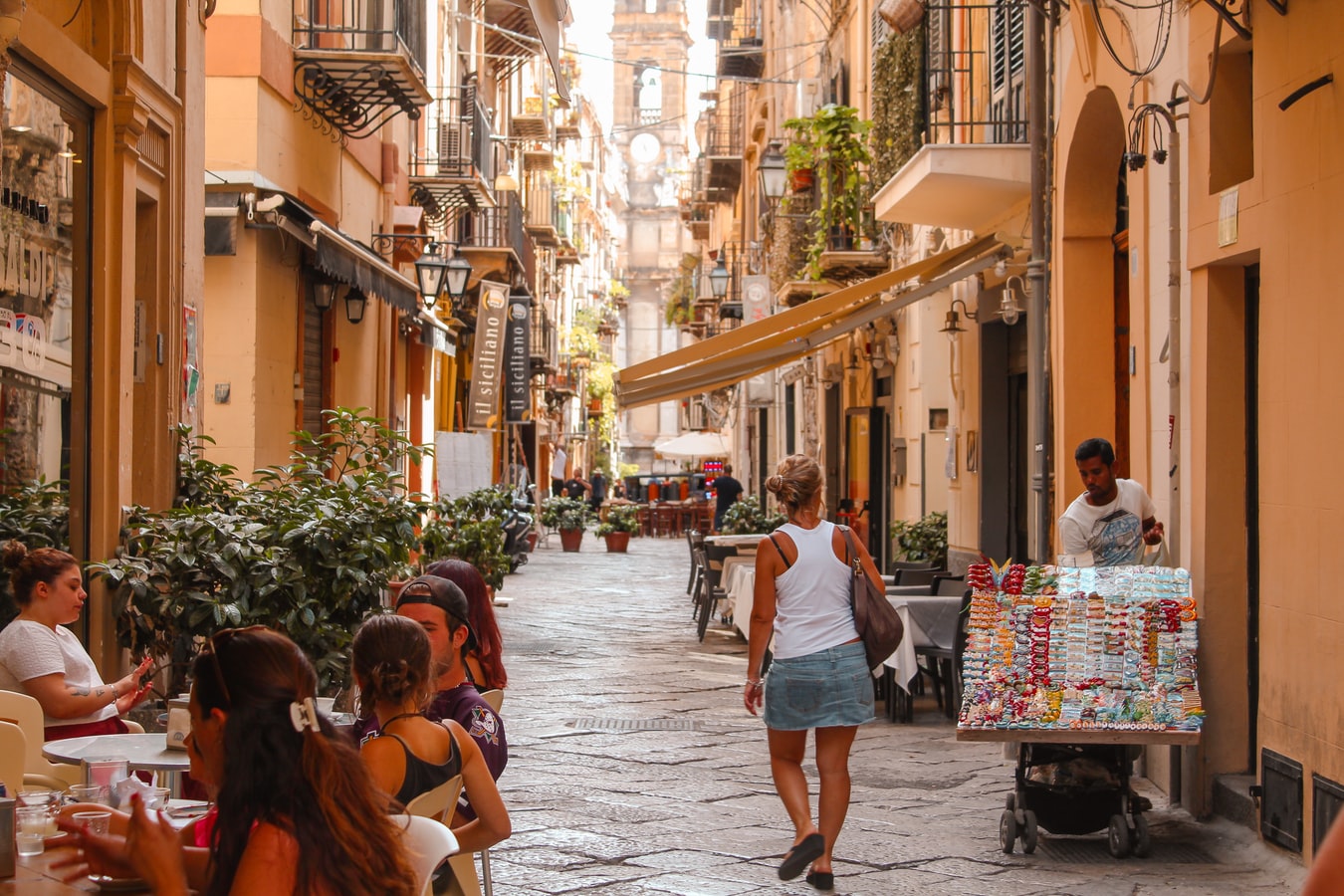
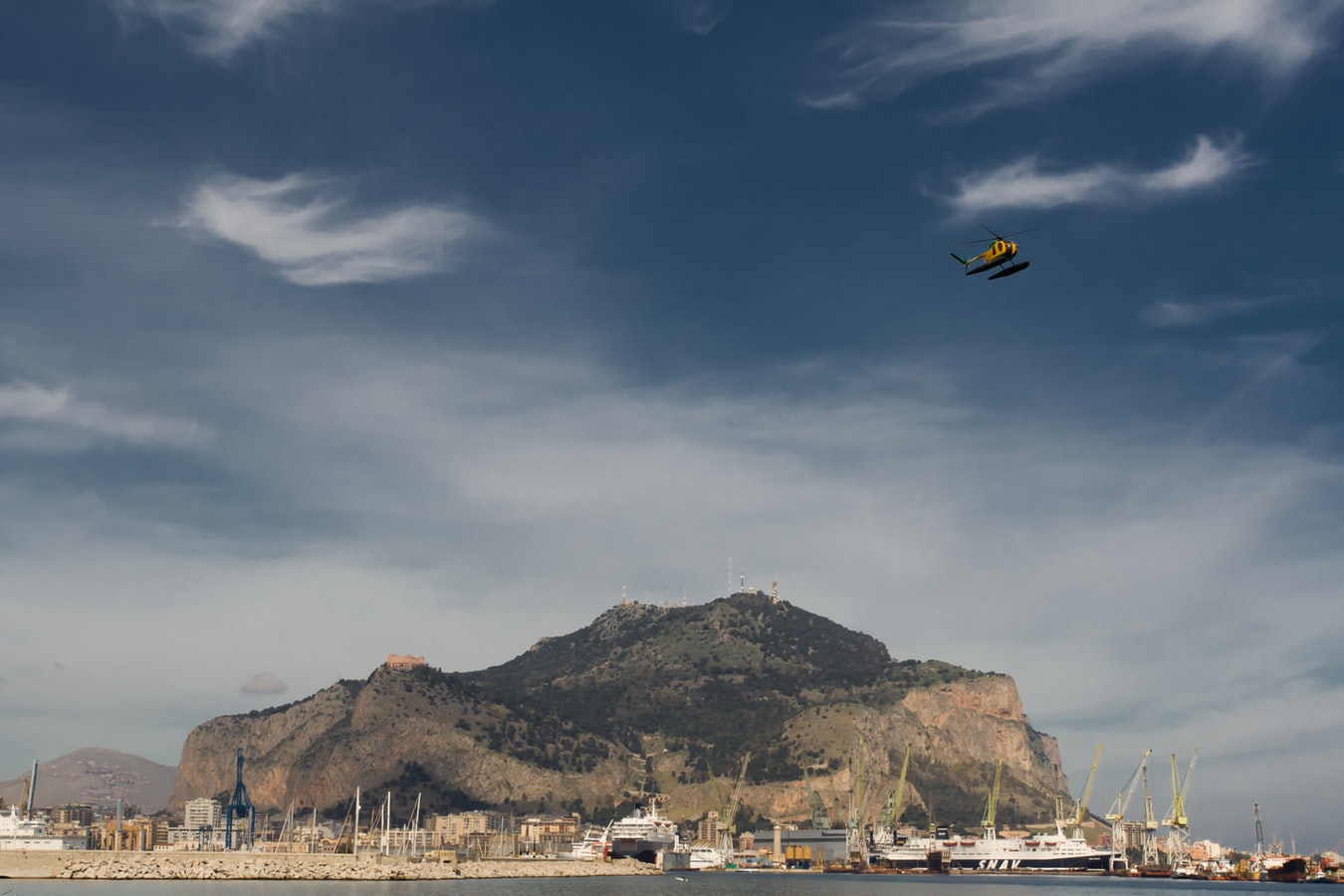
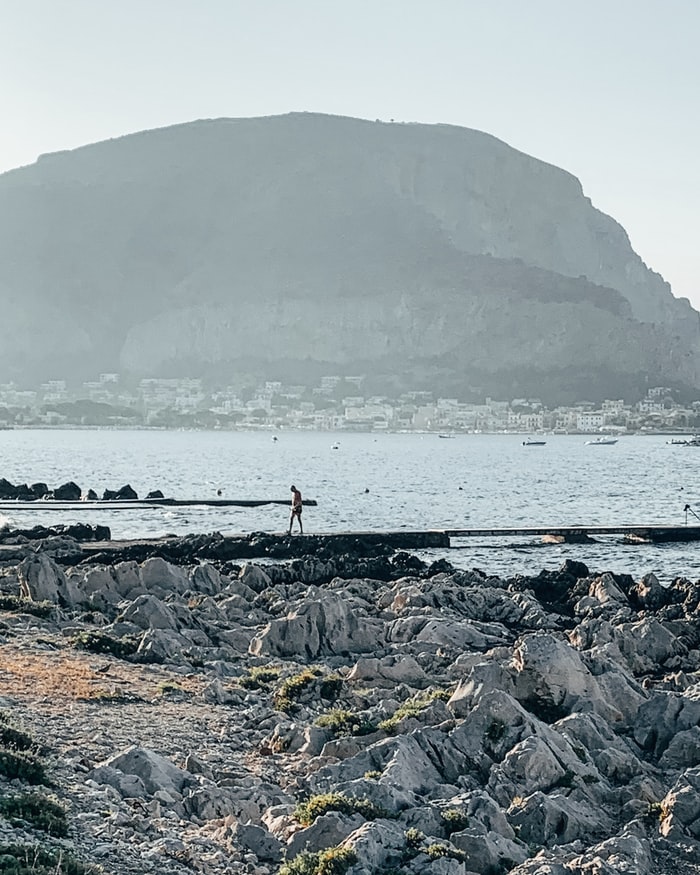
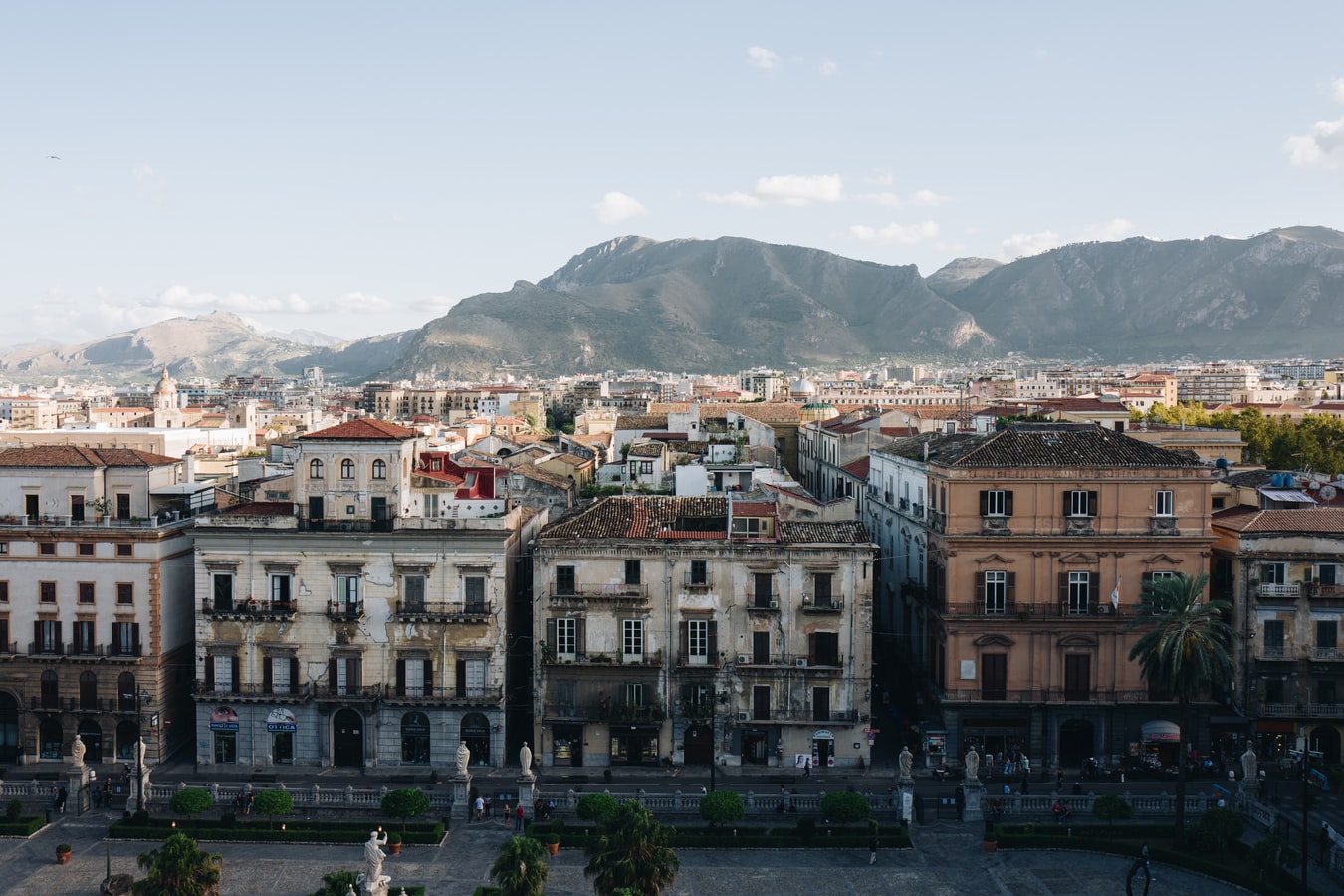
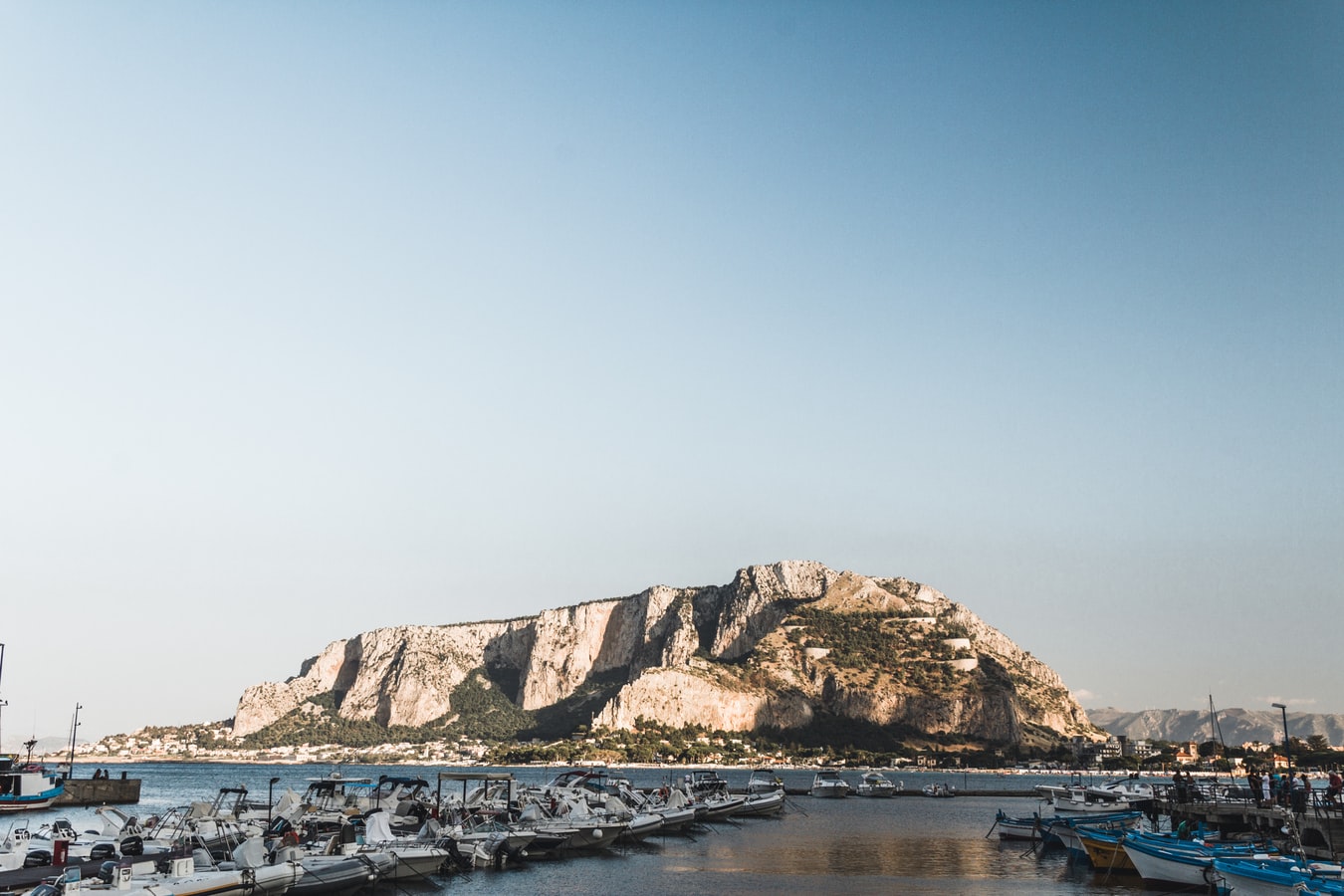
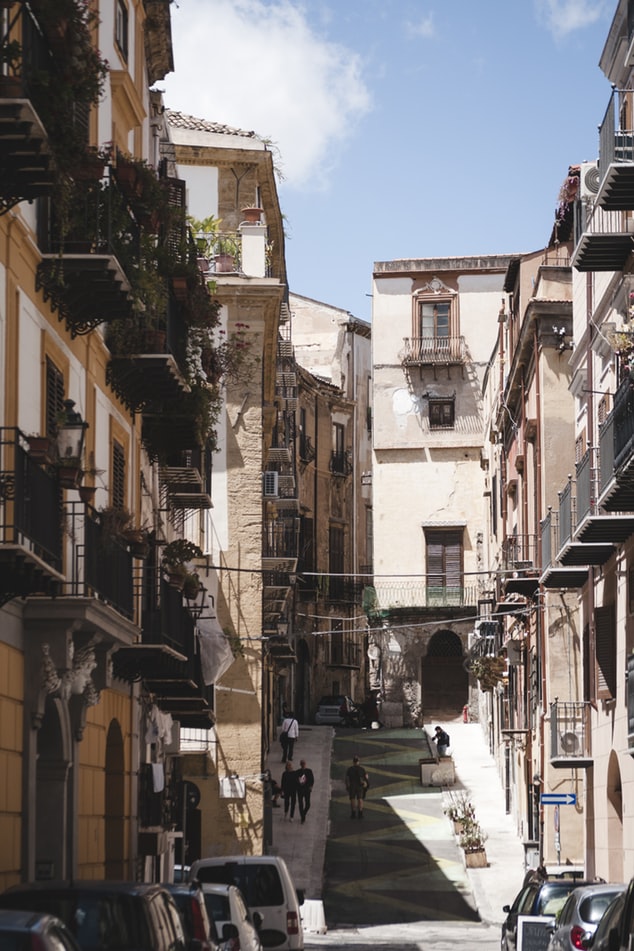
Once the intellectual capital of southern Europe, Palermo has always been at the crossroads of civilization. Favorably situated on a crescent-shaped bay at the foot of Monte Pellegrino, it has attracted almost every culture touching the Mediterranean world. To Palermo's credit, it has absorbed these diverse cultures into a unique personality that is at once Arab and Christian, Byzantine and Roman, Norman and Italian. The city's heritage encompasses all of Sicily's varied ages, but its distinctive aspect is its Arab-Norman identity, an improbable marriage that, mixed in with Byzantine and Jewish elements, created some resplendent works of art. No less noteworthy than the architecture is Palermo's chaotic vitality, on display at some of Italy's most vibrant outdoor markets, public squares, street bazaars, and food vendors, and above all in its grand climax of Italy's most spectacular passeggiata (the leisurely social stroll along the principal thoroughfare).
About Valletta
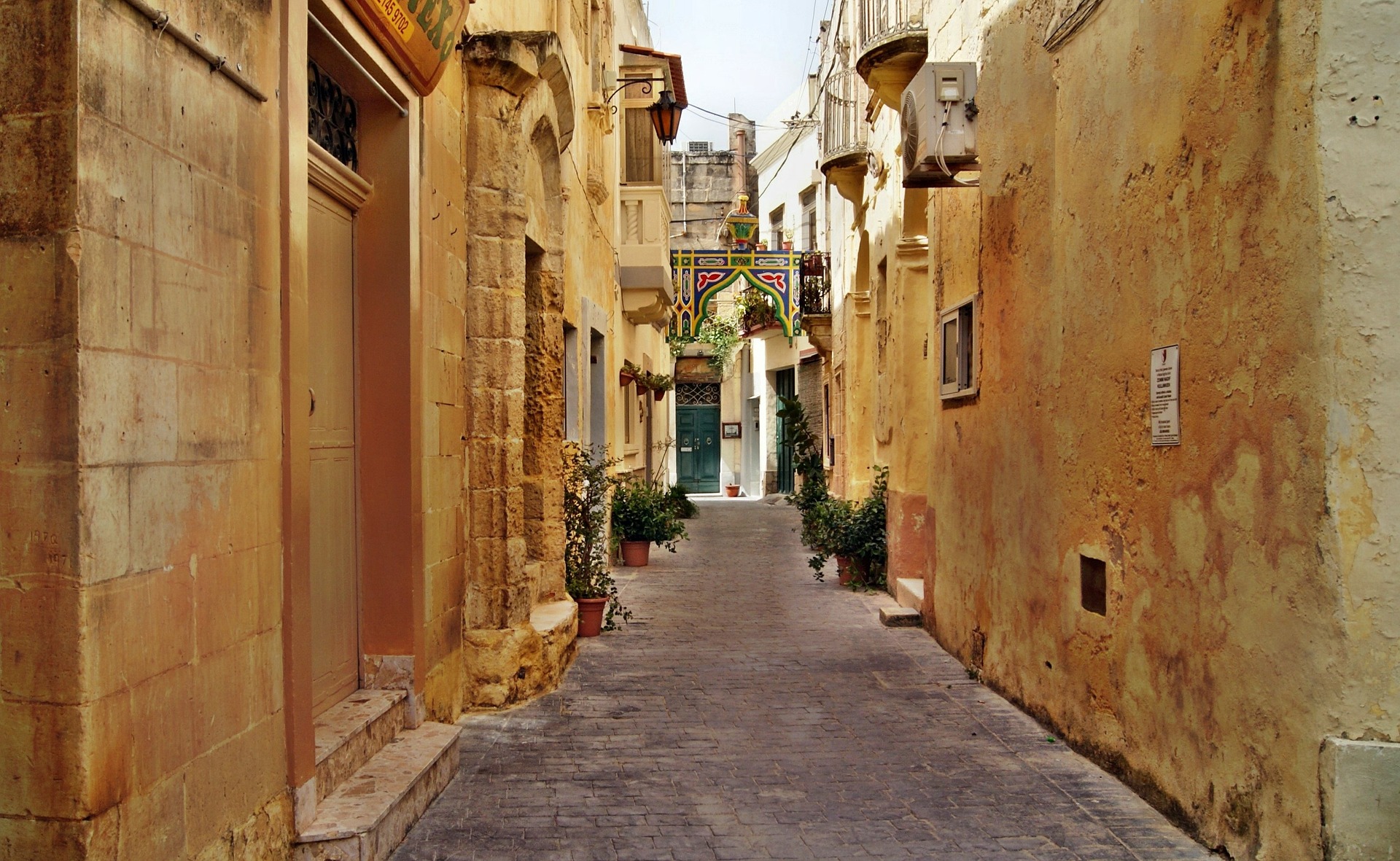
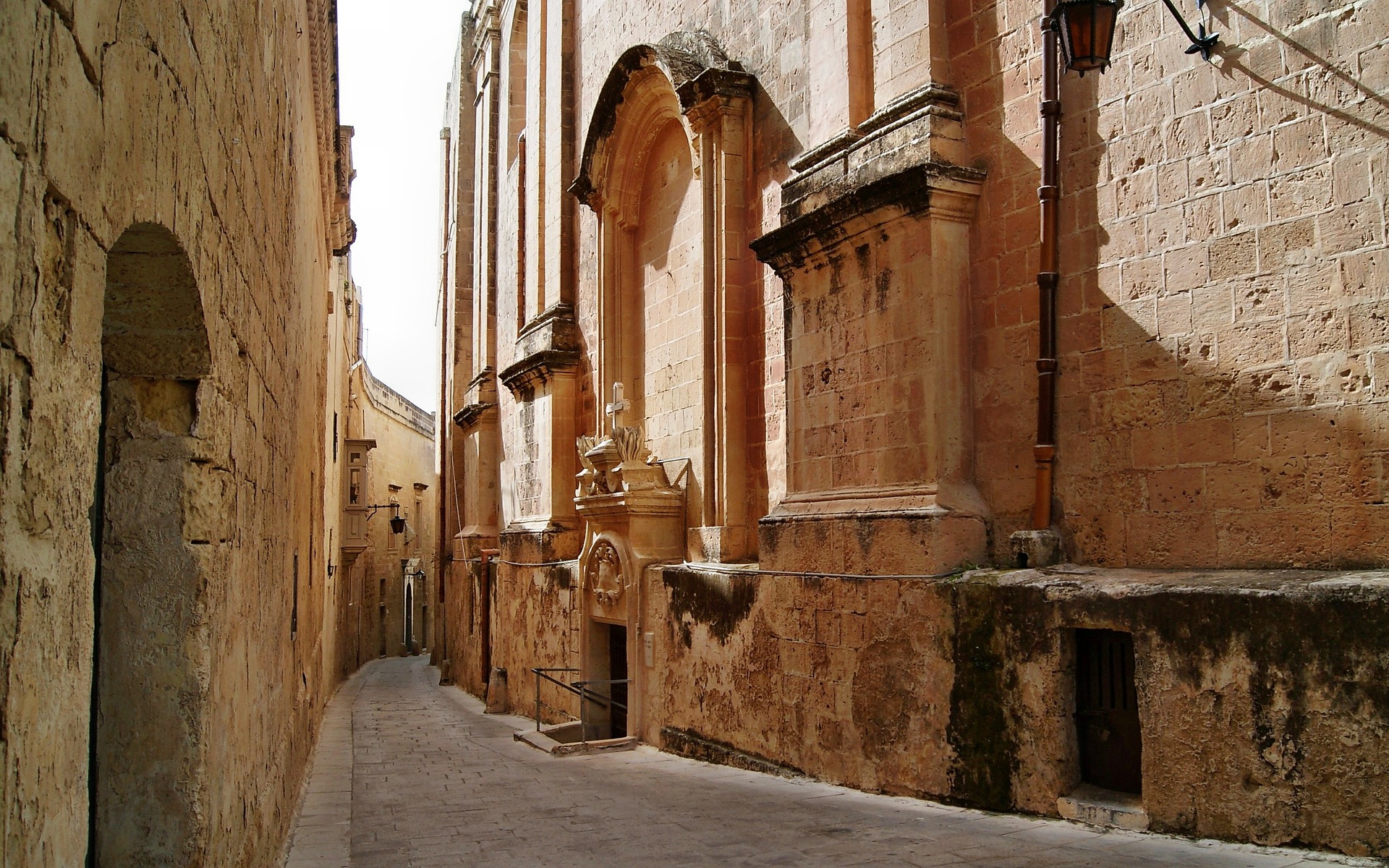
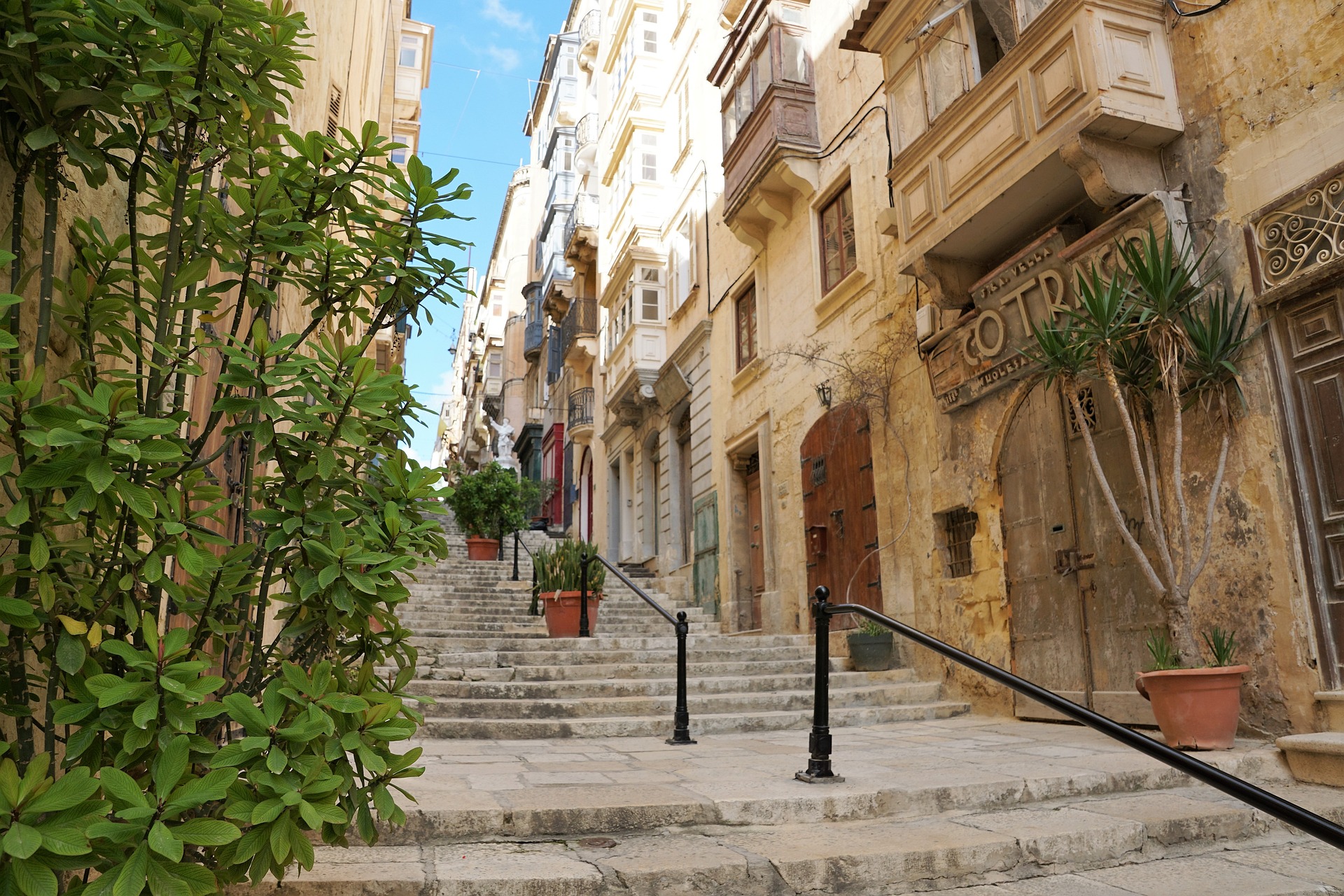
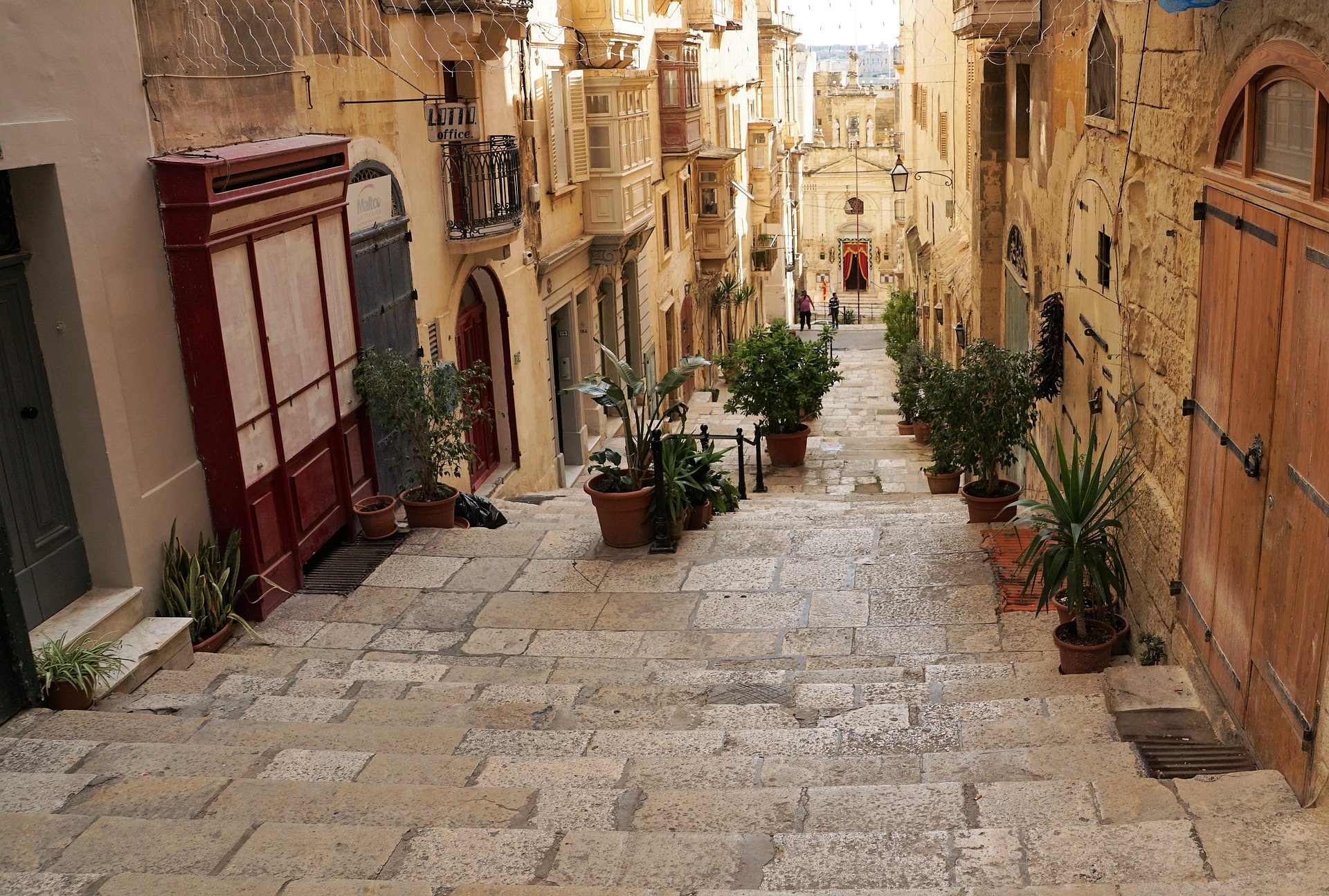
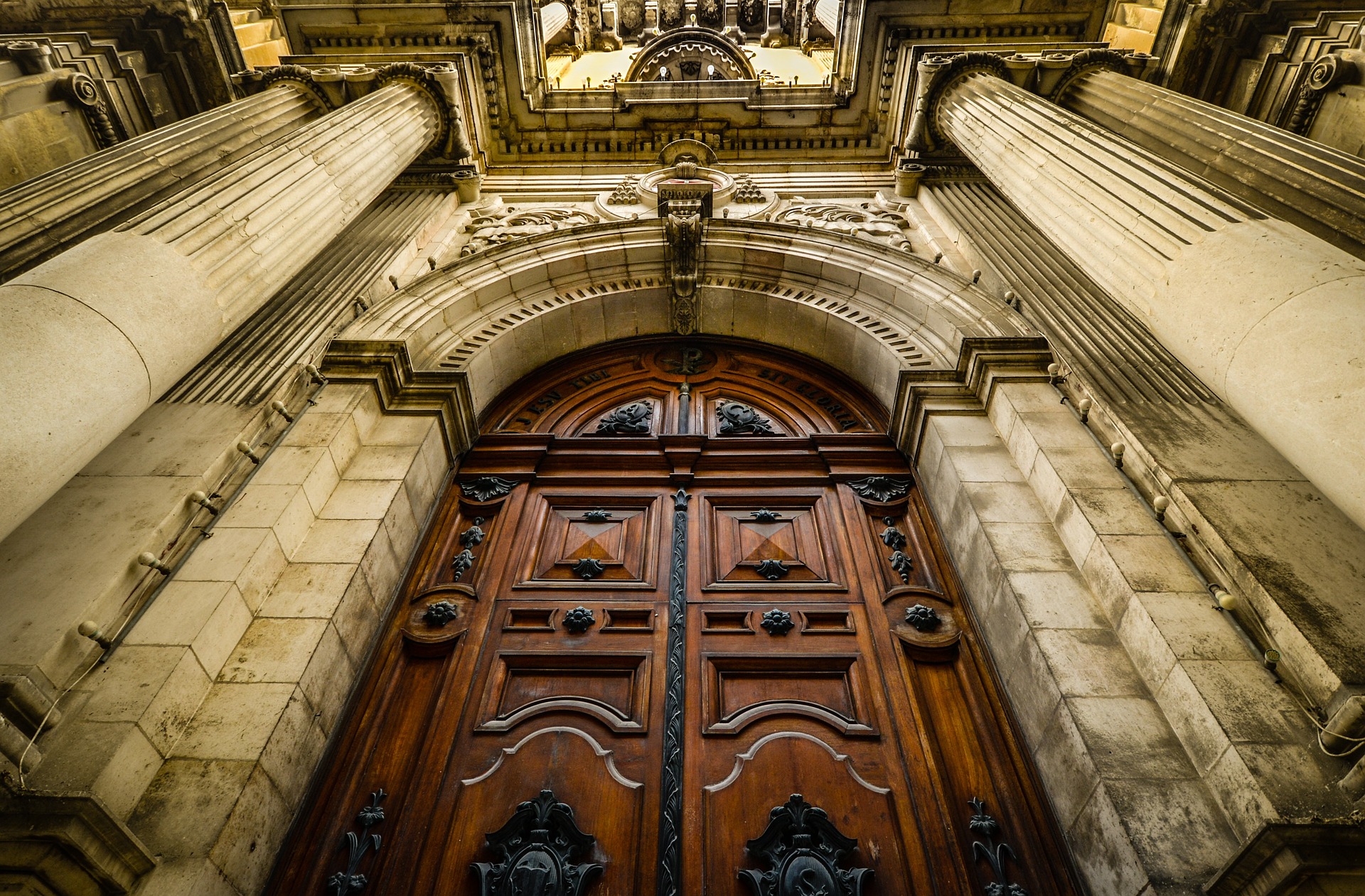
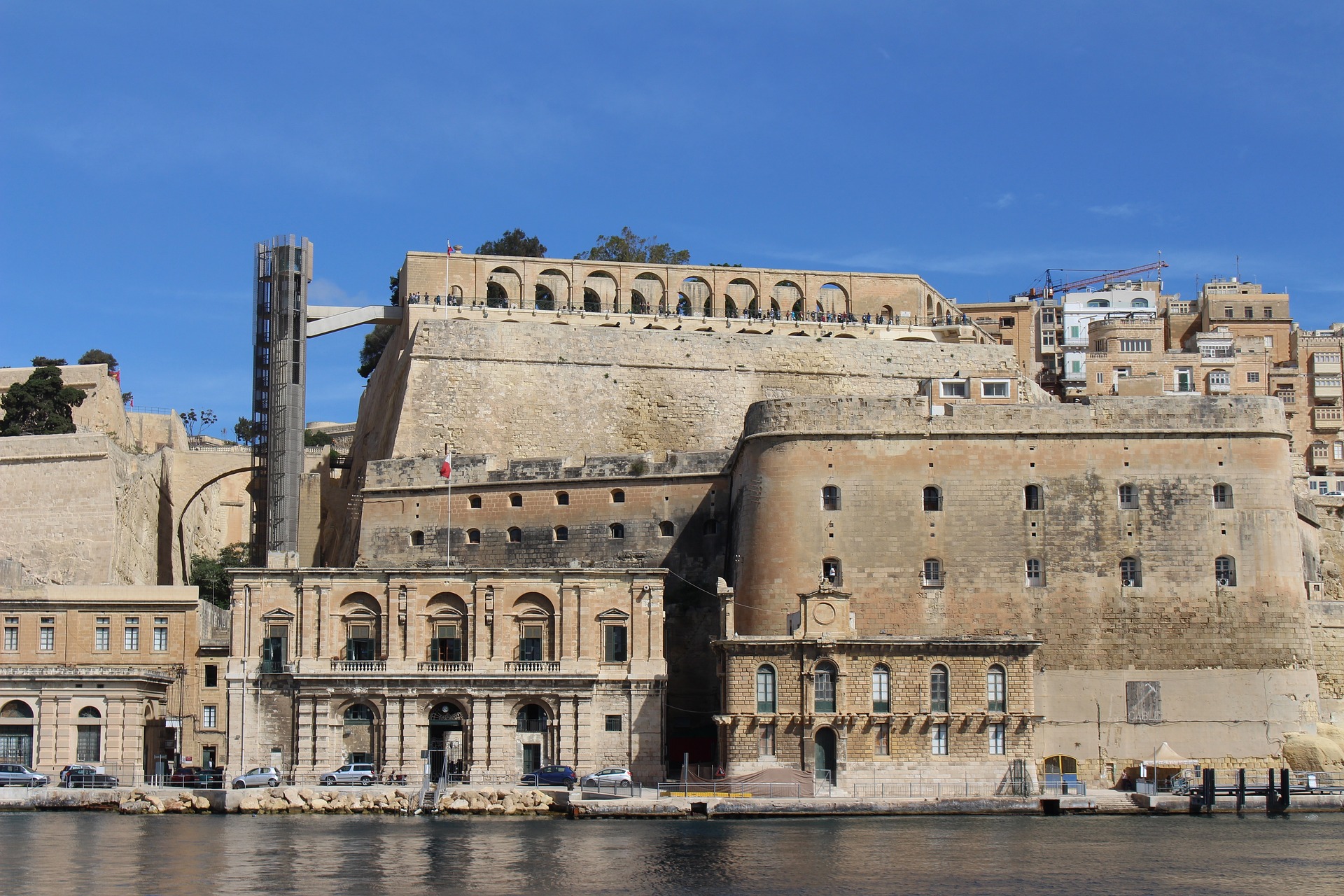
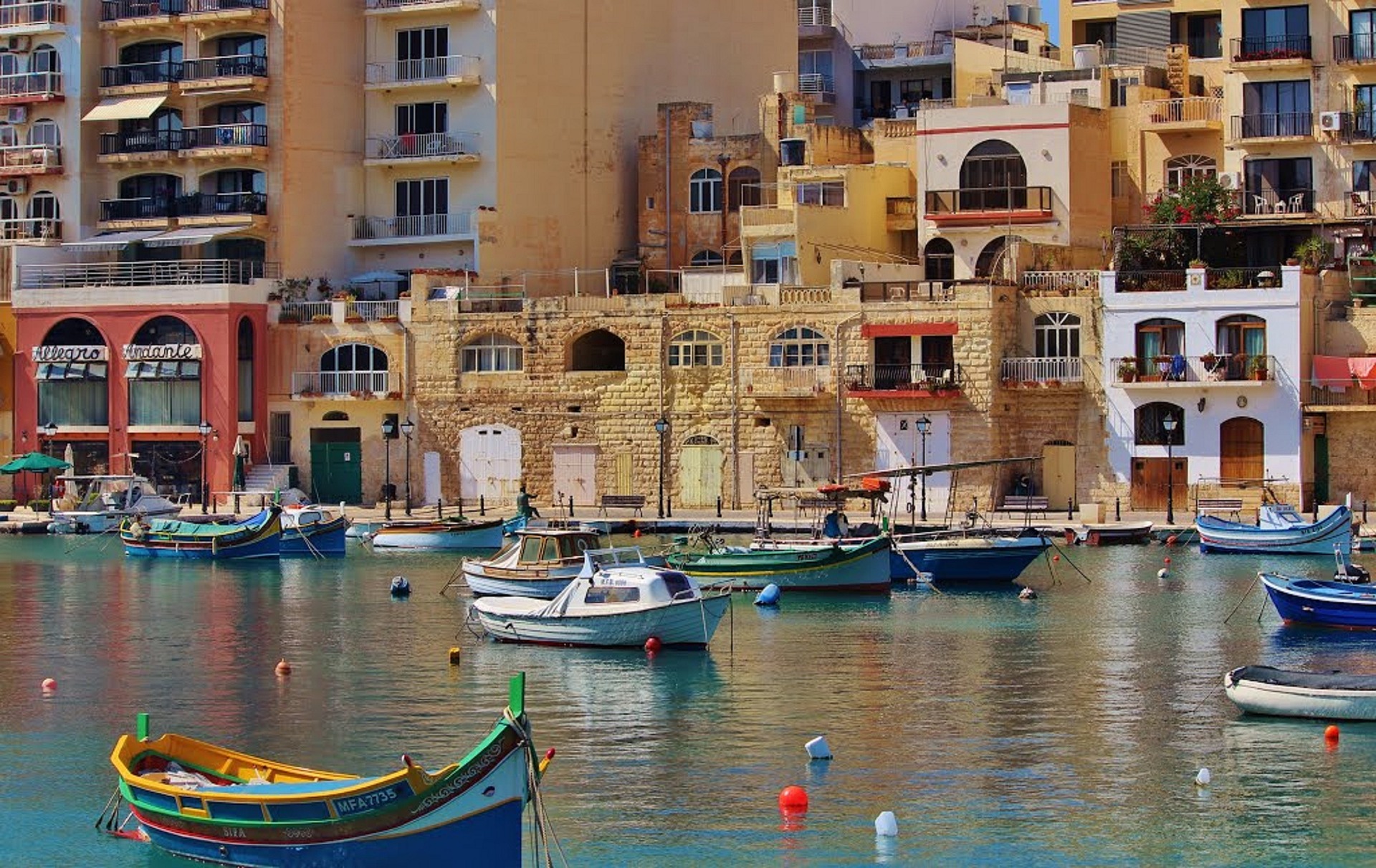
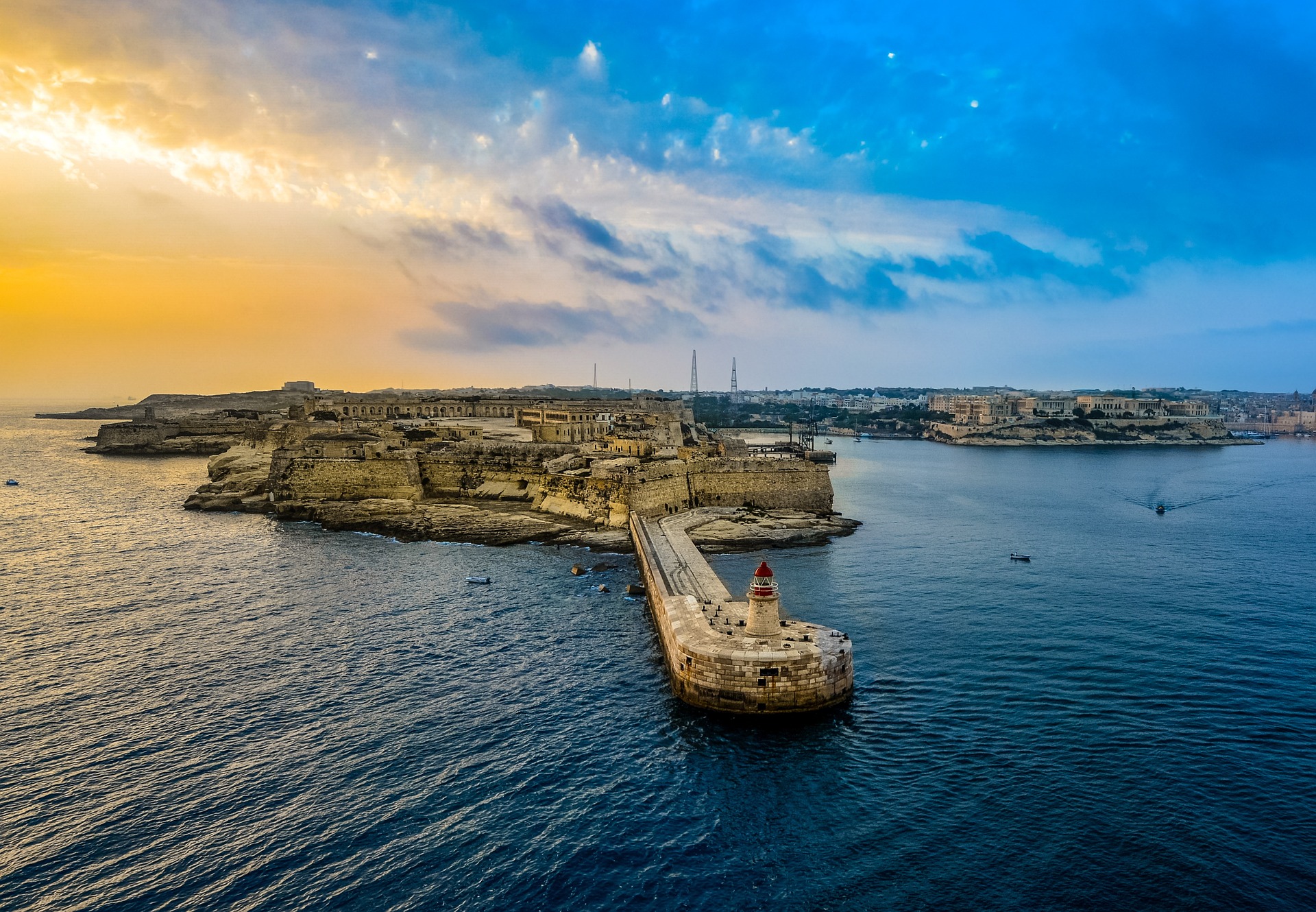
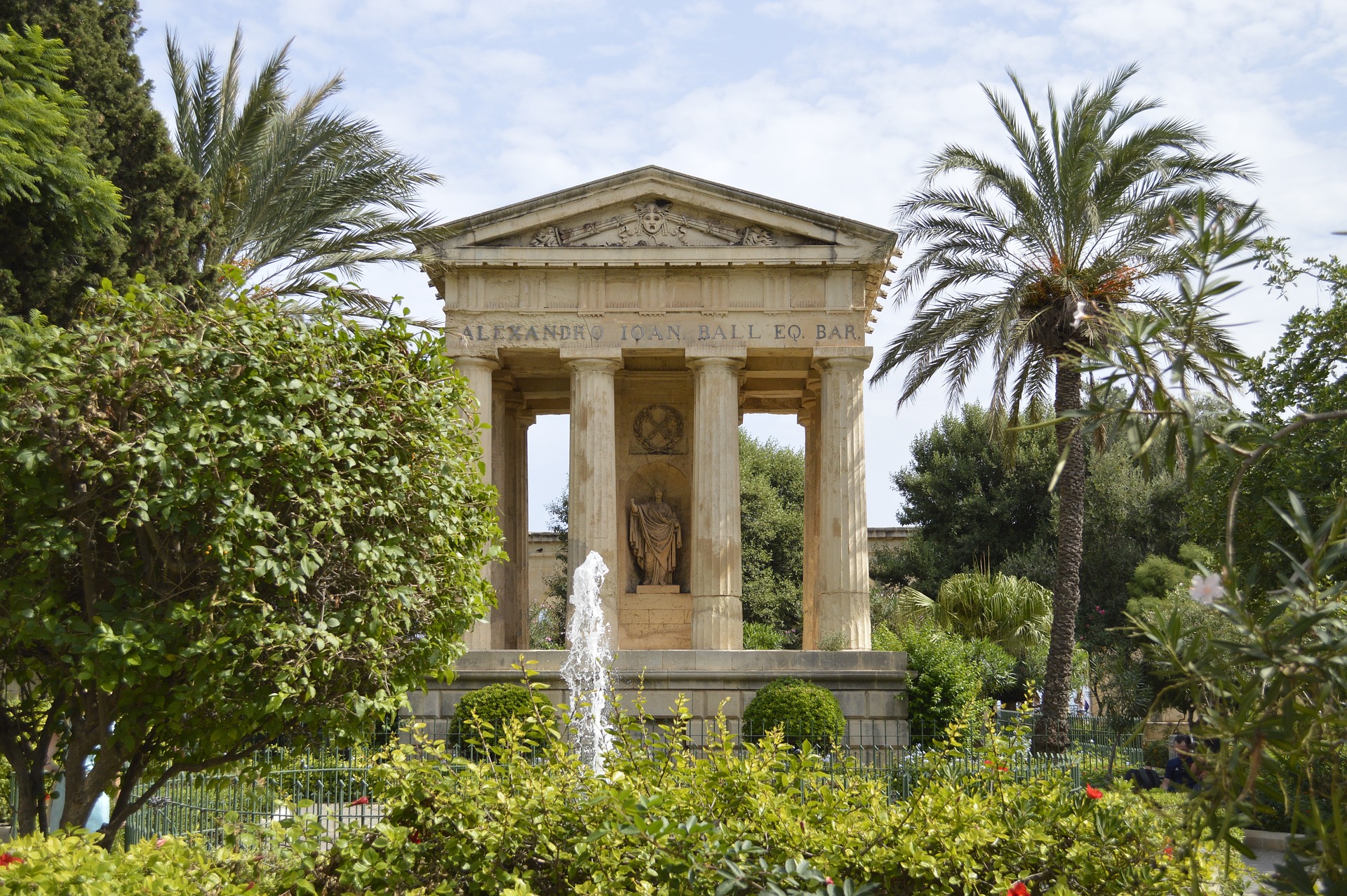
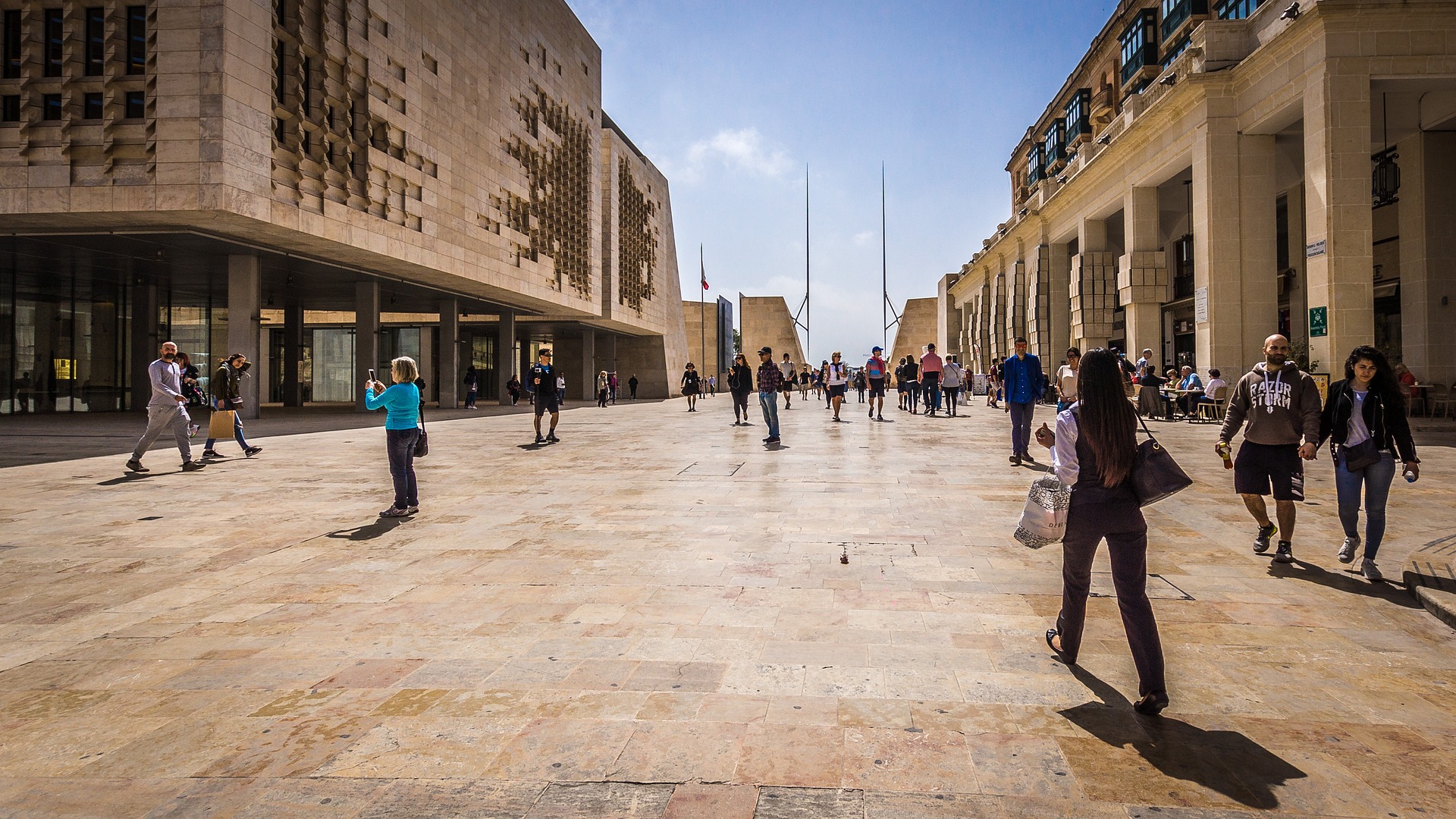
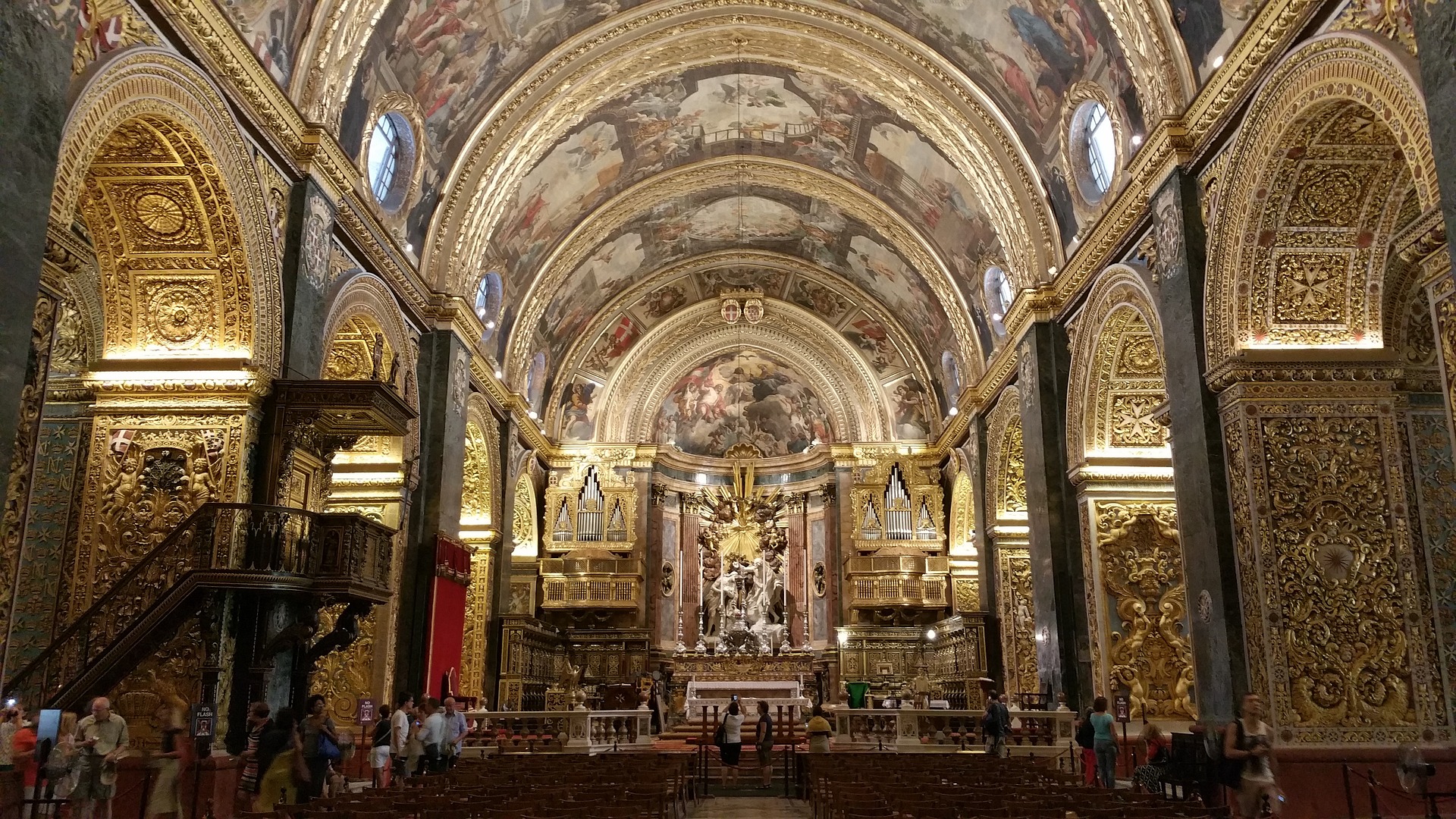
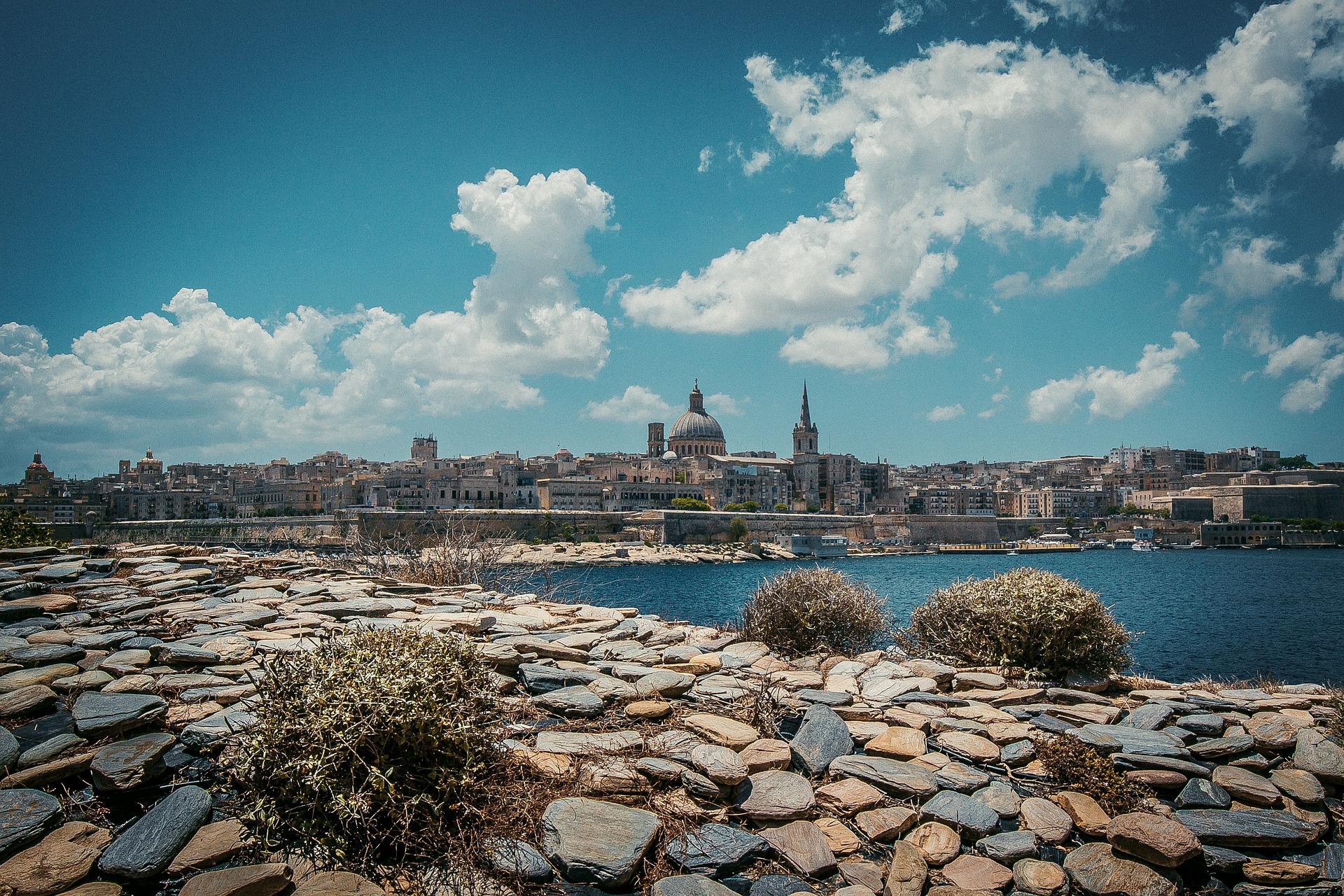
Malta's capital, the minicity of Valletta, has ornate palaces and museums protected by massive fortifications of honey-color limestone. Houses along the narrow streets have overhanging wooden balconies for people-watching from indoors. Generations ago they gave housebound women a window on the world of the street. The main entrance to town is through the City Gate (where all bus routes end), which leads onto Triq Repubblika (Republic Street), the spine of the grid-pattern city and the main shopping street. Triq Mercante (Merchant Street) parallels Repubblika to the east and is also good for strolling. From these two streets, cross streets descend toward the water; some are stepped. Valletta's compactness makes it ideal to explore on foot. City Gate and the upper part of Valletta are experiencing vast redevelopment that includes a new Parliament Building and open-air performance venue. The complex, completed mid-2013, has numerous pedestrian detours in place along with building noise and dust. Before setting out along Republic Street, stop at the tourist information office on Merchant Street for maps and brochures.
About Siracuse, Sicily
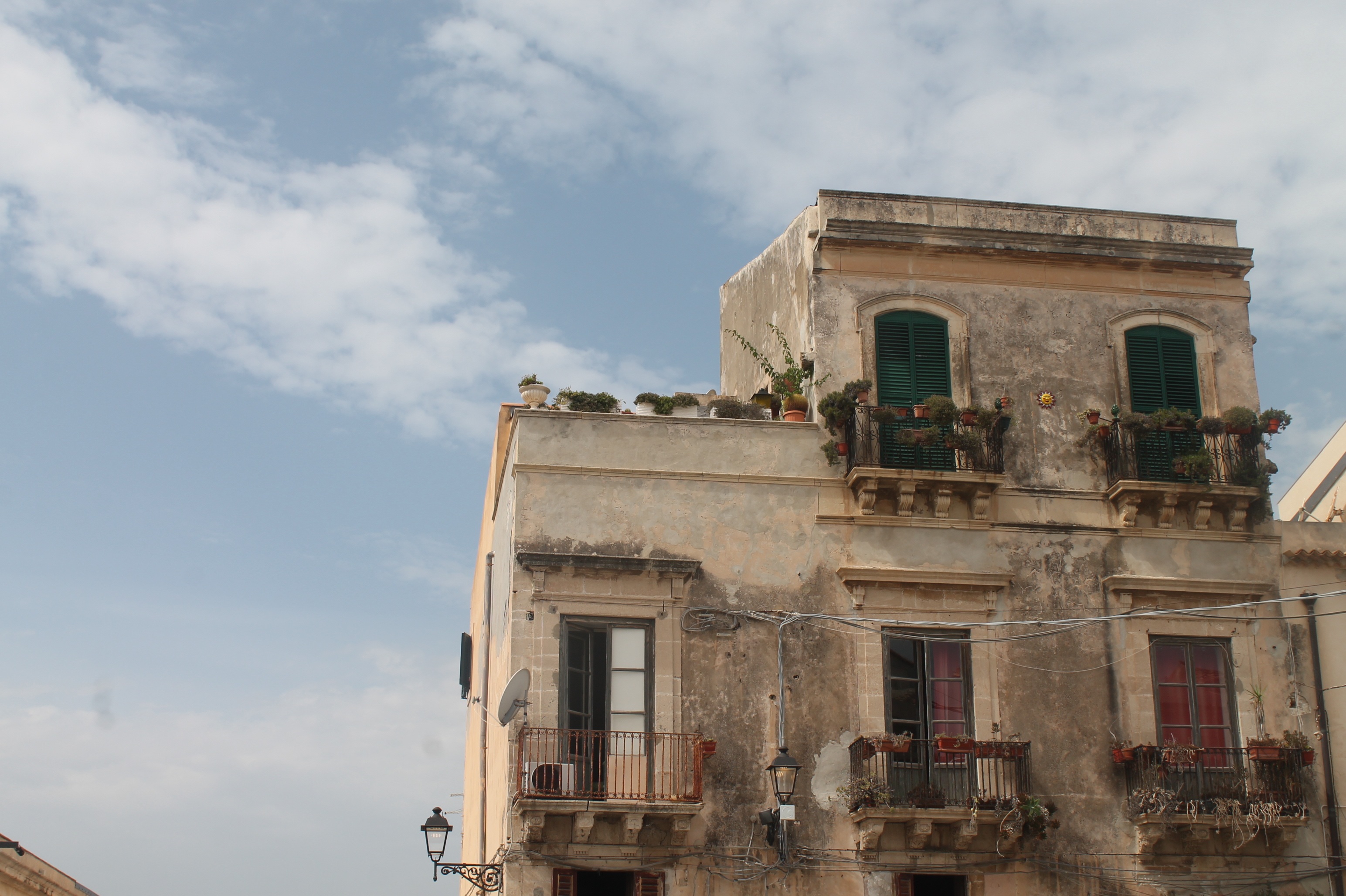
Siracusa, known to English speakers as Syracuse, is a wonder to behold. One of the great ancient capitals of Western civilization, the city was founded in 734 BC by Greek colonists from Corinth and soon grew to rival, and even surpass, Athens in splendor and power. It became the largest, wealthiest city-state in the West and a bulwark of Greek civilization. Although Siracusa lived under tyranny, rulers such as Dionysius filled their courts with Greeks of the highest cultural stature—among them the playwrights Aeschylus and Euripides, and the philosopher Plato. The Athenians, who didn't welcome Siracusa's rise, set out to conquer Sicily, but the natives outsmarted them in what was one of the greatest military campaigns in ancient history (413 BC). The city continued to prosper until it was conquered two centuries later by the Romans.Present-day Siracusa still has some of the finest examples of Baroque art and architecture; dramatic Greek and Roman ruins; and a Duomo that's the stuff of legend—a microcosm of the city's entire history in one building. The modern city also has a wonderful, lively, Baroque old town worthy of extensive exploration, as well as pleasant piazzas, outdoor cafés and bars, and a wide assortment of excellent seafood. There are essentially two areas to explore in Siracusa: the Parco Archeologico (Archaeological Zone), on the mainland; and the island of Ortygia, the ancient city first inhabited by the Greeks, which juts out into the Ionian Sea and is connected to the mainland by two small bridges. Ortygia is becoming increasingly popular with tourists, and is starting to lose its old-fashioned charm in favor of modern boutiques.Siracusa's old nucleus of Ortygia, a compact area, is a pleasure to amble around without getting unduly tired. In contrast, mainland Siracusa is a grid of wider avenues. At the northern end of Corso Gelone, above Viale Paolo Orsi, the orderly grid gives way to the ancient quarter of Neapolis, where the sprawling Parco Archeologico is accessible from Viale Teracati (an extension of Corso Gelone). East of Viale Teracati, about a 10-minute walk from the Parco Archeologico, the district of Tyche holds the archaeological museum and the church and catacombs of San Giovanni, both off Viale Teocrito (drive or take a taxi or city bus from Ortygia). Coming from the train station, it's a 15-minute trudge to Ortygia along Via Francesco Crispi and Corso Umberto. If you're not up for that, take one of the free electric buses leaving every 10 minutes from the bus station around the corner.
About Argostoli
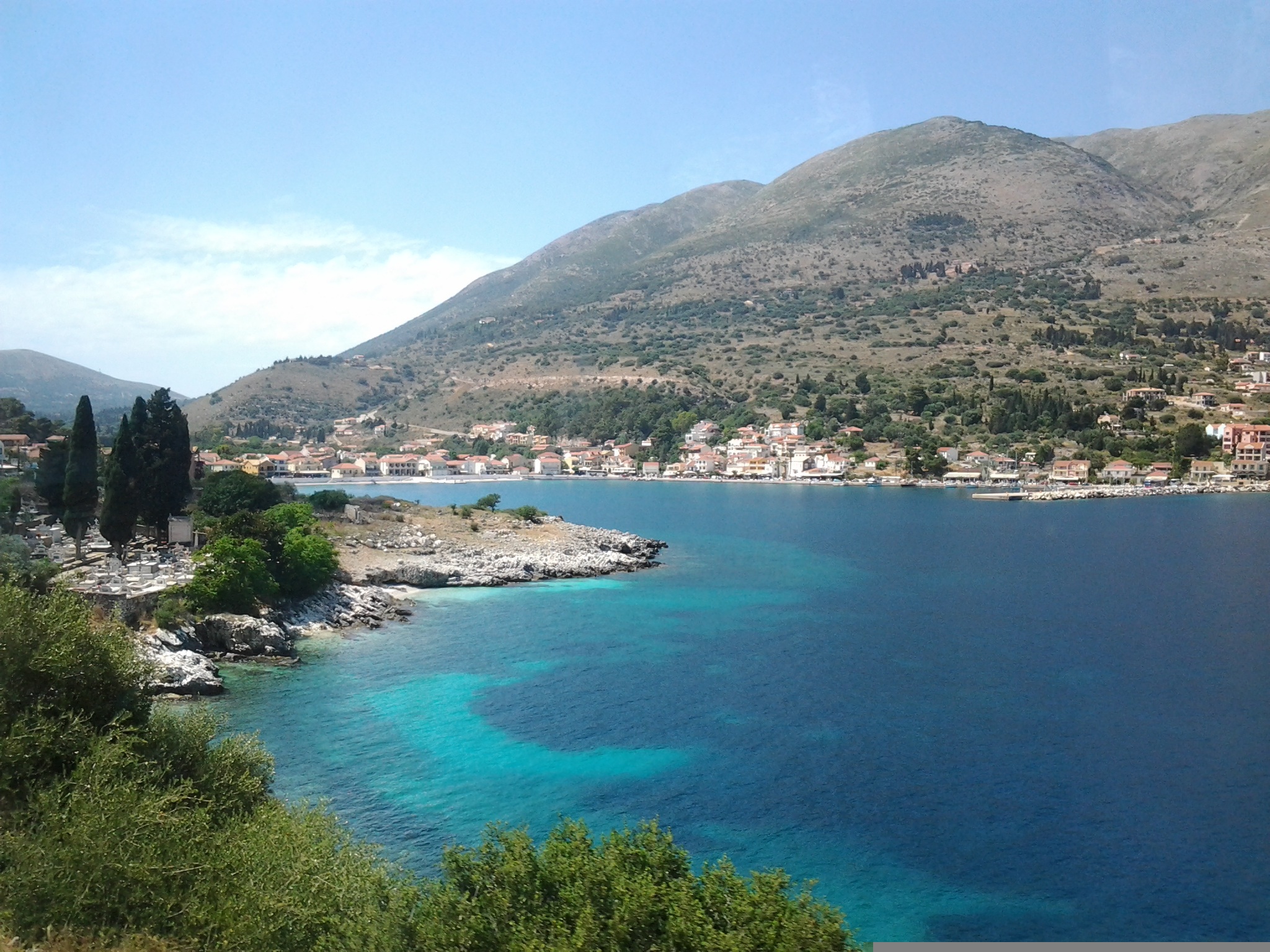
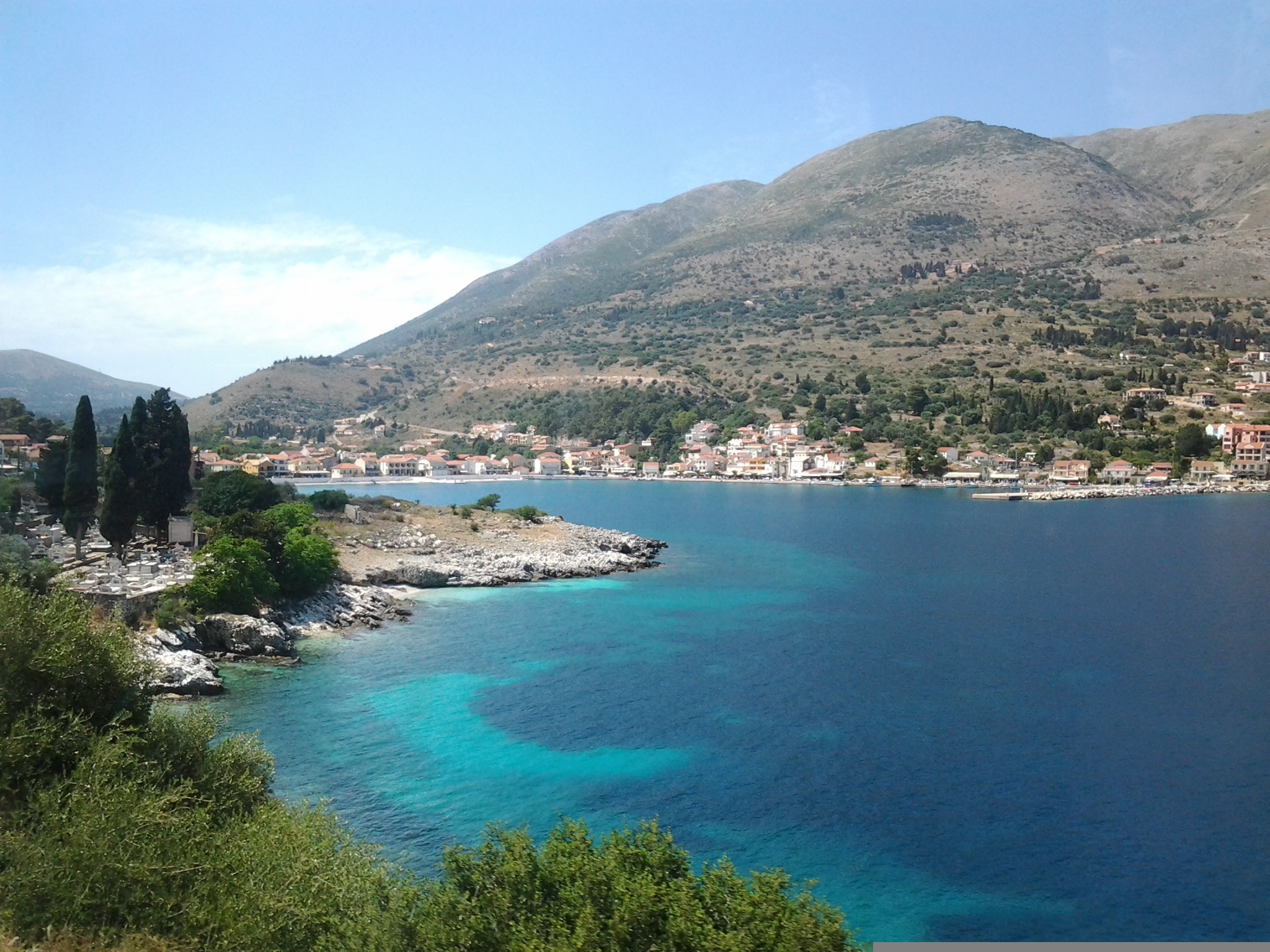
Ground literally to ashes in World War II and wracked by a massive earthquake a decade later, the capital of Kefalonia once more shows pride in its native spirit and natural beauty. The vast harbor on Argostoli’s east side makes an especially attractive port for cruise ships full of visitors who never seem to tire of strolling the cobbled seaside promenade, sipping ouzos in cafés, and stocking up on the succulent Mediterranean fruits in the outdoor markets.
About Corfu
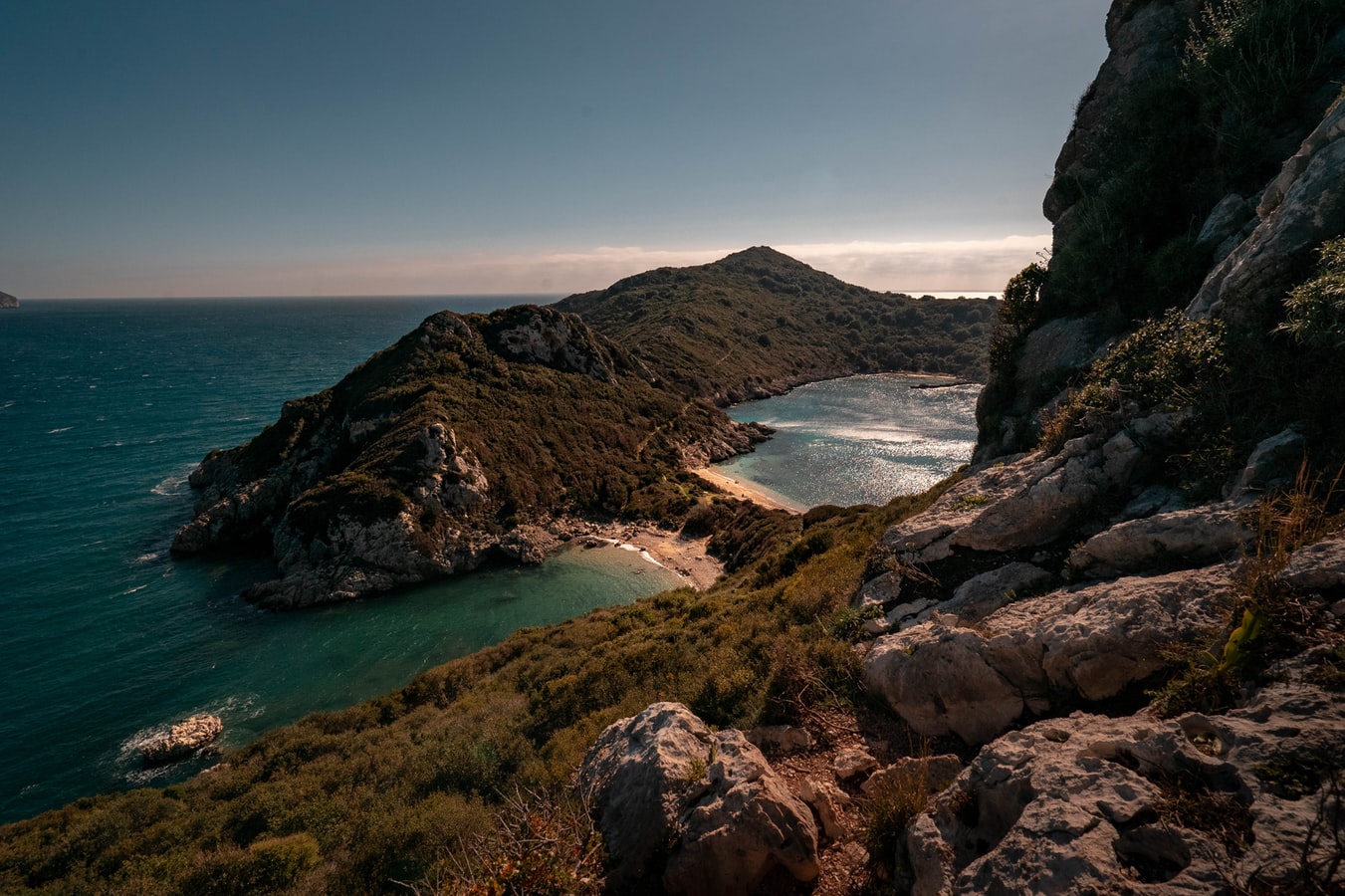
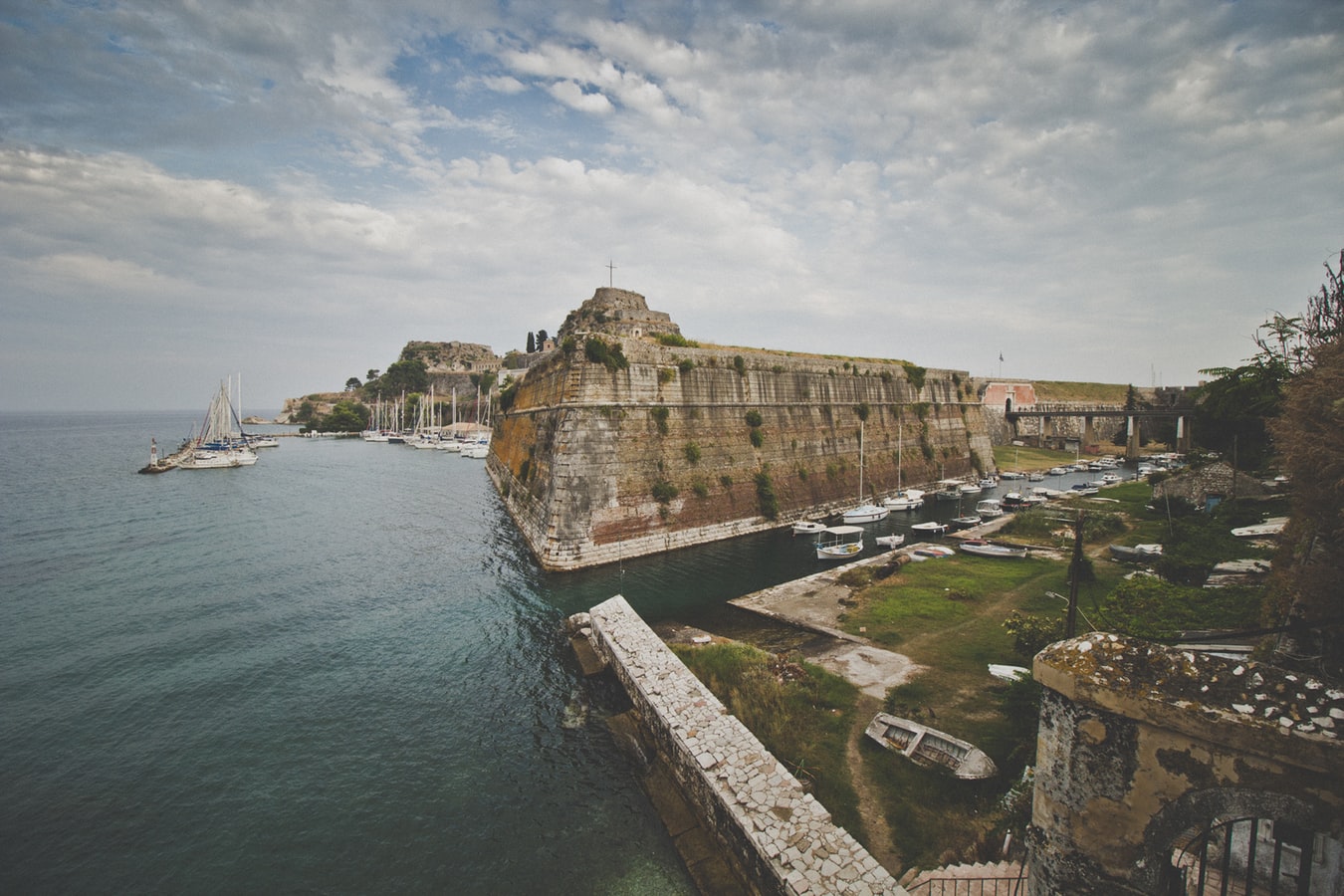
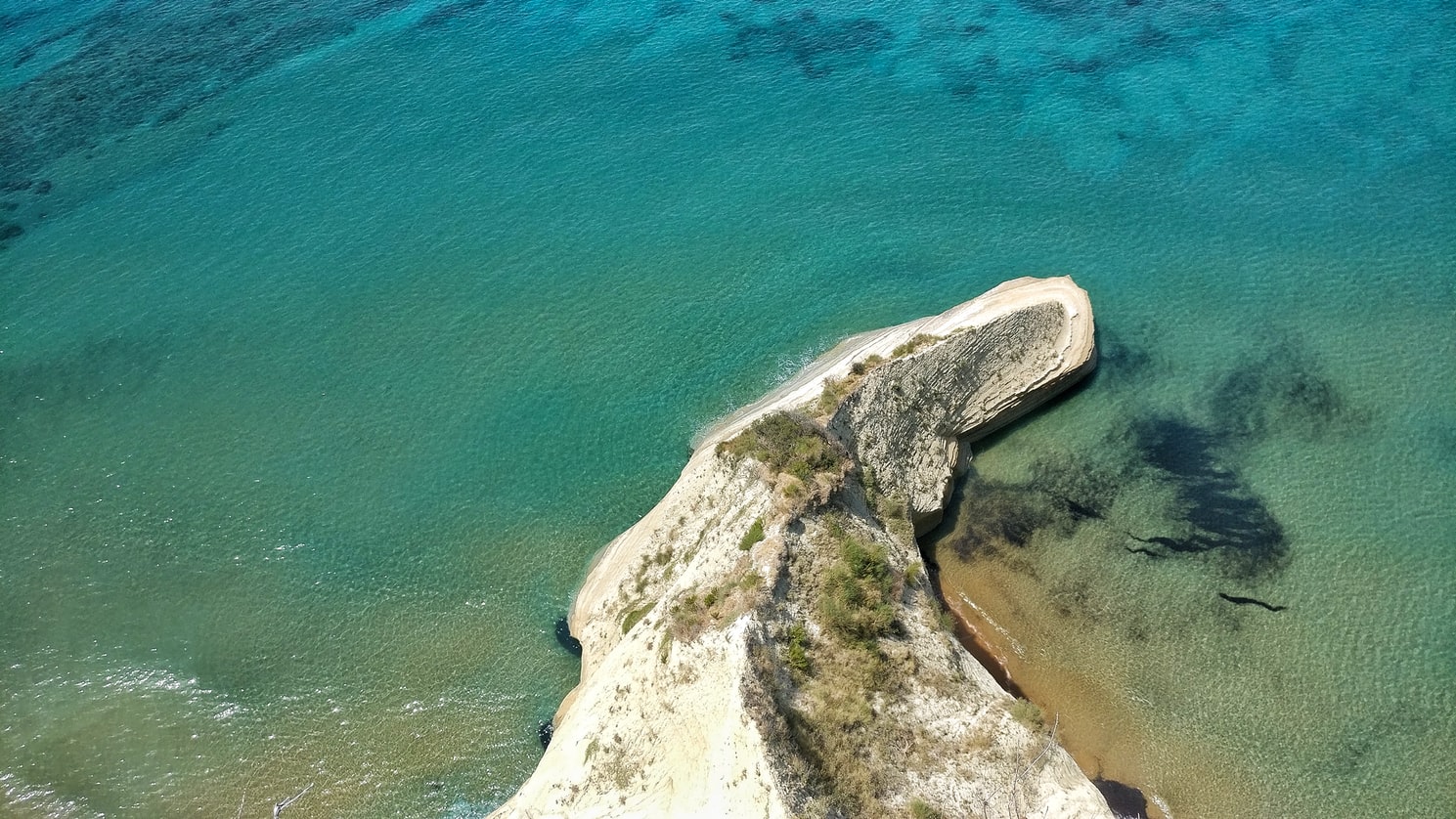
Corfu town today is a vivid tapestry of cultures—a sophisticated weave, where charm, history, and natural beauty blend. Located about midway along the island's east coast, this spectacularly lively capital is the cultural heart of Corfu and has a remarkable historic center that UNESCO designated as a World Heritage Site in 2007. All ships and planes dock or land near Corfu town, which occupies a small peninsula jutting into the Ionian Sea.Whether arriving by ferry from mainland Greece or Italy, from another island, or directly by plane, catch your breath by first relaxing with a coffee or a gelato in Corfu town's shaded Liston Arcade, then stroll the narrow lanes of its pedestrians-only quarter. For an overview of the immediate area, and a quick tour of Mon Repos palace, hop on the little tourist train that runs from May to September. Corfu town has a different feel at night, so book a table at one of its famed tavernas to savor the island's unique cuisine.The best way to get around Corfu town is on foot. The town is small enough so that you can easily walk to every sight. There are local buses, but they do not thread their way into the streets (many now car-free) of the historic center. If you are arriving by ferry or plane, it's best to take a taxi to your hotel. Expect to pay about €10 from the airport or ferry terminal to a hotel in Corfu town. If there are no taxis waiting, you can call for one.
About Dubrovnik
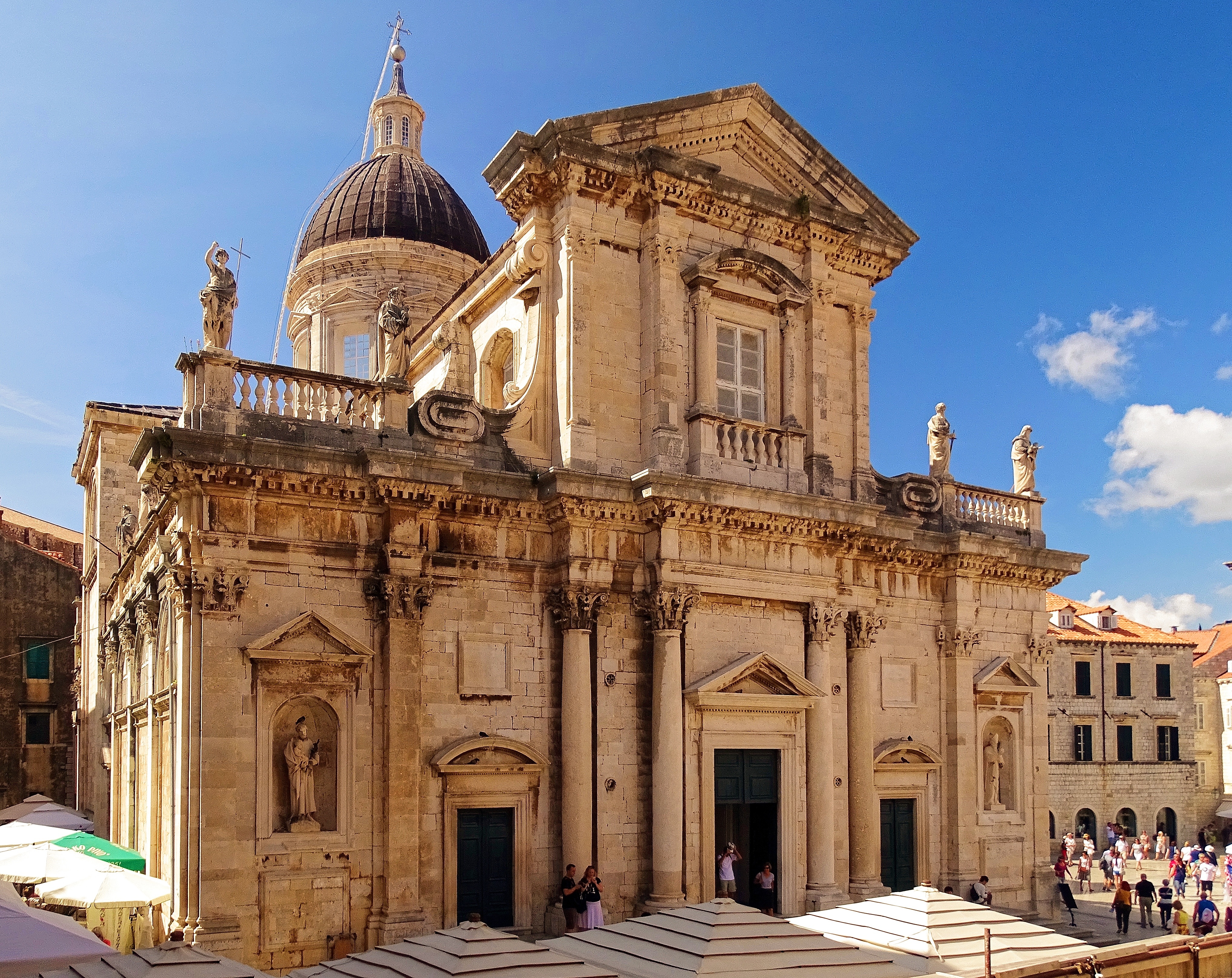
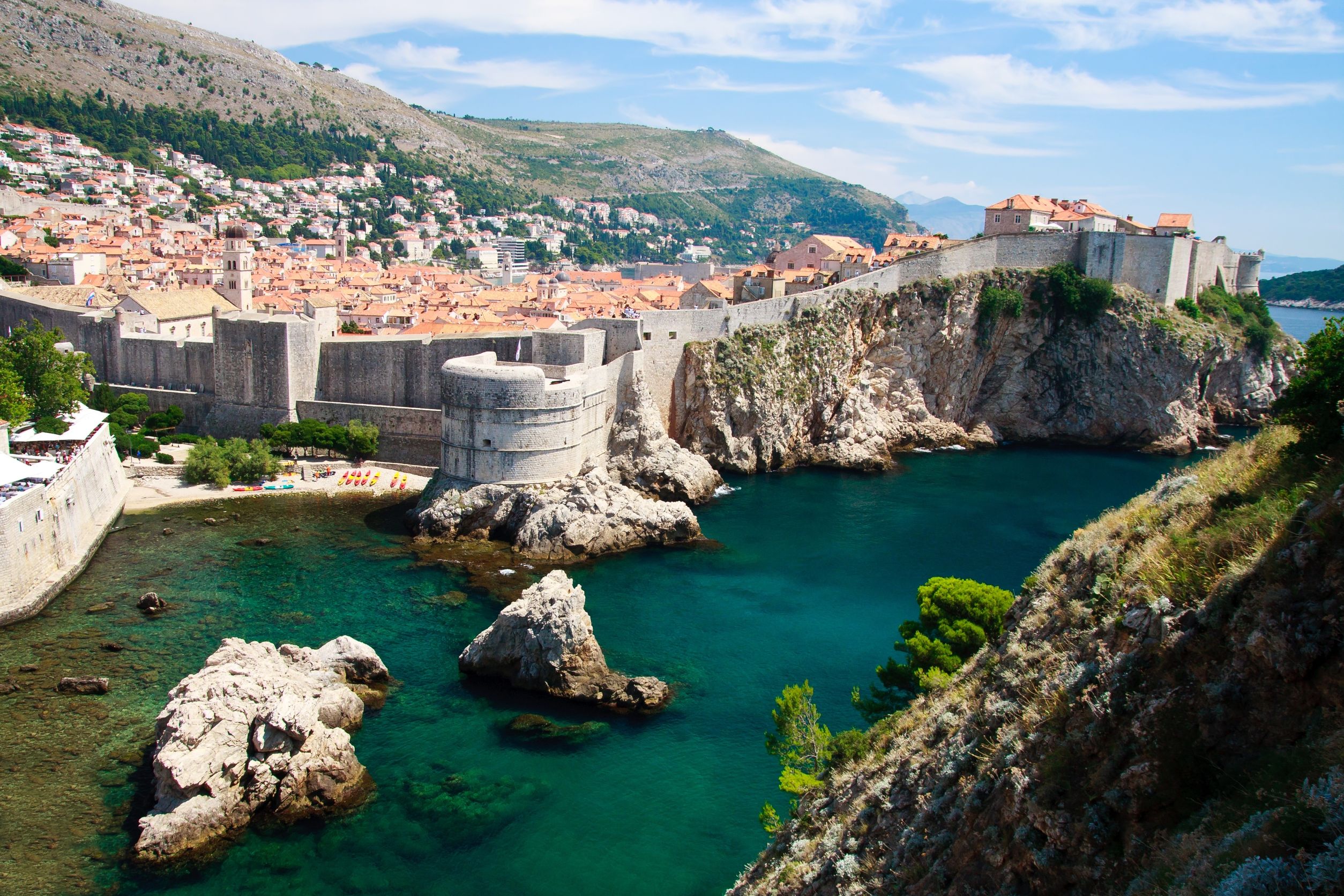
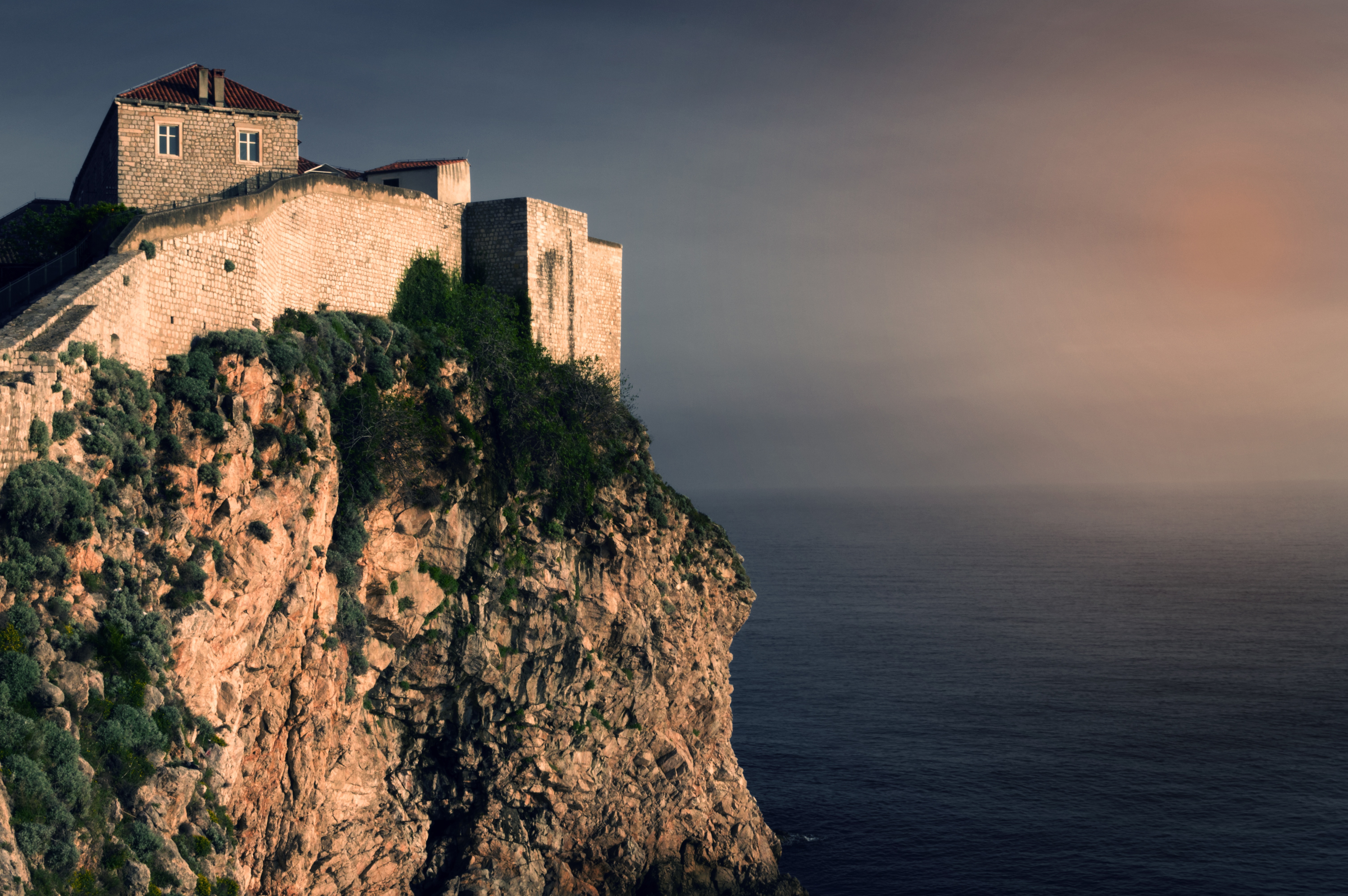
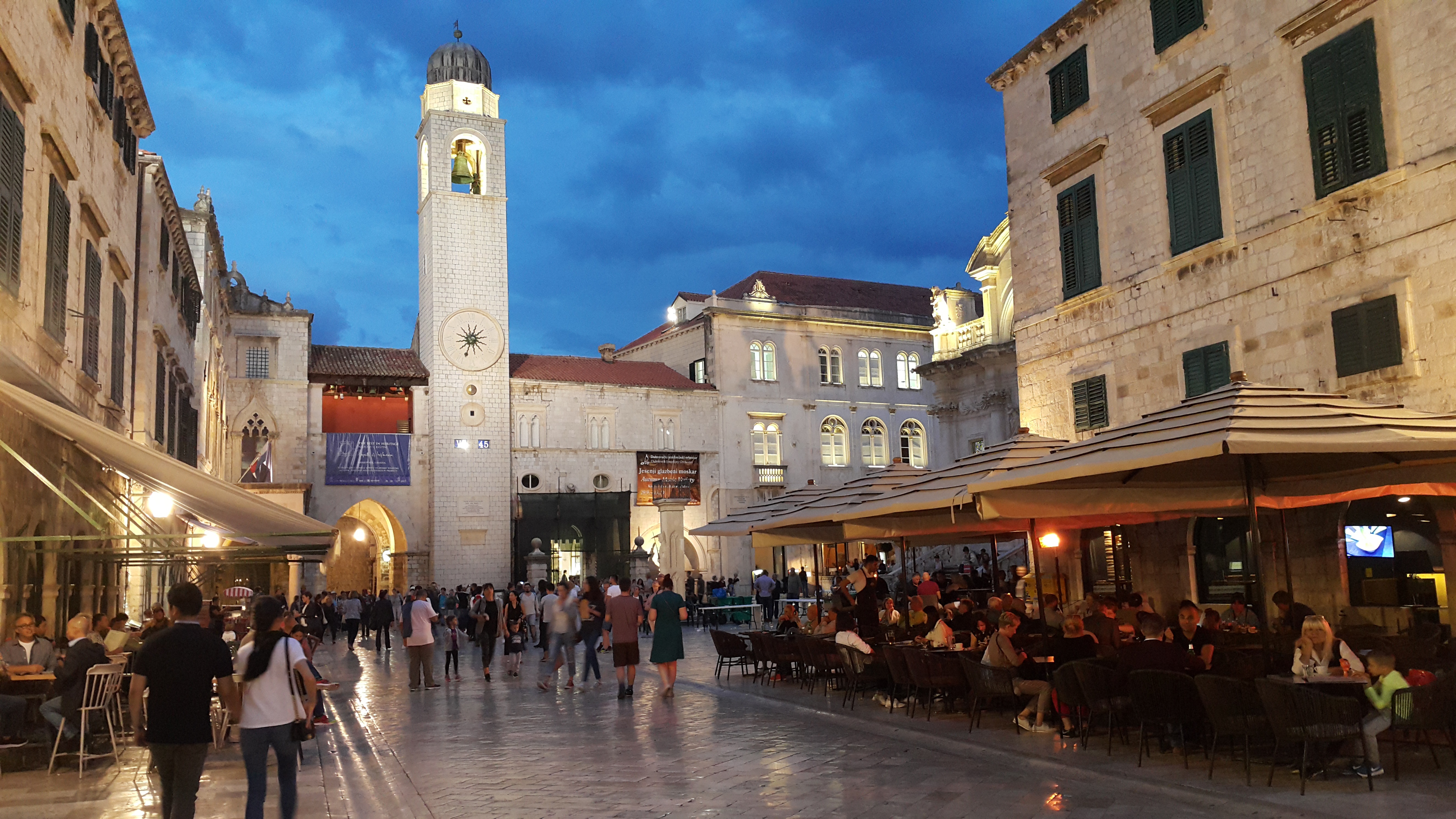
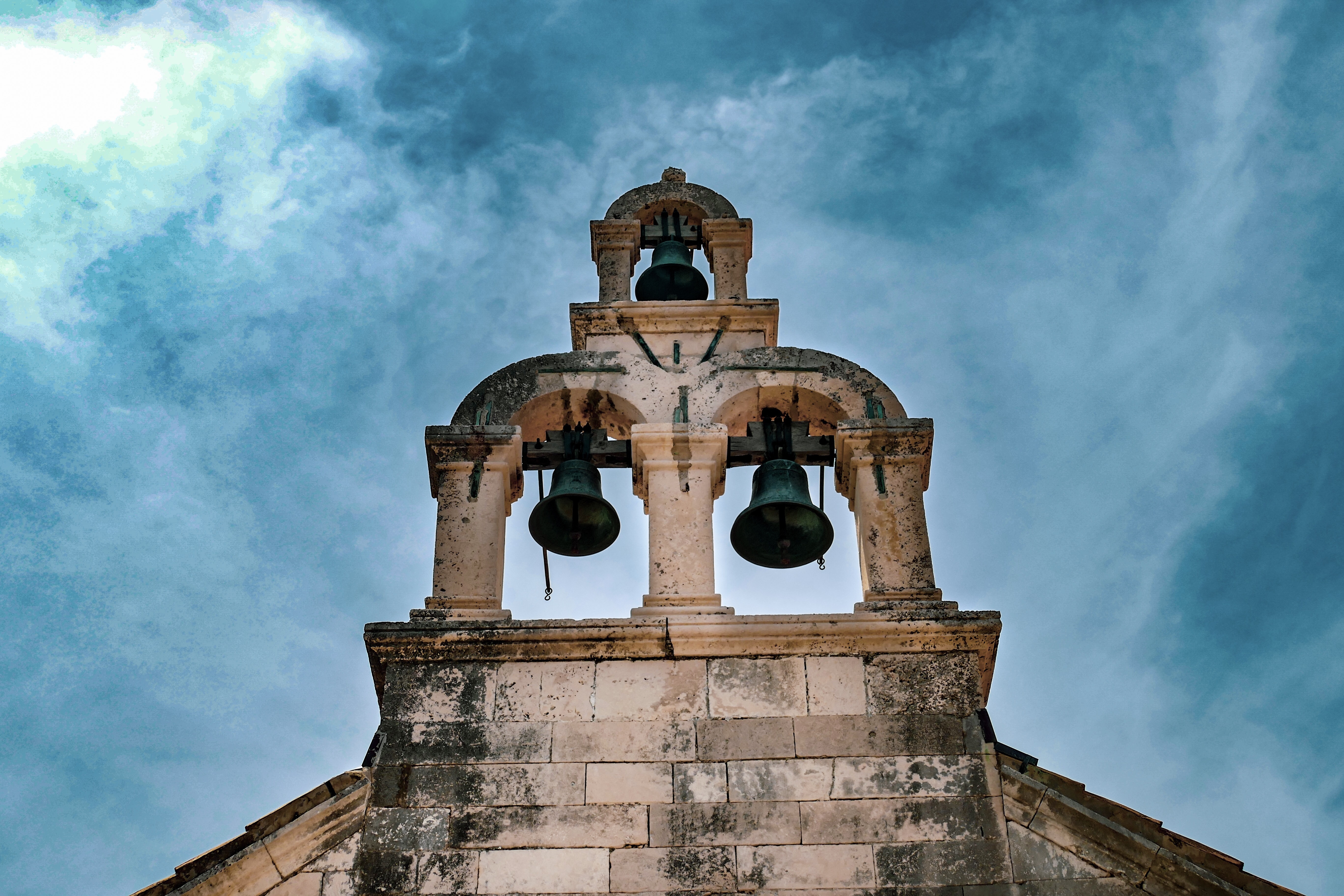
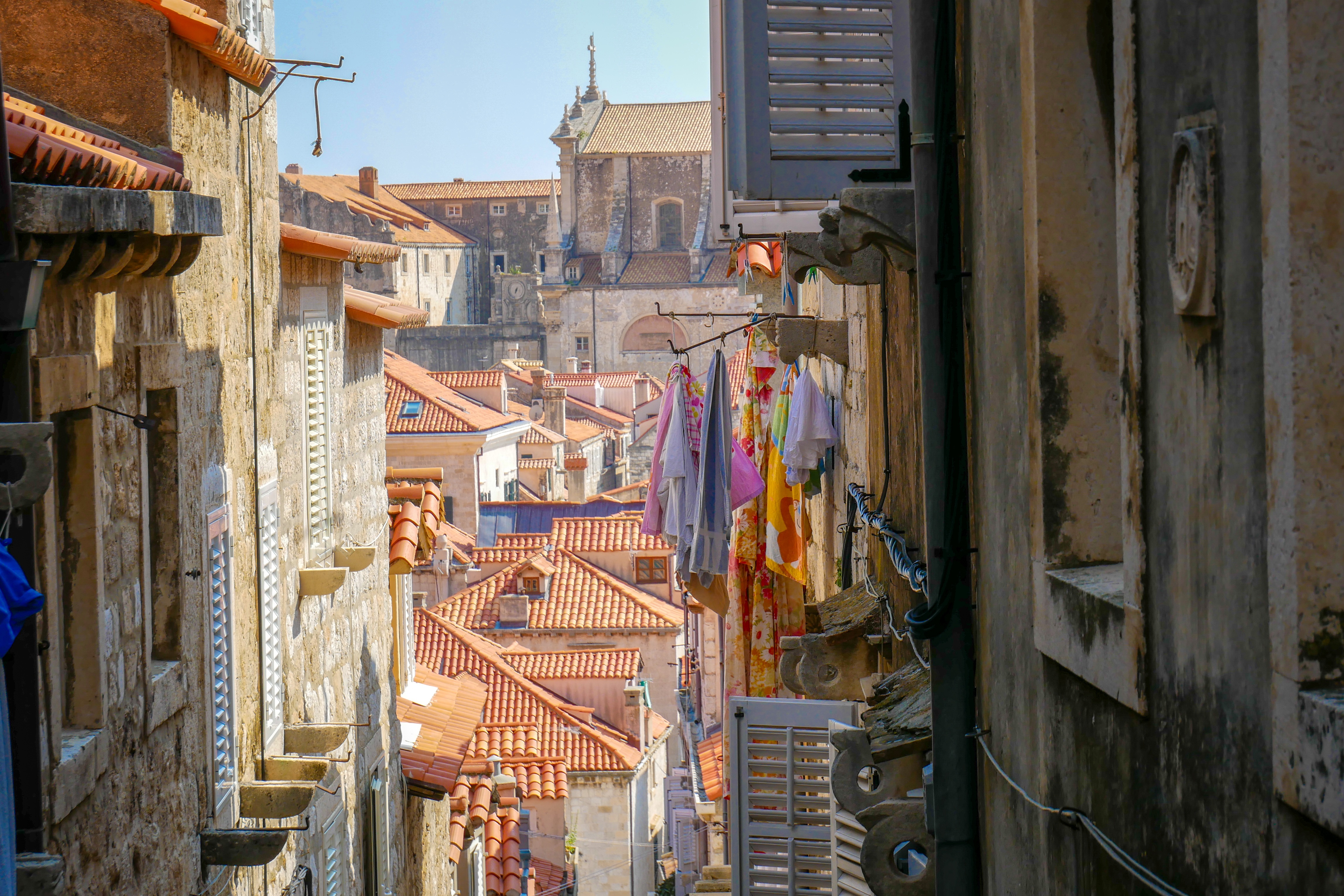
Nothing can prepare you for your first sight of Dubrovnik. Lying 216 km (135 miles) southeast of Split and commanding a jaw-dropping coastal location, it is one of the world's most beautiful fortified cities. Its massive stone ramparts and fortress towers curve around a tiny harbor, enclosing graduated ridges of sun-bleached orange-tiled roofs, copper domes, and elegant bell towers. Your imagination will run wild picturing what it looked like seven centuries ago when the walls were built, without any suburbs or highways around it, just this magnificent stone city rising out of the sea.In the 7th century AD, residents of the Roman city Epidaurum (now Cavtat) fled the Avars and Slavs of the north and founded a new settlement on a small rocky island, which they named Laus, and later Ragusa. On the mainland hillside opposite the island, the Slav settlement called Dubrovnik grew up. In the 12th century the narrow channel separating the two settlements was filled in (now the main street through the Old Town, called Stradun), and Ragusa and Dubrovnik became one. The city was surrounded by defensive walls during the 13th century, and these were reinforced with towers and bastions in the late 15th century.From 1358 to 1808 the city thrived as a powerful and remarkably sophisticated independent republic, reaching its golden age during the 16th century. In 1667 many of its splendid Gothic and Renaissance buildings were destroyed by an earthquake. The defensive walls survived the disaster, and the city was rebuilt in baroque style.Dubrovnik lost its independence to Napoléon in 1808, and in 1815 passed to Austria-Hungary. During the 20th century, as part of Yugoslavia, the city became a popular tourist destination, and in 1979 it was listed as a UNESCO World Heritage Site. During the war for independence, it came under heavy siege. Thanks to careful restoration, few traces of damage remain; however, there are maps inside the Pile and Ploče Gates illustrating the points around the city where damage was done. It’s only when you experience Dubrovnik yourself that you can understand what a treasure the world nearly lost
About Dubrovnik
Nothing can prepare you for your first sight of Dubrovnik. Lying 216 km (135 miles) southeast of Split and commanding a jaw-dropping coastal location, it is one of the world's most beautiful fortified cities. Its massive stone ramparts and fortress towers curve around a tiny harbor, enclosing graduated ridges of sun-bleached orange-tiled roofs, copper domes, and elegant bell towers. Your imagination will run wild picturing what it looked like seven centuries ago when the walls were built, without any suburbs or highways around it, just this magnificent stone city rising out of the sea.In the 7th century AD, residents of the Roman city Epidaurum (now Cavtat) fled the Avars and Slavs of the north and founded a new settlement on a small rocky island, which they named Laus, and later Ragusa. On the mainland hillside opposite the island, the Slav settlement called Dubrovnik grew up. In the 12th century the narrow channel separating the two settlements was filled in (now the main street through the Old Town, called Stradun), and Ragusa and Dubrovnik became one. The city was surrounded by defensive walls during the 13th century, and these were reinforced with towers and bastions in the late 15th century.From 1358 to 1808 the city thrived as a powerful and remarkably sophisticated independent republic, reaching its golden age during the 16th century. In 1667 many of its splendid Gothic and Renaissance buildings were destroyed by an earthquake. The defensive walls survived the disaster, and the city was rebuilt in baroque style.Dubrovnik lost its independence to Napoléon in 1808, and in 1815 passed to Austria-Hungary. During the 20th century, as part of Yugoslavia, the city became a popular tourist destination, and in 1979 it was listed as a UNESCO World Heritage Site. During the war for independence, it came under heavy siege. Thanks to careful restoration, few traces of damage remain; however, there are maps inside the Pile and Ploče Gates illustrating the points around the city where damage was done. It’s only when you experience Dubrovnik yourself that you can understand what a treasure the world nearly lost
On warm days, sun worshippers will appreciate the spacious DEDON sofa island, which is a great place for some private relaxation. And the separate living and sleeping areas with their subtle, earthy colours and high-quality furnishings will make you feel relaxed and comfortable. Do you have any other requests? If so, please ask your personal butler, who will be available to help at any time.
Selected equipment features
- 85 m² (915 ft²) Penthouse Grand Suite with a spacious veranda above the bridge
- Butler service
- 24-hour suite service
- Separate living and sleeping areas
- Spacious walk-in wardrobe
- Generously sized dining area
- DEDON sun island on the veranda
- Bathroom with underfloor heating, two washbasins, a whirlpool bath, seperate shower, a private sauna
- Separate guest toilet
- Tablet
- Nespresso machine
- Free mini bar (water, juices, soft drinks, beer and a selection of high-quality spirits)
- Fresh canapes
- Ironing service
- On-board table reservation for the restaurant The Globe by Kevin Fehling
- Free daily full edition of a newspaper of your choice on request
- Exclusive service privileges
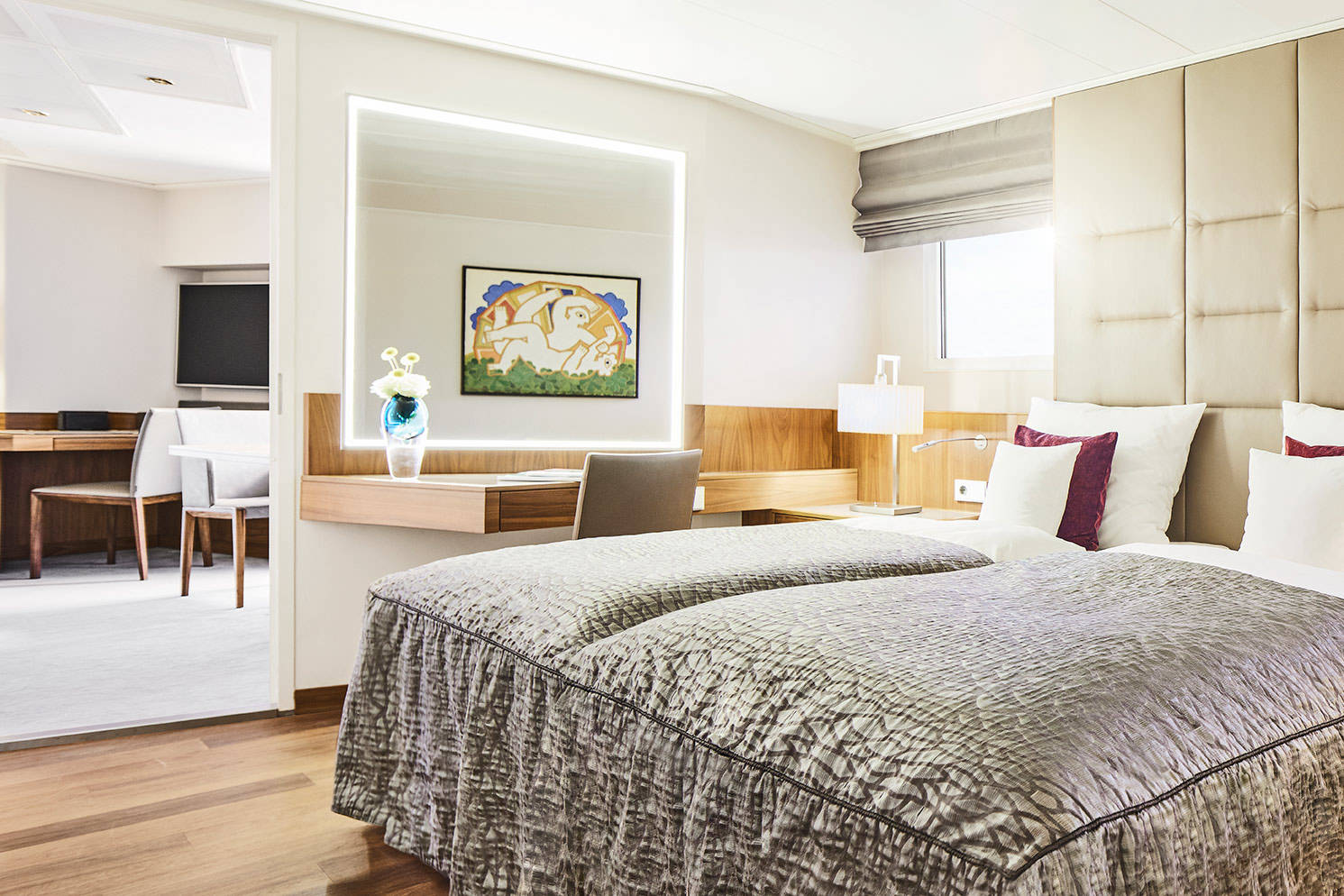
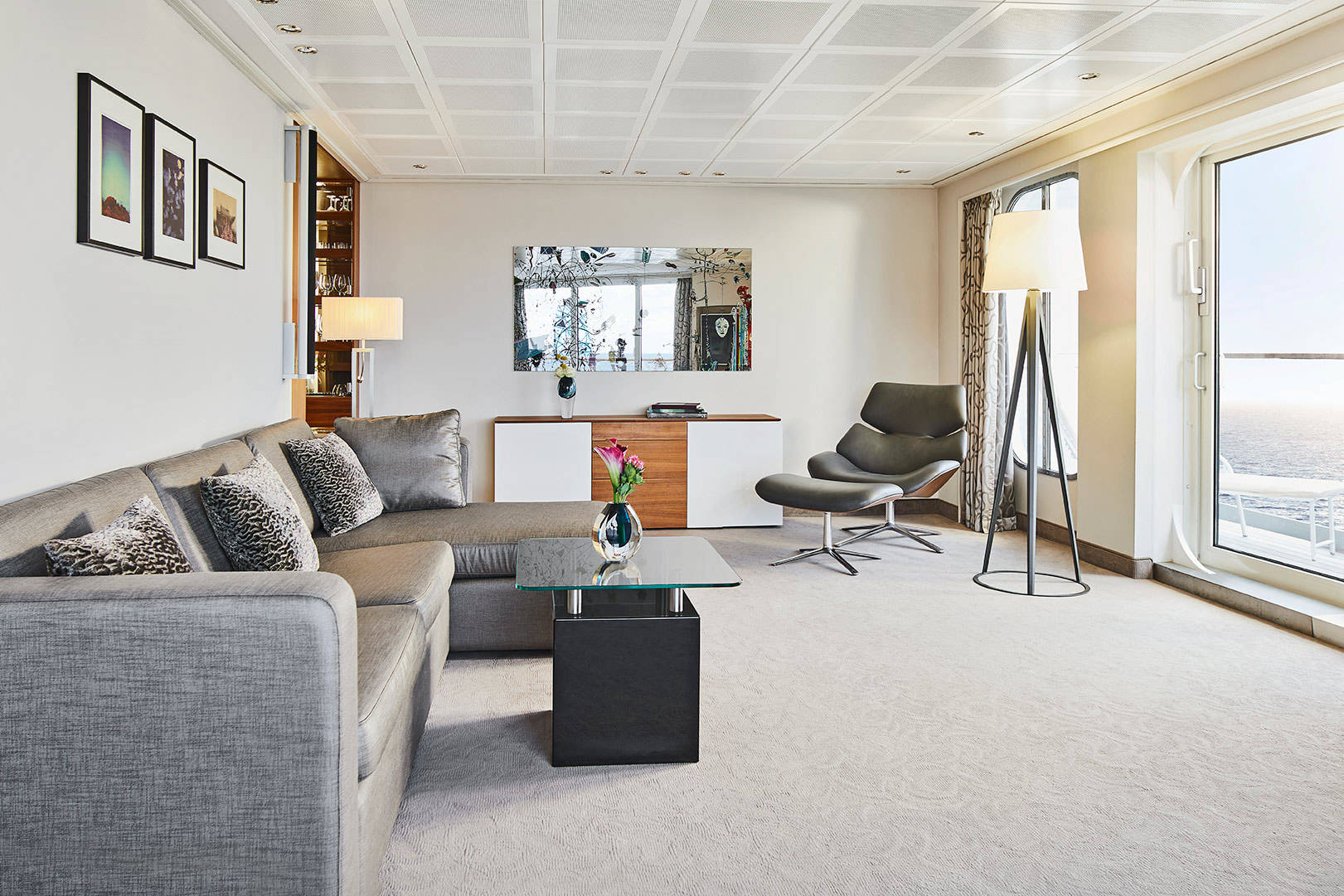
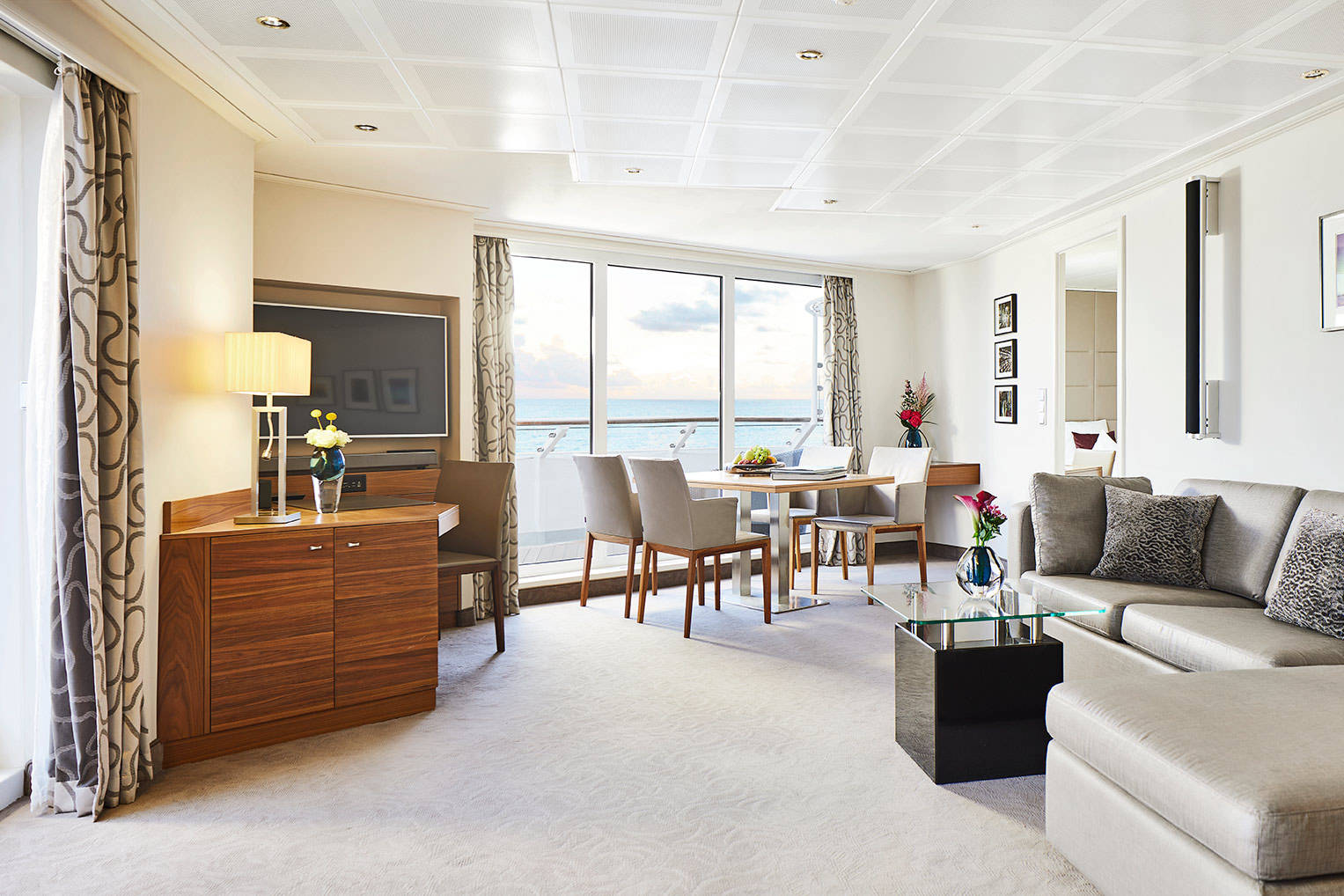
In the relaxed atmosphere of your suite, it is our pleasure to pamper you with gourmet snacks or a glass of champagne, for example. Whether you prefer to dream away the day in the cosy lounge or on your private veranda, the choice is yours – either way, you will be able to enjoy an ocean view.
Selected equipment features
- 45 m² (484 ft²) Penthouse Deluxe Suite with a veranda
- Butler service
- 24-hour suite service
- Separate living and sleeping areas
- Walk-in wardrobe
- Bathroom with underfloor heating, two washbasins, whirlpool bath and seperate shower
- Tablet
- Nespresso machine
- Free mini bar (water, juices, soft drinks, beer and a selection of high-quality spirits)
- Fresh canapes every day
- Ironing service
- On-board table reservation for the restaurant The Globe by Kevin Fehling
- Exclusive service privileges
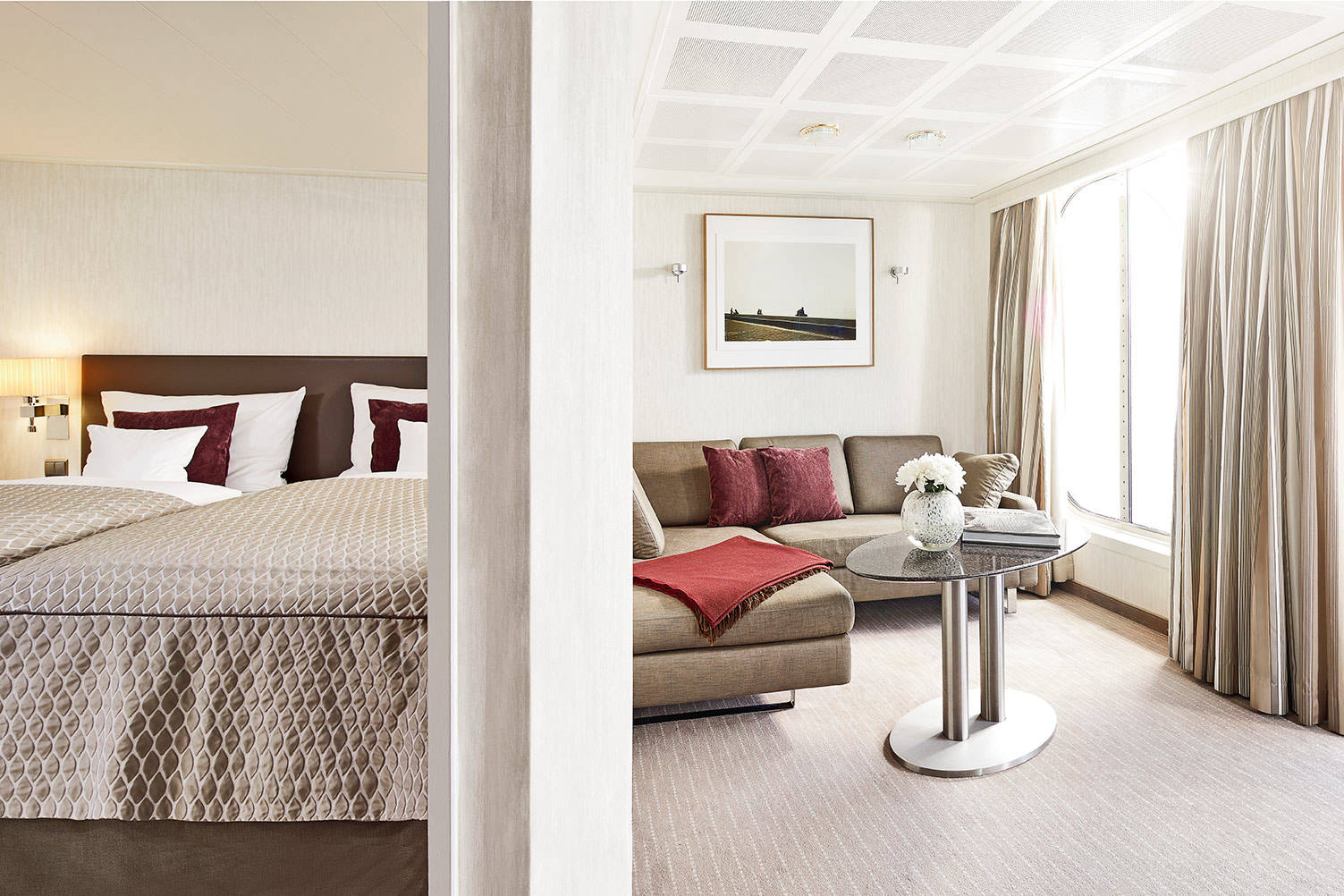
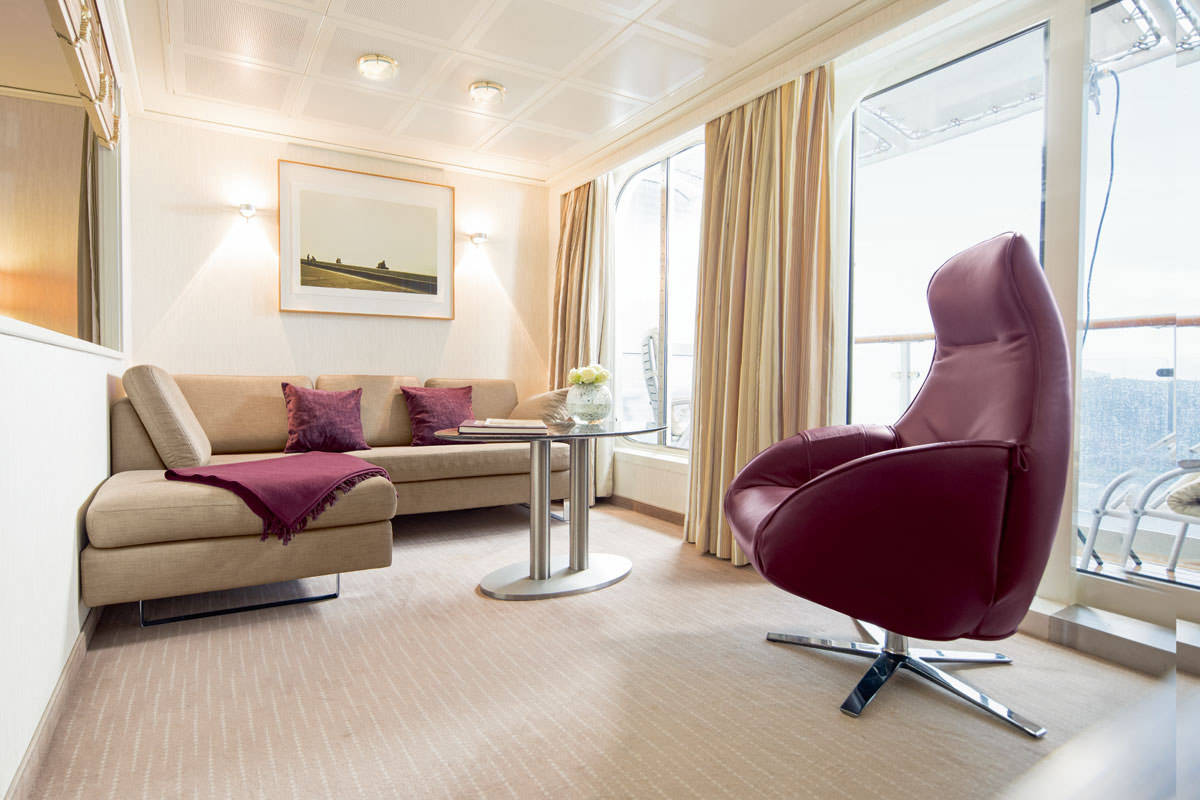
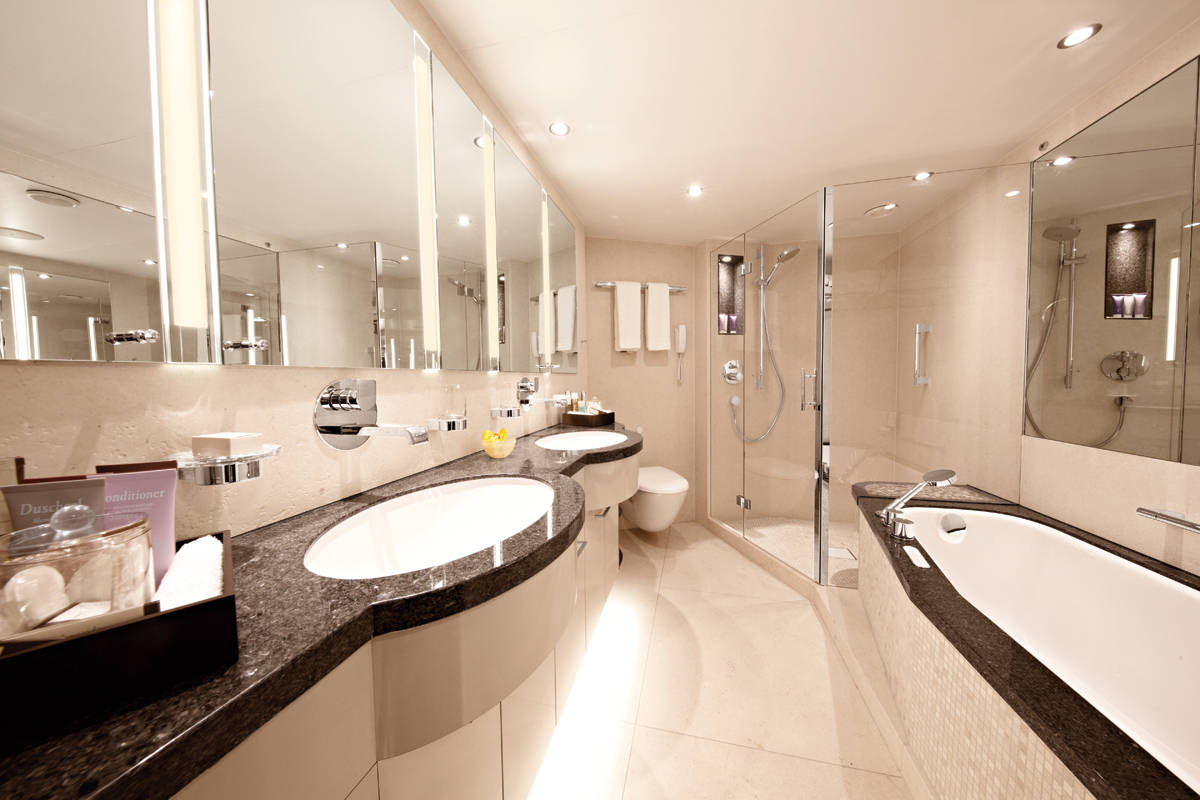
The modern living and sleeping areas feature a contemporary design. Light-coloured wood furniture further accentuates the spaciousness of the light-filled room. The whirlpool bath with optional lighting provides a special opportunity for relaxation – and the large window with a Venetian blind means you can enjoy the fantastic views from the bath as well.
Selected equipment features
27 m² (291 ft²) SPA Suite with a veranda
- 24-hour suite service
- Includes SPA pamper package
- Walk-in wardrobe
- Bathroom with natural light, ocean view, whirlpool bath ans separate shower
- Tablet
- Nespresso machine
- Free mini bar (water, juices, soft drinks, beer and a selection of high-quality spirits)
- Choice of SPA drinks, including smoothies, fresh fruit juices and herbal teas, fresh canapes and fresh fruits
- Ironing service
- On-board table reservations for the restaurant The Globe by Kevin Fehling
- Exclusive service privileges
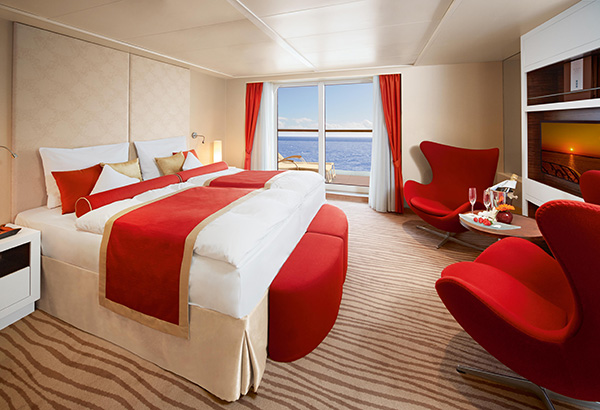
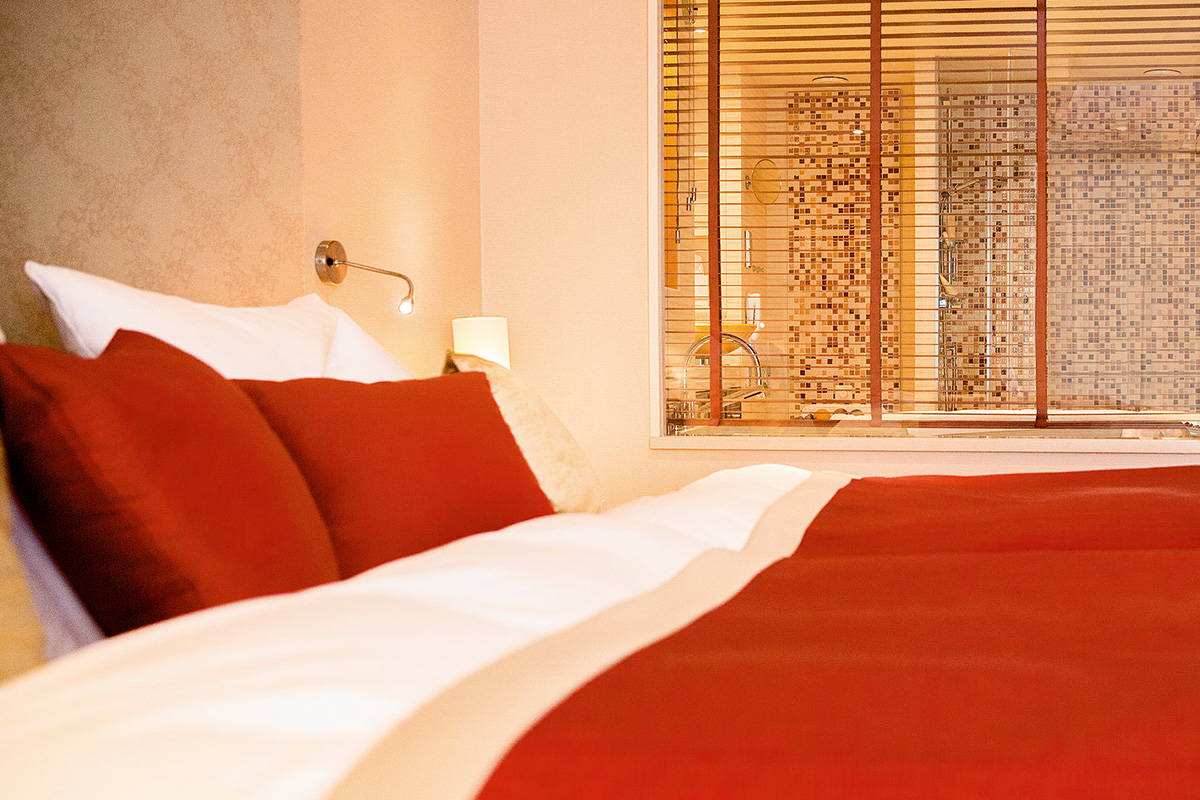
A modern suite with an elegant design, stylishly furnished to the last detail. Enjoy total privacy while taking in the view from your very own veranda.
Selected equipment features
27 m² (291 ft²) suite with a veranda (cat. 6-7)
- 24-hour suite service
- Visually divided living and sleeping area
- Walk-in wardrobe
- Bathroom with bathtub and seperate shower
- Nespresso machine
- Free mini bar (water, juices, soft drinks and beer)
- Some suites can be booked with connecting doors
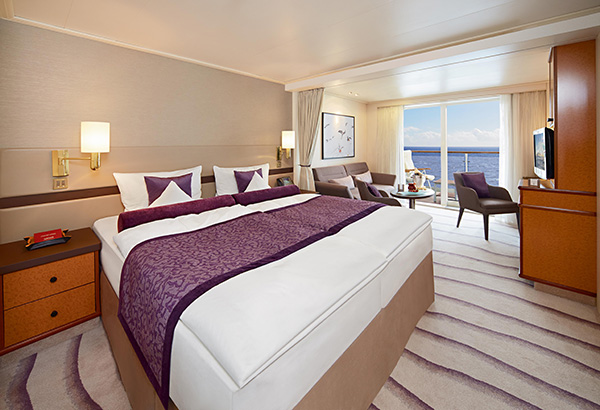
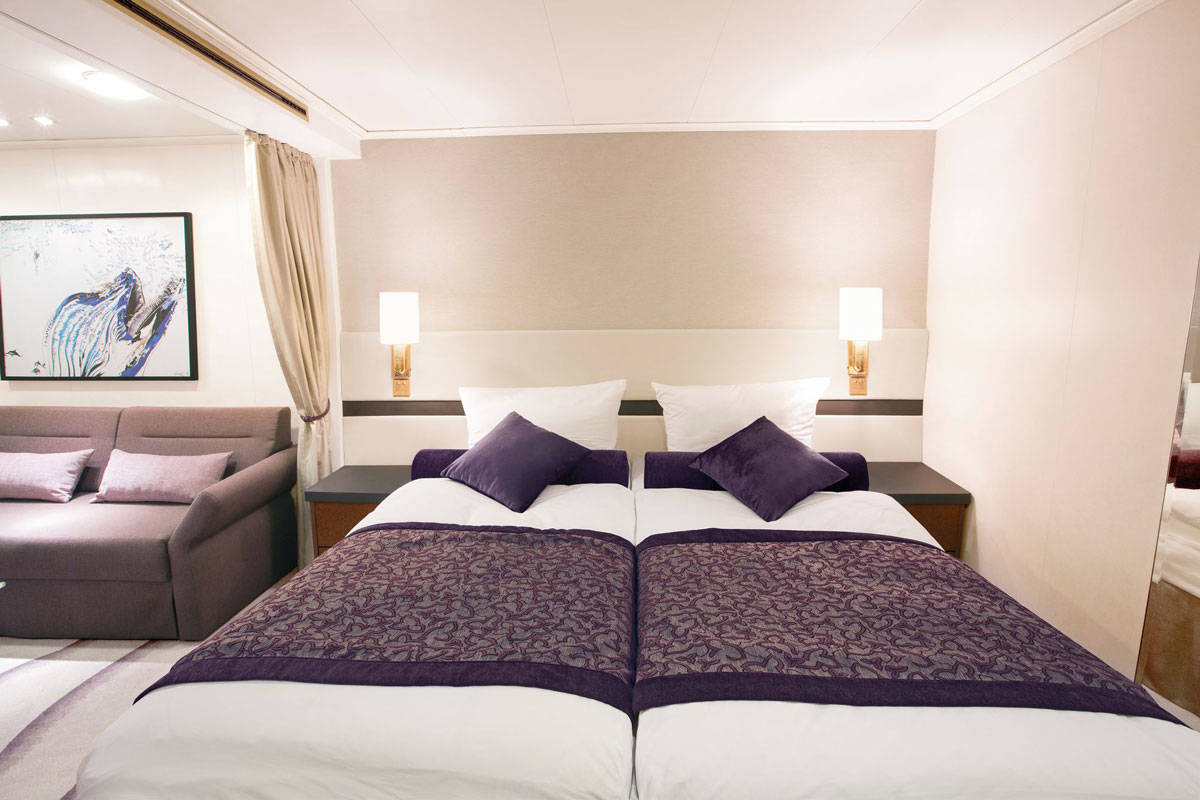
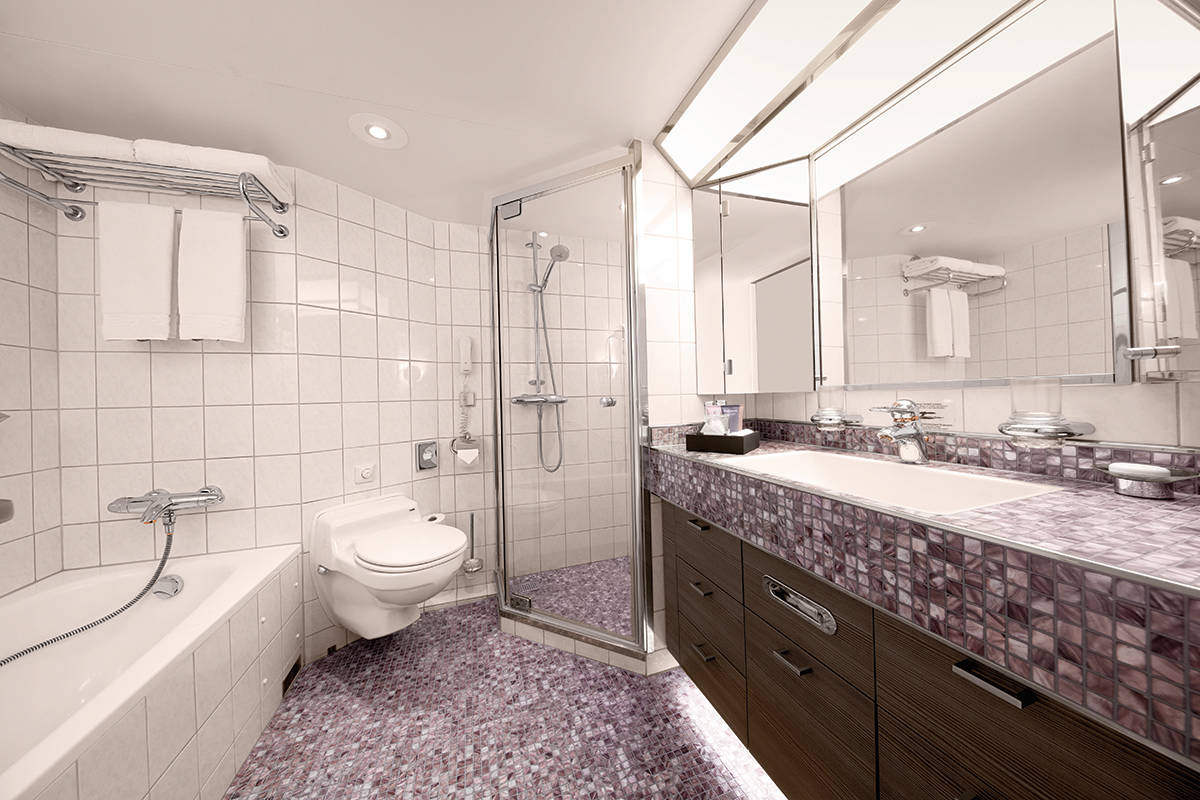
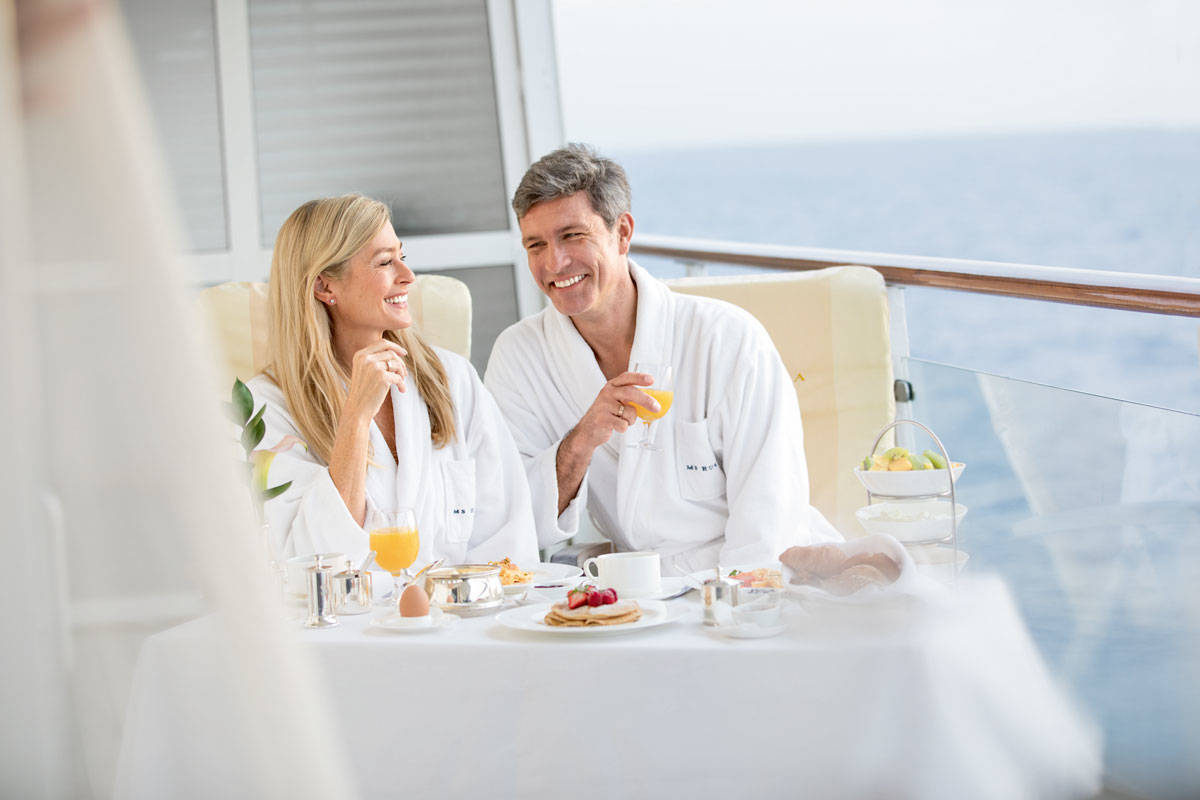
With their subtle colours, harmonious design and visually divided living and sleeping areas, the Veranda Suites fulfil your requirements for a cosy, private retreat. Additional connecting doors in some suites provide the option of making your family cruise even more comfortable.
Selected equipment features
- 27 m² (291 ft²) suite with a veranda (cat. 4-5)
- 24-hour suite service
- Visually divided living and sleeping area
- Walk-in wardrobe
- Bathroom with bathtub and separate shower
- Nespresso machine
- Free mini (water, juices, soft drinks and beer)
- Some suites can be booked with connecting doors or are equipped for use by disabled guests
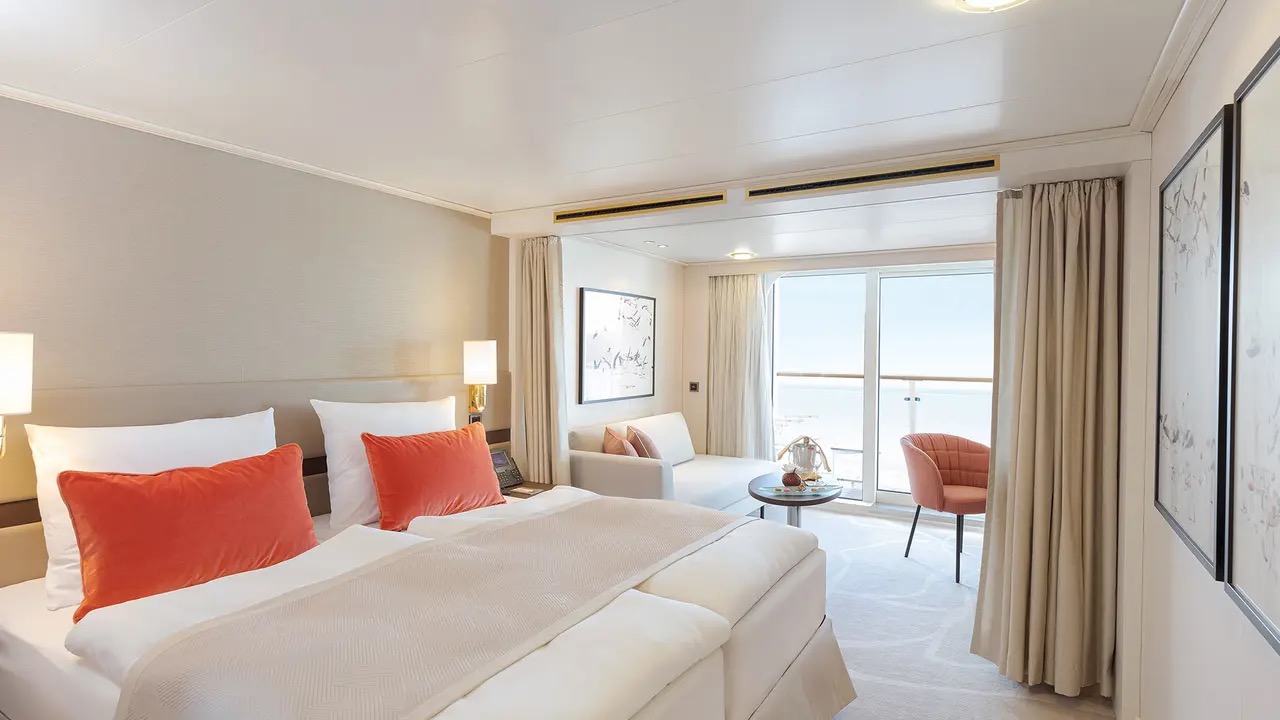
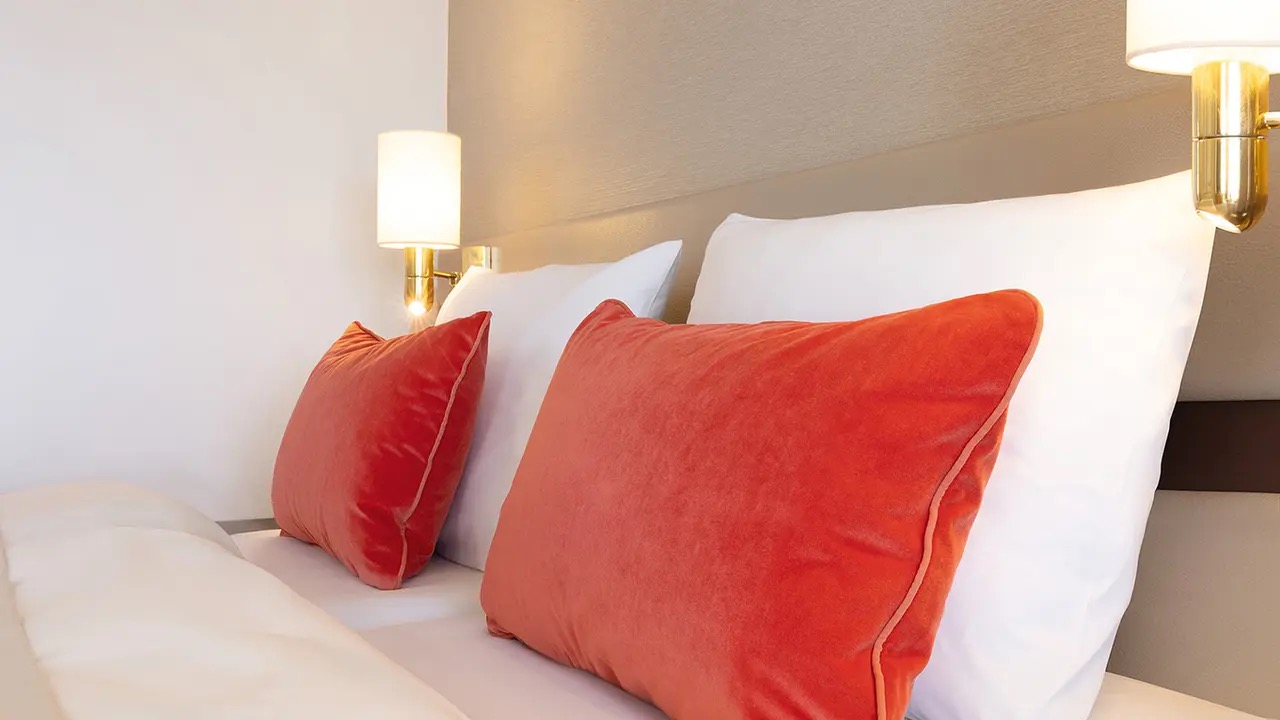
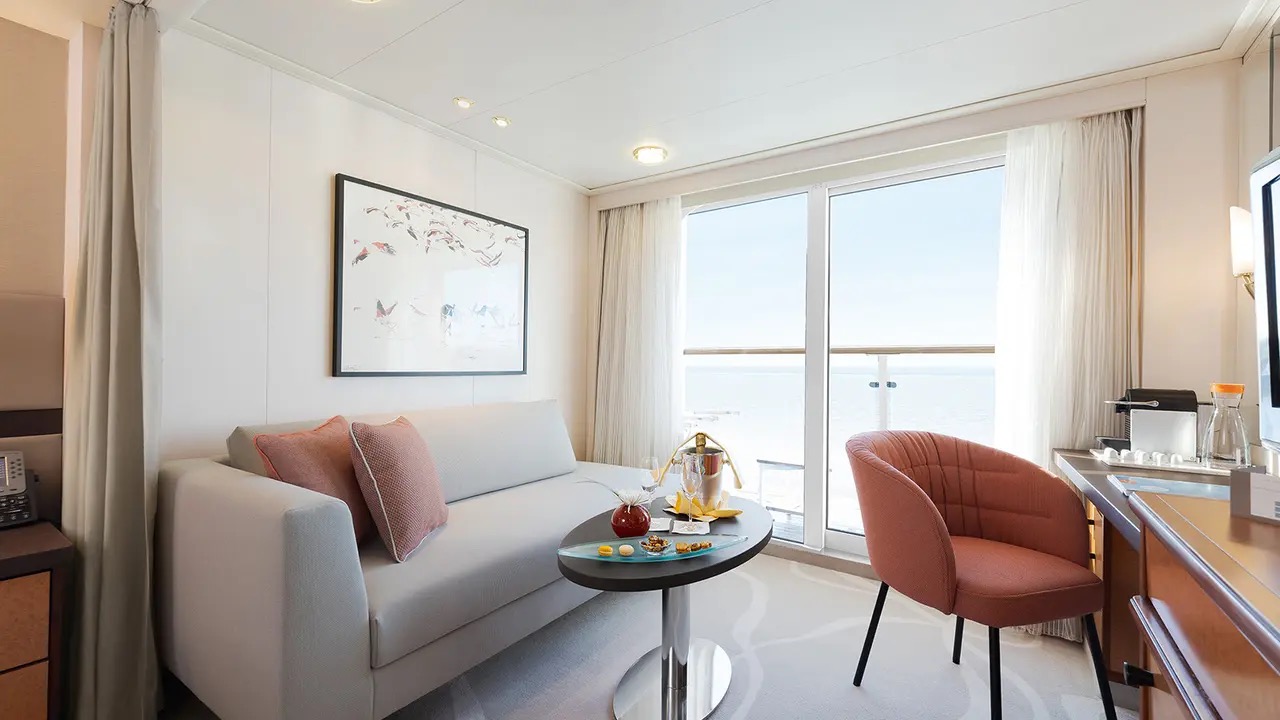
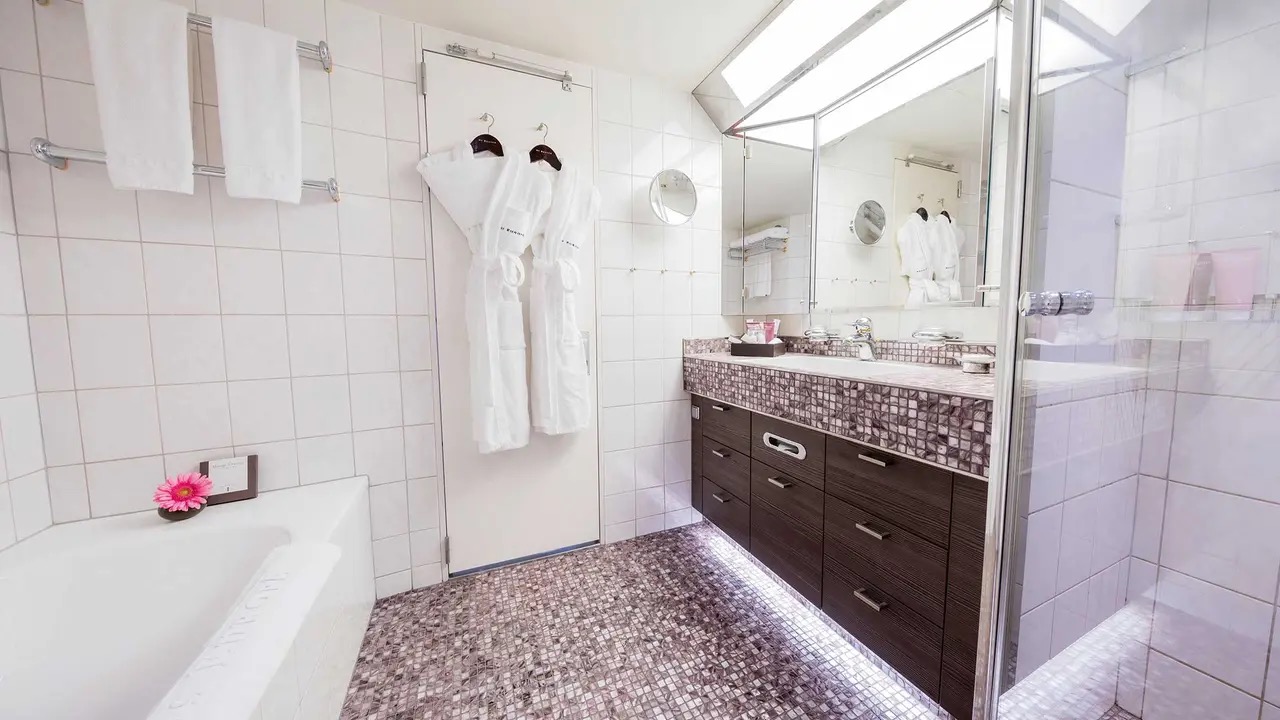
Your suite is a place where you can feel completely at home. An inspiring colour palette, cosy lighting and carefully selected interior decor combine to create a pleasant atmosphere of well-being. Featuring a panorama window with a view that changes every day.
Selected equipment features
- 27 m² (291 ft²) suite with a panorama window
- 24-hour suite service
- Visually divided living and sleeping area
- Walk-in wardrobe
- Bathroom with bathtub and seperate shower
- Nespresso machine
- Free mini bar (water, juices, soft drinks and beer)
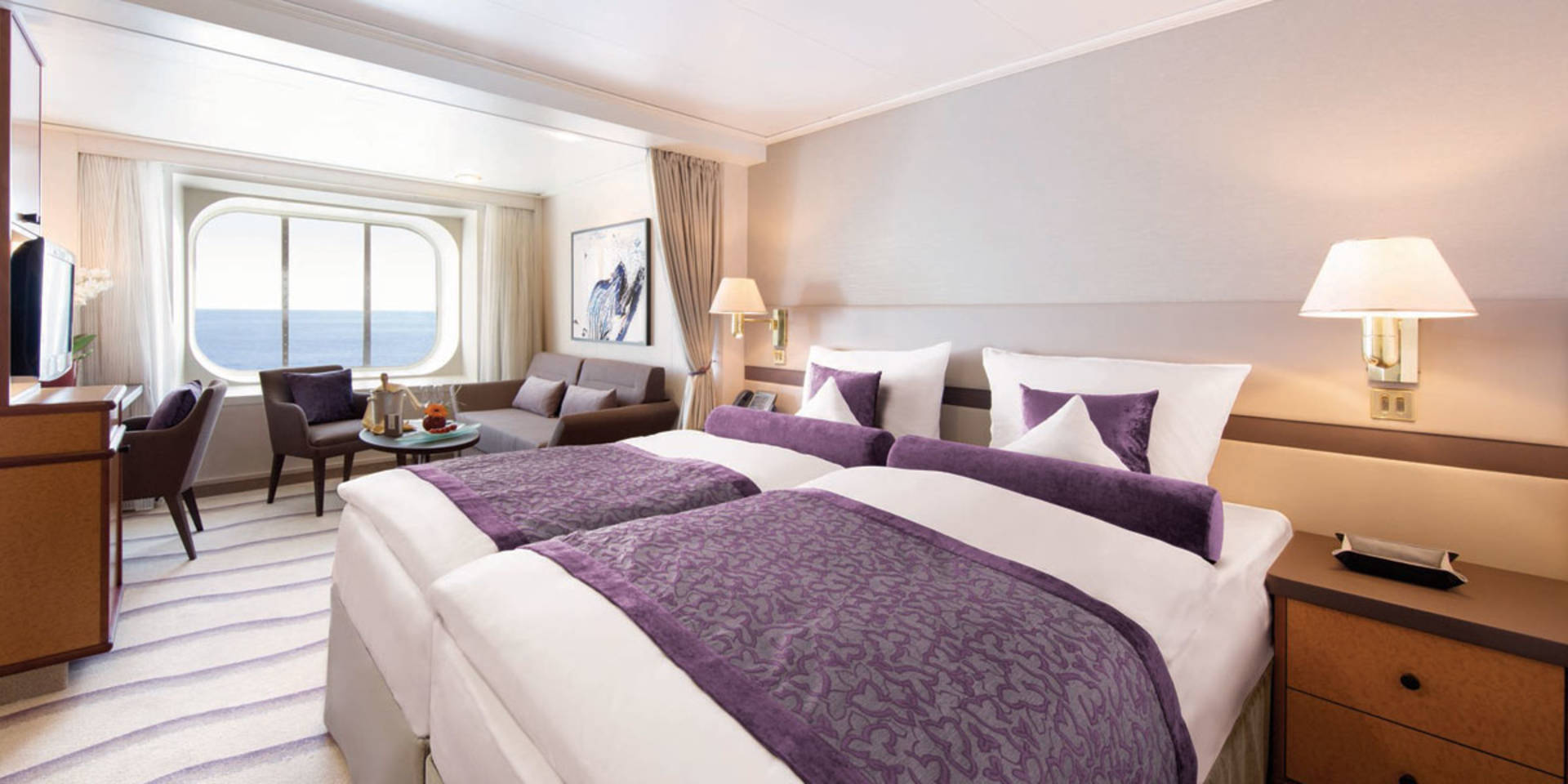
MS EUROPA
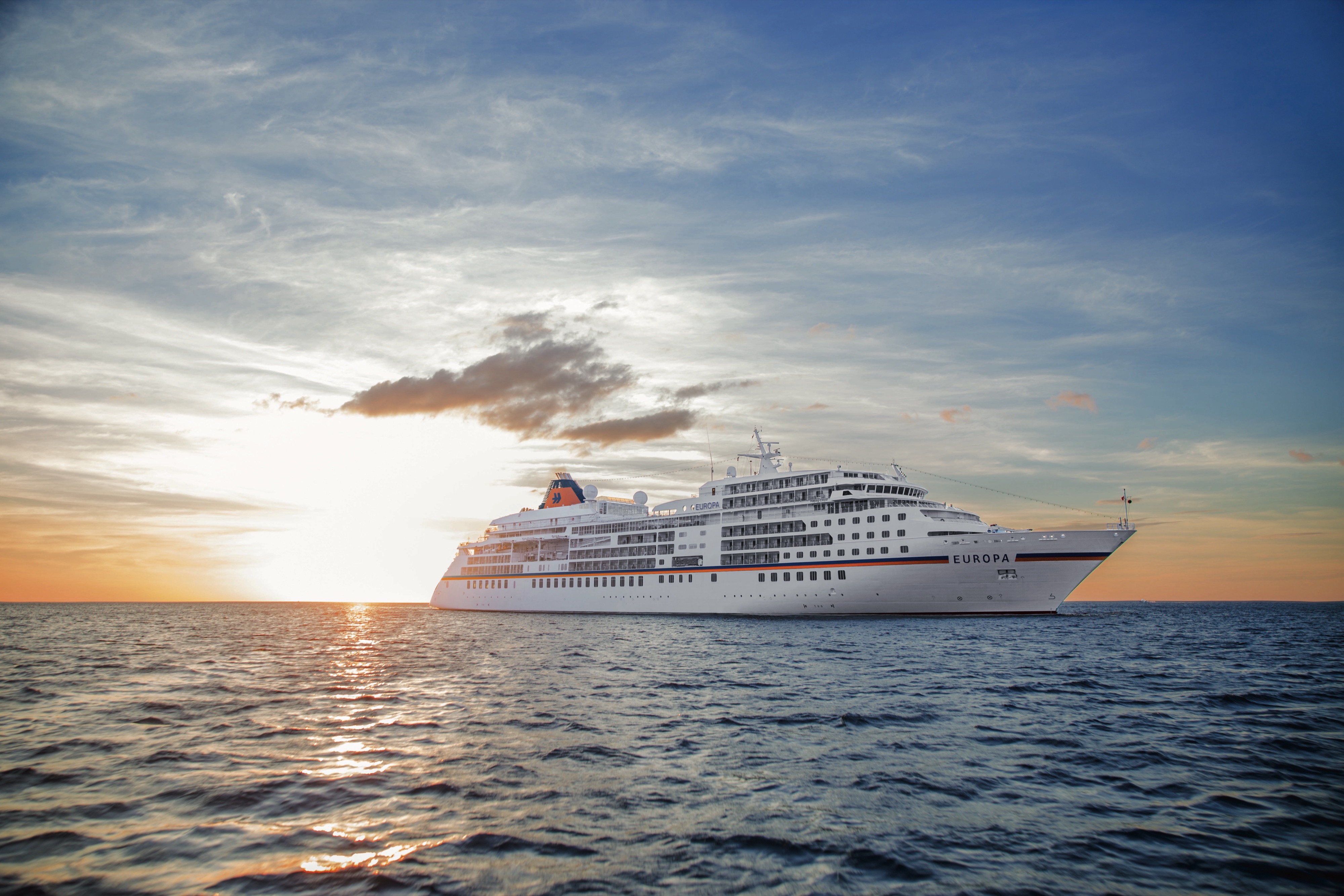
Welcome to a ship that sets the global benchmarks for luxury cruises. It may be smaller than other cruise ships, but the EUROPA is miles ahead of the crowd. Enjoy the unrivalled freedom for personal relaxation on a cruise with no more than 400 guests – with plenty of scope for fresh ideas, indulgence and inspiring perspectives.
However you define it, enjoy your own personal luxury throughout your time on the EUROPA. Come aboard and experience an exceptional cruise as you travel to the world’s most beautiful destinations.
Ship Facts
| Launch Year | 1999 | ||||
| Refit Year | 2013 | ||||
| Language | de+en | ||||
| Gross Tonnage | 28890 | ||||
| Length | 198 | ||||
| Width | 24 | ||||
| Currency | EUR | ||||
| Speed | 21 | ||||
| Capacity | 400 | ||||
| Crew Count | 285 | ||||
| Deck Count | 7 | ||||
| Cabin Count | 204 | ||||
| Large Cabin Count | N/A | ||||
| Wheelchair Cabin Count | 2 | ||||
| Electrical Plugs |
|
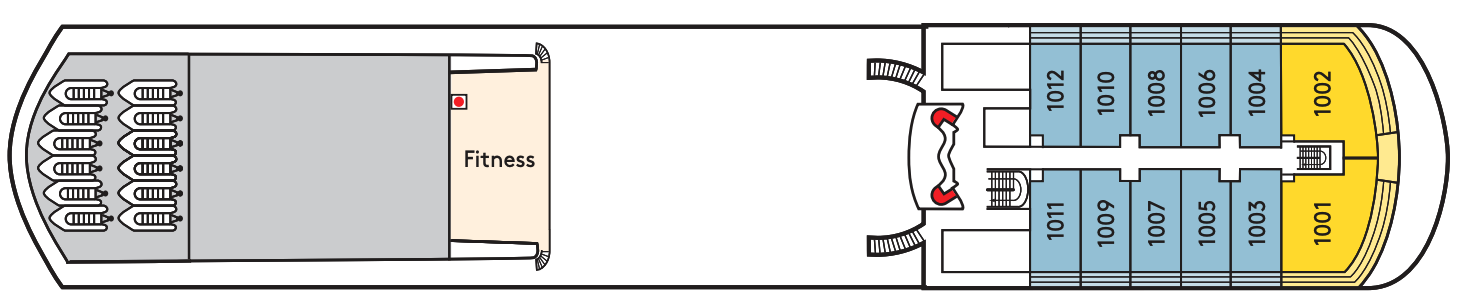
Penthouse Deck
- Fitness
- Penthouse Deluxe Suite Cat. 8
- Penthouse Grand Suite Cat.9
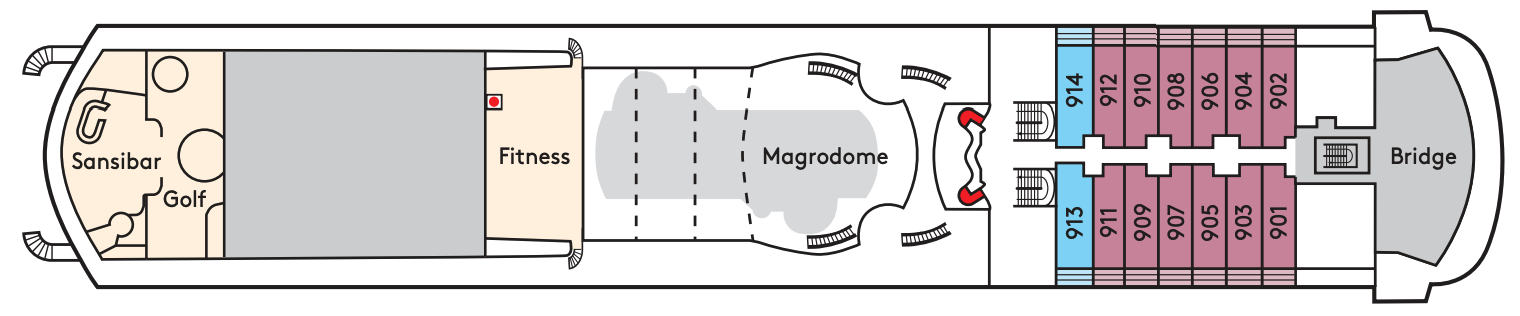
Bellevue Deck
- Bridge
- Magrodome
- Fitness Area
- Golf
- Sansibar
- Veranda Suite Cat. 6
- Veranda Suite Cat. 7
Lido Deck
- Lido Café
- Shuffleboard
- Whirlpool
- Lido Pool
- Pool Bar
- Library
- Atelier
- Club Belvedere

Sport Deck
- Pearls
- Play-room
- Creative room
- OCEAN SPA
- Hair-dresser
- SPA Suite Cat. 10
- Veranda Suite Cat. 5
- Veranda Suite Cat. 6
- Suite without veranda Cat. 3

Atlantik Deck
- Veranda Suite Cat. 5
- Suite without veranda Cat. 2
- Veranda Suite Cat. 6

Pazifik Deck
- Photo Shop
- Tendering Area
- Veranda Suite Cat. 4
- Veranda Suite Cat. 5
- Suite without veranda Cat. 1

Europa Deck
- Europa Restaurant
- Venezia
- The Globe
- Boutique and jeweller
- Studio
- Havana Bar
- Cruise sales
- Reception
- Atrium
- Tour office
- Gatsby's
- Europa Lounge
- Stage

Sophisticated indulgence up to the stars
Exclusive flavour experiences await you as a guest of the EUROPA. Our chefs, along with one of the top three-star chefs Kevin Fehling, will spoil you with refined, modern creations and timeless classics. Enjoy the special atmosphere in our five restaurants with a free choice of seats and a dress code ranging from casual to elegant according to how you feel.
Europa Restaurant
In the stylish atmosphere of our main restaurant, every experience is a pleasure. Our chefs de cuisine will delight you with gourmet dishes, which are often inspired by the region you are cruising in. There are now even more tables for two, allowing you a flexible choice of seating and some wonderful private moments.
Lido Café
Venezia
The small, fine Venezia is dedicated to Italian-Mediterranean cuisine. Allora: Pasta or freshly caught fish? Exquisite cheese selection or tempting dolci? Delicacies and Italian classics, brought together for you on one menu.
The Globe by Kevin Fehling
The Globe is the home of the three-star chef from Hamburg, Kevin Fehling. He has already delighted guests on board the EUROPA with his cuisine right at the start of his career. In his own gourmet restaurant on board the EUROPA he will be on board in person for selected cruises. His unconventional, modern creations are a real feast for the senses, with nuances of influence from many different latitudes. Take a seat and allow yourself to be pampered.
Top chef Kevin Fehling is head chef at ‘The Table’ in Hamburg and has been awarded 3 stars by the Michelin Guide. He is one of the stars of German Michelin-starred cuisine and brings his award-winning cuisine to the world's oceans with The Globe by Kevin Fehling.
Pearls
The gourmet restaurant on deck 7 is inspired by French seafood bars and makes caviar the star of the evening. Discover innovative dishes in the finest form, accompanied by modern flavours from all over the world. Another treat: the view from the outdoor terrace high above the sea.
Known for great moments
On every cruise, we welcome stars and all kinds of renowned artists on board. Enjoy some thrilling moments in the private setting of the EUROPA, with the finest classical music, groovy jazz and soul, danceable swing, as well as readings and theatrical pieces, first-rate comedy, and much more. As well as a varied entertainment programme, which changes every day, there are also exclusive events and shows, in which top chefs or circus acts delight the senses. Simply unforgettable.
Gatsby's
Gatsby's loves the bar culture of the Golden Twenties and first-class mixed drinks. Dancing is allowed and encouraged.
Sansibar
Sylt's famous bar is also very popular on the EUROPA. As the sun slowly sinks into the sea, a lively atmosphere spreads here until late into the night. Let our sommeliers inspire you and discover the largest selection of champagne at sea. Live music also awaits you on selected evenings.
Havana Bar
A refined and cosy club atmosphere awaits you in the Havana Bar. Take a seat, choose a first-class cigar from the well-stocked humidor and order a drink to go with it. A place to indulge.
Club Belvedere
The cosy Club Belvedere attracts guests with its panoramic view and an excellent selection of tea and coffee specialities, small macarons and delicious cakes. On selected evenings, you can enjoy exciting readings and other entertainment here.
Piano Bar
Start your evening with an aperitif, accompanied by some gentle melodies. The Piano Bar is also open in the daytime and is a great place for an afternoon coffee, reading the paper or enjoying some musical relaxation.
Pool Bar
We will treat you to light snacks and cold drinks at the pool bar. Enjoy fresh waffles in the afternoon as a delicious snack to see you through - served to your sunlounger on request.
Ocean Sun Festival
As part of the Ocean Sun Festival, the EUROPA is transformed into an exclusive concert hall at sea. Enjoy daily classical concerts on board - performed by excellent musicians with a repertoire spanning several centuries. Whether virtuoso soloists or renowned chamber ensembles - experience extraordinary concert experiences in the stylish, personalised setting of our small luxury ship.
A musical highlight also awaits you on land: an unforgettable concert evening in a special place - often far off the beaten track.
Classical Ballett
Lucia Lacarra & Matthew Golding
On board the EUROPA, you will experience classical ballet at the highest level - an exclusive offer that emphasises the ship's artistic standards and cultural diversity. Highlights include performances by ballet stars such as Lucía Lacarra and Matthew Golding.
Lucía Lacarra, one of the most important ballerinas of her generation, and Matthew Golding, an outstanding dancer, have not only made a name for themselves on international stages, but also bring their passion and expertise to the EUROPA. Their impressive skills and captivating presence offer guests on board an unforgettable experience.
Exclusive Concerts
Chamber music at the highest level is not only part of your cruise with the EUROPA during the Ocean Sun Festival - classical music in its finest form also awaits you on many other routes.
Experience excellent musicians in a personalised setting that allows you to get very close to the music and the artists. Whether duo, trio or ensemble - every performance is a cultural highlight at sea.
Singer-Songwriter