Island Dreams In The Mediterranean
Island Dreams In The Mediterranean
Cruise overview
WHY BOOK WITH US?
- ✔ The Deluxe Cruises’ team has extensive experience in ultra-luxury cruising.
- ✔ Call now to speak to our helpful and experienced Cruise Concierge team.
- ✔ Enjoy our Unique Deluxe Cruises Bonus for substantial savings.
- ✔ Our team will tailor your holiday to your exacting requirements.
- ✔ As agents, we work under the protection of each cruise lines ABTA / ATOL licences
About Piraeus
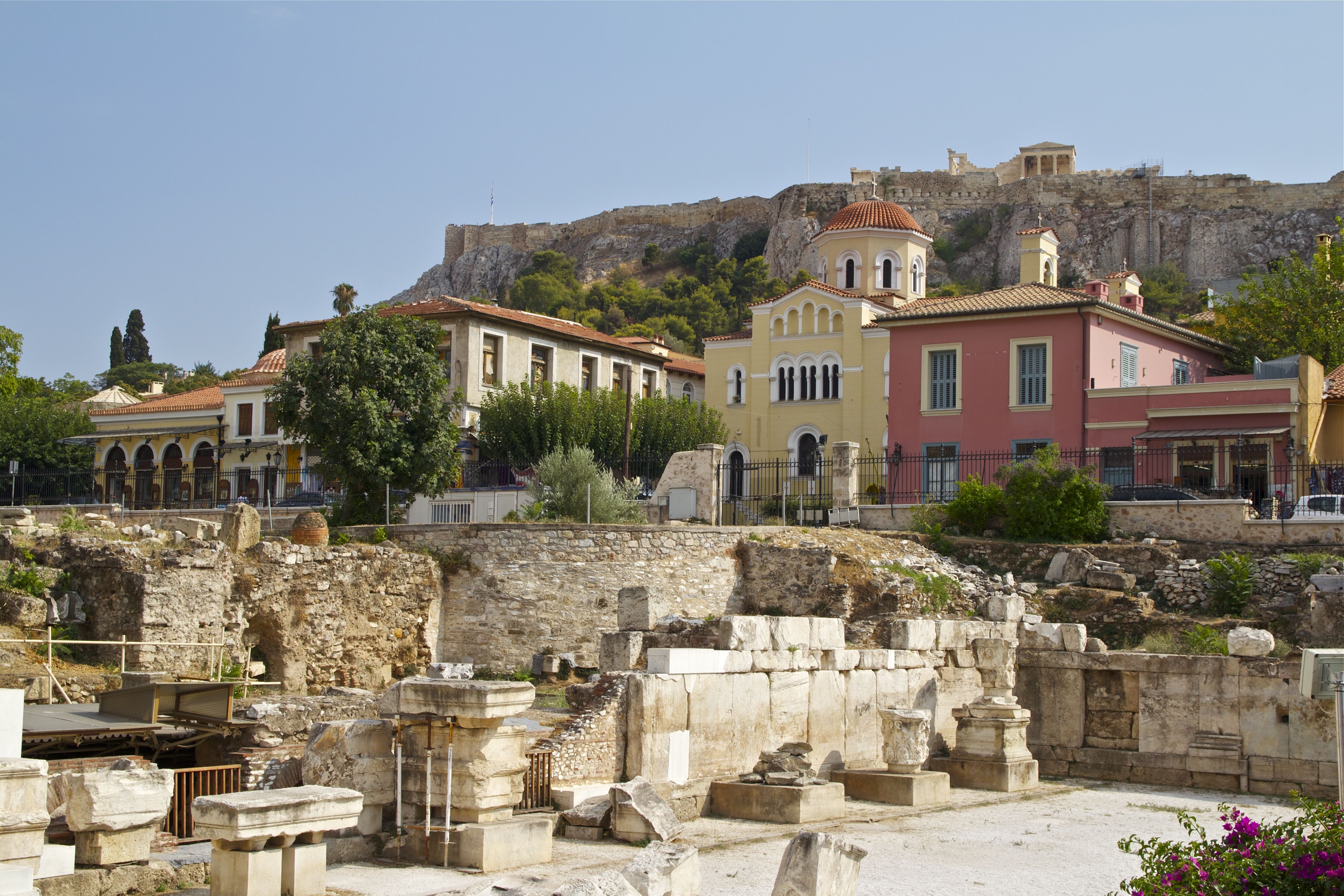
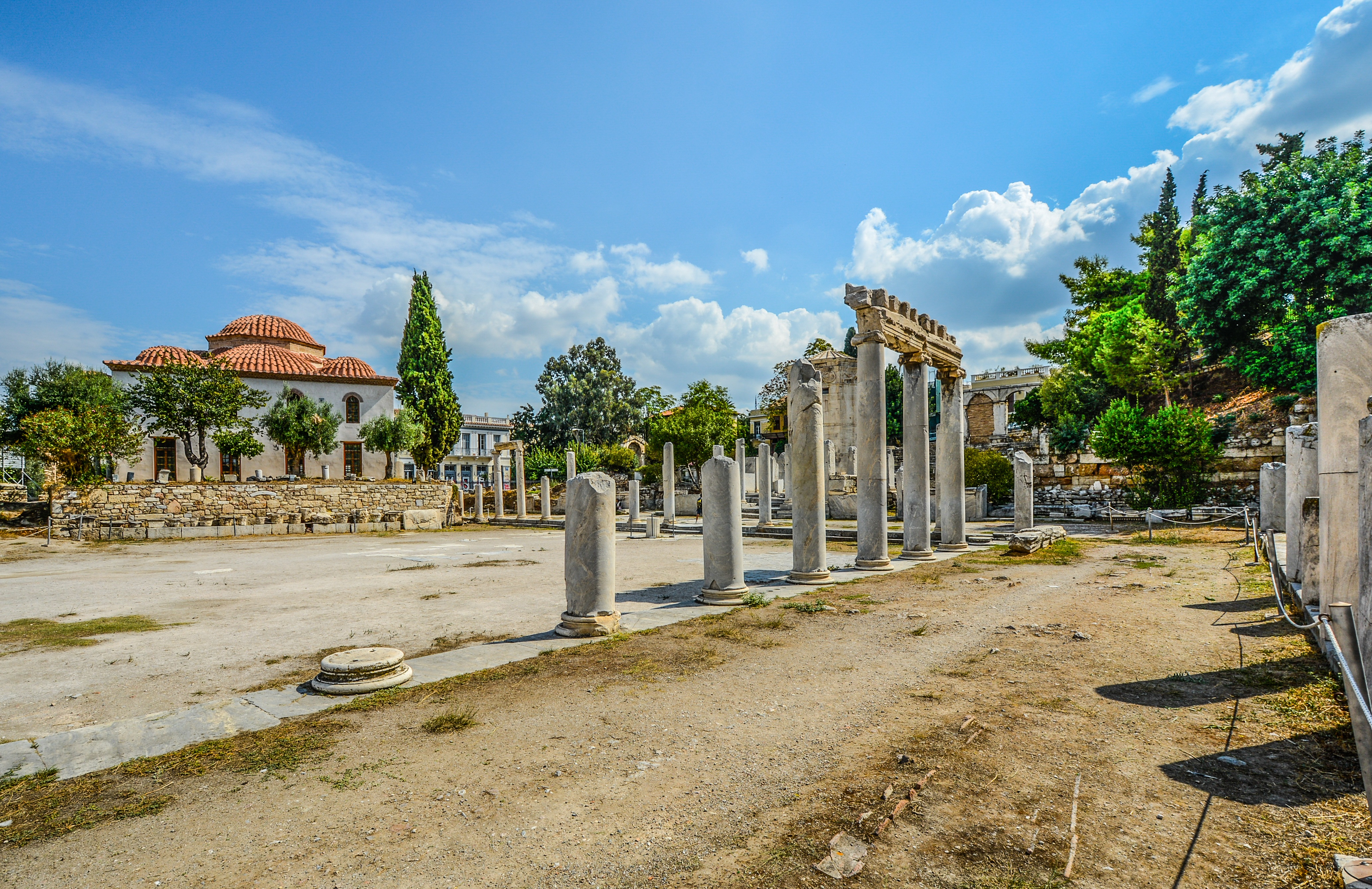
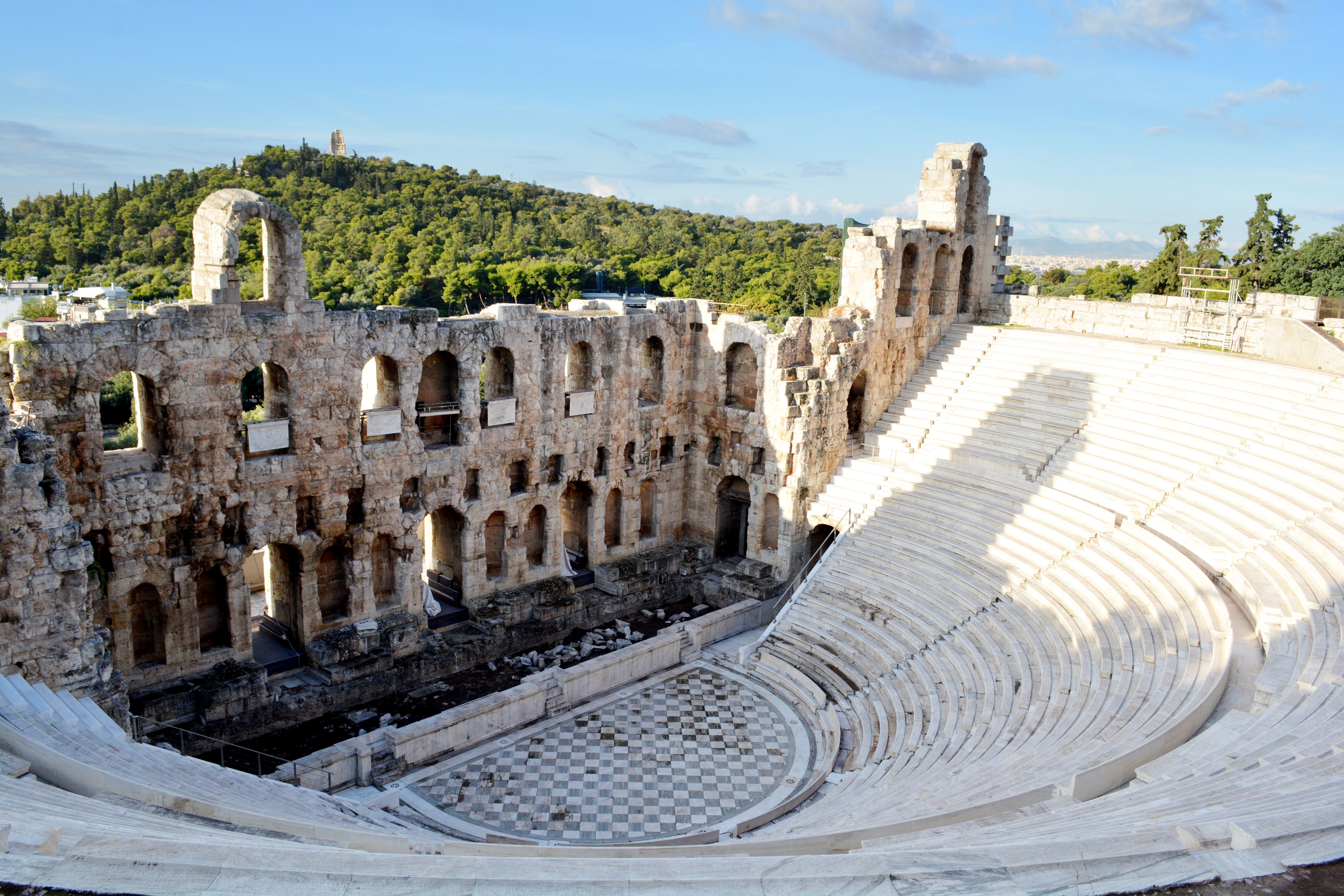
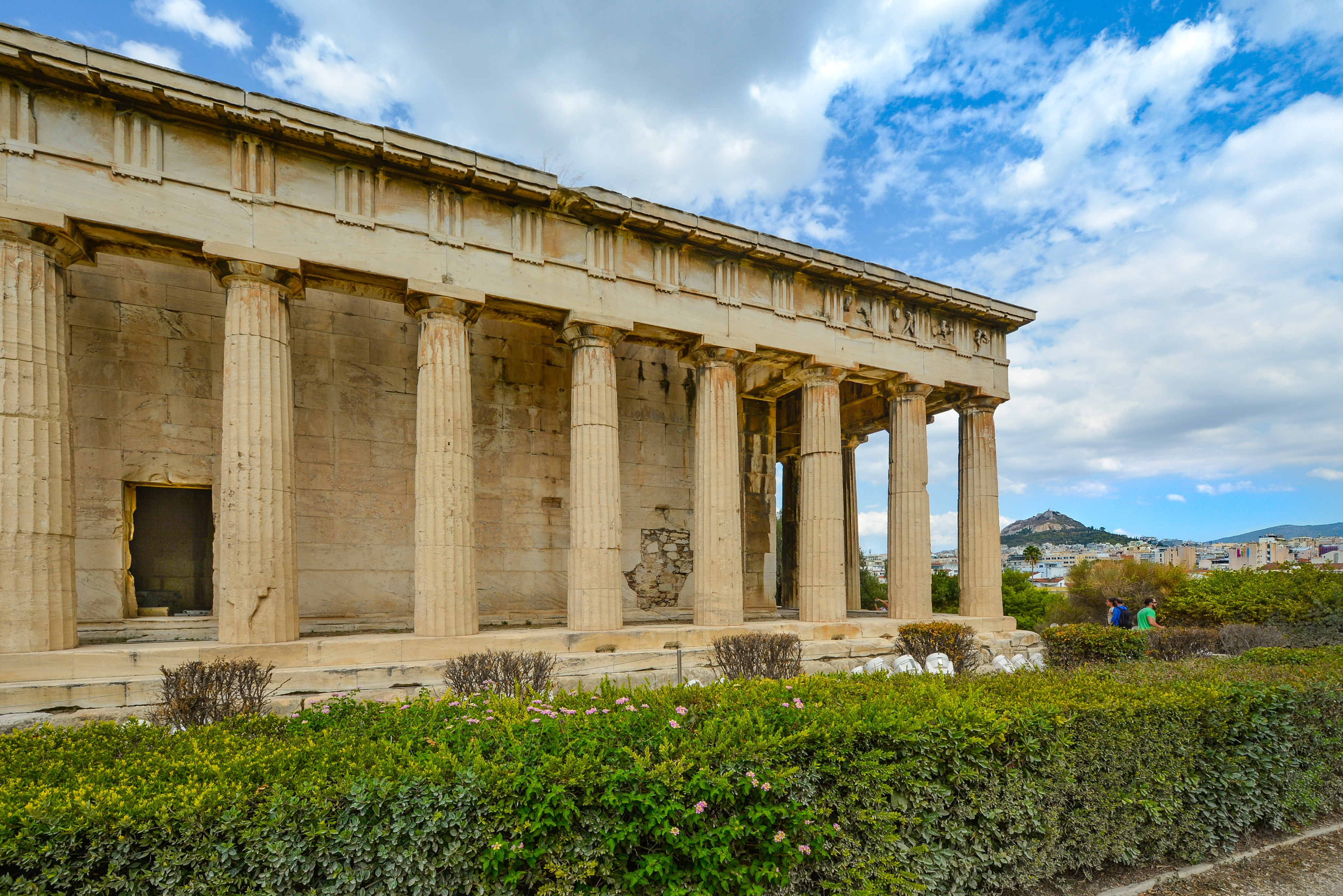
It's no wonder that all roads lead to the fascinating and maddening metropolis of Athens. Lift your eyes 200 feet above the city to the Parthenon, its honey-color marble columns rising from a massive limestone base, and you behold architectural perfection that has not been surpassed in 2,500 years. But, today, this shrine of classical form dominates a 21st-century boomtown. To experience Athens—Athína in Greek—fully is to understand the essence of Greece: ancient monuments surviving in a sea of cement, startling beauty amid the squalor, tradition juxtaposed with modernity. Locals depend on humor and flexibility to deal with the chaos; you should do the same. The rewards are immense. Although Athens covers a huge area, the major landmarks of the ancient Greek, Roman, and Byzantine periods are close to the modern city center. You can easily walk from the Acropolis to many other key sites, taking time to browse in shops and relax in cafés and tavernas along the way. From many quarters of the city you can glimpse "the glory that was Greece" in the form of the Acropolis looming above the horizon, but only by actually climbing that rocky precipice can you feel the impact of the ancient settlement. The Acropolis and Filopappou, two craggy hills sitting side by side; the ancient Agora (marketplace); and Kerameikos, the first cemetery, form the core of ancient and Roman Athens. Along the Unification of Archaeological Sites promenade, you can follow stone-paved, tree-lined walkways from site to site, undisturbed by traffic. Cars have also been banned or reduced in other streets in the historical center. In the National Archaeological Museum, vast numbers of artifacts illustrate the many millennia of Greek civilization; smaller museums such as the Goulandris Museum of Cycladic Art Museum and the Byzantine and Christian Museum illuminate the history of particular regions or periods. Athens may seem like one huge city, but it is really a conglomeration of neighborhoods with distinctive characters. The Eastern influences that prevailed during the 400-year rule of the Ottoman Empire are still evident in Monastiraki, the bazaar area near the foot of the Acropolis. On the northern slope of the Acropolis, stroll through Plaka (if possible by moonlight), an area of tranquil streets lined with renovated mansions, to get the flavor of the 19th-century's gracious lifestyle. The narrow lanes of Anafiotika, a section of Plaka, thread past tiny churches and small, color-washed houses with wooden upper stories, recalling a Cycladic island village. In this maze of winding streets, vestiges of the older city are everywhere: crumbling stairways lined with festive tavernas; dank cellars filled with wine vats; occasionally a court or diminutive garden, enclosed within high walls and filled with magnolia trees and the flaming trumpet-shaped flowers of hibiscus bushes. Formerly run-down old quarters, such as Thission, Gazi and Psirri, popular nightlife areas filled with bars and mezedopoleia (similar to tapas bars), are now in the process of gentrification, although they still retain much of their original charm, as does the colorful produce and meat market on Athinas. The area around Syntagma Square, the tourist hub, and Omonia Square, the commercial heart of the city about 1 km (½ mi) northwest, is distinctly European, having been designed by the court architects of King Otho, a Bavarian, in the 19th century. The chic shops and bistros of ritzy Kolonaki nestle at the foot of Mt. Lycabettus, Athens's highest hill (909 feet). Each of Athens's outlying suburbs has a distinctive character: in the north is wealthy, tree-lined Kifissia, once a summer resort for aristocratic Athenians, and in the south and southeast lie Glyfada, Voula, and Vouliagmeni, with their sandy beaches, seaside bars, and lively summer nightlife. Just beyond the city's southern fringes is Piraeus, a bustling port city of waterside fish tavernas and Saronic Gulf views.

About Hydra
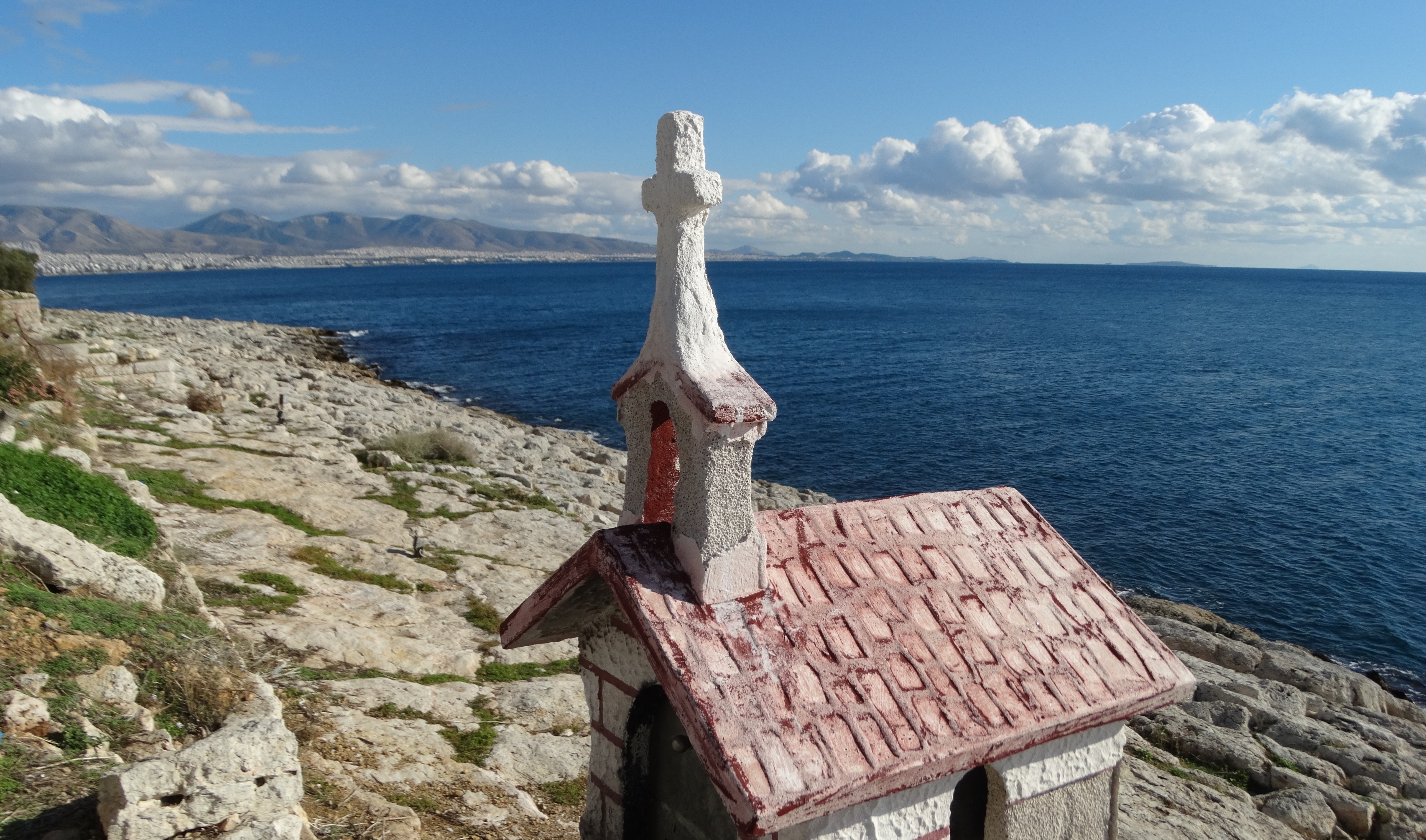
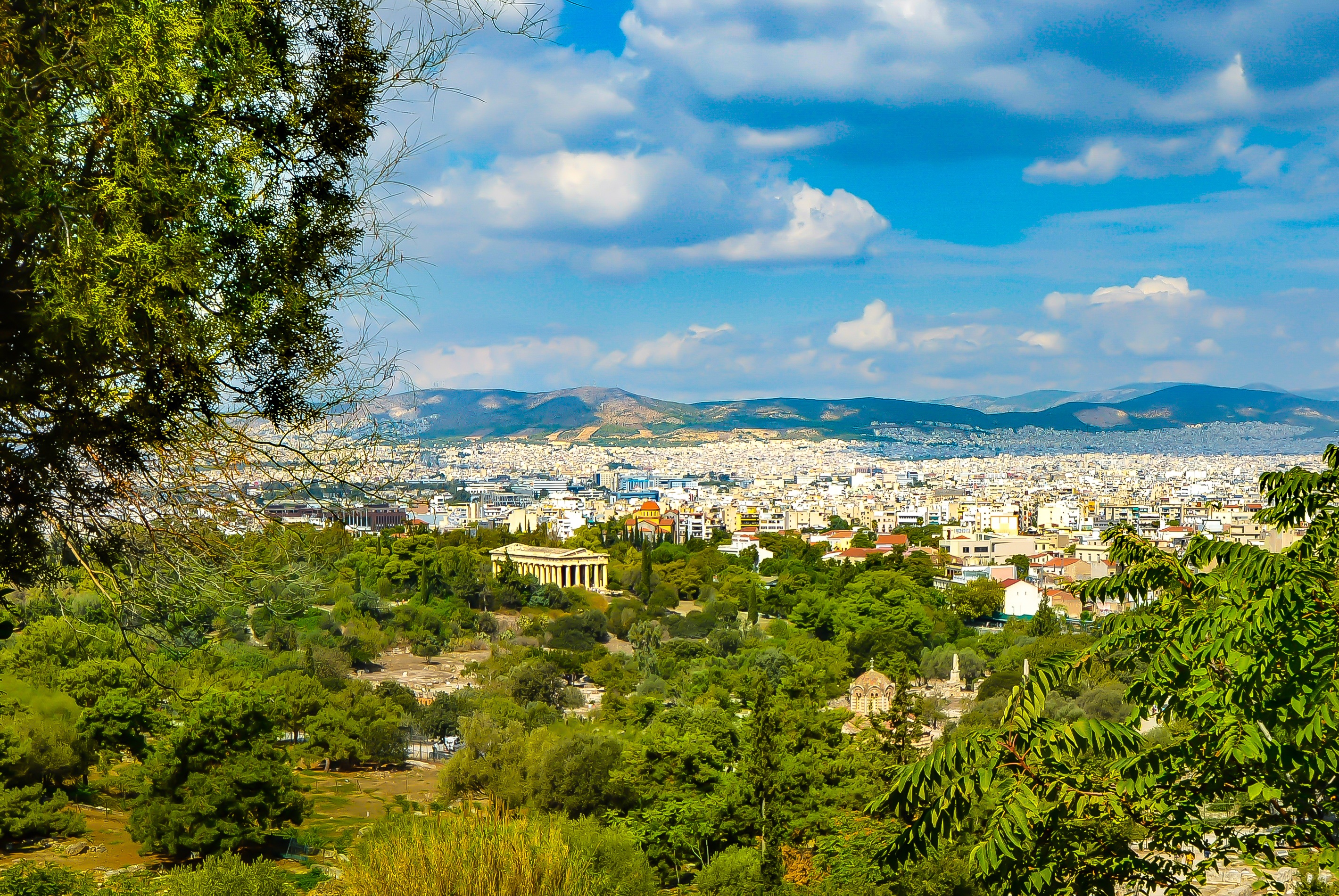
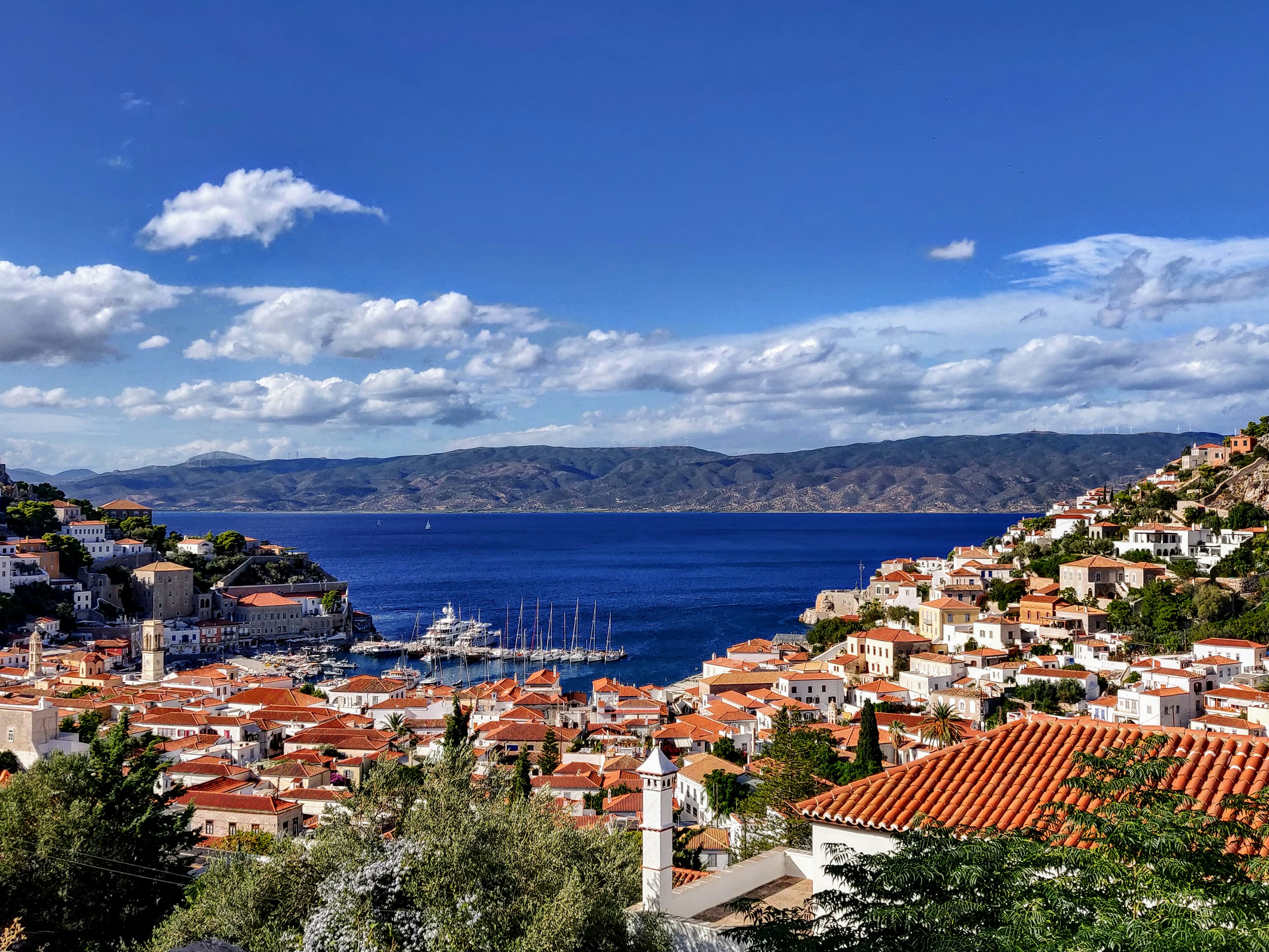
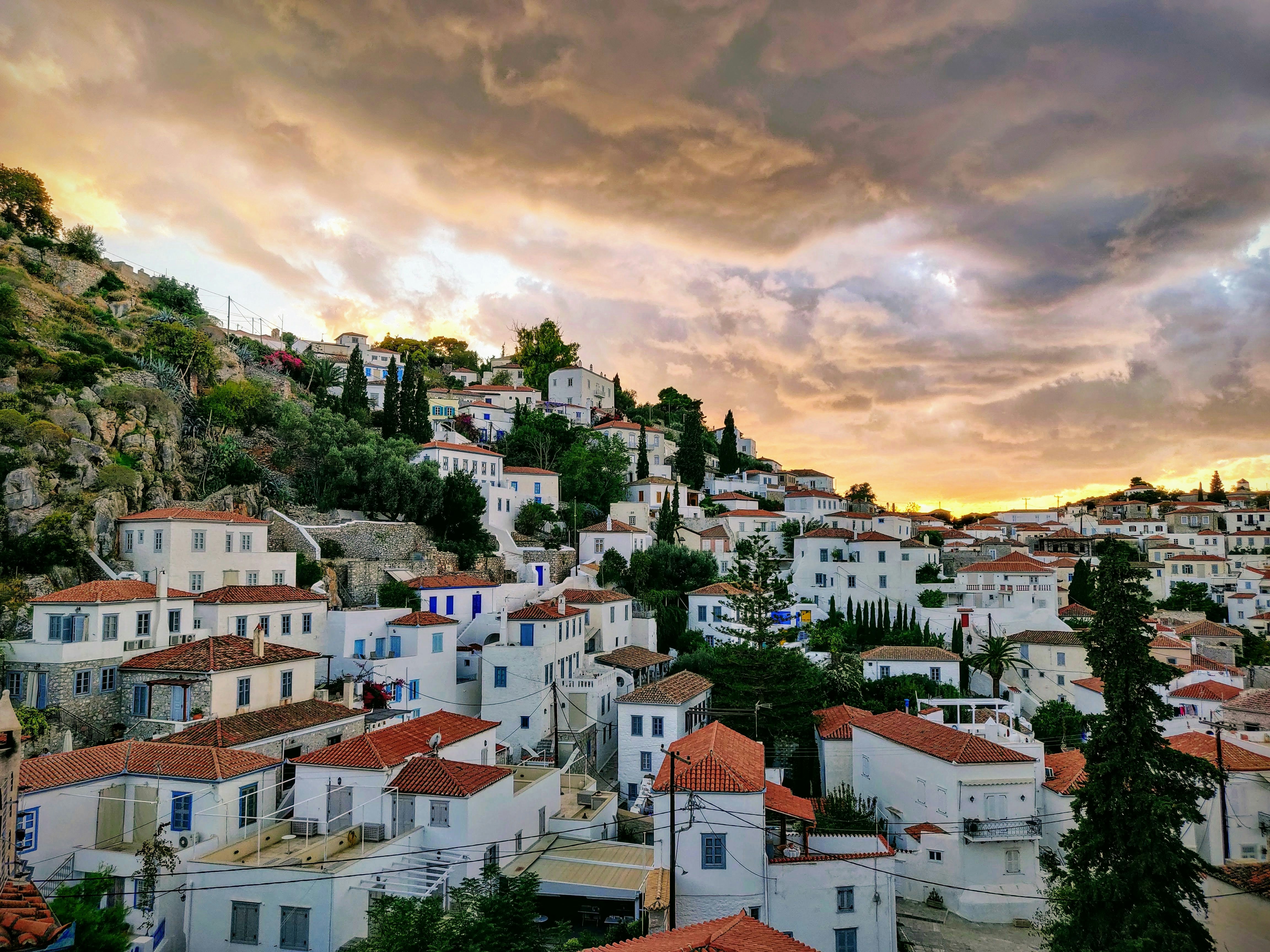
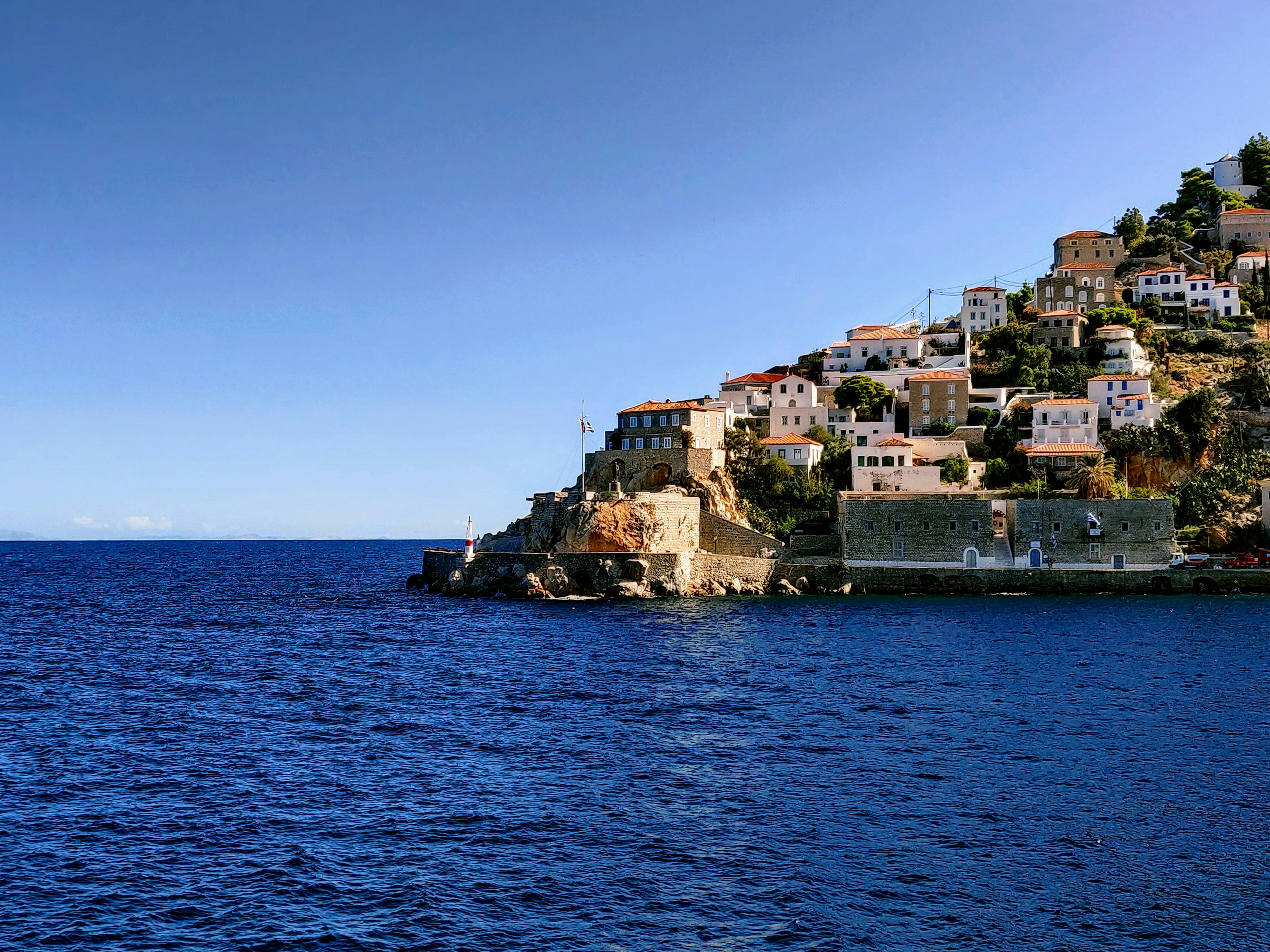
Rising from the turquoise expanse of the sunny Mediterranean, Hydra is the counterpoint of choice for Athenians - who can swap the city chaos for blissful relaxation with an hour’s boat journey. Known for its inspiring celebrity appeal - Leonard Cohen bought a house here in the 60s - Hydra is a pretty island of rising streets, whitewash mansions, and carefree clamour. Located a stone's throw from the Greek mainland, the authorities have resisted the temptation to cash in, meaning Hydra remains an endearing time-warp, which revels in life in the slow lane. With cars and new building developments banned – discover an island of donkeys plodding cobbled streets, and fishing boats undulating gently on the harbour’s waves.

About Khania
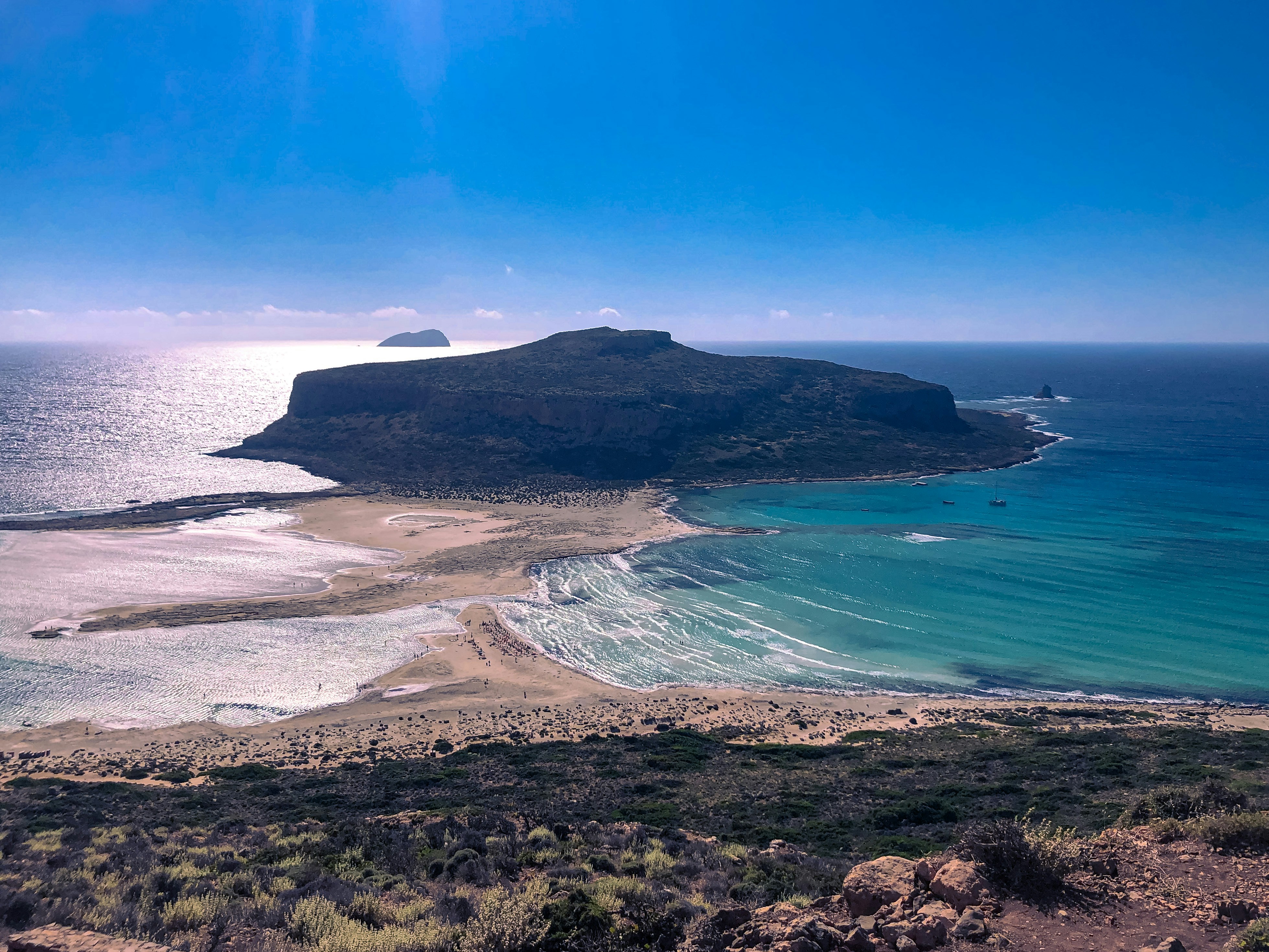
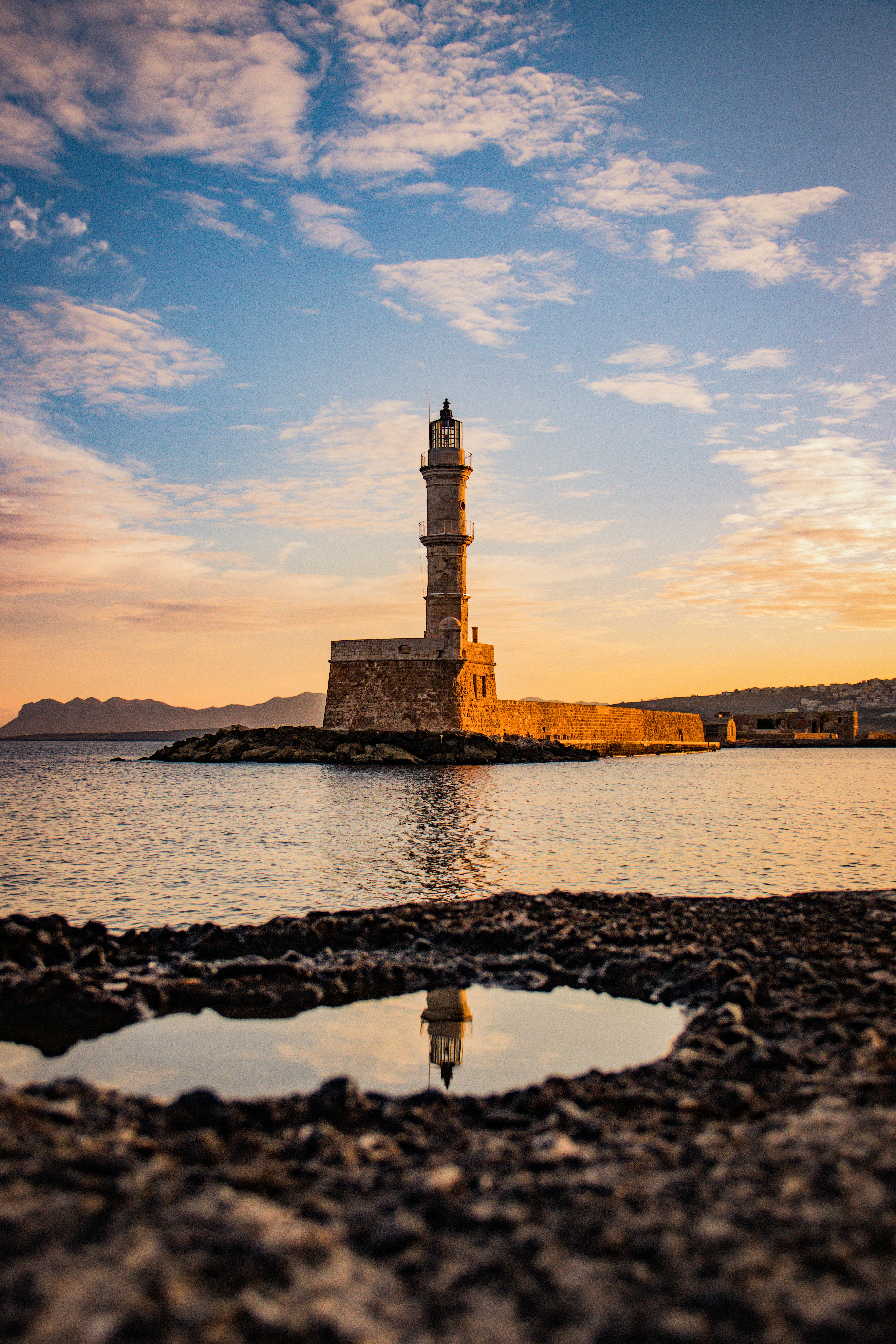
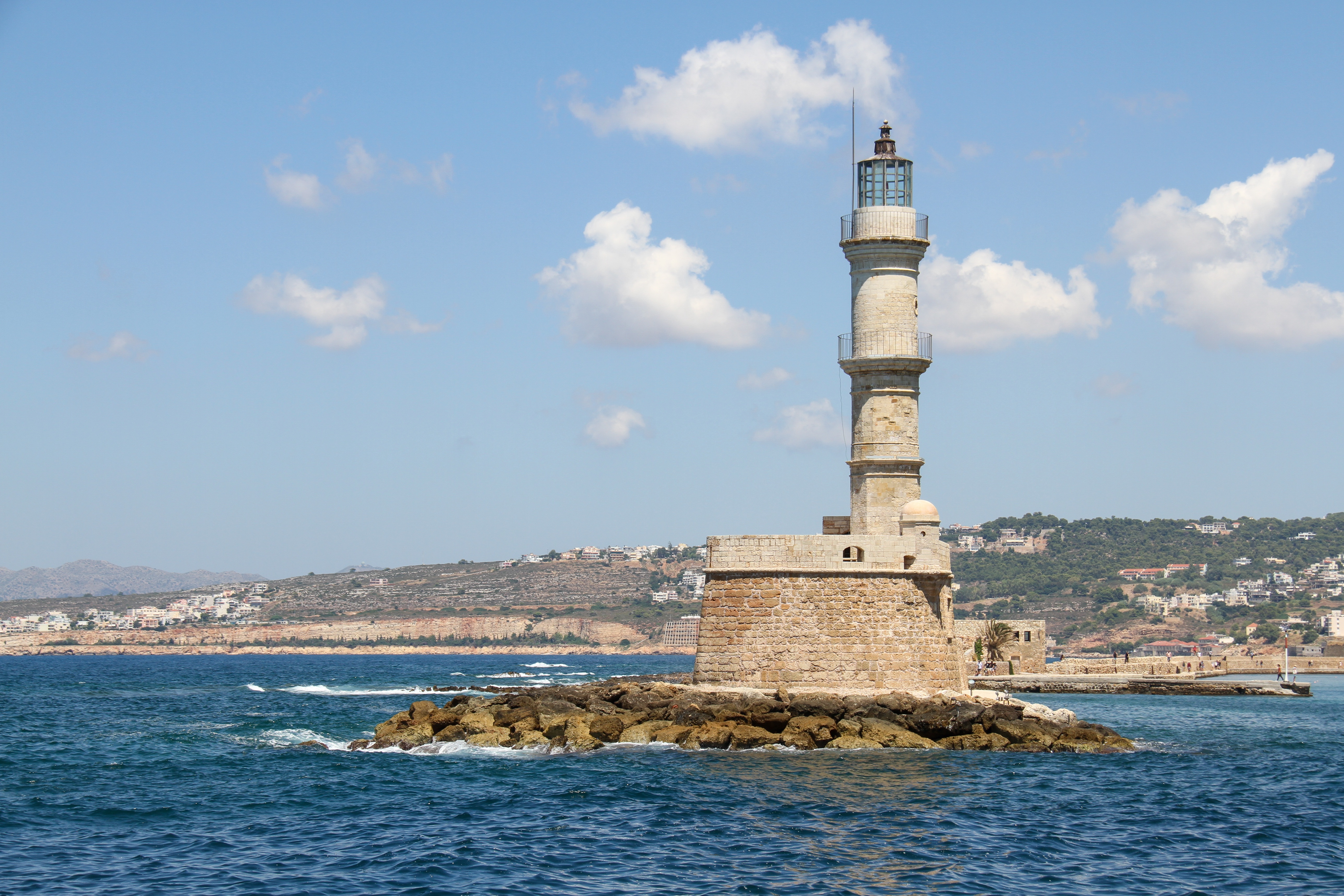
The second-largest city in Crete and capital of the Homonym Prefecture, Chania is located in Minoan Kidonia at the end of the Homonym Gulf between the Akrotiri and Onicha peninsulas. Chania City is divided into two parts; the Old Town, which is comprised of several connected districts built around the old Venetian Harbour, and New Town, a larger, more modern city whose centre is situated next to, and south of, the Old Town. The Old Town is home to Venetian buildings and Turkish elements that combine to create a unique architectural style, and is considered to be the most beautiful urban district on Crete. It was once surrounded by old Venetian fortifications that separated it from the New Town; however, only the eastern and western parts remain today. Due to its compact size, Skiathos can be easily explored in just a single day.
About Siracuse, Sicily
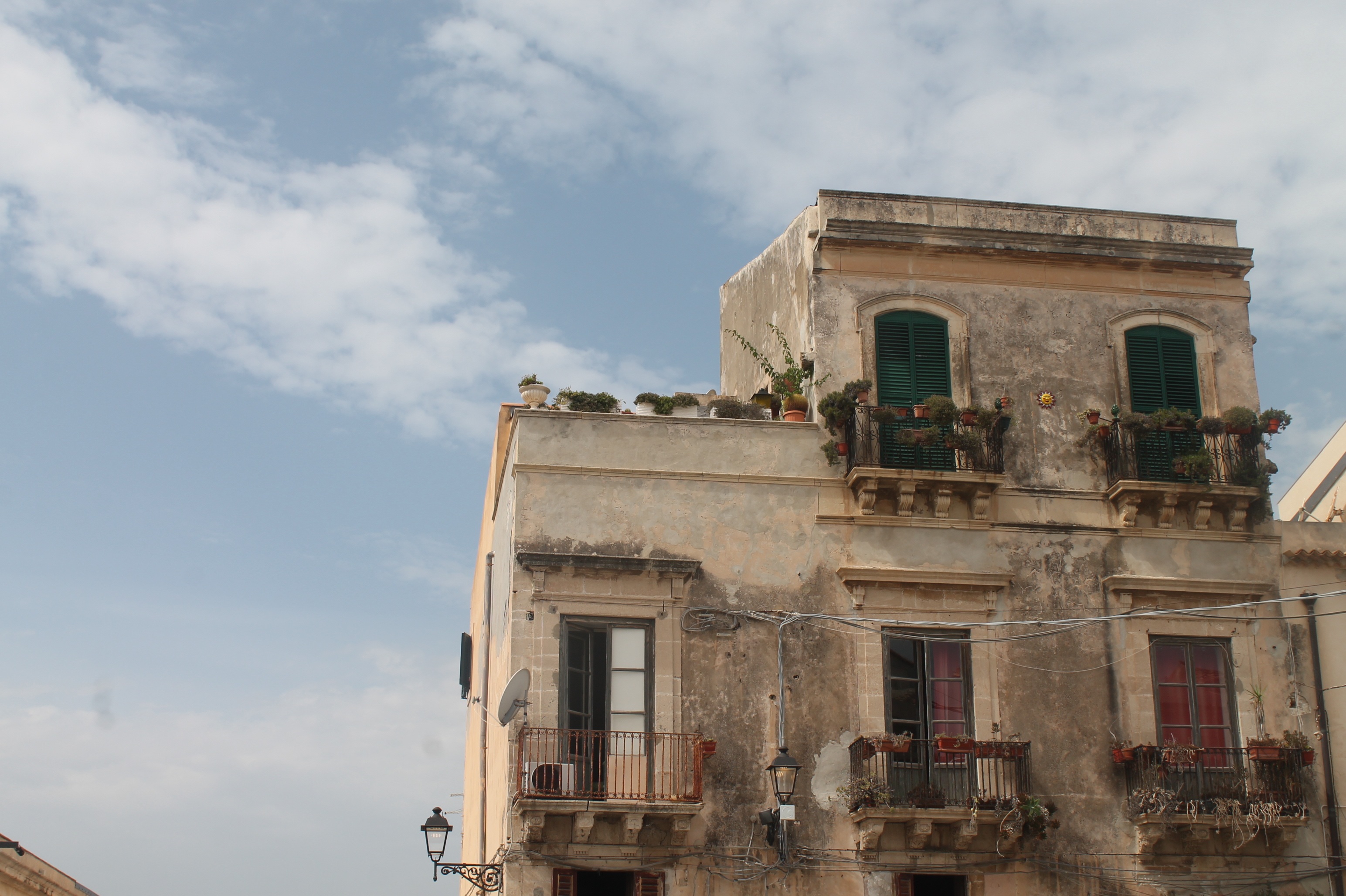
Siracusa, known to English speakers as Syracuse, is a wonder to behold. One of the great ancient capitals of Western civilization, the city was founded in 734 BC by Greek colonists from Corinth and soon grew to rival, and even surpass, Athens in splendor and power. It became the largest, wealthiest city-state in the West and a bulwark of Greek civilization. Although Siracusa lived under tyranny, rulers such as Dionysius filled their courts with Greeks of the highest cultural stature—among them the playwrights Aeschylus and Euripides, and the philosopher Plato. The Athenians, who didn't welcome Siracusa's rise, set out to conquer Sicily, but the natives outsmarted them in what was one of the greatest military campaigns in ancient history (413 BC). The city continued to prosper until it was conquered two centuries later by the Romans.Present-day Siracusa still has some of the finest examples of Baroque art and architecture; dramatic Greek and Roman ruins; and a Duomo that's the stuff of legend—a microcosm of the city's entire history in one building. The modern city also has a wonderful, lively, Baroque old town worthy of extensive exploration, as well as pleasant piazzas, outdoor cafés and bars, and a wide assortment of excellent seafood. There are essentially two areas to explore in Siracusa: the Parco Archeologico (Archaeological Zone), on the mainland; and the island of Ortygia, the ancient city first inhabited by the Greeks, which juts out into the Ionian Sea and is connected to the mainland by two small bridges. Ortygia is becoming increasingly popular with tourists, and is starting to lose its old-fashioned charm in favor of modern boutiques.Siracusa's old nucleus of Ortygia, a compact area, is a pleasure to amble around without getting unduly tired. In contrast, mainland Siracusa is a grid of wider avenues. At the northern end of Corso Gelone, above Viale Paolo Orsi, the orderly grid gives way to the ancient quarter of Neapolis, where the sprawling Parco Archeologico is accessible from Viale Teracati (an extension of Corso Gelone). East of Viale Teracati, about a 10-minute walk from the Parco Archeologico, the district of Tyche holds the archaeological museum and the church and catacombs of San Giovanni, both off Viale Teocrito (drive or take a taxi or city bus from Ortygia). Coming from the train station, it's a 15-minute trudge to Ortygia along Via Francesco Crispi and Corso Umberto. If you're not up for that, take one of the free electric buses leaving every 10 minutes from the bus station around the corner.
About Trapani, Sicily
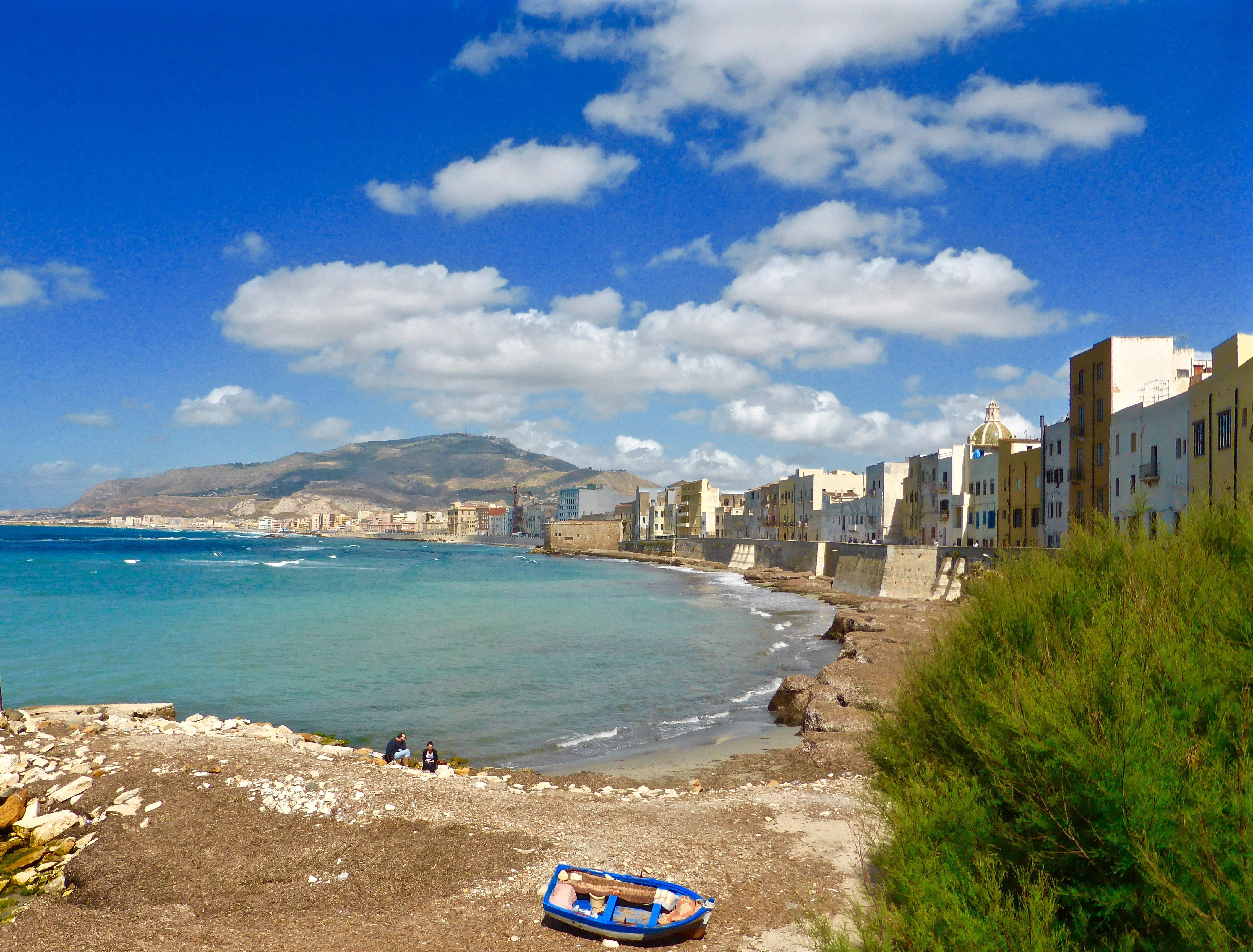
Trapani, the most important town on Sicily’s west coast, lies below the headland of Mount Erice and offers stunning views of the Egadi Islands on a clear day. Trapani’s Old District occupies a scimitarshaped promontory between the open sea on the north and the salt marshes to the south. The ancient industry of extracting salt from the marshes has recently been revived, and it is documented in the Museo delle Saline. In addition to the salt marshes,Trapani’s other interesting environs include the beautiful little hill town of Erice, the promontory of Capo San Vito stretching north beyond the splendid headland of Monte Cofano, the lovely island of Motya and the town of Marsala. Trips farther afield will take you to the magnificent site of Segesta or the Egadi Islands, reached by boat or hydrofoil from Trapani Port.
About Amalfi
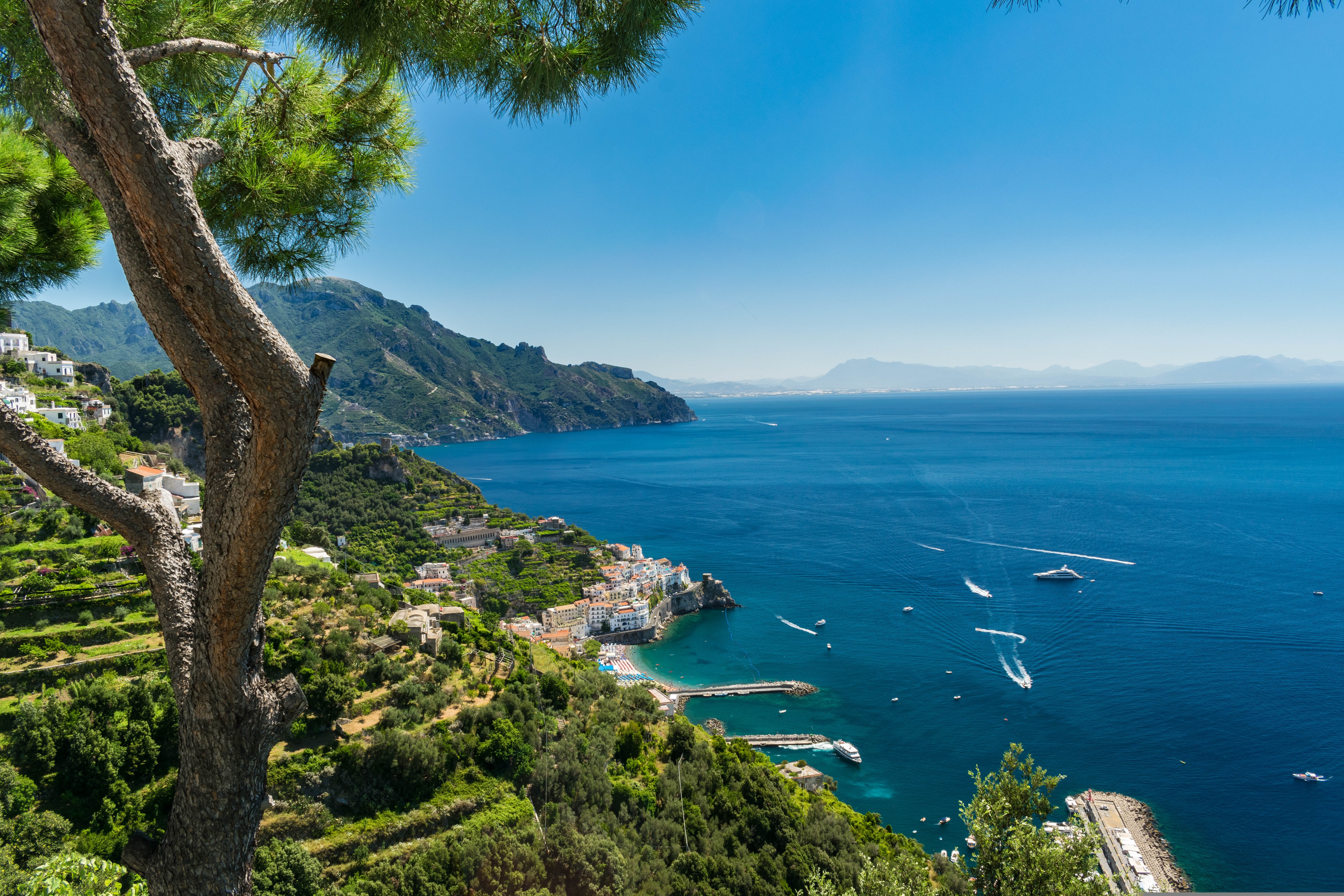
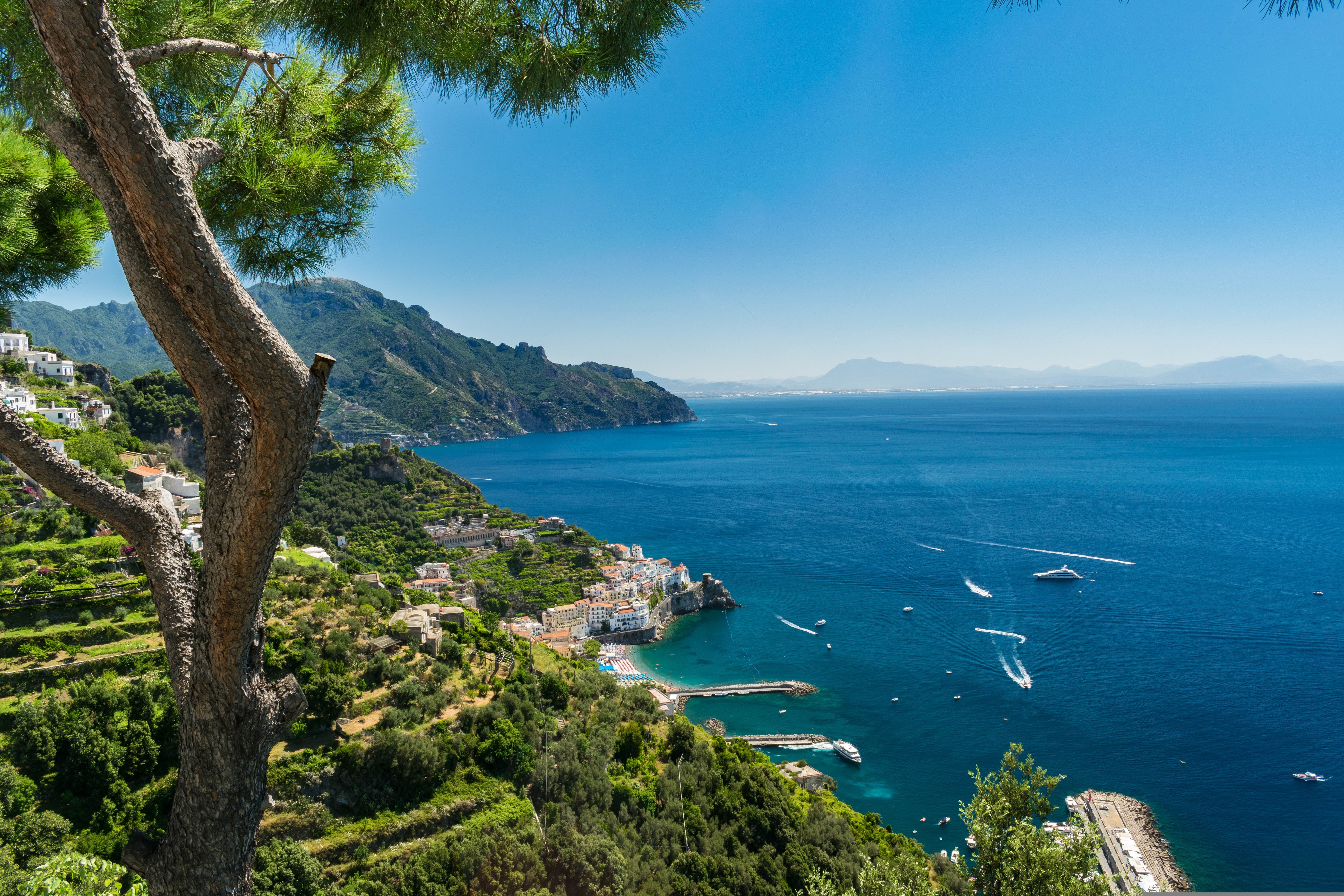
At first glance, it's hard to imagine that this resort destination was one of the world's great naval powers, and a sturdy rival of Genoa and Pisa for control of the Mediterranean in the 11th and 12th centuries. Once the seat of the Amalfi Maritime Republic, the town is set in a verdant valley of the Lattari Mountains, with cream-colored and pastel-hued buildings tightly packing a gorge on the Bay of Salerno. The harbor, which once launched the greatest fleet in Italy, now bobs with ferries and blue-and-white fishing boats. The main street, lined with shops and pasticcerie, has replaced a raging mountain torrent, and terraced hills flaunt the green and gold of lemon groves. Bearing testimony to its great trade with Tunis, Tripoli, and Algiers, Amalfi remains honeycombed with Arab-Sicilian cloisters and covered passages. In a way Amalfi has become great again, showing off its medieval glory days with sea pageants, convents-turned-hotels, ancient paper mills, covered streets, and its glimmering cathedral.
About Amalfi
At first glance, it's hard to imagine that this resort destination was one of the world's great naval powers, and a sturdy rival of Genoa and Pisa for control of the Mediterranean in the 11th and 12th centuries. Once the seat of the Amalfi Maritime Republic, the town is set in a verdant valley of the Lattari Mountains, with cream-colored and pastel-hued buildings tightly packing a gorge on the Bay of Salerno. The harbor, which once launched the greatest fleet in Italy, now bobs with ferries and blue-and-white fishing boats. The main street, lined with shops and pasticcerie, has replaced a raging mountain torrent, and terraced hills flaunt the green and gold of lemon groves. Bearing testimony to its great trade with Tunis, Tripoli, and Algiers, Amalfi remains honeycombed with Arab-Sicilian cloisters and covered passages. In a way Amalfi has become great again, showing off its medieval glory days with sea pageants, convents-turned-hotels, ancient paper mills, covered streets, and its glimmering cathedral.
About Ponza Island
About Bastia
Corsica's northern capital, Bastia, is the centre of commerce and industry and a thriving freight and passenger port. Commerce, more than tourism, is its main focus, providing employment for many Corsicans. Bastia's industrial sprawl, however, is offset by its aged charm. The presence of an overwhelming Italian atmosphere adds to the city's attraction. Two distinct areas comprise the city: Terra Vecchia, the old quarter, consisting of haphazard streets, flamboyant Baroque churches and lofty tenements, with their crumbling golden-grey walls set against a backdrop of fire-darkened hills; and the more orderly Terra Nova, the historic district favoured by prominent doctors, lawyers and architects. The city dates from Roman times, when a base was set up at Biguglia to the south. Under the Genoese, Bastia was the island's capital for four centuries and of major importance for the export of wine to the Italian mainland. They built a fortress (bastiglia), which gave the town its name. The Genoese also were responsible for laying the foundation for the area's prosperity by planting vines, olives, chestnut trees and other experimental crops. This resulted in an energetic and enterprising region, still a characteristic of today's northern Corsica. Although Napoleon had appointed Ajaccio the capital of the island in 1811- initiating a rivalry that still exists - Bastia established a stronger trading position with mainland France. As a result, the Nouveau Port was created in 1862 to cope with the increasing traffic with France and Italy. Bastia's economic prominence and a German division based here during World War II accounted for severe bombing attacks. Many buildings were destroyed, including much of the old governor's palace. Of the two largest towns on the island, Ajaccio and Bastia, the latter boasts a more genuine Corsican character. Visitors can experience an authentic feel of island life by wandering through the maze of narrow streets of Bastia's old quarter and by exploring its fortifications. Don't miss the vast Place Saint-Nicolas just north of the old quarter; it is the focal point of the city. Open to the sea and lined with shady trees and sidewalk cafes, it is a perfect place for people watching and for taking in the local ambiance. Pier Information The ship is scheduled to dock at the port of Bastia. The city's focal point, Place Saint-Nicolas, is a distance of 650 feet (200 metres) to walk. Taxis are generally available at the pier but it is highly recommended to book in advance if you want to be sure to get one. It is recommended to establish the fare before leaving the port. Shopping The main shopping streets, Boulevard Paoli and Rue Cesar Campinchi, are less than one half miles (500 metres) from the port terminal. Handicrafts and the area's specialties such as honey, wine and liqueurs may be of interest. Most shops are open from 9:00 a.m. to 12:00 p.m. and 2:30 p.m. to 7:00 p.m. Shops are closed for the day on Sundays and some shops may also close Monday mornings (some souvenirs shops may open Sundays during the high season of July-August). The local currency is the euro. Cuisine A variety of restaurants offer a good choice of eating possibilities. Some of the best restaurants are found around the Vieux Port and on the Quai des Martyrs. French cuisine and seafood feature prominently on menus as well as such Corsican specialties as wild boar, charcuterie and aziminu, a local version of bouillabaisse. Evidence of Bastia's strong Italian influence is apparent in the numerous pizza and pasta places in the Nouveau Port area. For outdoor dining and people watching, cafes around lively Place Saint-Nicolas are a perfect place. Other Sites Oratoire de Saint-Roch Located in the Terra Vecchia quarter, the chapel is a Genoese Baroque extravaganza built in 1604. The walls are covered with finely carved wooden panelling and the organ is magnificent with its decoration of gilt and wooden sculpture. Oratoire de L'Immaculee Conception Although its exterior is rather austere, the flamboyant interior of this 17th-century church with gilt and marble ceiling, frescoes and crystal chandeliers creates an ambiance of an opera house. Vieux Port Site of the original Porto Prado, the area around the Vieux Port is the most appealing part of town. Its soaring houses seem to bend inwards towards the water. Once busy with Genoese traders, the building of the ferry terminal and commercial docks have reduced much of the action at Vieux Port. Terra Nova As the administrative core of old Bastia, Terra Nova displays a distinct air of affluence. Its most impressive building is the 14th-century Governor's Palace. During the Genoese heyday the governor and the bishop lived here, entertaining foreign dignitaries and hosting massive parties. Private arrangements for independent sightseeing may be requested through the Tour Office on board, subject to the availability of English-speaking guides.

About Monte-Carlo
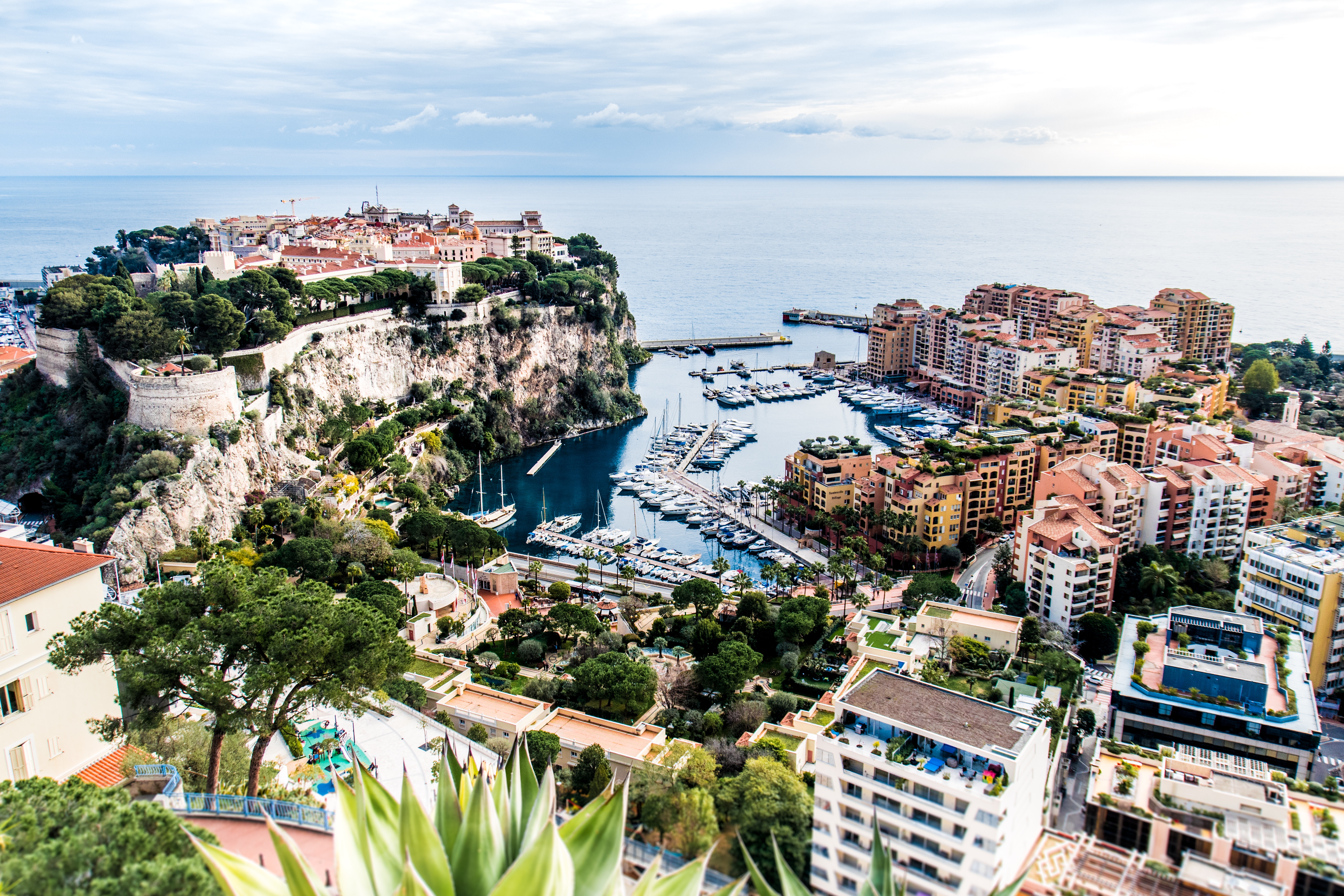
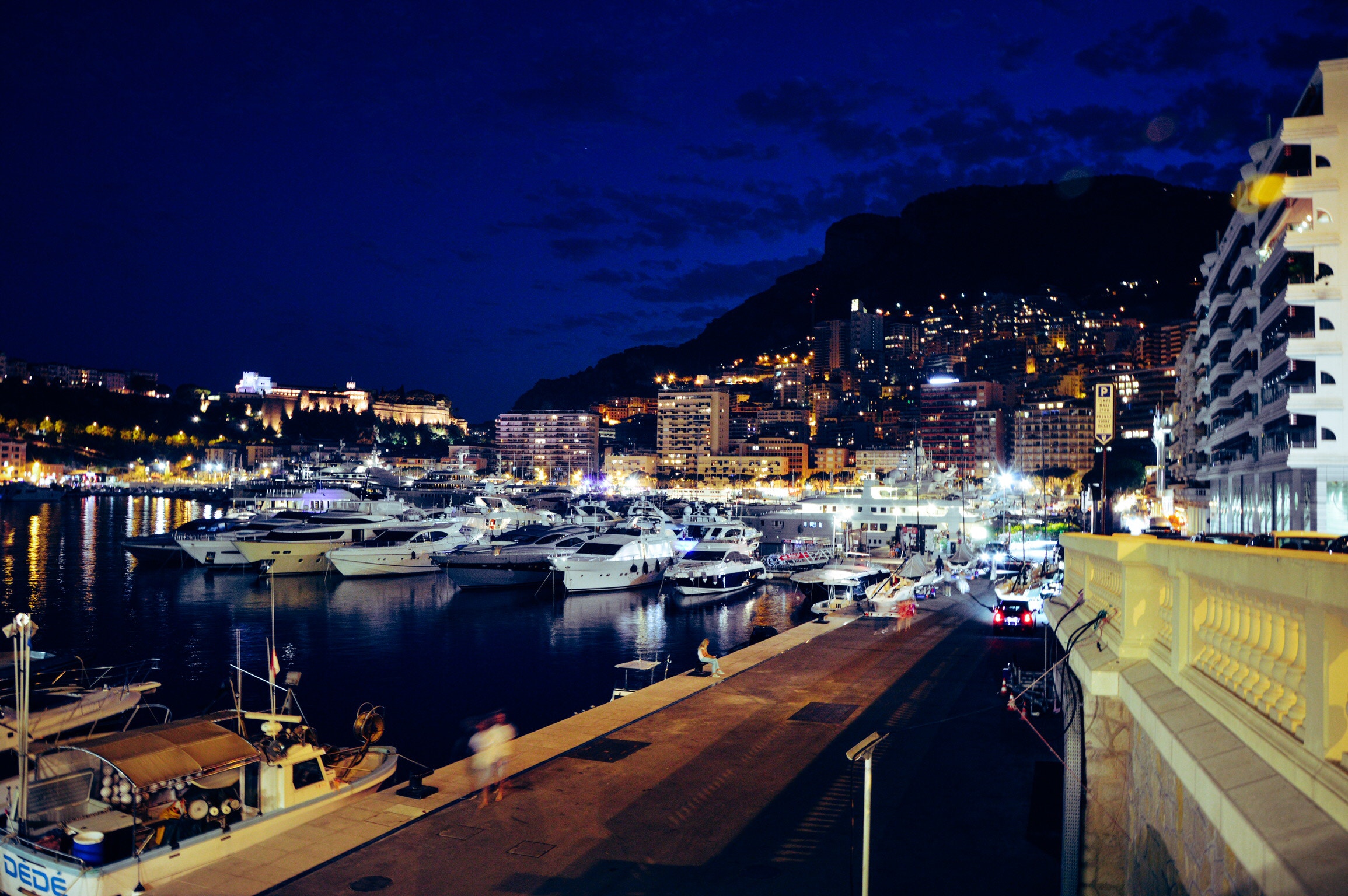
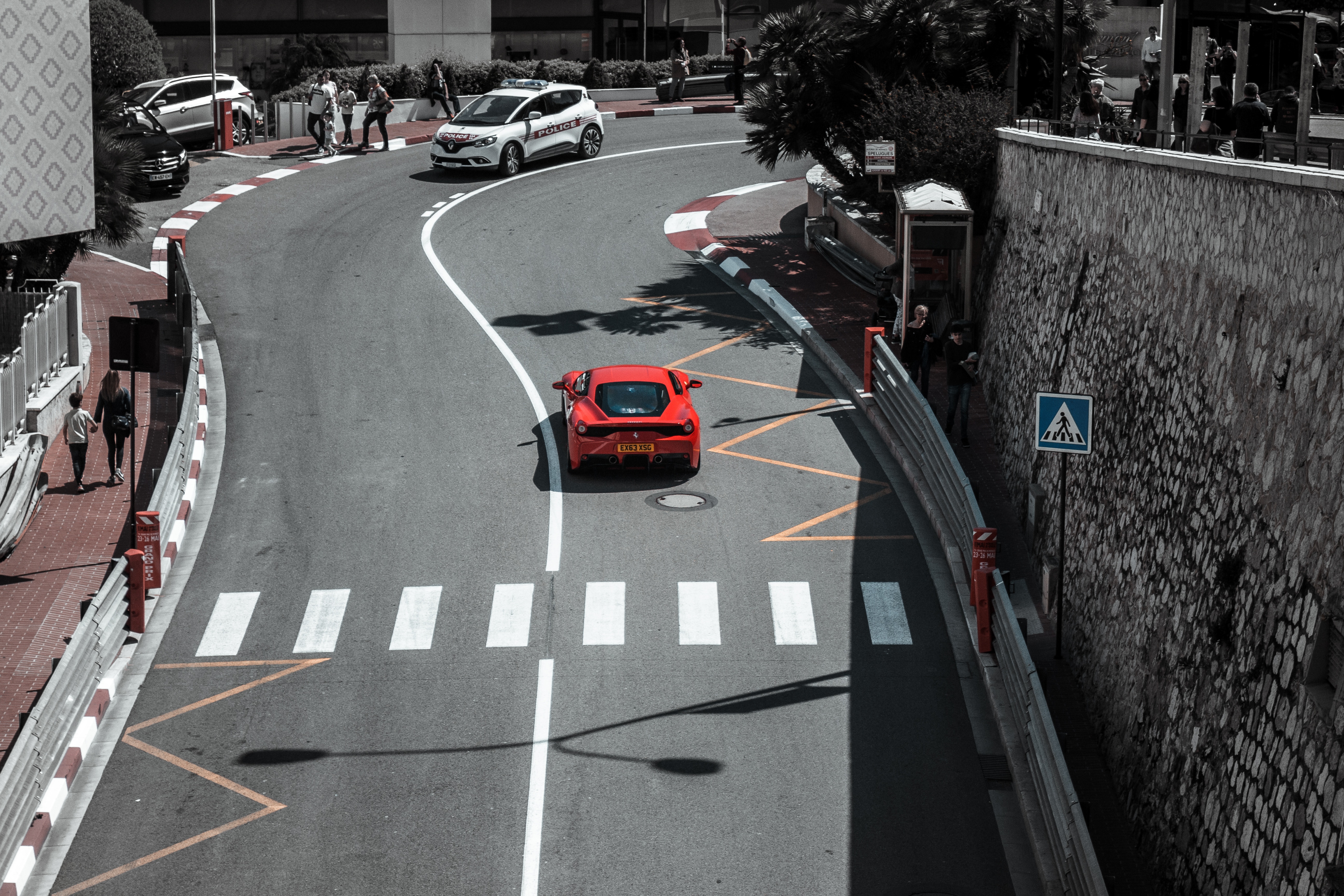
On one of the best stretches of the Mediterranean, this classic luxury destination is one of the most sought-after addresses in the world. With all the high-rise towers you have to look hard to find the Belle Époque grace of yesteryear. But if you head to the town's great 1864 landmark Hôtel de Paris—still a veritable crossroads of the buffed and befurred Euro-gentry—or enjoy a grand bouffe at its famous Louis XV restaurant, or attend the opera, or visit the ballrooms of the casino, you may still be able to conjure up Monaco's elegant past. Prince Albert II, a political science graduate from Amherst College, traces his ancestry to Otto Canella, who was born in 1070. The Grimaldi dynasty began with Otto's great-great-great-grandson, Francesco Grimaldi, also known as Frank the Rogue. Expelled from Genoa, Frank and his cronies disguised themselves as monks and in 1297 seized the fortified medieval town known today as Le Rocher (the Rock). Except for a short break under Napoléon, the Grimaldis have been here ever since, which makes them the oldest reigning family in Europe. In the 1850s a Grimaldi named Charles III made a decision that turned the Rock into a giant blue chip. Needing revenue but not wanting to impose additional taxes on his subjects, he contracted with a company to open a gambling facility. The first spin of the roulette wheel was on December 14, 1856. There was no easy way to reach Monaco then—no carriage roads or railroads—so no one came. Between March 15 and March 20, 1857, one person entered the casino—and won two francs. In 1868, however, the railroad reached Monaco, and it was filled with Englishmen who came to escape the London fog. The effects were immediate. Profits were so great that Charles eventually abolished all direct taxes. Almost overnight, a threadbare principality became an elegant watering hole for European society. Dukes (and their mistresses) and duchesses (and their gigolos) danced and dined their way through a world of spinning roulette wheels and bubbling champagne—preening themselves for nights at the opera, where such artists as Vaslav Nijinsky, Sarah Bernhardt, and Enrico Caruso came to perform. Along with the tax system, its sensational position on a broad, steep peninsula that bulges into the Mediterranean—its harbor sparkling with luxury cruisers, its posh mansions angling awnings toward the nearly perpetual sun—continues to draw the rich and famous. One of the latest French celebrities to declare himself "Monégasque," thus giving up his French passport, is superchef Alain Ducasse, who said that he made the choice out of affection for Monaco rather than tax reasons. Pleasure boats vie with luxury cruisers in their brash beauty and Titanic scale, and teams of handsome young men—themselves dyed blond and tanned to match—scour and polish every gleaming surface. As you might expect, all this glitz doesn't come cheap. Eating is expensive, and even the most modest hotels cost more here than in nearby Nice or Menton. As for taxis, they don't even have meters so you are completely at the driver's mercy (with prices skyrocketing during events such as the Grand Prix). For the frugal, Monaco is the ultimate day-trip, although parking is as coveted as a room with a view. At the very least you can afford a coffee at Starbucks. The harbor district, known as La Condamine, connects the new quarter, officially known as Monte Carlo with Monaco-Ville (or Le Rocher), a medieval town on the Rock, topped by the palace, the cathedral, and the Oceanography Museum. Have no fear that you'll need to climb countless steps to get to Monaco-Ville, as there are plenty of elevators and escalators climbing the steep cliffs. But shuttling between the lovely casino grounds of Monte Carlo and Old Monaco, separated by a vast port, is a daunting proposition for ordinary mortals without wings, so hop on the No. 1 bus from Saint Roman, or No. 2 from the Jardin Exotique - Both stop at Place du Casino and come up to Monaco Ville.
On warm days, sun worshippers will appreciate the spacious DEDON sofa island, which is a great place for some private relaxation. And the separate living and sleeping areas with their subtle, earthy colours and high-quality furnishings will make you feel relaxed and comfortable. Do you have any other requests? If so, please ask your personal butler, who will be available to help at any time.
Selected equipment features
- 85 m² (915 ft²) Penthouse Grand Suite with a spacious veranda above the bridge
- Butler service
- 24-hour suite service
- Separate living and sleeping areas
- Spacious walk-in wardrobe
- Generously sized dining area
- DEDON sun island on the veranda
- Bathroom with underfloor heating, two washbasins, a whirlpool bath, seperate shower, a private sauna
- Separate guest toilet
- Tablet
- Nespresso machine
- Free mini bar (water, juices, soft drinks, beer and a selection of high-quality spirits)
- Fresh canapes
- Ironing service
- On-board table reservation for the restaurant The Globe by Kevin Fehling
- Free daily full edition of a newspaper of your choice on request
- Exclusive service privileges
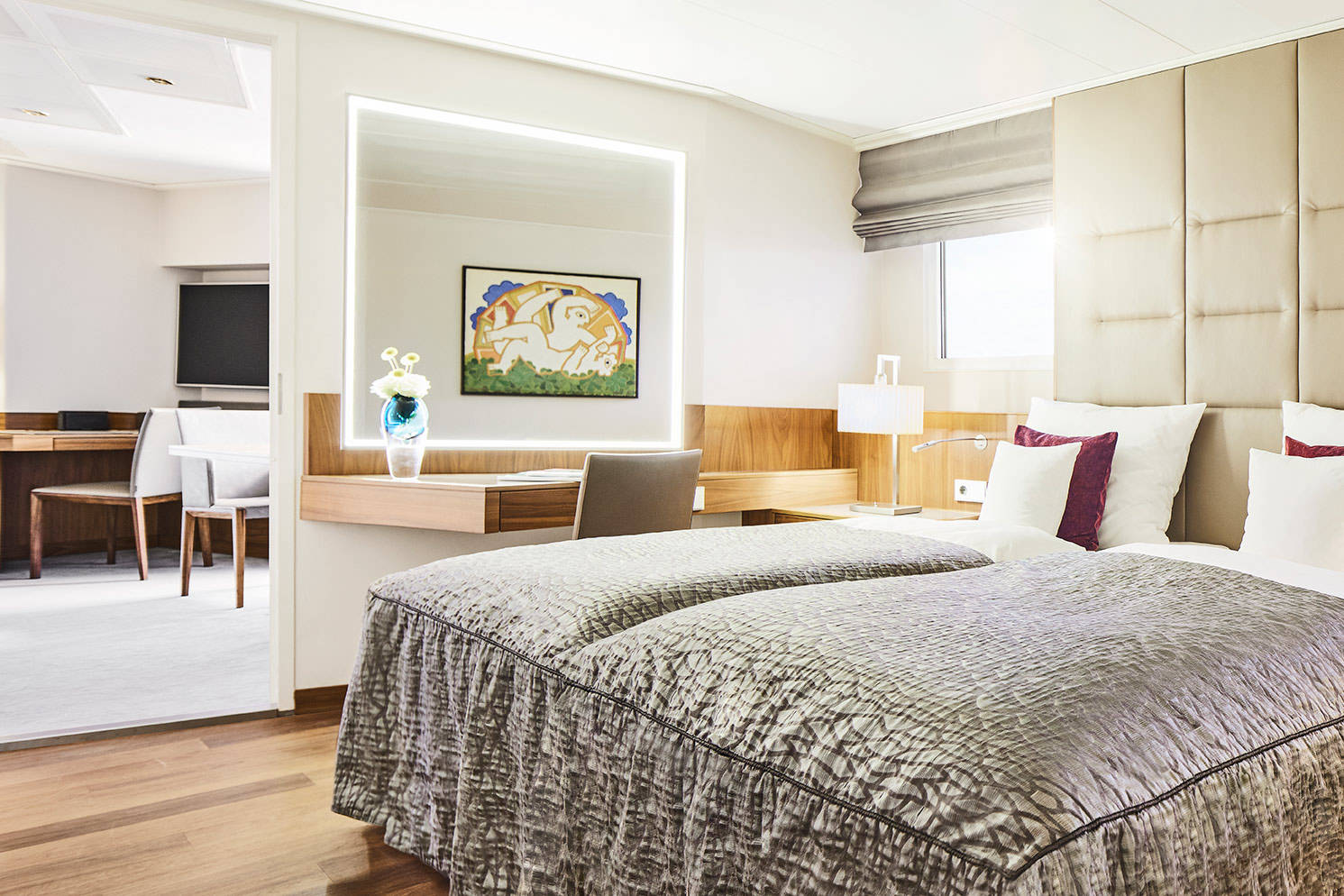
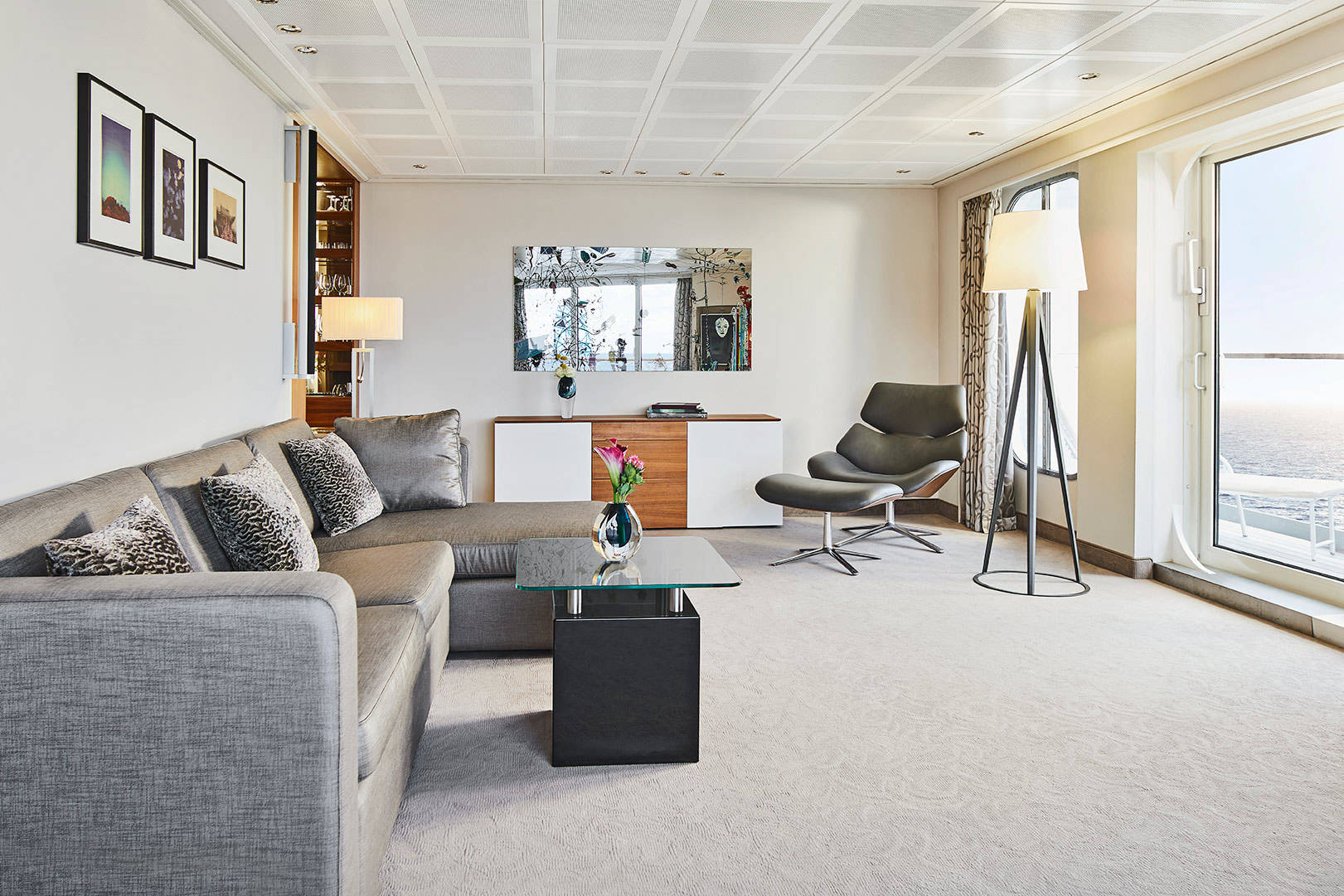
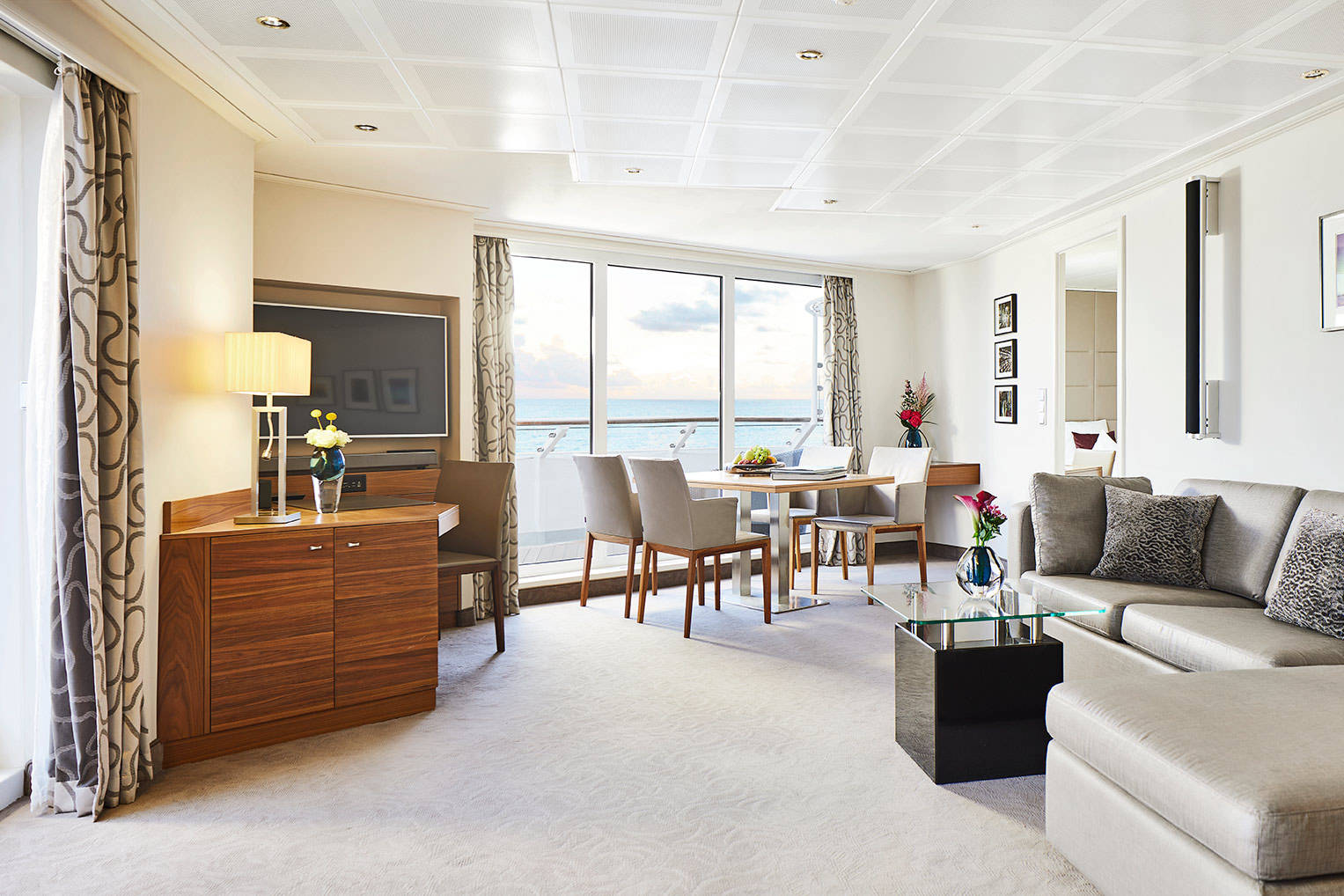
In the relaxed atmosphere of your suite, it is our pleasure to pamper you with gourmet snacks or a glass of champagne, for example. Whether you prefer to dream away the day in the cosy lounge or on your private veranda, the choice is yours – either way, you will be able to enjoy an ocean view.
Selected equipment features
- 45 m² (484 ft²) Penthouse Deluxe Suite with a veranda
- Butler service
- 24-hour suite service
- Separate living and sleeping areas
- Walk-in wardrobe
- Bathroom with underfloor heating, two washbasins, whirlpool bath and seperate shower
- Tablet
- Nespresso machine
- Free mini bar (water, juices, soft drinks, beer and a selection of high-quality spirits)
- Fresh canapes every day
- Ironing service
- On-board table reservation for the restaurant The Globe by Kevin Fehling
- Exclusive service privileges
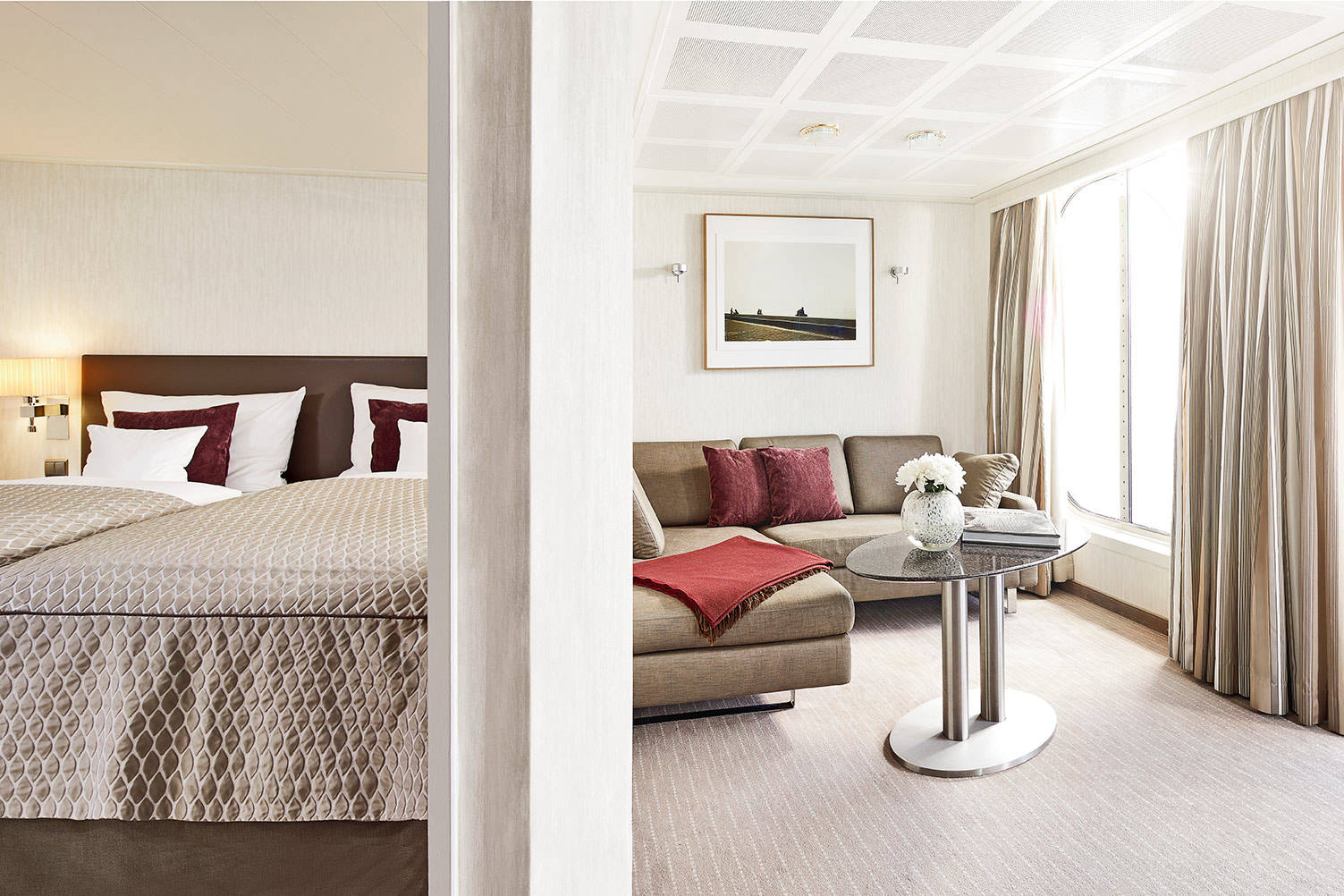
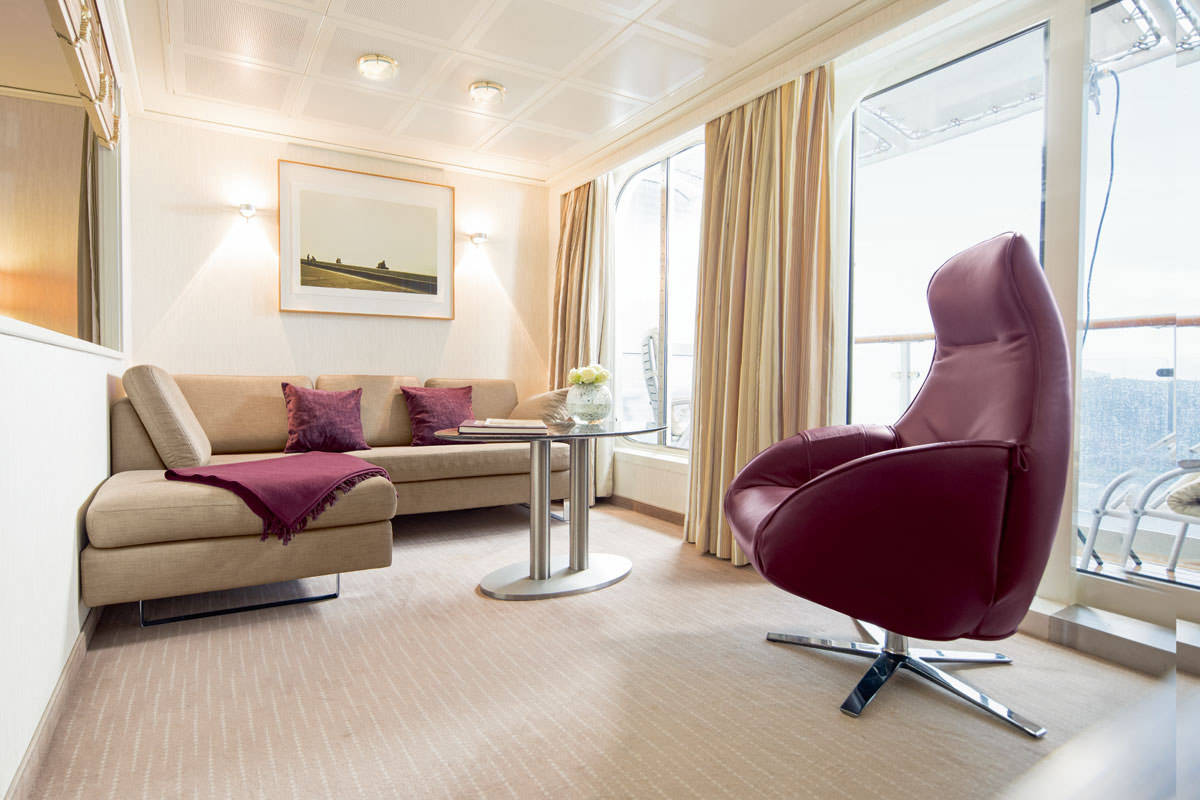
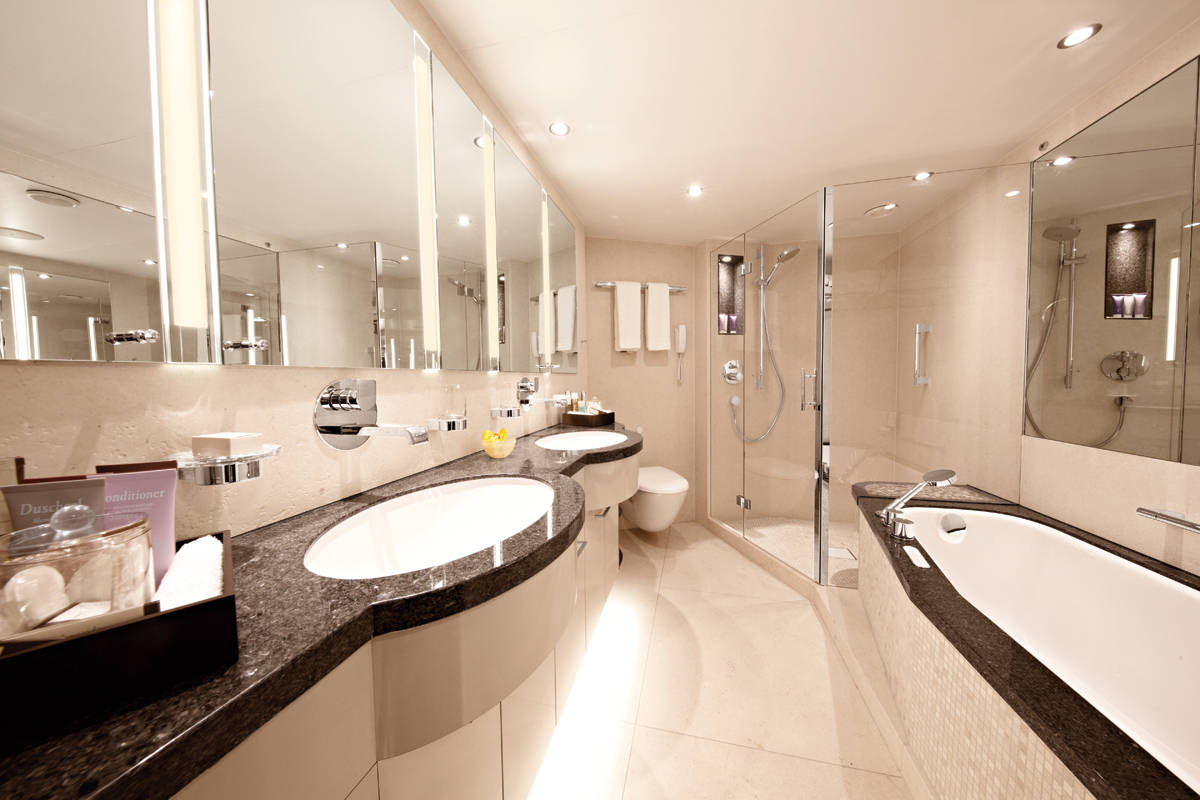
The modern living and sleeping areas feature a contemporary design. Light-coloured wood furniture further accentuates the spaciousness of the light-filled room. The whirlpool bath with optional lighting provides a special opportunity for relaxation – and the large window with a Venetian blind means you can enjoy the fantastic views from the bath as well.
Selected equipment features
27 m² (291 ft²) SPA Suite with a veranda
- 24-hour suite service
- Includes SPA pamper package
- Walk-in wardrobe
- Bathroom with natural light, ocean view, whirlpool bath ans separate shower
- Tablet
- Nespresso machine
- Free mini bar (water, juices, soft drinks, beer and a selection of high-quality spirits)
- Choice of SPA drinks, including smoothies, fresh fruit juices and herbal teas, fresh canapes and fresh fruits
- Ironing service
- On-board table reservations for the restaurant The Globe by Kevin Fehling
- Exclusive service privileges
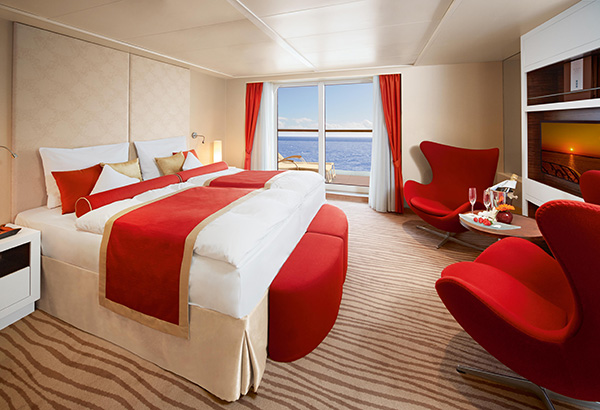
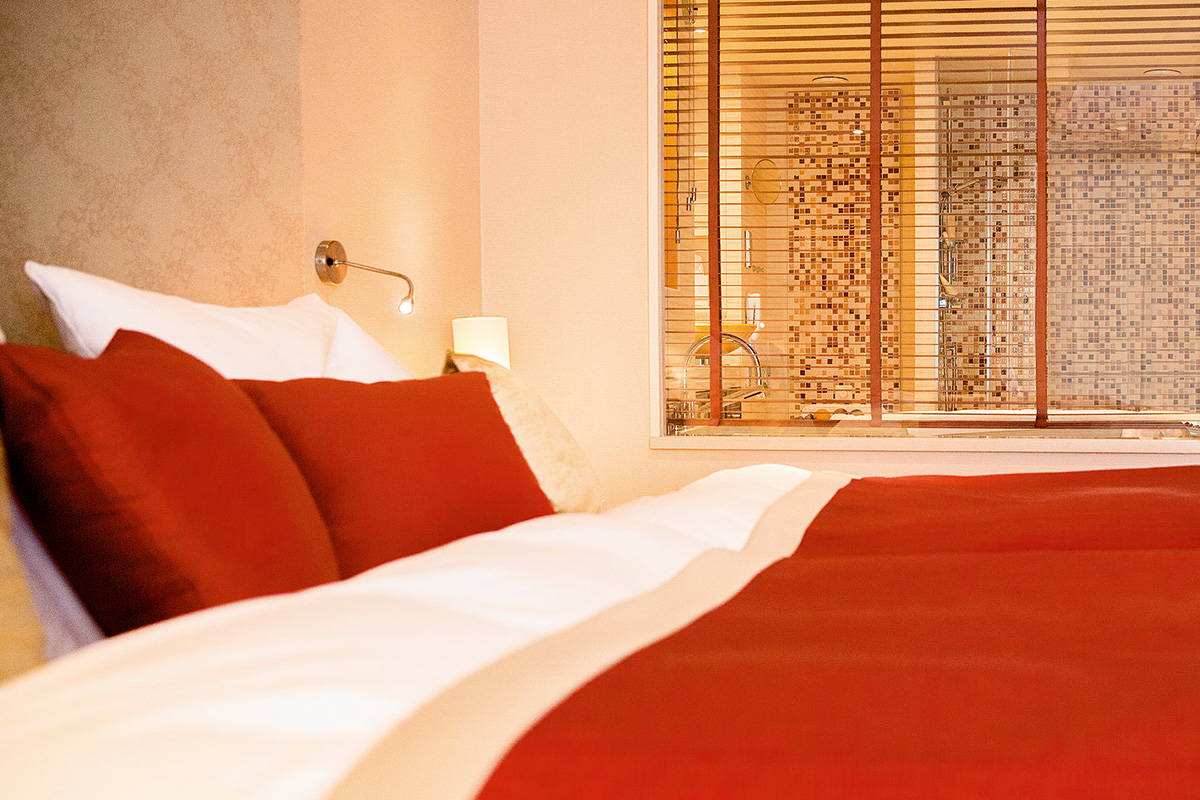
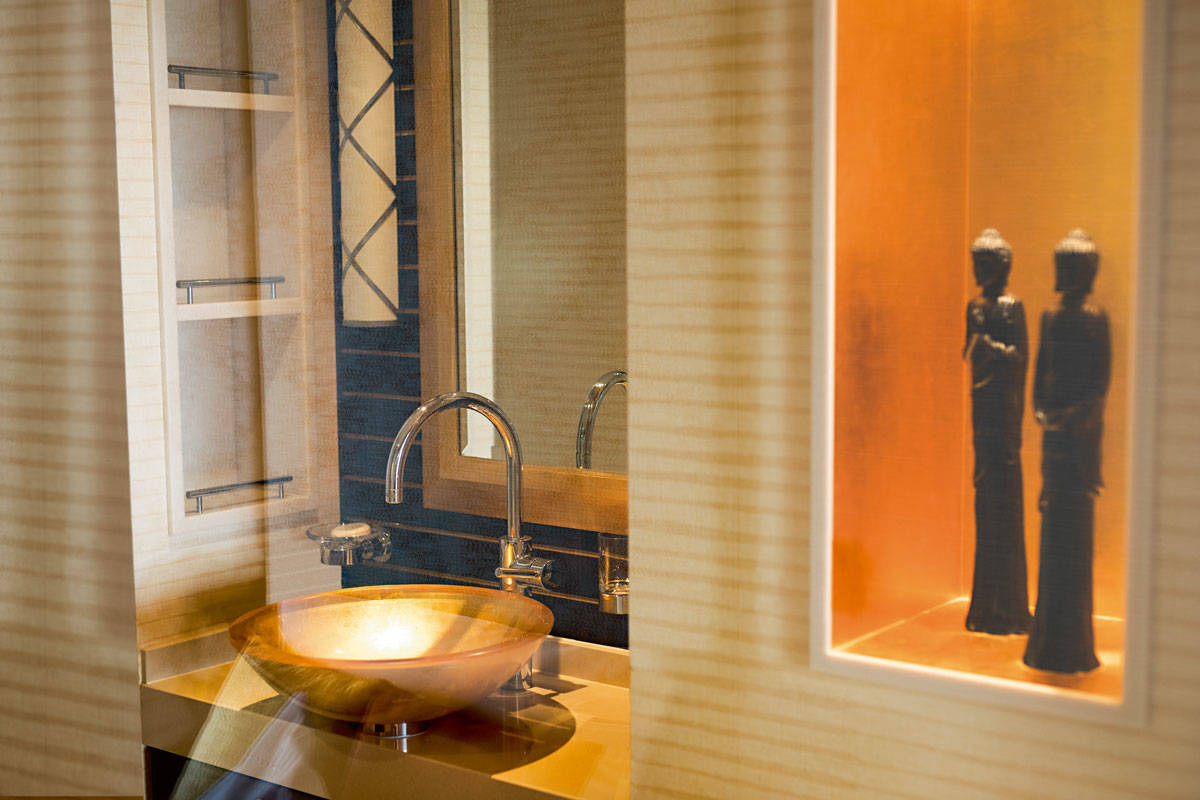
A modern suite with an elegant design, stylishly furnished to the last detail. Enjoy total privacy while taking in the view from your very own veranda.
Selected equipment features
27 m² (291 ft²) suite with a veranda (cat. 6-7)
- 24-hour suite service
- Visually divided living and sleeping area
- Walk-in wardrobe
- Bathroom with bathtub and seperate shower
- Nespresso machine
- Free mini bar (water, juices, soft drinks and beer)
- Some suites can be booked with connecting doors
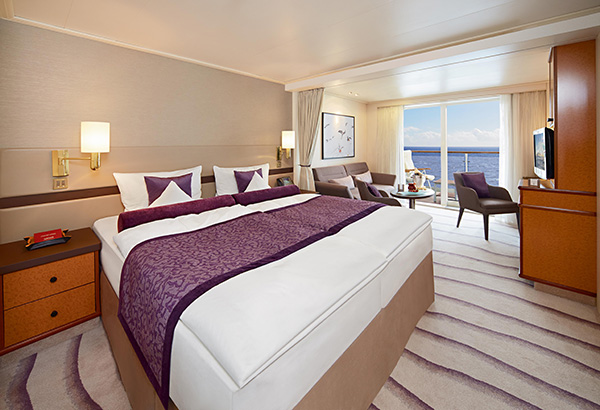
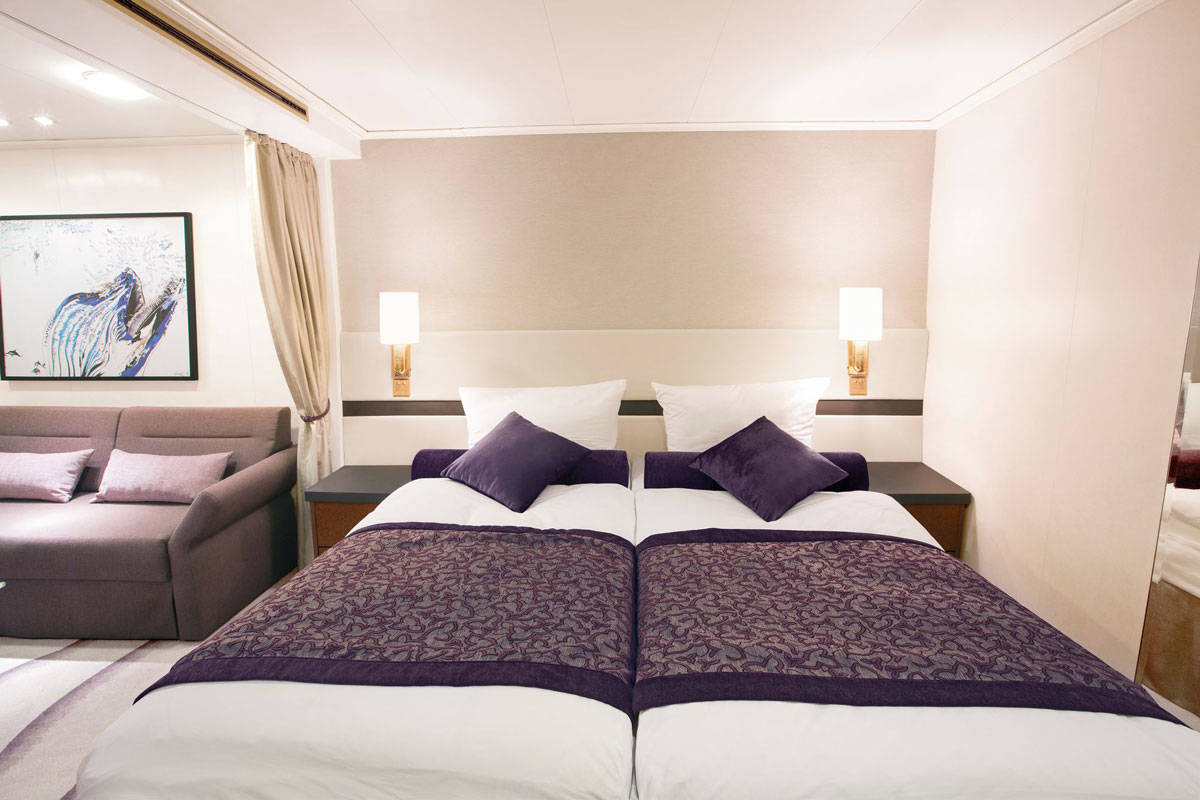
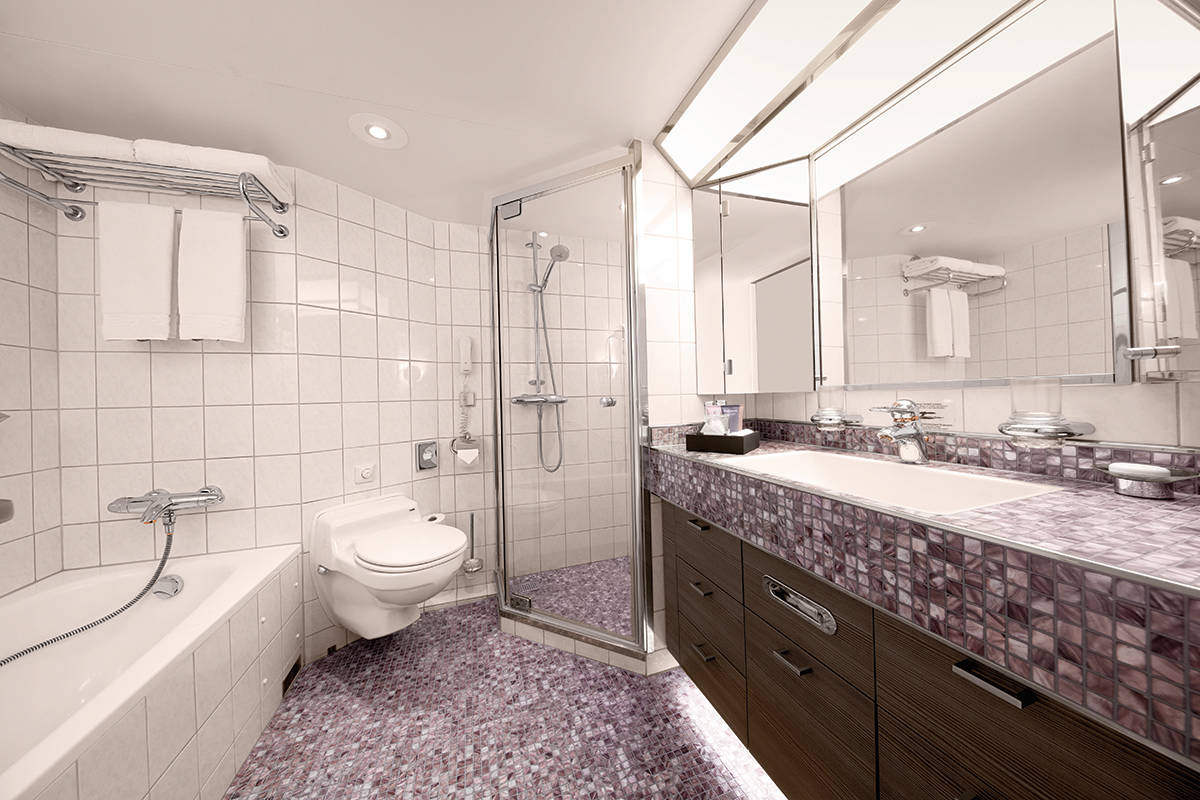
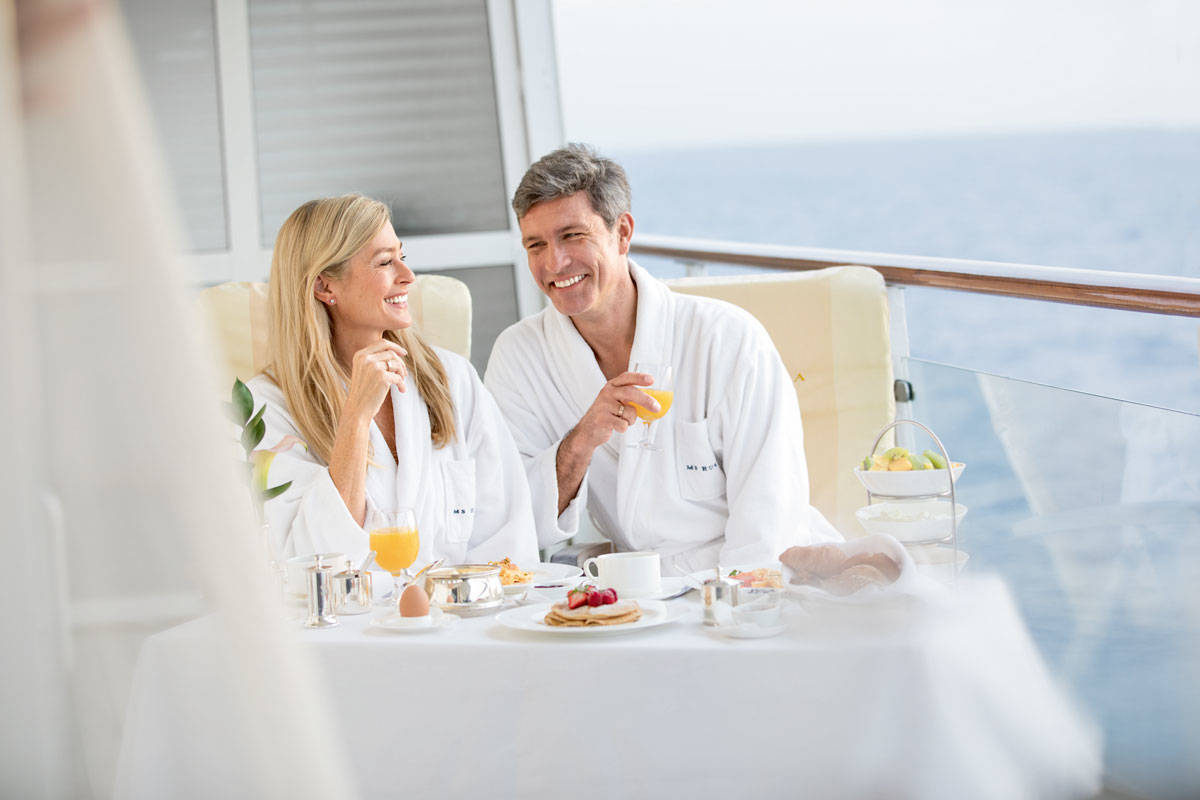
With their subtle colours, harmonious design and visually divided living and sleeping areas, the Veranda Suites fulfil your requirements for a cosy, private retreat. Additional connecting doors in some suites provide the option of making your family cruise even more comfortable.
Selected equipment features
- 27 m² (291 ft²) suite with a veranda (cat. 4-5)
- 24-hour suite service
- Visually divided living and sleeping area
- Walk-in wardrobe
- Bathroom with bathtub and separate shower
- Nespresso machine
- Free mini (water, juices, soft drinks and beer)
- Some suites can be booked with connecting doors or are equipped for use by disabled guests
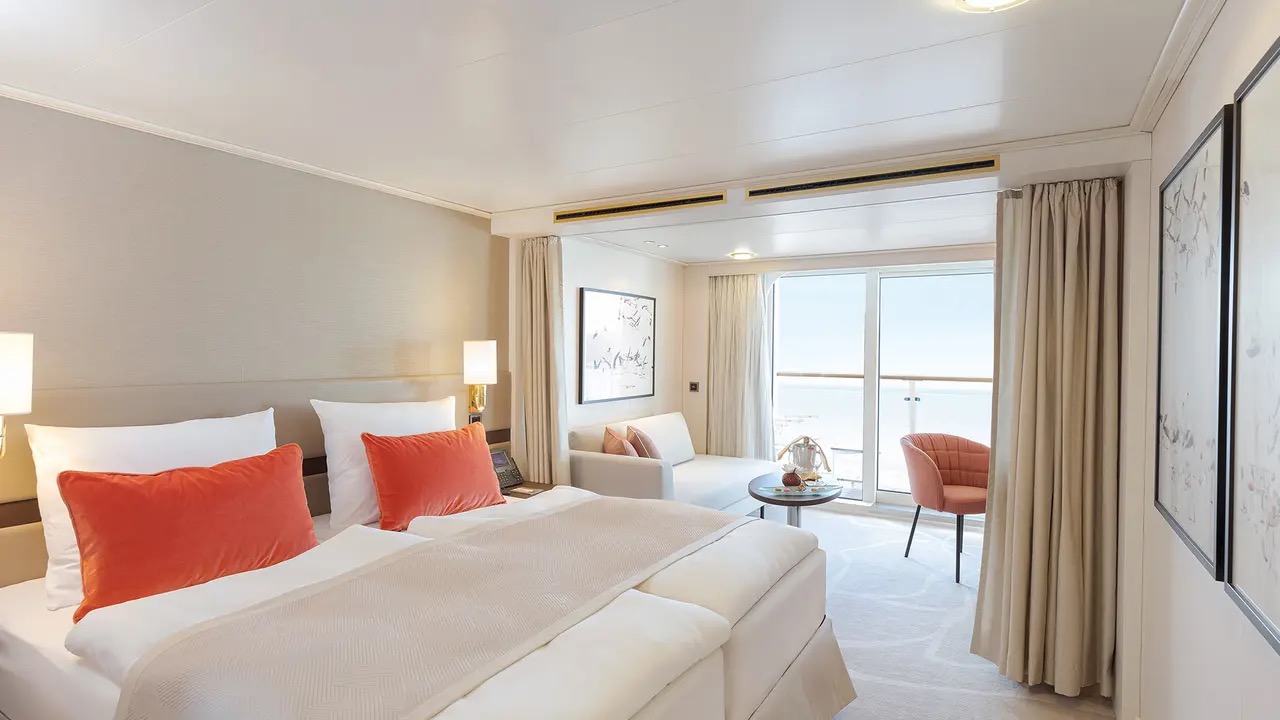
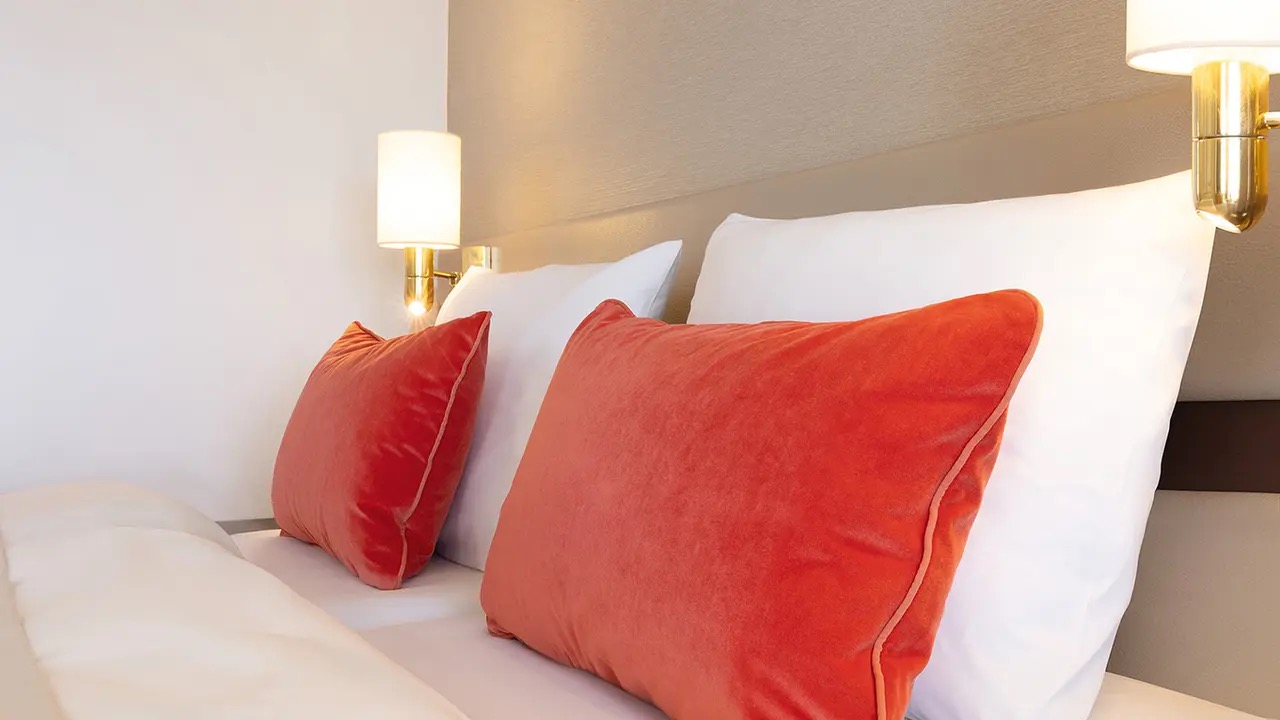
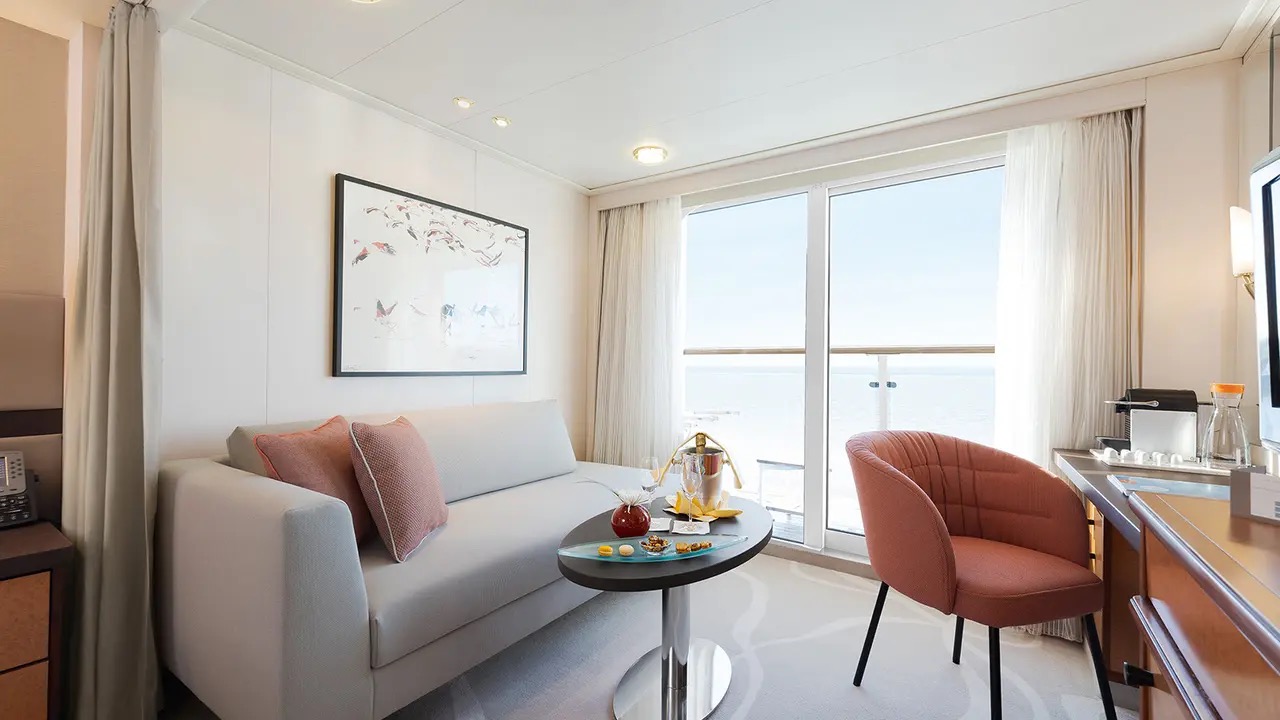
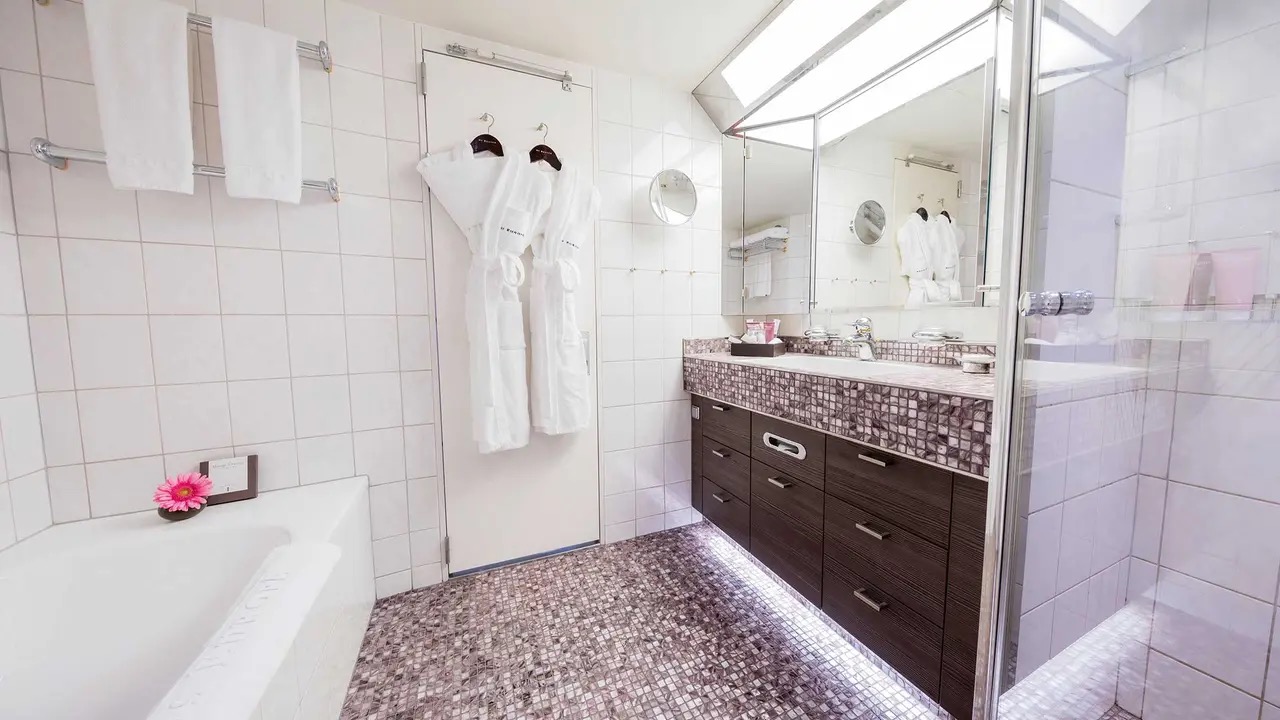
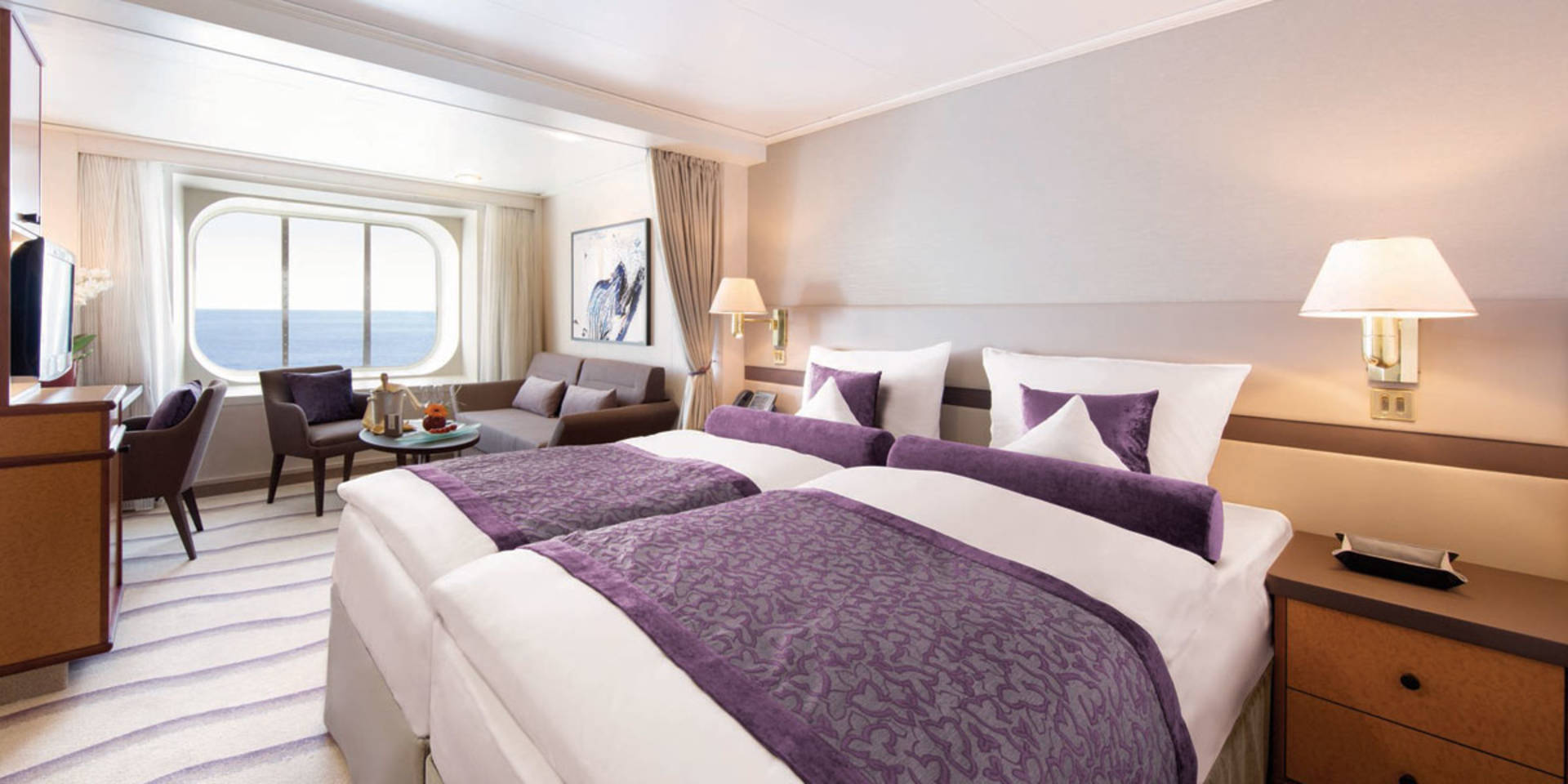
Your suite is a place where you can feel completely at home. An inspiring colour palette, cosy lighting and carefully selected interior decor combine to create a pleasant atmosphere of well-being. Featuring a panorama window with a view that changes every day.
Selected equipment features
- 27 m² (291 ft²) suite with a panorama window
- 24-hour suite service
- Visually divided living and sleeping area
- Walk-in wardrobe
- Bathroom with bathtub and seperate shower
- Nespresso machine
- Free mini bar (water, juices, soft drinks and beer)
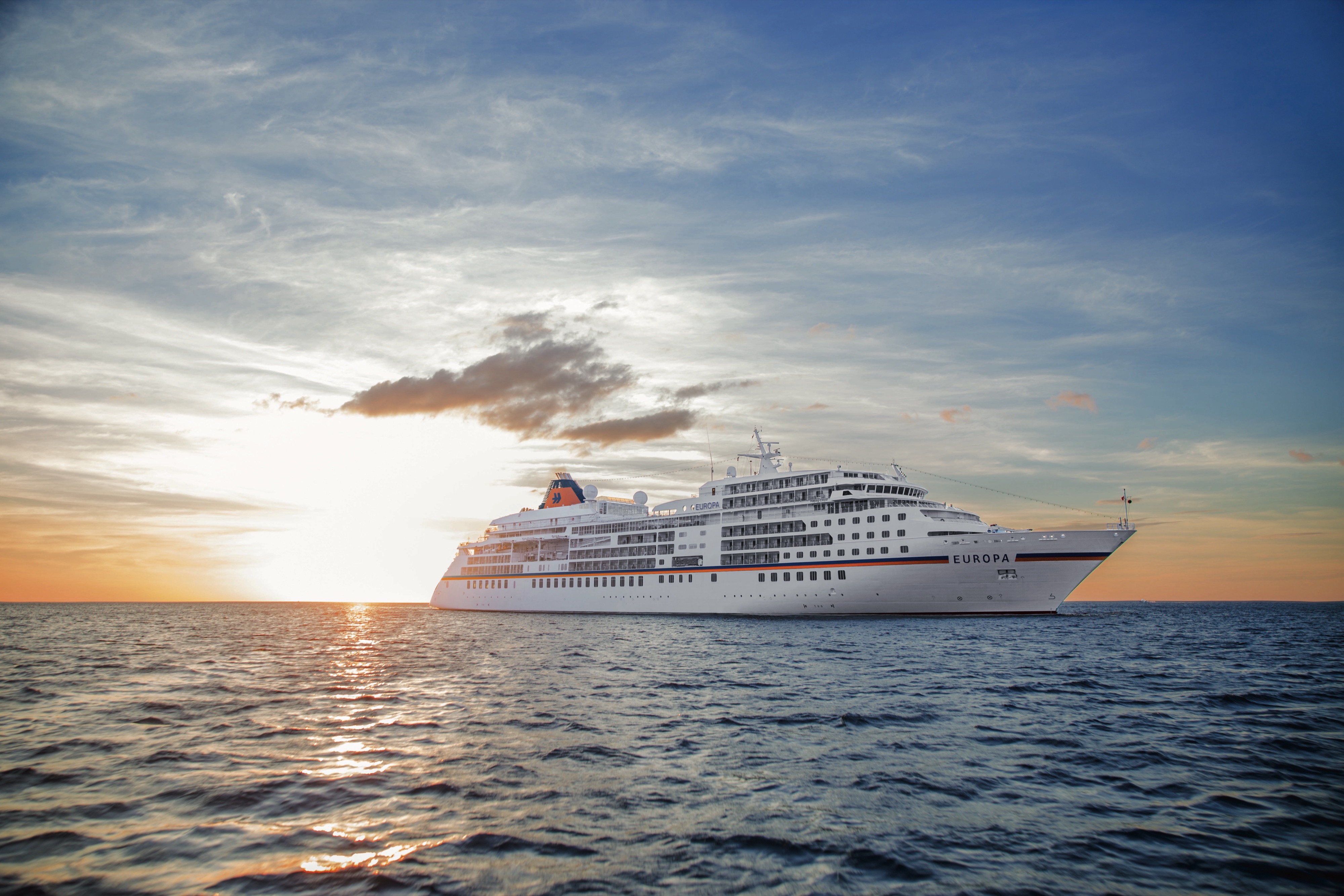
MS EUROPA
Welcome to a ship that sets the global benchmarks for luxury cruises. It may be smaller than other cruise ships, but the EUROPA is miles ahead of the crowd. Enjoy the unrivalled freedom for personal relaxation on a cruise with no more than 400 guests – with plenty of scope for fresh ideas, indulgence and inspiring perspectives.
However you define it, enjoy your own personal luxury throughout your time on the EUROPA. Come aboard and experience an exceptional cruise as you travel to the world’s most beautiful destinations.
Ship Facts
| Launch Year | 1999 | ||||
| Refit Year | 2013 | ||||
| Language | de+en | ||||
| Gross Tonnage | 28890 | ||||
| Length | 198 | ||||
| Width | 24 | ||||
| Currency | EUR | ||||
| Speed | 21 | ||||
| Capacity | 400 | ||||
| Crew Count | 285 | ||||
| Deck Count | 7 | ||||
| Cabin Count | 204 | ||||
| Large Cabin Count | N/A | ||||
| Wheelchair Cabin Count | 2 | ||||
| Electrical Plugs |
|
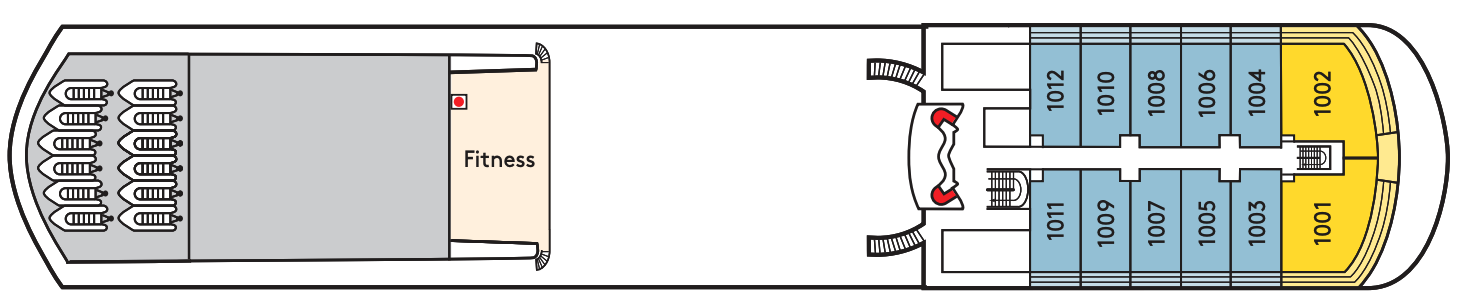
Penthouse Deck
- Fitness
- Penthouse Deluxe Suite Cat. 8
- Penthouse Grand Suite Cat.9
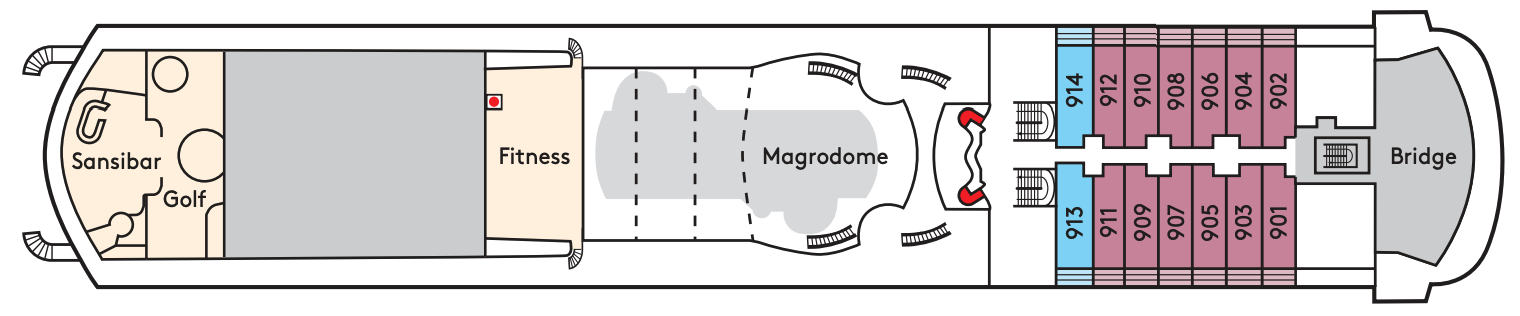
Bellevue Deck
- Bridge
- Magrodome
- Fitness Area
- Golf
- Sansibar
- Veranda Suite Cat. 6
- Veranda Suite Cat. 7
Lido Deck
- Lido Café
- Shuffleboard
- Whirlpool
- Lido Pool
- Pool Bar
- Library
- Atelier
- Club Belvedere

Sport Deck
- Pearls
- Play-room
- Creative room
- OCEAN SPA
- Hair-dresser
- SPA Suite Cat. 10
- Veranda Suite Cat. 5
- Veranda Suite Cat. 6
- Suite without veranda Cat. 3

Atlantik Deck
- Veranda Suite Cat. 5
- Suite without veranda Cat. 2
- Veranda Suite Cat. 6

Pazifik Deck
- Photo Shop
- Tendering Area
- Veranda Suite Cat. 4
- Veranda Suite Cat. 5
- Suite without veranda Cat. 1

Europa Deck
- Europa Restaurant
- Venezia
- The Globe
- Boutique and jeweller
- Studio
- Havana Bar
- Cruise sales
- Reception
- Atrium
- Tour office
- Gatsby's
- Europa Lounge
- Stage

Sophisticated indulgence up to the stars
Exclusive flavour experiences await you as a guest of the EUROPA. Our chefs, along with one of the top three-star chefs Kevin Fehling, will spoil you with refined, modern creations and timeless classics. Enjoy the special atmosphere in our five restaurants with a free choice of seats and a dress code ranging from casual to elegant according to how you feel.
Europa Restaurant
In the stylish atmosphere of our main restaurant, every experience is a pleasure. Our chefs de cuisine will delight you with gourmet dishes, which are often inspired by the region you are cruising in. There are now even more tables for two, allowing you a flexible choice of seating and some wonderful private moments.
Lido Café
Venezia
The small, fine Venezia is dedicated to Italian-Mediterranean cuisine. Allora: Pasta or freshly caught fish? Exquisite cheese selection or tempting dolci? Delicacies and Italian classics, brought together for you on one menu.
The Globe by Kevin Fehling
The Globe is the home of the three-star chef from Hamburg, Kevin Fehling. He has already delighted guests on board the EUROPA with his cuisine right at the start of his career. In his own gourmet restaurant on board the EUROPA he will be on board in person for selected cruises. His unconventional, modern creations are a real feast for the senses, with nuances of influence from many different latitudes. Take a seat and allow yourself to be pampered.
Top chef Kevin Fehling is head chef at ‘The Table’ in Hamburg and has been awarded 3 stars by the Michelin Guide. He is one of the stars of German Michelin-starred cuisine and brings his award-winning cuisine to the world's oceans with The Globe by Kevin Fehling.
Pearls
The gourmet restaurant on deck 7 is inspired by French seafood bars and makes caviar the star of the evening. Discover innovative dishes in the finest form, accompanied by modern flavours from all over the world. Another treat: the view from the outdoor terrace high above the sea.
Known for great moments
On every cruise, we welcome stars and all kinds of renowned artists on board. Enjoy some thrilling moments in the private setting of the EUROPA, with the finest classical music, groovy jazz and soul, danceable swing, as well as readings and theatrical pieces, first-rate comedy, and much more. As well as a varied entertainment programme, which changes every day, there are also exclusive events and shows, in which top chefs or circus acts delight the senses. Simply unforgettable.
Gatsby's
Gatsby's loves the bar culture of the Golden Twenties and first-class mixed drinks. Dancing is allowed and encouraged.
Sansibar
Sylt's famous bar is also very popular on the EUROPA. As the sun slowly sinks into the sea, a lively atmosphere spreads here until late into the night. Let our sommeliers inspire you and discover the largest selection of champagne at sea. Live music also awaits you on selected evenings.
Havana Bar
A refined and cosy club atmosphere awaits you in the Havana Bar. Take a seat, choose a first-class cigar from the well-stocked humidor and order a drink to go with it. A place to indulge.
Club Belvedere
The cosy Club Belvedere attracts guests with its panoramic view and an excellent selection of tea and coffee specialities, small macarons and delicious cakes. On selected evenings, you can enjoy exciting readings and other entertainment here.
Piano Bar
Start your evening with an aperitif, accompanied by some gentle melodies. The Piano Bar is also open in the daytime and is a great place for an afternoon coffee, reading the paper or enjoying some musical relaxation.
Pool Bar
We will treat you to light snacks and cold drinks at the pool bar. Enjoy fresh waffles in the afternoon as a delicious snack to see you through - served to your sunlounger on request.
Ocean Sun Festival
As part of the Ocean Sun Festival, the EUROPA is transformed into an exclusive concert hall at sea. Enjoy daily classical concerts on board - performed by excellent musicians with a repertoire spanning several centuries. Whether virtuoso soloists or renowned chamber ensembles - experience extraordinary concert experiences in the stylish, personalised setting of our small luxury ship.
A musical highlight also awaits you on land: an unforgettable concert evening in a special place - often far off the beaten track.
Classical Ballett
Lucia Lacarra & Matthew Golding
On board the EUROPA, you will experience classical ballet at the highest level - an exclusive offer that emphasises the ship's artistic standards and cultural diversity. Highlights include performances by ballet stars such as Lucía Lacarra and Matthew Golding.
Lucía Lacarra, one of the most important ballerinas of her generation, and Matthew Golding, an outstanding dancer, have not only made a name for themselves on international stages, but also bring their passion and expertise to the EUROPA. Their impressive skills and captivating presence offer guests on board an unforgettable experience.
Exclusive Concerts
Chamber music at the highest level is not only part of your cruise with the EUROPA during the Ocean Sun Festival - classical music in its finest form also awaits you on many other routes.
Experience excellent musicians in a personalised setting that allows you to get very close to the music and the artists. Whether duo, trio or ensemble - every performance is a cultural highlight at sea.
Singer-Songwriter