
Dalmatian Charm And Greek Hospitality
Dalmatian Charm And Greek Hospitality
Cruise overview
WHY BOOK WITH US?
- ✔ The Deluxe Cruises’ team has extensive experience in ultra-luxury cruising.
- ✔ Call now to speak to our helpful and experienced Cruise Concierge team.
- ✔ Enjoy our Unique Deluxe Cruises Bonus for substantial savings.
- ✔ Our team will tailor your holiday to your exacting requirements.
- ✔ As agents, we work under the protection of each cruise lines ABTA / ATOL licences
About Venice
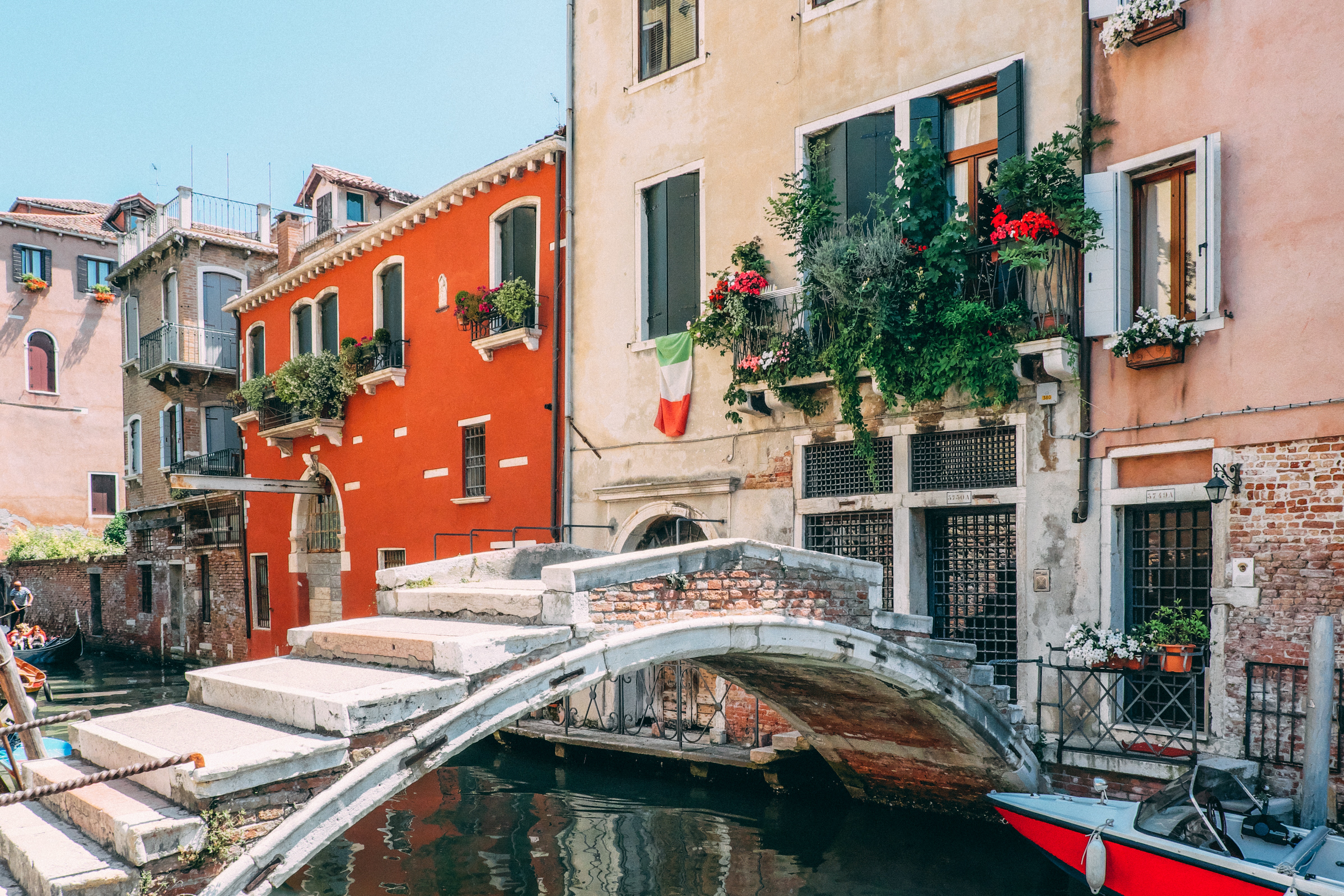
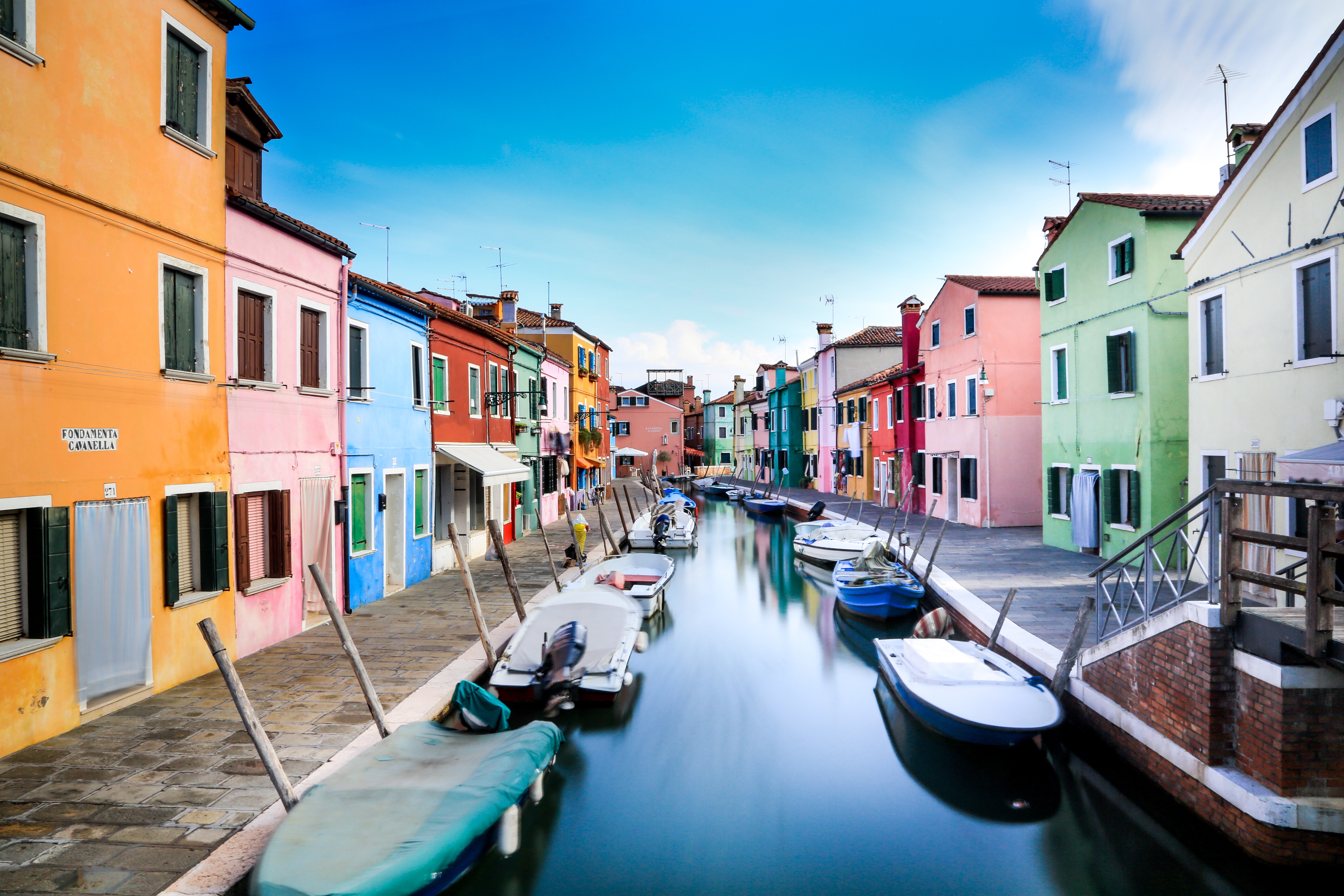
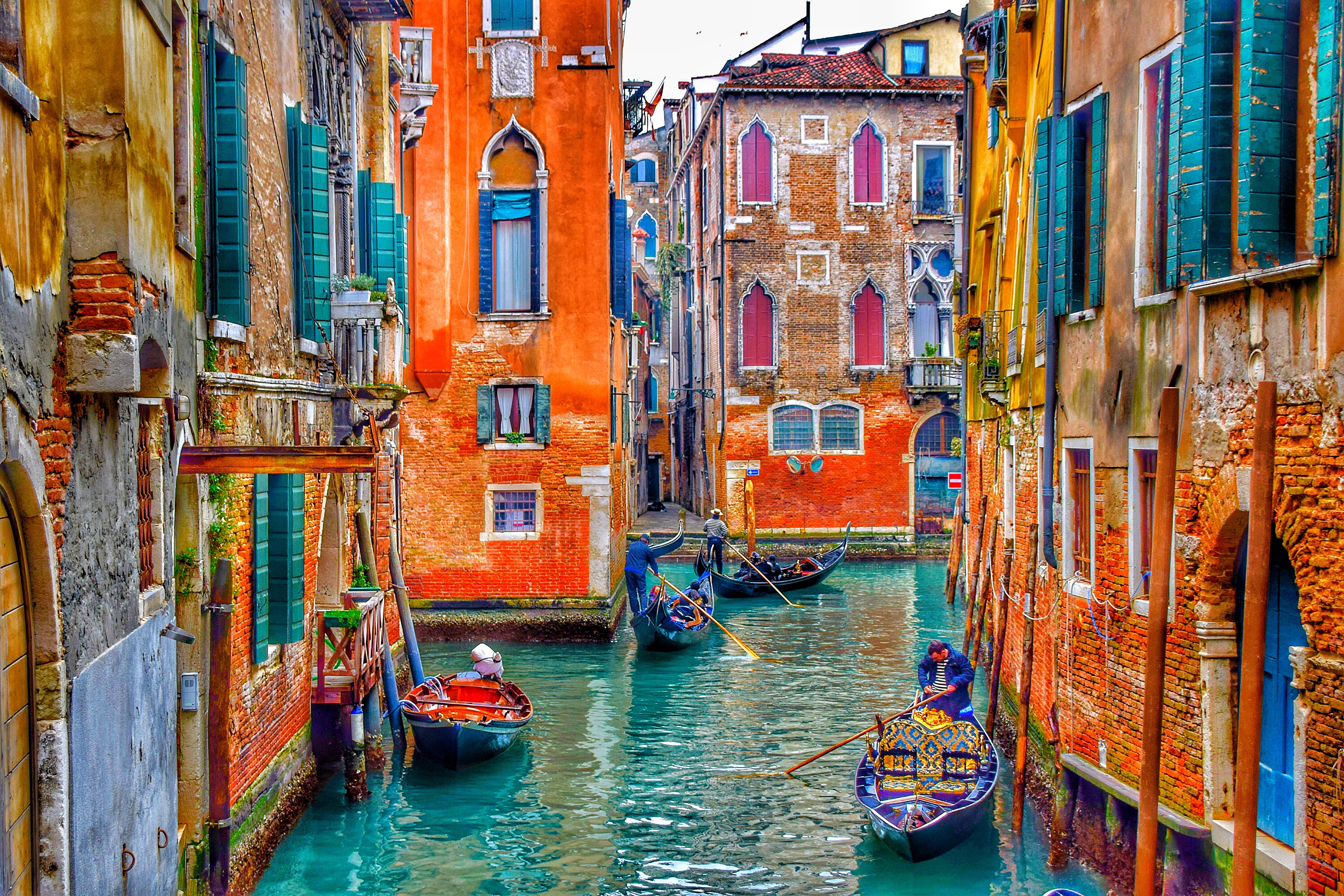
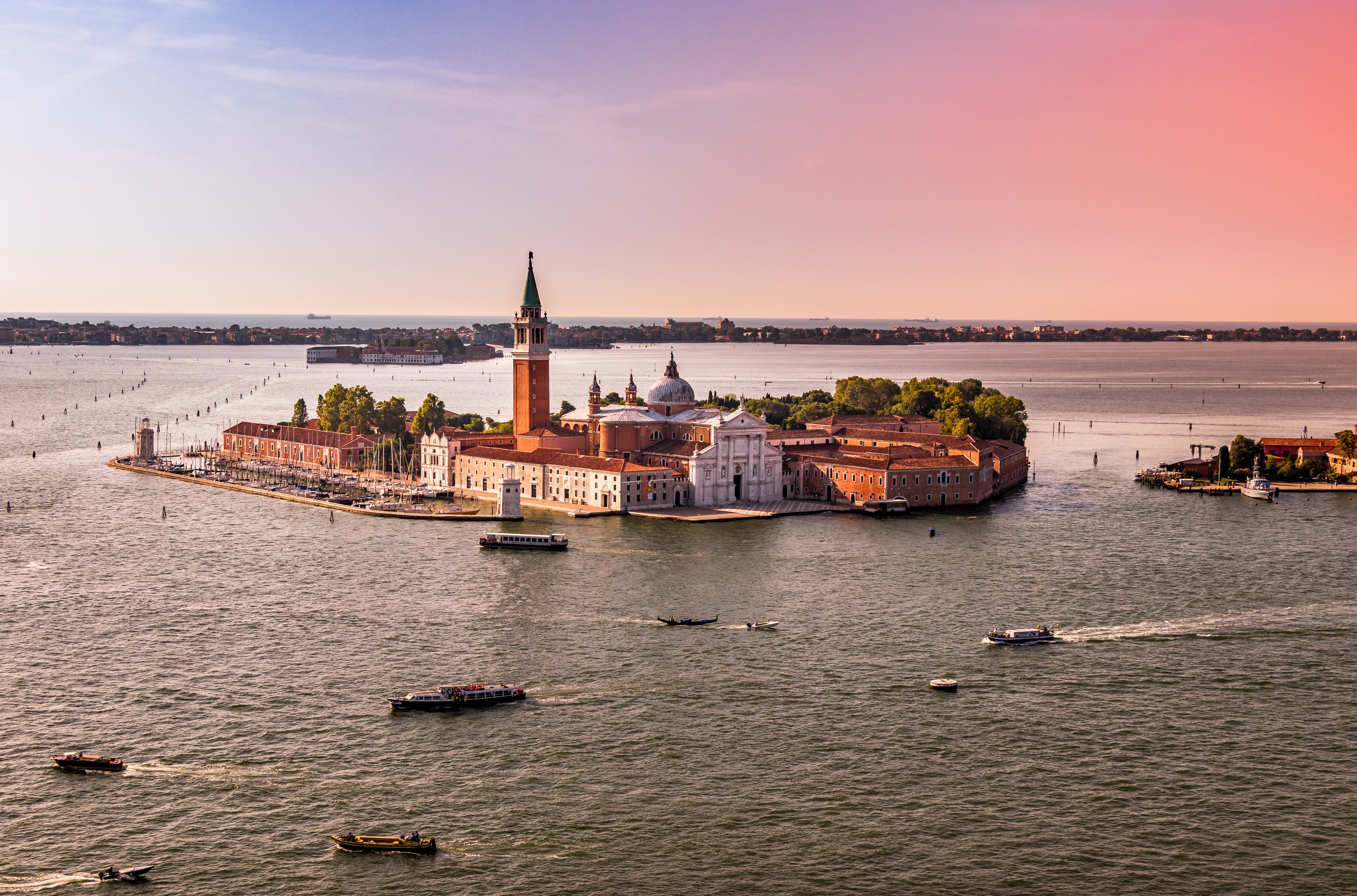
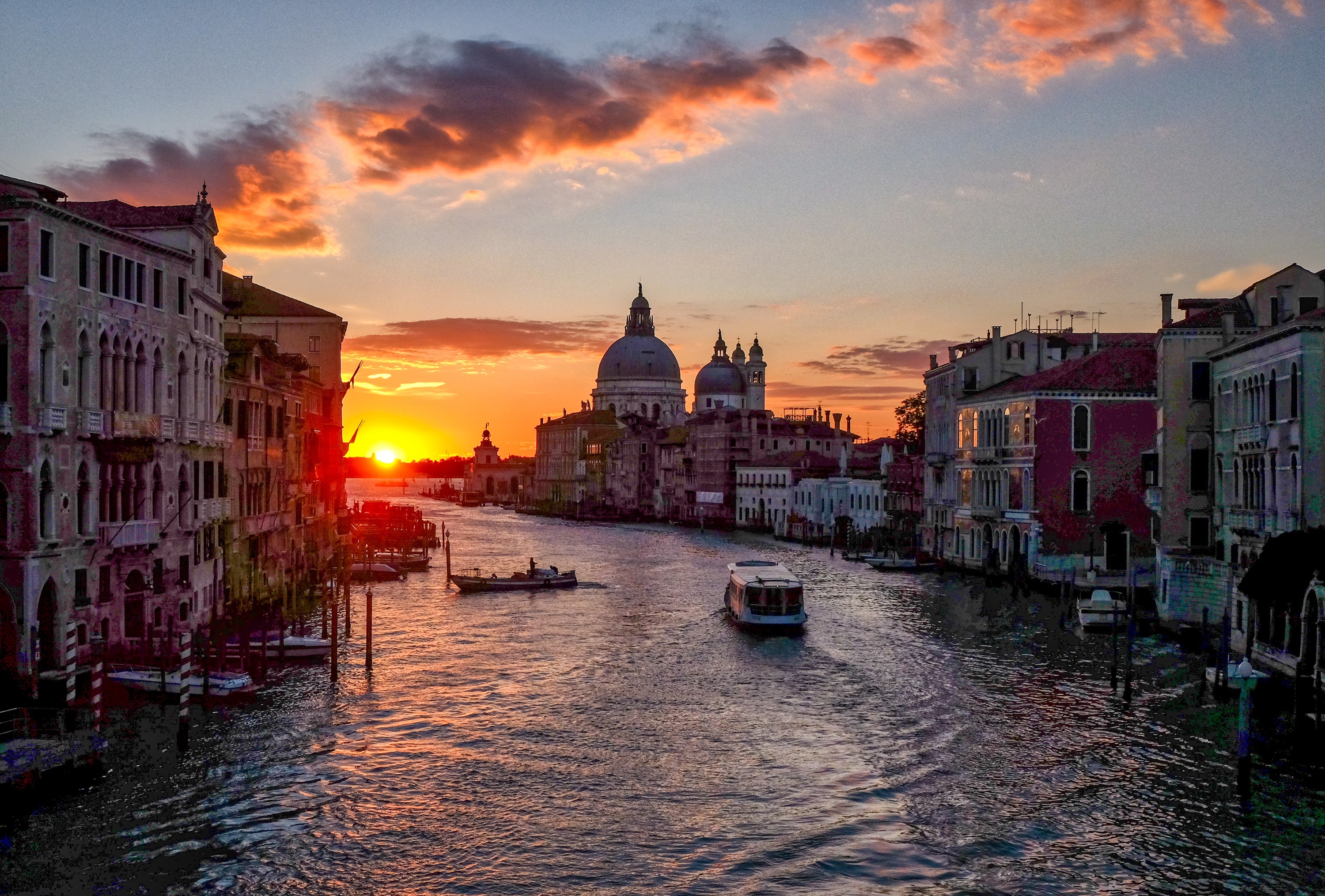
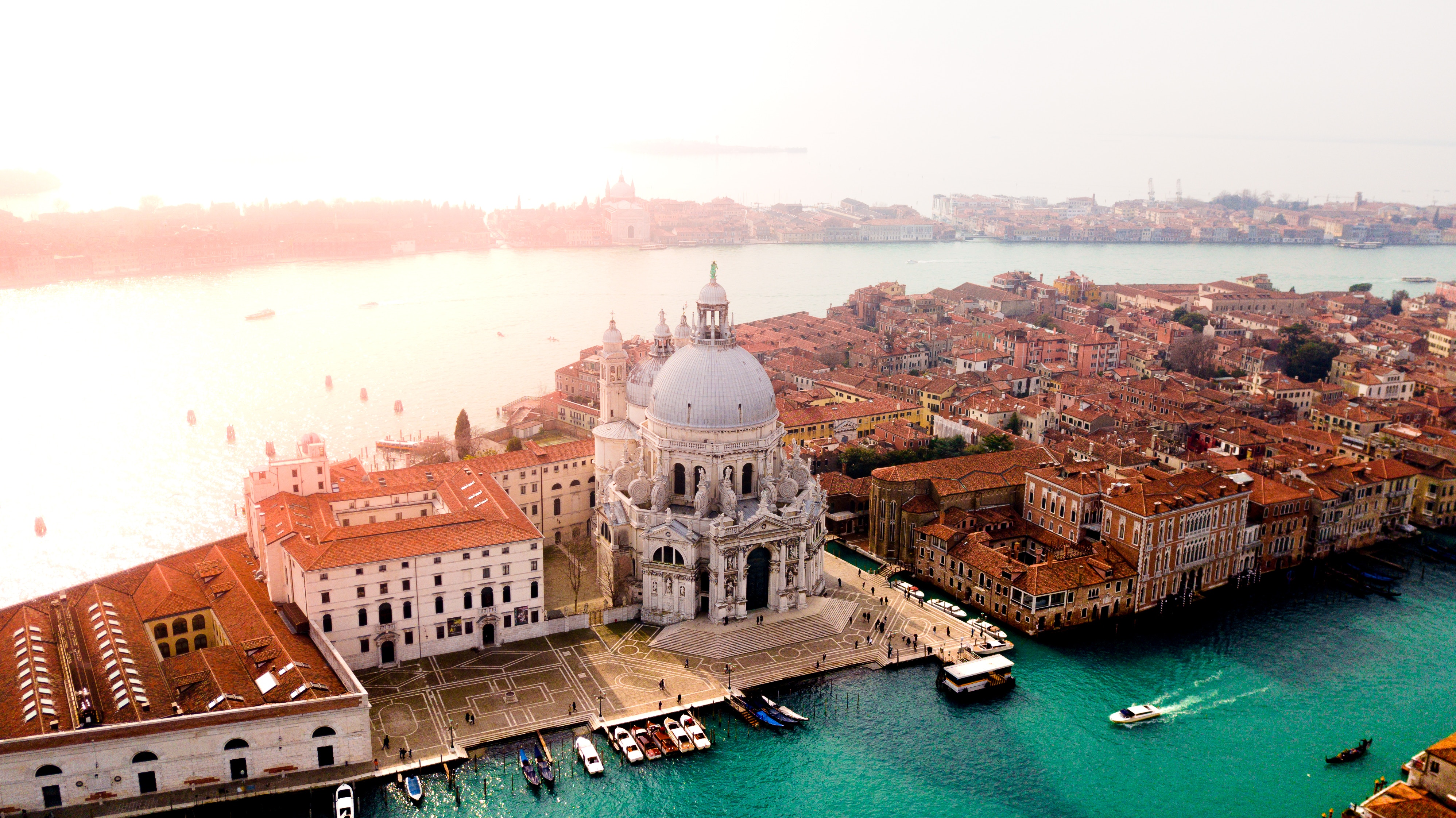
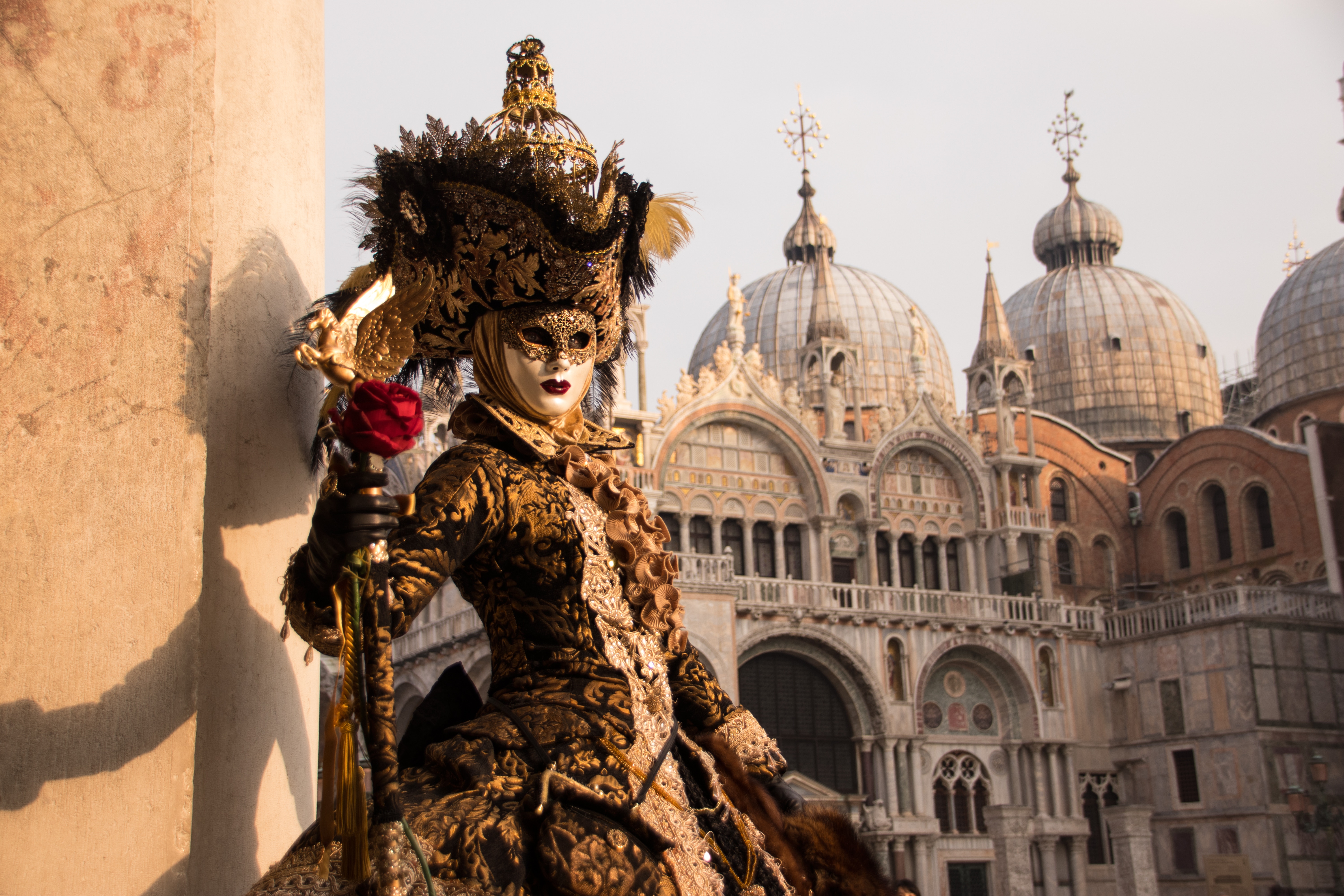
Venice is a city unlike any other. No matter how often you've seen it in photos and films, the real thing is more dreamlike than you could imagine. With canals where streets should be, water shimmers everywhere. The fabulous palaces and churches reflect centuries of history in what was a wealthy trading center between Europe and the Orient. Getting lost in the narrow alleyways is a quintessential part of exploring Venice, but at some point you'll almost surely end up in Piazza San Marco, where tourists and locals congregate for a coffee or an aperitif.
About Venice
Venice is a city unlike any other. No matter how often you've seen it in photos and films, the real thing is more dreamlike than you could imagine. With canals where streets should be, water shimmers everywhere. The fabulous palaces and churches reflect centuries of history in what was a wealthy trading center between Europe and the Orient. Getting lost in the narrow alleyways is a quintessential part of exploring Venice, but at some point you'll almost surely end up in Piazza San Marco, where tourists and locals congregate for a coffee or an aperitif.
About Split
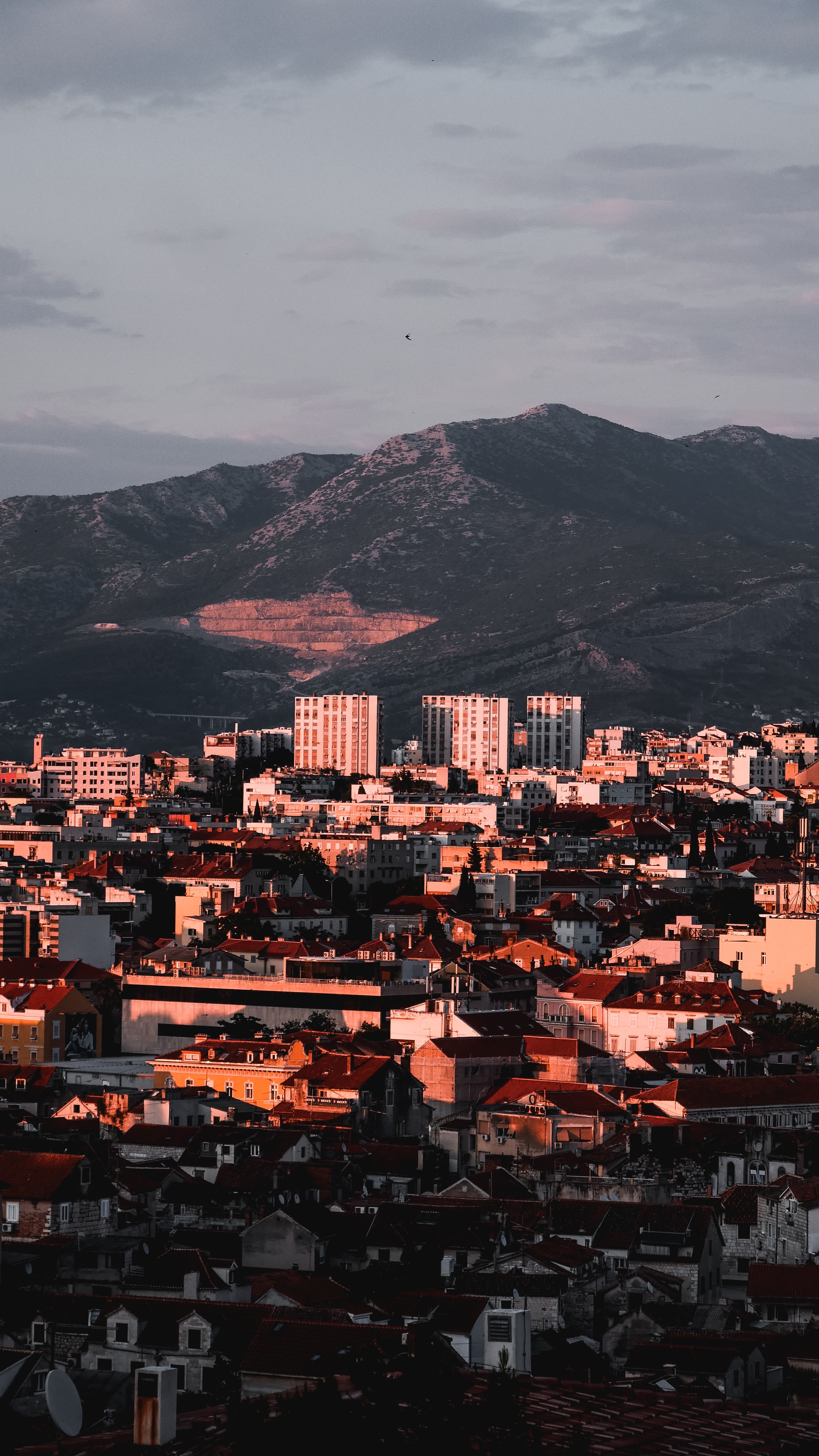
Split's ancient core is so spectacular and unusual that a visit is more than worth your time. The heart of the city lies within the walls of Roman emperor Diocletian's retirement palace, which was built in the 3rd century AD. Diocletian, born in the nearby Roman settlement of Salona in AD 245, achieved a brilliant career as a soldier and became emperor at the age of 40. In 295 he ordered this vast palace to be built in his native Dalmatia, and when it was completed he stepped down from the throne and retired to his beloved homeland. Upon his death, he was laid to rest in an octagonal mausoleum, around which Split's magnificent cathedral was built.In 615, when Salona was sacked by barbarian tribes, those fortunate enough to escape found refuge within the stout palace walls and divided up the vast imperial apartments into more modest living quarters. Thus, the palace developed into an urban center, and by the 11th century the settlement had expanded beyond the ancient walls.Under the rule of Venice (1420–1797), Split—as a gateway to the Balkan interior—became one of the Adriatic's main trading ports, and the city's splendid Renaissance palaces bear witness to the affluence of those times. When the Habsburgs took control during the 19th century, an overland connection to Central Europe was established by the construction of the Split–Zagreb–Vienna railway line.After World War II, the Tito years saw a period of rapid urban expansion: industrialization accelerated and the suburbs extended to accommodate high-rise apartment blocks. Today the historic center of Split is included on UNESCO's list of World Heritage Sites.
About Monopoli
About Kotor
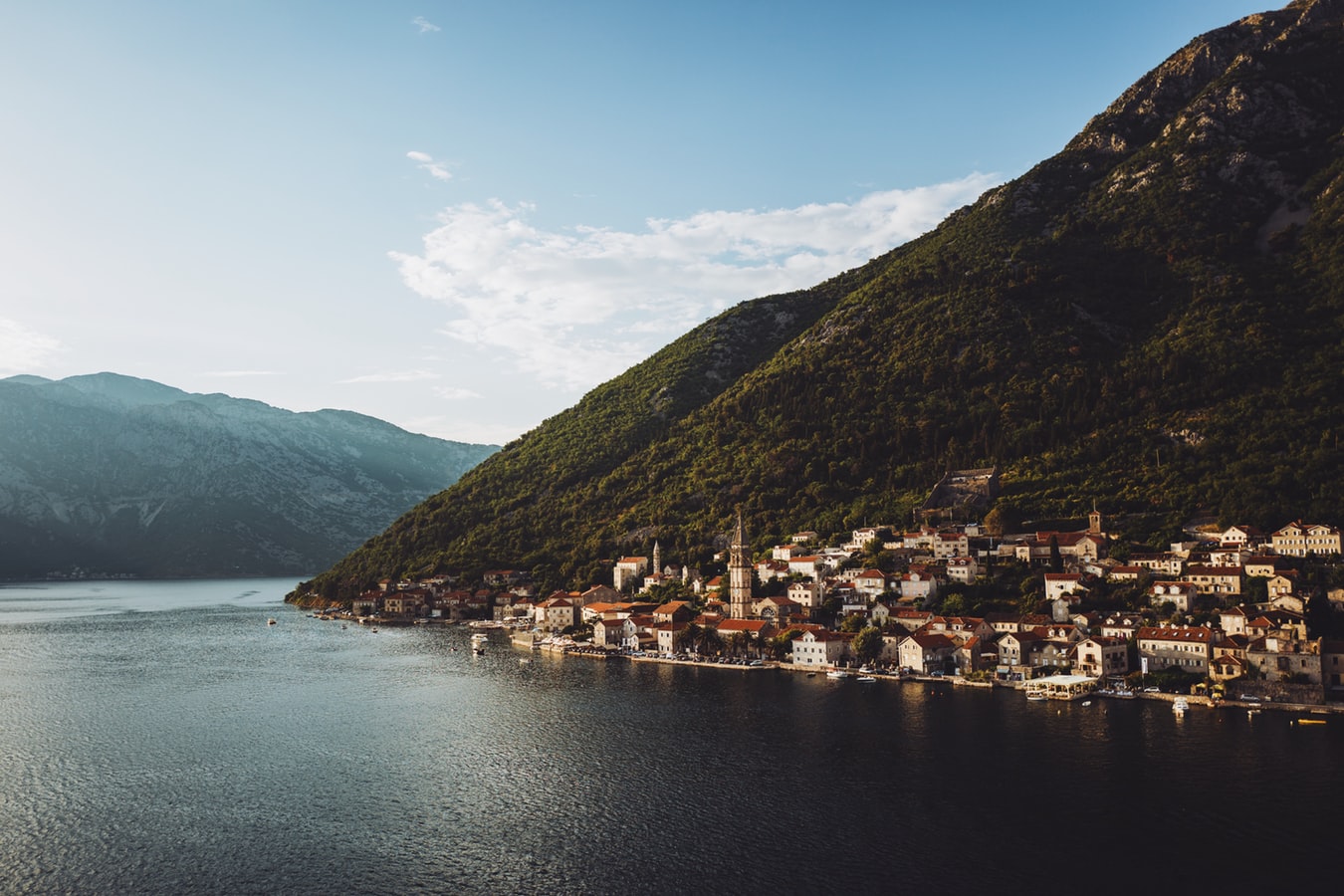
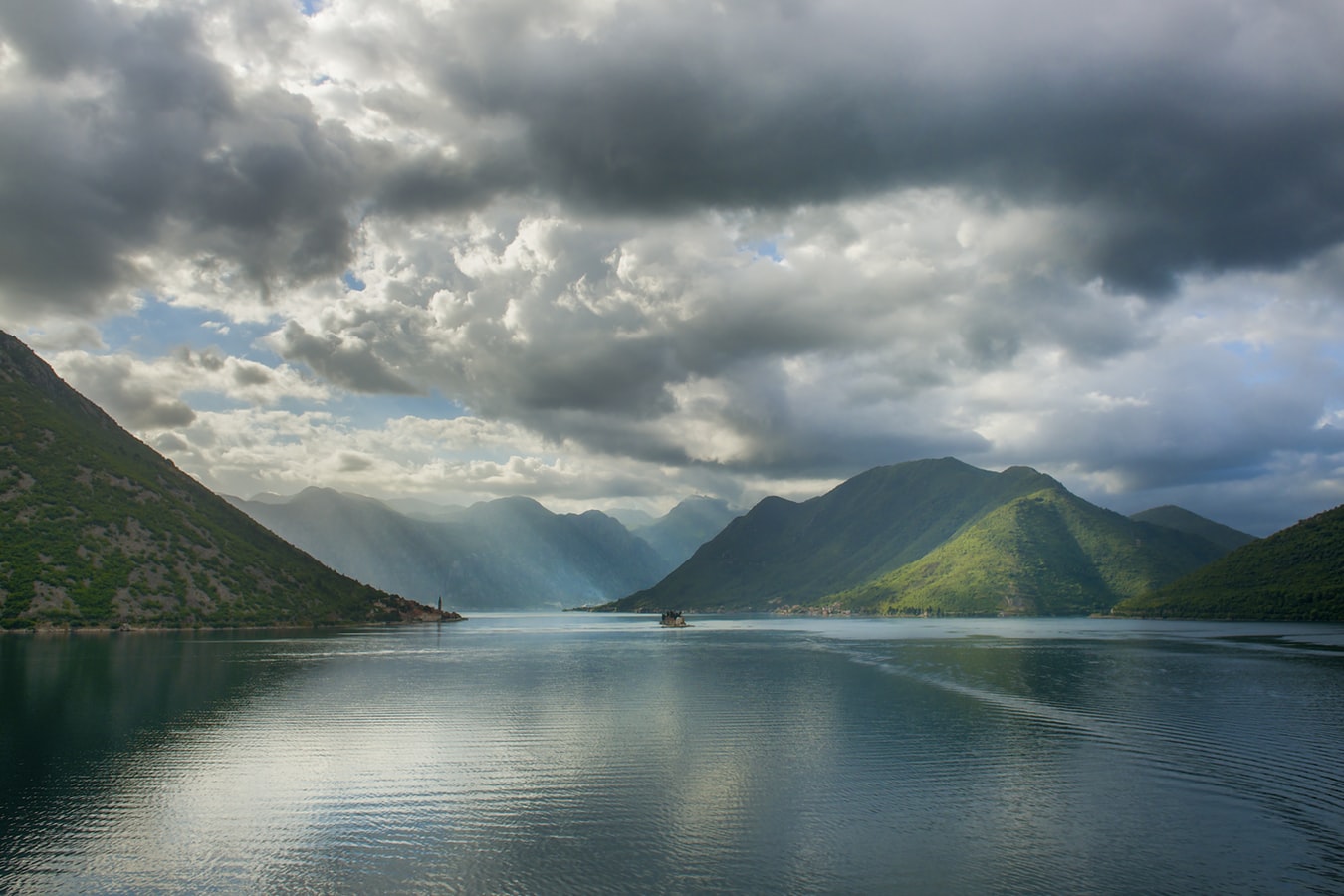
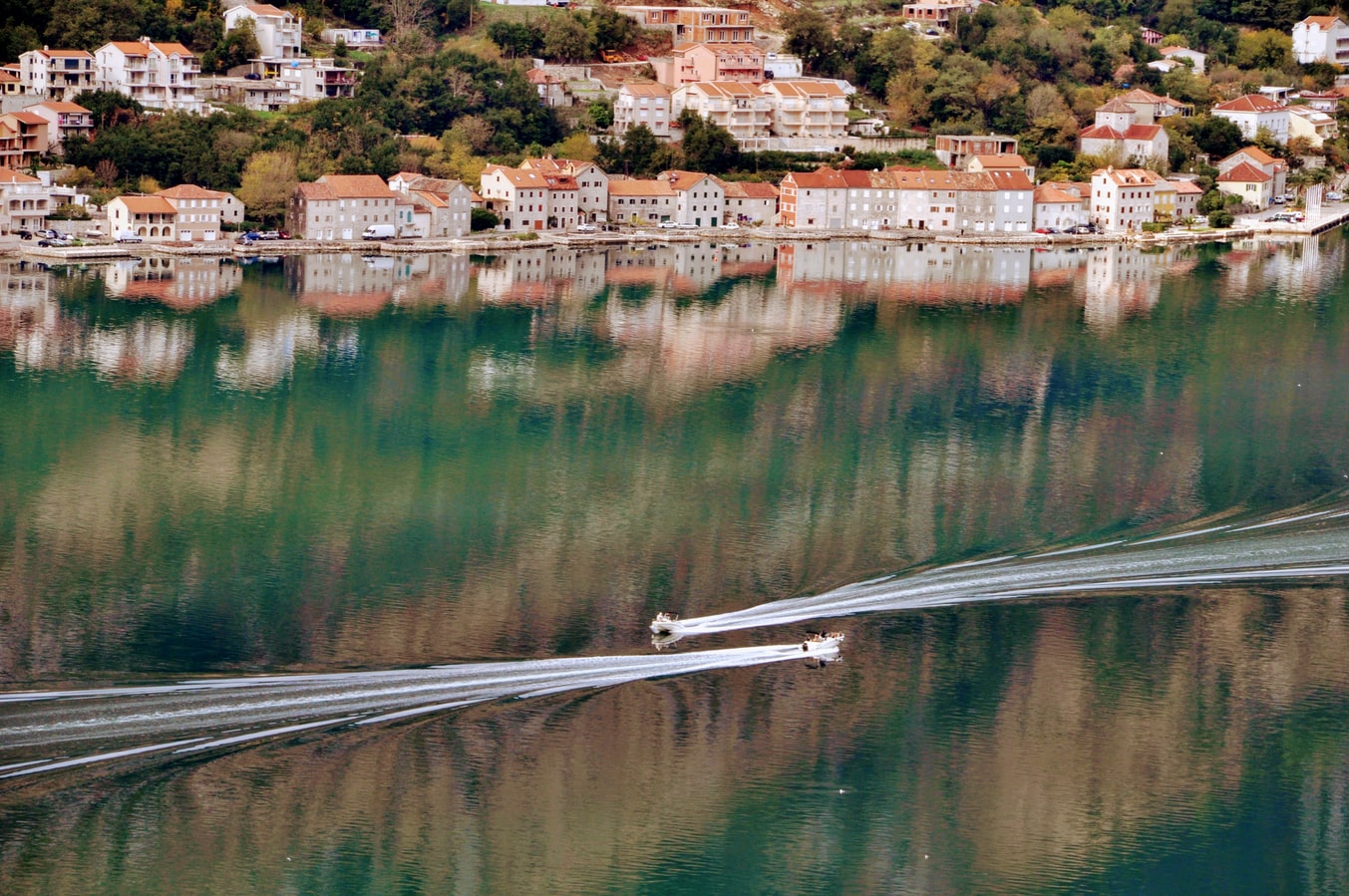
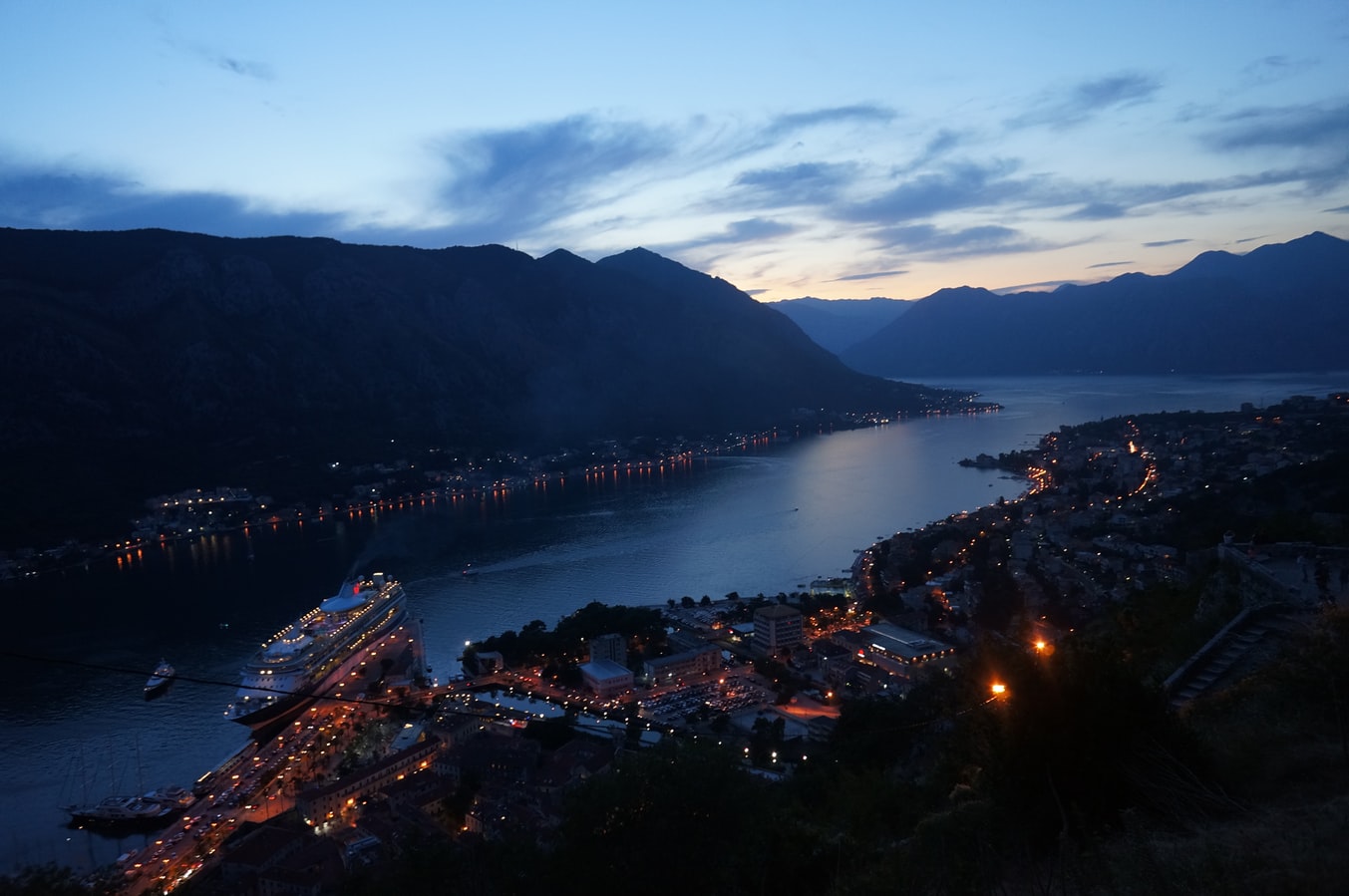
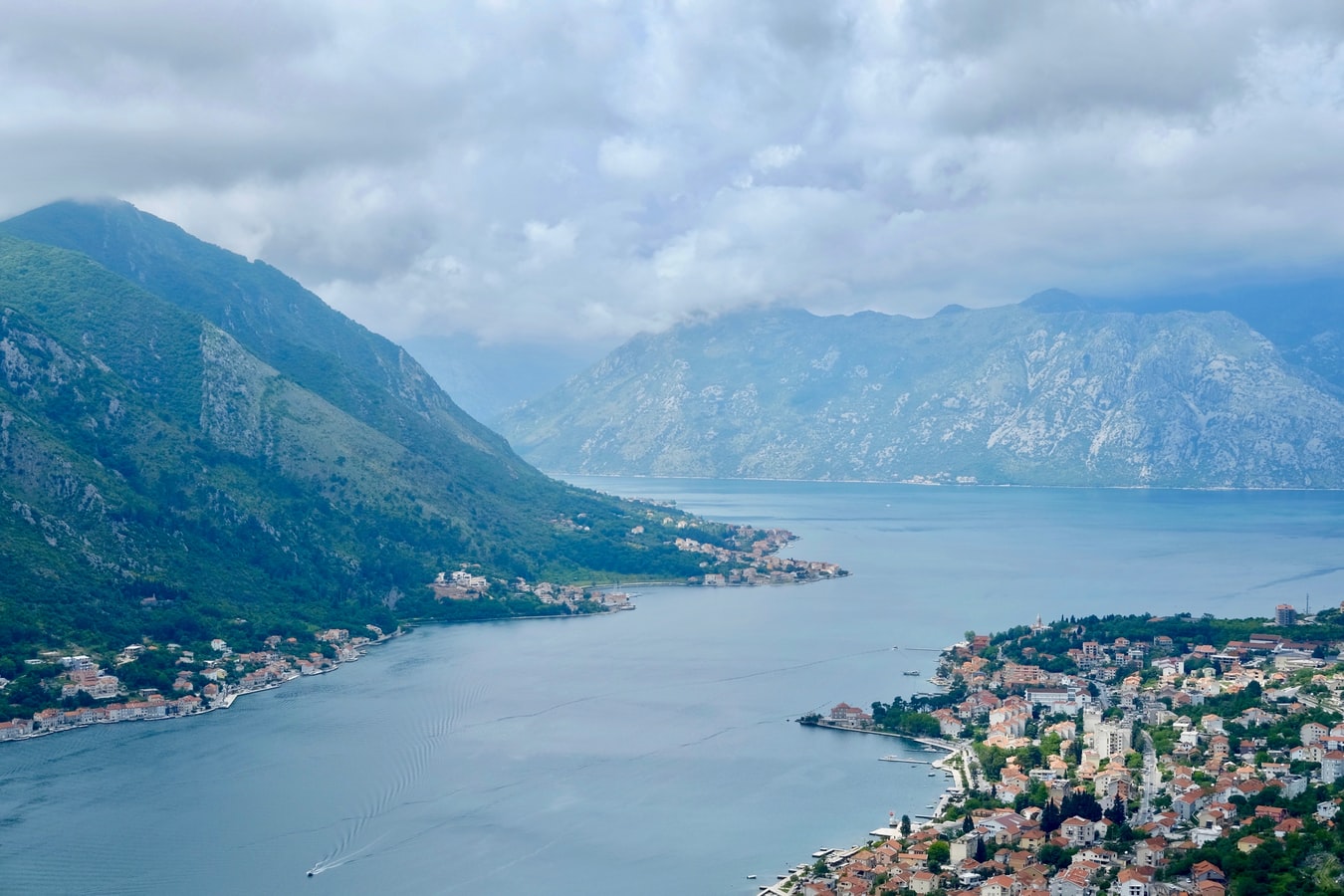
Backed by imposing mountains, tiny Kotor lies hidden from the open sea, tucked into the deepest channel of the Bokor Kotorska (Kotor Bay), which is Europe's most southerly fjord. To many, this town is more charming than its sister UNESCO World Heritage Site, Dubrovnik, retaining more authenticity, but with fewer tourists and spared the war damage and subsequent rebuilding which has given Dubrovnik something of a Disney feel.Kotor's medieval Stari Grad (Old Town) is enclosed within well-preserved defensive walls built between the 9th and 18th centuries and is presided over by a proud hilltop fortress. Within the walls, a labyrinth of winding cobbled streets leads through a series of splendid paved piazzas, rimmed by centuries-old stone buildings. The squares are now haunted by strains from buskers but although many now house trendy cafés and chic boutiques, directions are still given medieval-style by reference to the town’s landmark churches.In the Middle Ages, as Serbia's chief port, Kotor was an important economic and cultural center with its own highly regarded schools of stonemasonry and iconography. From 1391 to 1420 it was an independent city-republic and later, it spent periods under Venetian, Austrian, and French rule, though it was undoubtedly the Venetians who left the strongest impression on the city's architecture. Since the breakup of Yugoslavia, some 70% of the stone buildings in the romantic Old Town have been snapped up by foreigners, mostly Brits and Russians. Porto Montenegro, a new marina designed to accommodate some of the world’s largest super yachts, opened in nearby Tivat in 2011, and along the bay are other charming seaside villages, all with better views of the bay than the vista from Kotor itself where the waterside is congested with cruise ships and yachts. Try sleepy Muo or the settlement of Prčanj in one direction around the bay, or Perast and the Roman mosaics of Risan in the other direction.
About Corfu
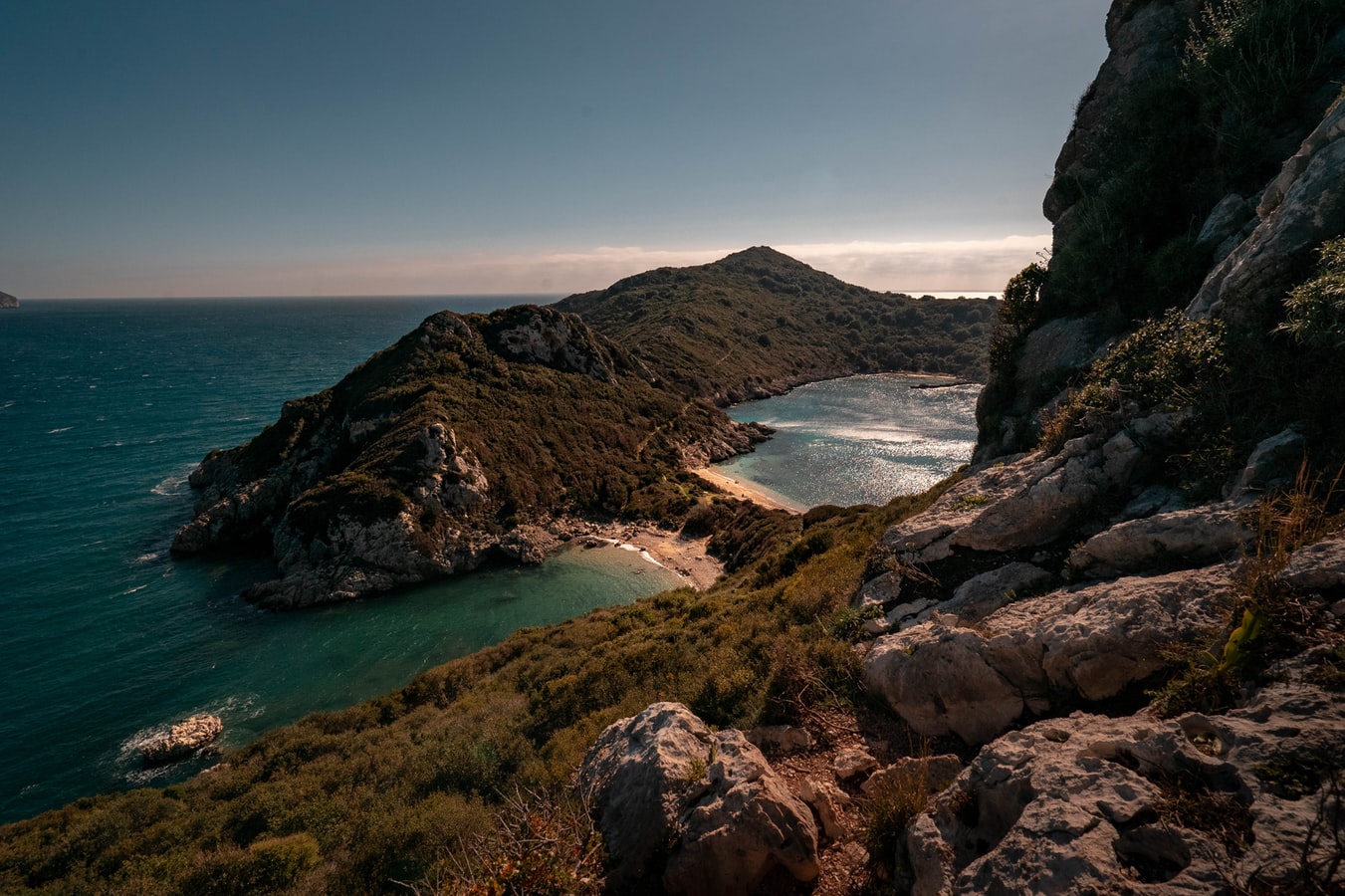
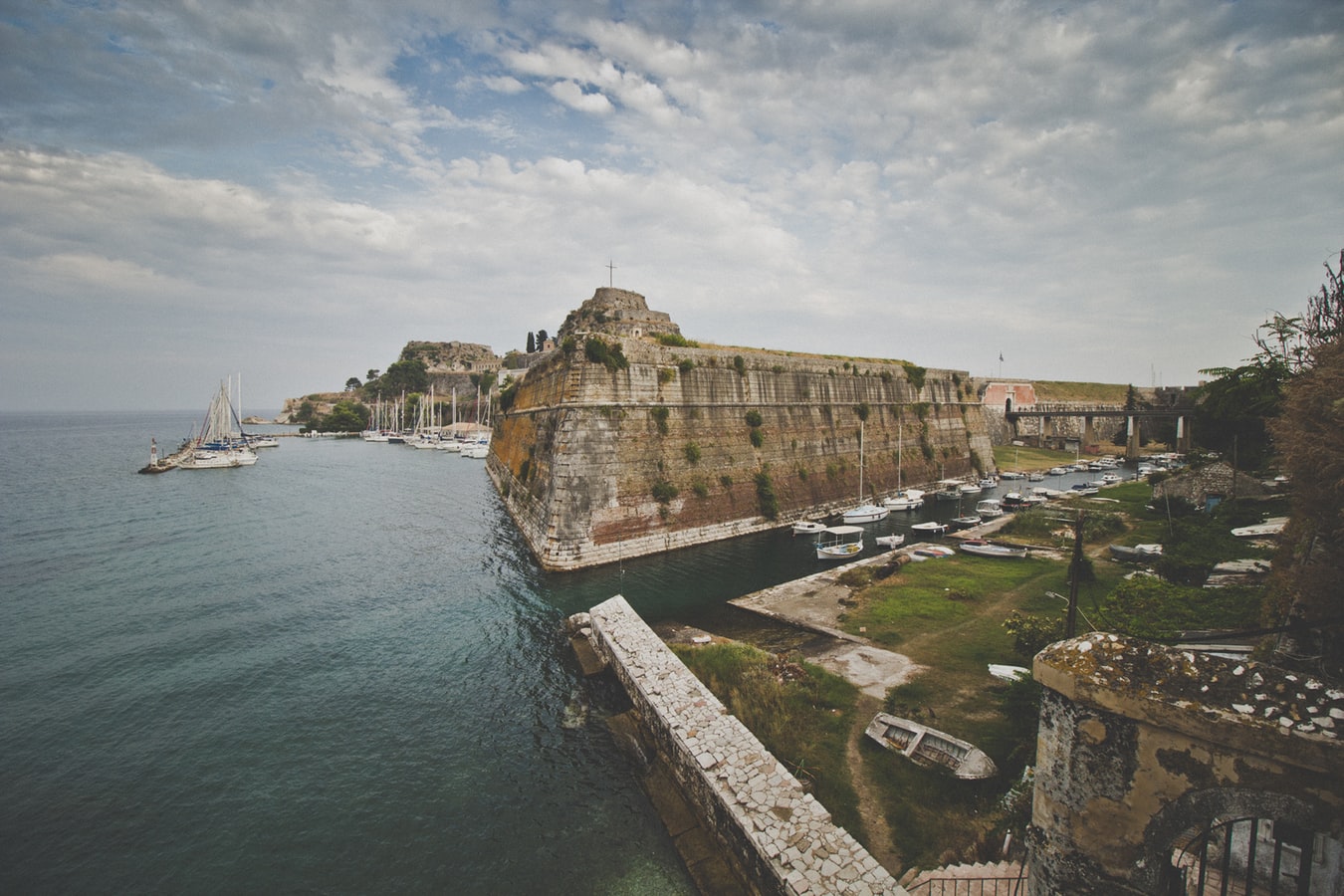
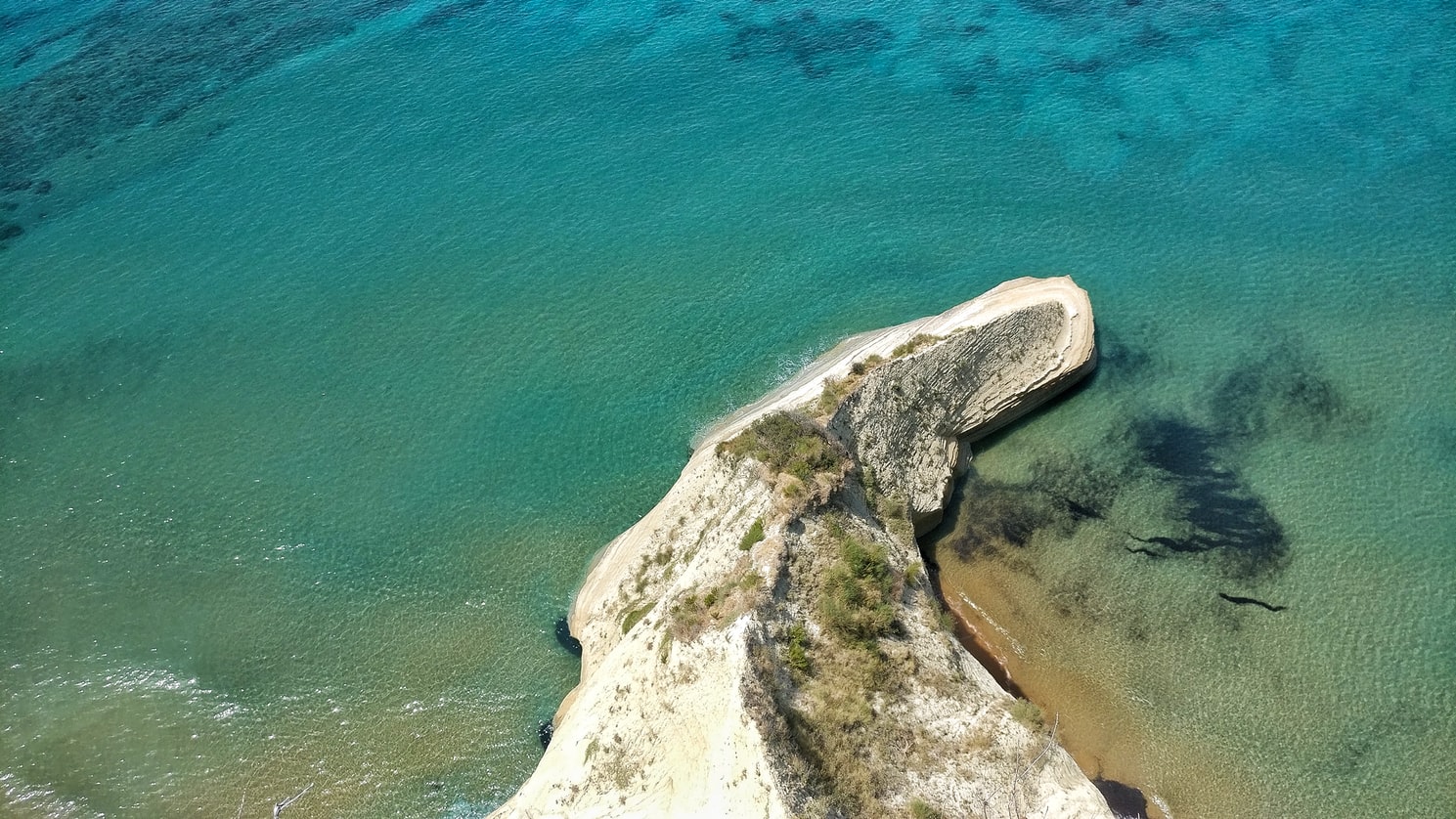
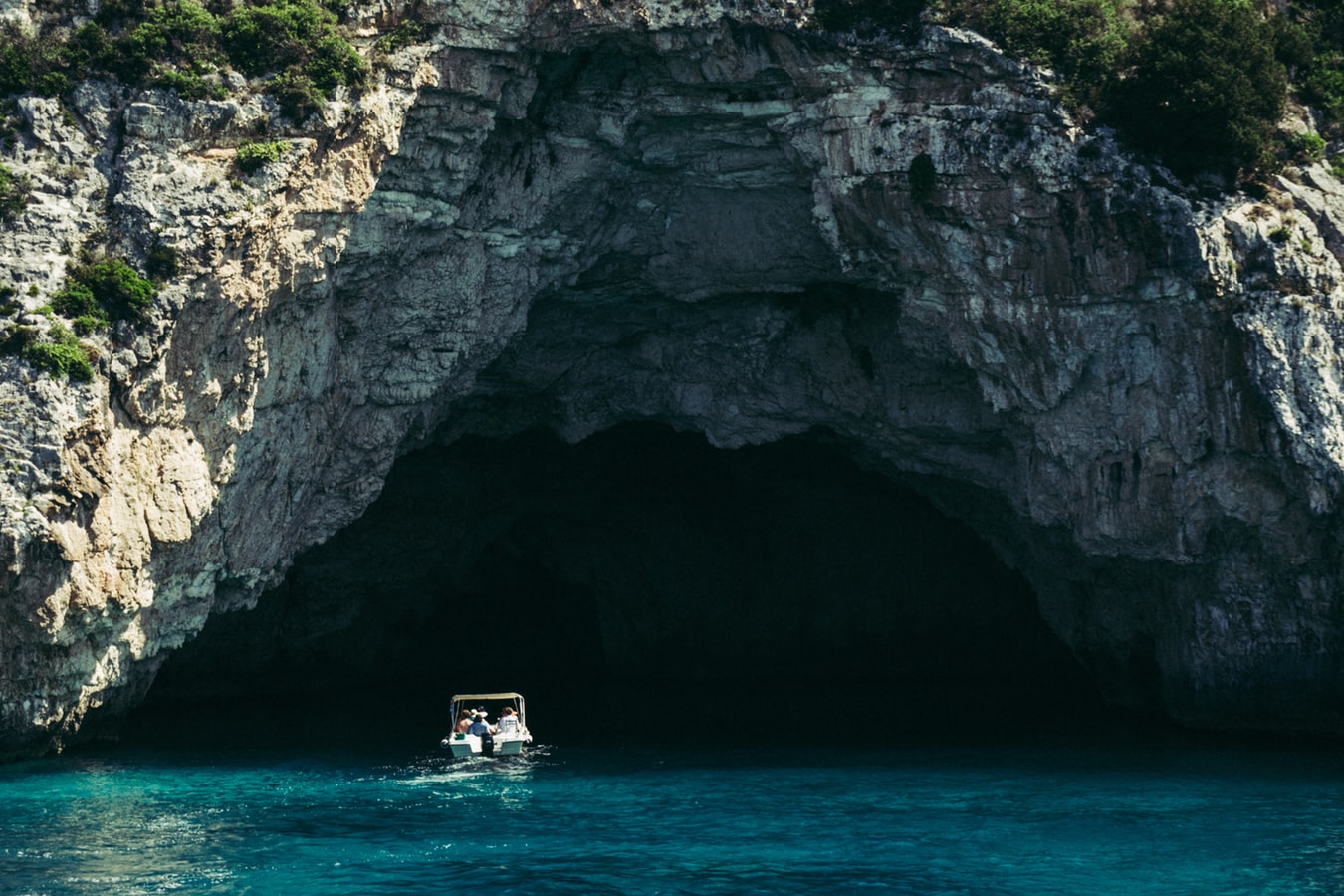
Corfu town today is a vivid tapestry of cultures—a sophisticated weave, where charm, history, and natural beauty blend. Located about midway along the island's east coast, this spectacularly lively capital is the cultural heart of Corfu and has a remarkable historic center that UNESCO designated as a World Heritage Site in 2007. All ships and planes dock or land near Corfu town, which occupies a small peninsula jutting into the Ionian Sea.Whether arriving by ferry from mainland Greece or Italy, from another island, or directly by plane, catch your breath by first relaxing with a coffee or a gelato in Corfu town's shaded Liston Arcade, then stroll the narrow lanes of its pedestrians-only quarter. For an overview of the immediate area, and a quick tour of Mon Repos palace, hop on the little tourist train that runs from May to September. Corfu town has a different feel at night, so book a table at one of its famed tavernas to savor the island's unique cuisine.The best way to get around Corfu town is on foot. The town is small enough so that you can easily walk to every sight. There are local buses, but they do not thread their way into the streets (many now car-free) of the historic center. If you are arriving by ferry or plane, it's best to take a taxi to your hotel. Expect to pay about €10 from the airport or ferry terminal to a hotel in Corfu town. If there are no taxis waiting, you can call for one.
About Katakolon
Katakolon could not seem less of a cruise port if it tried. A tiny enclave clinging to the western Peloponnese coast, it's a sleepy place except when ships dock. But it's a popular cruise destination because of its proximity to Olympia. Ancient Olympia was one of the most important cities in classical Greece. The Sanctuary of Zeus was the city's raison d'être, and attracted pilgrims from around the eastern Mediterranean, and later the city played host to Olympic Games, the original athletic games that were the inspiration for today's modern sporting pan-planetary meet. At the foot of the tree-covered Kronion hill, in a valley near two rivers, Katakolon is today one of the most popular ancient sites in Greece. If you don't want to make the trip to Olympia, then Katakolon is an ideal place for a leisurely Greek lunch while you watch the fishermen mend their nets, but there's just not much else to do there.
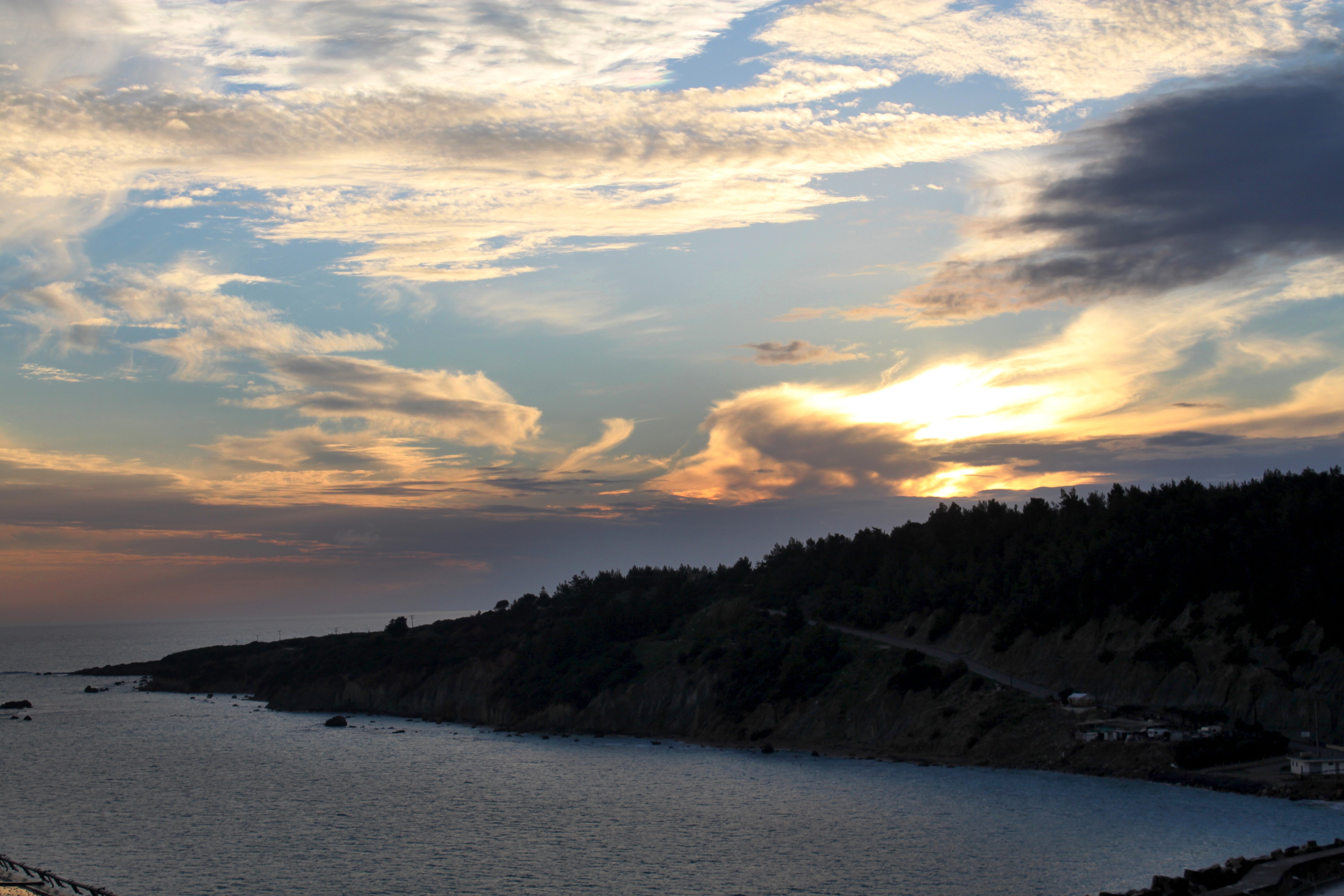
About Heraklion (Iraklion), Crete
Having been controlled by Arabic, Venetian and Ottoman empires over the years - it's no surprise that Heraklion is a diverse patchwork of exotic cultures and historical treasures. Celebrated as the birthplace of the Spanish Renaissance artist, El Greco, you can visit to explore the storied ruins of the Minoan empire's capital, and unearth the rich cultural treasures that Crete’s bustling modern capital has to offer.
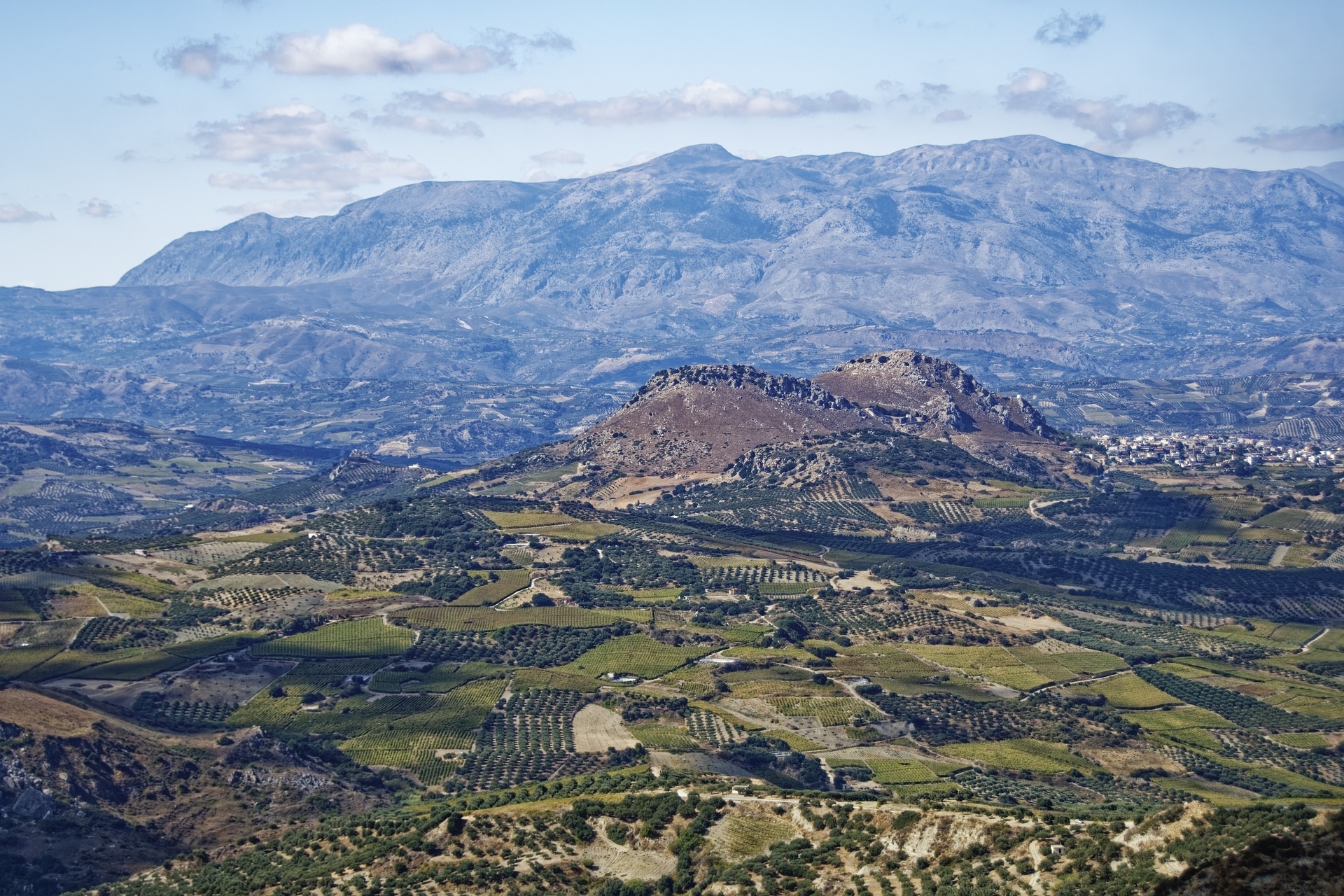
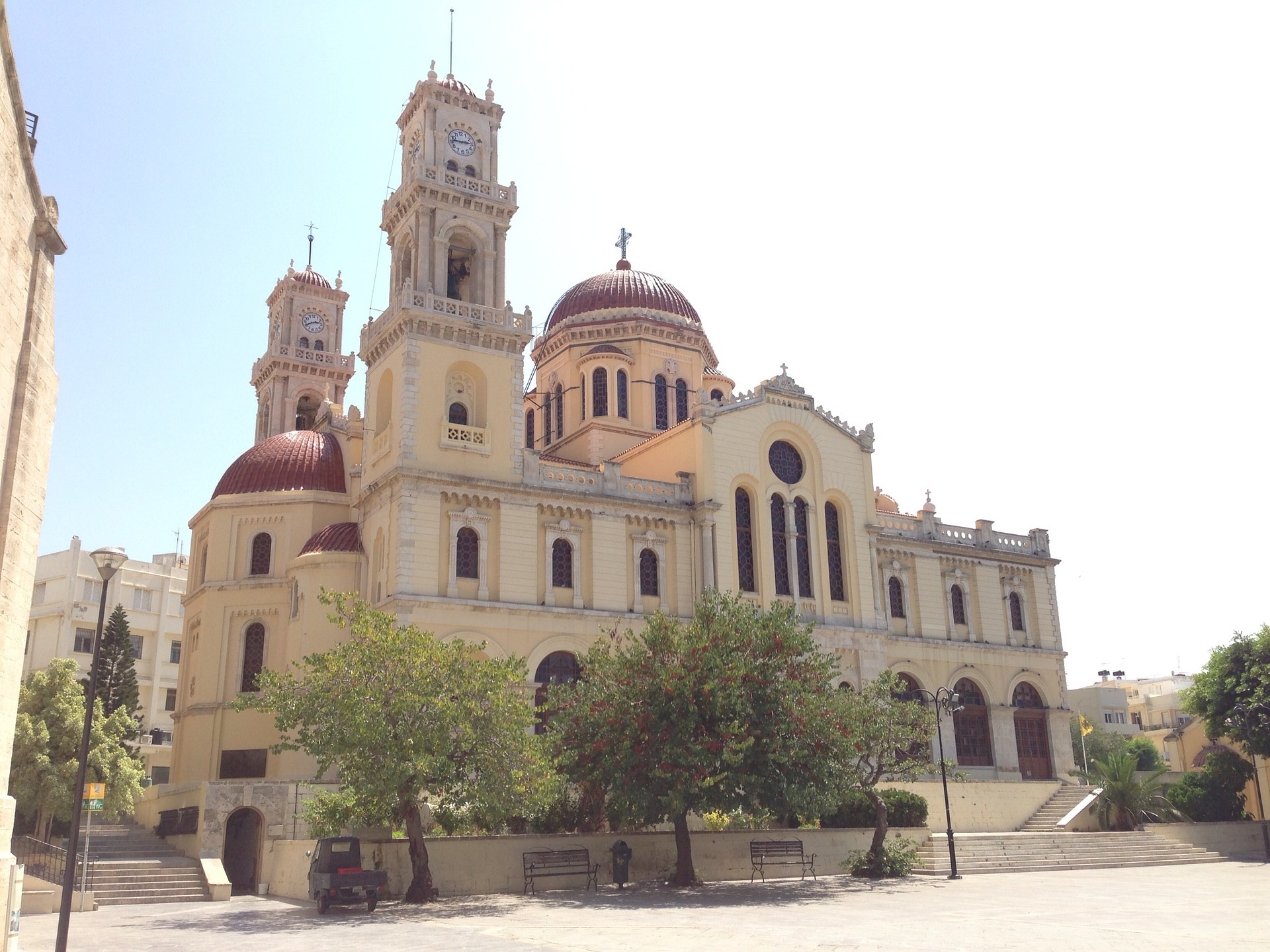
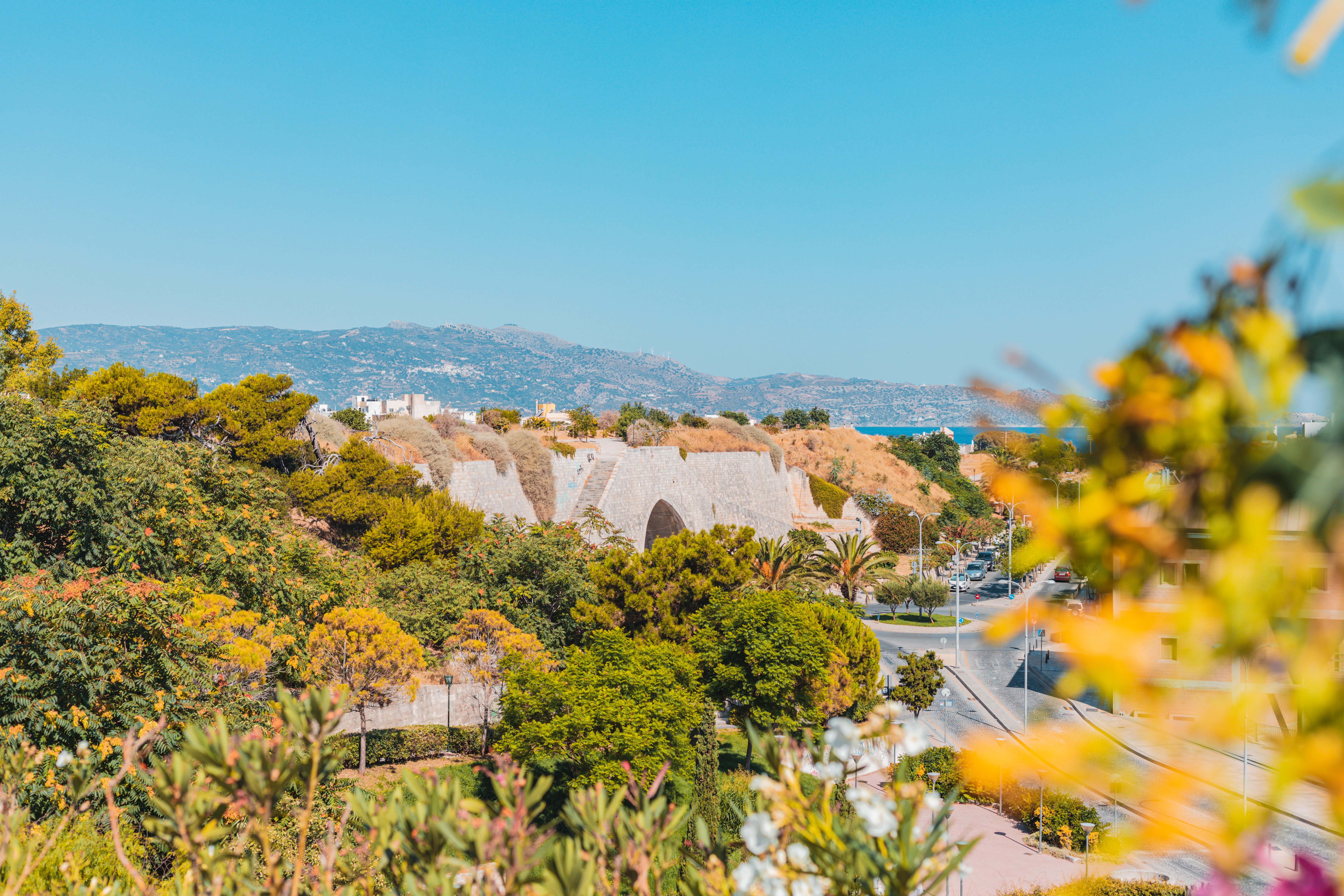
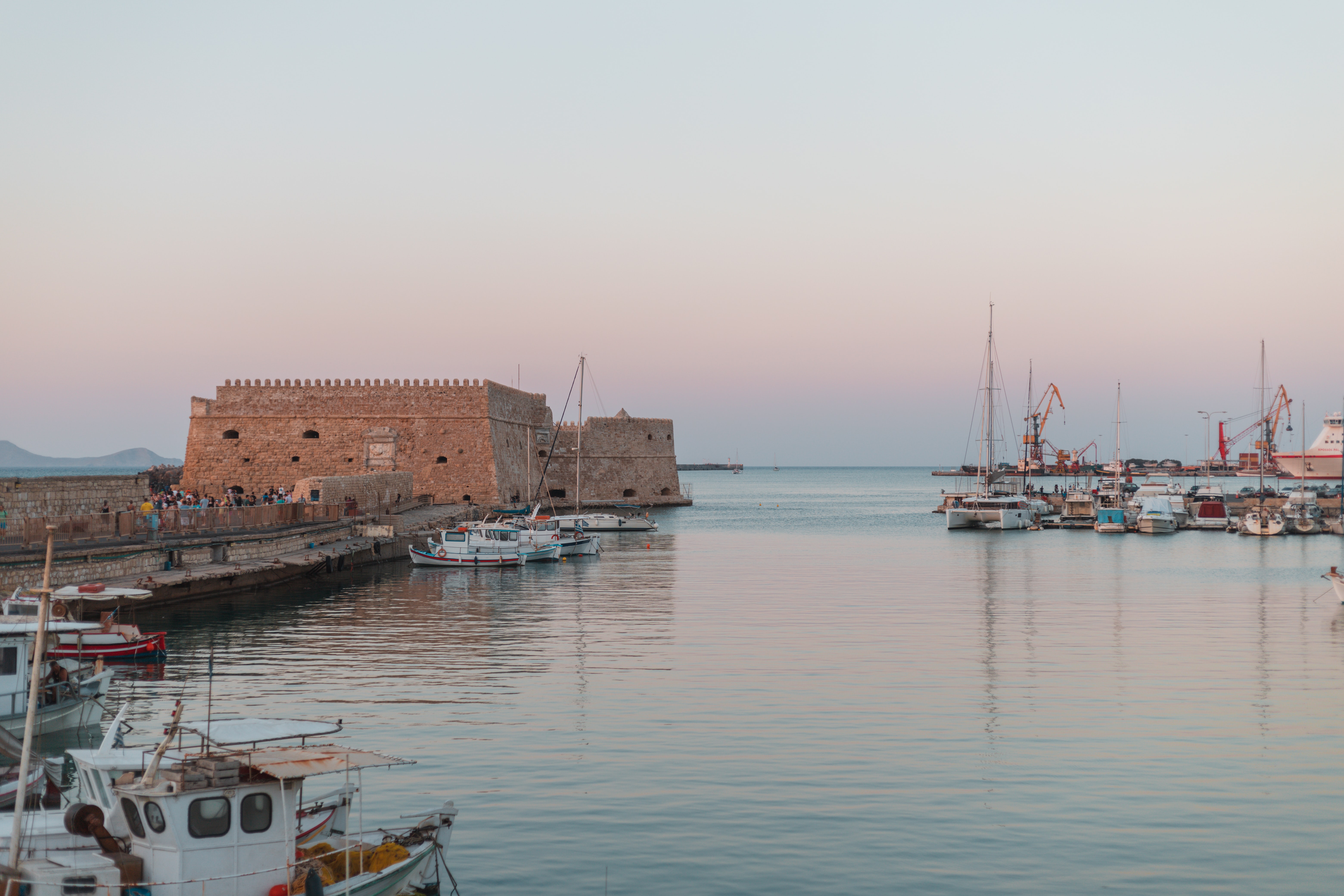
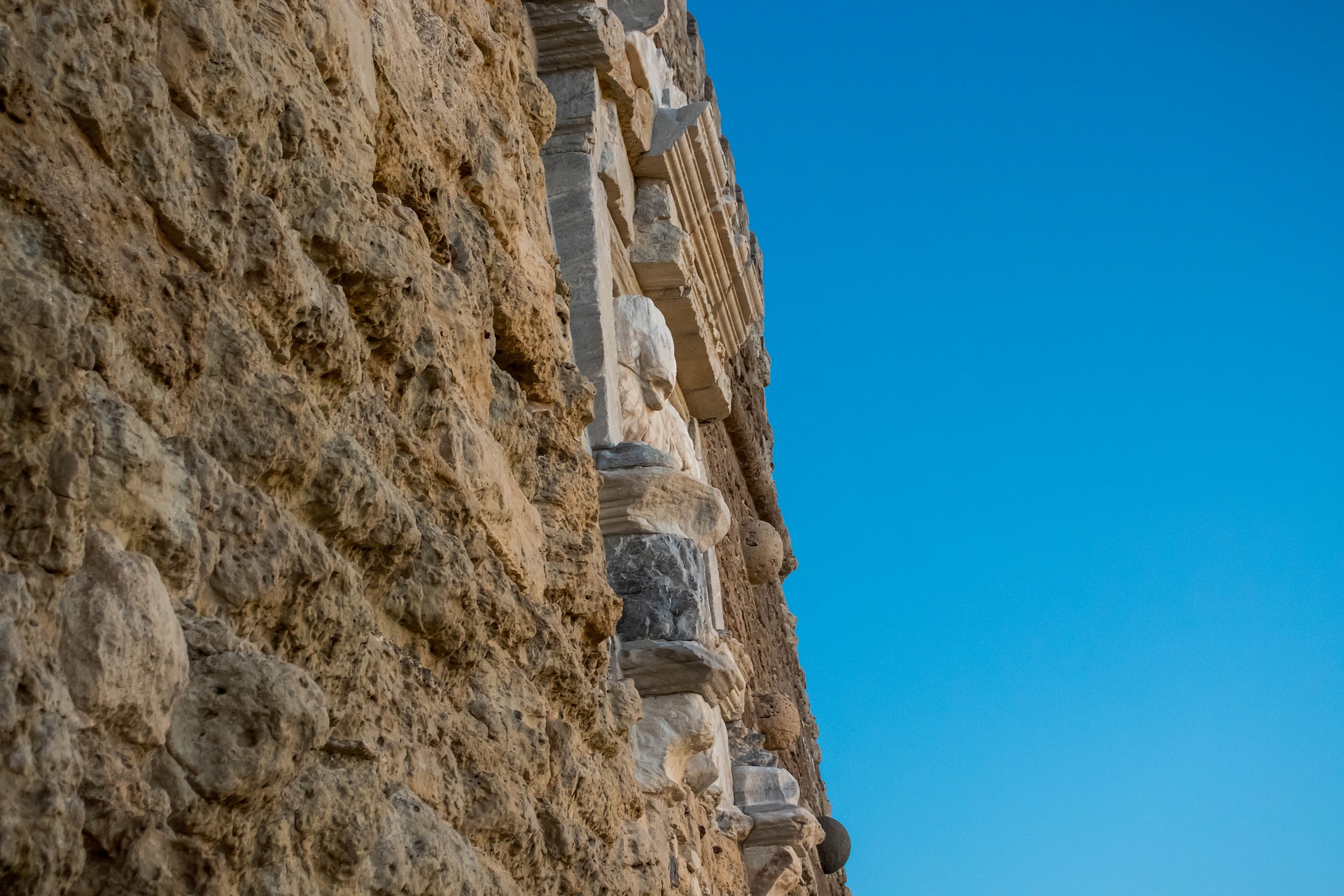
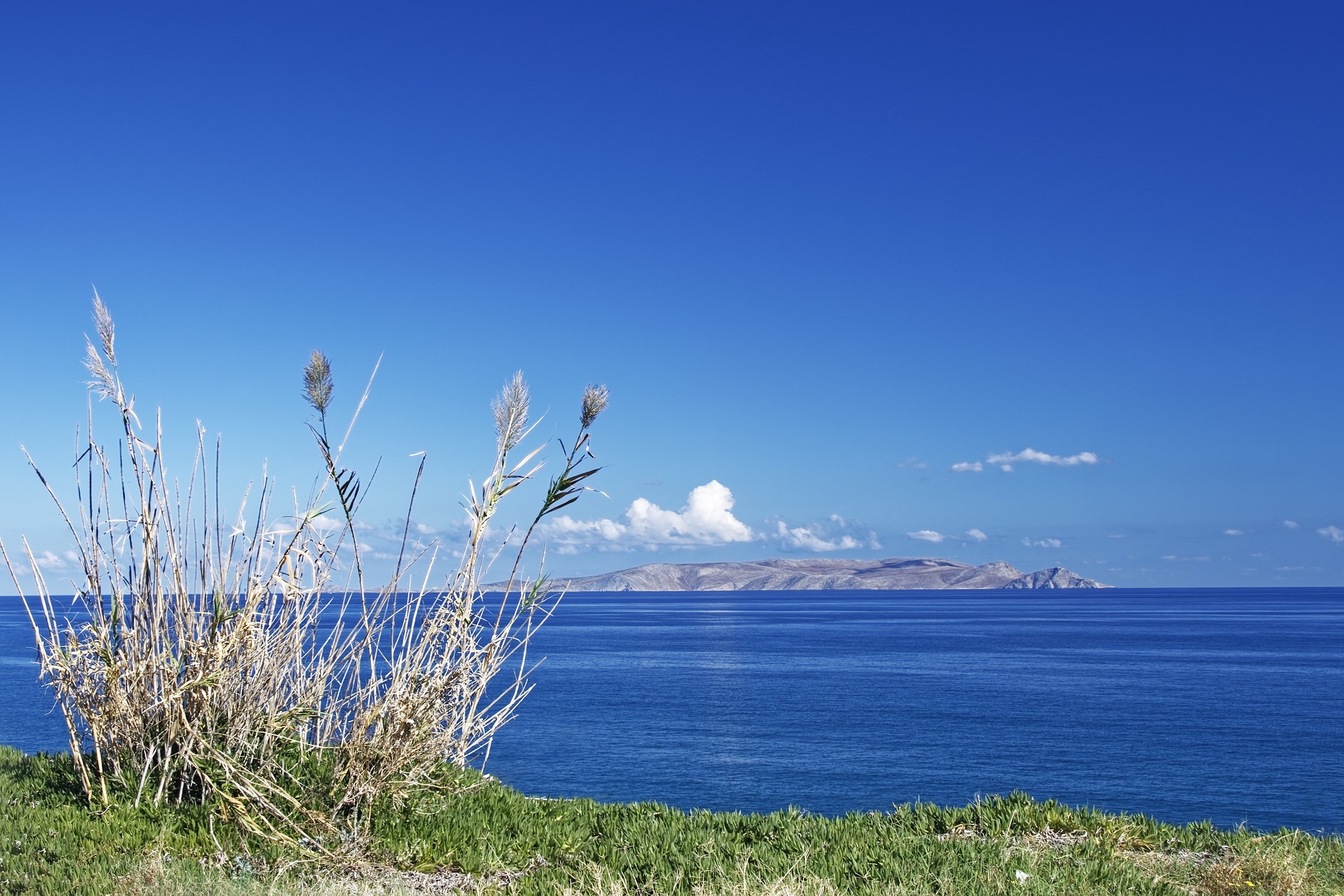
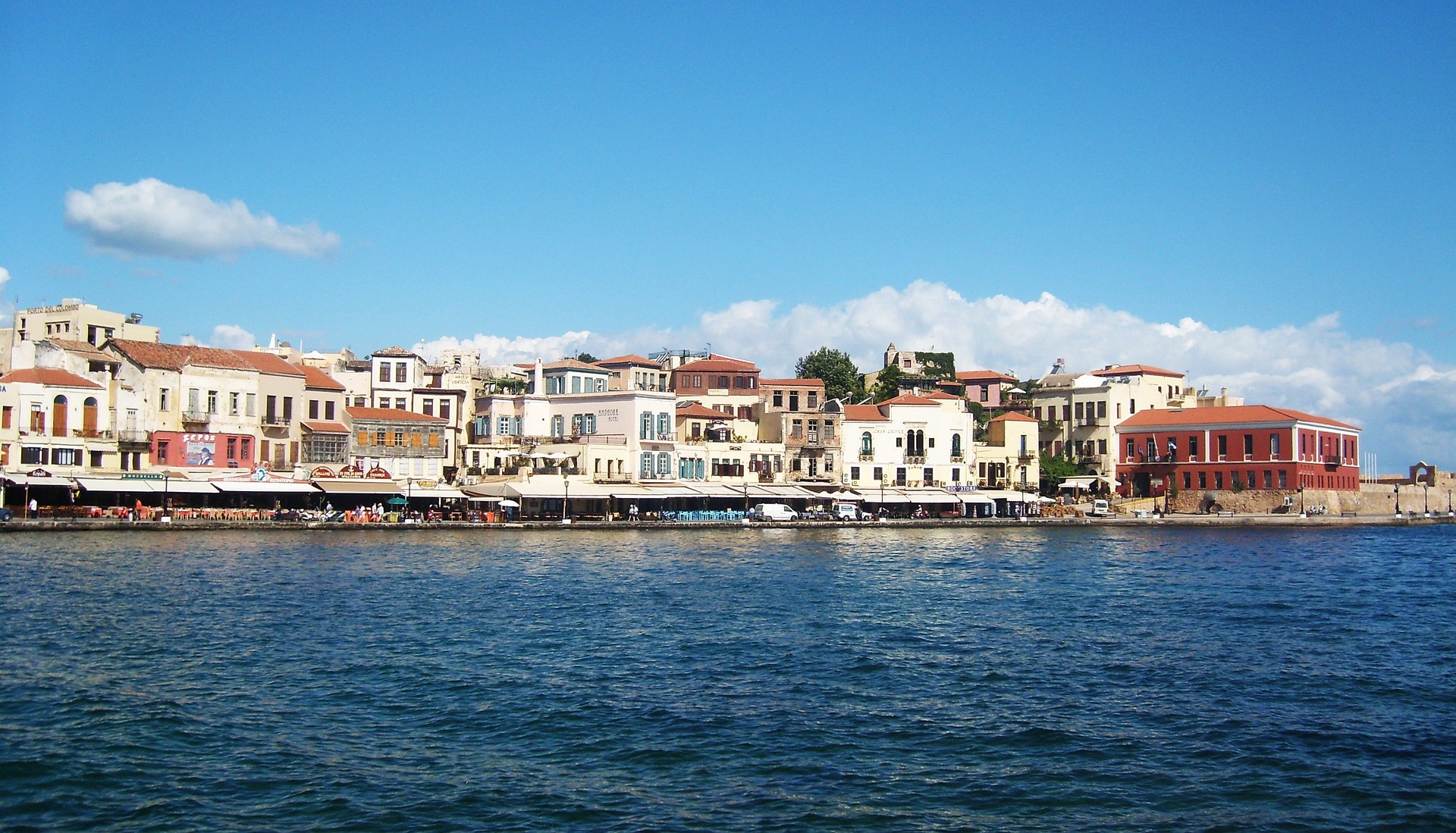
About Heraklion (Iraklion), Crete
Having been controlled by Arabic, Venetian and Ottoman empires over the years - it's no surprise that Heraklion is a diverse patchwork of exotic cultures and historical treasures. Celebrated as the birthplace of the Spanish Renaissance artist, El Greco, you can visit to explore the storied ruins of the Minoan empire's capital, and unearth the rich cultural treasures that Crete’s bustling modern capital has to offer.
About Santorini
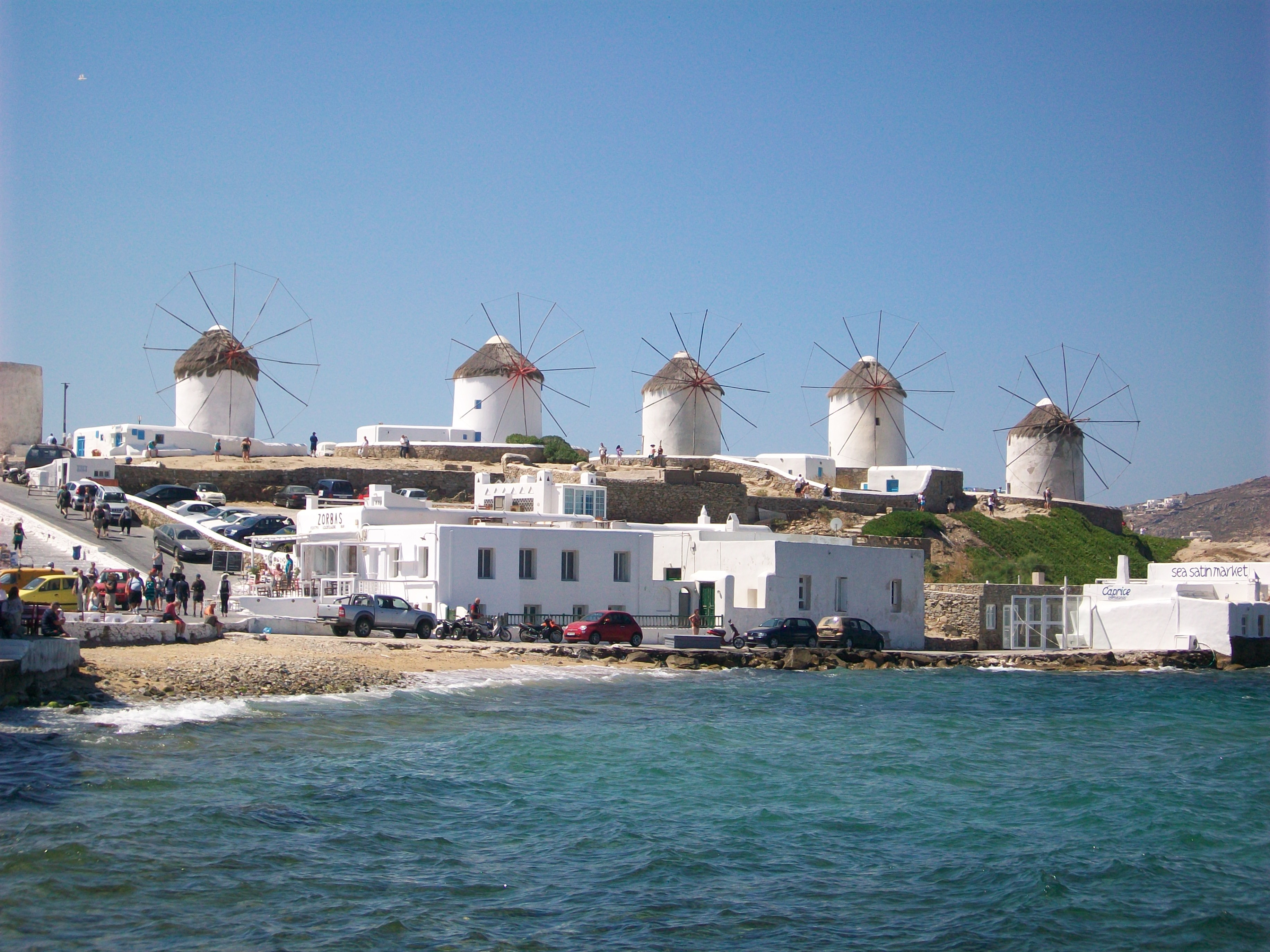
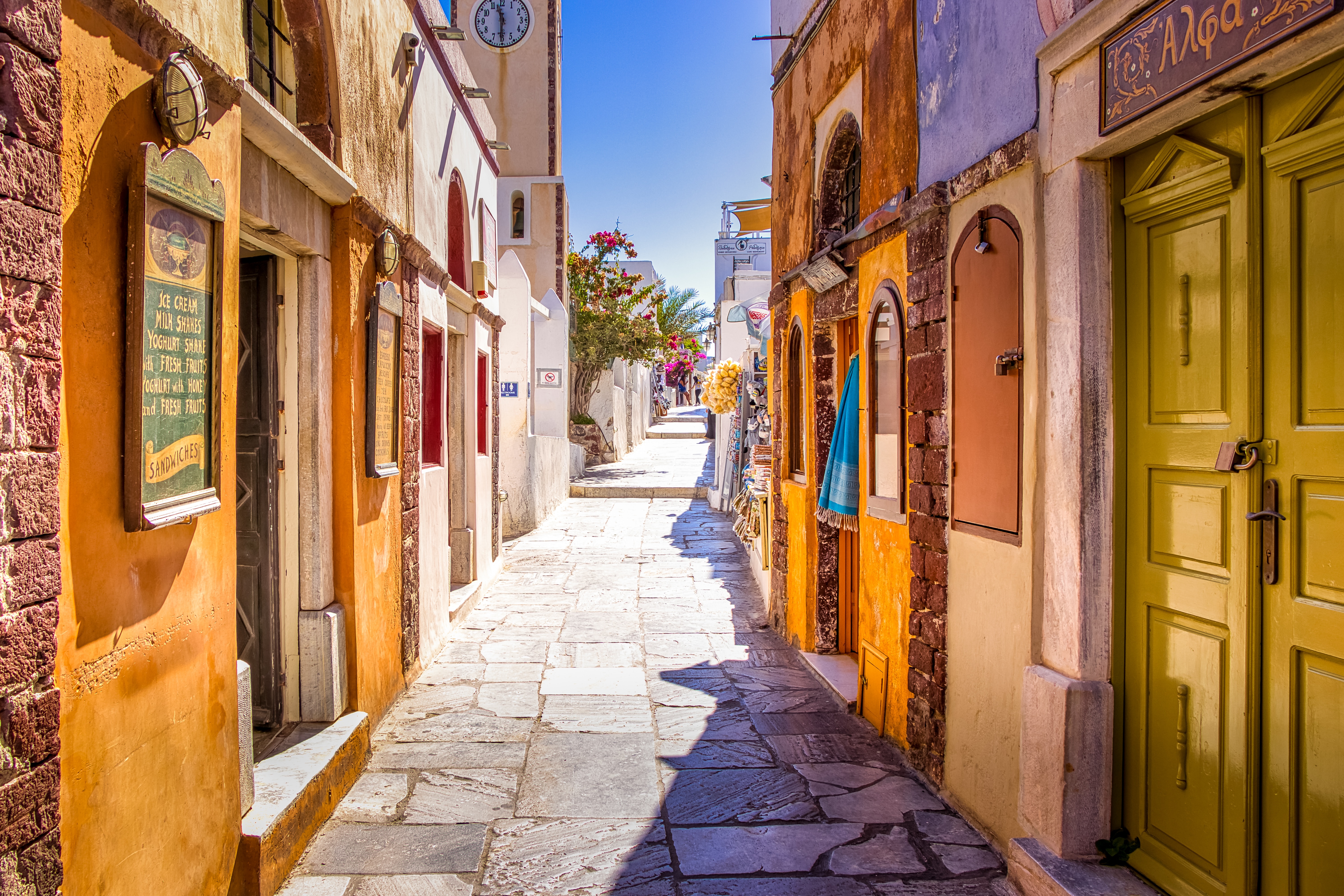
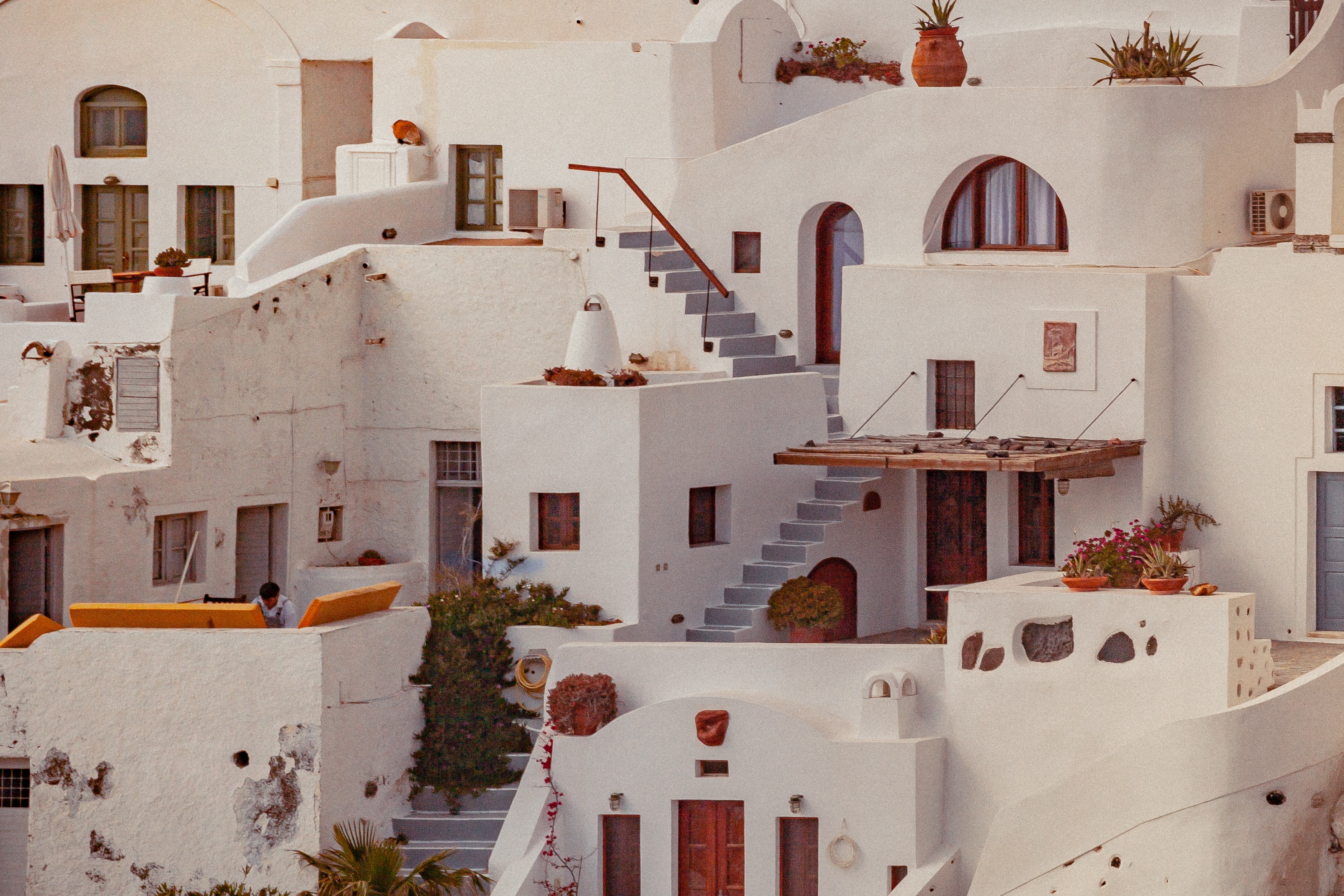
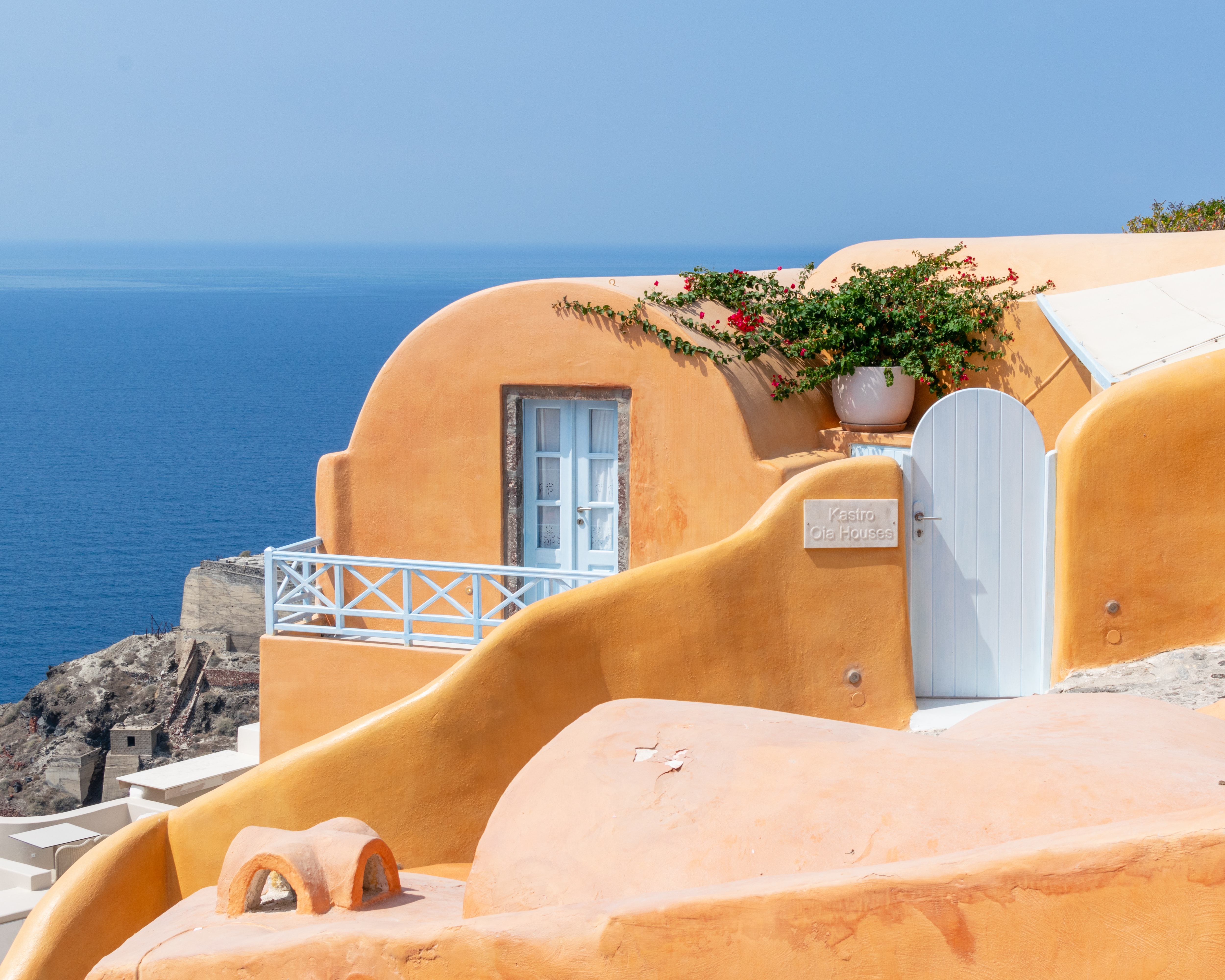
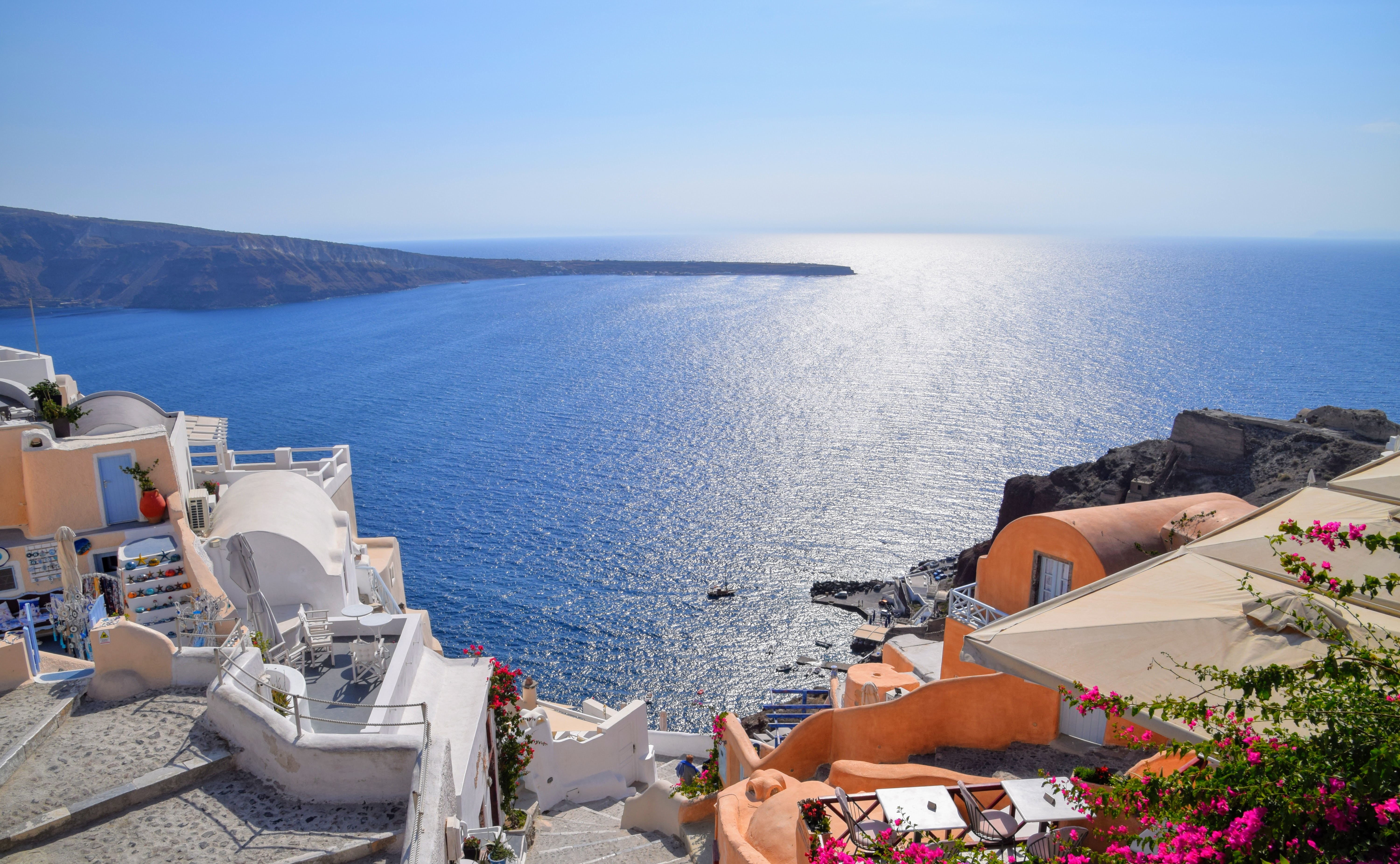
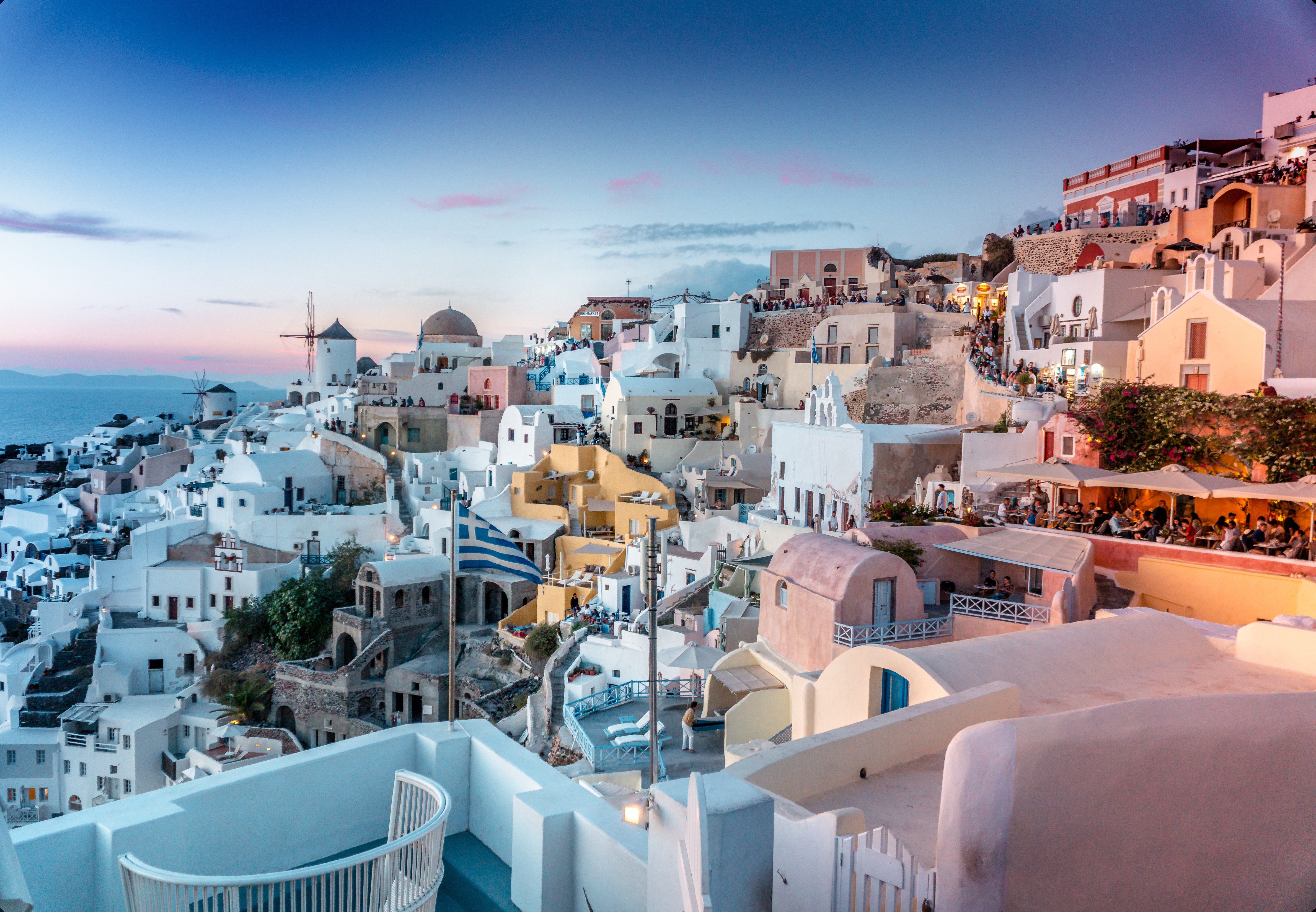
Undoubtedly the most extraordinary island in the Aegean, crescent-shape Santorini remains a mandatory stop on the Cycladic tourist route—even if it's necessary to enjoy the sensational sunsets from Ia, the fascinating excavations, and the dazzling white towns with a million other travelers. Called Kállisti (the "Loveliest") when first settled, the island has now reverted to its subsequent name of Thira, after the 9th-century-BC Dorian colonizer Thiras. The place is better known, however, these days as Santorini, a name derived from its patroness, St. Irene of Thessaloniki, the Byzantine empress who restored icons to Orthodoxy and died in 802. You can fly conveniently to Santorini, but to enjoy a true Santorini rite of passage, opt instead for the boat trip here, which provides a spectacular introduction. After the boat sails between Sikinos and Ios, your deck-side perch approaches two close islands with a passage between them. The bigger one on the left is Santorini, and the smaller on the right is Thirassia. Passing between them, you see the village of Ia adorning Santorini's northernmost cliff like a white geometric beehive. You are in the caldera (volcanic crater), one of the world's truly breathtaking sights: a demilune of cliffs rising 1,100 feet, with the white clusters of the towns of Fira and Ia perched along the top. The bay, once the high center of the island, is 1,300 feet in some places, so deep that when boats dock in Santorini's shabby little port of Athinios, they do not drop anchor. The encircling cliffs are the ancient rim of a still-active volcano, and you are sailing east across its flooded caldera. On your right are the Burnt isles, the White isle, and other volcanic remnants, all lined up as if some outsize display in a geology museum. Hephaestus's subterranean fires smolder still—the volcano erupted in 198 BC, about 735, and there was an earthquake in 1956. Indeed, Santorini and its four neighboring islets are the fragmentary remains of a larger landmass that exploded about 1600 BC: the volcano's core blew sky high, and the sea rushed into the abyss to create the great bay, which measures 10 km by 7 km (6 mi by 4½ mi) and is 1,292 feet deep. The other pieces of the rim, which broke off in later eruptions, are Thirassia, where a few hundred people live, and deserted little Aspronissi ("White isle"). In the center of the bay, black and uninhabited, two cones, the Burnt Isles of Palea Kameni and Nea Kameni, appeared between 1573 and 1925. There has been too much speculation about the identification of Santorini with the mythical Atlantis, mentioned in Egyptian papyri and by Plato (who says it's in the Atlantic), but myths are hard to pin down. This is not true of old arguments about whether tidal waves from Santorini's cataclysmic explosion destroyed Minoan civilization on Crete, 113 km (70 mi) away. The latest carbon-dating evidence, which points to a few years before 1600 BC for the eruption, clearly indicates that the Minoans outlasted the eruption by a couple of hundred years, but most probably in a weakened state. In fact, the island still endures hardships: since antiquity, Santorini has depended on rain collected in cisterns for drinking and irrigating—the well water is often brackish—and the serious shortage is alleviated by the importation of water. However, the volcanic soil also yields riches: small, intense tomatoes with tough skins used for tomato paste (good restaurants here serve them); the famous Santorini fava beans, which have a light, fresh taste; barley; wheat; and white-skin eggplants.
About Piraeus
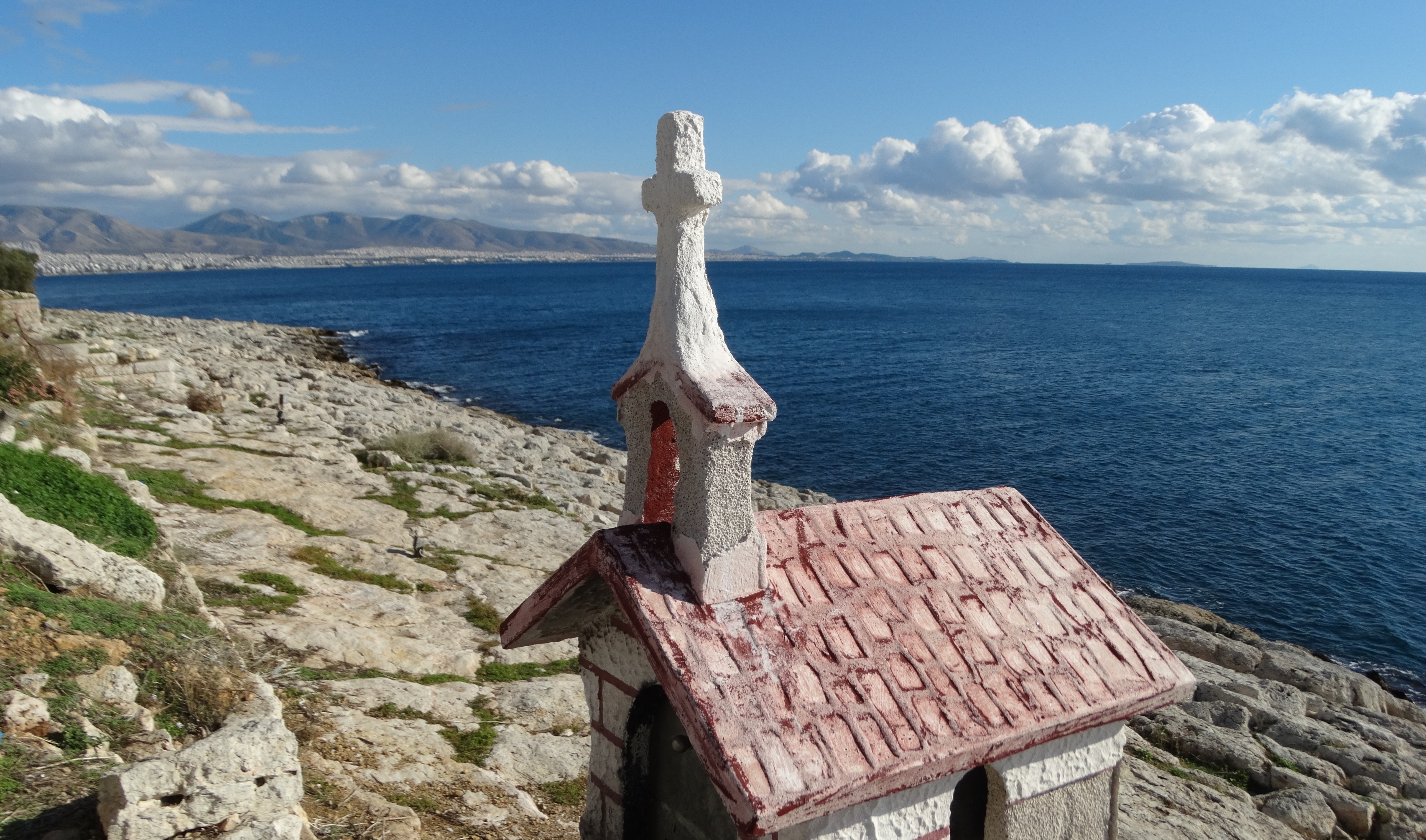
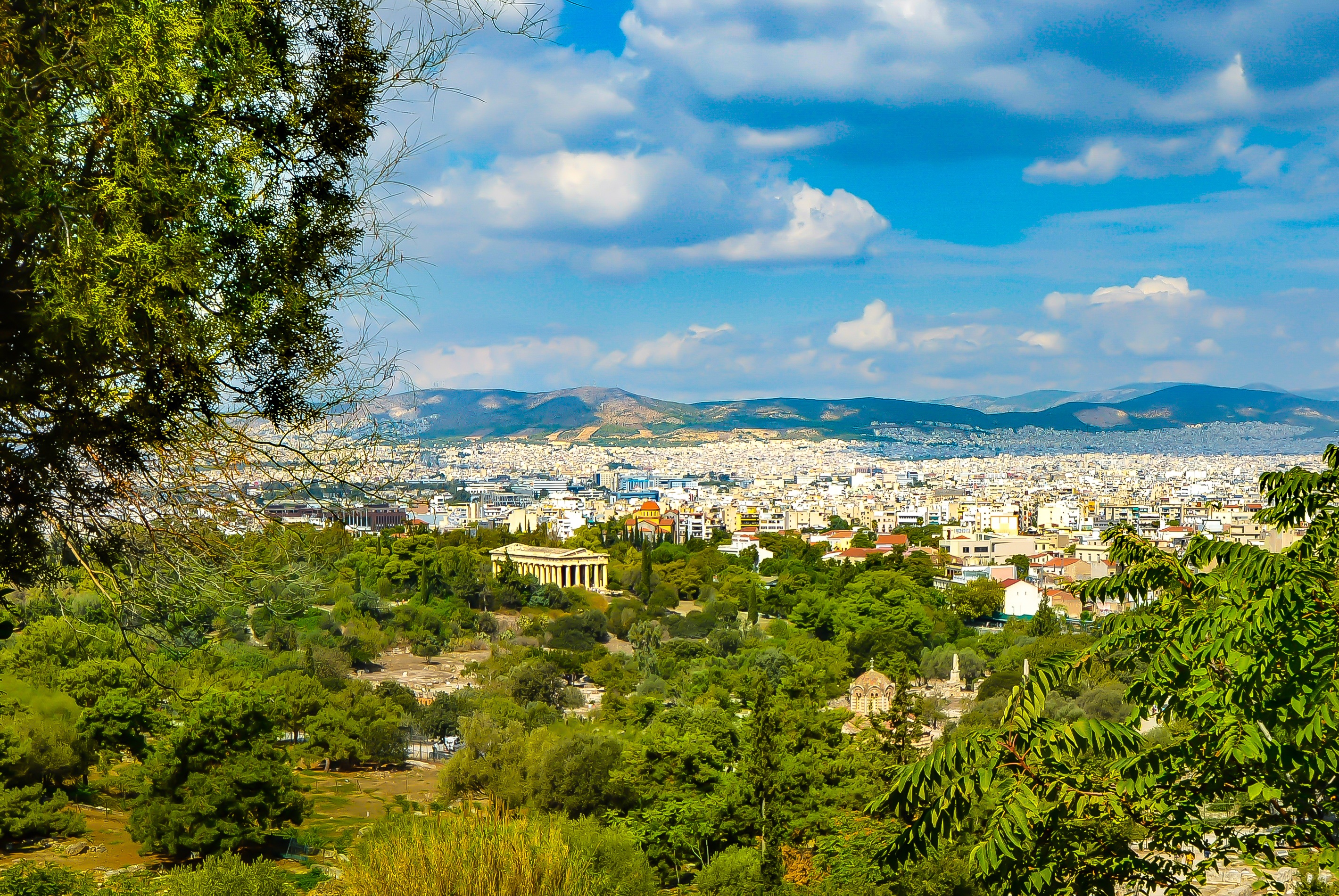
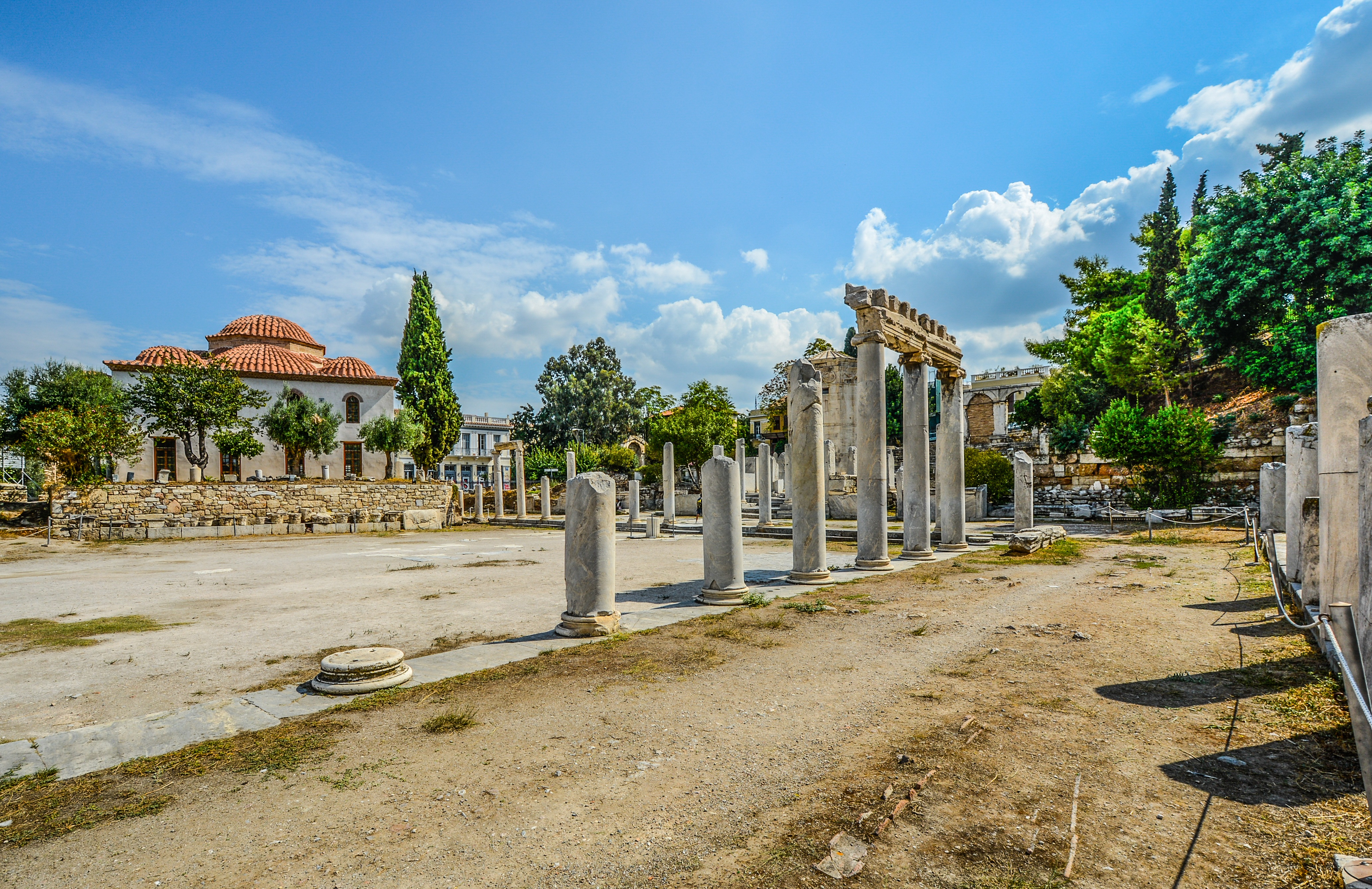
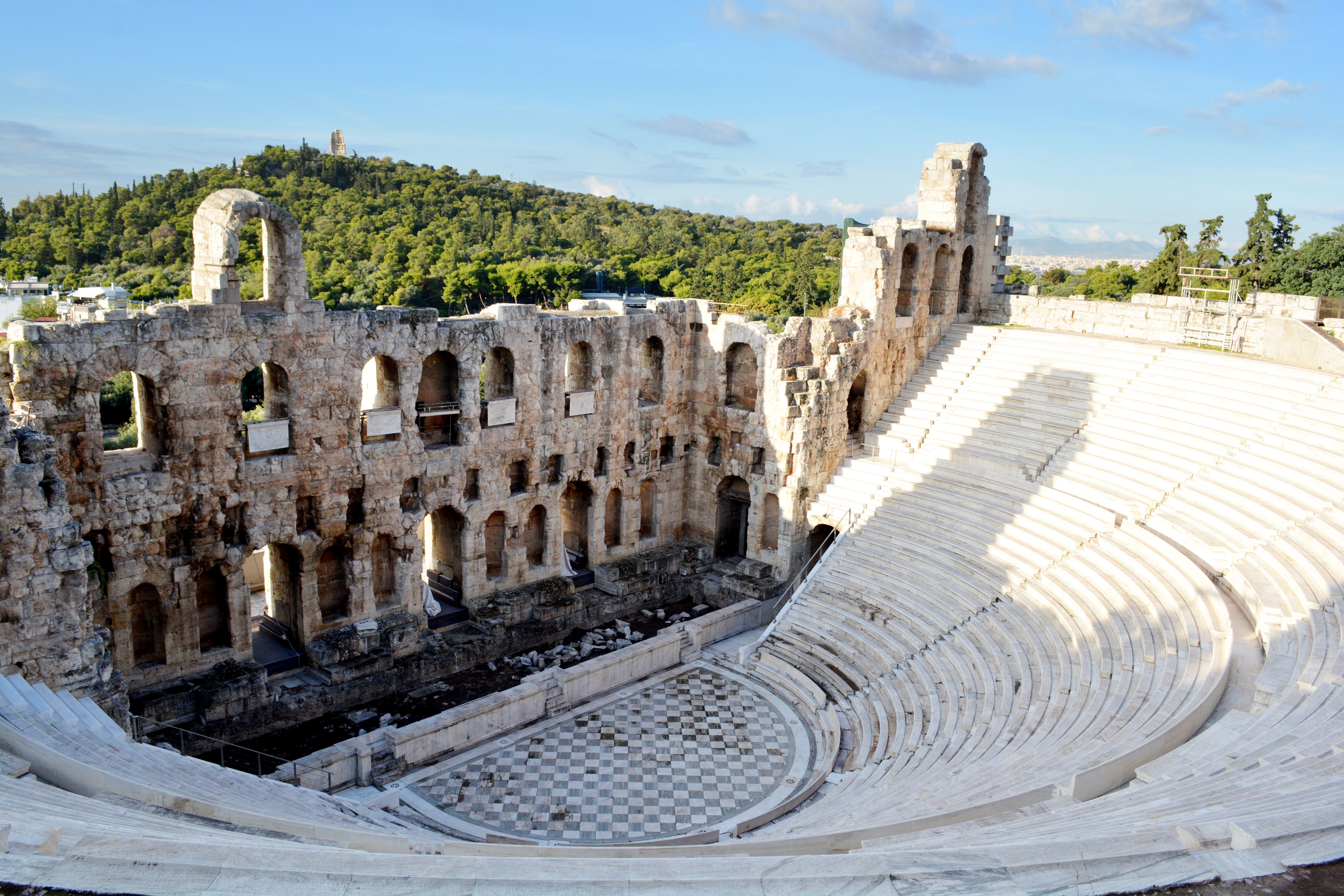
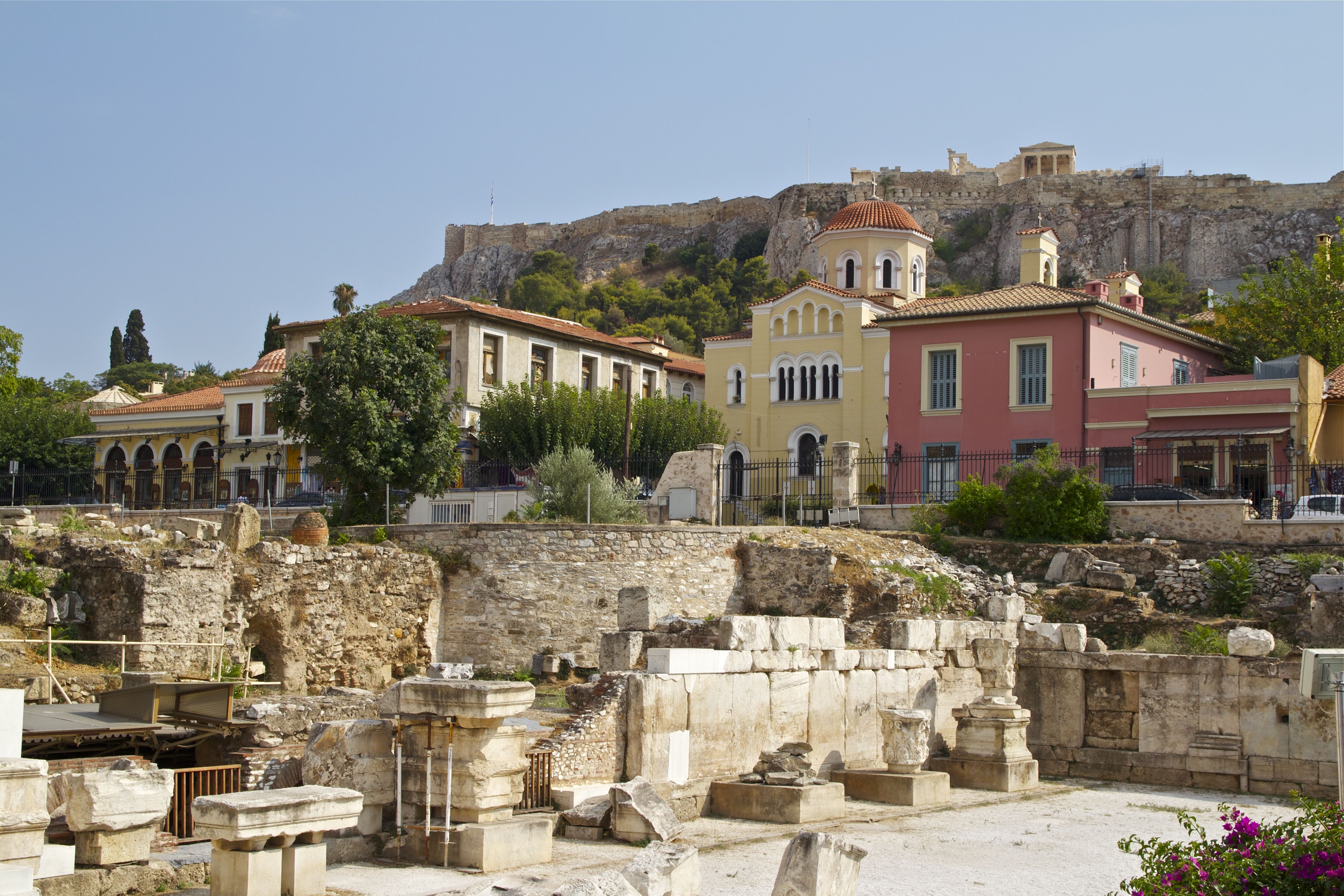
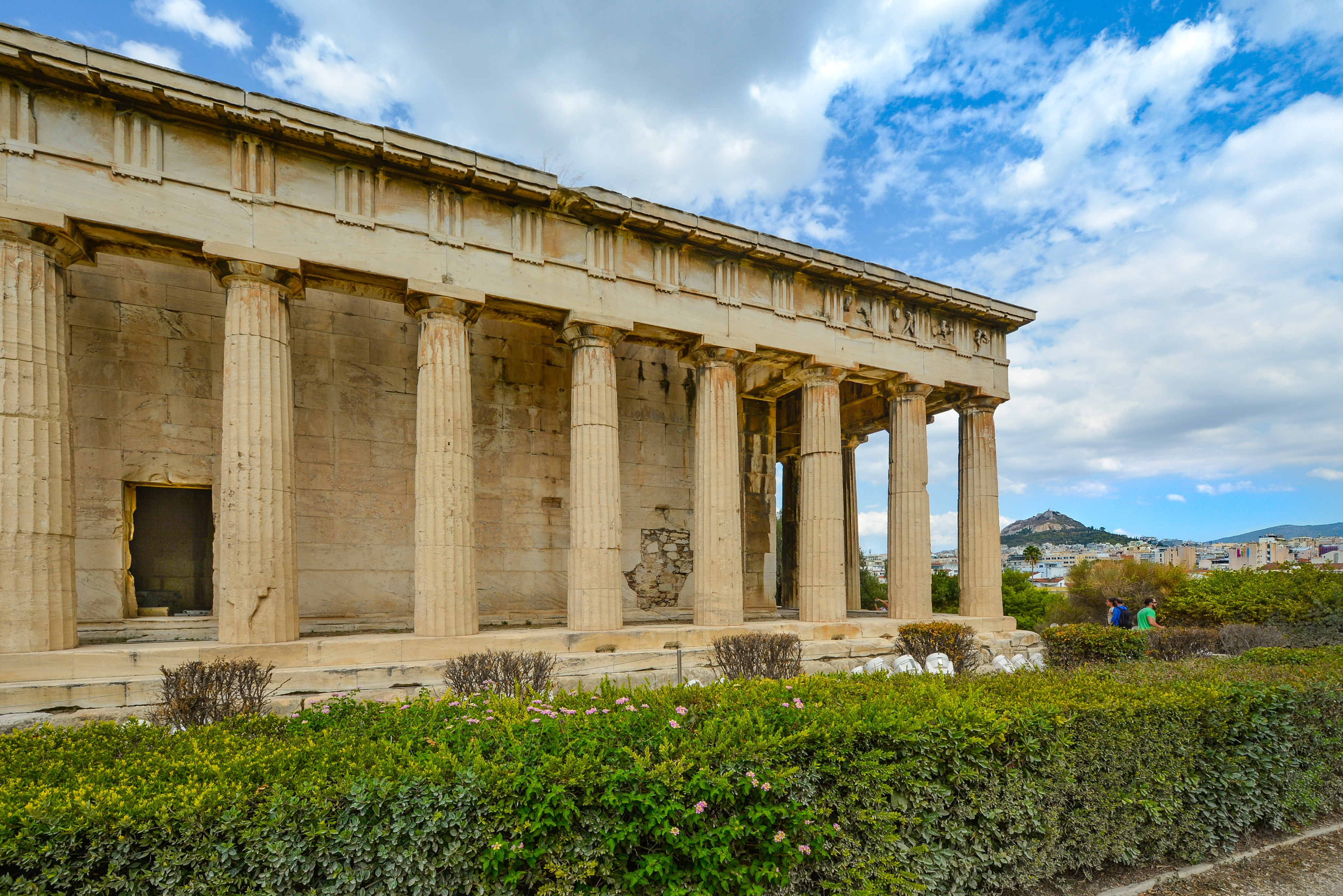
It's no wonder that all roads lead to the fascinating and maddening metropolis of Athens. Lift your eyes 200 feet above the city to the Parthenon, its honey-color marble columns rising from a massive limestone base, and you behold architectural perfection that has not been surpassed in 2,500 years. But, today, this shrine of classical form dominates a 21st-century boomtown. To experience Athens—Athína in Greek—fully is to understand the essence of Greece: ancient monuments surviving in a sea of cement, startling beauty amid the squalor, tradition juxtaposed with modernity. Locals depend on humor and flexibility to deal with the chaos; you should do the same. The rewards are immense. Although Athens covers a huge area, the major landmarks of the ancient Greek, Roman, and Byzantine periods are close to the modern city center. You can easily walk from the Acropolis to many other key sites, taking time to browse in shops and relax in cafés and tavernas along the way. From many quarters of the city you can glimpse "the glory that was Greece" in the form of the Acropolis looming above the horizon, but only by actually climbing that rocky precipice can you feel the impact of the ancient settlement. The Acropolis and Filopappou, two craggy hills sitting side by side; the ancient Agora (marketplace); and Kerameikos, the first cemetery, form the core of ancient and Roman Athens. Along the Unification of Archaeological Sites promenade, you can follow stone-paved, tree-lined walkways from site to site, undisturbed by traffic. Cars have also been banned or reduced in other streets in the historical center. In the National Archaeological Museum, vast numbers of artifacts illustrate the many millennia of Greek civilization; smaller museums such as the Goulandris Museum of Cycladic Art Museum and the Byzantine and Christian Museum illuminate the history of particular regions or periods. Athens may seem like one huge city, but it is really a conglomeration of neighborhoods with distinctive characters. The Eastern influences that prevailed during the 400-year rule of the Ottoman Empire are still evident in Monastiraki, the bazaar area near the foot of the Acropolis. On the northern slope of the Acropolis, stroll through Plaka (if possible by moonlight), an area of tranquil streets lined with renovated mansions, to get the flavor of the 19th-century's gracious lifestyle. The narrow lanes of Anafiotika, a section of Plaka, thread past tiny churches and small, color-washed houses with wooden upper stories, recalling a Cycladic island village. In this maze of winding streets, vestiges of the older city are everywhere: crumbling stairways lined with festive tavernas; dank cellars filled with wine vats; occasionally a court or diminutive garden, enclosed within high walls and filled with magnolia trees and the flaming trumpet-shaped flowers of hibiscus bushes. Formerly run-down old quarters, such as Thission, Gazi and Psirri, popular nightlife areas filled with bars and mezedopoleia (similar to tapas bars), are now in the process of gentrification, although they still retain much of their original charm, as does the colorful produce and meat market on Athinas. The area around Syntagma Square, the tourist hub, and Omonia Square, the commercial heart of the city about 1 km (½ mi) northwest, is distinctly European, having been designed by the court architects of King Otho, a Bavarian, in the 19th century. The chic shops and bistros of ritzy Kolonaki nestle at the foot of Mt. Lycabettus, Athens's highest hill (909 feet). Each of Athens's outlying suburbs has a distinctive character: in the north is wealthy, tree-lined Kifissia, once a summer resort for aristocratic Athenians, and in the south and southeast lie Glyfada, Voula, and Vouliagmeni, with their sandy beaches, seaside bars, and lively summer nightlife. Just beyond the city's southern fringes is Piraeus, a bustling port city of waterside fish tavernas and Saronic Gulf views.

On warm days, sun worshippers will appreciate the spacious DEDON sofa island, which is a great place for some private relaxation. And the separate living and sleeping areas with their subtle, earthy colours and high-quality furnishings will make you feel relaxed and comfortable. Do you have any other requests? If so, please ask your personal butler, who will be available to help at any time.
Selected equipment features
- 85 m² (915 ft²) Penthouse Grand Suite with a spacious veranda above the bridge
- Butler service
- 24-hour suite service
- Separate living and sleeping areas
- Spacious walk-in wardrobe
- Generously sized dining area
- DEDON sun island on the veranda
- Bathroom with underfloor heating, two washbasins, a whirlpool bath, seperate shower, a private sauna
- Separate guest toilet
- Tablet
- Nespresso machine
- Free mini bar (water, juices, soft drinks, beer and a selection of high-quality spirits)
- Fresh canapes
- Ironing service
- On-board table reservation for the restaurant The Globe by Kevin Fehling
- Free daily full edition of a newspaper of your choice on request
- Exclusive service privileges
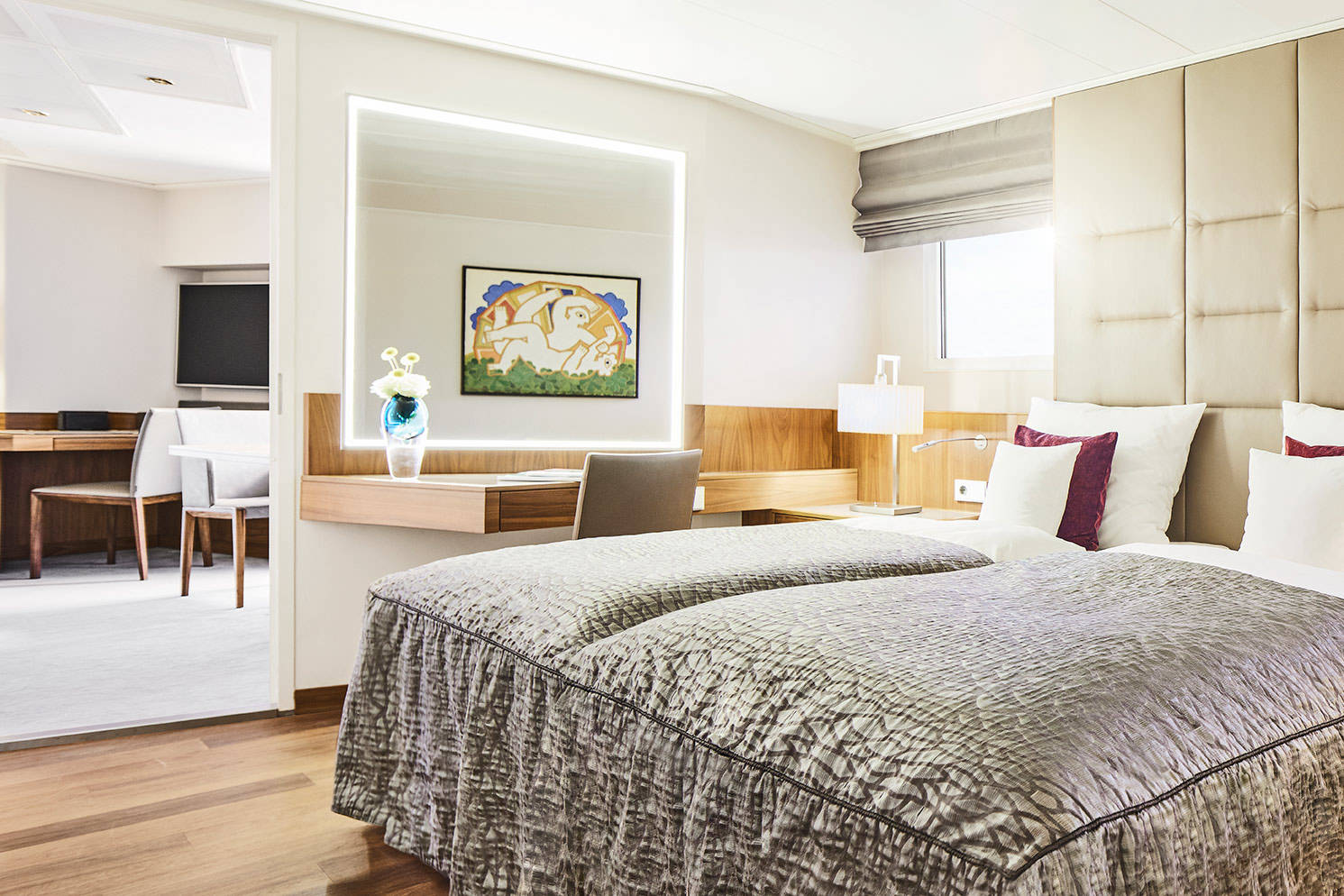
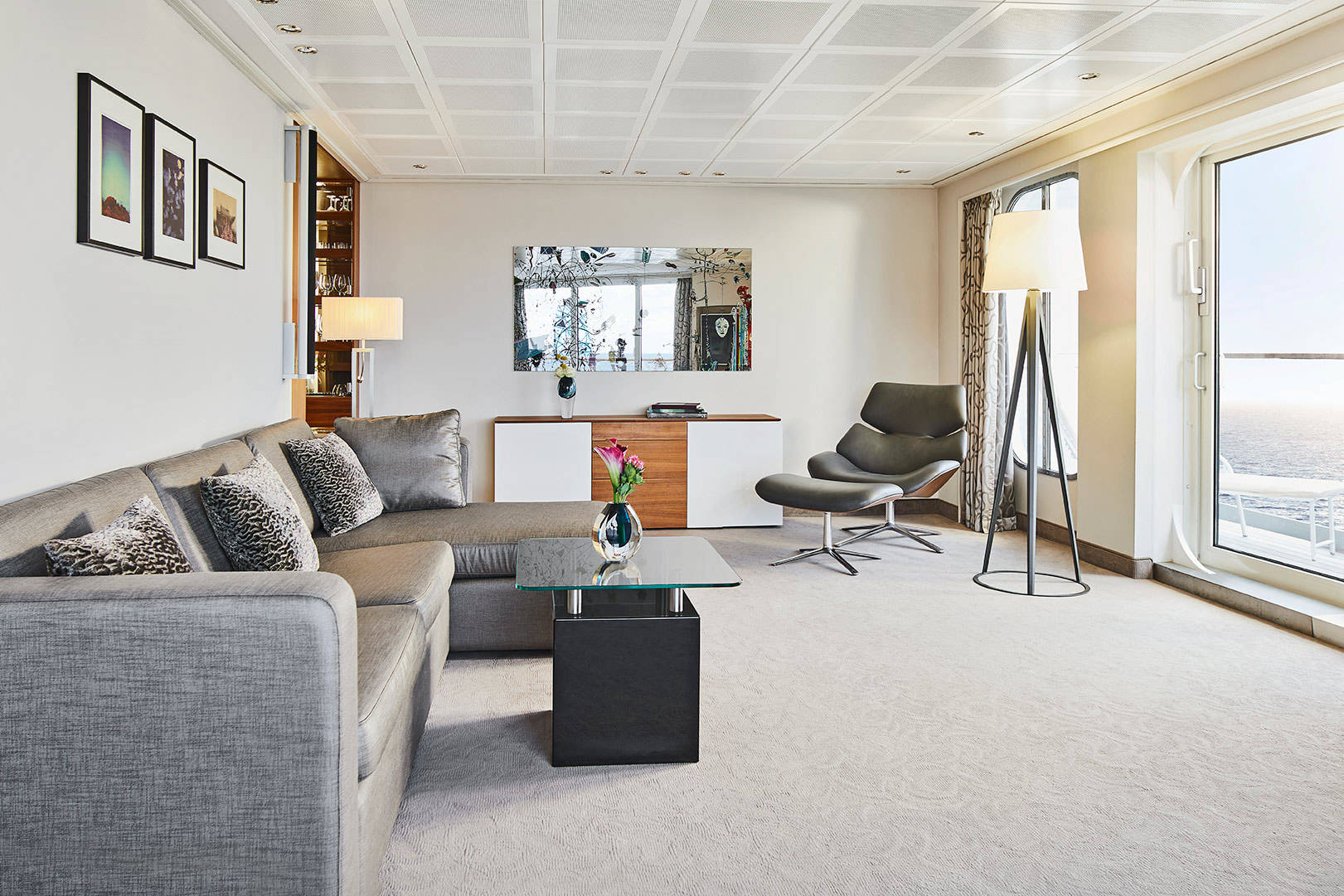
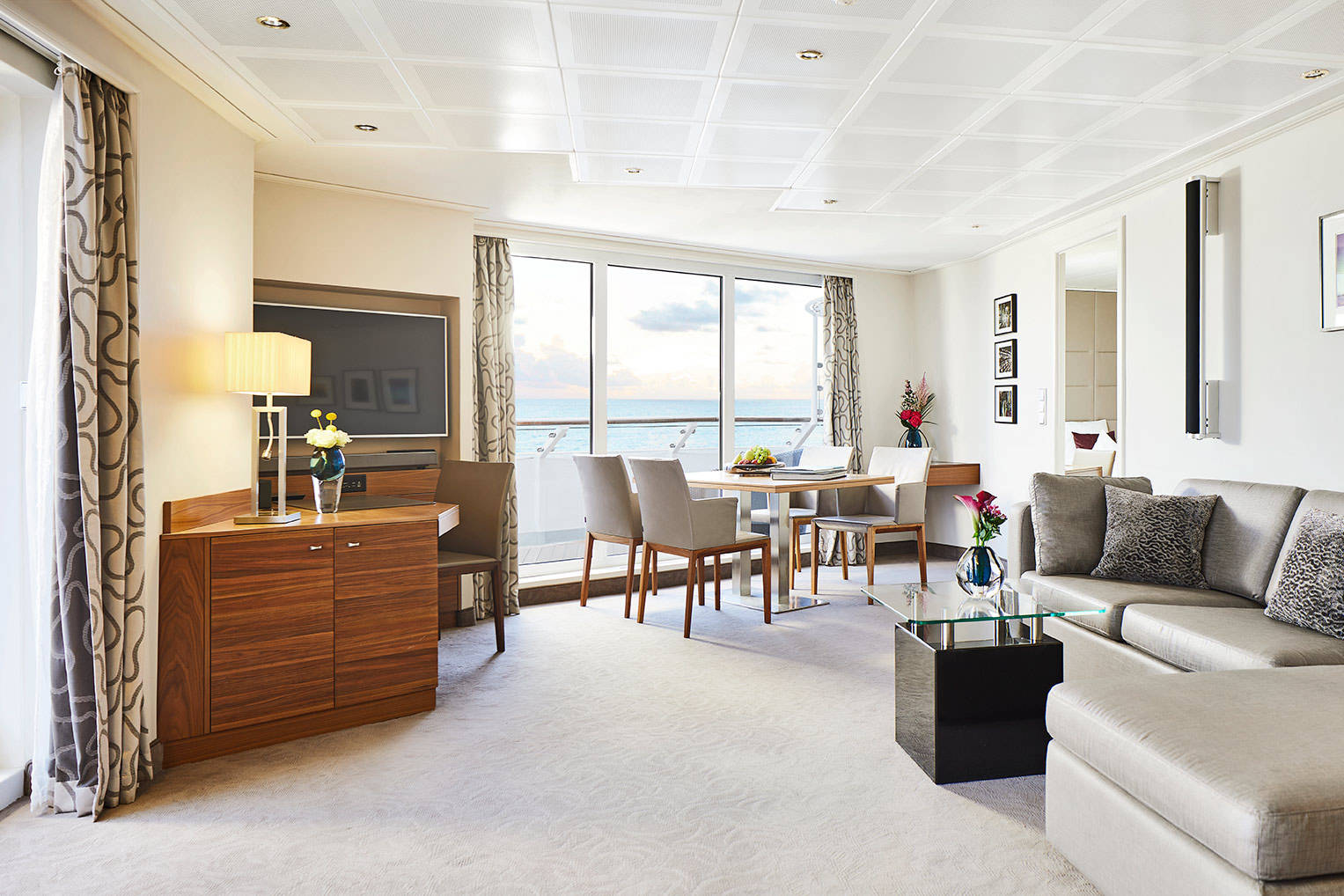
In the relaxed atmosphere of your suite, it is our pleasure to pamper you with gourmet snacks or a glass of champagne, for example. Whether you prefer to dream away the day in the cosy lounge or on your private veranda, the choice is yours – either way, you will be able to enjoy an ocean view.
Selected equipment features
- 45 m² (484 ft²) Penthouse Deluxe Suite with a veranda
- Butler service
- 24-hour suite service
- Separate living and sleeping areas
- Walk-in wardrobe
- Bathroom with underfloor heating, two washbasins, whirlpool bath and seperate shower
- Tablet
- Nespresso machine
- Free mini bar (water, juices, soft drinks, beer and a selection of high-quality spirits)
- Fresh canapes every day
- Ironing service
- On-board table reservation for the restaurant The Globe by Kevin Fehling
- Exclusive service privileges
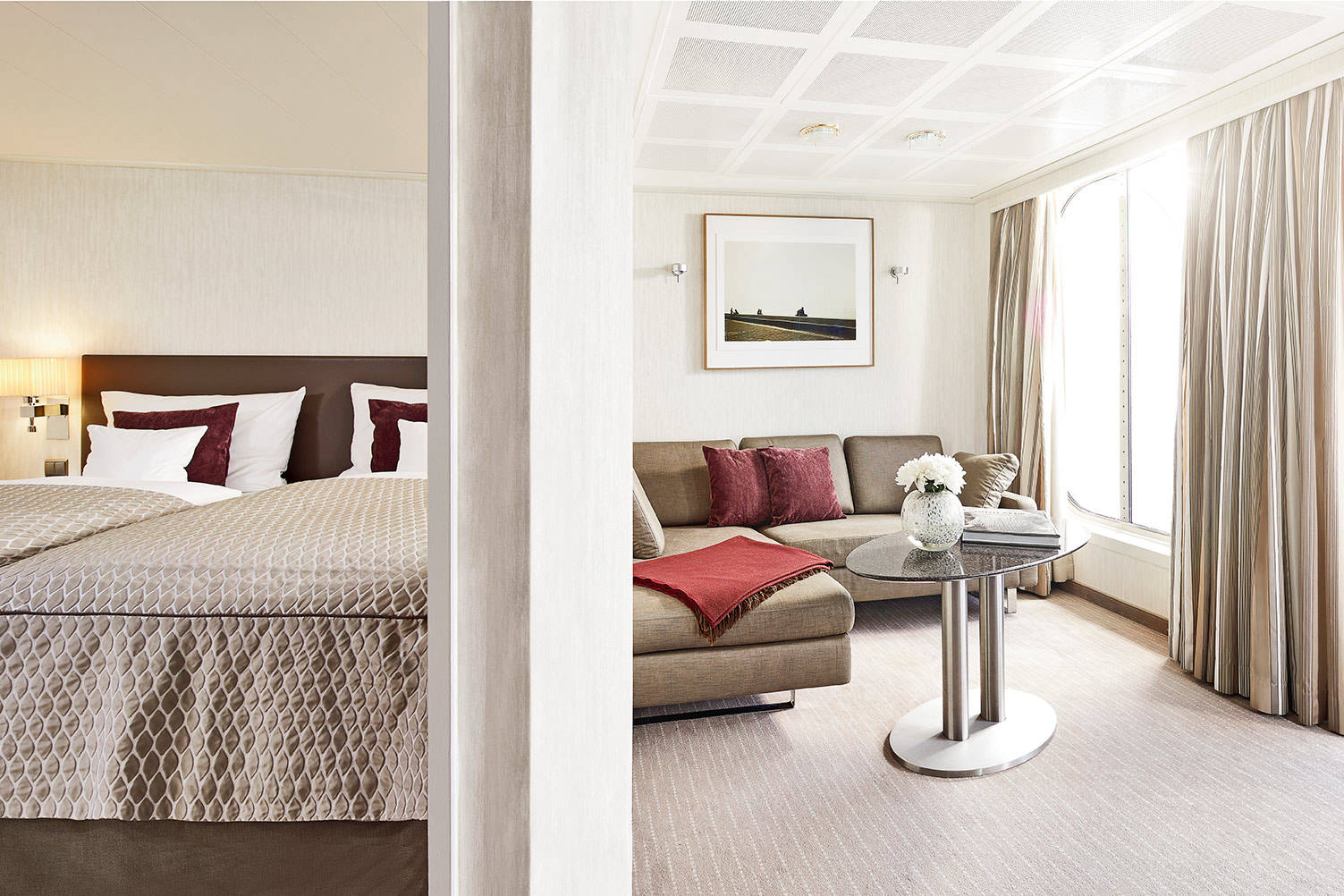
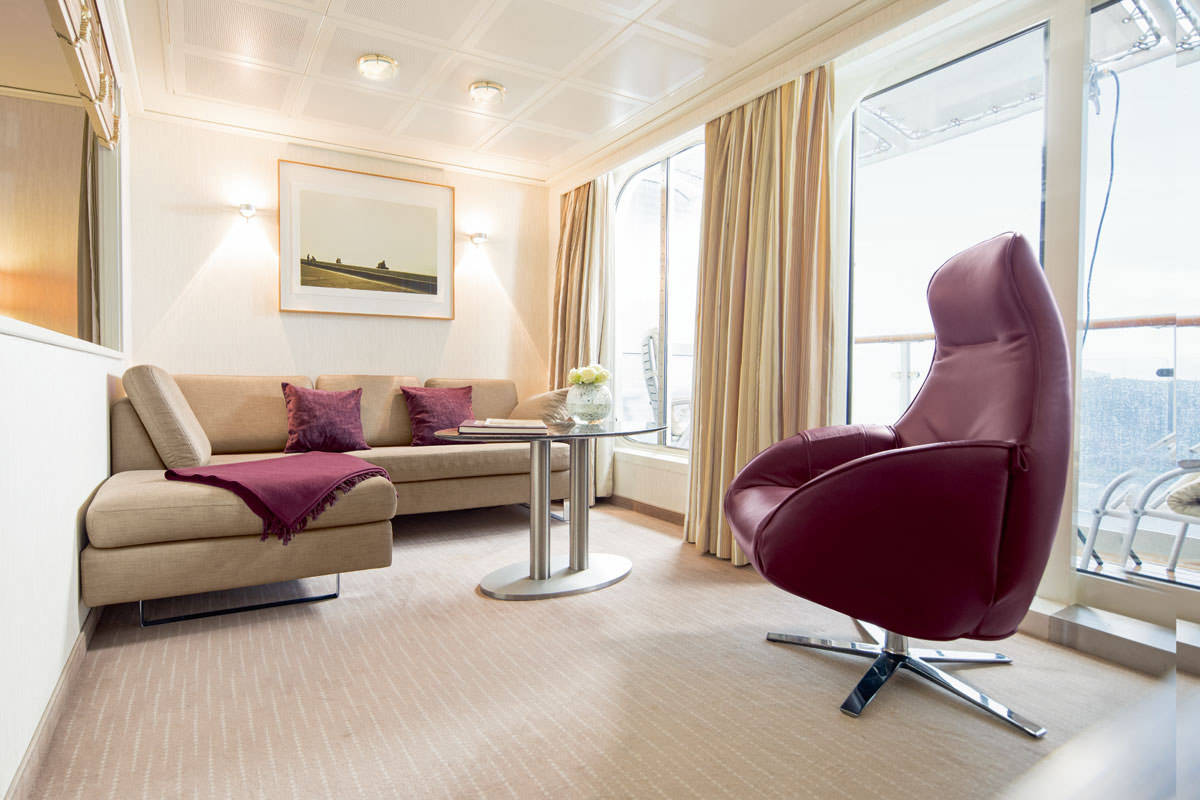
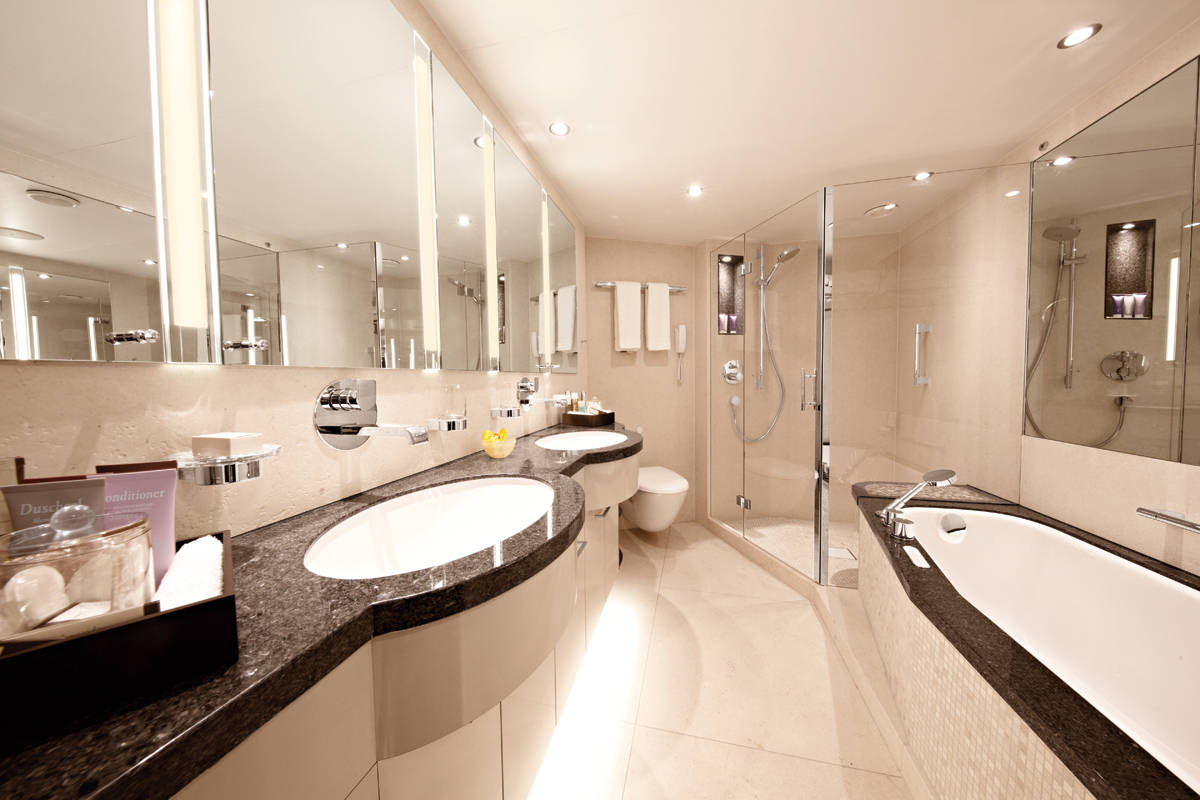
The modern living and sleeping areas feature a contemporary design. Light-coloured wood furniture further accentuates the spaciousness of the light-filled room. The whirlpool bath with optional lighting provides a special opportunity for relaxation – and the large window with a Venetian blind means you can enjoy the fantastic views from the bath as well.
Selected equipment features
27 m² (291 ft²) SPA Suite with a veranda
- 24-hour suite service
- Includes SPA pamper package
- Walk-in wardrobe
- Bathroom with natural light, ocean view, whirlpool bath ans separate shower
- Tablet
- Nespresso machine
- Free mini bar (water, juices, soft drinks, beer and a selection of high-quality spirits)
- Choice of SPA drinks, including smoothies, fresh fruit juices and herbal teas, fresh canapes and fresh fruits
- Ironing service
- On-board table reservations for the restaurant The Globe by Kevin Fehling
- Exclusive service privileges
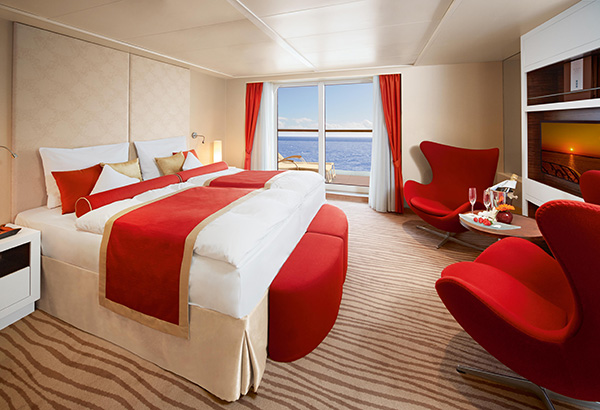
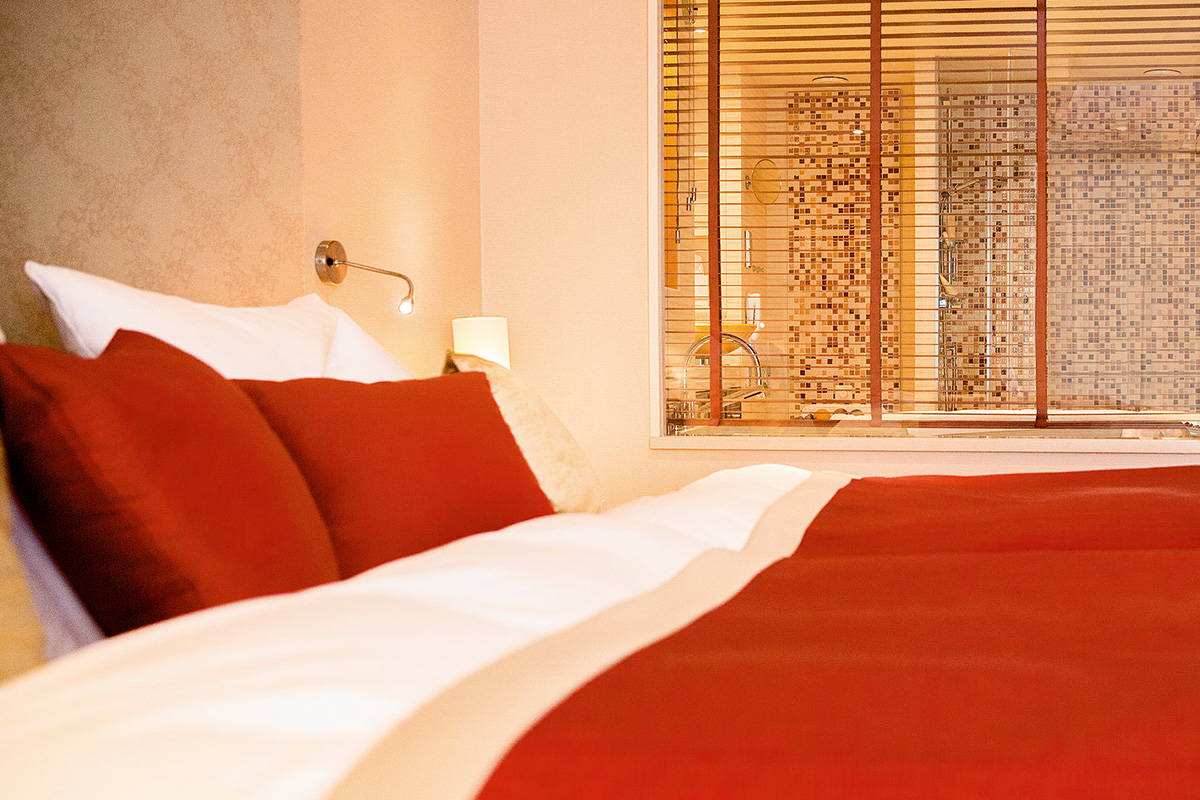
A modern suite with an elegant design, stylishly furnished to the last detail. Enjoy total privacy while taking in the view from your very own veranda.
Selected equipment features
27 m² (291 ft²) suite with a veranda (cat. 6-7)
- 24-hour suite service
- Visually divided living and sleeping area
- Walk-in wardrobe
- Bathroom with bathtub and seperate shower
- Nespresso machine
- Free mini bar (water, juices, soft drinks and beer)
- Some suites can be booked with connecting doors
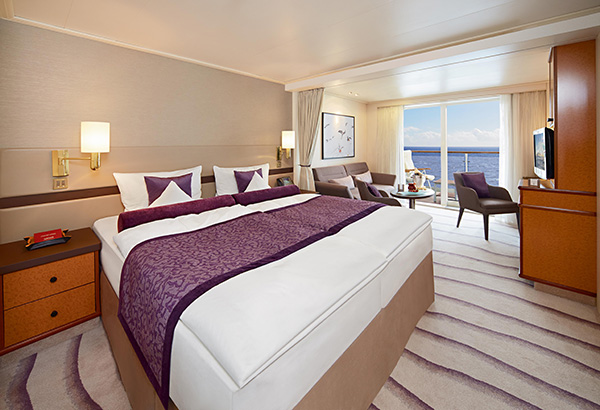
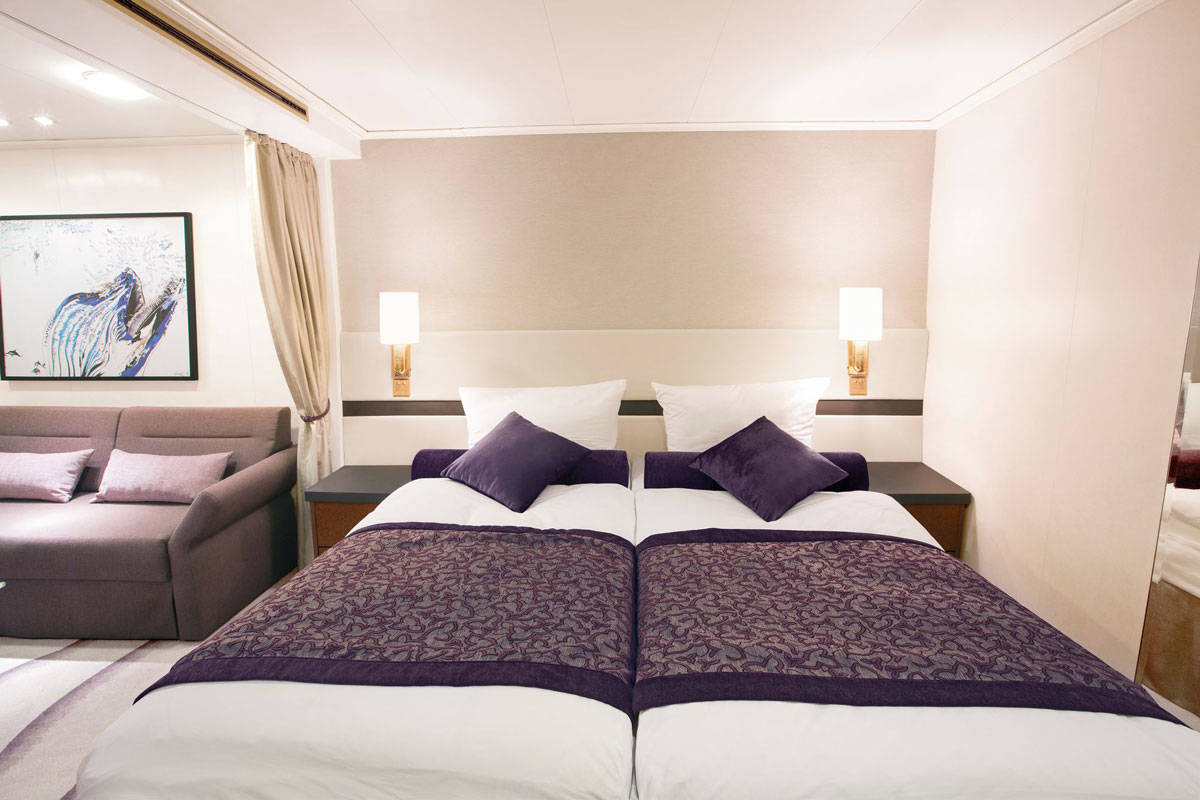
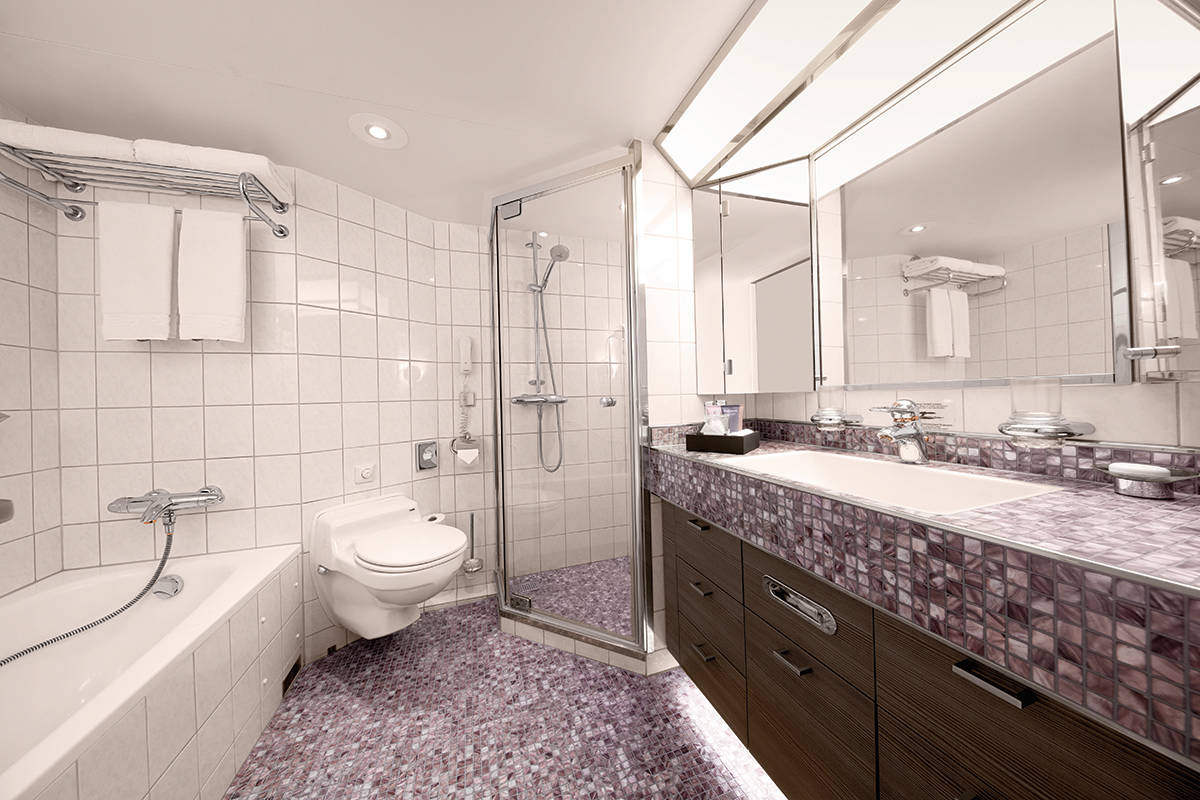
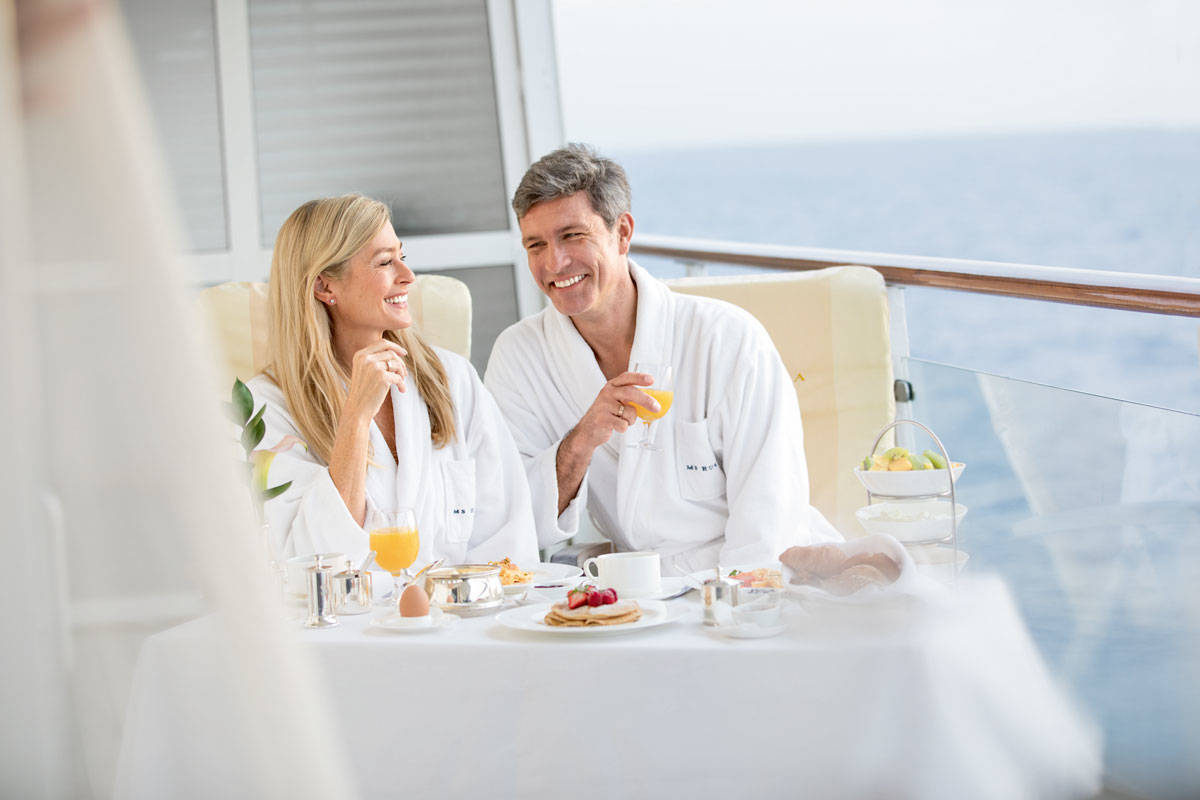
With their subtle colours, harmonious design and visually divided living and sleeping areas, the Veranda Suites fulfil your requirements for a cosy, private retreat. Additional connecting doors in some suites provide the option of making your family cruise even more comfortable.
Selected equipment features
- 27 m² (291 ft²) suite with a veranda (cat. 4-5)
- 24-hour suite service
- Visually divided living and sleeping area
- Walk-in wardrobe
- Bathroom with bathtub and separate shower
- Nespresso machine
- Free mini (water, juices, soft drinks and beer)
- Some suites can be booked with connecting doors or are equipped for use by disabled guests
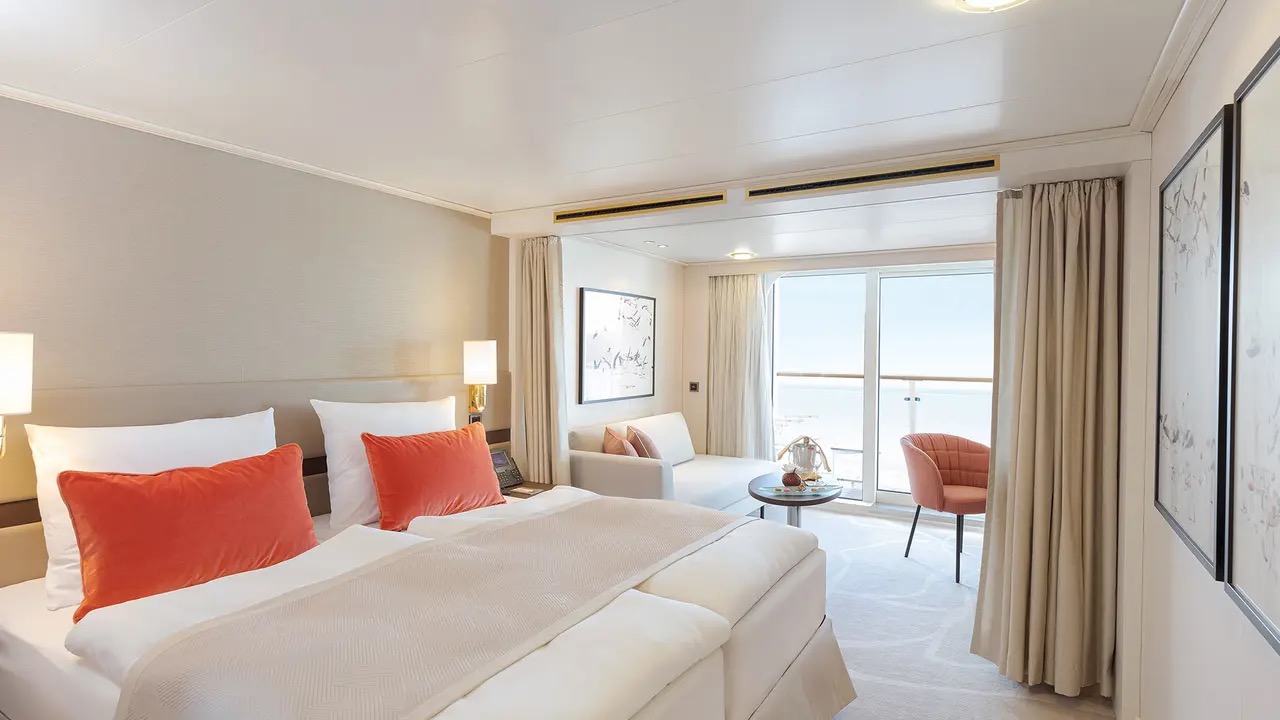
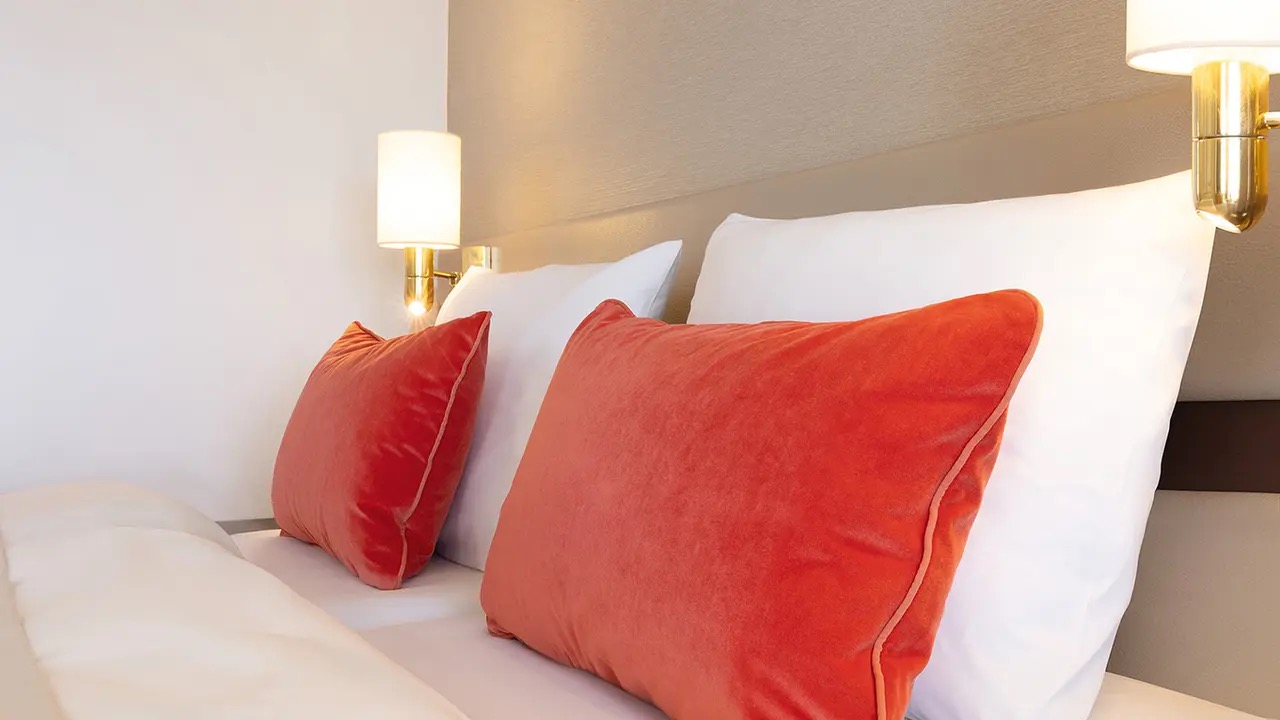
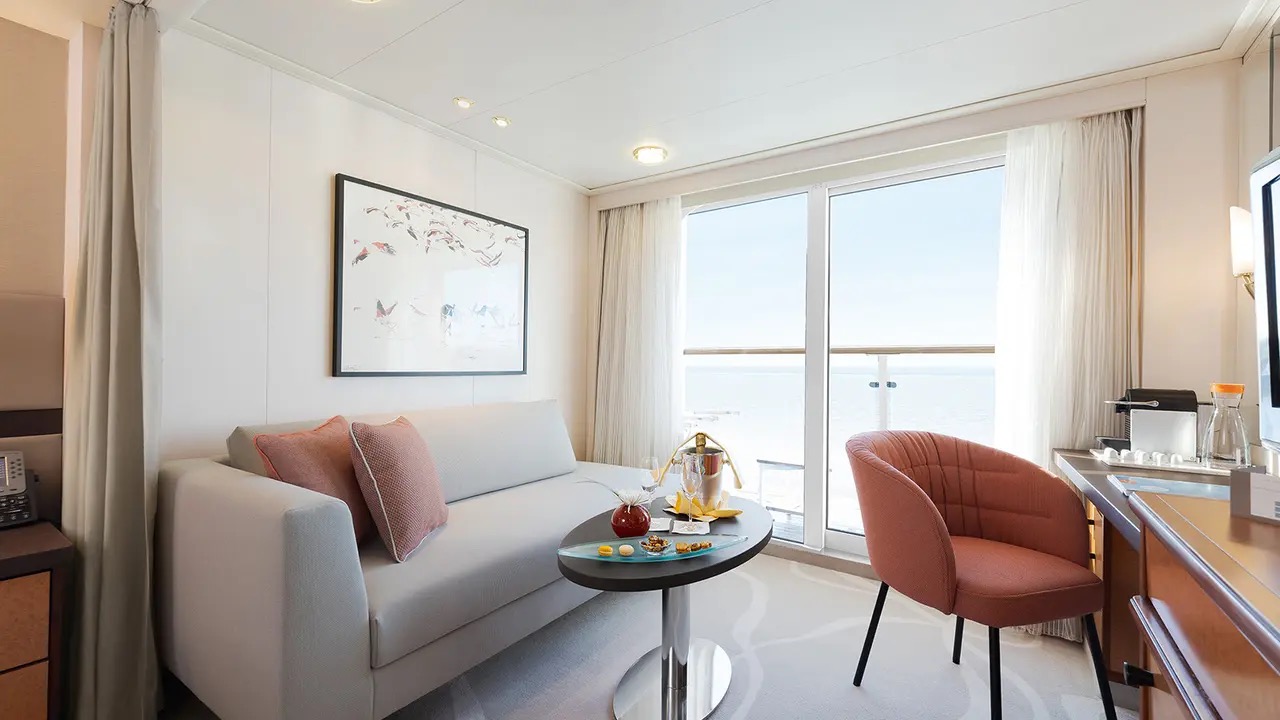
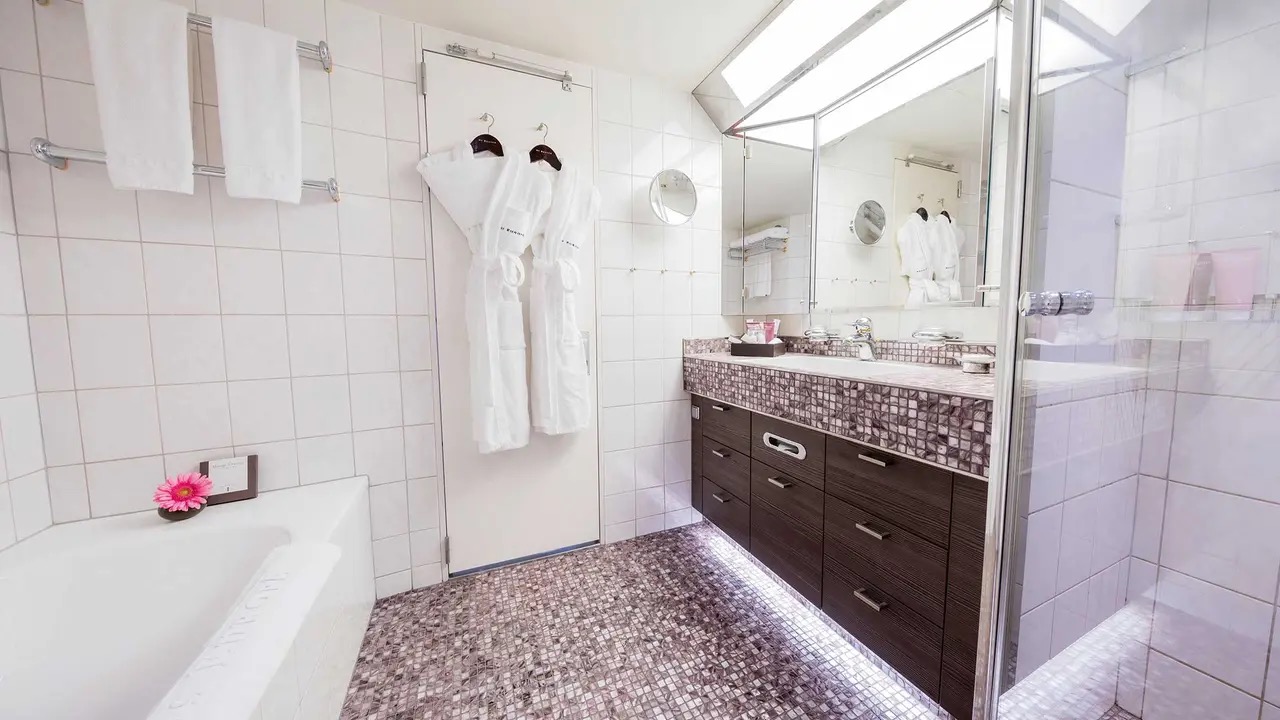
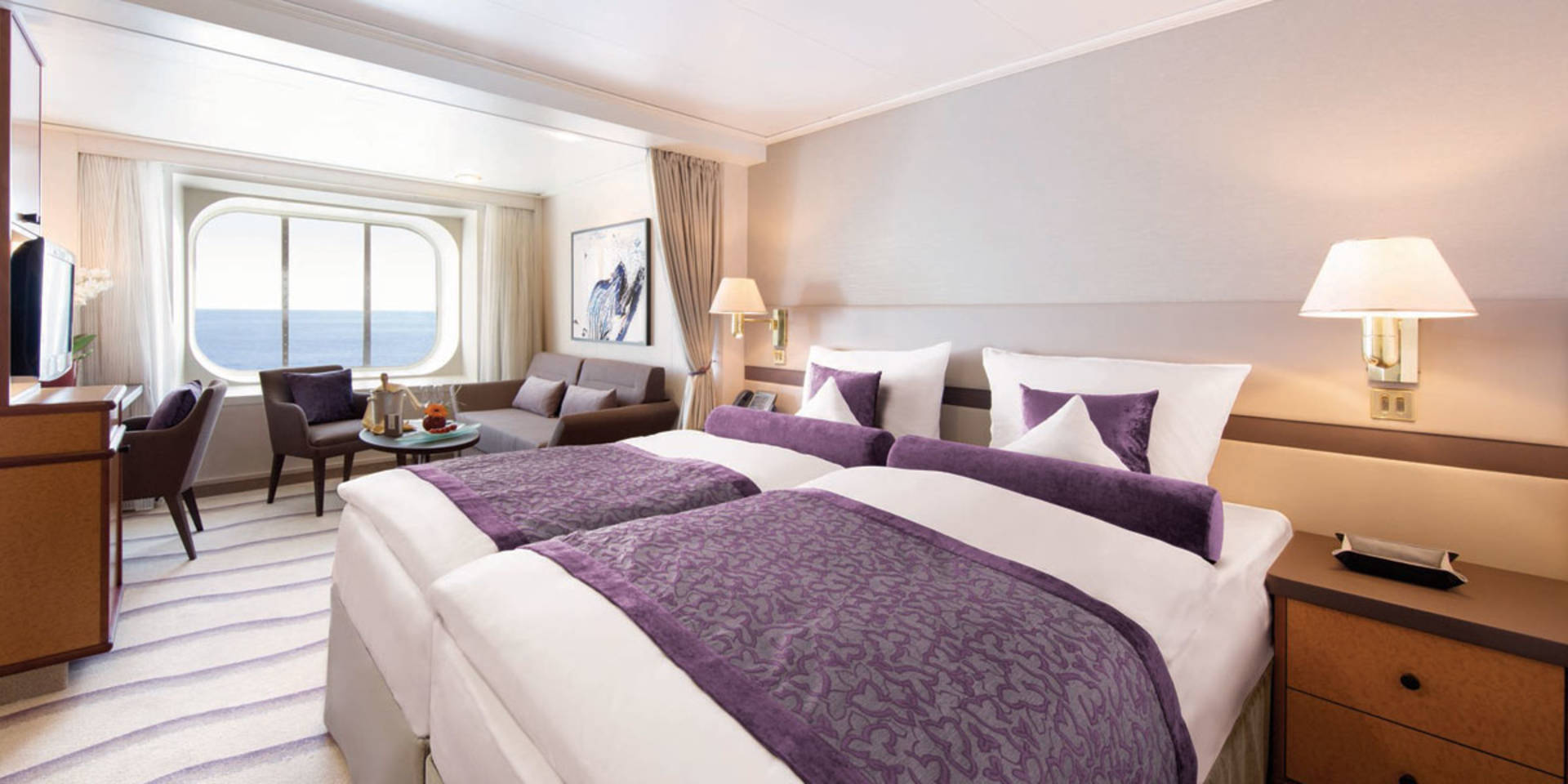
Your suite is a place where you can feel completely at home. An inspiring colour palette, cosy lighting and carefully selected interior decor combine to create a pleasant atmosphere of well-being. Featuring a panorama window with a view that changes every day.
Selected equipment features
- 27 m² (291 ft²) suite with a panorama window
- 24-hour suite service
- Visually divided living and sleeping area
- Walk-in wardrobe
- Bathroom with bathtub and seperate shower
- Nespresso machine
- Free mini bar (water, juices, soft drinks and beer)
MS EUROPA
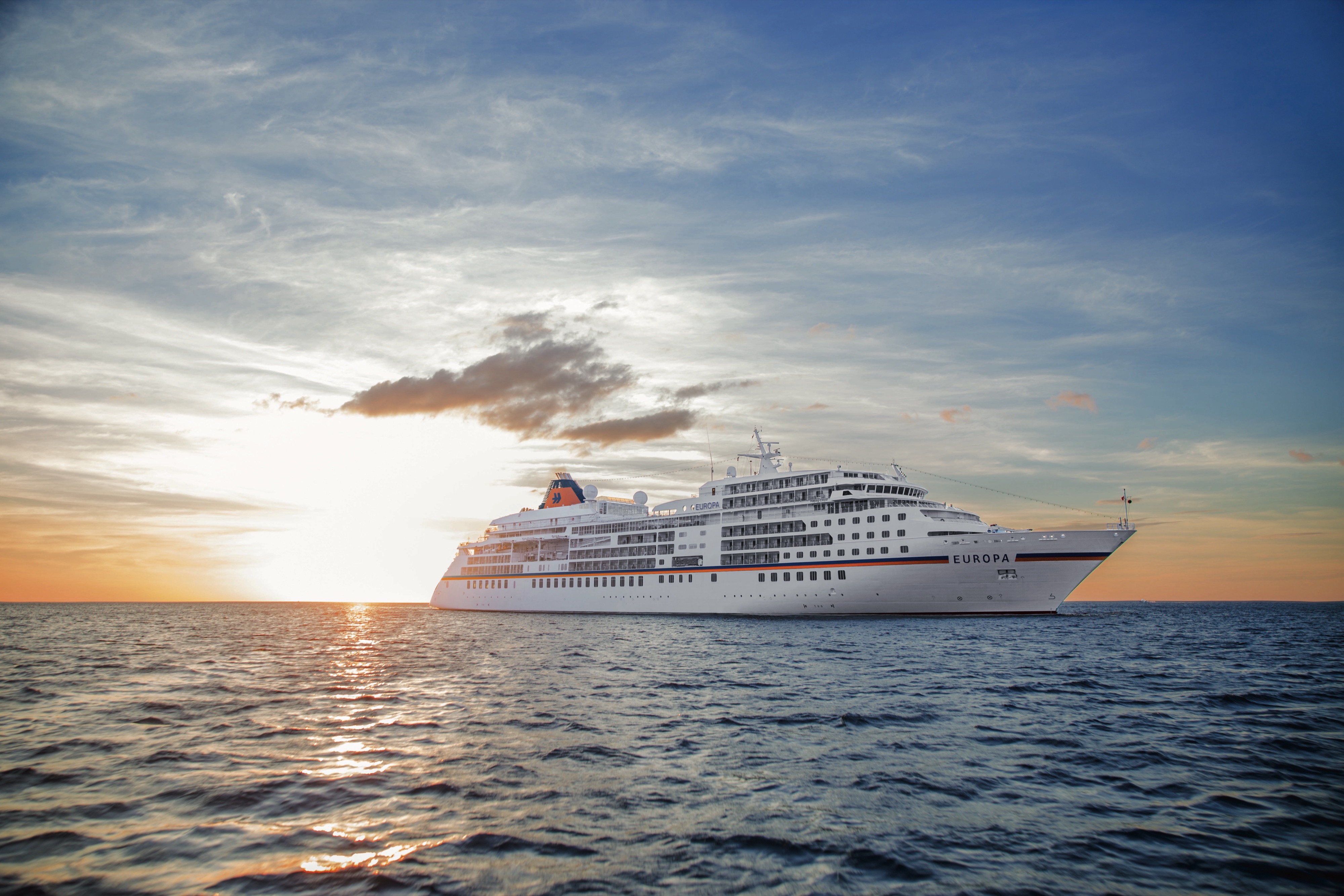
Welcome to a ship that sets the global benchmarks for luxury cruises. It may be smaller than other cruise ships, but the EUROPA is miles ahead of the crowd. Enjoy the unrivalled freedom for personal relaxation on a cruise with no more than 400 guests – with plenty of scope for fresh ideas, indulgence and inspiring perspectives.
However you define it, enjoy your own personal luxury throughout your time on the EUROPA. Come aboard and experience an exceptional cruise as you travel to the world’s most beautiful destinations.
Ship Facts
| Launch Year | 1999 | ||||
| Refit Year | 2013 | ||||
| Language | de+en | ||||
| Gross Tonnage | 28890 | ||||
| Length | 198 | ||||
| Width | 24 | ||||
| Currency | EUR | ||||
| Speed | 21 | ||||
| Capacity | 400 | ||||
| Crew Count | 285 | ||||
| Deck Count | 7 | ||||
| Cabin Count | 204 | ||||
| Large Cabin Count | N/A | ||||
| Wheelchair Cabin Count | 2 | ||||
| Electrical Plugs |
|
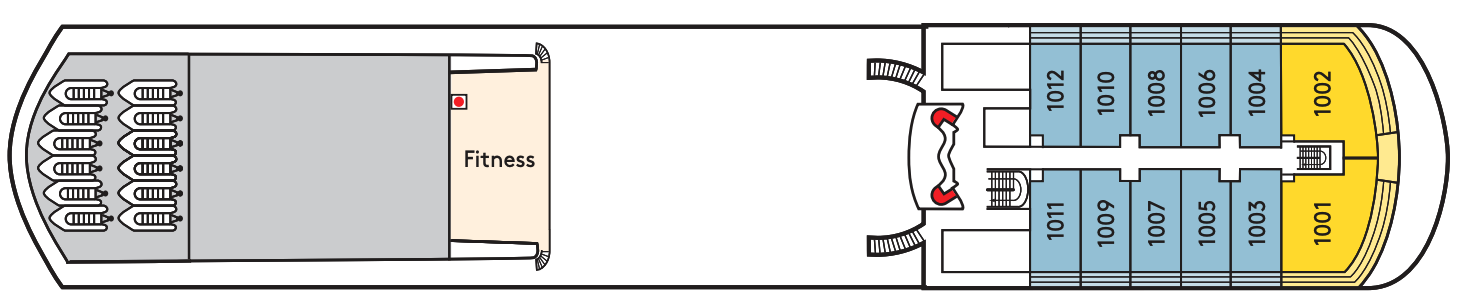
Penthouse Deck
- Fitness
- Penthouse Deluxe Suite Cat. 8
- Penthouse Grand Suite Cat.9
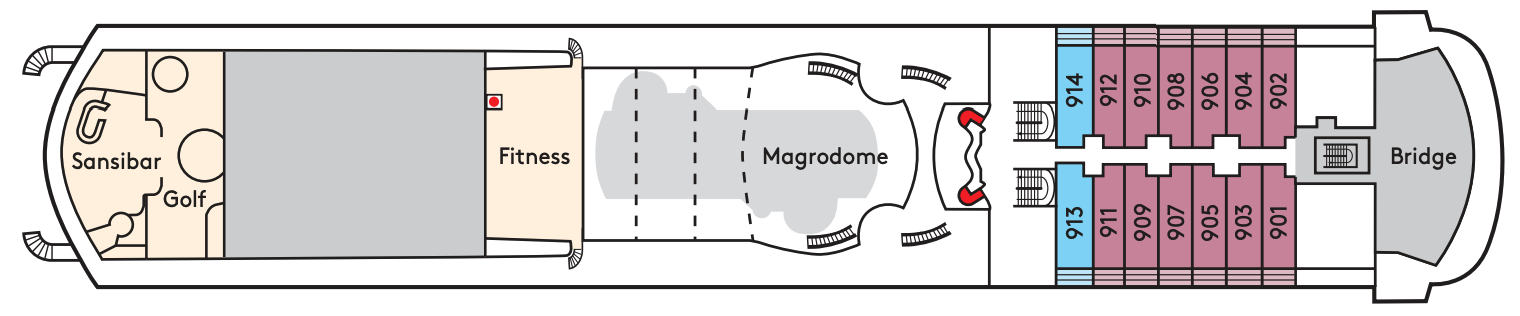
Bellevue Deck
- Bridge
- Magrodome
- Fitness Area
- Golf
- Sansibar
- Veranda Suite Cat. 6
- Veranda Suite Cat. 7
Lido Deck
- Lido Café
- Shuffleboard
- Whirlpool
- Lido Pool
- Pool Bar
- Library
- Atelier
- Club Belvedere

Sport Deck
- Pearls
- Play-room
- Creative room
- OCEAN SPA
- Hair-dresser
- SPA Suite Cat. 10
- Veranda Suite Cat. 5
- Veranda Suite Cat. 6
- Suite without veranda Cat. 3

Atlantik Deck
- Veranda Suite Cat. 5
- Suite without veranda Cat. 2
- Veranda Suite Cat. 6

Pazifik Deck
- Photo Shop
- Tendering Area
- Veranda Suite Cat. 4
- Veranda Suite Cat. 5
- Suite without veranda Cat. 1

Europa Deck
- Europa Restaurant
- Venezia
- The Globe
- Boutique and jeweller
- Studio
- Havana Bar
- Cruise sales
- Reception
- Atrium
- Tour office
- Gatsby's
- Europa Lounge
- Stage

Sophisticated indulgence up to the stars
Exclusive flavour experiences await you as a guest of the EUROPA. Our chefs, along with one of the top three-star chefs Kevin Fehling, will spoil you with refined, modern creations and timeless classics. Enjoy the special atmosphere in our five restaurants with a free choice of seats and a dress code ranging from casual to elegant according to how you feel.
Europa Restaurant
In the stylish atmosphere of our main restaurant, every experience is a pleasure. Our chefs de cuisine will delight you with gourmet dishes, which are often inspired by the region you are cruising in. There are now even more tables for two, allowing you a flexible choice of seating and some wonderful private moments.
Lido Café
Venezia
The small, fine Venezia is dedicated to Italian-Mediterranean cuisine. Allora: Pasta or freshly caught fish? Exquisite cheese selection or tempting dolci? Delicacies and Italian classics, brought together for you on one menu.
The Globe by Kevin Fehling
The Globe is the home of the three-star chef from Hamburg, Kevin Fehling. He has already delighted guests on board the EUROPA with his cuisine right at the start of his career. In his own gourmet restaurant on board the EUROPA he will be on board in person for selected cruises. His unconventional, modern creations are a real feast for the senses, with nuances of influence from many different latitudes. Take a seat and allow yourself to be pampered.
Top chef Kevin Fehling is head chef at ‘The Table’ in Hamburg and has been awarded 3 stars by the Michelin Guide. He is one of the stars of German Michelin-starred cuisine and brings his award-winning cuisine to the world's oceans with The Globe by Kevin Fehling.
Pearls
The gourmet restaurant on deck 7 is inspired by French seafood bars and makes caviar the star of the evening. Discover innovative dishes in the finest form, accompanied by modern flavours from all over the world. Another treat: the view from the outdoor terrace high above the sea.
Known for great moments
On every cruise, we welcome stars and all kinds of renowned artists on board. Enjoy some thrilling moments in the private setting of the EUROPA, with the finest classical music, groovy jazz and soul, danceable swing, as well as readings and theatrical pieces, first-rate comedy, and much more. As well as a varied entertainment programme, which changes every day, there are also exclusive events and shows, in which top chefs or circus acts delight the senses. Simply unforgettable.
Gatsby's
Gatsby's loves the bar culture of the Golden Twenties and first-class mixed drinks. Dancing is allowed and encouraged.
Sansibar
Sylt's famous bar is also very popular on the EUROPA. As the sun slowly sinks into the sea, a lively atmosphere spreads here until late into the night. Let our sommeliers inspire you and discover the largest selection of champagne at sea. Live music also awaits you on selected evenings.
Havana Bar
A refined and cosy club atmosphere awaits you in the Havana Bar. Take a seat, choose a first-class cigar from the well-stocked humidor and order a drink to go with it. A place to indulge.
Club Belvedere
The cosy Club Belvedere attracts guests with its panoramic view and an excellent selection of tea and coffee specialities, small macarons and delicious cakes. On selected evenings, you can enjoy exciting readings and other entertainment here.
Piano Bar
Start your evening with an aperitif, accompanied by some gentle melodies. The Piano Bar is also open in the daytime and is a great place for an afternoon coffee, reading the paper or enjoying some musical relaxation.
Pool Bar
We will treat you to light snacks and cold drinks at the pool bar. Enjoy fresh waffles in the afternoon as a delicious snack to see you through - served to your sunlounger on request.
Ocean Sun Festival
As part of the Ocean Sun Festival, the EUROPA is transformed into an exclusive concert hall at sea. Enjoy daily classical concerts on board - performed by excellent musicians with a repertoire spanning several centuries. Whether virtuoso soloists or renowned chamber ensembles - experience extraordinary concert experiences in the stylish, personalised setting of our small luxury ship.
A musical highlight also awaits you on land: an unforgettable concert evening in a special place - often far off the beaten track.
Classical Ballett
Lucia Lacarra & Matthew Golding
On board the EUROPA, you will experience classical ballet at the highest level - an exclusive offer that emphasises the ship's artistic standards and cultural diversity. Highlights include performances by ballet stars such as Lucía Lacarra and Matthew Golding.
Lucía Lacarra, one of the most important ballerinas of her generation, and Matthew Golding, an outstanding dancer, have not only made a name for themselves on international stages, but also bring their passion and expertise to the EUROPA. Their impressive skills and captivating presence offer guests on board an unforgettable experience.
Exclusive Concerts
Chamber music at the highest level is not only part of your cruise with the EUROPA during the Ocean Sun Festival - classical music in its finest form also awaits you on many other routes.
Experience excellent musicians in a personalised setting that allows you to get very close to the music and the artists. Whether duo, trio or ensemble - every performance is a cultural highlight at sea.
Singer-Songwriter