Turkey´S Cultural Treasures And Greek Hospitality
Turkey´S Cultural Treasures And Greek Hospitality
Cruise overview
WHY BOOK WITH US?
- ✔ The Deluxe Cruises’ team has extensive experience in ultra-luxury cruising.
- ✔ Call now to speak to our helpful and experienced Cruise Concierge team.
- ✔ Enjoy our Unique Deluxe Cruises Bonus for substantial savings.
- ✔ Our team will tailor your holiday to your exacting requirements.
- ✔ As agents, we work under the protection of each cruise lines ABTA / ATOL licences
About Istanbul
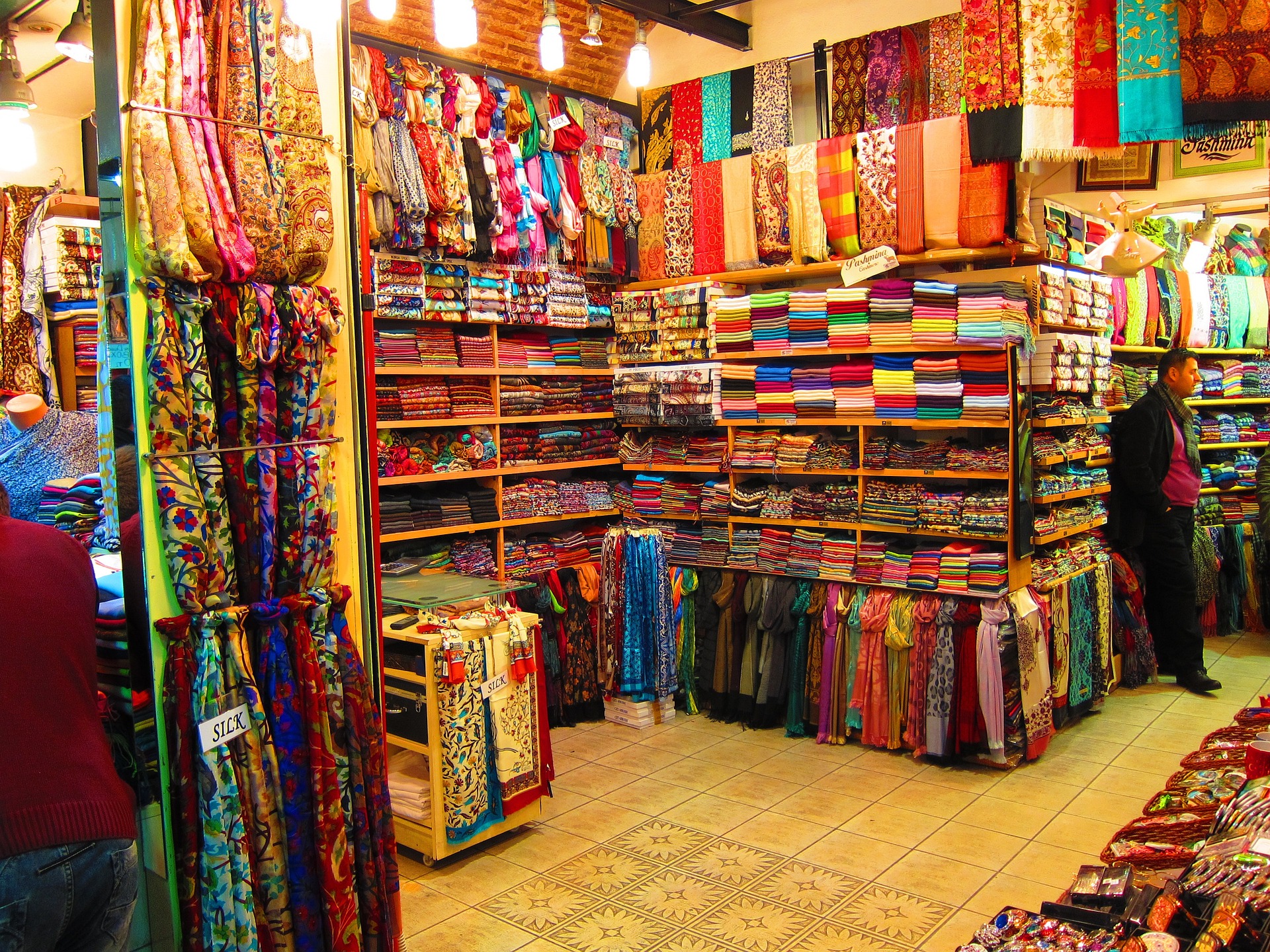
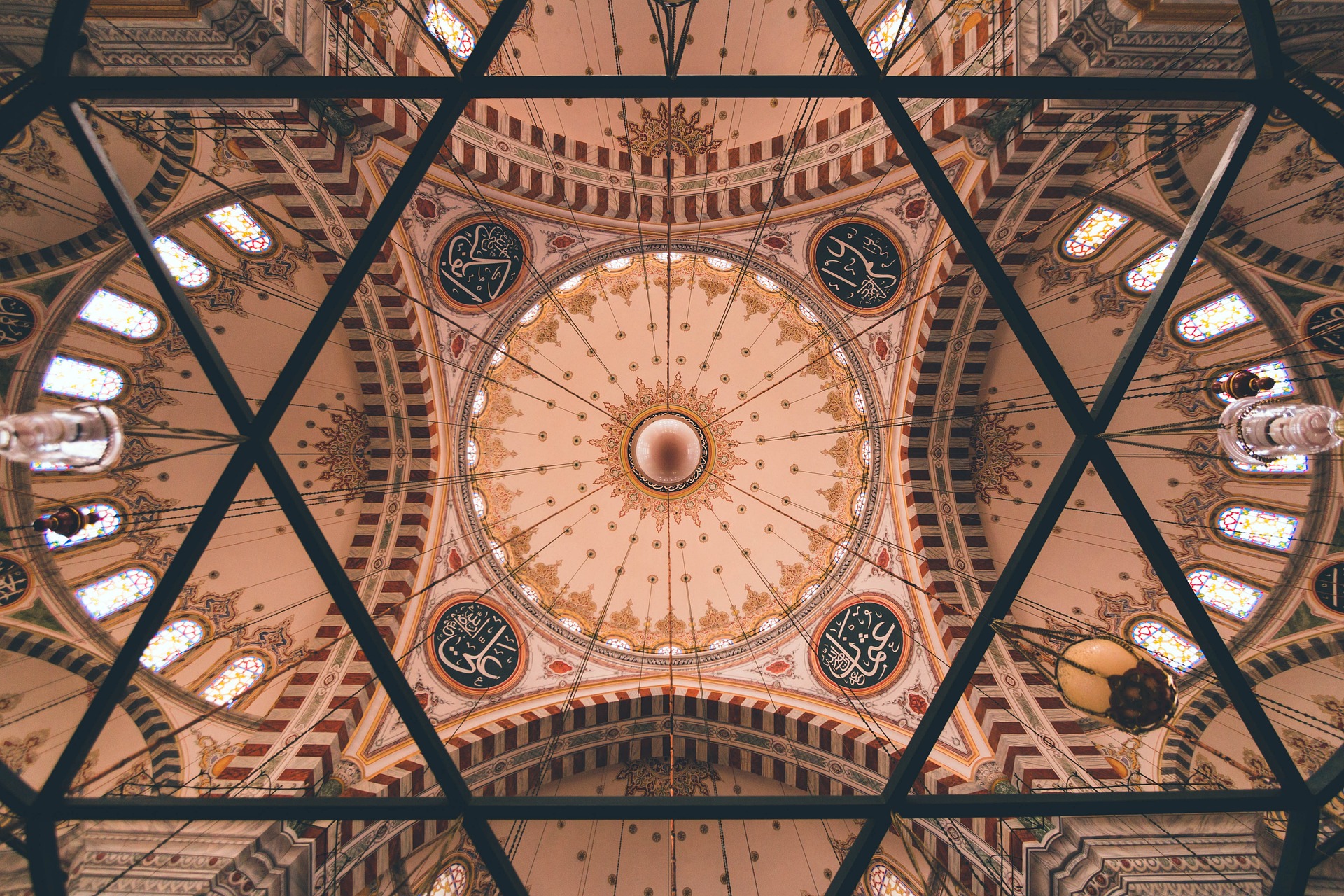
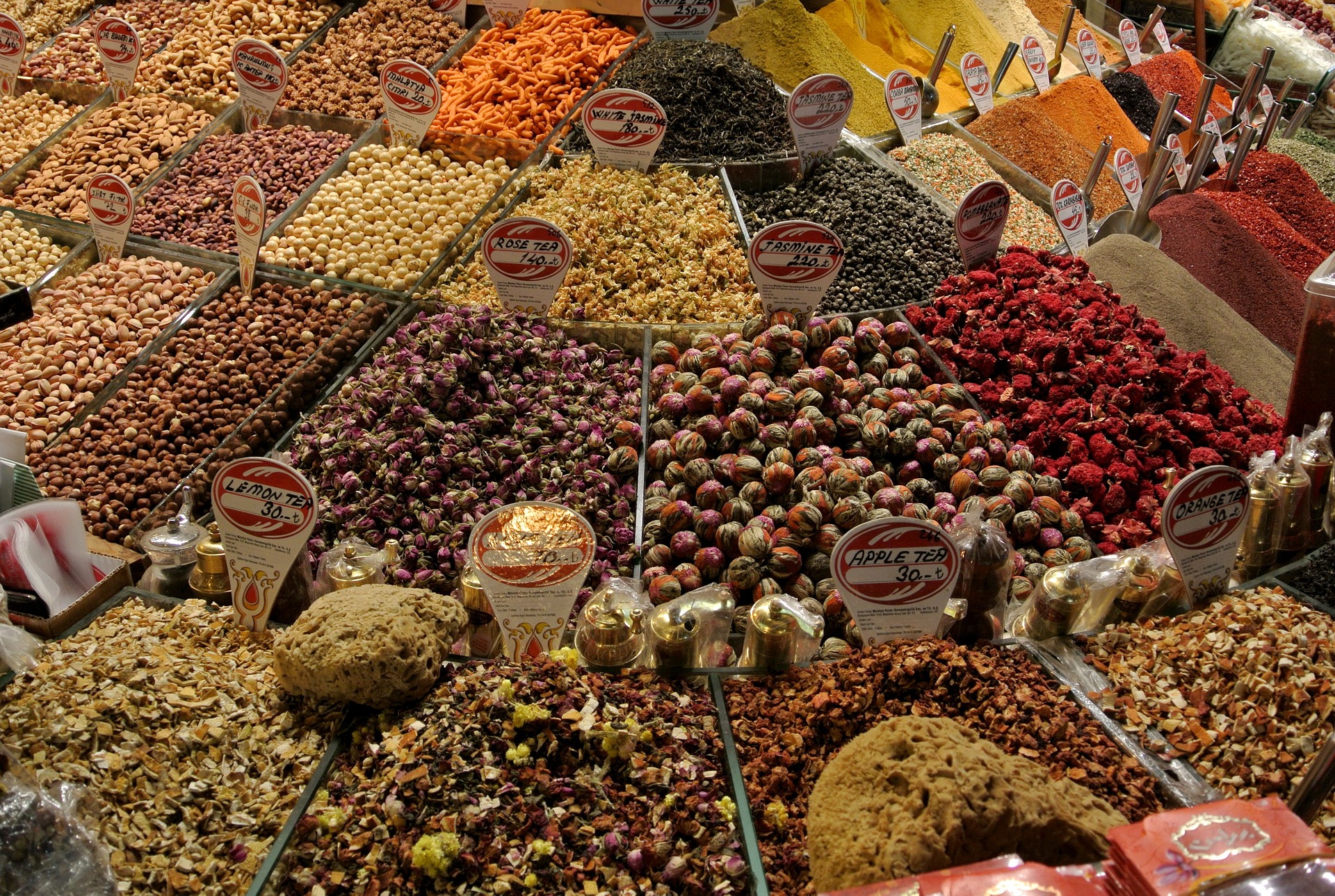
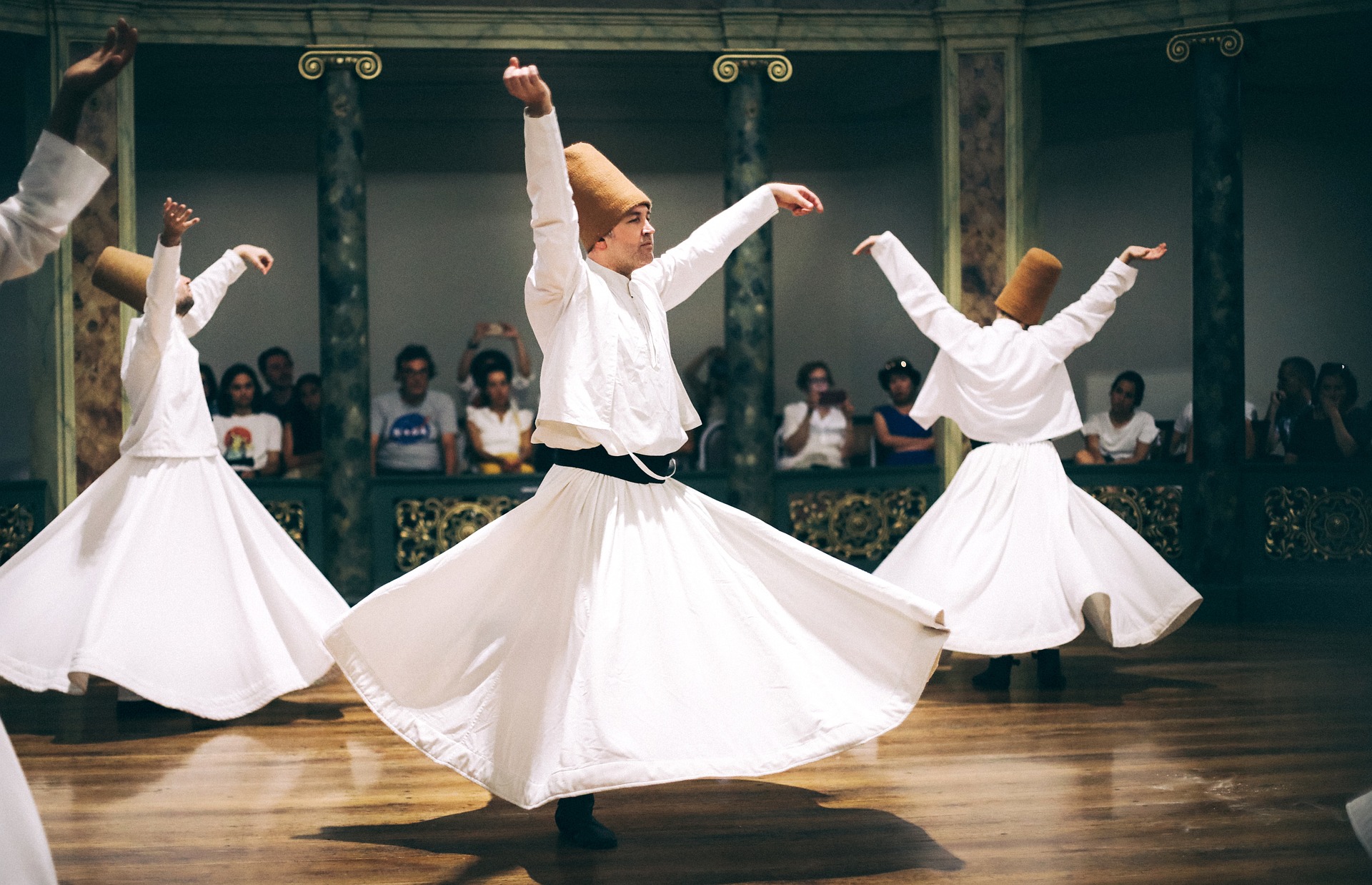
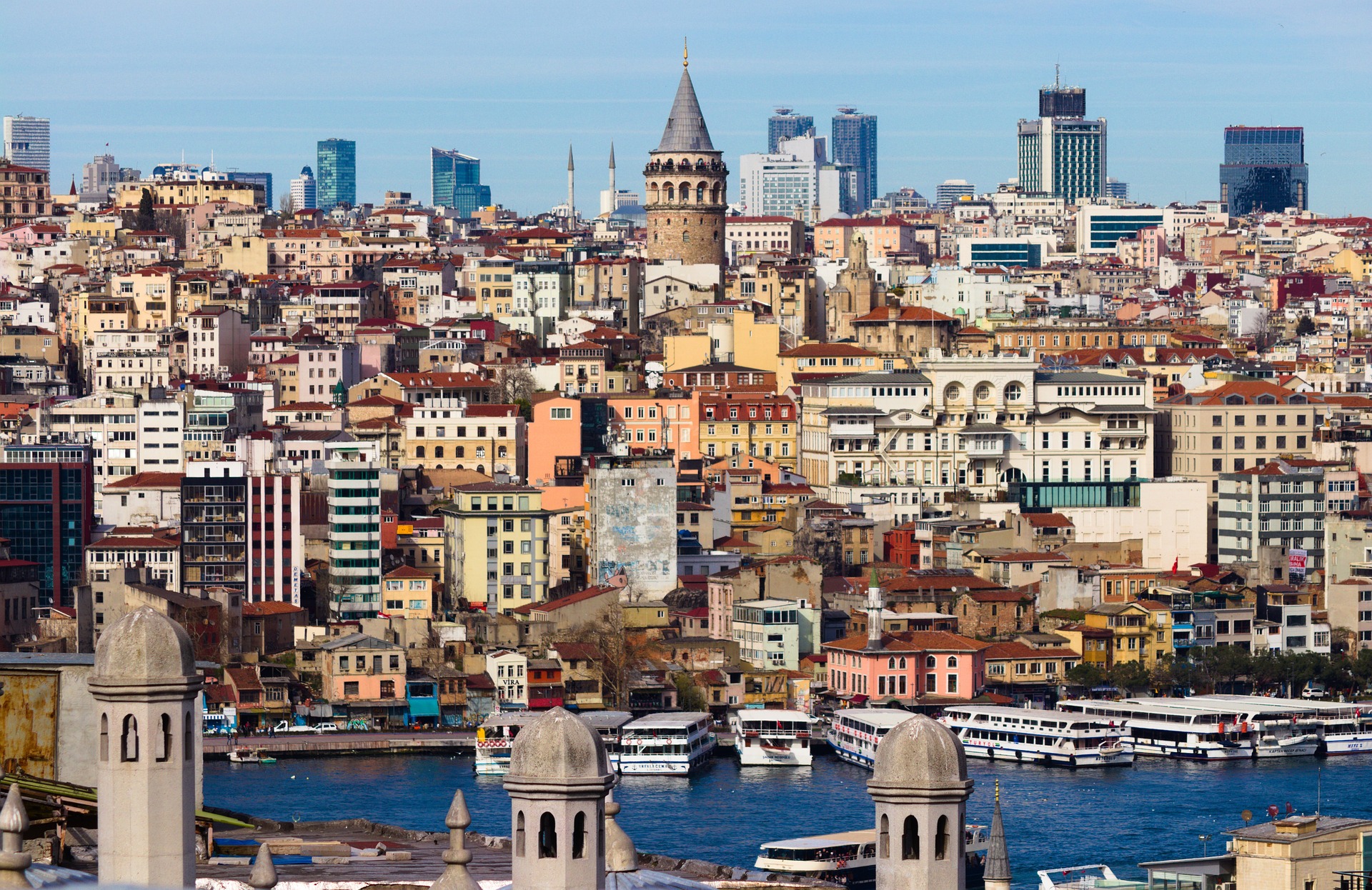
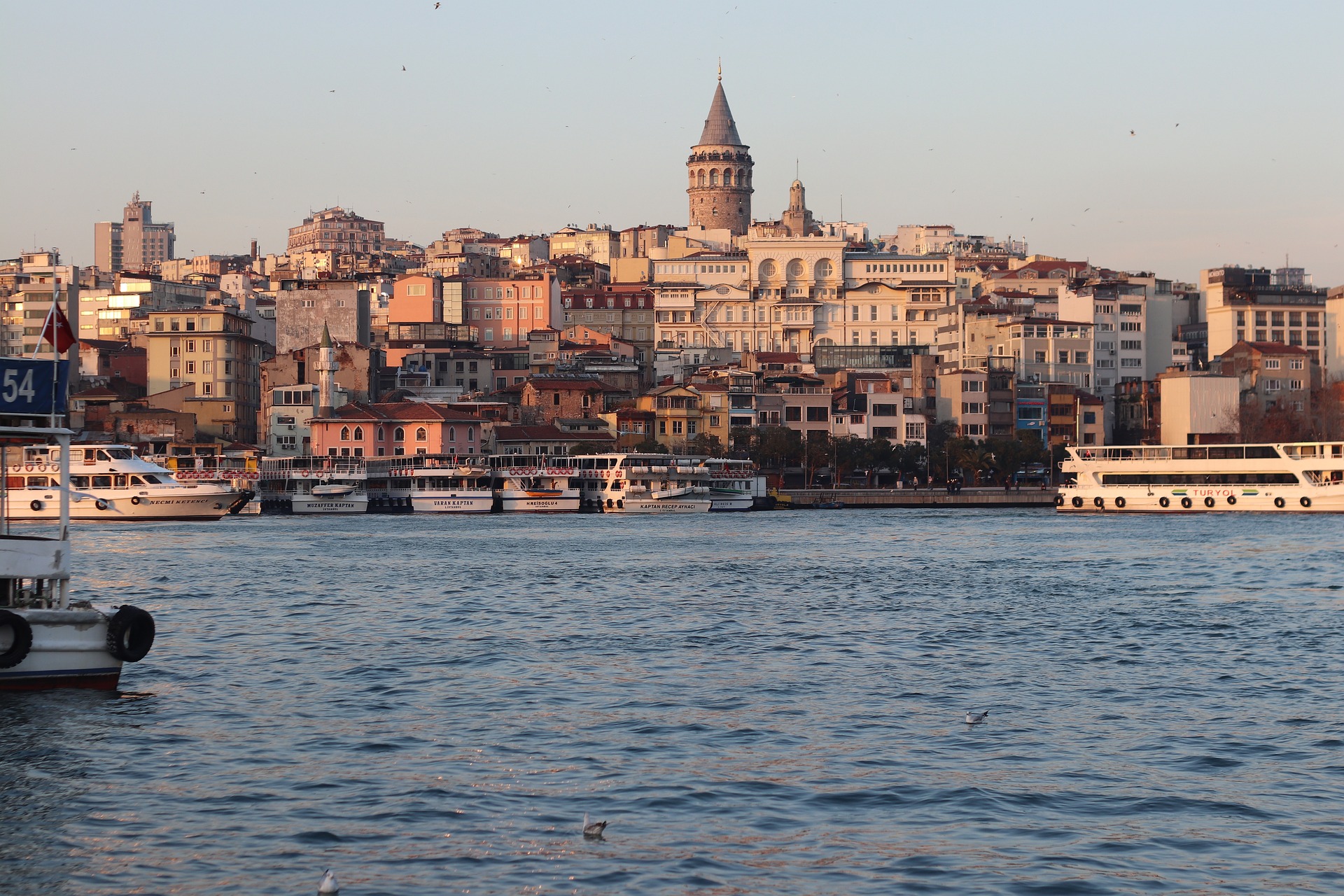
The only city in the world that can lay claim to straddling two continents, Istanbul—once known as Constantinople, capital of the Byzantine and then the Ottoman Empire—has for centuries been a bustling metropolis with one foot in Europe and the other in Asia. Istanbul embraces this enviable position with both a certain chaos and inventiveness, ever evolving as one of the world’s most cosmopolitan crossroads. It’s often said that Istanbul is the meeting point of East and West, but visitors to this city built over the former capital of two great empires are likely to be just as impressed by the juxtaposition of old and new. Office towers creep up behind historic palaces, women in chic designer outfits pass others wearing long skirts and head coverings, peddlers’ pushcarts vie with battered old Fiats and shiny BMWs for dominance of the noisy, narrow streets, and the Grand Bazaar competes with modern shopping malls. At dawn, when the muezzin's call to prayer resounds from ancient minarets, there are inevitably a few hearty revelers still making their way home from nightclubs and bars. Most visitors to this sprawling city of more than 14 million will first set foot in the relatively compact Old City, where the legacy of the Byzantine and Ottoman empires can be seen in monumental works of architecture like the brilliant Aya Sofya and the beautifully proportioned mosques built by the great architect Sinan. Though it would be easy to spend days, if not weeks, exploring the wealth of attractions in the historical peninsula, visitors should make sure also to venture elsewhere in order to experience the vibrancy of contemporary Istanbul. With a lively nightlife propelled by its young population and an exciting arts scene that’s increasingly on the international radar—thanks in part to its stint as the European Capital of Culture in 2010—Istanbul is truly a city that never sleeps. It’s also a place where visitors will feel welcome: Istanbul may be on the Bosphorus, but at heart it’s a Mediterranean city, whose friendly inhabitants are effusively social and eager to share what they love most about it.
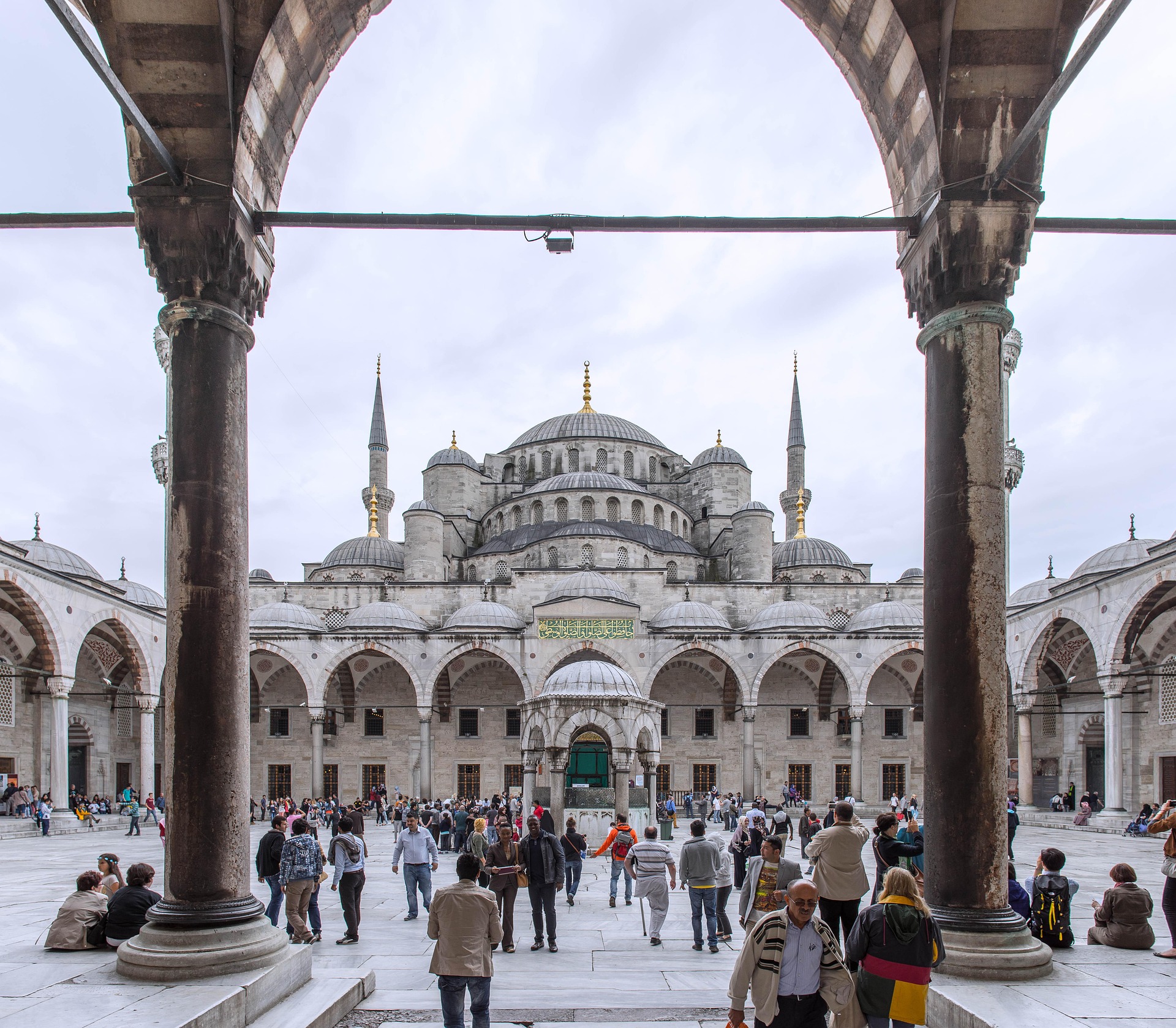
About Istanbul
The only city in the world that can lay claim to straddling two continents, Istanbul—once known as Constantinople, capital of the Byzantine and then the Ottoman Empire—has for centuries been a bustling metropolis with one foot in Europe and the other in Asia. Istanbul embraces this enviable position with both a certain chaos and inventiveness, ever evolving as one of the world’s most cosmopolitan crossroads. It’s often said that Istanbul is the meeting point of East and West, but visitors to this city built over the former capital of two great empires are likely to be just as impressed by the juxtaposition of old and new. Office towers creep up behind historic palaces, women in chic designer outfits pass others wearing long skirts and head coverings, peddlers’ pushcarts vie with battered old Fiats and shiny BMWs for dominance of the noisy, narrow streets, and the Grand Bazaar competes with modern shopping malls. At dawn, when the muezzin's call to prayer resounds from ancient minarets, there are inevitably a few hearty revelers still making their way home from nightclubs and bars. Most visitors to this sprawling city of more than 14 million will first set foot in the relatively compact Old City, where the legacy of the Byzantine and Ottoman empires can be seen in monumental works of architecture like the brilliant Aya Sofya and the beautifully proportioned mosques built by the great architect Sinan. Though it would be easy to spend days, if not weeks, exploring the wealth of attractions in the historical peninsula, visitors should make sure also to venture elsewhere in order to experience the vibrancy of contemporary Istanbul. With a lively nightlife propelled by its young population and an exciting arts scene that’s increasingly on the international radar—thanks in part to its stint as the European Capital of Culture in 2010—Istanbul is truly a city that never sleeps. It’s also a place where visitors will feel welcome: Istanbul may be on the Bosphorus, but at heart it’s a Mediterranean city, whose friendly inhabitants are effusively social and eager to share what they love most about it.
About Kusadasi
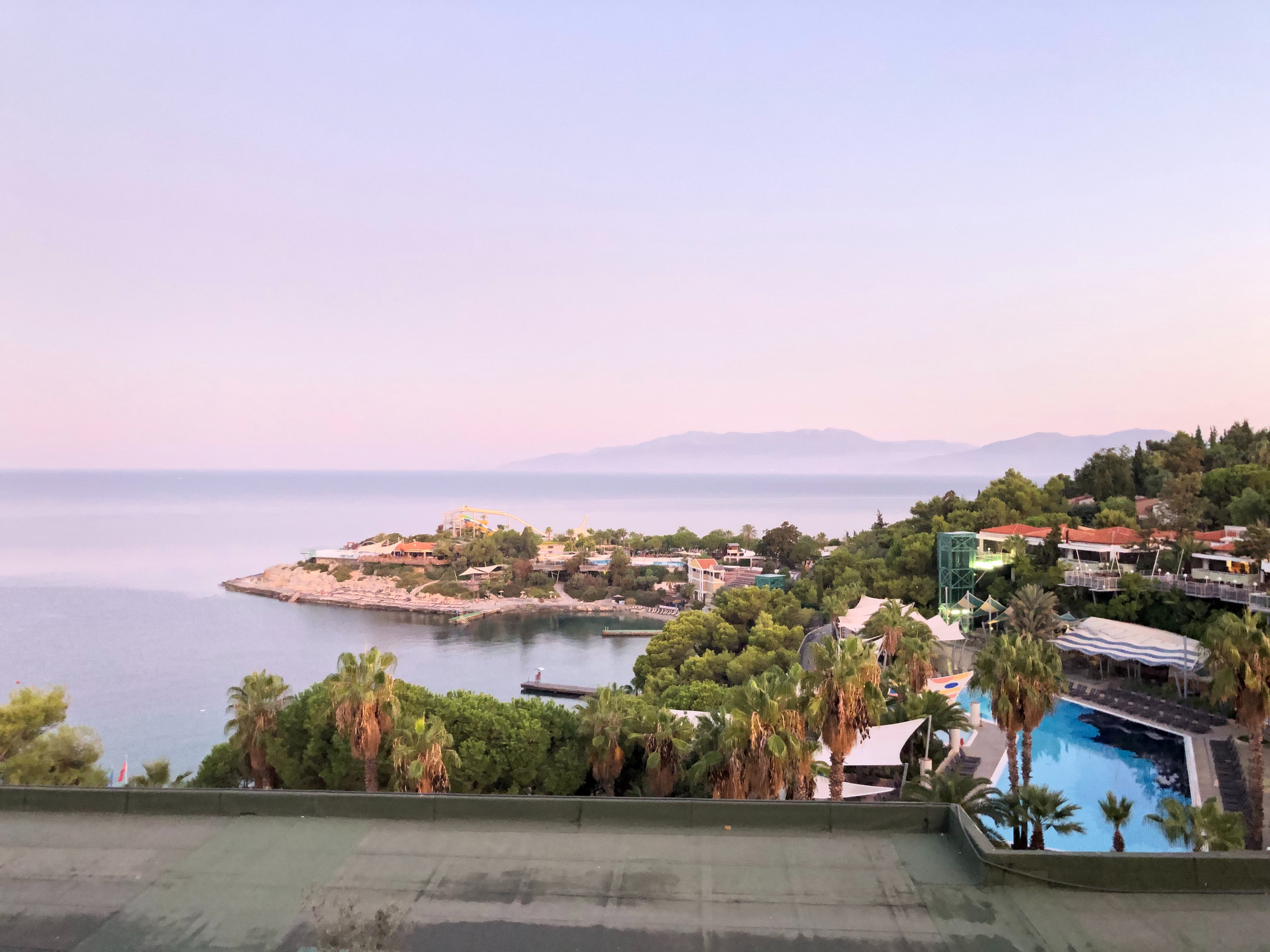
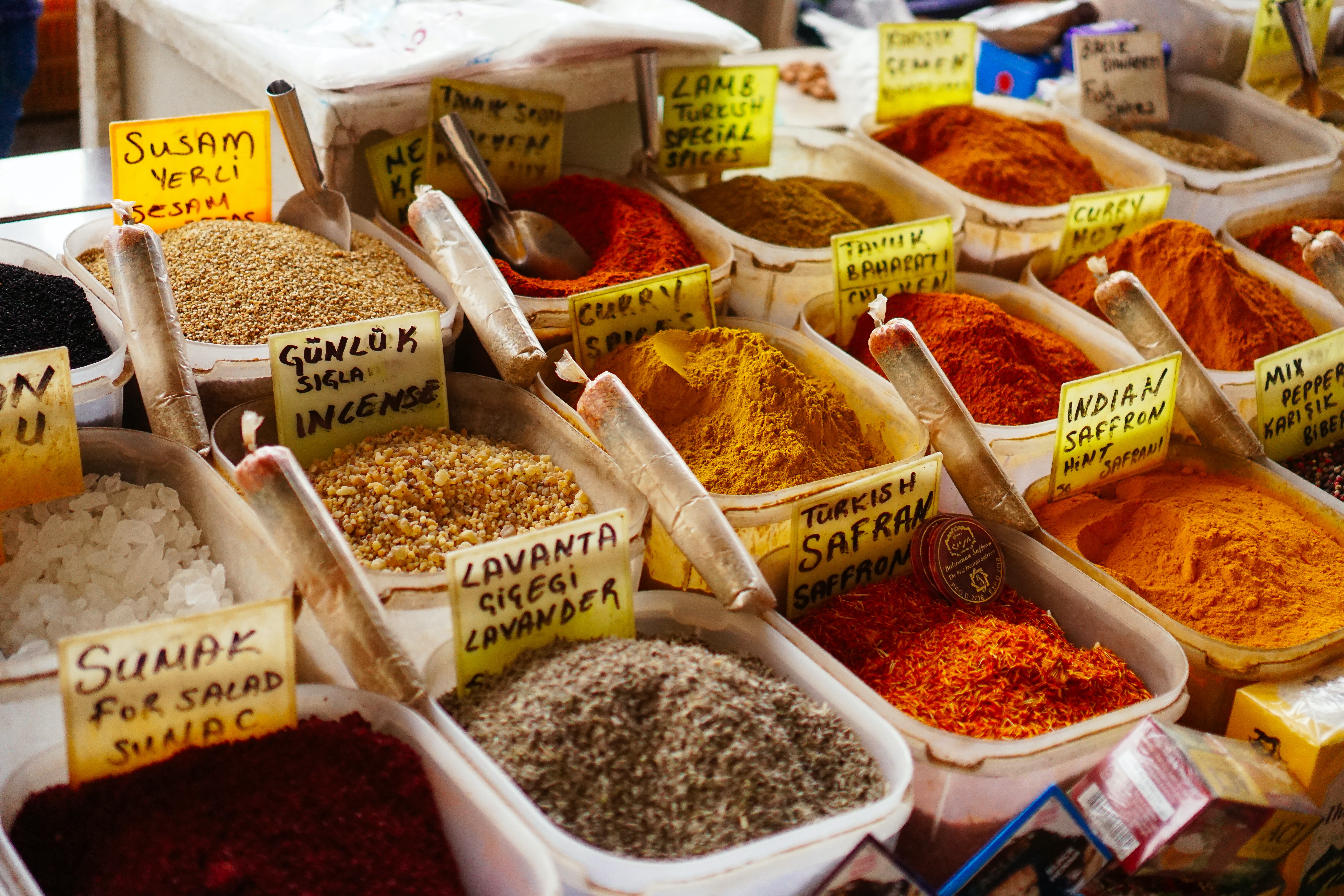
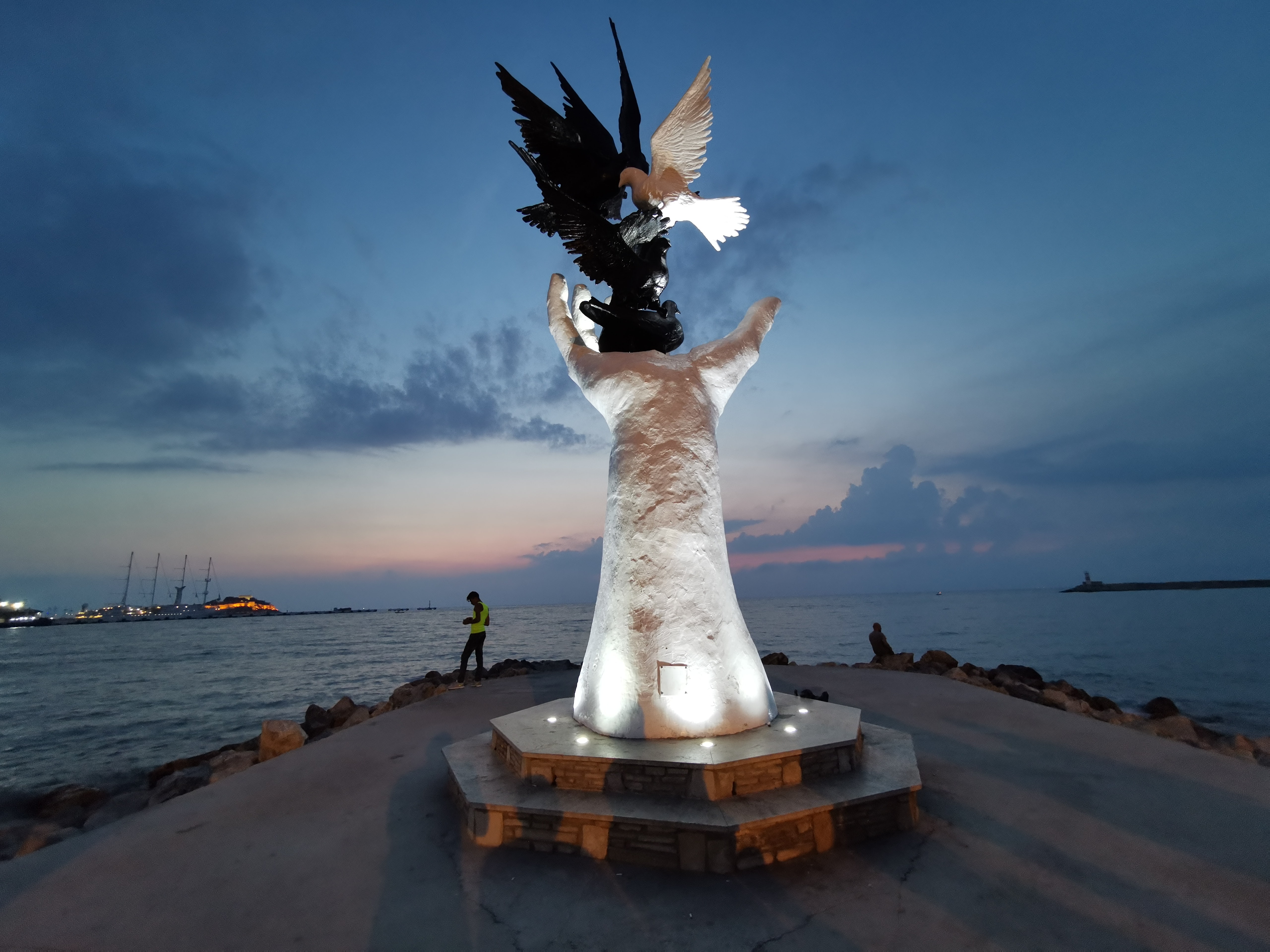
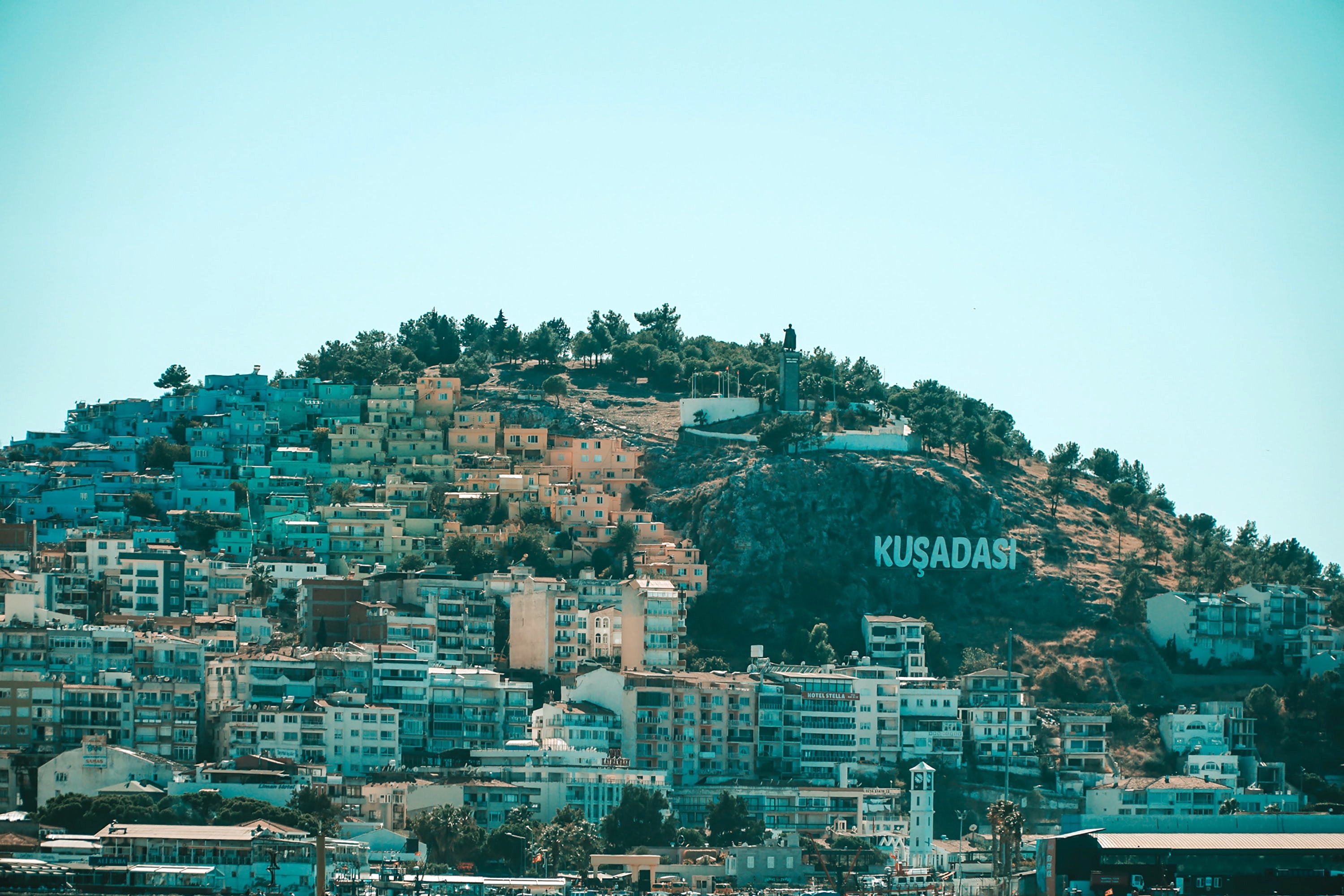
Whilst the busy resort town of Kusadasi offers much in the way of shopping and dining – not to mention a flourishing beach life scene, the real jewel here is Ephesus and the stunning ruined city that really take centre stage. With only 20% of the classical ruins having been excavated, this archaeological wonder has already gained the status as Europe’s most complete classical metropolis. And a metropolis it really is; built in the 10th century BC this UNESCO World Heritage site is nothing short of spectacular. Although regrettably very little remains of the Temple of Artemis (one of the seven wonders of the ancient world), the superb Library of Celsus’ façade is practically intact and it is one of life’s great joys to attend an evening performance in the illuminated ruins once all the tourists have left. The history of the city is fascinating and multi-layered and it is well worth reading up on this beforehand if a visit is planned. Another point of interest for historians would be the house of the Virgin Mary, located on the romantically named Mount Nightingale and just nine kilometres away from Ephesus proper. Legend has it that Mary (along with St. John) spent her final years here, secluded from the rest of the population, spreading Christianity. An edifying experience, even for non-believers. For the less historical minded amongst you, Kusadasi offers plenty in the way of activities. After a stroll through the town, jump in a taxi to Ladies’ Beach (men are allowed), sample a Turkish kebap on one of the many beachfront restaurants and enjoy the clement weather. If you do want to venture further afield, then the crystal clear beaches of Guzelcamli (or the Millipark), the cave of Zeus and the white scalloped natural pools at Pamukkale, known as Cleopatra’s pools, are definitely worth a visit.
About Marmaris
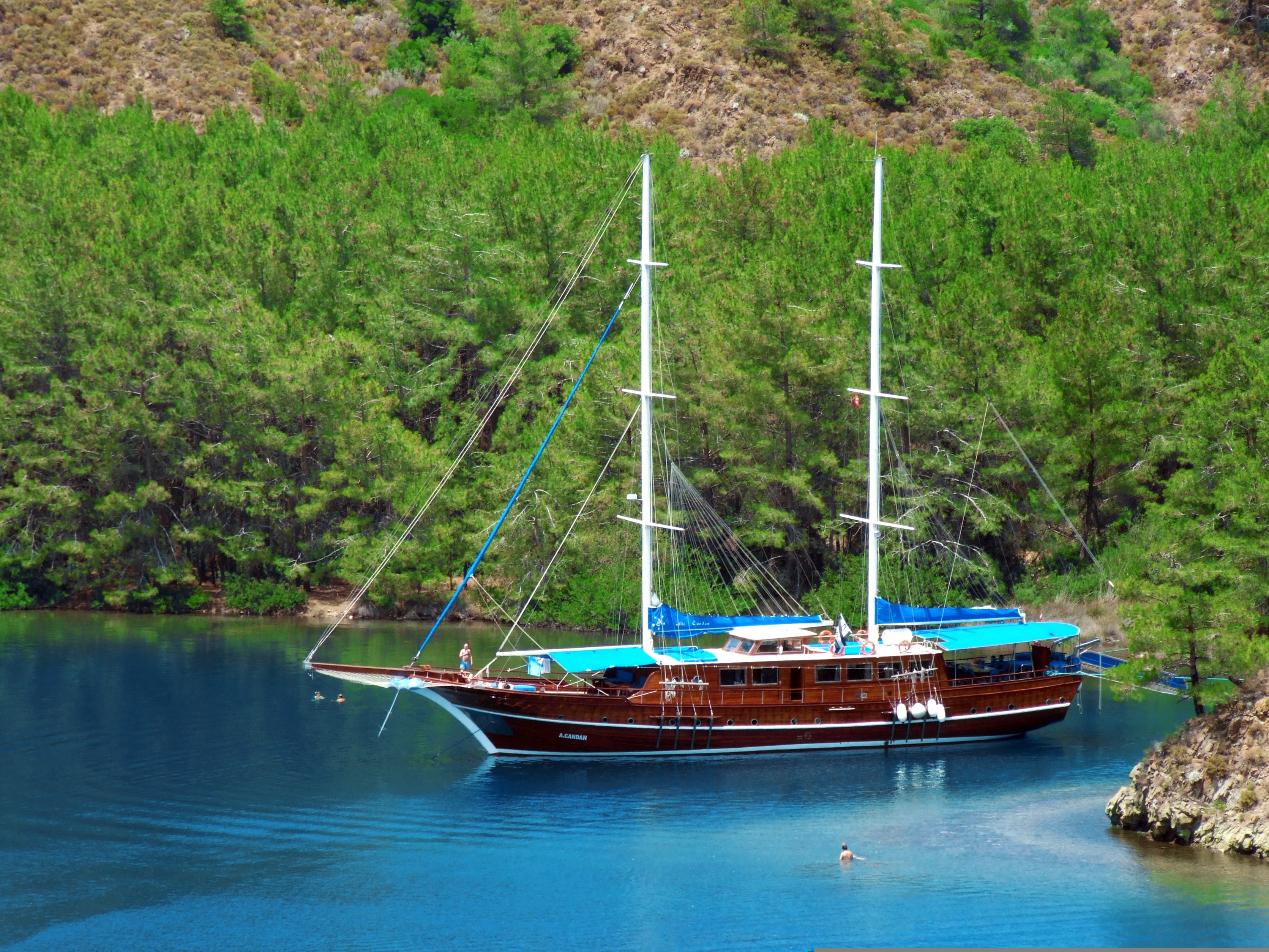
This big, brash resort city has two faces, and they're hard to reconcile. From the sea, a line of hotels stretches around the northern edge of a great bay, the whole encircled by a magical necklace of pine-clad mountains. Behind those same hotels, however, the city has been overwhelmed by boxy concrete development and streets lined with a hundred generically named eateries. An annual horde of European tourists descends on these workaday establishments, but for the international traveler, there is little about Marmaris that can’t be savored elsewhere in Turkey. Although it is a pretty spot, there isn’t much reason to linger unless you are meeting a yacht, traveling on to the Greek island of Rhodes, or perhaps snapping up an unbeatable deal at one of the top resorts, some of which are spectacular worlds unto themselves.
About Bodrum

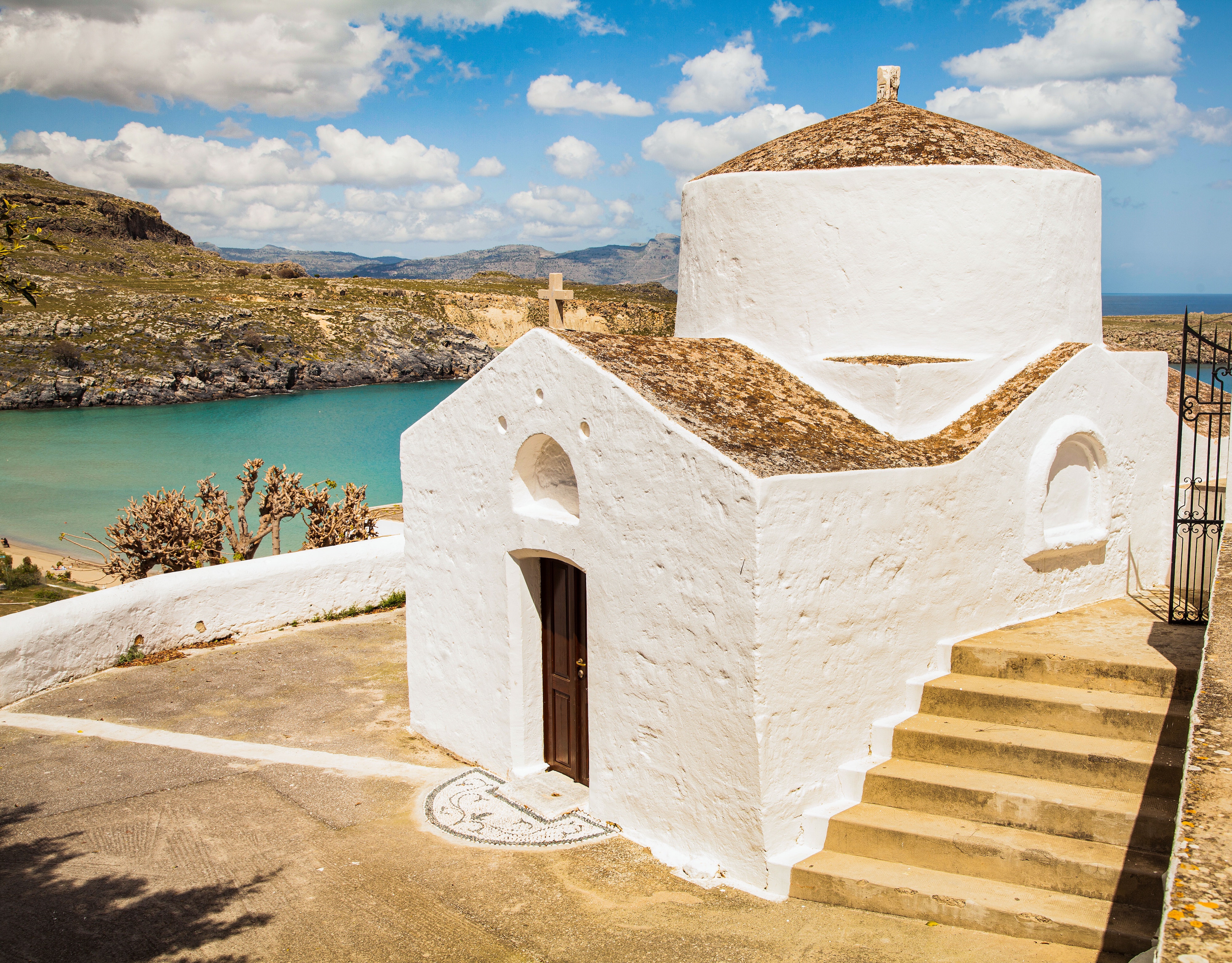
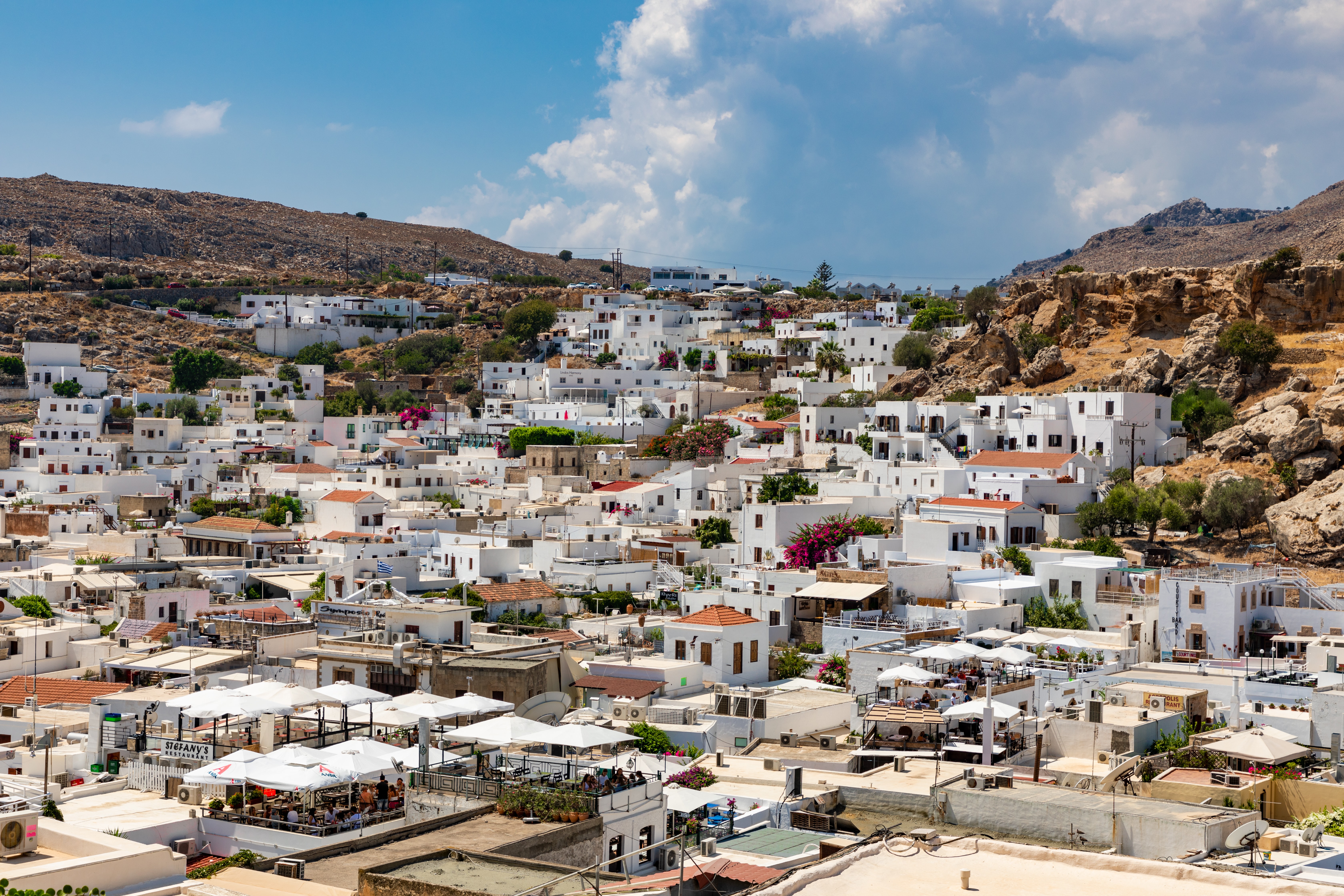
About Rhodes
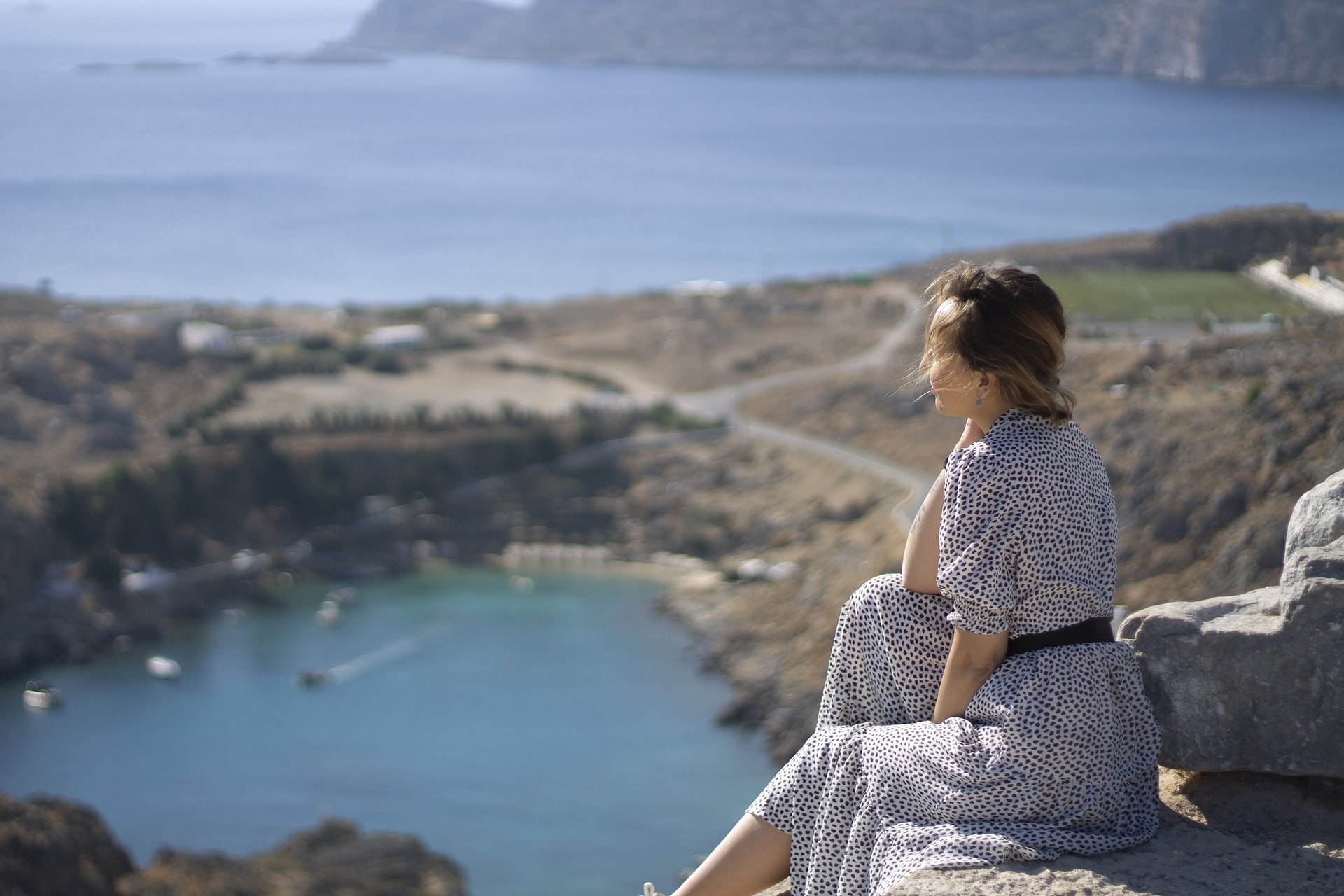
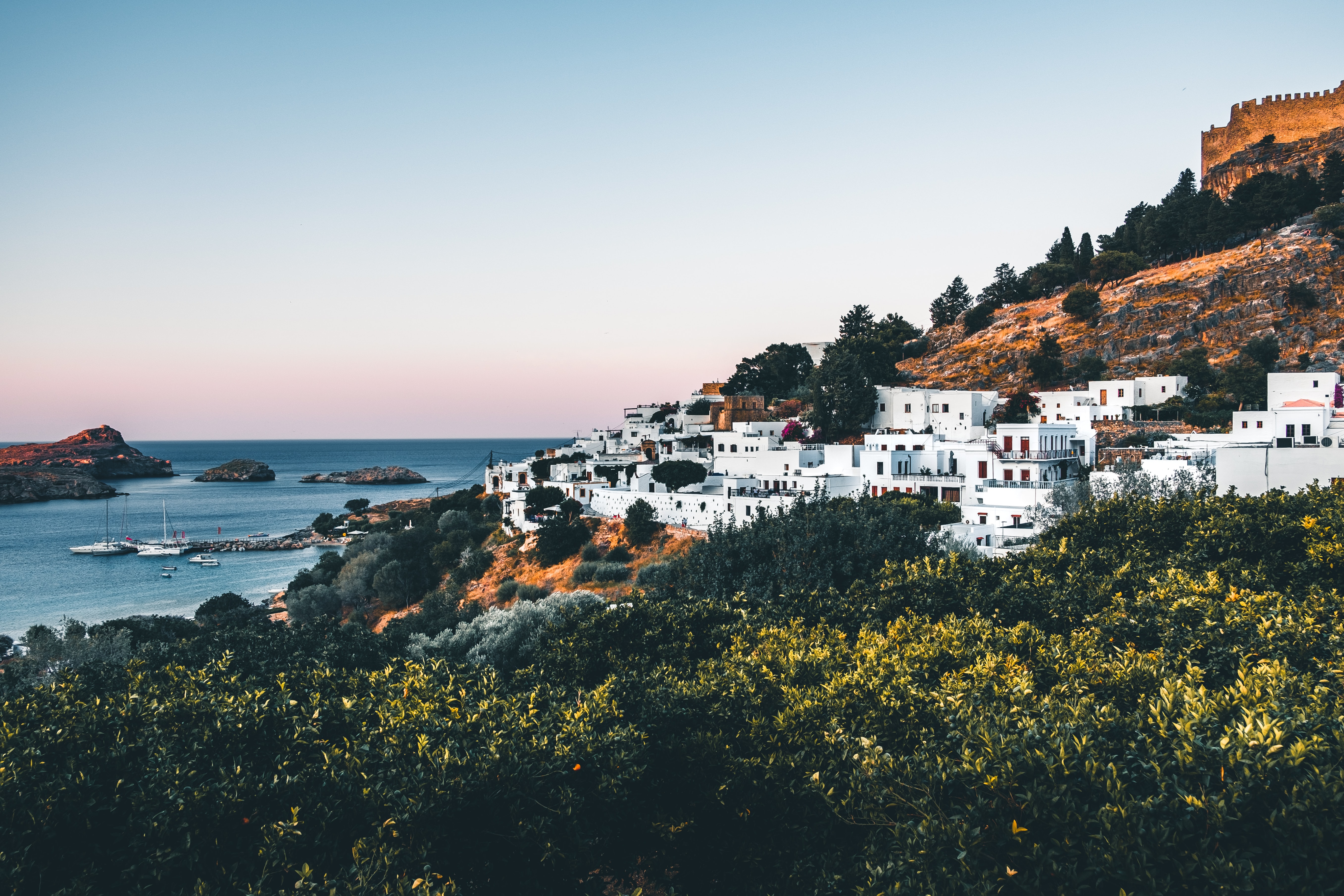
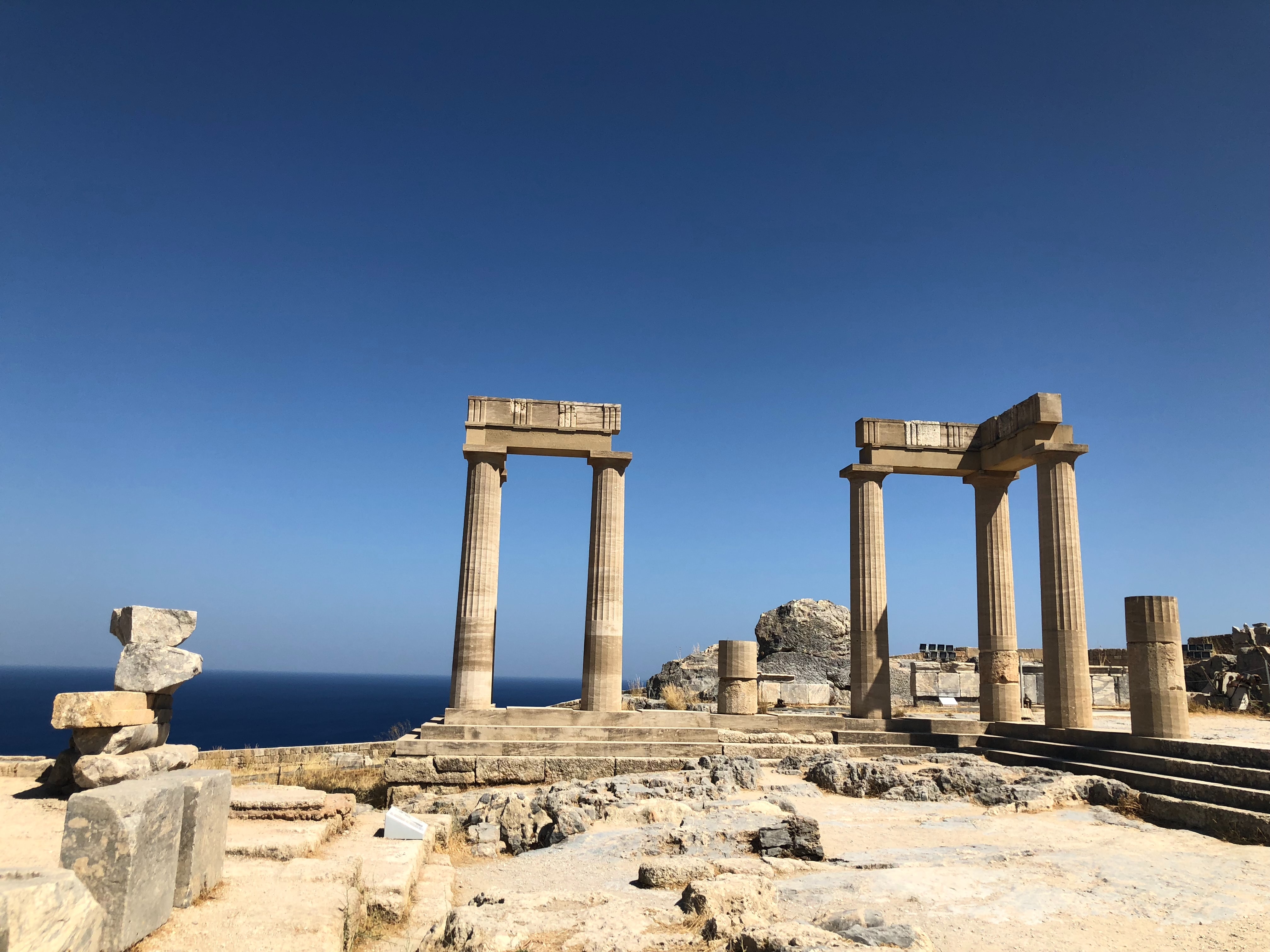
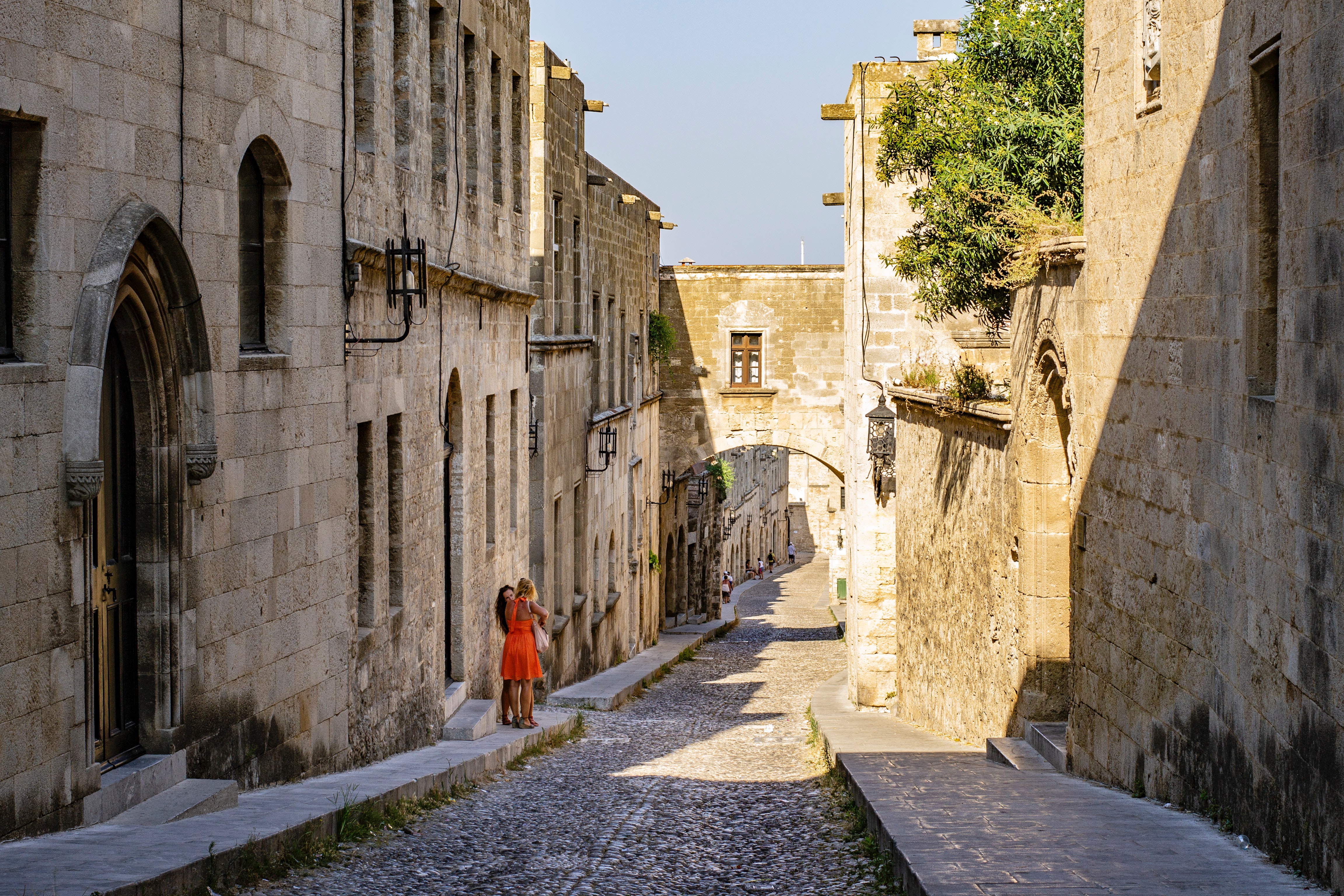
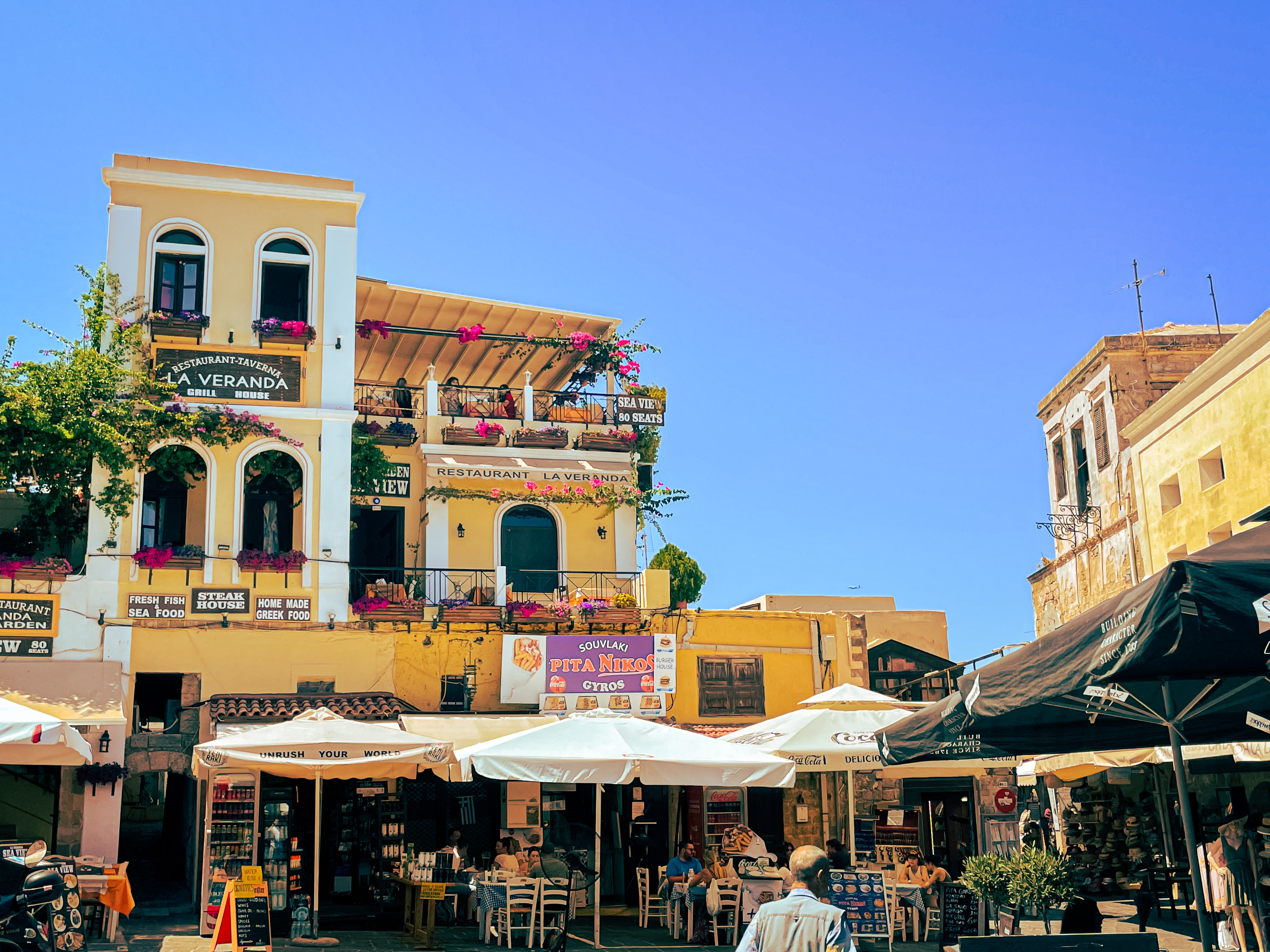
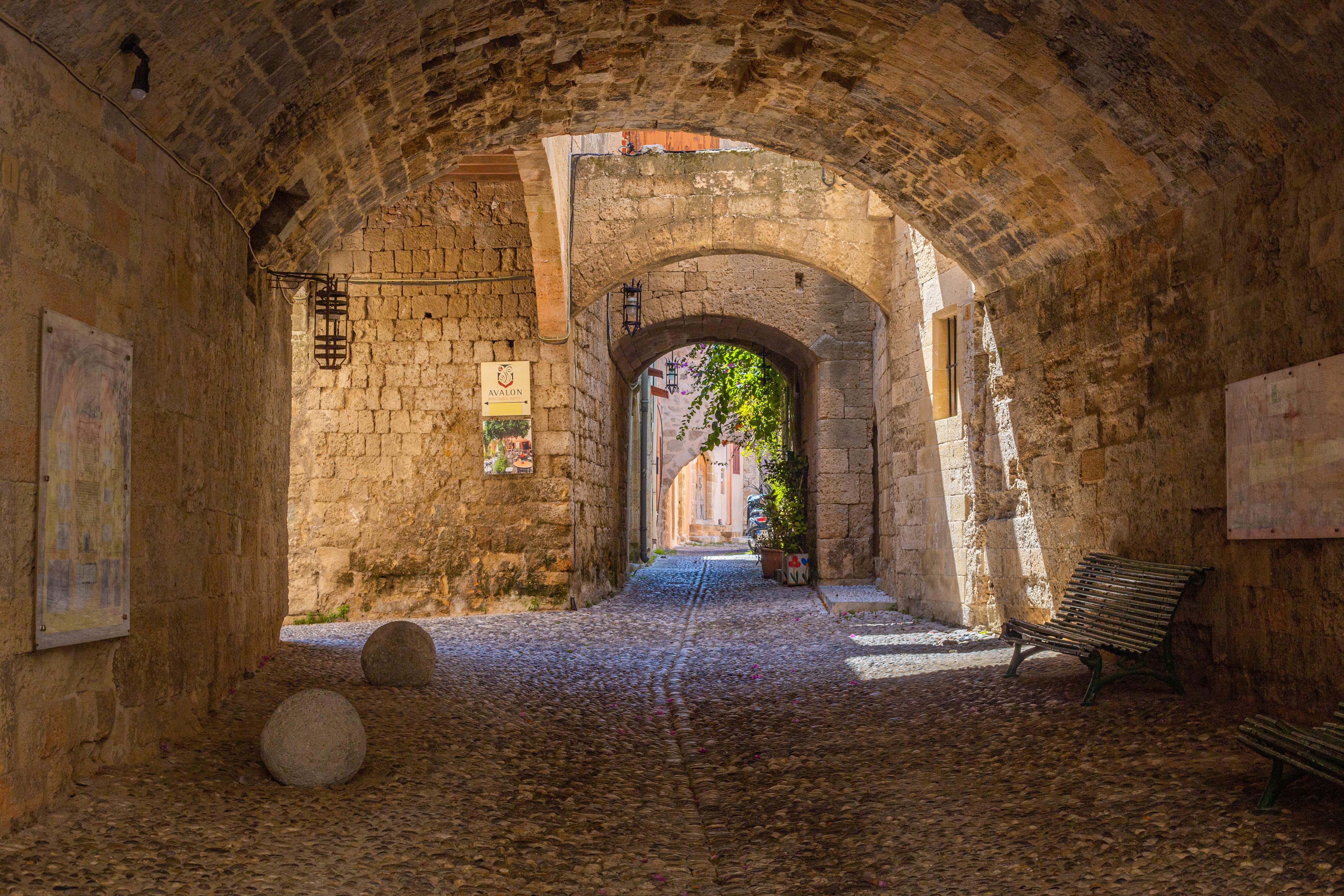
Early travelers described Rhodes as a town of two parts: a castle or high town (Collachium) and a lower city. Today Rhodes town—sometimes referred to as Ródos town—is still a city of two parts: the Old Town, a UNESCO World Heritage site that incorporates the high town and lower city, and the modern metropolis, or New Town, spreading away from the walls that encircle the Old Town. The narrow streets of the Old Town are for the most part closed to cars and are lined with Orthodox and Catholic churches, Turkish houses (some of which follow the ancient orthogonal plan), and medieval public buildings with exterior staircases and facades elegantly constructed of well-cut limestone from Lindos. Careful reconstruction in recent years has enhanced the harmonious effect.
About Symi
About Agios Nikólaos, Kríti

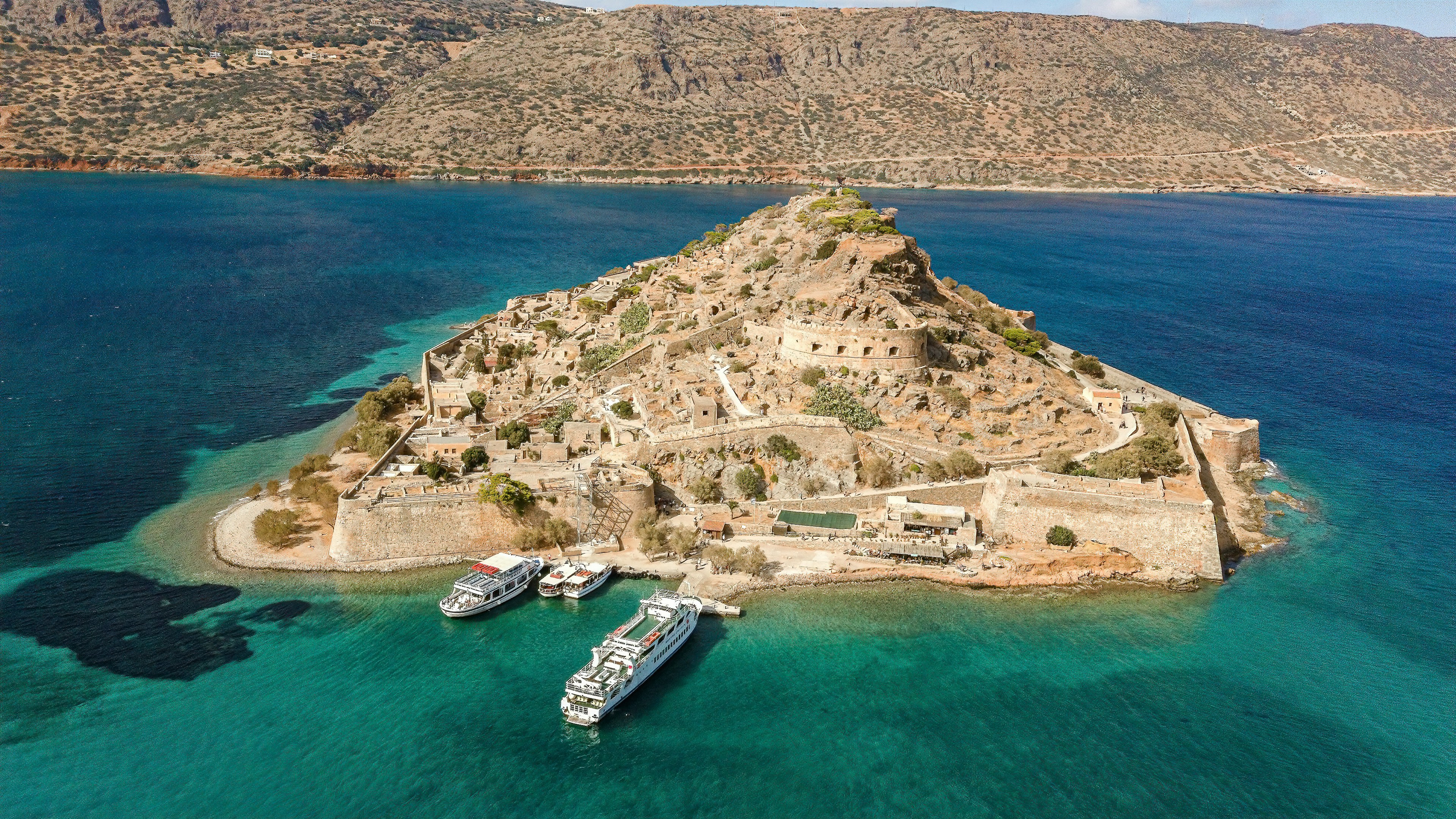
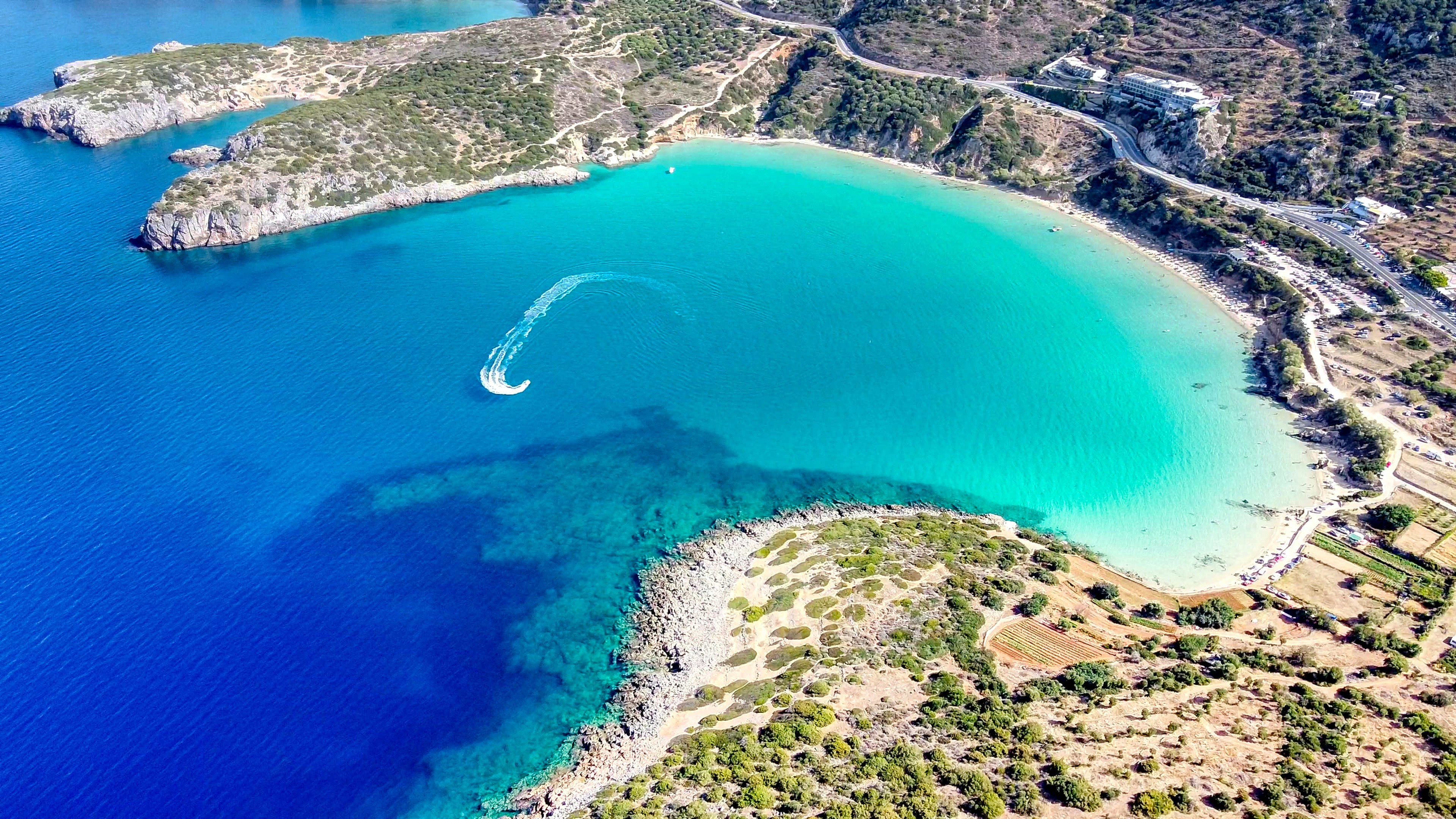
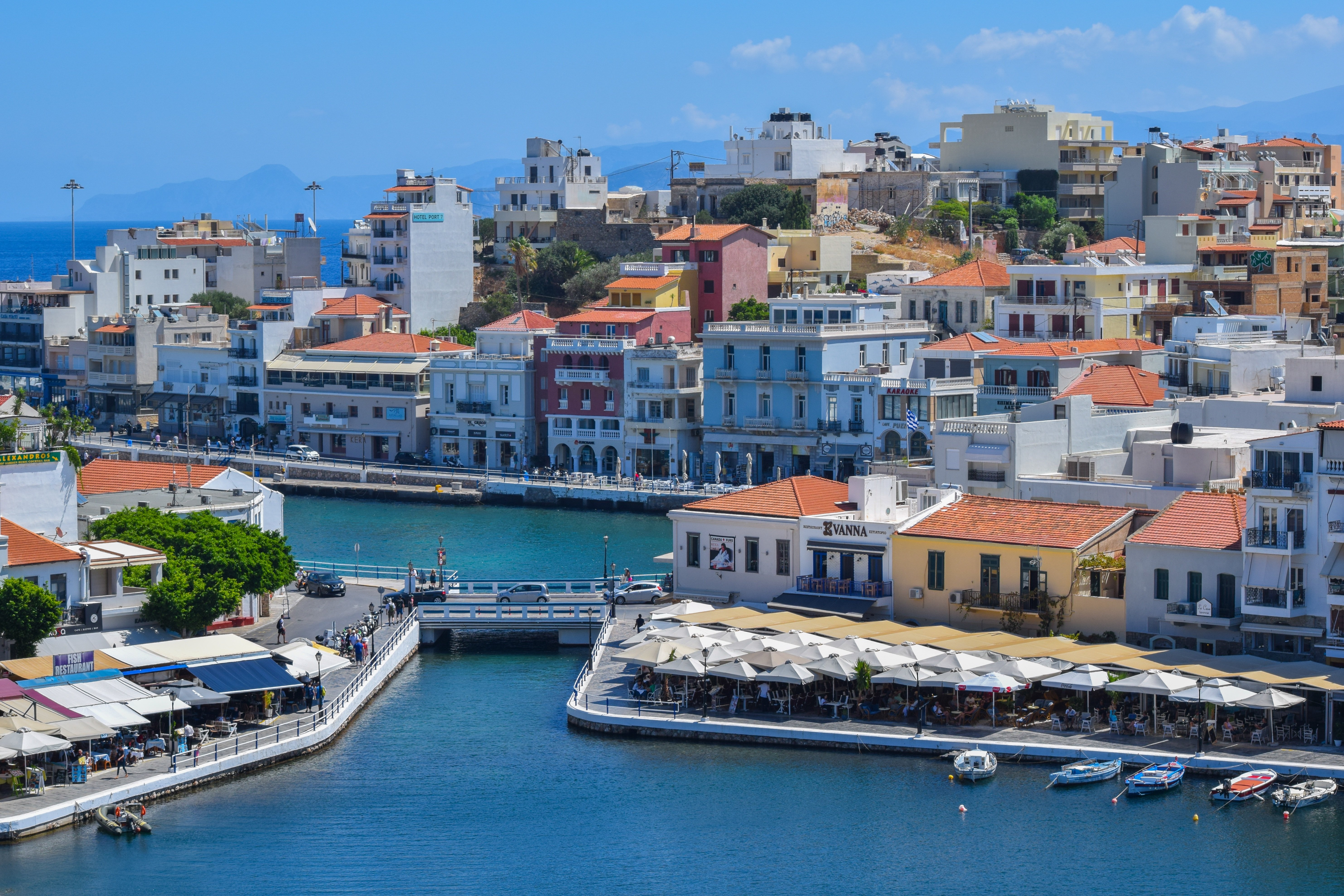
About Santorini
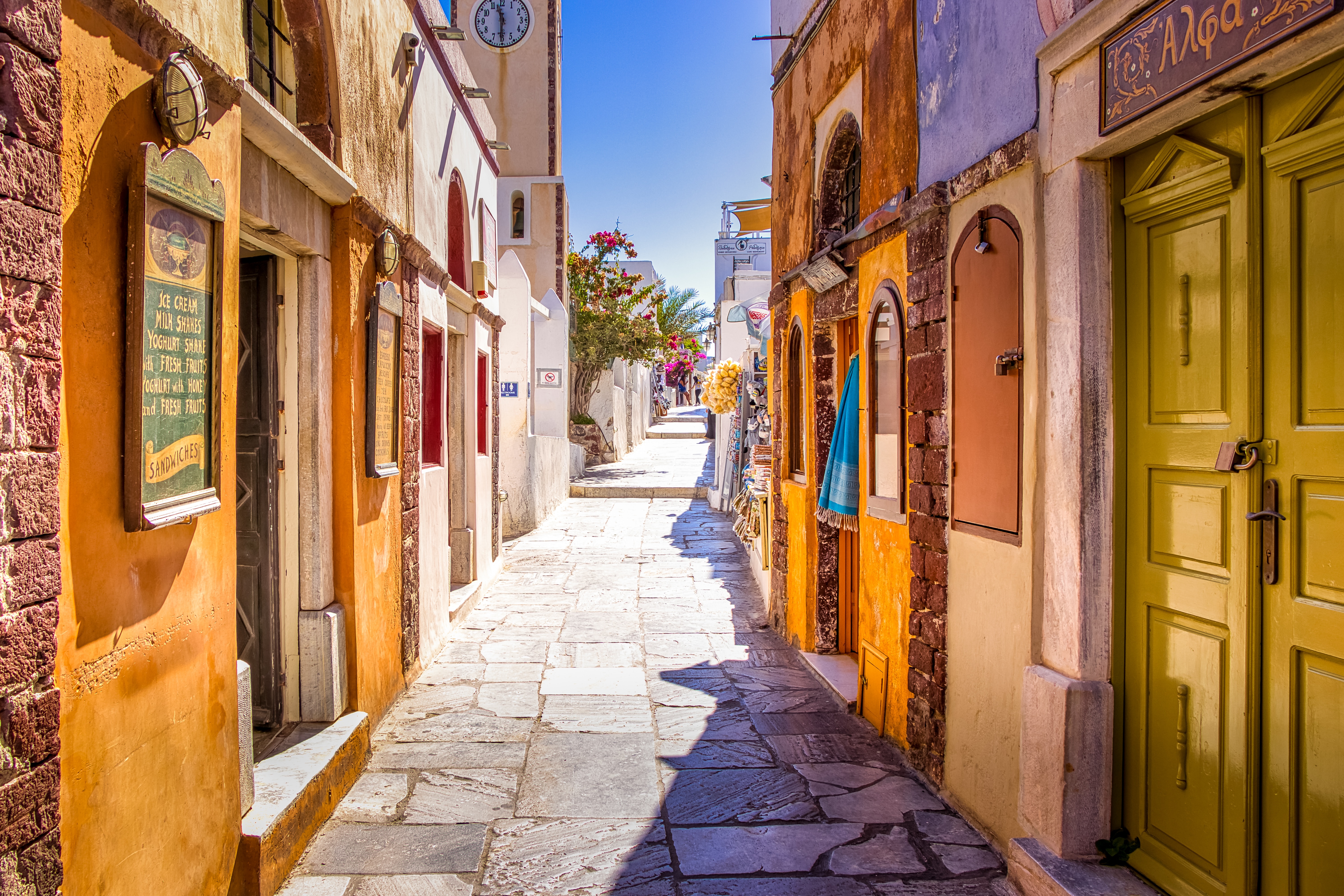
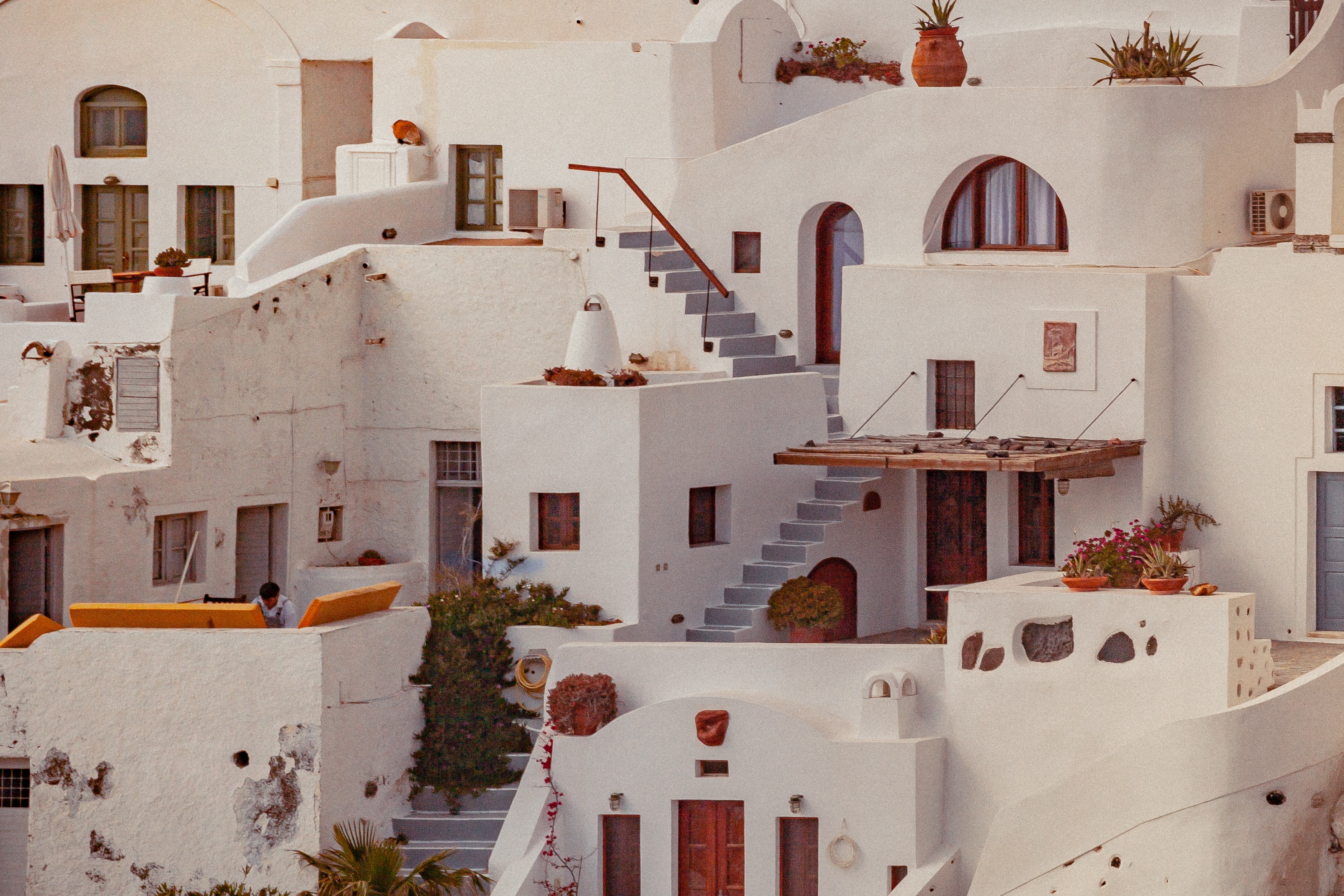
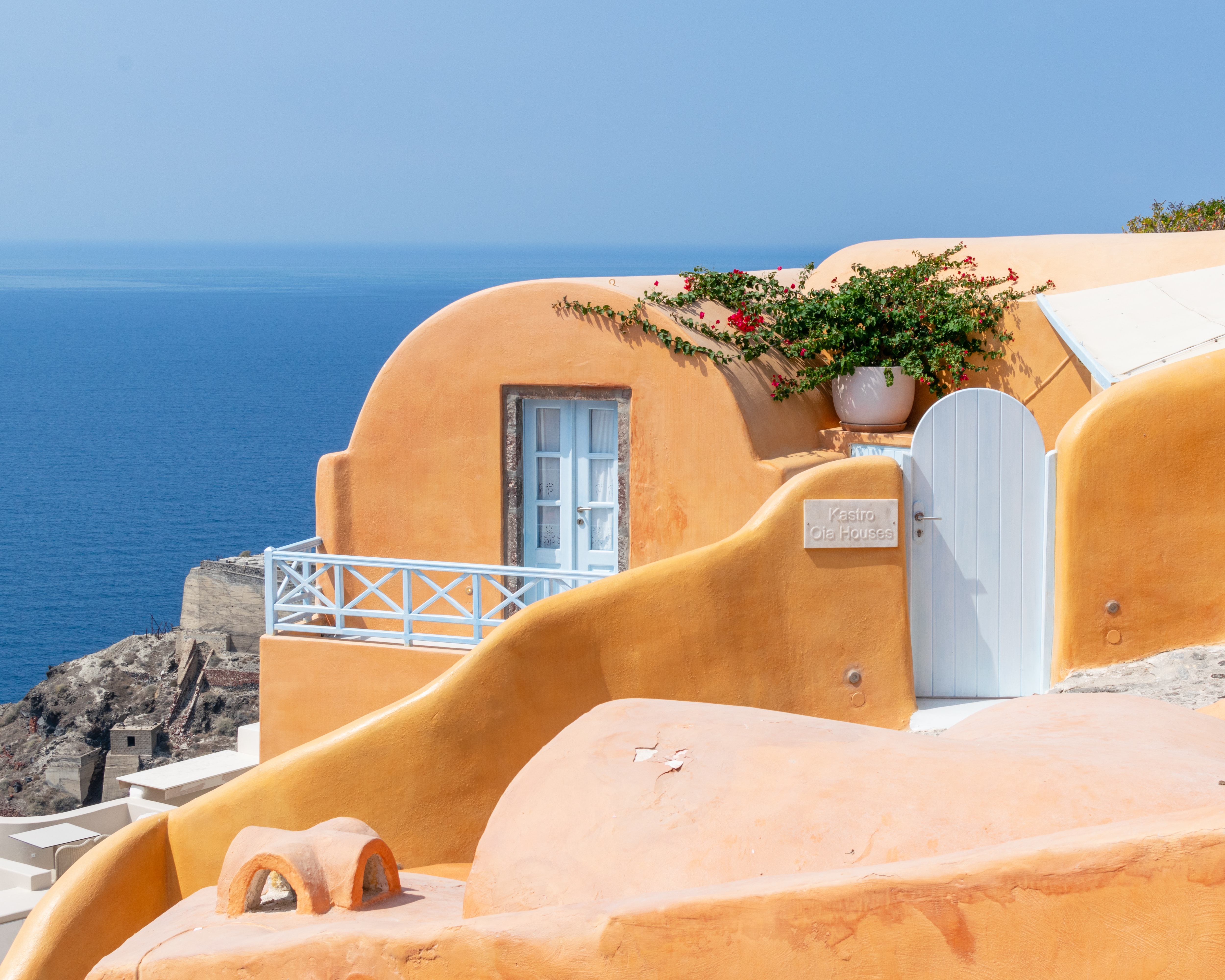
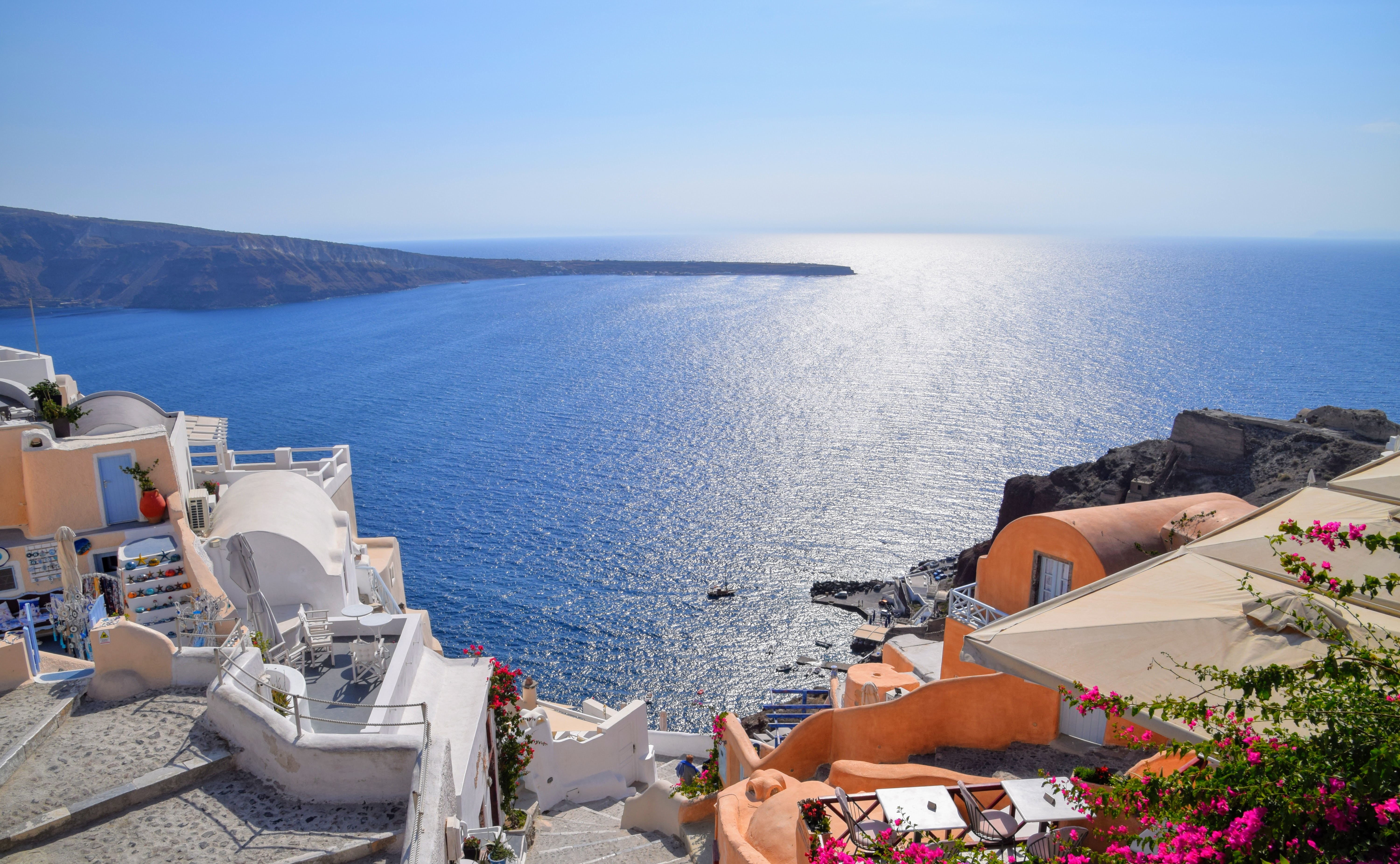
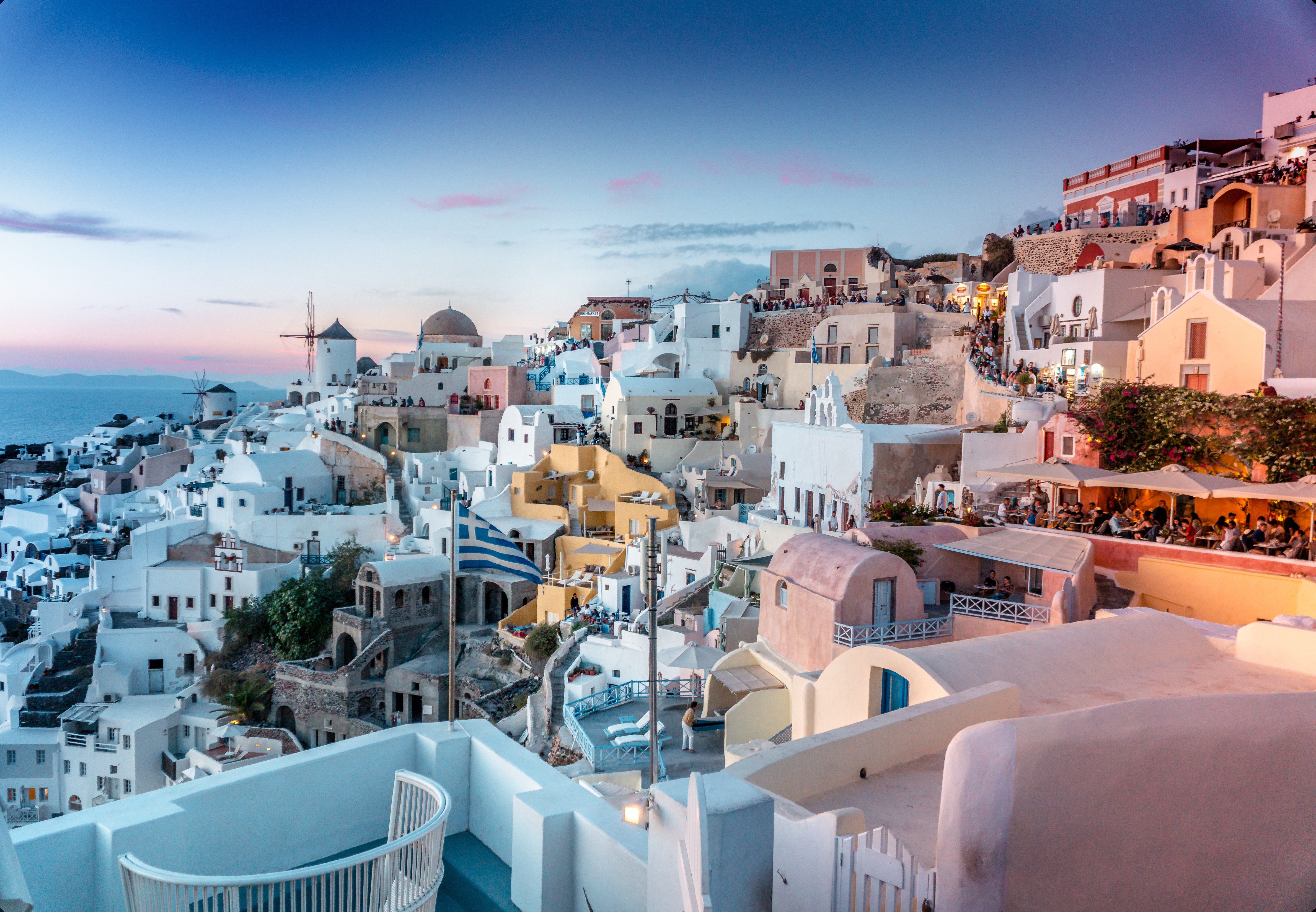
Undoubtedly the most extraordinary island in the Aegean, crescent-shape Santorini remains a mandatory stop on the Cycladic tourist route—even if it's necessary to enjoy the sensational sunsets from Ia, the fascinating excavations, and the dazzling white towns with a million other travelers. Called Kállisti (the "Loveliest") when first settled, the island has now reverted to its subsequent name of Thira, after the 9th-century-BC Dorian colonizer Thiras. The place is better known, however, these days as Santorini, a name derived from its patroness, St. Irene of Thessaloniki, the Byzantine empress who restored icons to Orthodoxy and died in 802. You can fly conveniently to Santorini, but to enjoy a true Santorini rite of passage, opt instead for the boat trip here, which provides a spectacular introduction. After the boat sails between Sikinos and Ios, your deck-side perch approaches two close islands with a passage between them. The bigger one on the left is Santorini, and the smaller on the right is Thirassia. Passing between them, you see the village of Ia adorning Santorini's northernmost cliff like a white geometric beehive. You are in the caldera (volcanic crater), one of the world's truly breathtaking sights: a demilune of cliffs rising 1,100 feet, with the white clusters of the towns of Fira and Ia perched along the top. The bay, once the high center of the island, is 1,300 feet in some places, so deep that when boats dock in Santorini's shabby little port of Athinios, they do not drop anchor. The encircling cliffs are the ancient rim of a still-active volcano, and you are sailing east across its flooded caldera. On your right are the Burnt isles, the White isle, and other volcanic remnants, all lined up as if some outsize display in a geology museum. Hephaestus's subterranean fires smolder still—the volcano erupted in 198 BC, about 735, and there was an earthquake in 1956. Indeed, Santorini and its four neighboring islets are the fragmentary remains of a larger landmass that exploded about 1600 BC: the volcano's core blew sky high, and the sea rushed into the abyss to create the great bay, which measures 10 km by 7 km (6 mi by 4½ mi) and is 1,292 feet deep. The other pieces of the rim, which broke off in later eruptions, are Thirassia, where a few hundred people live, and deserted little Aspronissi ("White isle"). In the center of the bay, black and uninhabited, two cones, the Burnt Isles of Palea Kameni and Nea Kameni, appeared between 1573 and 1925. There has been too much speculation about the identification of Santorini with the mythical Atlantis, mentioned in Egyptian papyri and by Plato (who says it's in the Atlantic), but myths are hard to pin down. This is not true of old arguments about whether tidal waves from Santorini's cataclysmic explosion destroyed Minoan civilization on Crete, 113 km (70 mi) away. The latest carbon-dating evidence, which points to a few years before 1600 BC for the eruption, clearly indicates that the Minoans outlasted the eruption by a couple of hundred years, but most probably in a weakened state. In fact, the island still endures hardships: since antiquity, Santorini has depended on rain collected in cisterns for drinking and irrigating—the well water is often brackish—and the serious shortage is alleviated by the importation of water. However, the volcanic soil also yields riches: small, intense tomatoes with tough skins used for tomato paste (good restaurants here serve them); the famous Santorini fava beans, which have a light, fresh taste; barley; wheat; and white-skin eggplants.
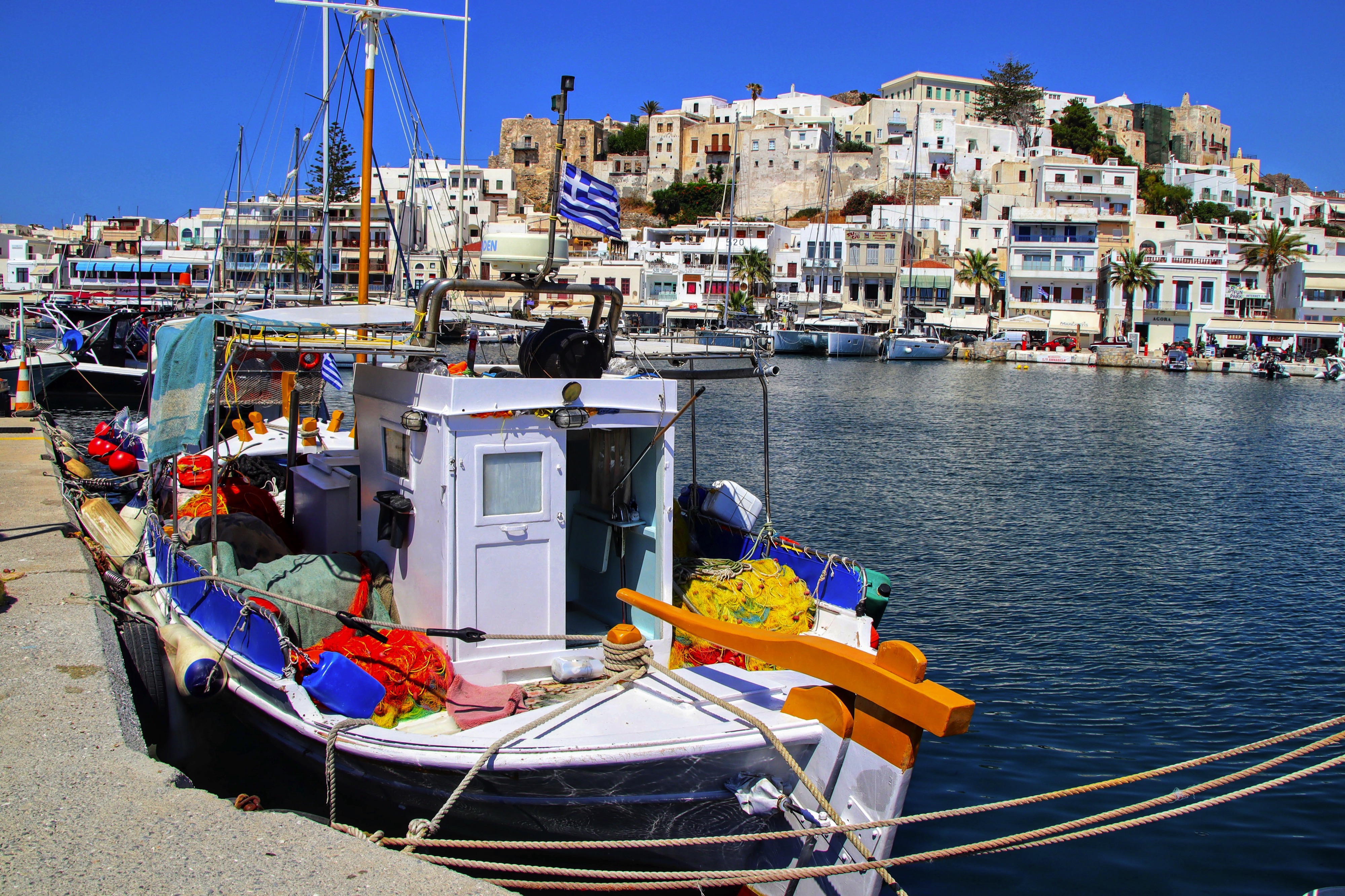
About Naxos
About Náfplion
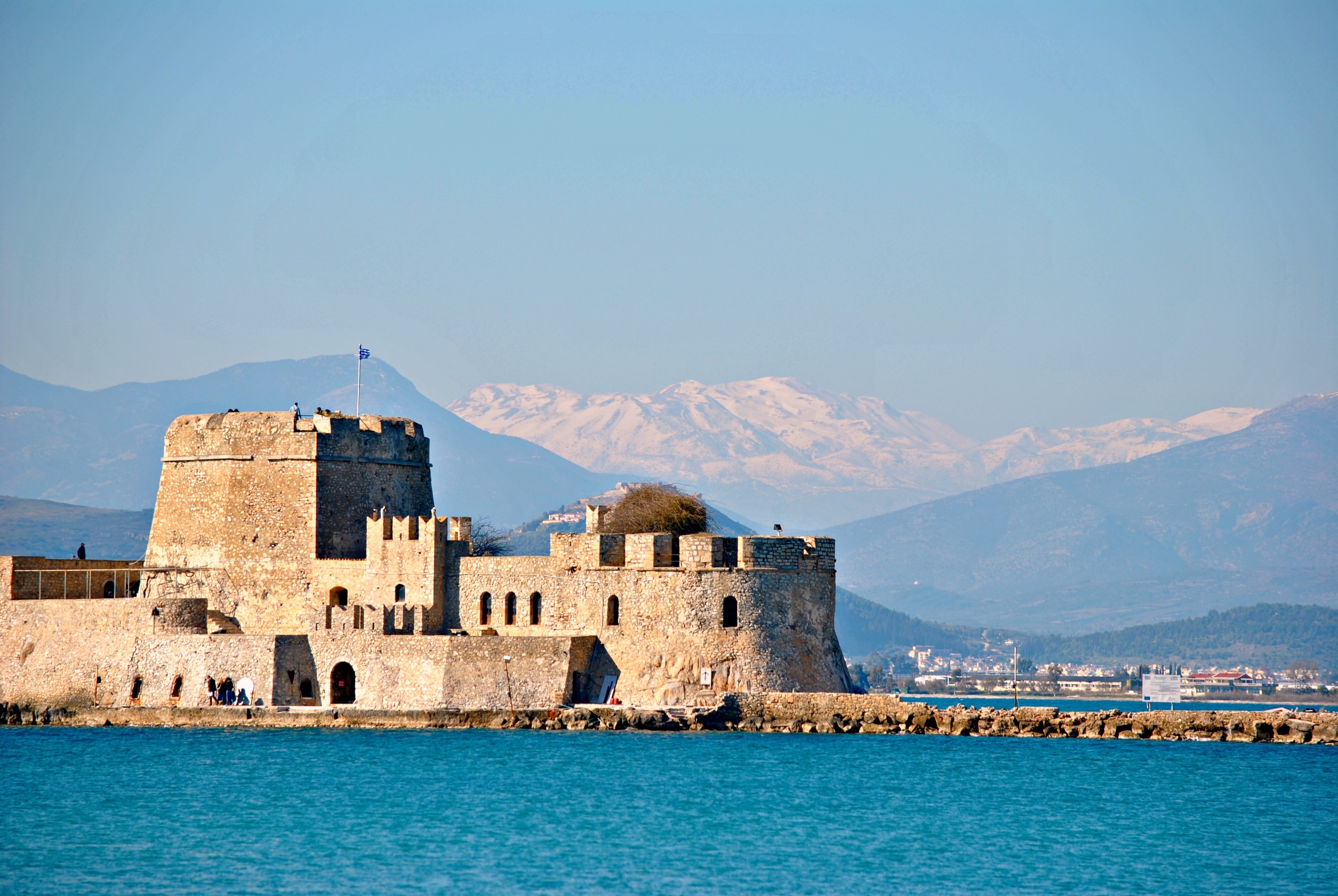
Oraia (beautiful) is the word Greeks use to describe Nafplion. The town's old section, on a peninsula jutting into the gulf of Argos, mixes Greek, Venetian, and Turkish architecture; narrow streets, often just broad flights of stone stairs, climb the slopes beneath the walls of Acronafplia. Tree-shaded plazas surround neoclassic buildings. The Palamidi fortress—an elegant display of Venetian might from the early 1700s—guards the town. Nafplion deserves at least a leisurely day of your undivided attention, and you may want to spend several days or a week here and use the city as the base from which to explore the many surrounding ancient sights.

About Piraeus
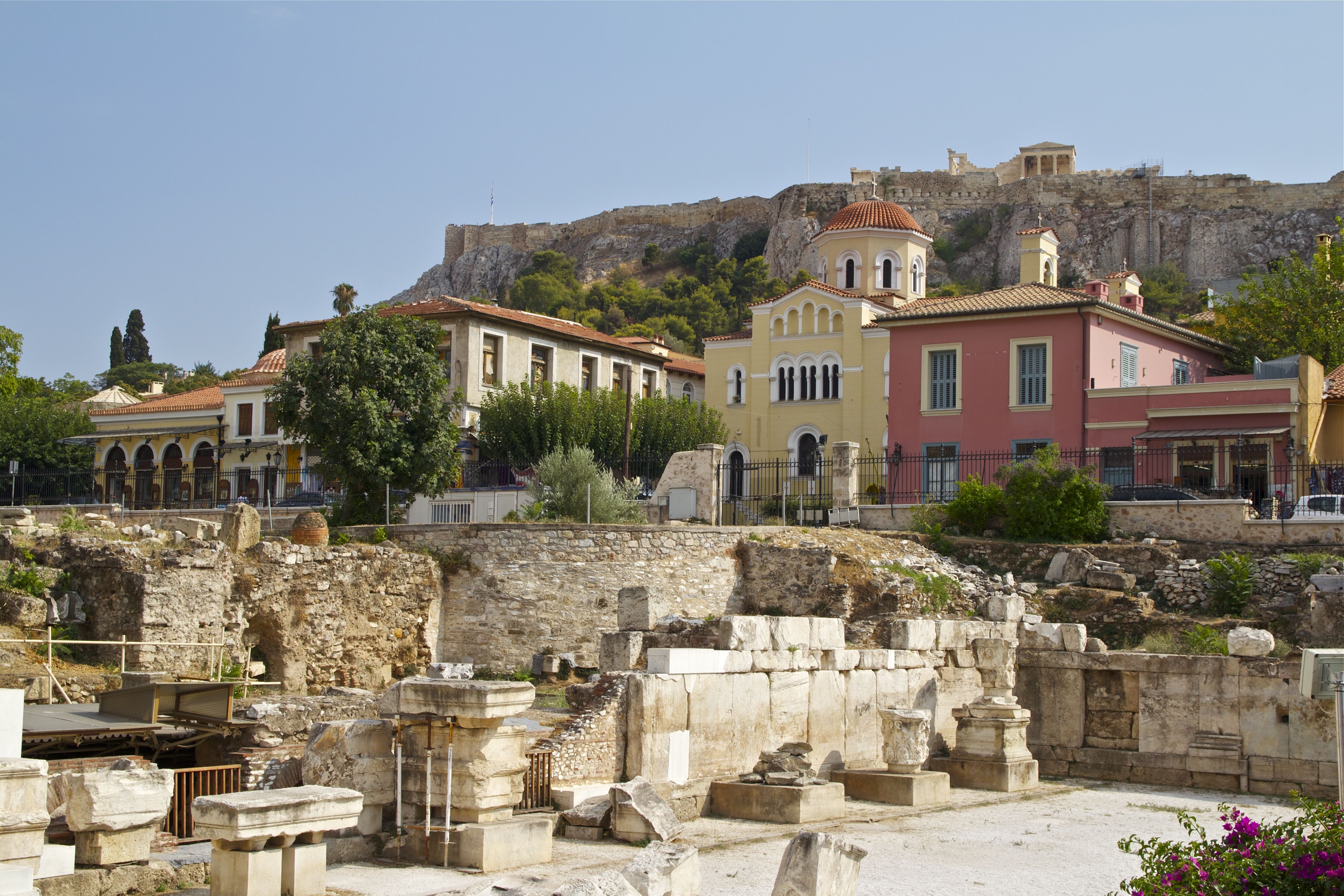
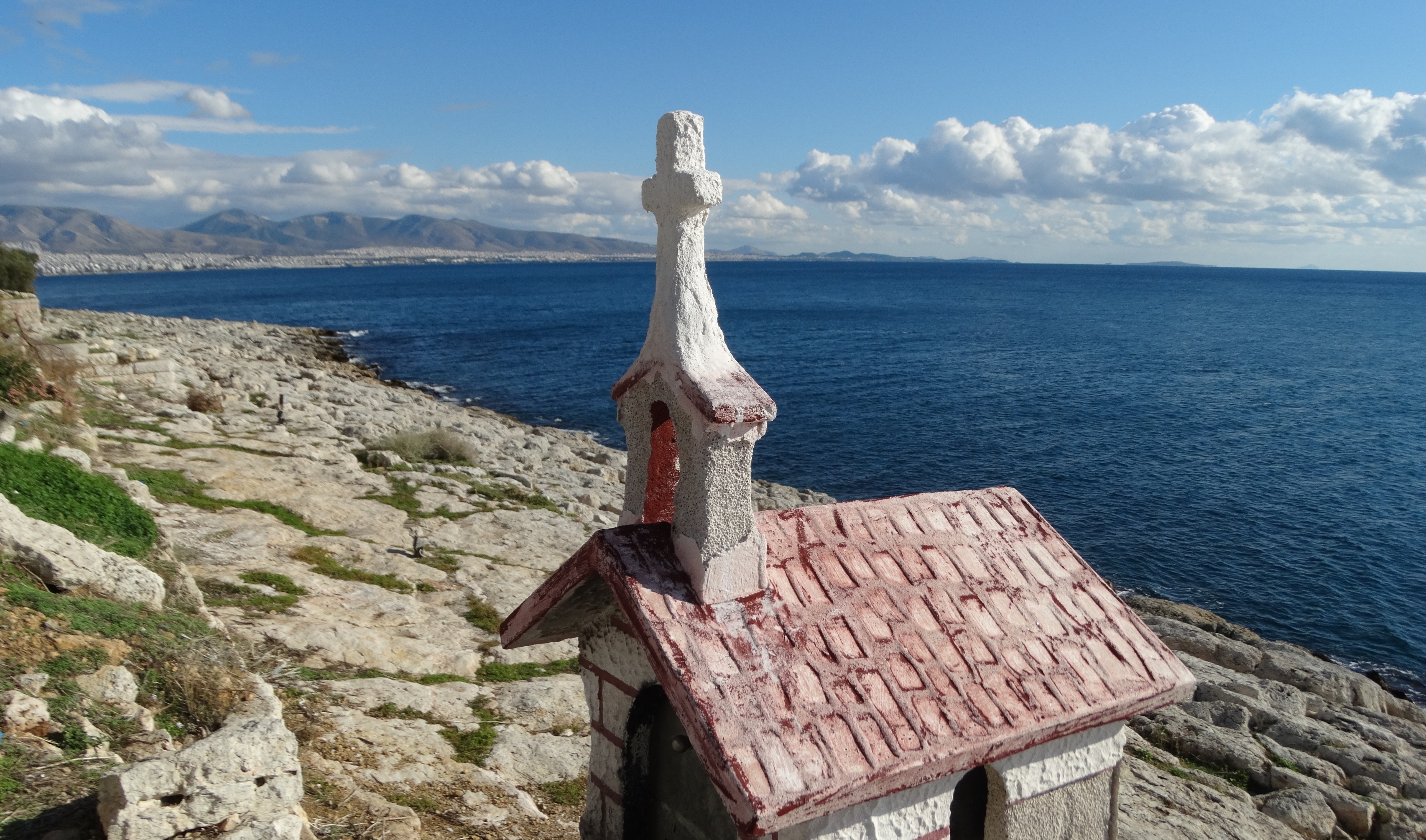
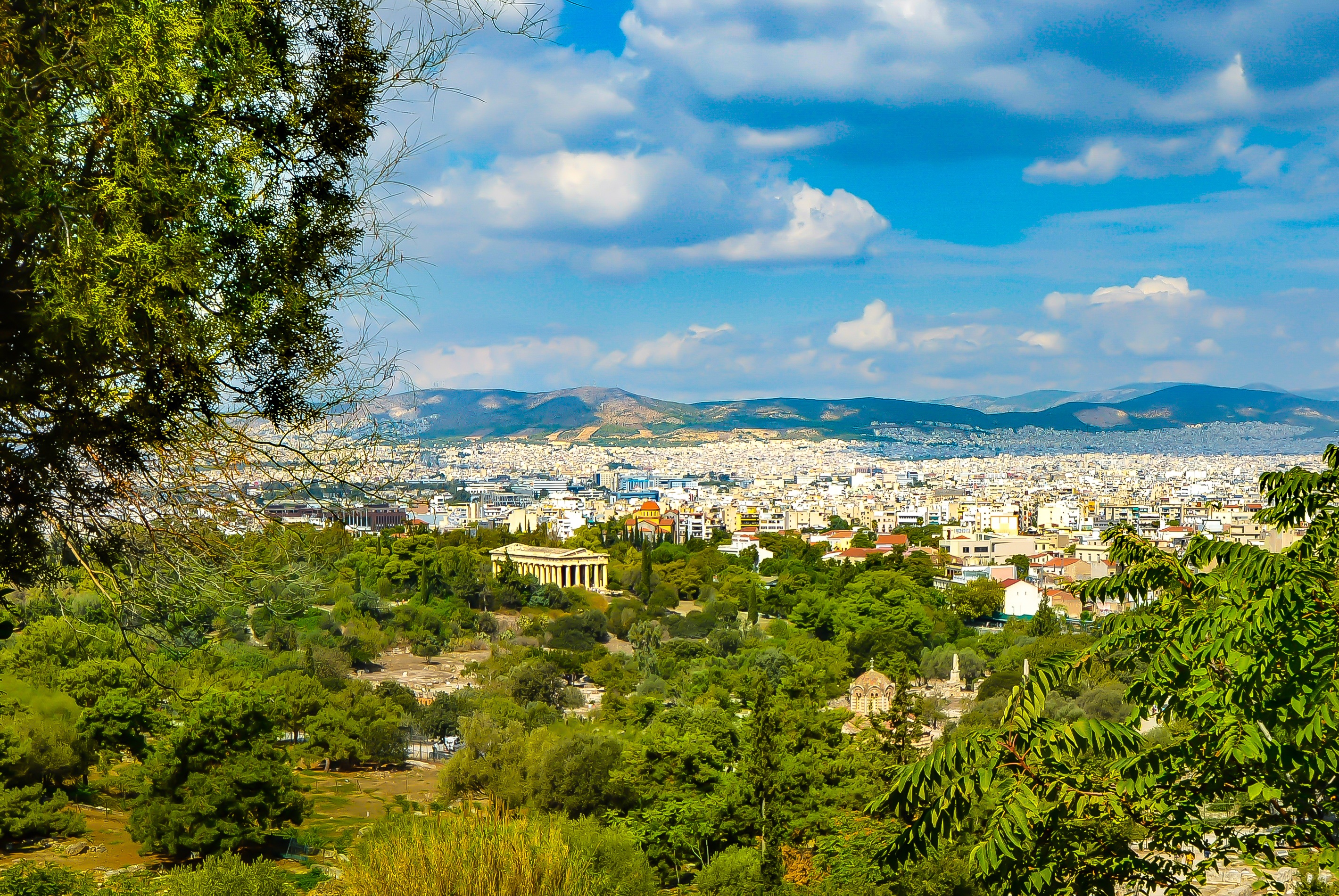
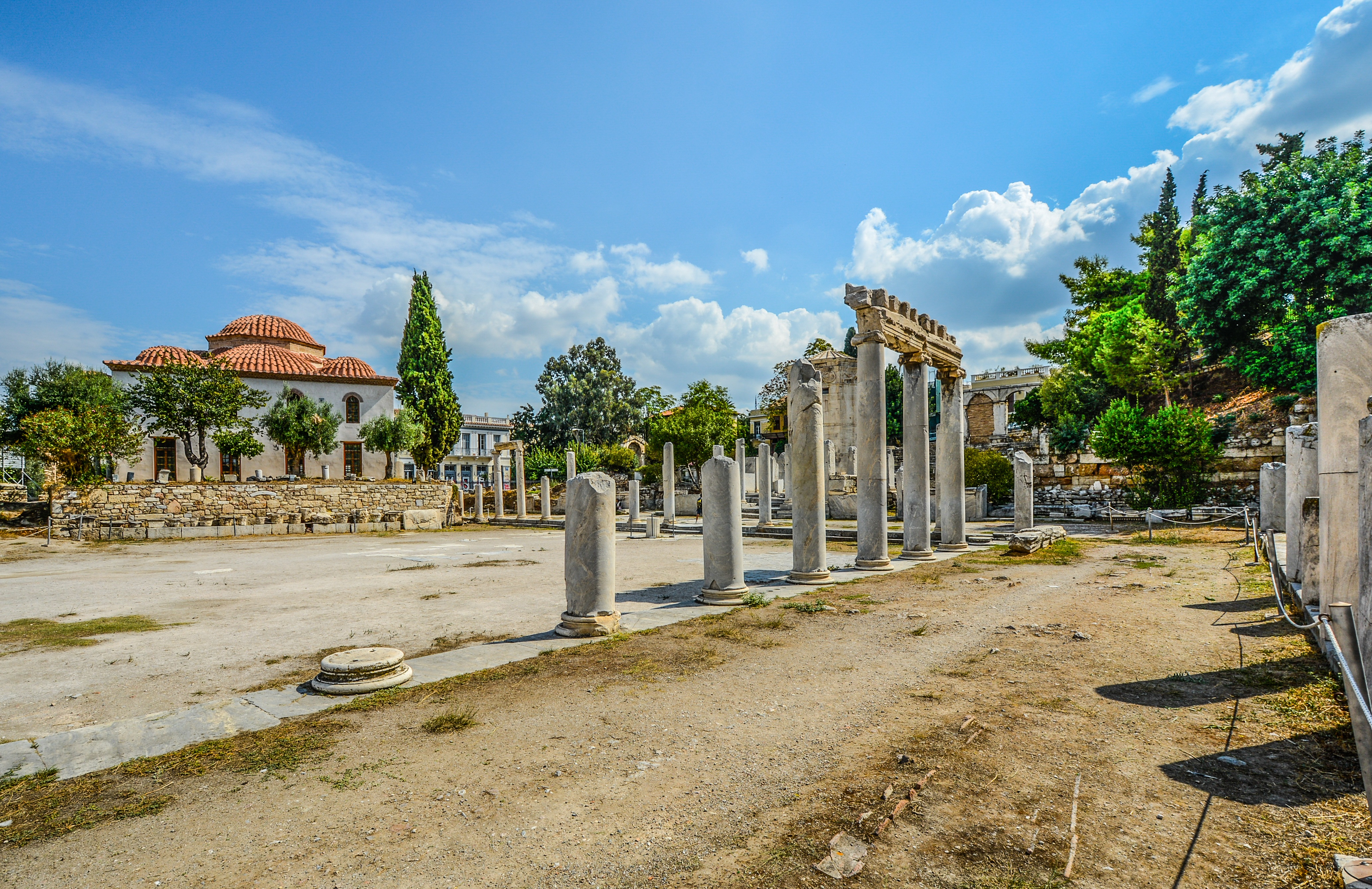
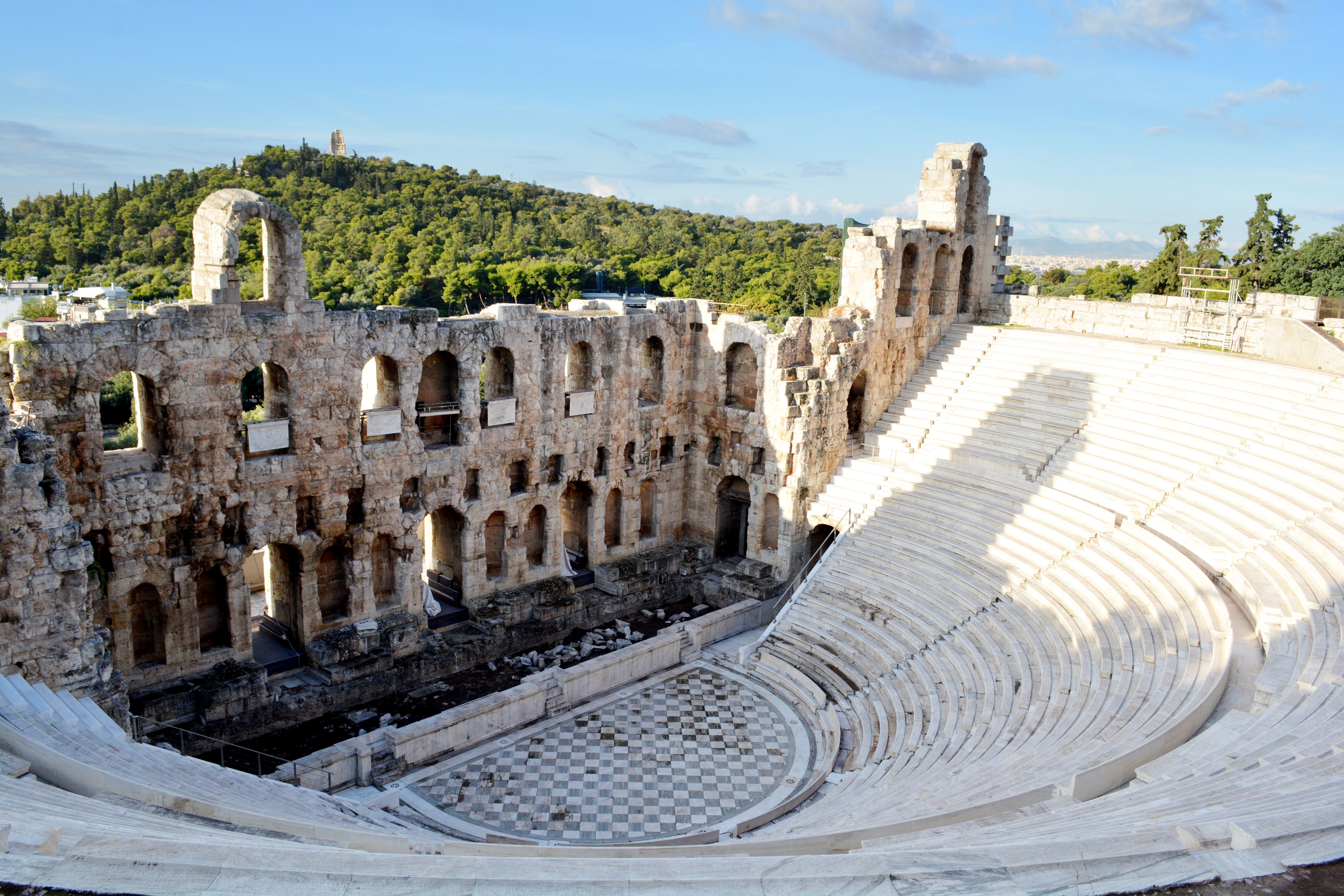
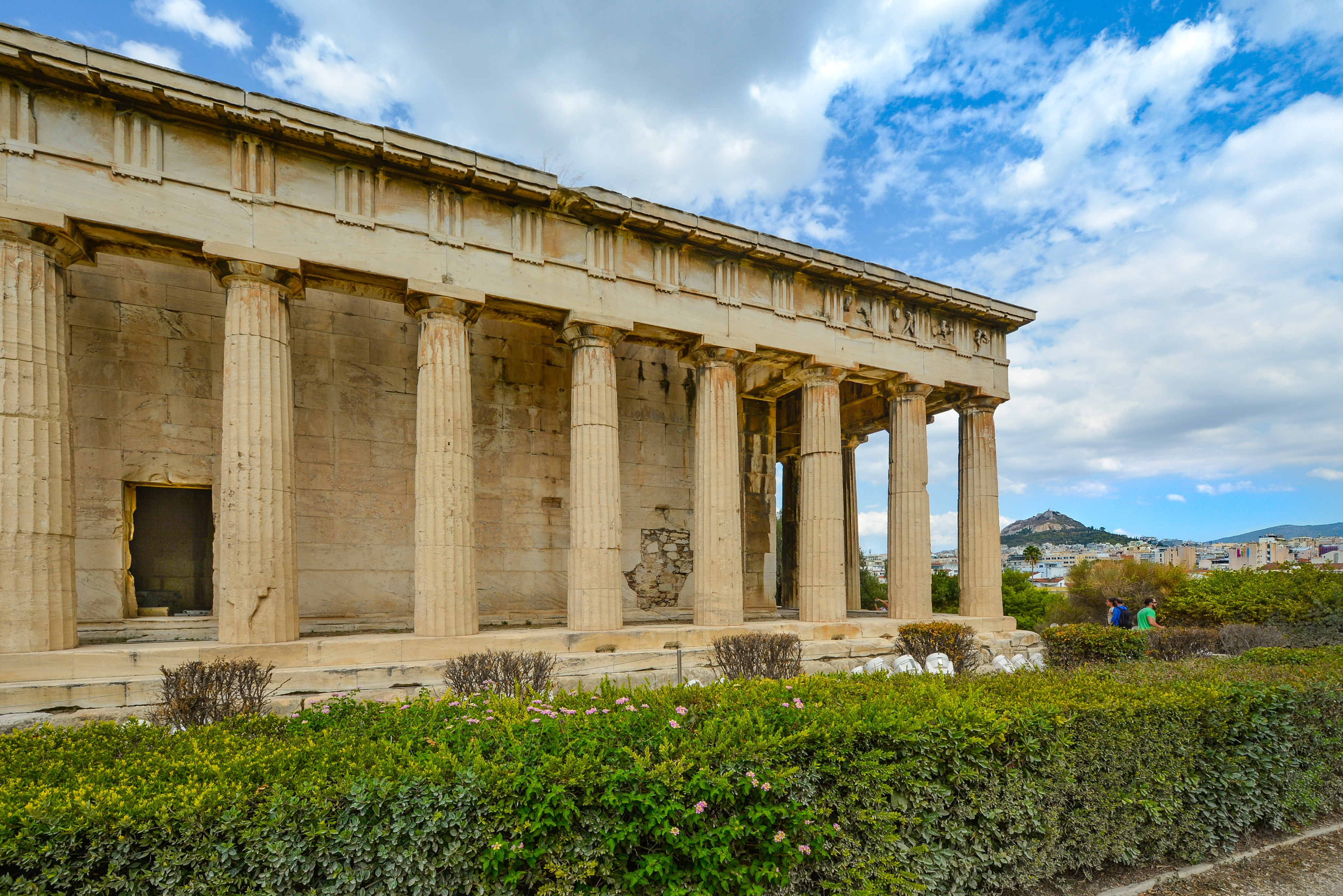
It's no wonder that all roads lead to the fascinating and maddening metropolis of Athens. Lift your eyes 200 feet above the city to the Parthenon, its honey-color marble columns rising from a massive limestone base, and you behold architectural perfection that has not been surpassed in 2,500 years. But, today, this shrine of classical form dominates a 21st-century boomtown. To experience Athens—Athína in Greek—fully is to understand the essence of Greece: ancient monuments surviving in a sea of cement, startling beauty amid the squalor, tradition juxtaposed with modernity. Locals depend on humor and flexibility to deal with the chaos; you should do the same. The rewards are immense. Although Athens covers a huge area, the major landmarks of the ancient Greek, Roman, and Byzantine periods are close to the modern city center. You can easily walk from the Acropolis to many other key sites, taking time to browse in shops and relax in cafés and tavernas along the way. From many quarters of the city you can glimpse "the glory that was Greece" in the form of the Acropolis looming above the horizon, but only by actually climbing that rocky precipice can you feel the impact of the ancient settlement. The Acropolis and Filopappou, two craggy hills sitting side by side; the ancient Agora (marketplace); and Kerameikos, the first cemetery, form the core of ancient and Roman Athens. Along the Unification of Archaeological Sites promenade, you can follow stone-paved, tree-lined walkways from site to site, undisturbed by traffic. Cars have also been banned or reduced in other streets in the historical center. In the National Archaeological Museum, vast numbers of artifacts illustrate the many millennia of Greek civilization; smaller museums such as the Goulandris Museum of Cycladic Art Museum and the Byzantine and Christian Museum illuminate the history of particular regions or periods. Athens may seem like one huge city, but it is really a conglomeration of neighborhoods with distinctive characters. The Eastern influences that prevailed during the 400-year rule of the Ottoman Empire are still evident in Monastiraki, the bazaar area near the foot of the Acropolis. On the northern slope of the Acropolis, stroll through Plaka (if possible by moonlight), an area of tranquil streets lined with renovated mansions, to get the flavor of the 19th-century's gracious lifestyle. The narrow lanes of Anafiotika, a section of Plaka, thread past tiny churches and small, color-washed houses with wooden upper stories, recalling a Cycladic island village. In this maze of winding streets, vestiges of the older city are everywhere: crumbling stairways lined with festive tavernas; dank cellars filled with wine vats; occasionally a court or diminutive garden, enclosed within high walls and filled with magnolia trees and the flaming trumpet-shaped flowers of hibiscus bushes. Formerly run-down old quarters, such as Thission, Gazi and Psirri, popular nightlife areas filled with bars and mezedopoleia (similar to tapas bars), are now in the process of gentrification, although they still retain much of their original charm, as does the colorful produce and meat market on Athinas. The area around Syntagma Square, the tourist hub, and Omonia Square, the commercial heart of the city about 1 km (½ mi) northwest, is distinctly European, having been designed by the court architects of King Otho, a Bavarian, in the 19th century. The chic shops and bistros of ritzy Kolonaki nestle at the foot of Mt. Lycabettus, Athens's highest hill (909 feet). Each of Athens's outlying suburbs has a distinctive character: in the north is wealthy, tree-lined Kifissia, once a summer resort for aristocratic Athenians, and in the south and southeast lie Glyfada, Voula, and Vouliagmeni, with their sandy beaches, seaside bars, and lively summer nightlife. Just beyond the city's southern fringes is Piraeus, a bustling port city of waterside fish tavernas and Saronic Gulf views.

The Owner Suite is much more than our most exclusive suite, it is an exquisite residence on the seas of the world. Enjoy every conceivable amenity in over 114 square meters of personal freedom.
- Living area: 99 m²; veranda 15 m²
- Separate living and sleeping areas
- Separate dining table
- guest toilet
- bathroom with two sinks
- shower with steam sauna
- whirlpool and daybed in the bathroom area
- butler service
- Free minibar
- Exclusive service privileges (details experience)
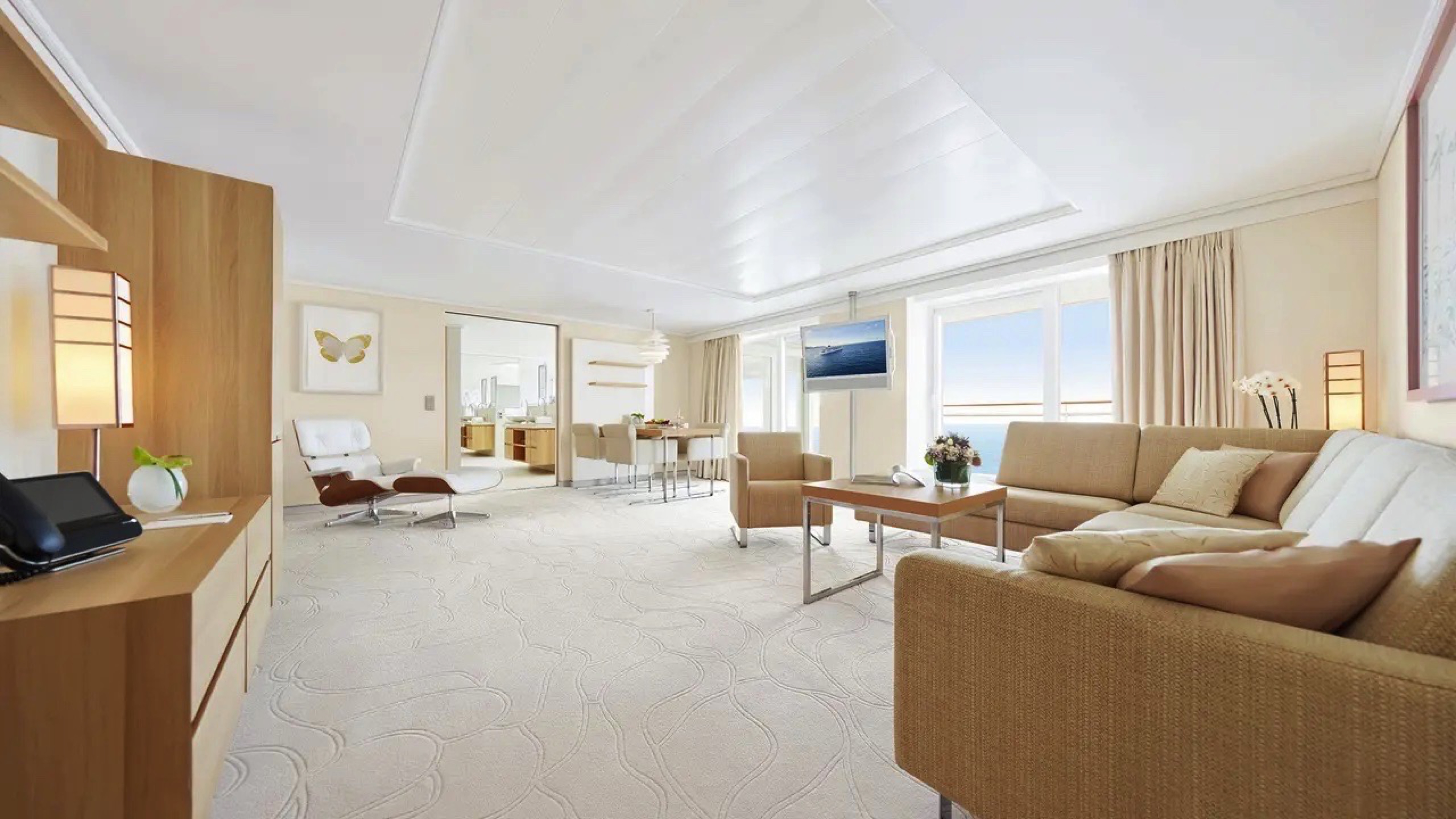
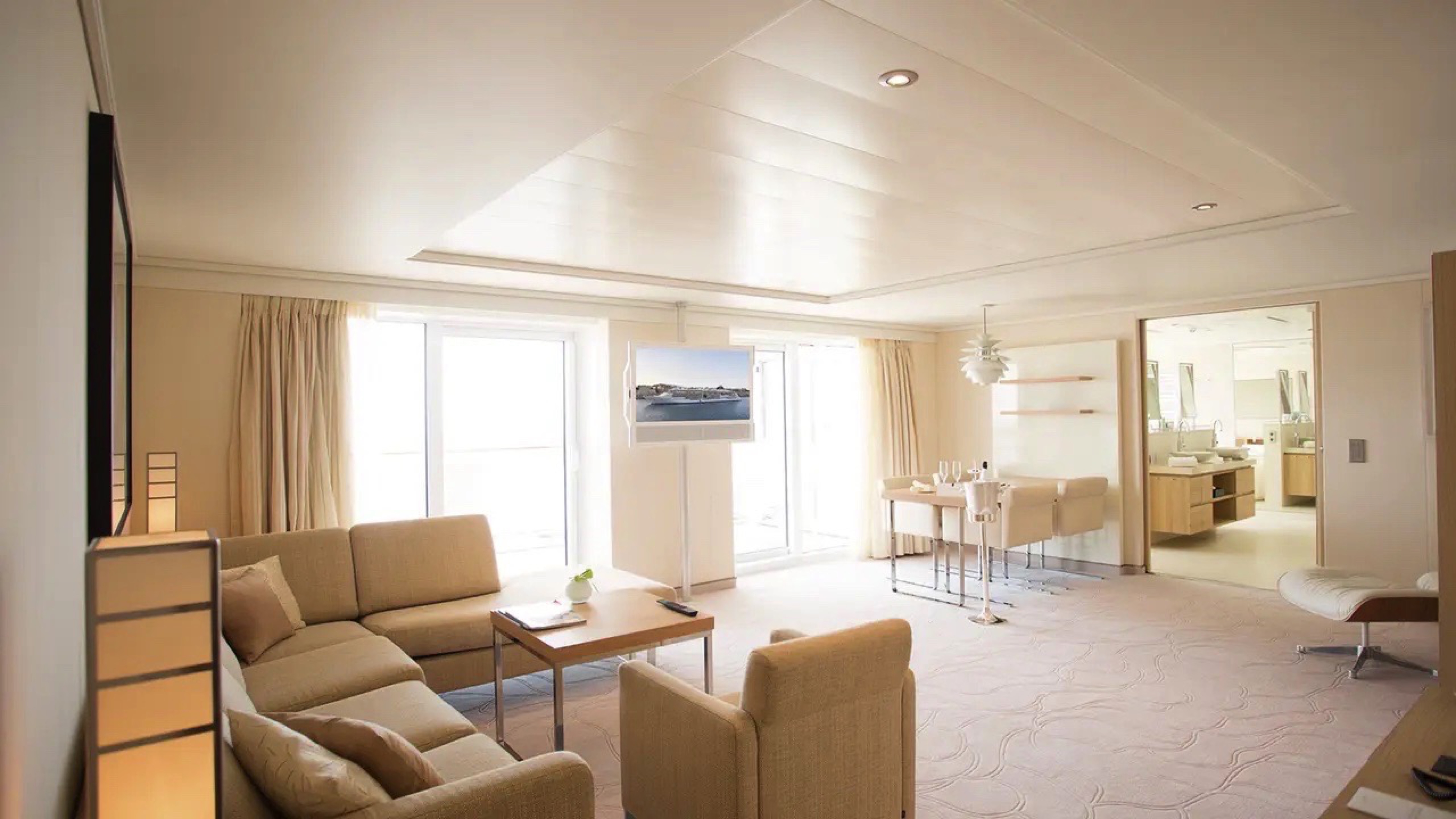
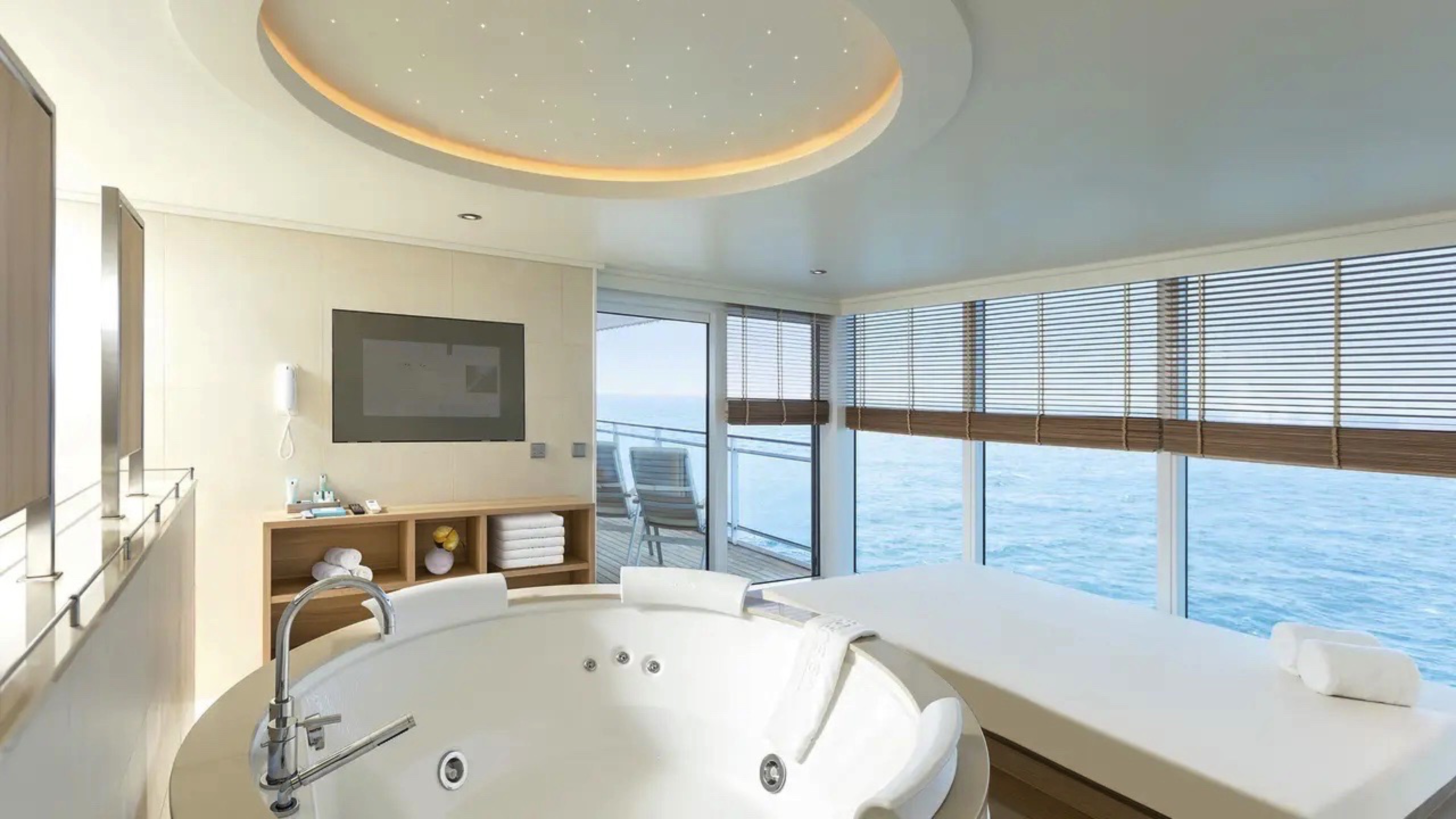
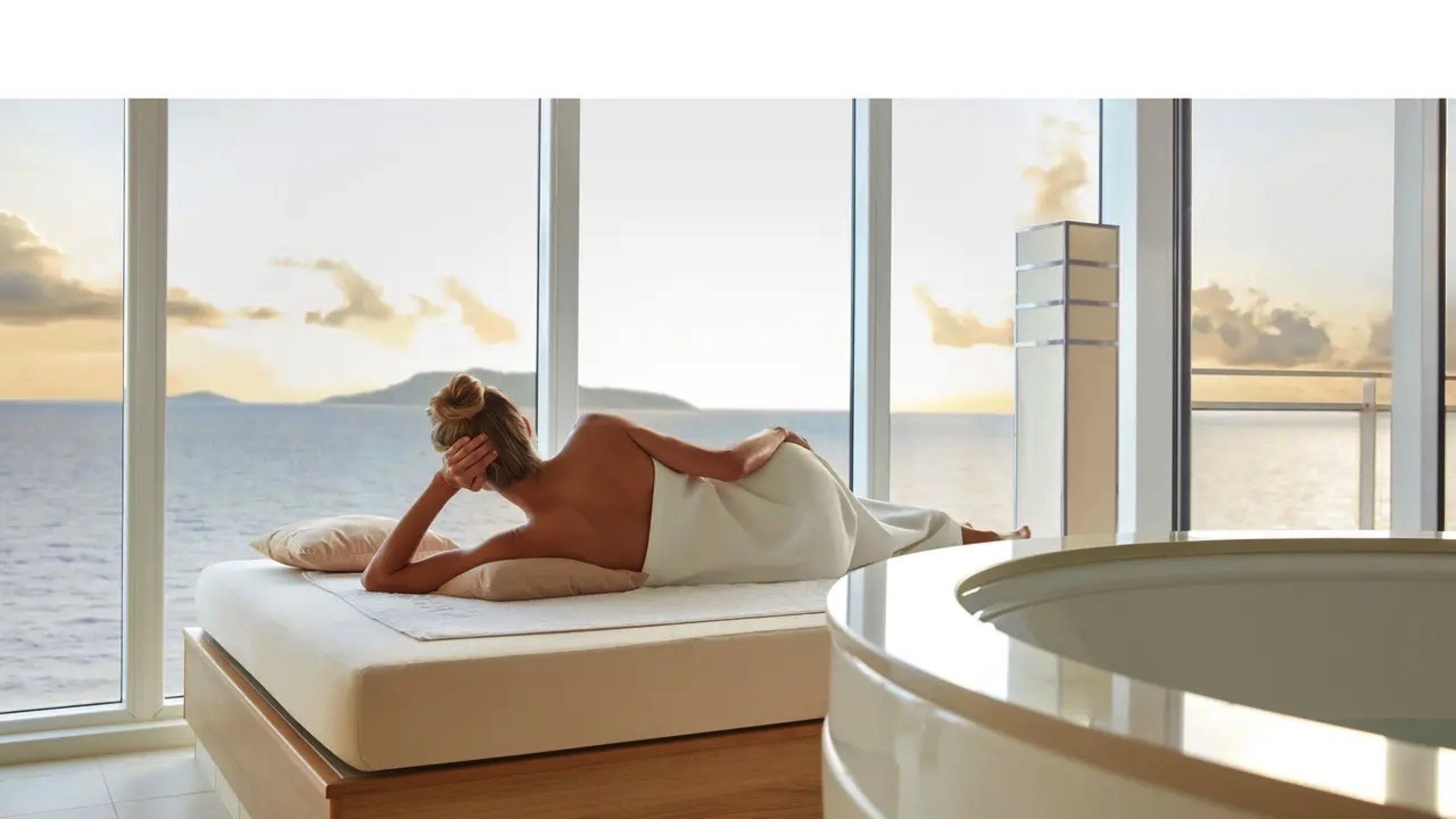
Enjoy luxurious spaciousness on the sea in the Grand Penthouse Suite – in the daybed with a view of the wide sea or while bathing in the middle of the ocean in your private whirlpool.
- Living area: 78 m²; Veranda: 10 m²
- Separate living and sleeping areas
- Separate dining table
- guest toilet
- bathroom with two sinks
- shower with steam sauna
- whirlpool and daybed in the bathroom
- butler service
- Free minibar
- Exclusive service privileges (detailsexperience)
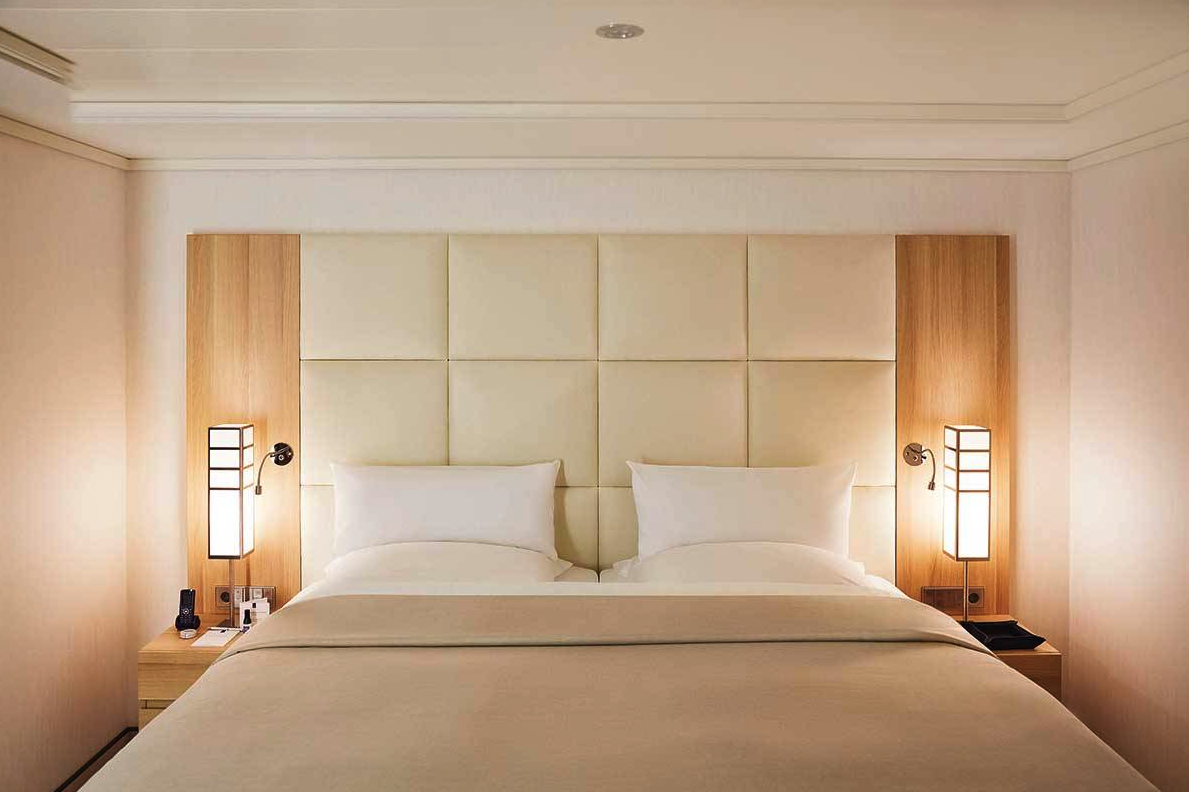
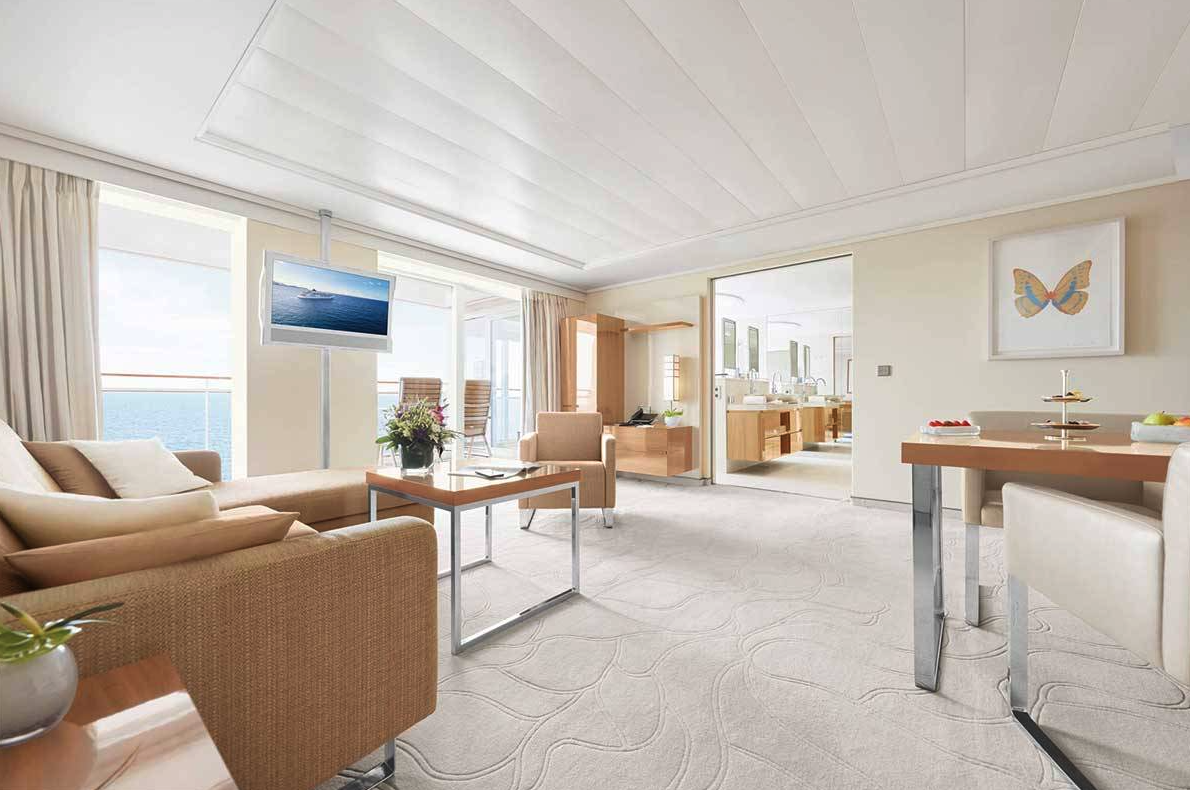
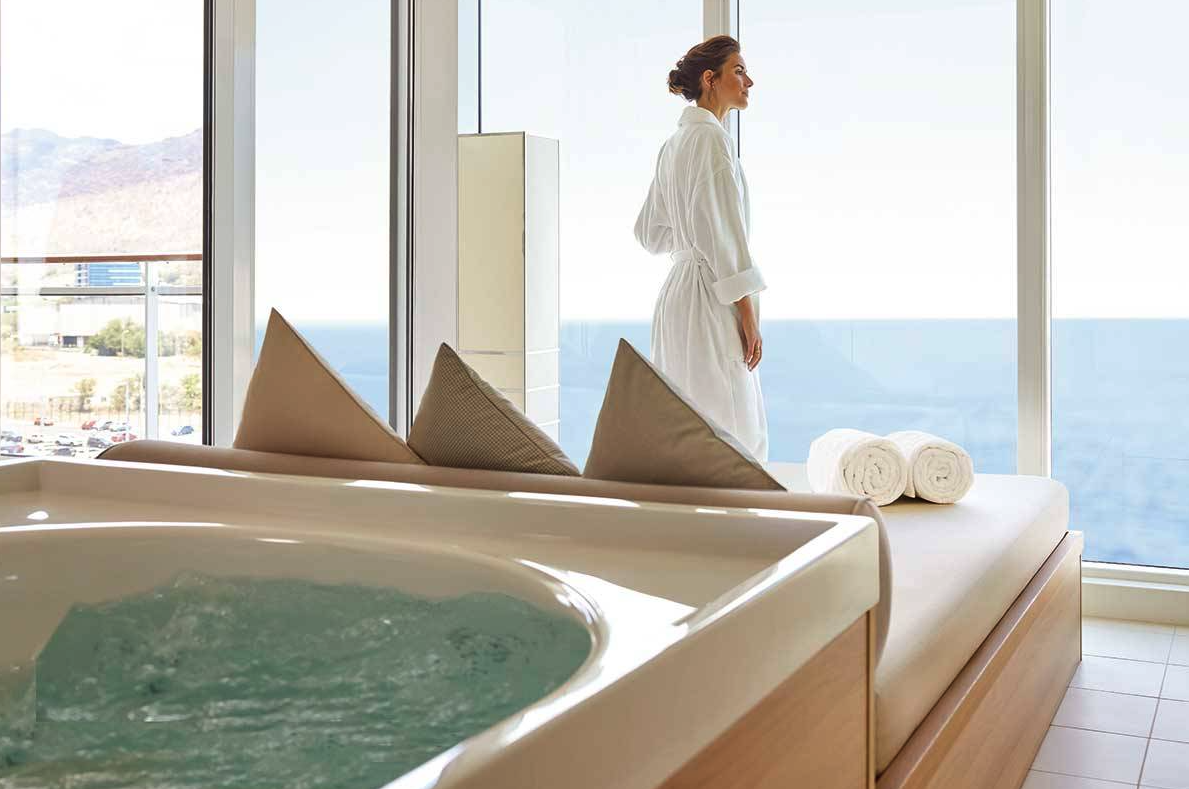
A private oasis of well-being and a stylish haven of peace – in the Grand Ocean Suite you can leave everyday life far behind thanks to a spa bath with panoramic sea views.
- Living area: 42 m²; Veranda: 10 m²
- bathroom with two sinks
- Separate toilet
- daylight in the bathroom
- shower with steam sauna
- whirlpool tub
- Free minibar
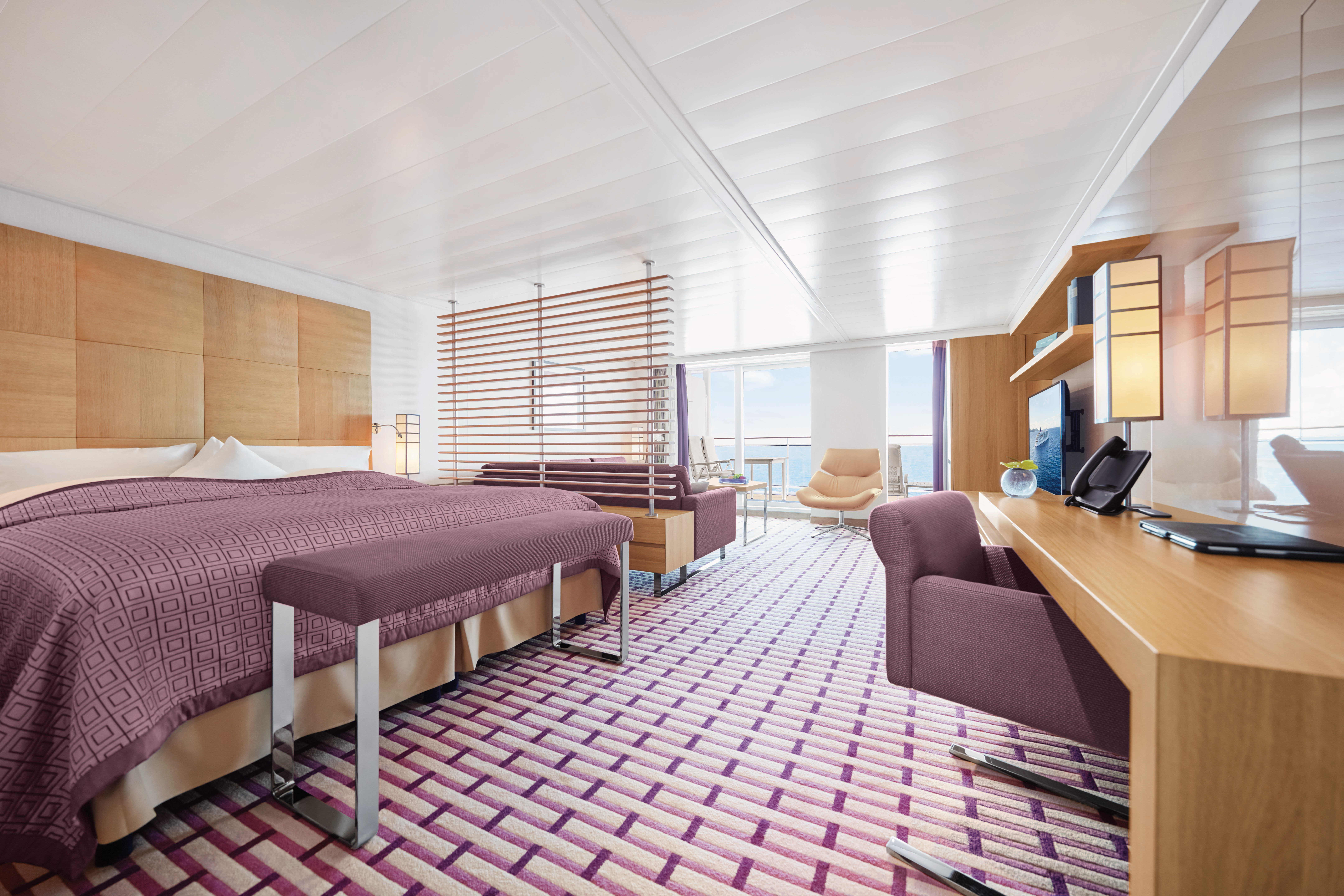
Awonderfully spacious suite with every comfort, uniquely located on the upper decks - is there a nicer place to relax? In the Penthouse Suite, enjoy the endless view of the sea and the amenities of a classic penthouse suite.
- Living area: 42 m²; Veranda: 10 m²
- walk-in closet
- bathroom with two sinks
- whirlpool tub and separate shower
- Separate toilet
- butler service
- Free minibar
- Exclusive service privileges (detailsexperience)
The Penthouse Suite can also be booked with barrier-free facilities (category 13). Here the toilet is in the bathroom.
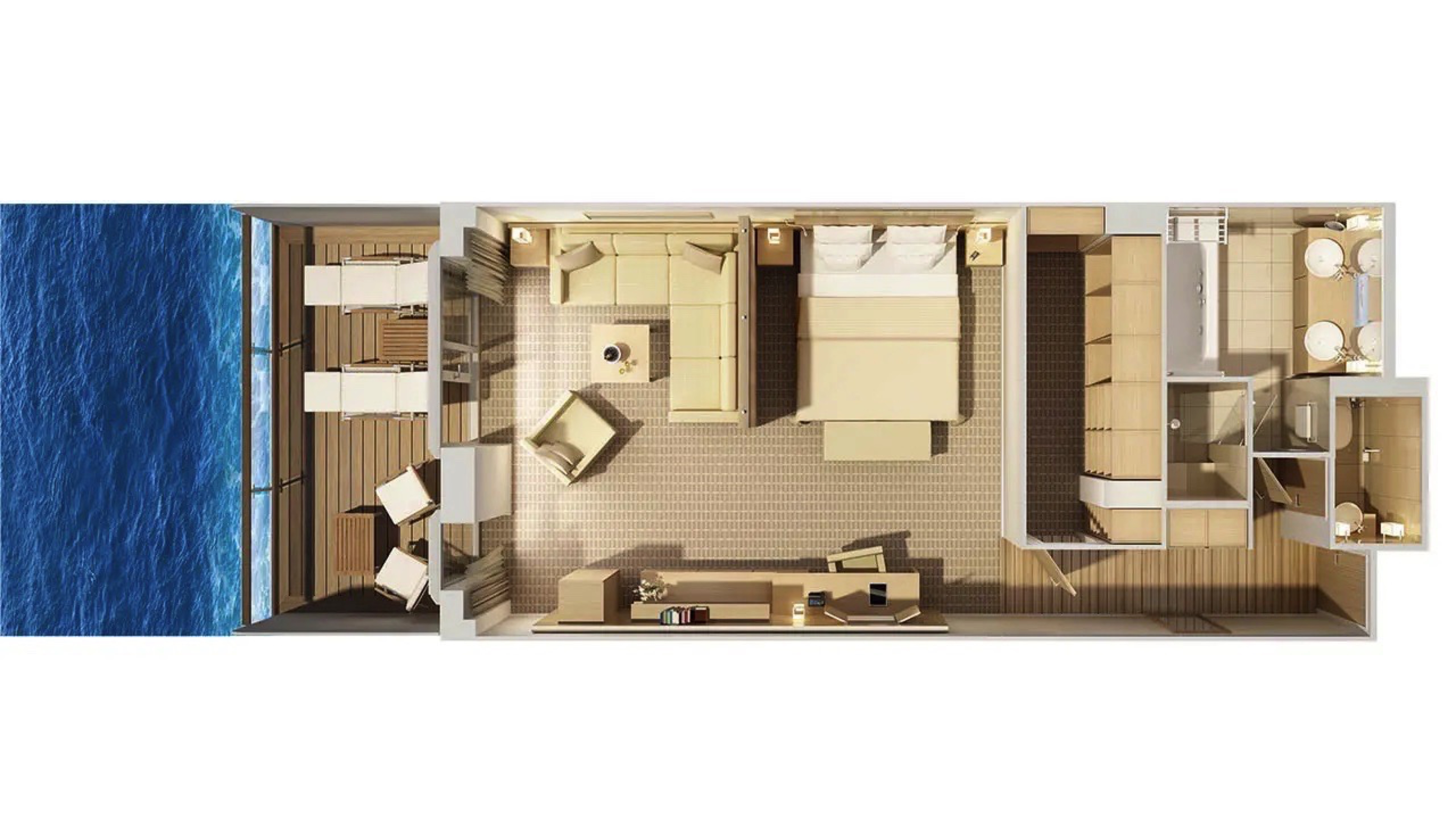
Everyone feels at home here. Lots of space for you and your personal wishes - that's what makes for a relaxing family holiday. In the family apartment, parents and children live in two separate areas that are connected by a door and the balcony. One of the living areas is specifically designed for our younger cruisers.
- Living area: 2× 20 m²; Veranda: 14m² (divisible to 2× 7 m²)
- connecting door between the rooms and verandas
- Separate toilets
- Free minibars
One of the living areas is specifically designed for our younger cruisers:
- Two single beds, one of which is a Pullman bed (80 x 200 cm)
- bathtub (140 x 80 cm)
- Age-appropriate games including games console
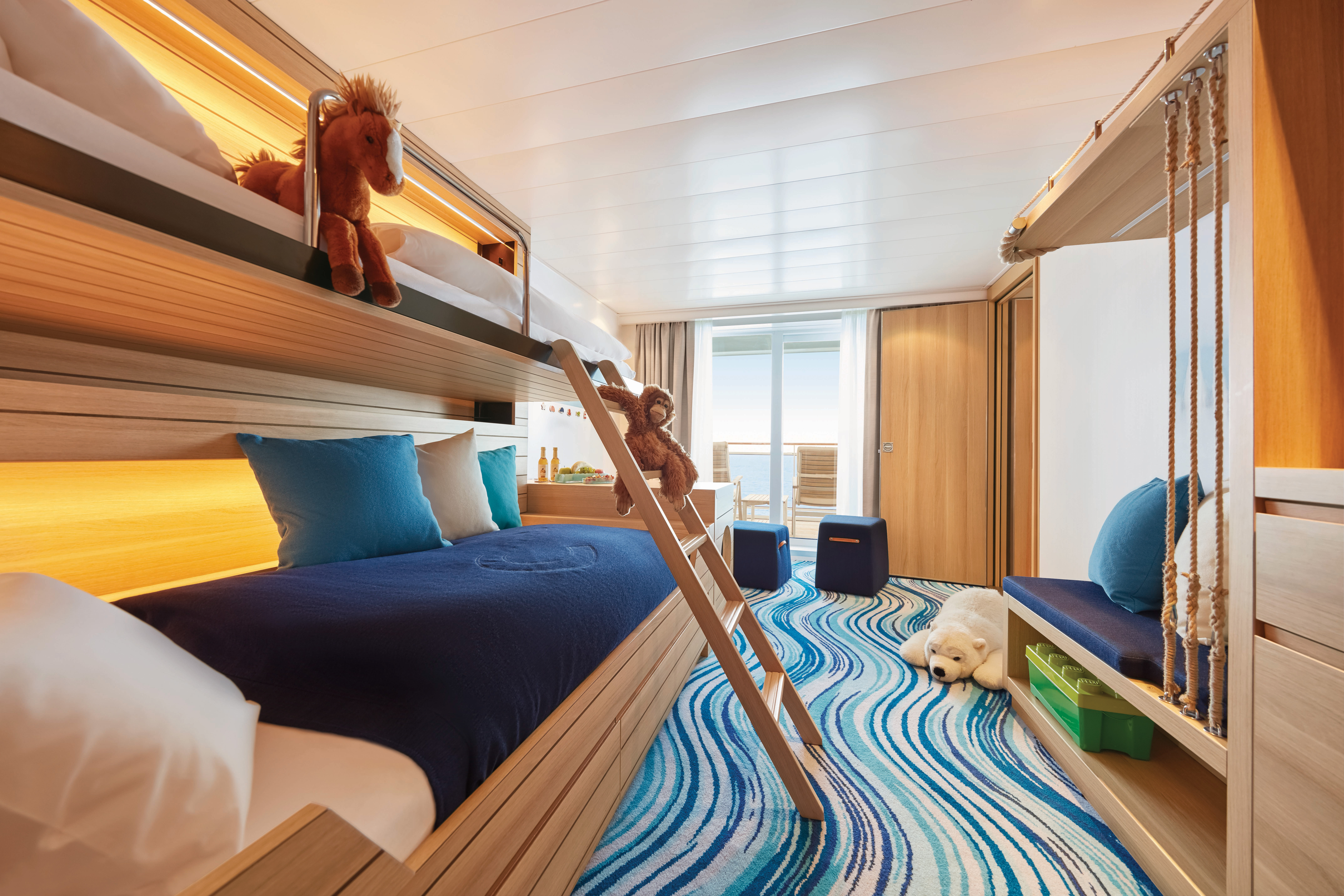
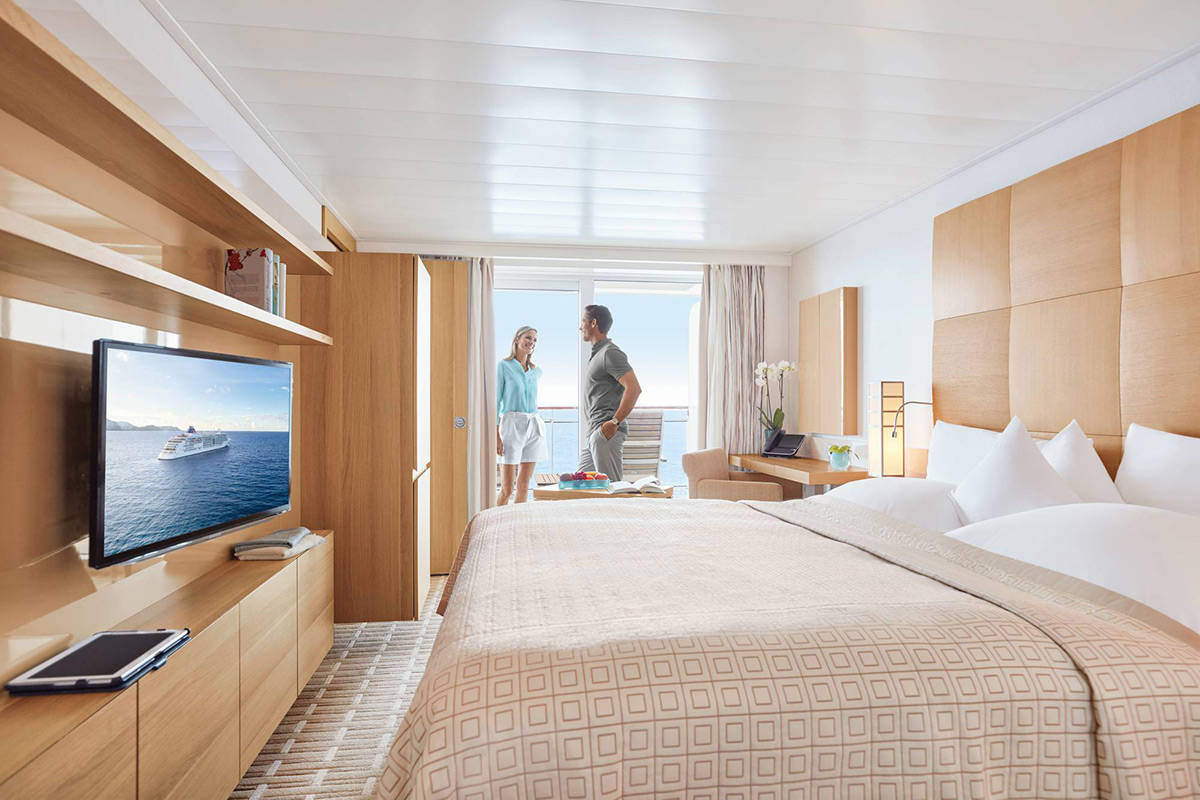
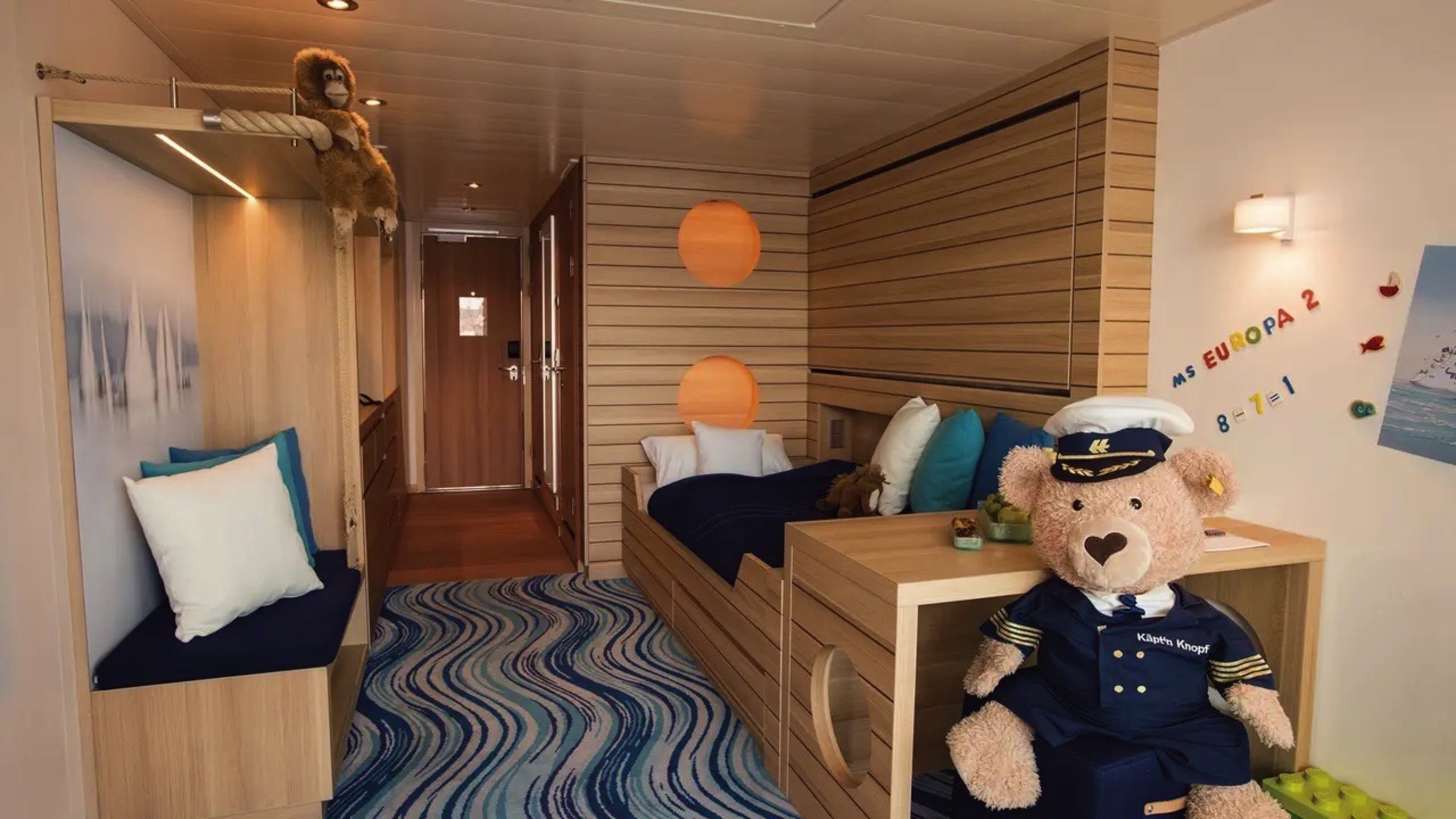
If you want to start the day with a fantastic view, you will have a wonderful time in the Ocean Suite.
- Living area: 28 m²; Veranda: 7 m²
- daylight in the bathroom
- bathroom with two sinks
- whirlpool tub and separate shower
- Separate toilet
- Free minibar
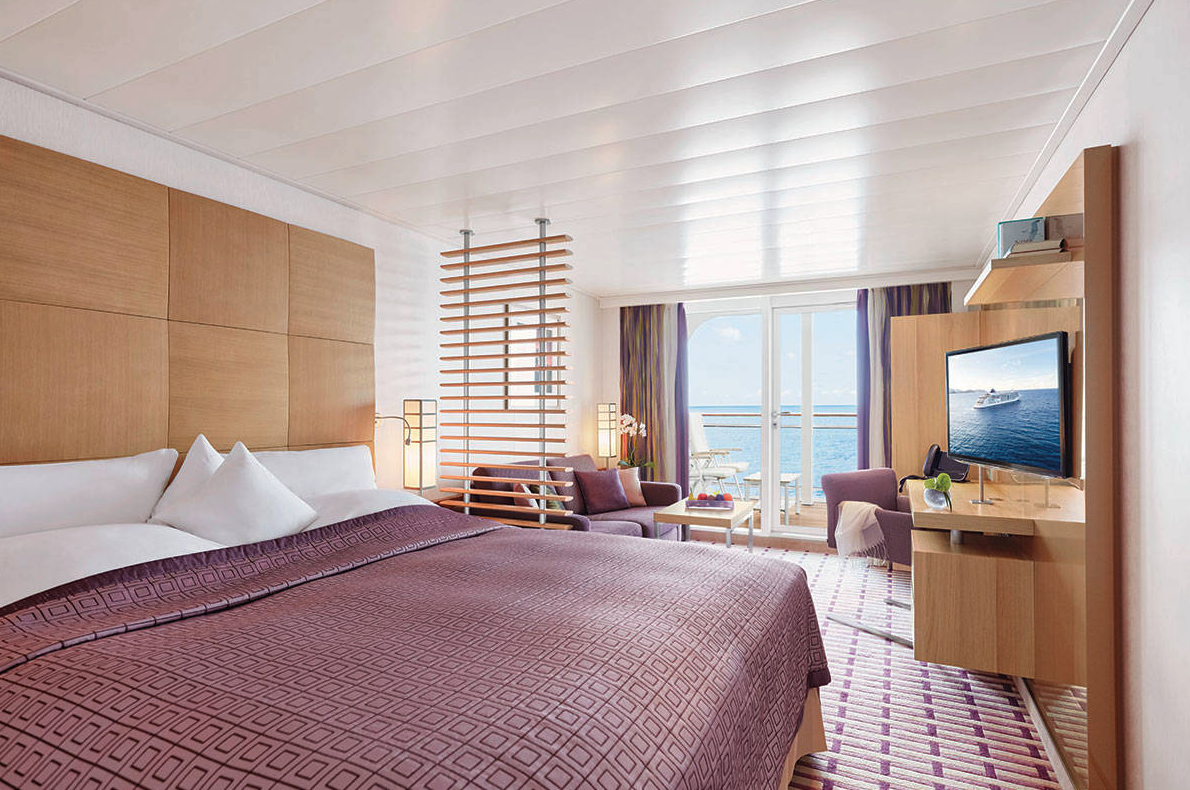
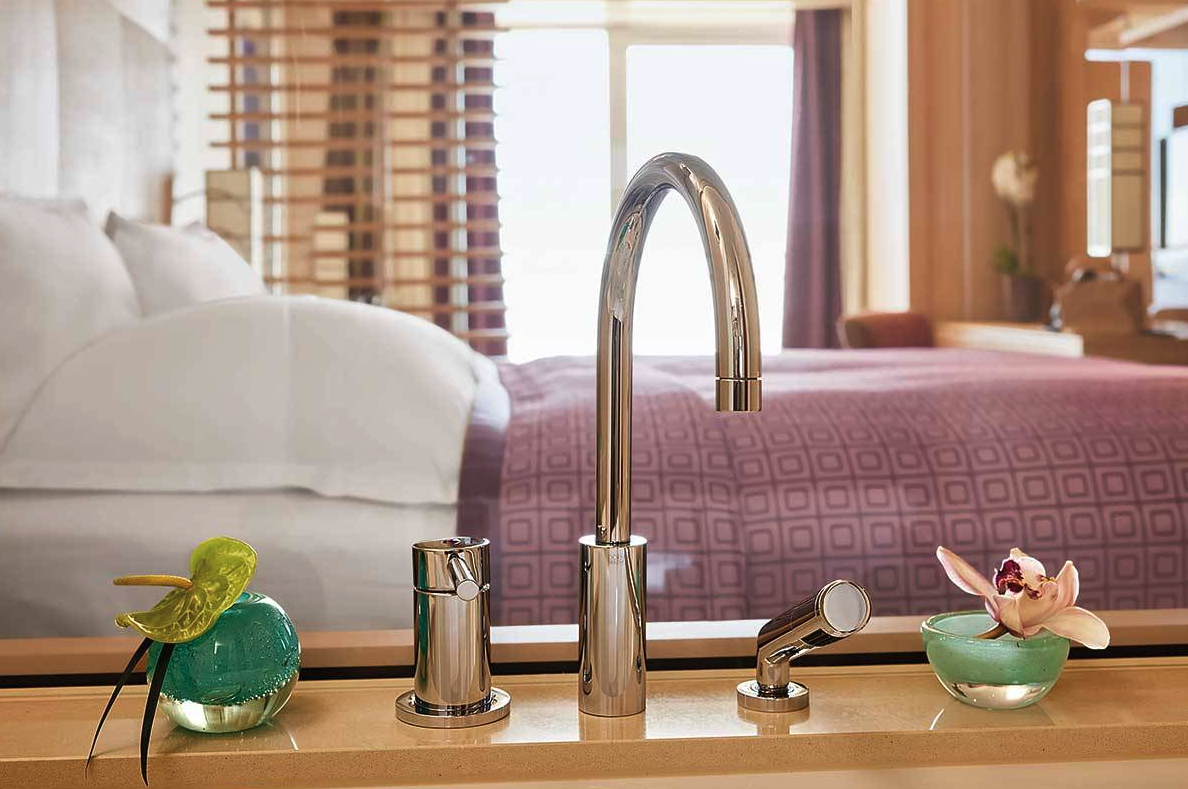
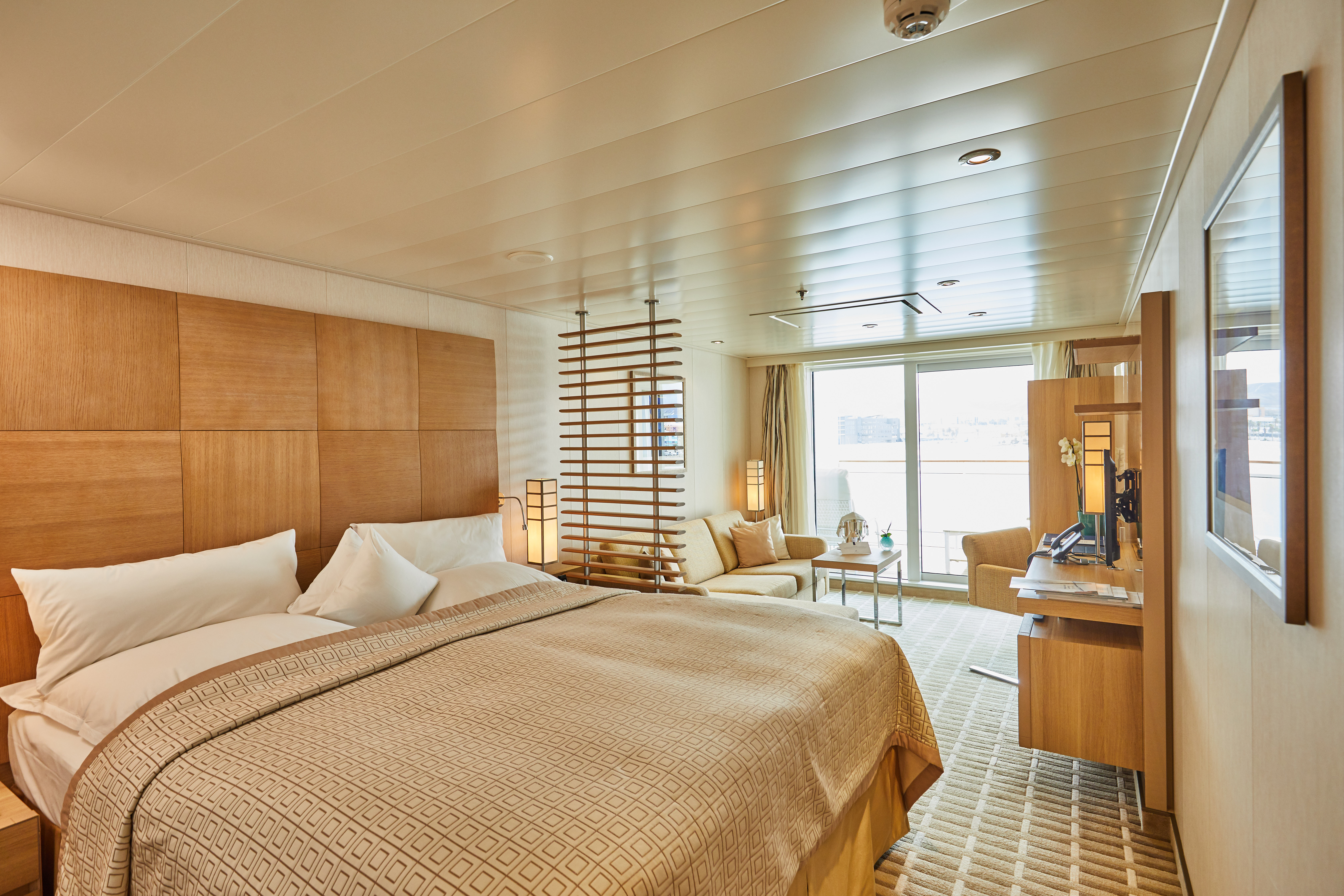
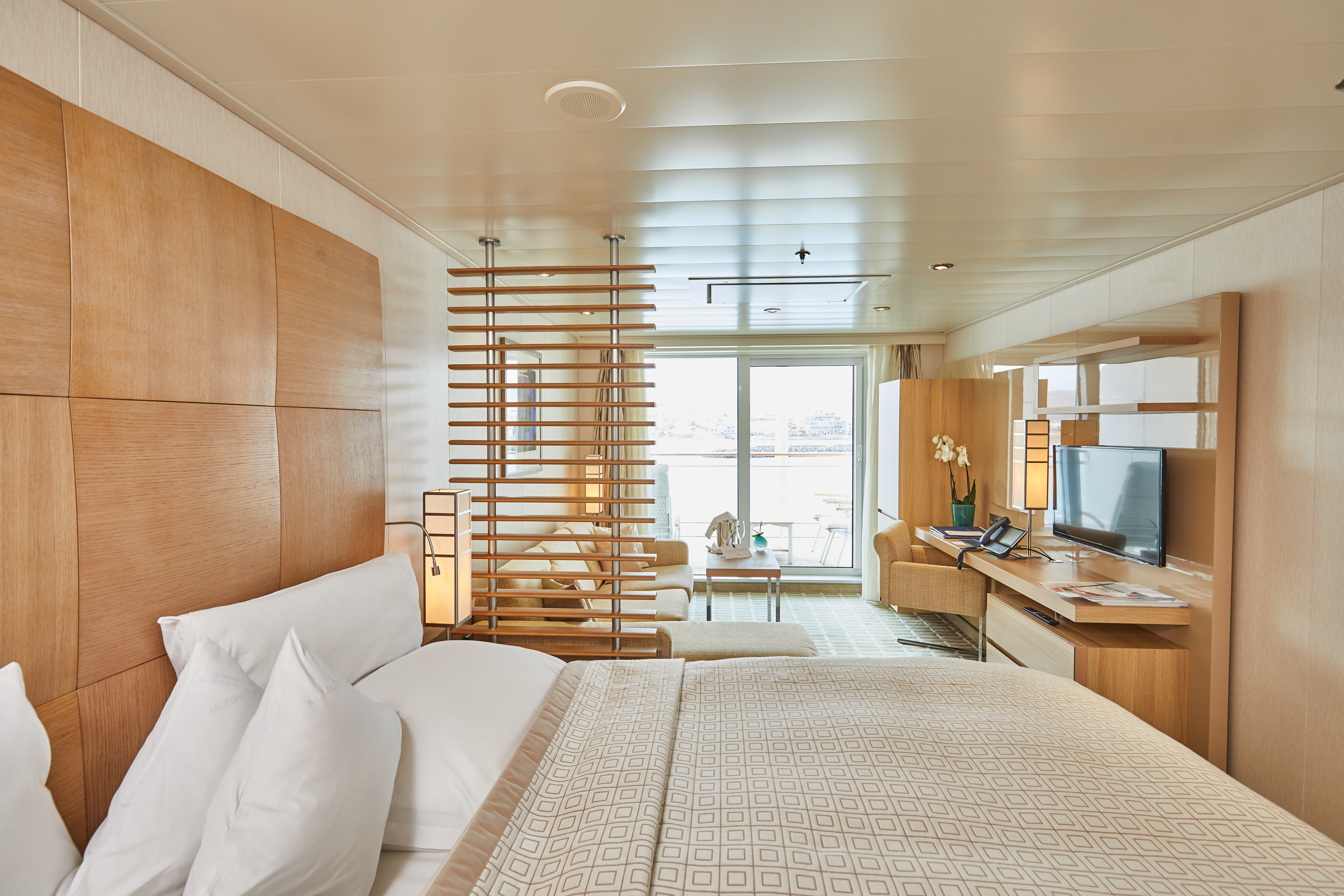
This comfortable suite offers plenty of space for relaxing days on board and a cruise with fantastic views.
- Living area: 28 m²; Veranda: 7 m²
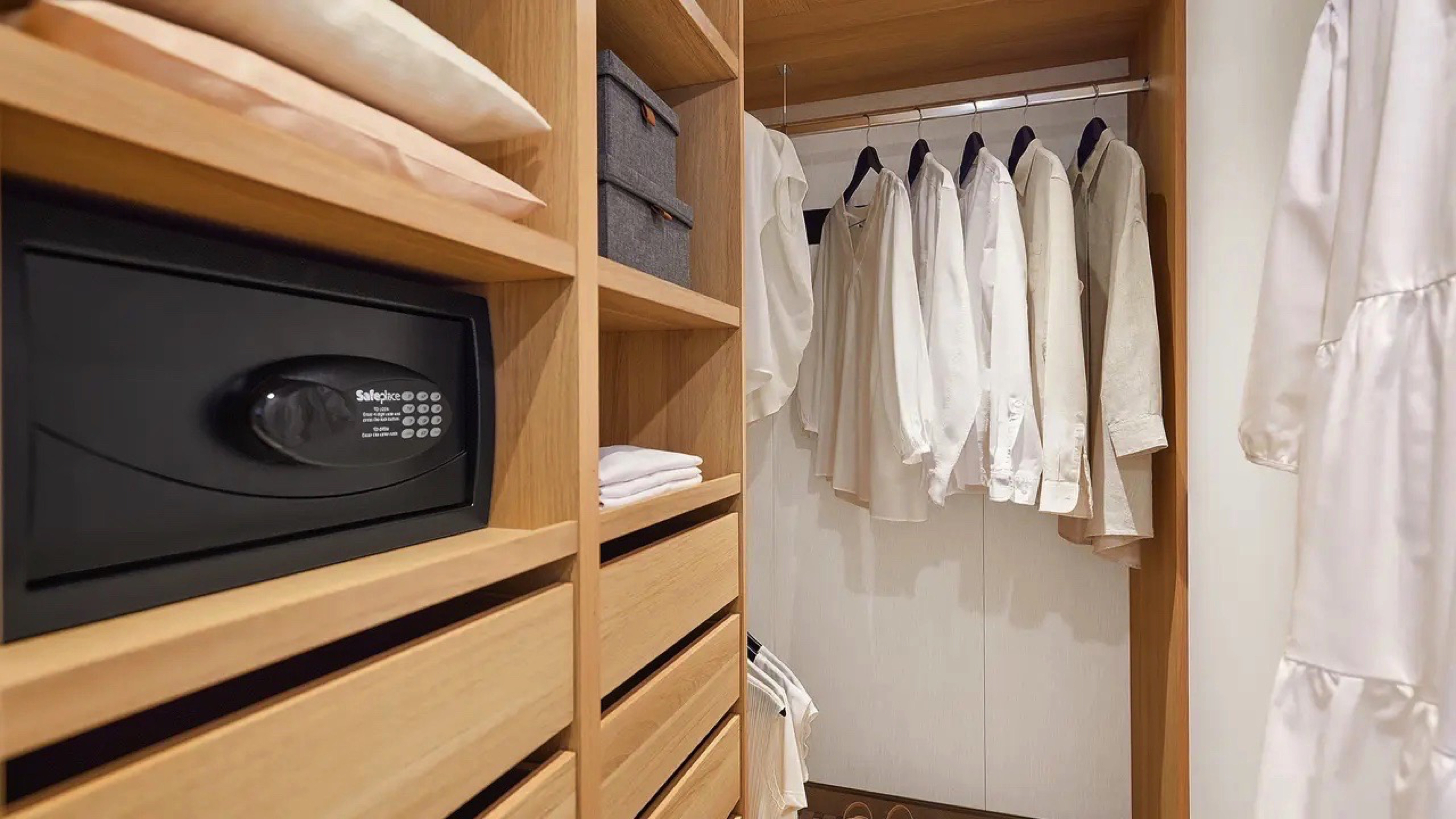
- walk-in closet
- Exclusive living area with chaise longue
- bathtub and separate shower
- Free minibar
MS EUROPA 2
With a maximum of 500 guests, you can expect the highest level of personal space and individual service. And all this with an extremely luxurious ratio of almost one to one. The EUROPA 2 combines comfort with a high level of flexibility by also heading to small ports and remote corners off the beaten track. Welcome on board the best cruise ship in the world!*
Enjoy every moment
Casual and individual, exquisite and stylish, entirely in line with your requirements – this is the aim of the EUROPA 2 philosophy. Experience a symbiosis of perfection, elegance and aesthetics, and enjoy lifestyle at the highest level in a modern, relaxed atmosphere.
Experience a unique ship
Experience the great freedom - in a relaxed and individual way, yet high quality and stylish. Enjoy a symbiosis of perfection and elegance as well as the highest level of casual luxury - culinary highlights, first-class wellness and fitness offers, exceptional on-board entertainment complemented by the highest level of privacy and individual freedom. With casual luxury for a maximum of 500 guests, the EUROPA 2 combines design and lifestyle, the highest standards and individual freedom.
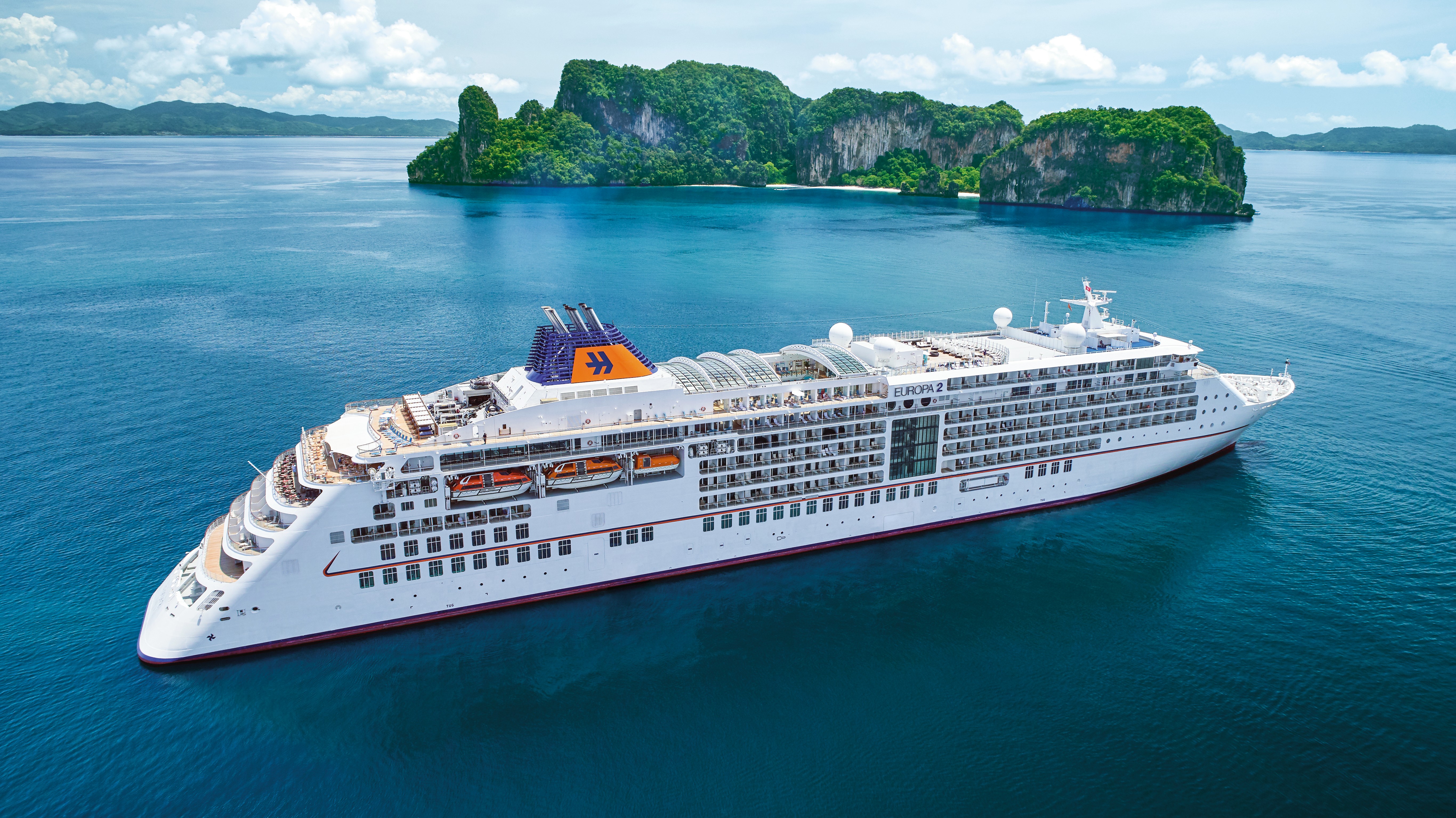
Ship Facts
| Launch Year | 2013 | ||||
| Refit Year | 2017 | ||||
| Language | de+en | ||||
| Gross Tonnage | 42830 | ||||
| Length | 225 | ||||
| Width | 27 | ||||
| Currency | EUR | ||||
| Speed | 21 | ||||
| Capacity | 500 | ||||
| Crew Count | 370 | ||||
| Deck Count | 7 | ||||
| Cabin Count | 251 | ||||
| Large Cabin Count | N/A | ||||
| Wheelchair Cabin Count | 2 | ||||
| Electrical Plugs |
|
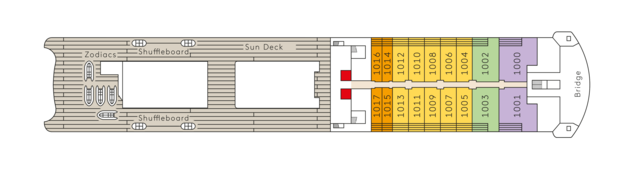
Deck 10
- Zodiacs
- Shuffleboard
- Sun Deck
- Bridge
- Veranda Suites
- Penthouse Suites
- Grand Penthouse Suites
- Owner Suites
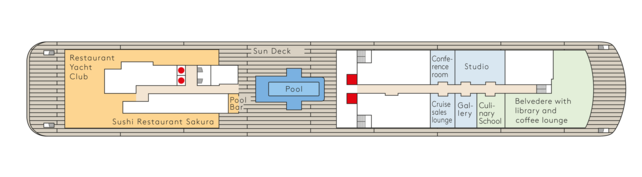
Deck 9
- Restaurant Yacht Club
- Sushi Restaurant Sakura
- Sun Deck
- Pool
- Conference Room
- Studio
- Gallery
- Culinary School
- Belvedere with library and coffee lounge
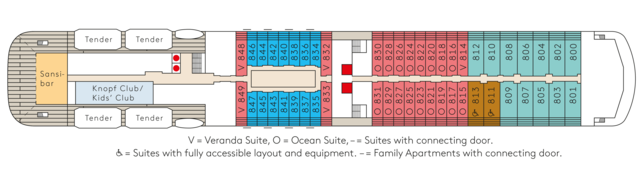
Deck 8
- Sansibar
- Tender
- Knopf Club / Kids Club
- Veranda Suites or Ocean Suites
- Family Apartments
- Penthouse Suites (accessible)
Deck 7
- Veranda Suites or Ocean Suites
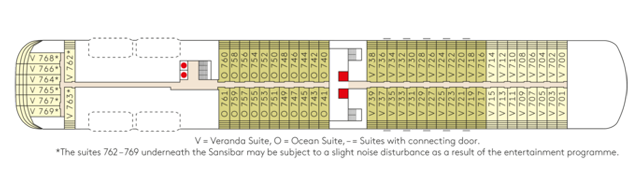
Deck 6
- Veranda Suites or Ocean Suites
- Owner Suites
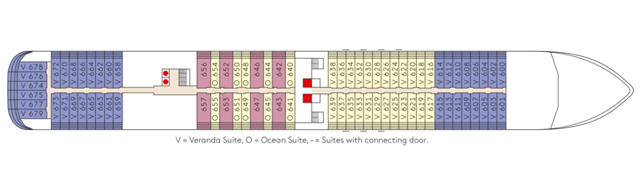
Deck 5
- Ocean Spa
- Sauna
- Jacuzzi
- Golf
- Embarkation and disembarkation
- Grand Ocean Suites
- Veranda Suites or Ocean Suites
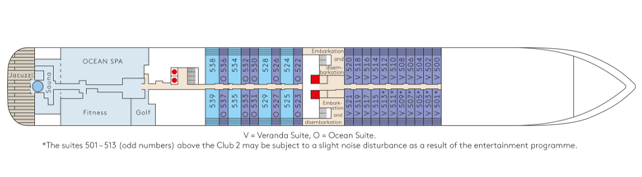
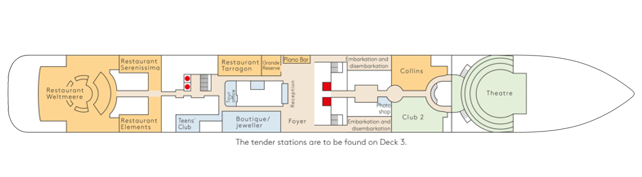
Deck 4
- Restaurant Weltmeere
- Restaurant Serenissima
- Restaurant Elements
- Restaurant Tarragon
- Grand Reserve
- Tour Office
- Teens' Club
- Boutique / Jeweller
- Reception
- Foyer
- Piano Bar
- Embarkation / disembarkation
- Photo shop
- Club 2
- Collins
- Theatre
Haute cuisine. Extremely casual.
With a keen eye for the finest details, the EUROPA 2's chef will open up new culinary horizons for you. He also offers vegetarian cuisine lovers a fine selection of artfully arranged dishes of the highest quality. Enjoy modern creations or timeless classics with more flexible table times and no fixed seating in our gourmet restaurants.
- Exclusive gourmet restaurants, all at no extra charge, with flexible table times and no fixed seating
- Full board: breakfast, late breakfast, lunch and dinner, patisserie and snacks
- Tea and coffee specialties.
Weltmeere
Restaurant Weltmeere is the biggest restaurant on board. It is located at the stern of the ship and is quite striking thanks to its spacious room concept.
The world a la carte
The flagship restaurant in the heart of the EUROPA 2: Enjoy a daily changing international gourmet cuisine and go on a culinary journey. The Weltmeere bears the very personal signature of our chef and stands for creative culinary highlights - always interpreted in a new and unusual way, of course also vegetarian.
CREATIVE CUISINE WITH A PERSONAL TOUCH
Our chef de cuisine looks forward to pampering you with the highest possible standard of cuisine. The culinary range spans from international to vegetarian menus, which are all interpreted in new and surprising ways.
- The restaurant on board where our chefs de cuisine demonstrate their very personal flair.
- Magical culinary moments with international and vegetarian menus, always interpreted in new and unusual ways.
Tarragon
The Tarragon stands for great French cuisine and bistro classics, served in a stylish Art Deco atmosphere. Look forward to specialties that are as simple as they are sophisticated - like the beef tartare prepared fresh at the table.
Elements
Whether Indian, Vietnamese or traditional Chinese – at Elements the sun rises in the east, even in culinary terms. Enjoy the variety of Asian cuisine, the aroma of lemongrass, seafood and lime – and the exotic, modern flair of Elements.
Serenissima
Experience exquisite classics of Italian-Mediterranean cuisine: The Serenissima combines everything you love about Italian enjoyment and lifestyle. The house recommendation is the Ditaloni con Aragosta Marinata allo Zafferano.
Yacht Club
At the Yacht Club you can enjoy the finest cuisine from breakfast to dinner and an incomparable panoramic view of the sea. Look forward to fresh salads, antipasti from the buffet and grill specialties, fish, pasta and dishes prepared à la minute directly from the open cooking stations.
Sakura
Our Asian chef has mastered the art of conjuring up small masterpieces from the finest ingredients. The results are traditional and modern interpretations of Japanese cuisine as well as exquisite sushi, from classic to creative. In the relaxed atmosphere of the Sakura, you can enjoy an exclusive menu - with a sea view, of course.
Grand Reserve
The Grande Réserve, which is connected to the Tarragon, is all about exquisite wines, which you can also taste in a small group under the guidance of a sommelier (for an additional charge).
Lights out, spotlight on.
When the curtain opens, an unforgettable evening begins. With great acrobatics, dance, comedy, interesting talks, lectures or moving music from classical to pop. Let yourself be inspired by artists, performers and entertainers of the highest level on board the EUROPA 2. A varied show and a diverse entertainment program await you on every trip.
Enjoyment is a question of style
Six bars with unique charm to celebrate the day or night. Each with its own, distinctive atmosphere, from loungey to glamorous. This way you can give every night the perfect start and every day the perfect end. Discover the largest selection of champagne at sea on board the EUROPA 2 and let our sommeliers inspire you.
- Daily changing entertainment program with lectures, concerts, workshops and a sophisticated evening program, for example with live shows or readings
- Free internet on board - One hour per guest per day.
Zanzibar
The younger sister of the Sansibar on Sylt sees much more of the world: the view from the open-air bar over the sea and the parties on the dance floor to DJ sounds are unforgettable. And for a late breakfast and small dishes in the afternoon and evening, it is also the top location.
Belvedere
With its incomparable panorama, the Belvedere is a cozy place to linger. But above all, it is an atmospheric lounge where readings and concerts also take place.
Piano Bar
The piano bar follows the tradition of bars in classic grand hotels: you can reflect on the day with a first-class drink and pleasantly understated music from the Steinway grand piano. You can also enjoy a sea view that probably no other hotel in the world can offer.
Club 2
With its cosy bar and lounge area and small stage, Club 2 adapts to the theme of the itinerary and is constantly reinventing itself with its colour and lighting concept. Let the day end with exquisite drinks and small snacks, in keeping with the destination, and be inspired by the diverse entertainment programme.
Collins
The perfect setting for the perfect drink, nothing more and nothing less. In a classic, stylish ambience with club chairs and precious woods. With Cuban specialties from the humidor.
Theatre
- Multifaceted shows.
- Performances with numerous guest stars, soloists, entertainers and acrobats.
- Concerts from classical music to pop.
- Vaudeville highlights.
- State-of-the-art stage technology with LED screen.
Art
art2sea
Look forward to an inspiring journey into the world of art - art2sea welcomes important artists, gallery owners, art experts or curators from major museums. In cooperation with renowned experts, fascinating insights into the international art world are created. Exclusive exhibition, gallery and museum visits offer you a look behind the scenes.
Art on the High Seas
A walk through the bright corridors of the EUROPA 2 is as inspiring as a day in a museum of contemporary art. More than 890 original paintings and exhibits, photographs and sculptures - from Damien Hirst to Gerhard Richter - accompany the ship and its guests around the world. This collection is complemented by changing exhibitions and lectures by artists on various art historical topics.
pool bar
In the pool or at the bar next to it – where does the perfect refreshment await? The relaxed meeting point on the pool deck serves snacks for breakfast and lunch, legendary waffles in the afternoon, fresh juices and coffee specialties. It offers a casual atmosphere until the evening.
MS EUROPA Unplugged
Instead of in large concert halls, you can experience your star acoustically and up close - the concerts in the EUROPA 2 theatre thus have an almost private touch. Enjoy exclusive encounters with outstanding musicians.