Great Lakes And The St Lawrence River: Indian Summer Amidst Stunning Lakes And Rivers
Great Lakes And The St Lawrence River: Indian Summer Amidst Stunning Lakes And Rivers
Cruise overview
WHY BOOK WITH US?
- ✔ The Deluxe Cruises’ team has extensive experience in ultra-luxury cruising.
- ✔ Call now to speak to our helpful and experienced Cruise Concierge team.
- ✔ Enjoy our Unique Deluxe Cruises Bonus for substantial savings.
- ✔ Our team will tailor your holiday to your exacting requirements.
- ✔ As agents, we work under the protection of each cruise lines ABTA / ATOL licences
About Milwaukee, Wisconsin
About Mackinac Island, Michigan
About Sault-Sainte-Marie, Ontario
About Parry Sound, Ontario
About Killarney, Ontario
About Tobermory, Ontario
Tobermory is a harbour village on the Bruce Peninsula in the province of Ontario. Just southeast, Bruce Peninsula National Park is known for the Bruce Trail footpath on the craggy Niagara Escarpment, and the Grotto, a wave-carved cave in Georgian Bay. The village lies next to Fathom Five National Marine Park, which is home to the Flowerpot Island sea stacks, 19th-century lighthouses and multiple shipwreck dive sites.
About Windsor, Ontario
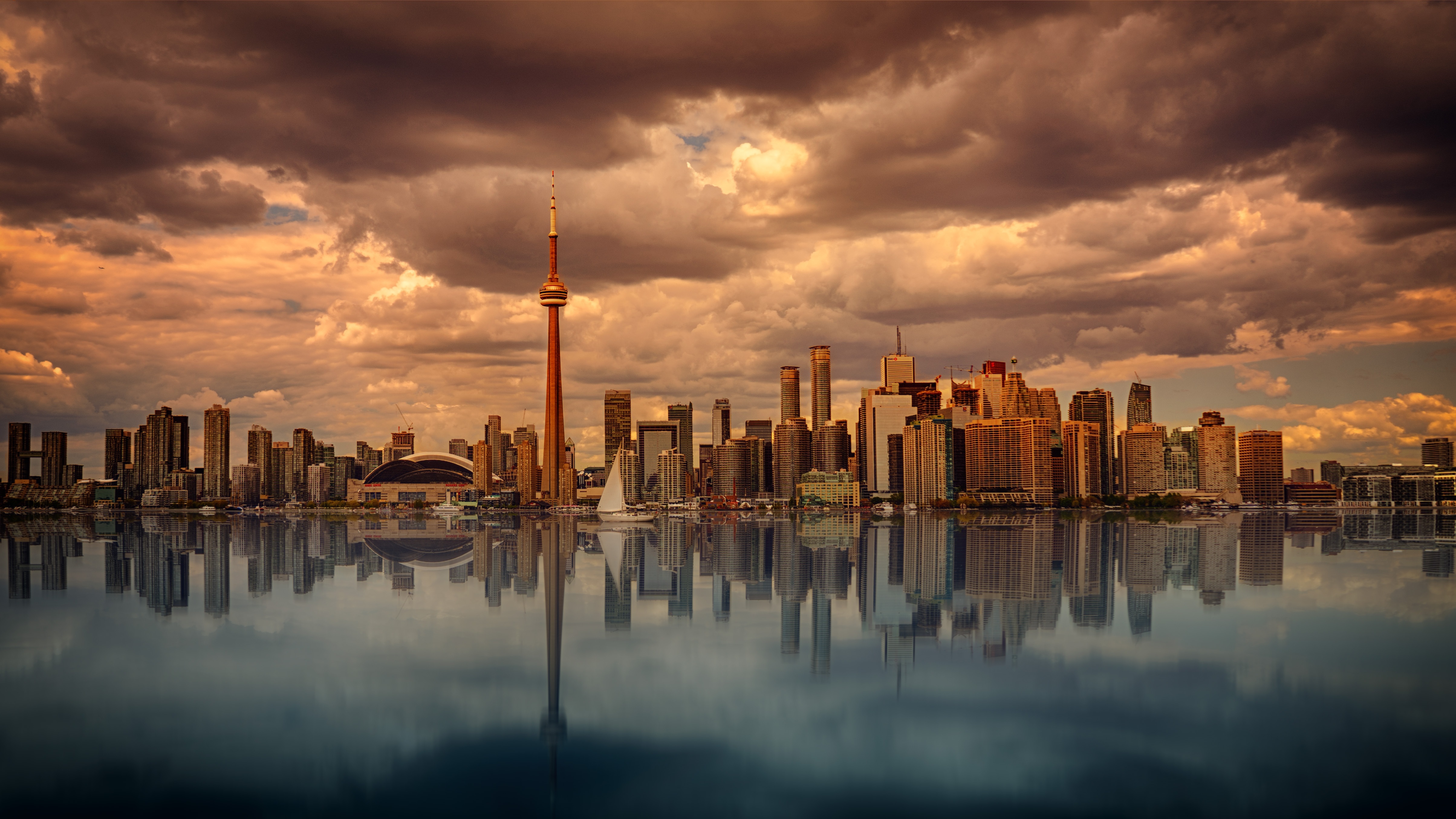
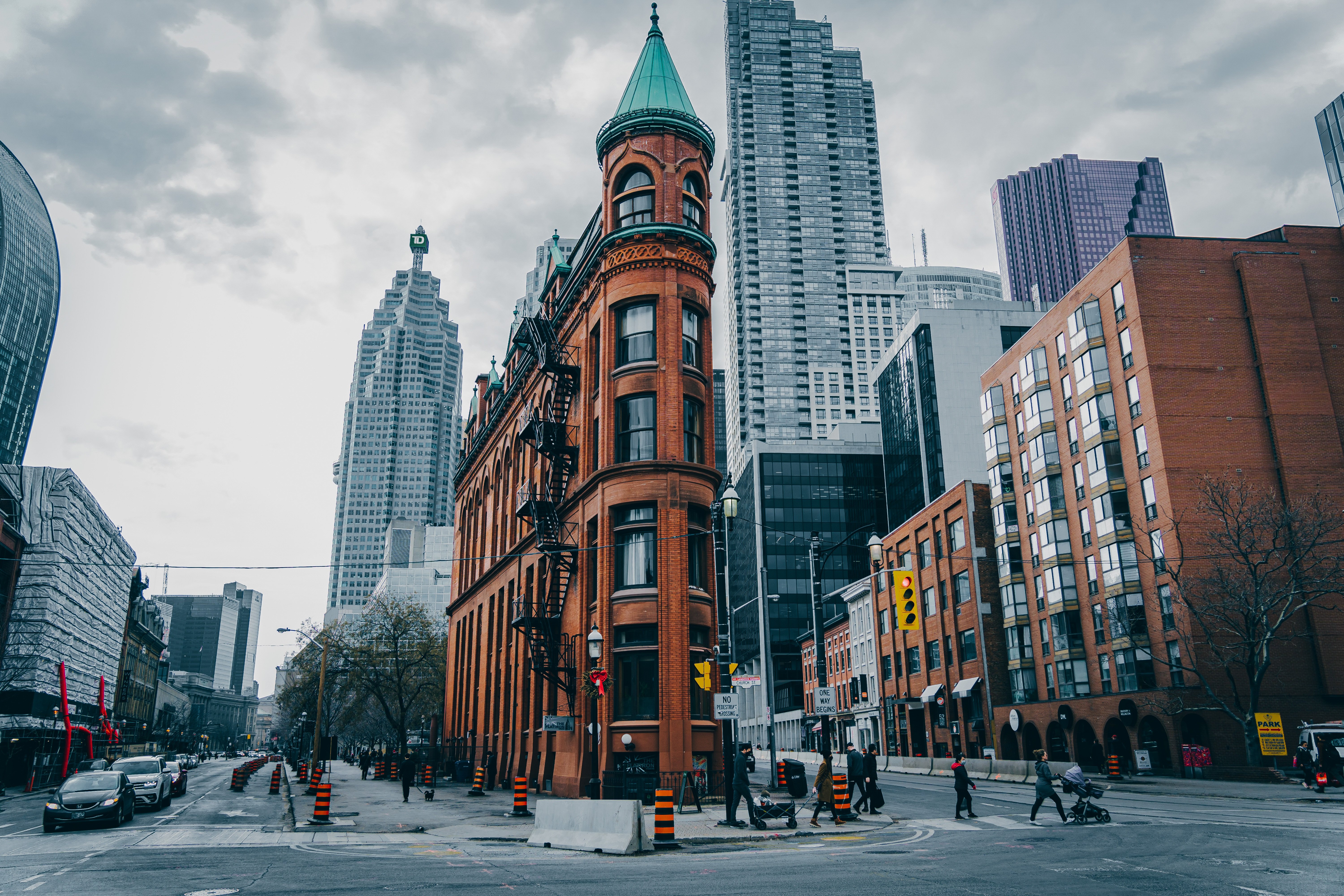
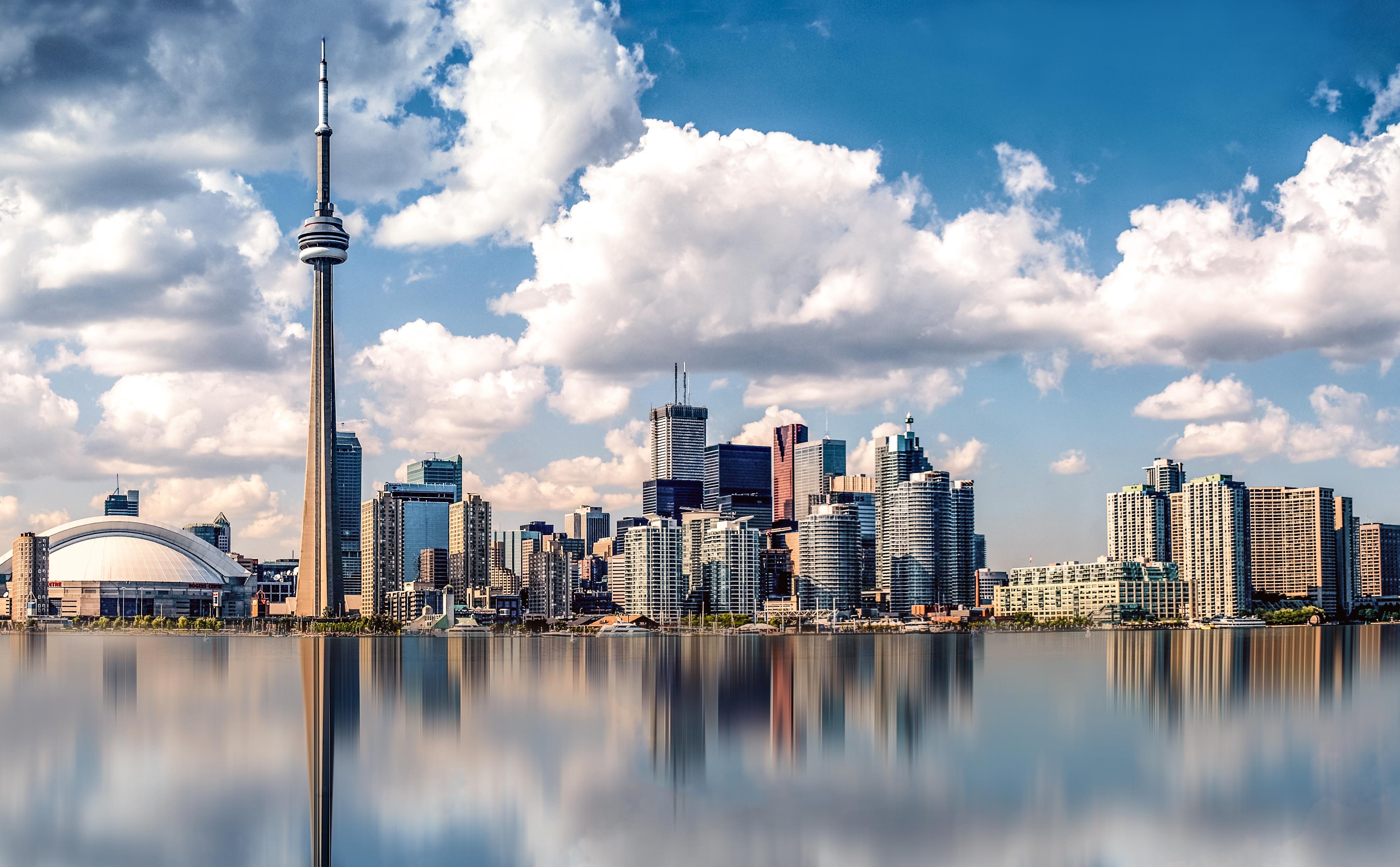
About Toronto, Ontario
About Montréal, Québec
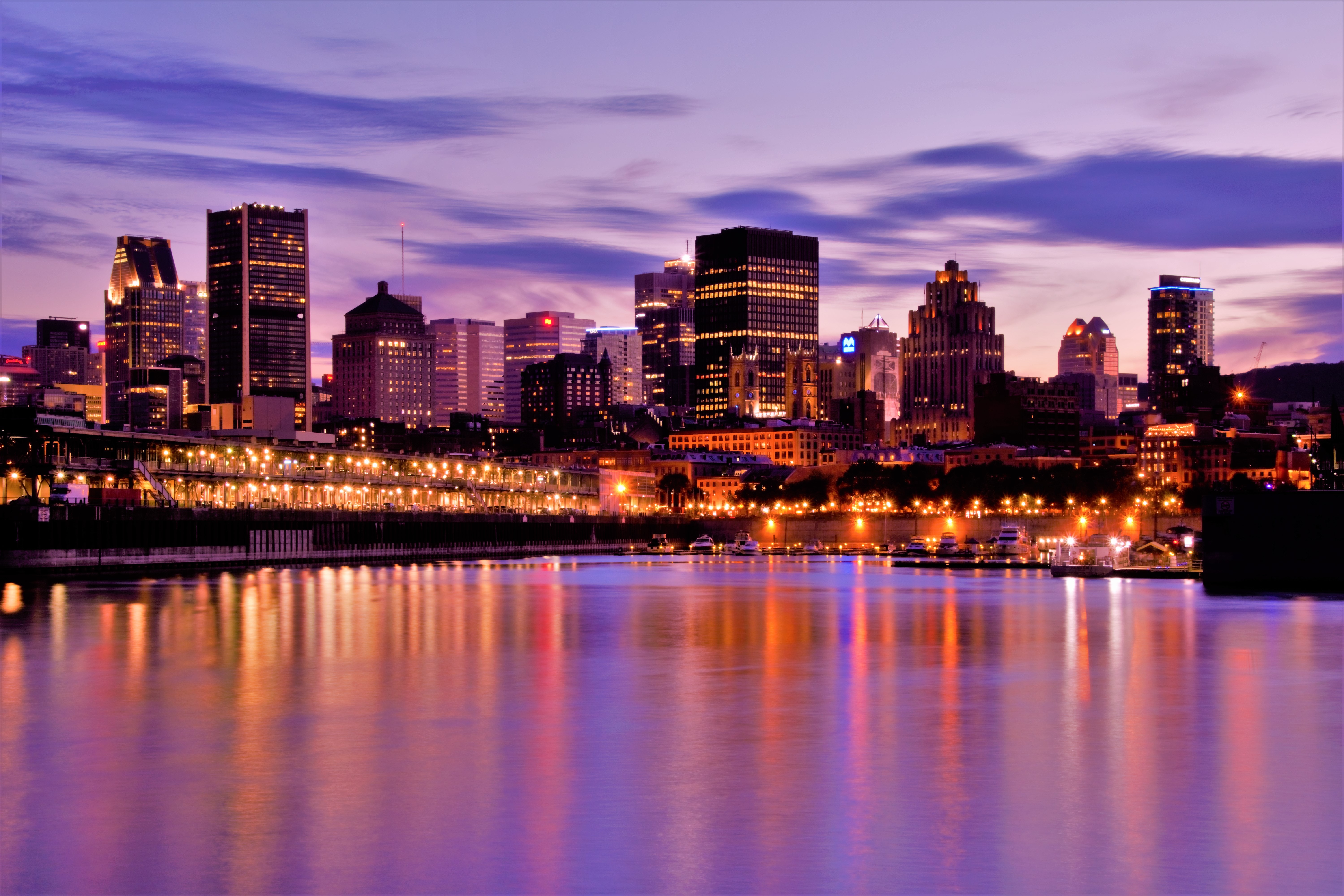
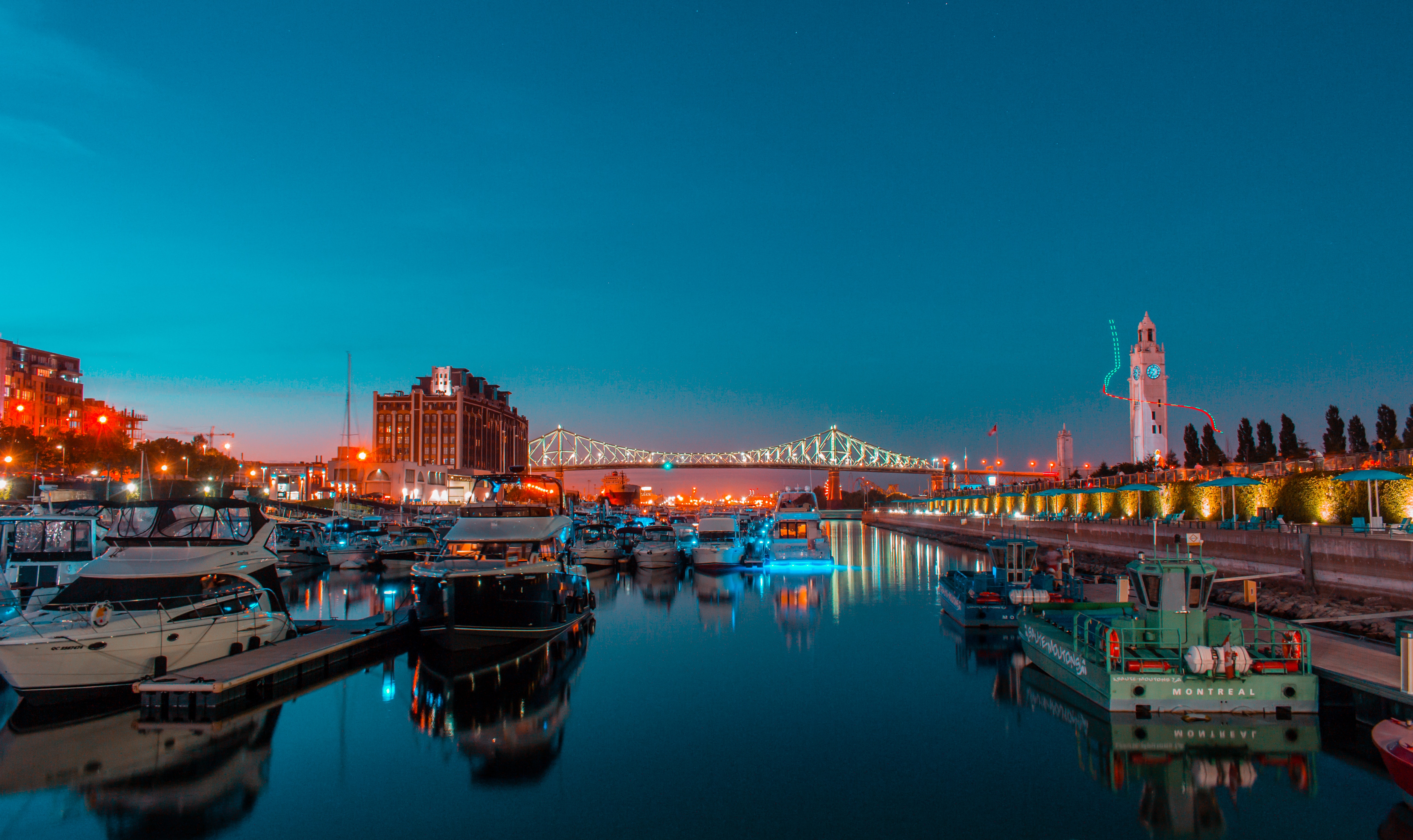
Canada's most diverse metropolis, Montréal, is an island city that favors style and elegance over order or even prosperity, a city where past and present intrude on each other daily. In some ways it resembles Vienna—well past its peak of power and glory, perhaps, yet still vibrant and grand.But don't get the wrong idea. Montréal has always had a bit of an edge. During Prohibition, thirsty Americans headed north to the city on the St. Lawrence for booze, music, and a good time, and people still come for the same things. Summer festivals celebrate everything from comedy and French music and culture to beer and fireworks, and, of course, jazz. And on those rare weeks when there isn't a planned event, the party continues. Clubs and sidewalk cafés are abuzz from late afternoon to the early hours of the morning. And Montréal is a city that knows how to mix it up even when it's 20 below zero. Rue St-Denis is almost as lively on a Saturday night in January as it is in July, and the festival Montréal en Lumière, or Montréal Highlights, enlivens the dreary days of February with concerts, balls, and fine food.Montréal takes its name from Parc du Mont-Royal, a stubby plug of tree-covered igneous rock that rises 764 feet above the surrounding cityscape. Although its height is unimpressive, "the Mountain" forms one of Canada's finest urban parks, and views from the Chalet du Mont-Royal atop the hill provide an excellent orientation to the city's layout and major landmarks.Old Montréal is home to museums, the municipal government, and the magnificent Basilique Notre-Dame-de-Montréal within its network of narrow, cobblestone streets. Although Montréal's centre-ville, or Downtown, bustles like many other major cities on the surface, it's active below street level as well, in the so-called Underground City–-the underground levels of shopping malls and food courts connected by pedestrian tunnels and the city's subway system, or métro. Residential Plateau Mont-Royal and trendy neighborhoods are abuzz with restaurants, nightclubs, art galleries, and cafés. The greener areas of town are composed of the Parc du Mont-Royal and the Jardin Botanique.
About Quebec City, Québec
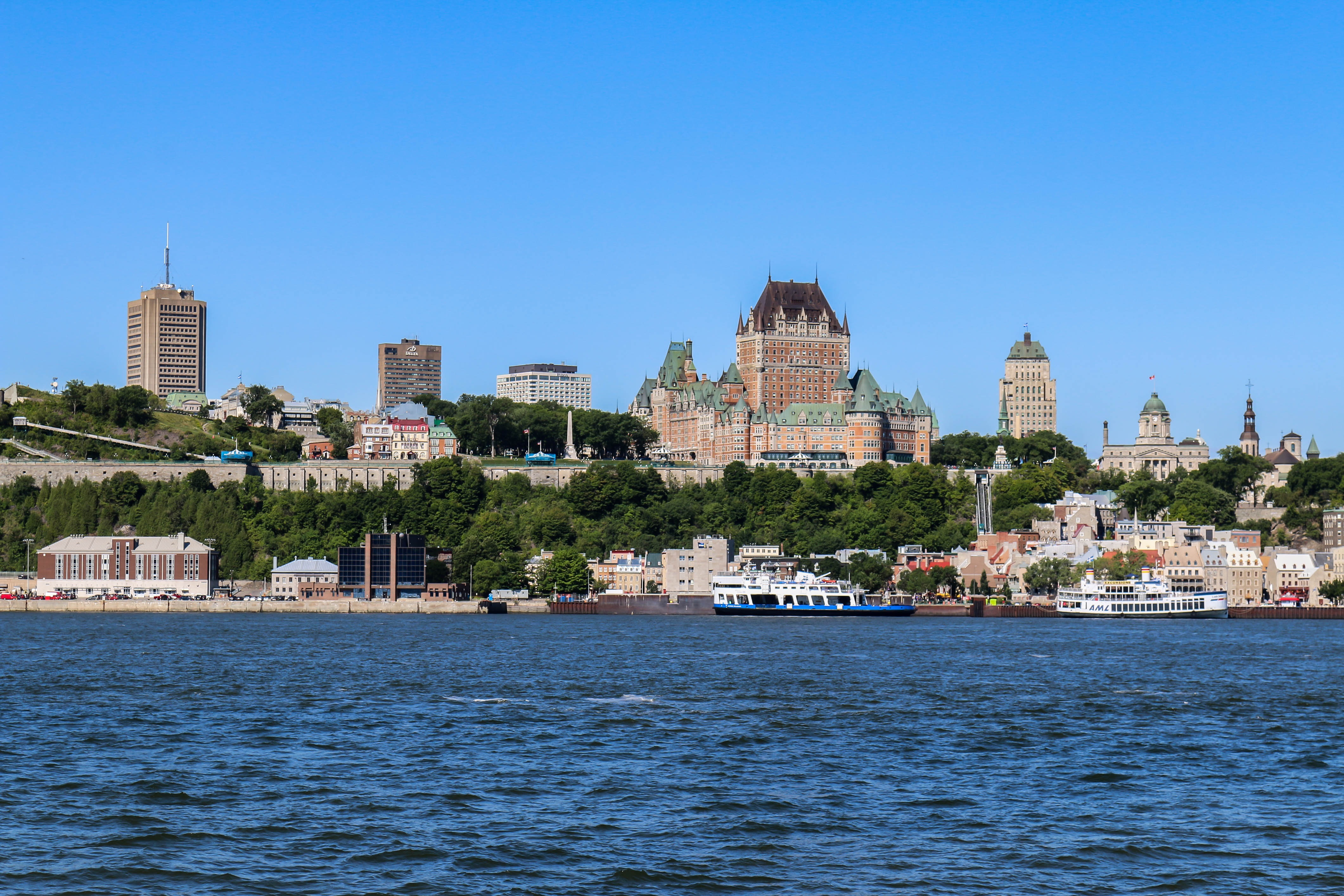
Québec City's alluring setting atop Cape Diamond (Cap Diamant) evokes a past of high adventure, military history, and exploration. This French-speaking capital city is the only walled city north of Mexico. Visitors come for the delicious and inventive cuisine, the remarkable historical continuity, and to share in the seasonal exuberance of the largest Francophone population outside France.The historic heart of this community is the Old City (Vieux-Québec), comprising the part of Upper Town (Haute-Ville) surrounded by walls and Lower Town (Basse-Ville), which spreads out at the base of the hill from Place Royale. Many sets of staircases and the popular funicular link the top of the hill with the bottom. Cobblestone streets, horse-drawn carriages, and elaborate cathedrals here are charming in all seasons. The Old City earned recognition as an official UNESCO World Heritage site in 1985, thanks largely to city planners who managed to update and preserve the 400-year-old buildings and attractions without destroying what made them worth preserving. The most familiar icon of the city, Fairmont Château Frontenac, is set on the highest point in Upper Town, where it holds court over the entire city.Sitting proudly above the confluence of the St. Lawrence and St. Charles rivers, the city's famous military fortification, La Citadelle, built in the early 19th century, remains the largest of its kind in North America. In summer, visitors should try to catch the Changing of the Guard, held every morning at 10 am; you can get much closer to the guards here than at Buckingham Palace in London.Enchanting as it is, the Old City is just a small part of the true Québec City experience. Think outside the walls and explore St-Roch, a downtown hot spot, which has artsy galleries, foodie haunts, and a bustling square. Cruise the Grande-Allée and avenue Cartier to find a livelier part of town dotted with nightclubs and fun eateries. Or while away the hours in St-Jean-Baptiste, a neighborhood with trendy shops and hipster hangouts.
About La Baie, Québec
About Tadoussac, Québec
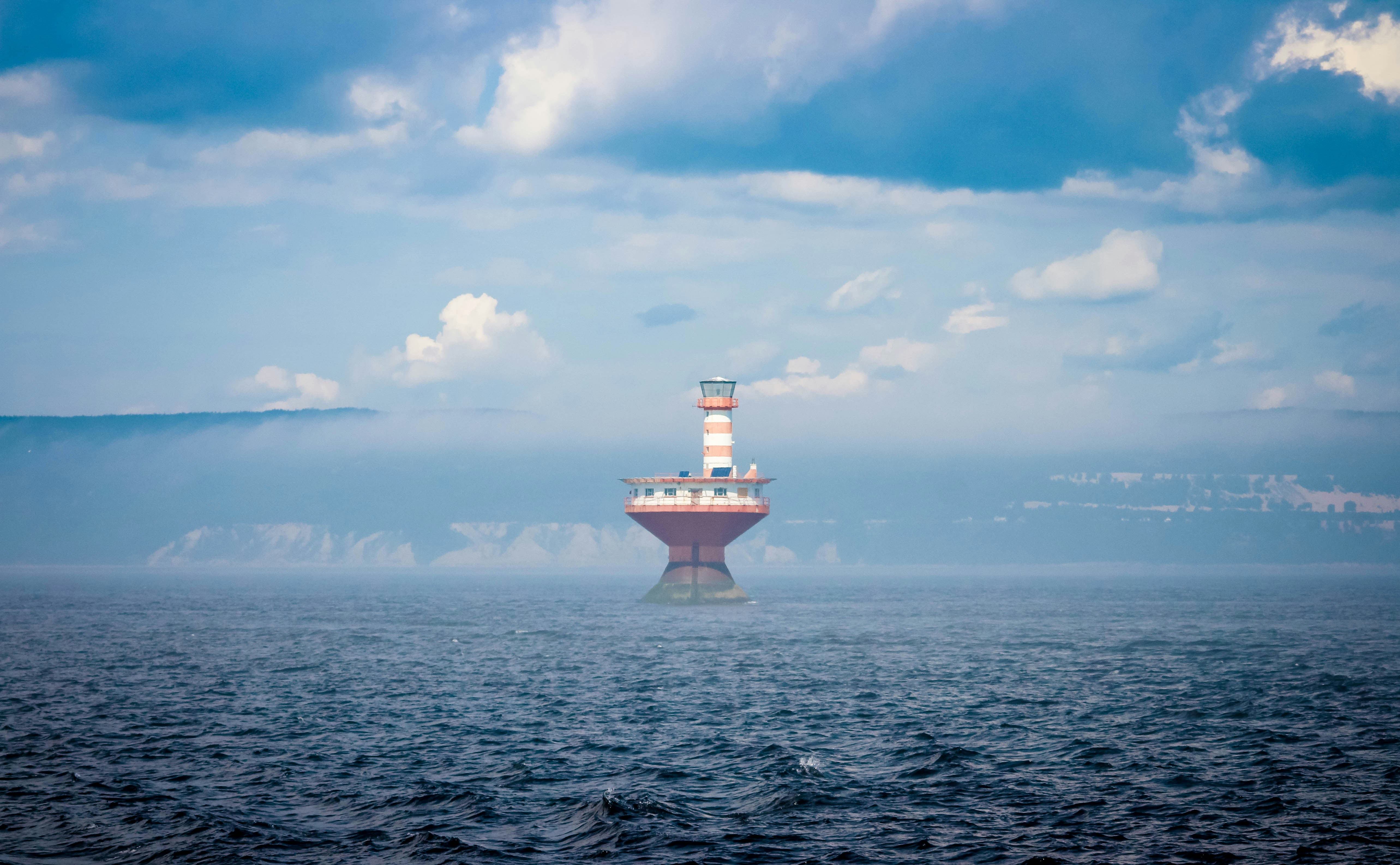
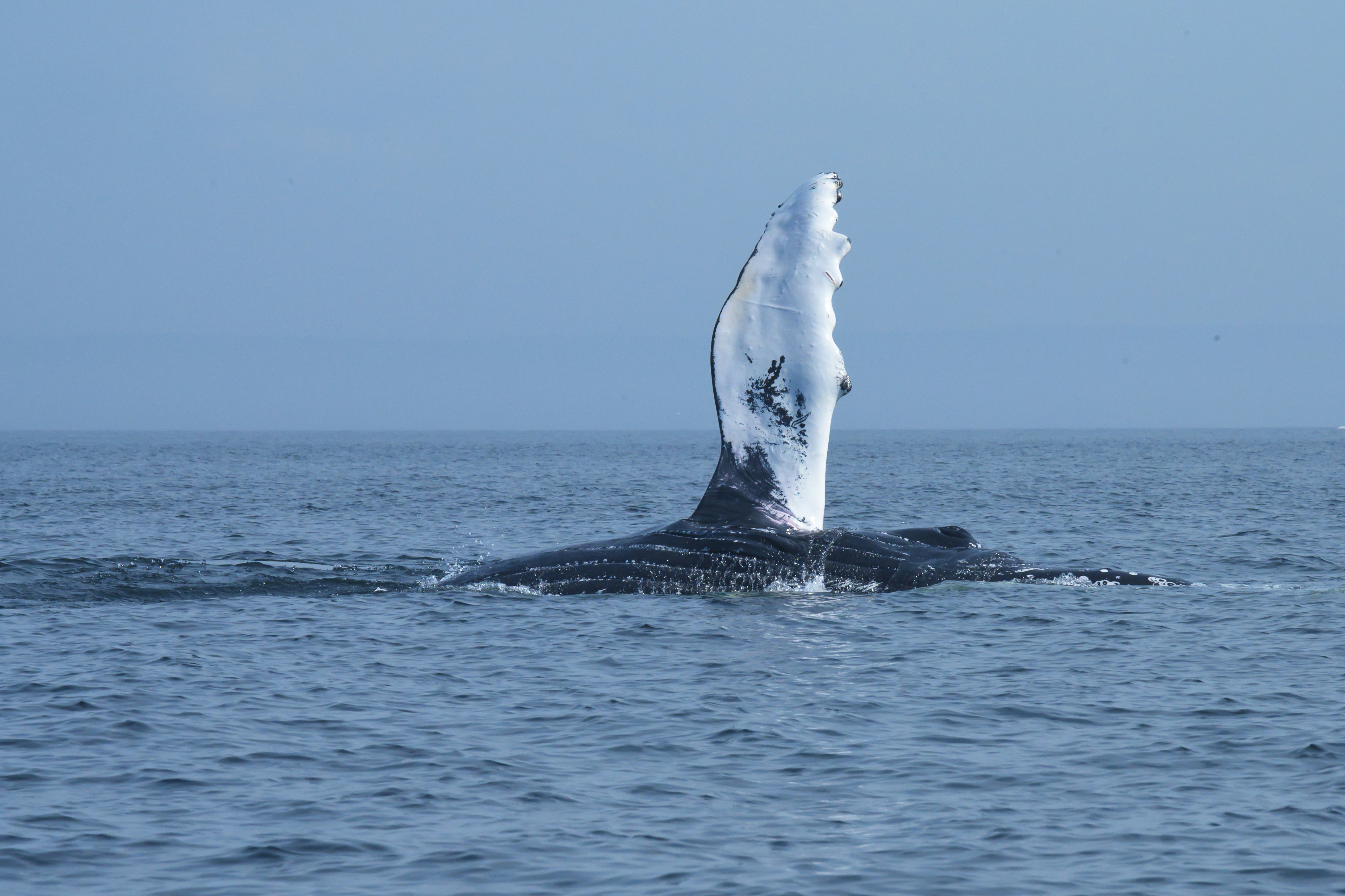
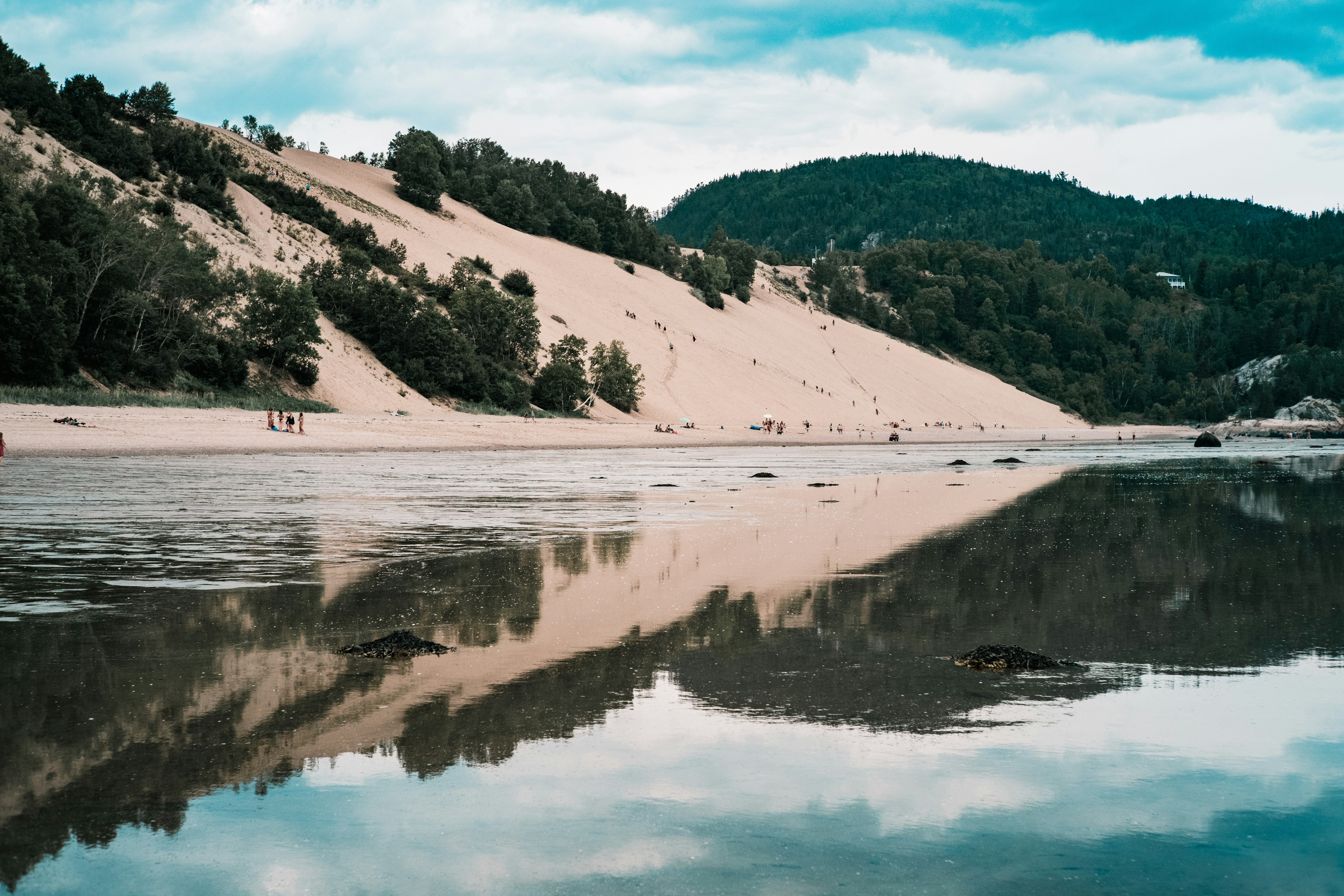
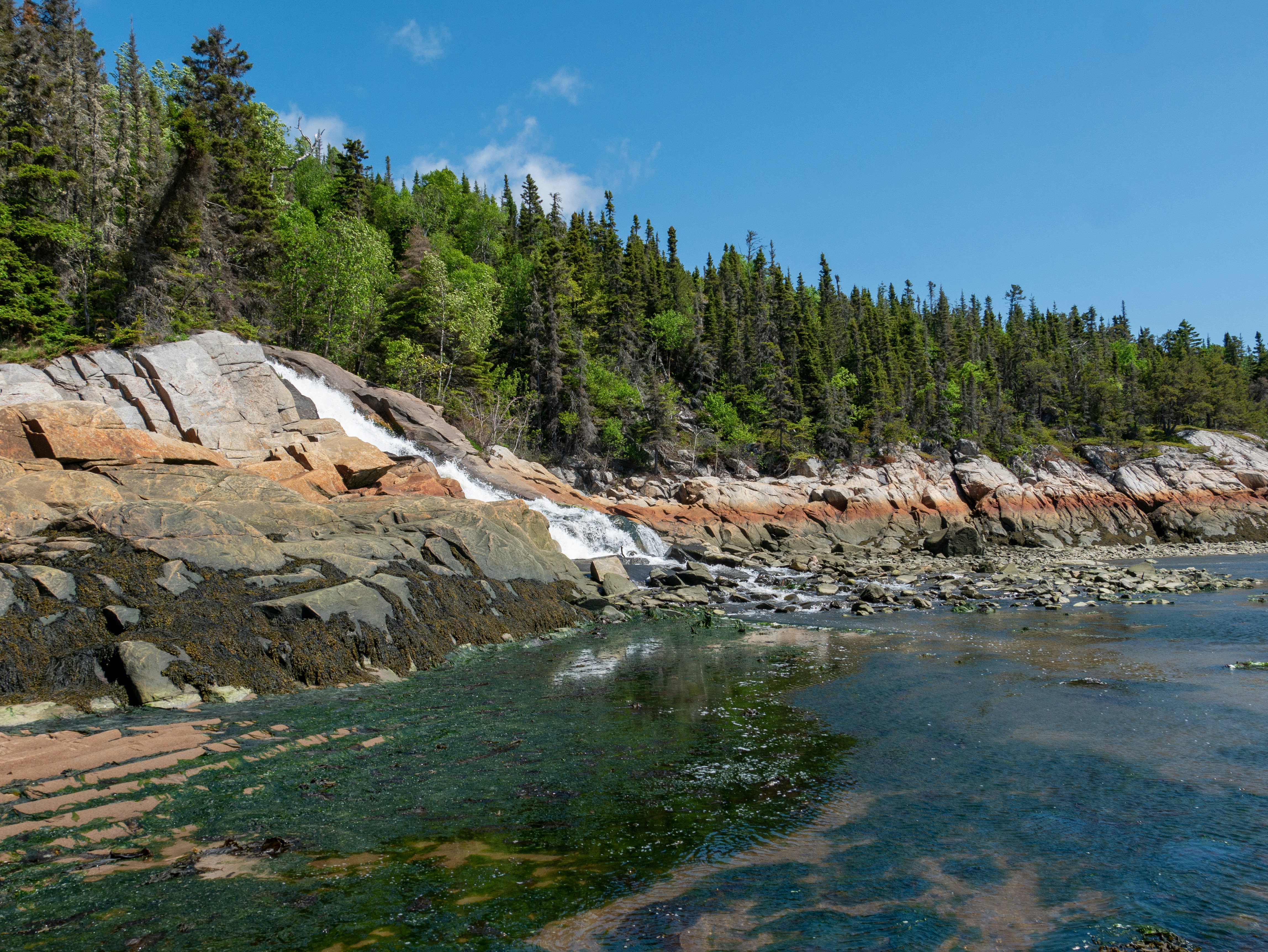
Sitting on the natural junction where the River Saguenay unloads into the massive Saint Lawrence, a visit to strategically located Tadoussac leaves you fantastically placed to explore some of Quebec's finest history, wildlife and scenery. Sail a little further up the Saguenay, and you’ll be confronted by the glorious Saguenay Fjord, as you cruise through verdant hills of dense forestry, and steep cliffs. Or, alternatively, voyage out onto the deep waters of the Saint Lawrence river, where you can spot the surface parting, as the world's largest animals - blue whales - slowly emerge from the depths to gulp in air. With a fantastic supply of krill to tempt the whales, you can even spot the various species that visit from Tadoussac’s shoreline – just make sure you brush up on your whale knowledge beforehand, at the Marine Mammal Interpretation Centre.The town was the first trading post established by the French when they landed here, and it remains the oldest of the settlements still in existence. As the name suggests, Tadoussac's Old Chapel, has an impressive history, and is North America's oldest wooden chapel. You wouldn't necessarily know it from the outside, however, as the charming little church gleams tidily with a fresh lick of cherry red and white paint.
About Tadoussac, Québec
Sitting on the natural junction where the River Saguenay unloads into the massive Saint Lawrence, a visit to strategically located Tadoussac leaves you fantastically placed to explore some of Quebec's finest history, wildlife and scenery. Sail a little further up the Saguenay, and you’ll be confronted by the glorious Saguenay Fjord, as you cruise through verdant hills of dense forestry, and steep cliffs. Or, alternatively, voyage out onto the deep waters of the Saint Lawrence river, where you can spot the surface parting, as the world's largest animals - blue whales - slowly emerge from the depths to gulp in air. With a fantastic supply of krill to tempt the whales, you can even spot the various species that visit from Tadoussac’s shoreline – just make sure you brush up on your whale knowledge beforehand, at the Marine Mammal Interpretation Centre.The town was the first trading post established by the French when they landed here, and it remains the oldest of the settlements still in existence. As the name suggests, Tadoussac's Old Chapel, has an impressive history, and is North America's oldest wooden chapel. You wouldn't necessarily know it from the outside, however, as the charming little church gleams tidily with a fresh lick of cherry red and white paint.
About Gaspé, Québec
About Magdalen Islands, Québec
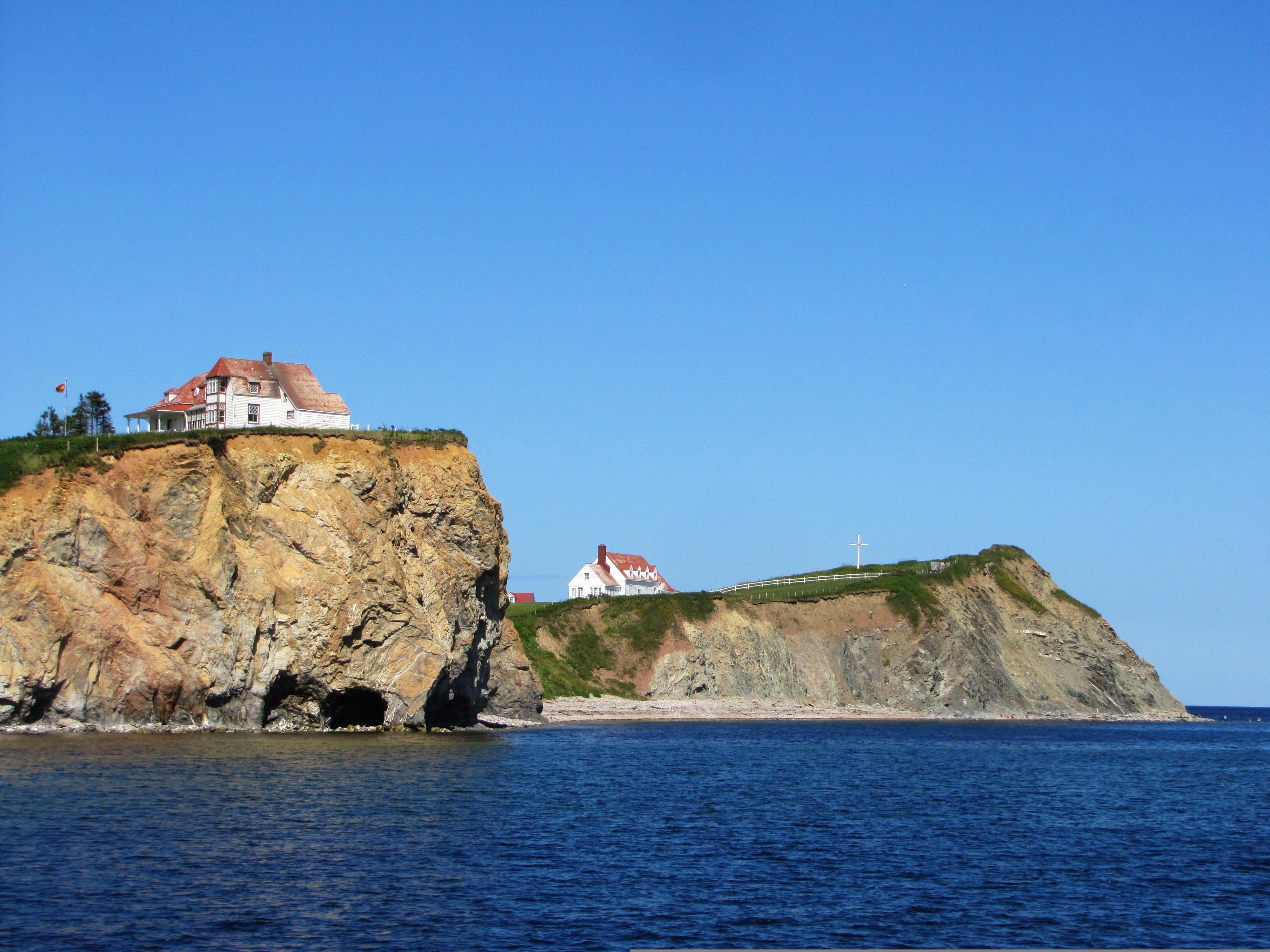
The Îles-de-la-Madeleine, or 'Magdalen Islands', form a small archipelago in the Gulf of Saint Lawrence with a land area of 79.36 square miles (205.53 square kilometres). Though closer to Prince Edward Island and Nova Scotia, the islands form part of the Canadian province of Quebec. Les Îles-de-la-Madeleine encompass eight major islands: Havre-Aubert, Grande Entrée, Cap aux Meules, Grosse-Île, Havre aux Maisons, Pointe-Aux-Loups, Île d'Entrée and Brion. All except Brion are inhabited. Several other tiny islands are also considered part of the archipelago: Rocher aux Oiseaux; Île aux Loups-marins; Île Paquet; and Rocher du Corps Mort. Although Europeans first arrived on the islands in the mid-1600s, Mi'kmaq Indians had been visiting the islands for hundreds of years, and numerous archaeological sites have been excavated on the archipelago. By the mid-18th century, the islands were inhabited by French-speaking Acadians, and administered as part of the colony of Newfoundland from 1763-1774, when they were annexed to Quebec by the Quebec Act. A segment of the population are English descendants from survivors of the over 400 shipwrecks on the islands. The construction of lighthouses eventually reduced the number of shipwrecks, but many old hulks remain on the beaches and under the waters. Until the 20th century, the islands were completely isolated during the winter months due to the pack ice that made the trip to the mainland impassable by boat. However, a new wireless telegraph station provided Magdalens with year-round communication with the outside world. In recent years, the pristine natural beauty of the Îles-de-la-Madeleine, along with the archipelago's strategic geographic location in the heart of the Gulf of Saint Lawrence, has made tourism an important part of the local economy. The well-preserved natural heritage, extraordinarily beautiful marine landscapes and exceptional coastline of the Îles-de-la-Madeleine offer visitors a unique opportunity to explore the area's natural splendour. The panoramic archipelago features dramatic red cliffs, rolling green hills, brightly-coloured houses, intimate inlets, hidden coves, and over 180 miles (290 kilometres) of honey-coloured and white-sand beaches; half of the archipelago's islands are linked by sand dunes. The Îles-de-la-Madeleine are also home to a wealth of diverse marine life, bird species, and flora and fauna to discover. The Îles-de-la-Madeleine offer a truly distinctive blend of Acadian, Madelinot, French and English cultures, traditions and communities that make this breath-taking archipelago a truly unforgettable destination. You can explore the people and history of the islands during visits to the many wonderful museums and interpretation centres, public areas and historical sites, art galleries, artisan workshops, archival centres, performing arts and theatres, industrial facilities, culinary and wine shops, charming boutiques, and cultural and gourmet festivals and events. The exquisite natural and coastal splendour of the Îles-de-la-Madeleine include a host of incredibly scenic and memorable sightseeing venues. Land-based excursions include picturesque nature hikes, walking trails, bicycling, bird-watching, horseback riding, golfing at the Club de golf des Iles, kite-flying, and flightseeing. The teeming coastal waters are ideally-suited for seal- and whale-watching, mariculture, canoeing, sea-kayaking, surfing, windsurfing and kitesurfing, fishing, boating, sailing and Zodiac tours, snorkelling, scuba diving, and more. Private arrangements for independent sightseeing may be requested through the Shore Concierge Office on board the ship.
About Halifax, Nova Scotia
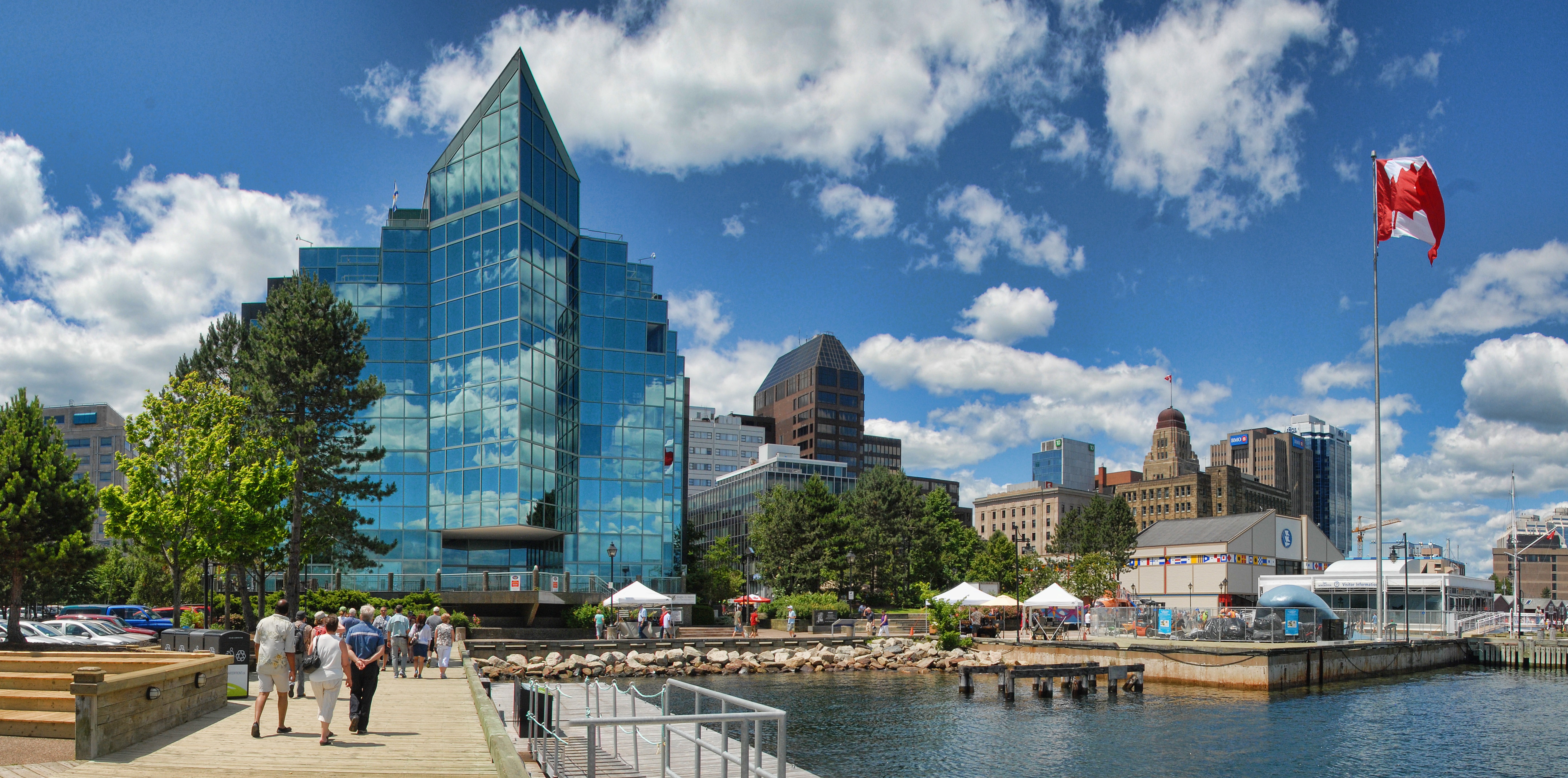
Surrounded by natural treasures and glorious seascapes, Halifax is an attractive and vibrant hub with noteworthy historic and modern architecture, great dining and shopping, and a lively nightlife and festival scene. The old city manages to feel both hip and historic. Previous generations had the foresight to preserve the cultural and architectural integrity of the city, yet students from five local universities keep it lively and current. It's a perfect starting point to any tour of the Atlantic provinces, but even if you don't venture beyond its boundaries, you will get a real taste of the region.It was Halifax’s natural harbor—the second largest in the world after Sydney, Australia’s—that first drew the British here in 1749, and today most major sites are conveniently located either along it or on the Citadel-crowned hill overlooking it. That’s good news for visitors because this city actually covers quite a bit of ground.Since amalgamating with Dartmouth (directly across the harbor) and several suburbs in 1996, Halifax has been absorbed into the Halifax Regional Municipality, and the HRM, as it is known, has around 415,000 residents. That may not sound like a lot by U.S. standards, but it makes Nova Scotia’s capital the most significant Canadian urban center east of Montréal.There's easy access to the water, and despite being the focal point of a busy commercial port, Halifax Harbour doubles as a playground, with one of the world's longest downtown boardwalks. It's a place where container ships, commuter ferries, cruise ships, and tour boats compete for space, and where workaday tugs and fishing vessels tie up beside glitzy yachts. Like Halifax as a whole, the harbor represents a blend of the traditional and the contemporary.
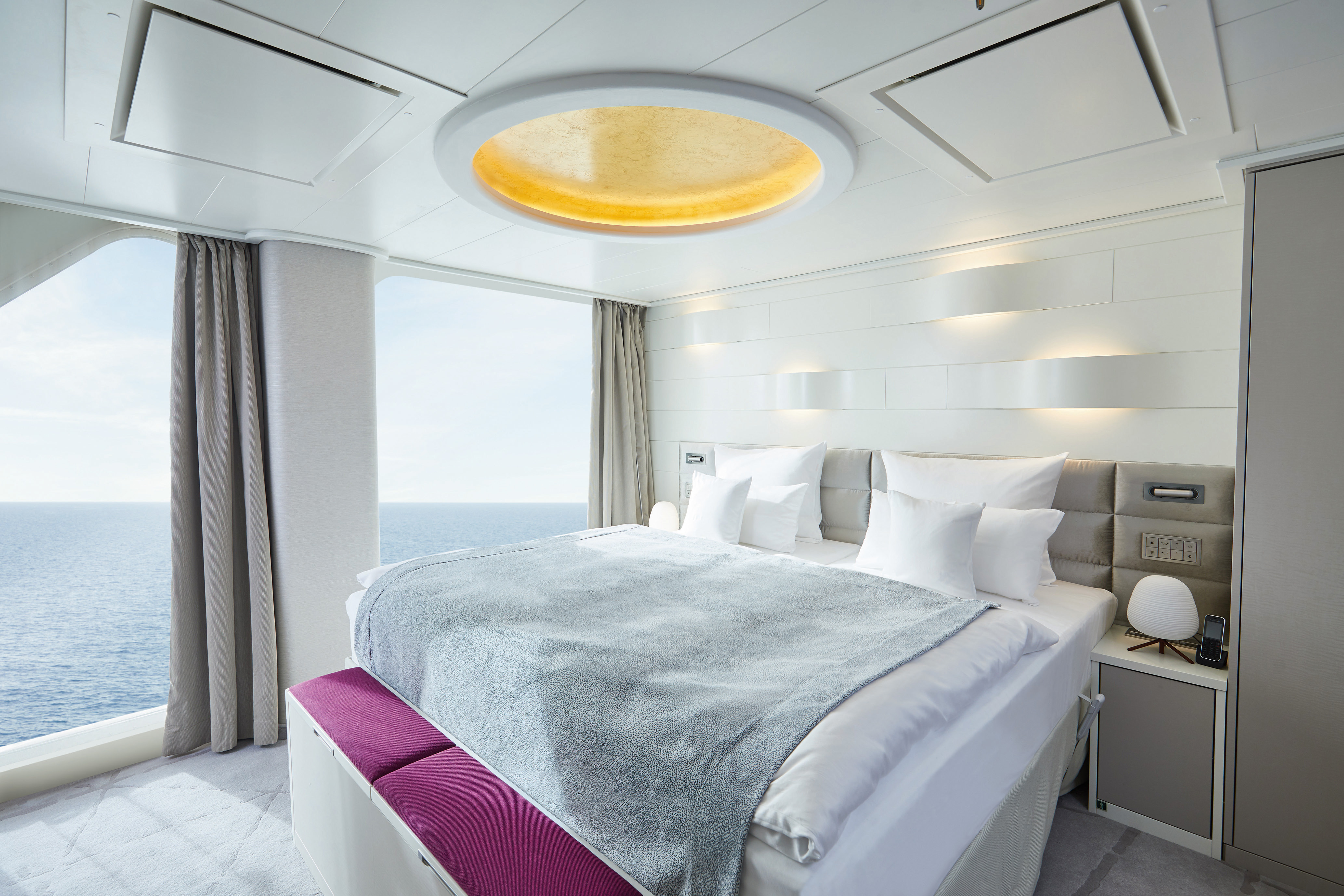
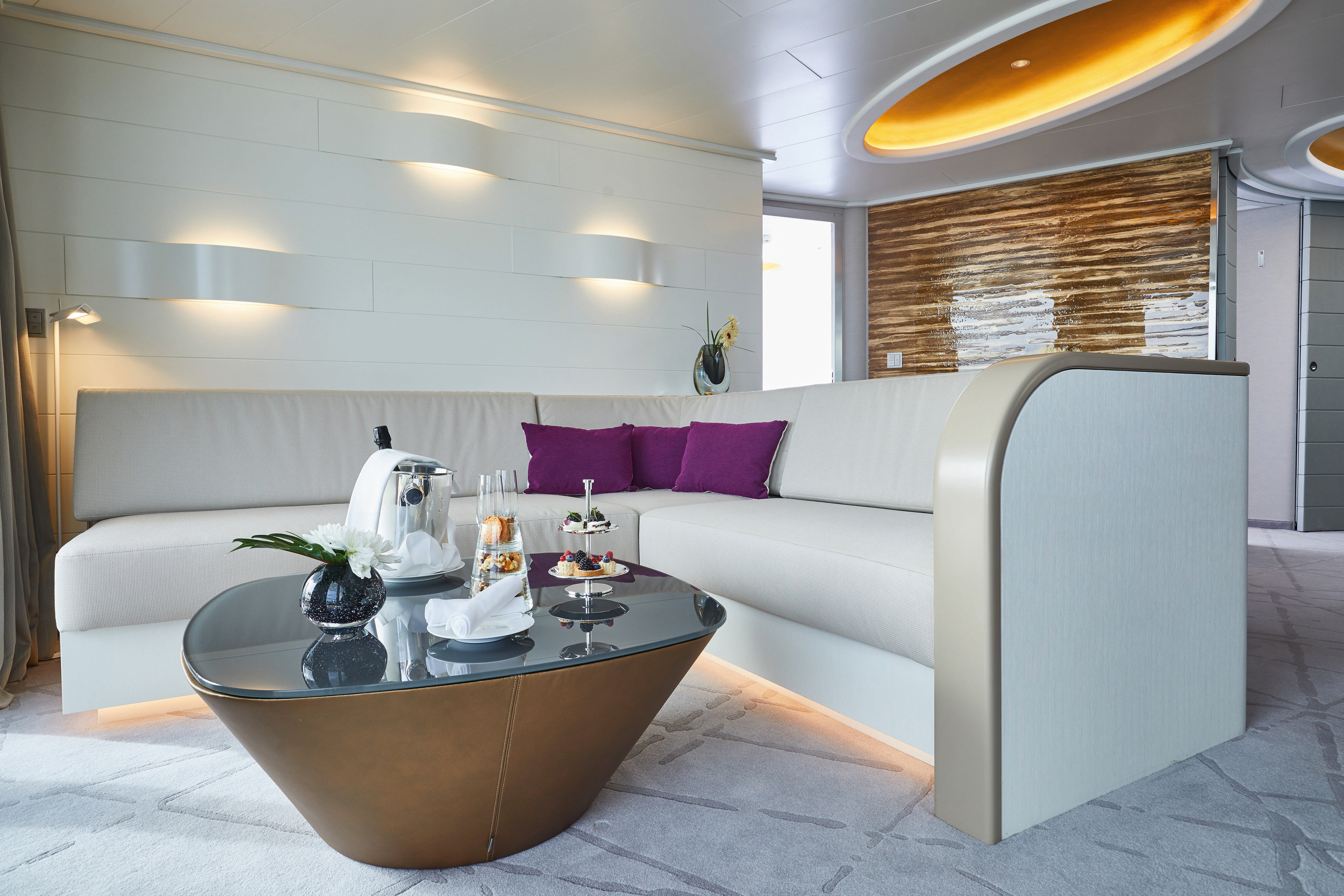
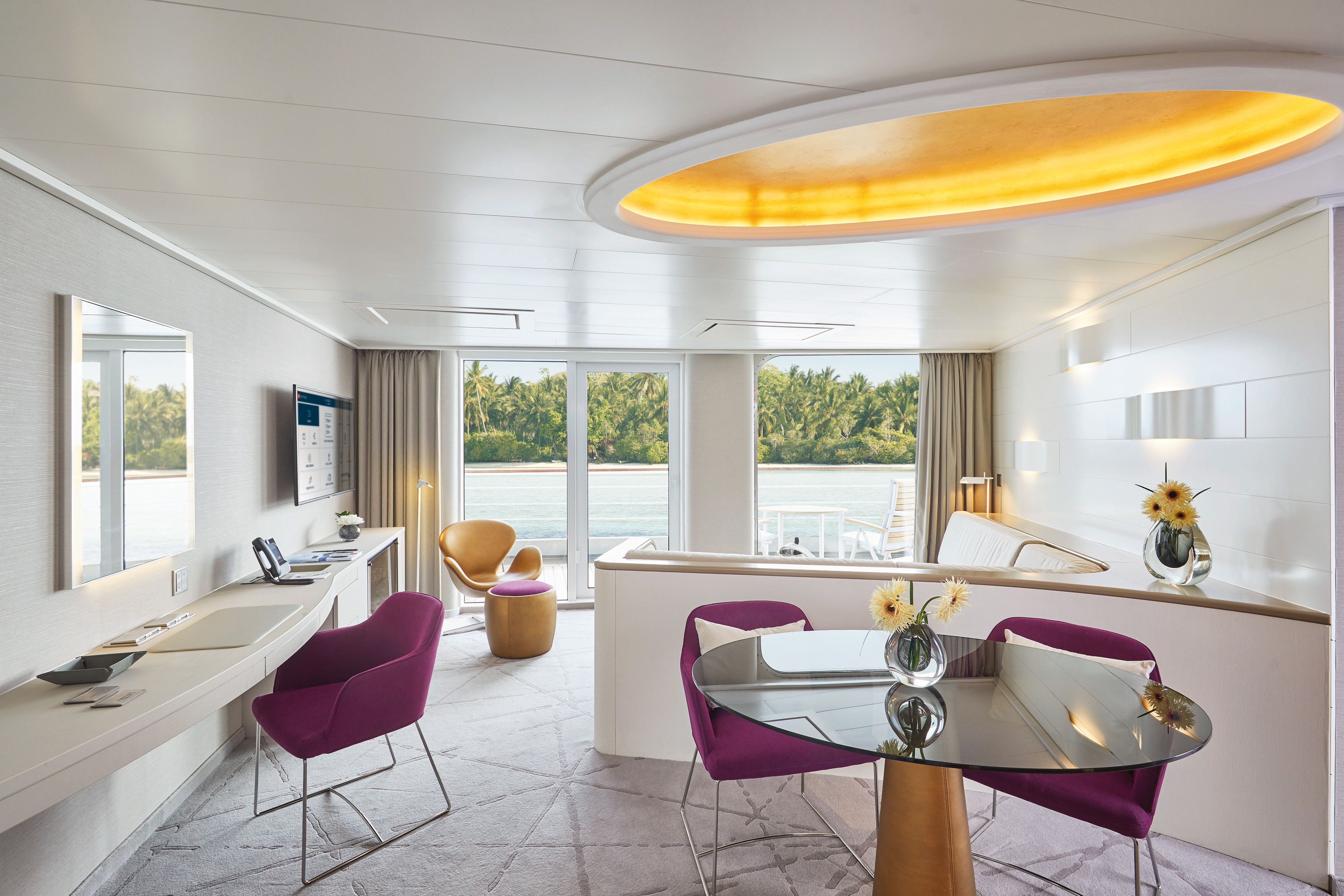
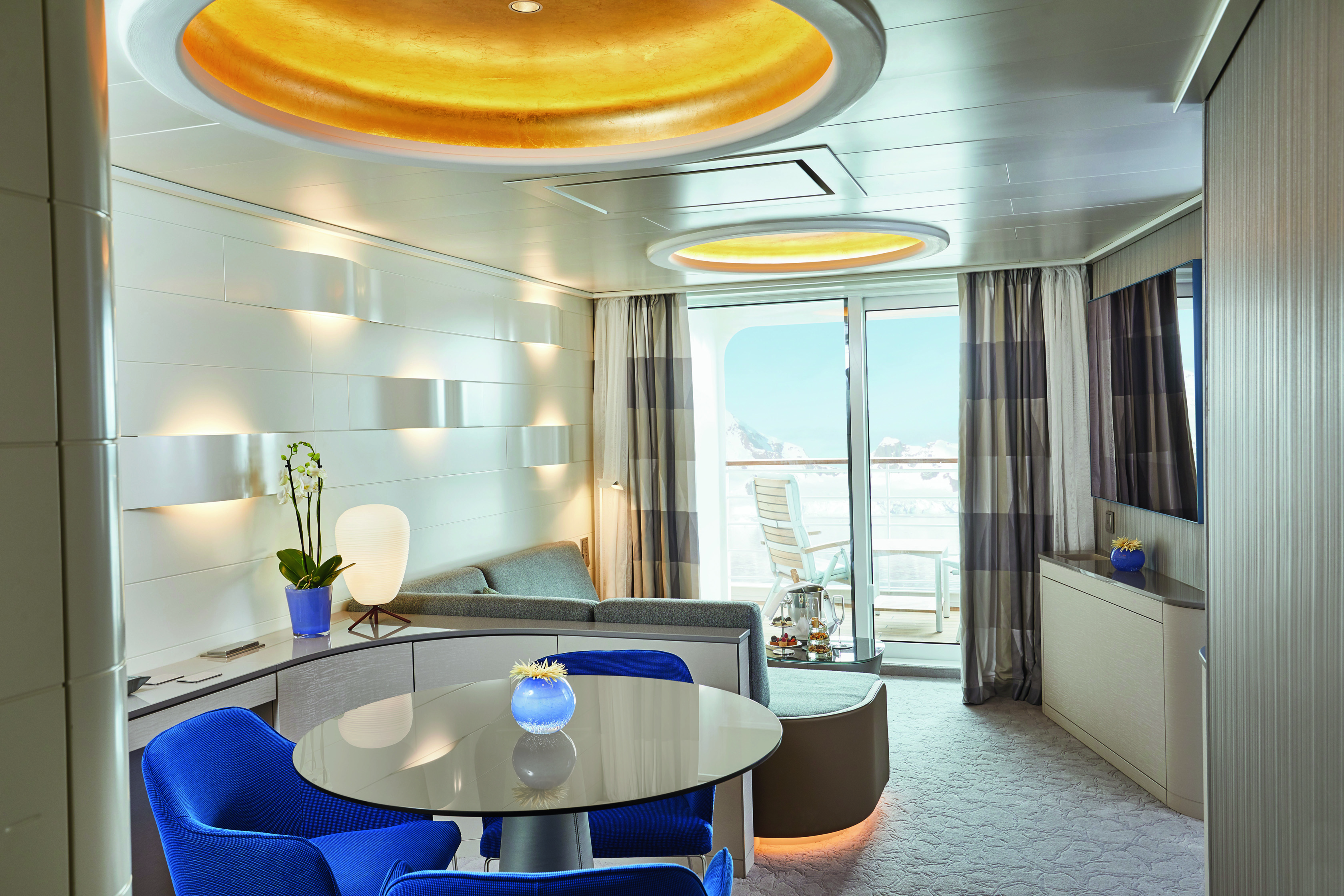
Separate living/sleeping area
- Separate dining area
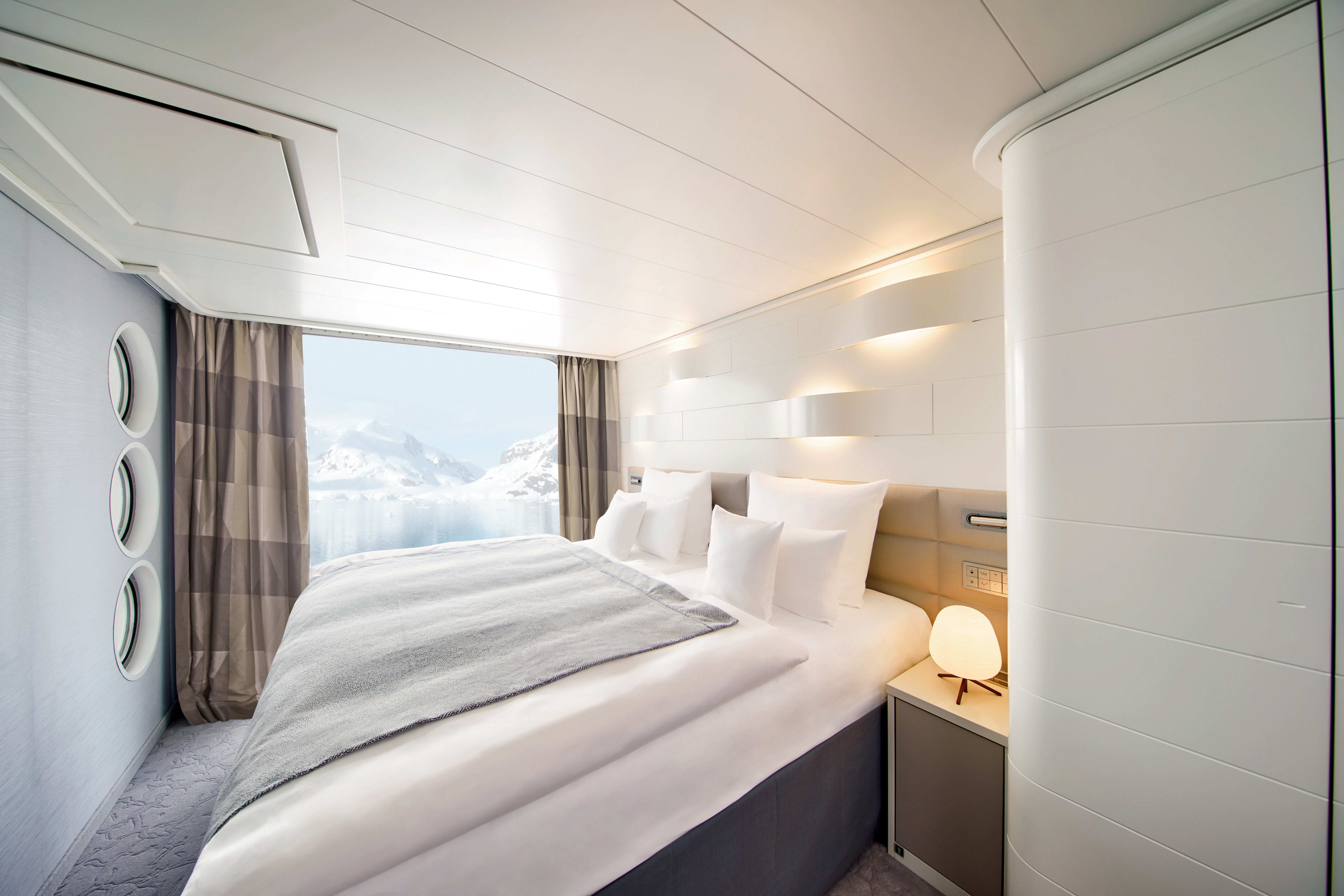
- Sleeping area with panoramic view
- Separable beds
- TV in living and sleeping areas
- Veranda with space heaters
- Daylight bathroom with two sinks, free-standing bath, rain shower and veranda access
- Steam sauna in shower area
- Heated wall in bathroom (e.g. for towels and wet parkas)
- Separate toilet
- Free mini bar
- Coffee machine
- Extensive infotainment with live broadcast and recordings of expert presentations, forward-view camera, navigation chart, films and much more
- Binoculars in the cabin
- Nordic walking poles
- 24-hour cabin service
- Butler service
- Table reservation in main restaurant
- Free use of Wi-Fi
- Separable beds
- TV in living and sleeping areas
- Bathroom with two sinks and rain shower
- Separate toilet
- Steam sauna in shower area
- Heated wall in bathroom (e.g. for towels and wet parkas)
- Free mini bar
- Coffee machine
- Extensive infotainment with live broadcast and recordings of expert presentations, forward-view camera, navigation chart, films and much more
- Binoculars
- Nordic walking poles
- 24-hour cabin service
- Table reservation in main restaurant (applies to the PLATINUM fare)
- Butler service
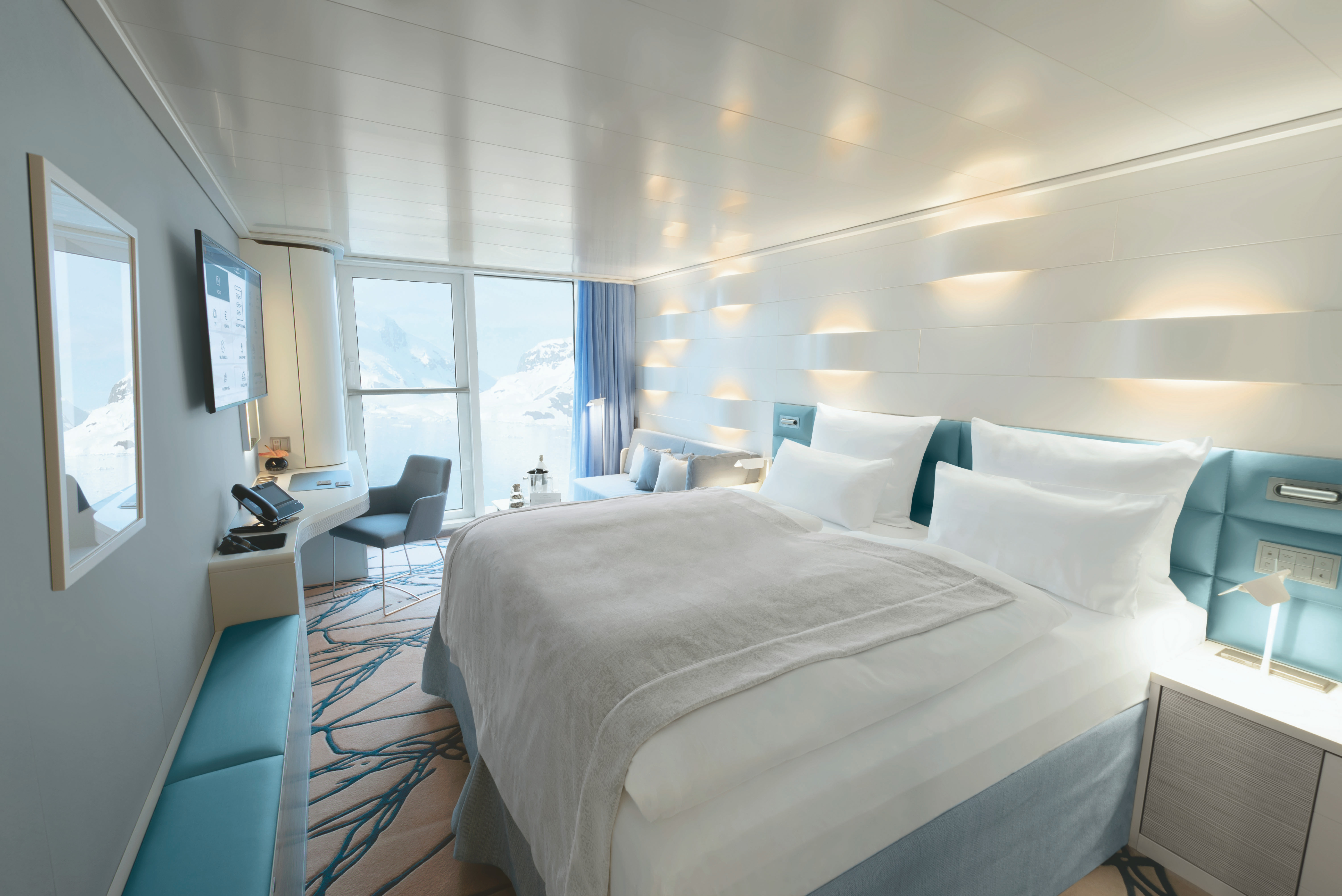
Heated wall in the bathroom (e. g. for towels and wet parkas)
- Rain shower
- Free mini bar (soft drinks)
- Coffee machine
- Separable beds
- Extensive infotainment with live broadcast and recordings of expert presentations, forward-view camera, navigation chart, films and much more
- Binoculars
- Nordic Walking poles
- 24-hour cabin service
- There is one cabin with fully accessible layout and equipment (cabin 404)
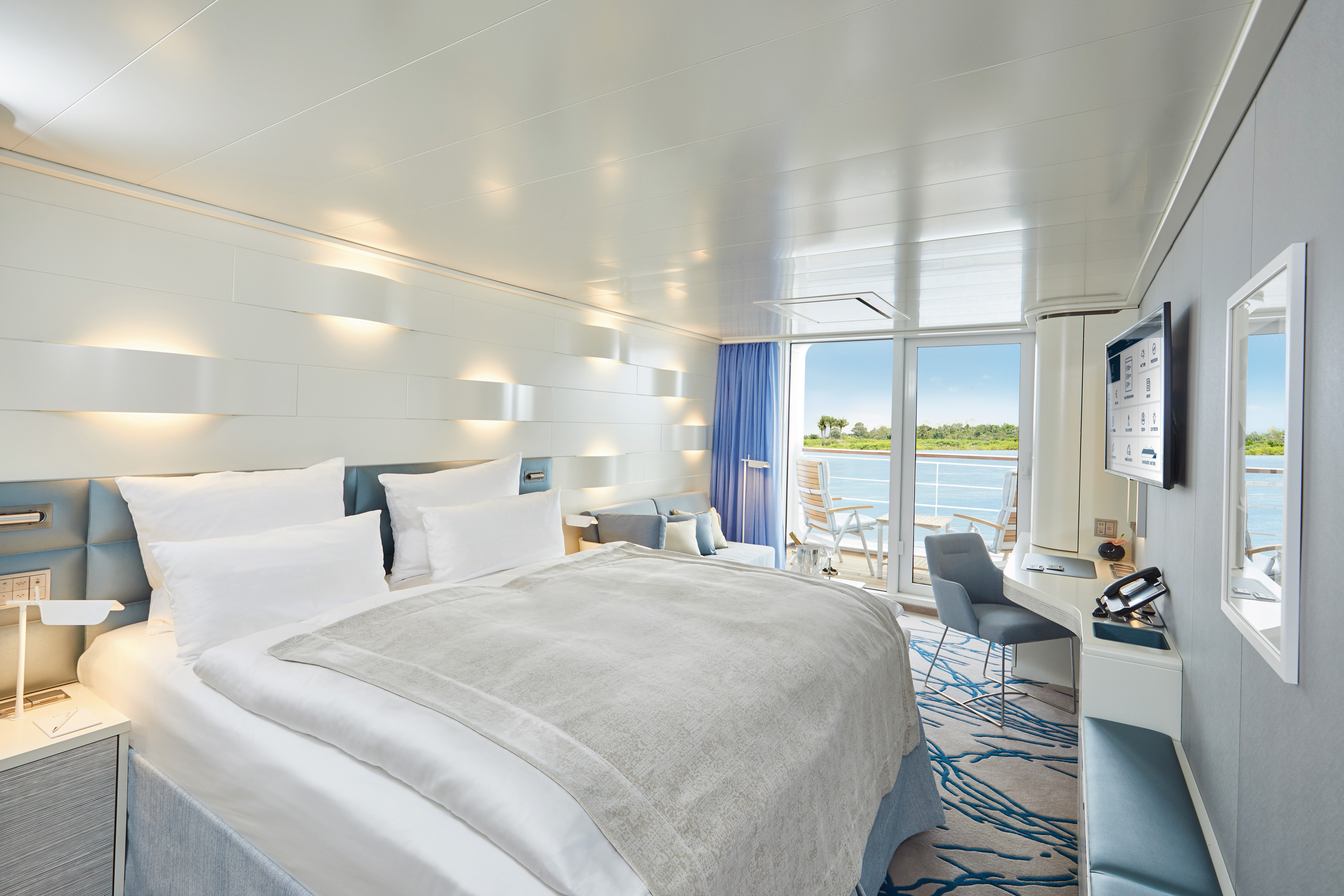
Heated wall in the bathroom (e. g. for towels and wet parkas)
- Rain shower
- Free mini bar (soft drinks)
- Coffee machine
- Separable beds
- Extensive infotainment with live broadcast and recordings of expert presentations, forward-view camera, navigation chart, films and much more
- Binoculars
- Nordic Walking poles
- 24-hour cabin service
- There is one cabin with fully accessible layout and equipment (cabin 404)
The French Balcony Cabins in Category 3 on Deck 6 are approximately 23 m²/248 ft² in size, and those in Category 5 on Deck 7 approximately 21 m²/226 ft². The Balcony Cabins at the stern have a slightly different floor plan.
Heated wall in the bathroom (e. g. for towels and wet parkas)
- Rain shower
- Free mini bar (soft drinks)
- Coffee machine
- Separable beds
- Extensive infotainment with live broadcast and recordings of expert presentations, forward-view camera, navigation chart, films and much more
- Binoculars
- Nordic Walking poles
- 24-hour cabin service
- There is one cabin with fully accessible layout and equipment (cabin 404)
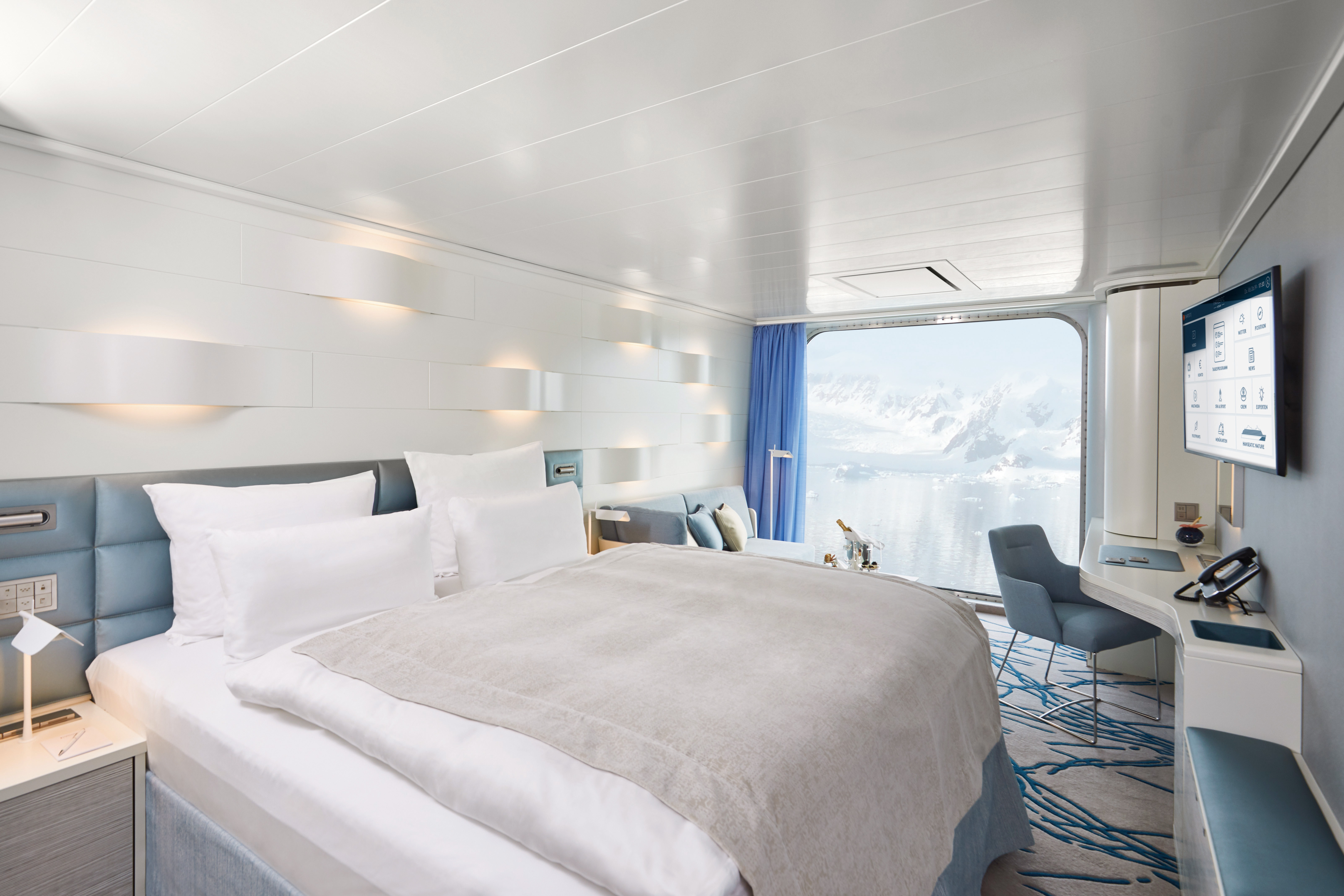
Heated wall in the bathroom (e. g. for towels and wet parkas)
- Rain shower
- Free mini bar (soft drinks)
- Coffee machine
- Separable beds
- Extensive infotainment with live broadcast and recordings of expert presentations, forward-view camera, navigation chart, films and much more
- Binoculars
- Nordic Walking poles
- 24-hour cabin service
- There is one cabin with fully accessible layout and equipment (cabin 404)
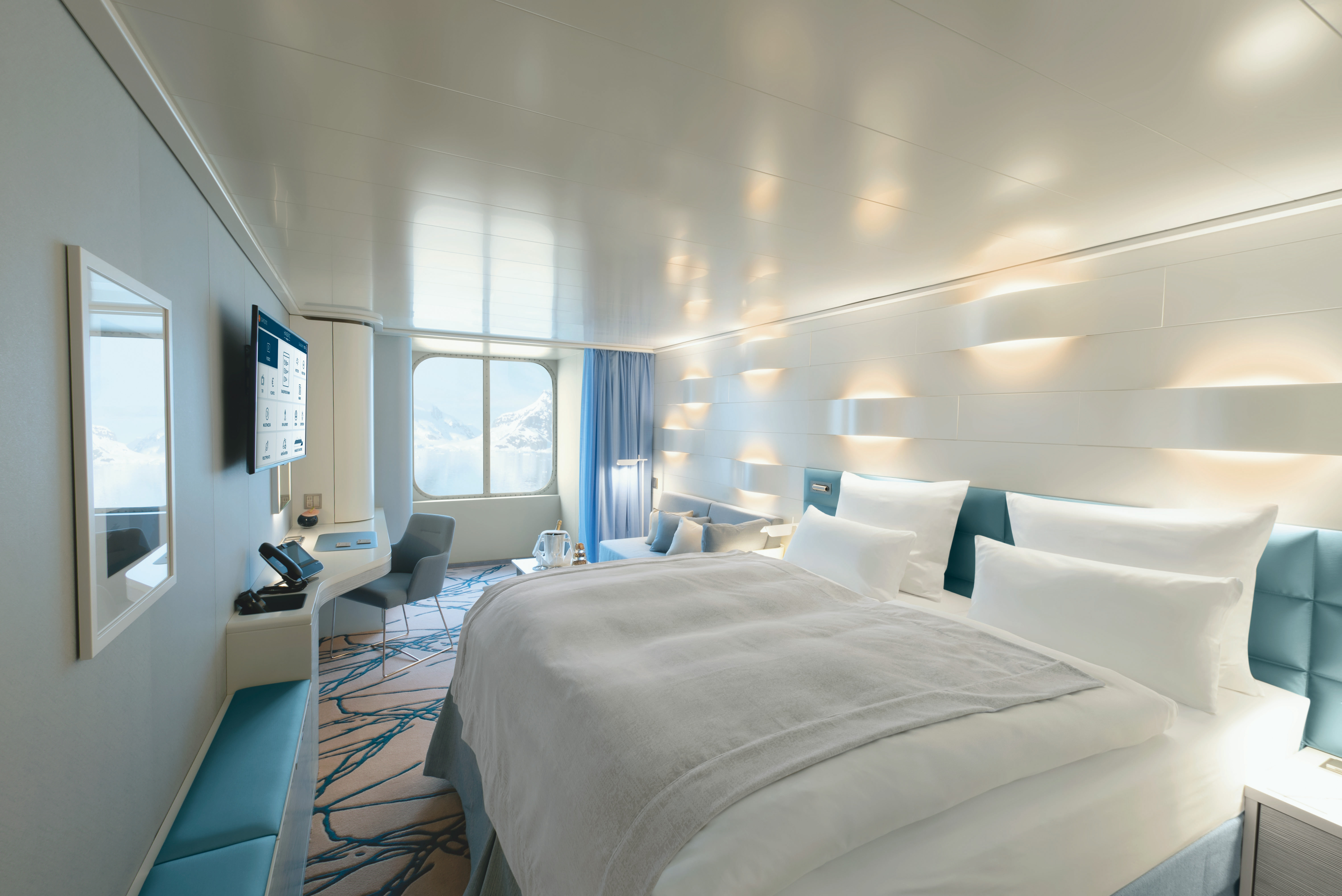
HANSEATIC inspiration
Each of our expeditions is a work of art. Passionately conceived, masterfully realised. A portrait of the world in which there is always something new to discover. And our small, state-of-the-art expedition ships HANSEATIC nature, HANSEATIC inspiration and HANSEATIC spirit (max. 230 guests) are the very best studio where such artistic masterpieces are created. Worlds both faraway and nearby. Ice and tropics. Wildlife paradise or cultural treasure. For every explorer, we offer the right journey of discovery. More than 30 years of experience as the market leader in German-speaking countries.
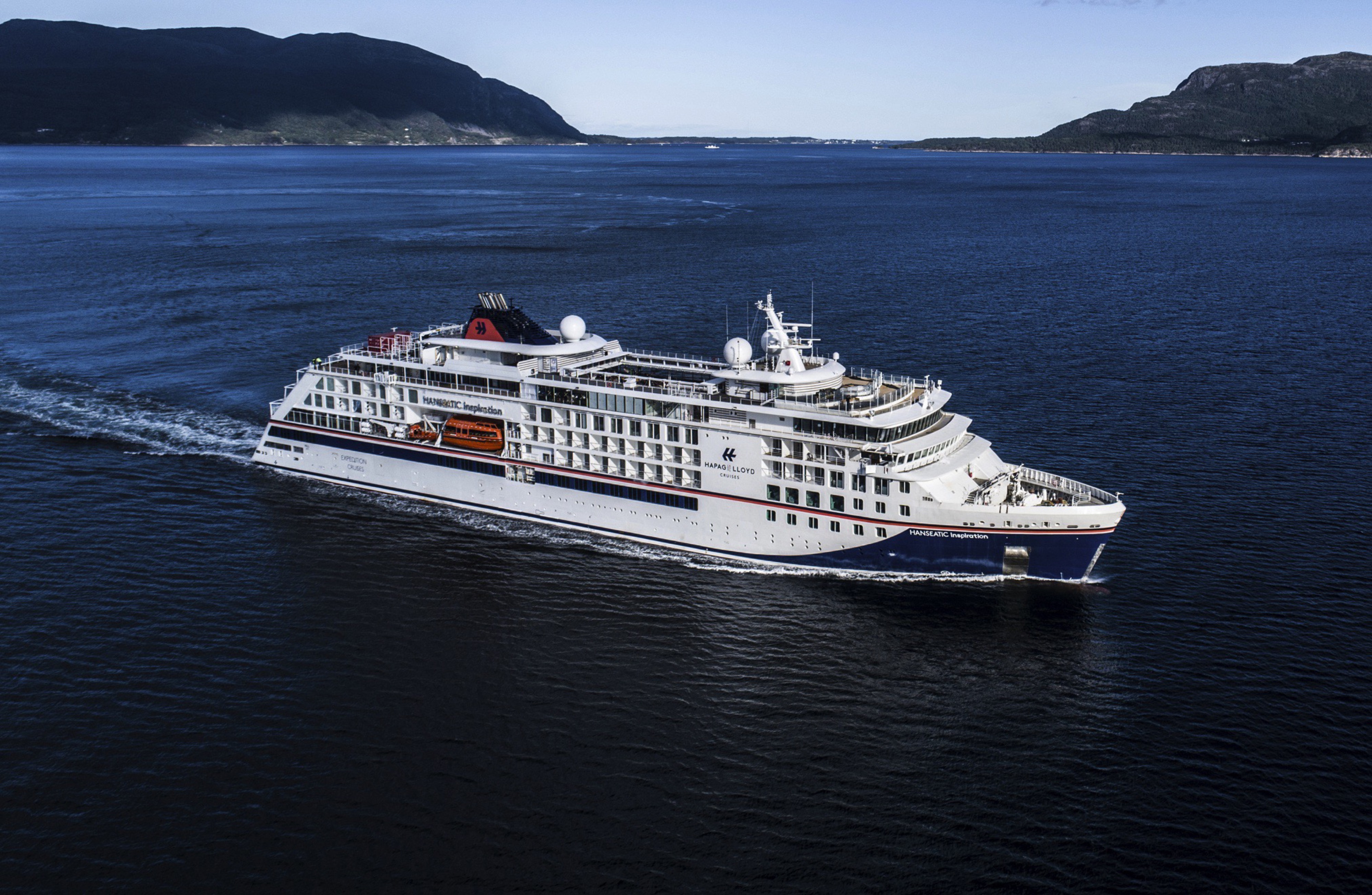
Ship Facts
| Launch Year | 2019 | ||||||
| Refit Year | |||||||
| Language | de+en | ||||||
| Gross Tonnage | 15650 | ||||||
| Length | 138 | ||||||
| Width | 22 | ||||||
| Currency | EUR | ||||||
| Speed | 16 | ||||||
| Capacity | 230 | ||||||
| Crew Count | 175 | ||||||
| Deck Count | 7 | ||||||
| Cabin Count | 127 | ||||||
| Large Cabin Count | N/A | ||||||
| Wheelchair Cabin Count | N/A | ||||||
| Electrical Plugs |
|
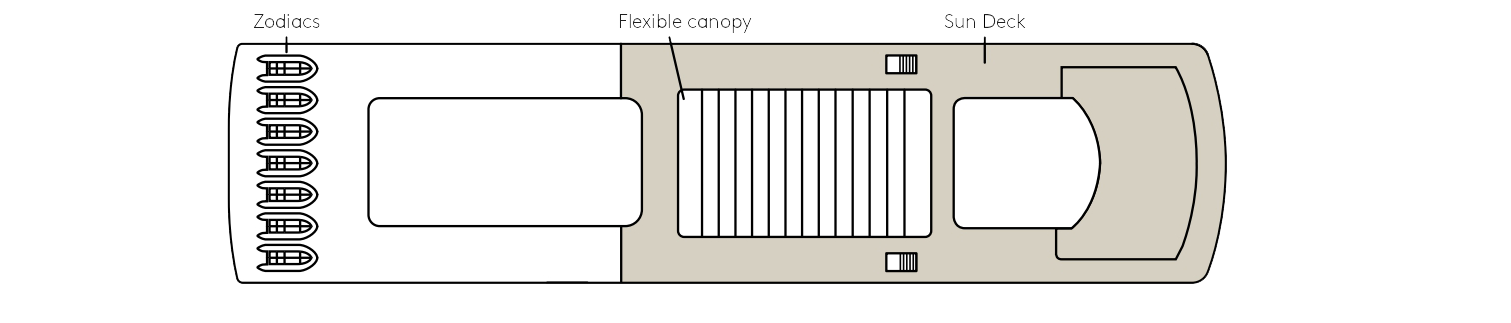
Deck 9
- Zodiacs
- Flexible canopy
- Sun Deck
Deck 8
- Sun Deck
- Ocean Academy
- OCEAN SPA
- Course room
- Sports Club
- Hairdresser
- Pool
- Whirlpool
- Glass Balcony
- Pool bar
- Observation Lounge

Deck 7
- Bridge
- Veranda Suite or Ocean Suite
- Penthouse Suite
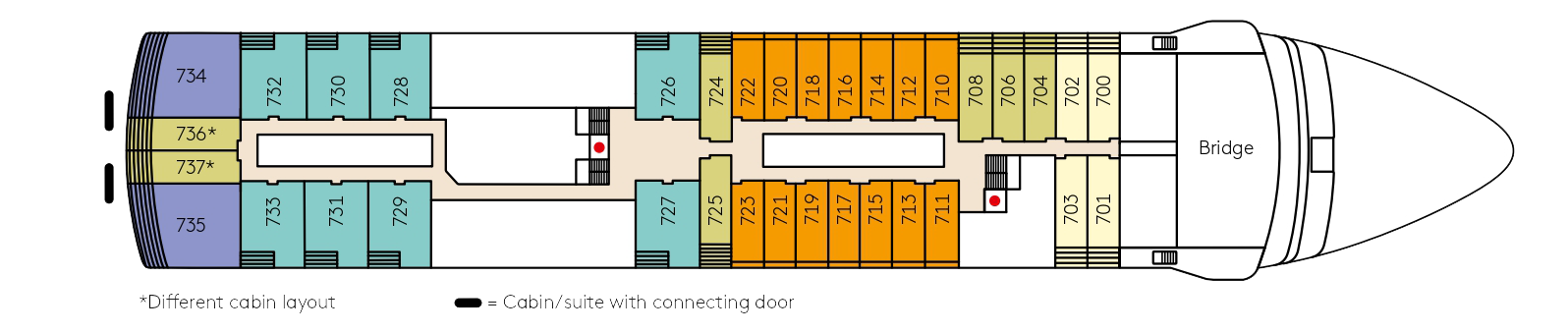
Deck 6
- Tenders
- Inspiration Walk
- Veranda Suite or Ocean Suite
- Grand Ocean Suite
- Penthouse Suite
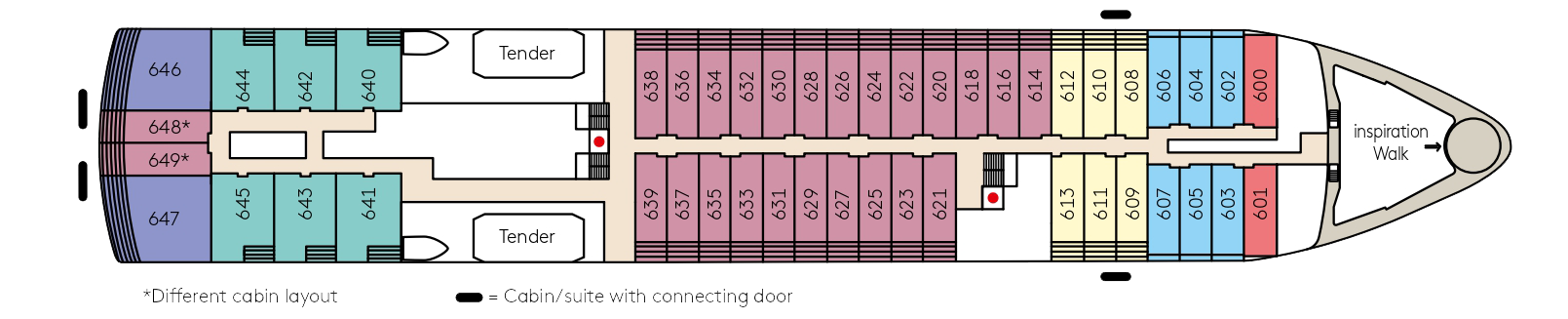
Deck 5
- Lido Restaurant
- Grand Penthouse Suite
- Penthouse Suite
- Veranda Suite or Ocean Suite
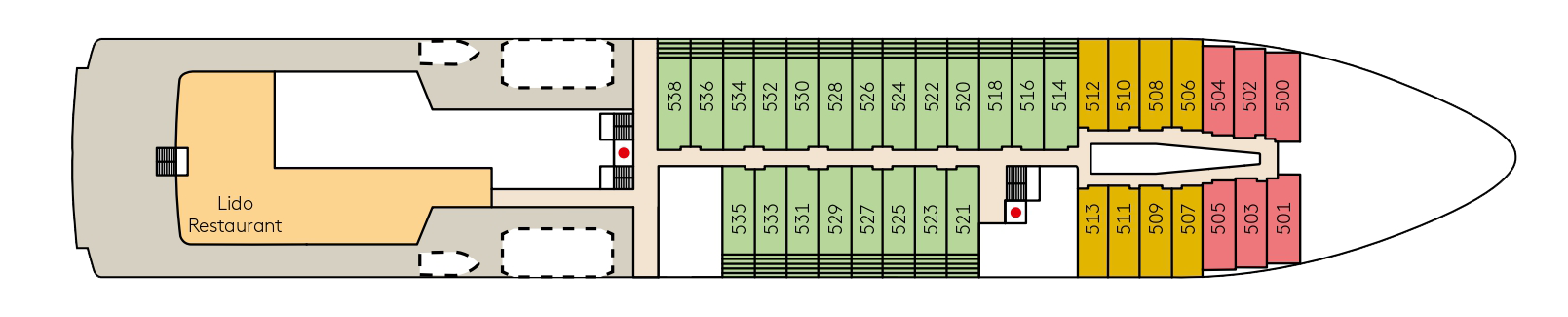
Deck 4
- HANSEATIC Restaurant
- Nikkei
- Reception
- Cruise Sales
- HanseAtrium & Bar
- Boutique
- Penthouse Suite
- Veranda Suite or Ocean Suite
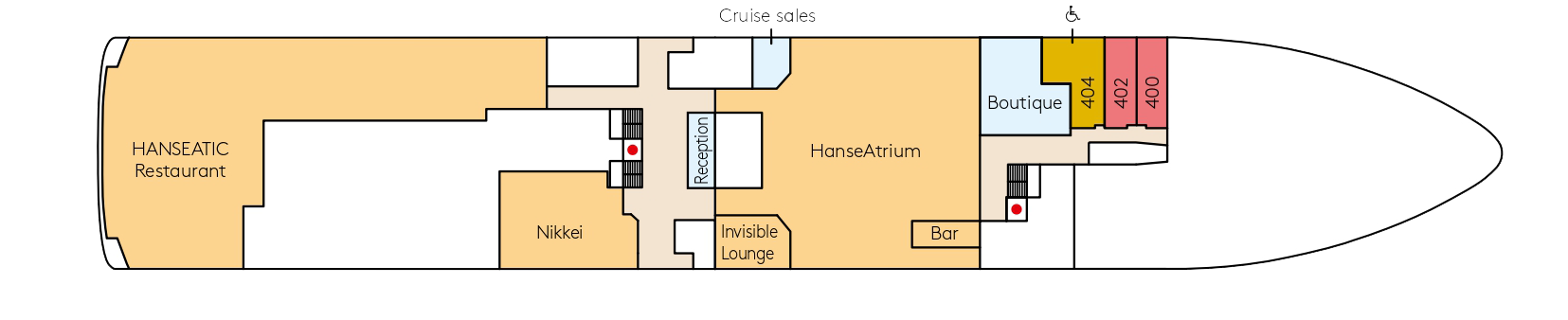
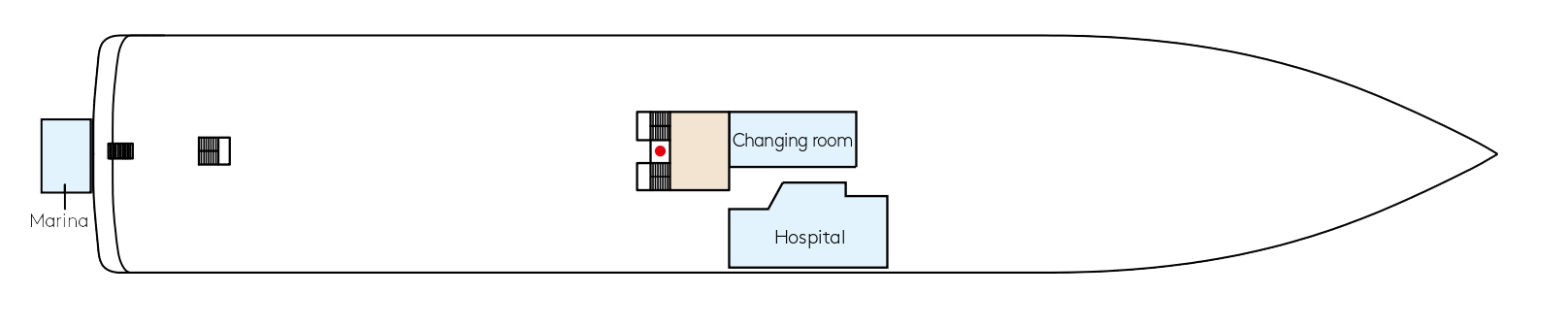
Deck 3
- Changing room
- Hospital
- Marina
A new kind of freedom between adventure and pleasure
Come with us on a culinary voyage of discovery around the globe: on board, three spacious first-class restaurants create a unique and indulgent combination of expedition spirit with international gourmet cuisine. Spend your days and evenings however you wish thanks to flexible mealtimes, a free choice of seating and attentive 24-hour cabin service.
HANSEATIC Restaurant
The spacious HANSEATIC Restaurant of the new expedition class redefines on-board cuisine. From breakfast to dinner, experience our endless variety of creative cuisine at any time of day. Where your ship drops anchor, our top chefs will look to local specialities and conjure up for your plate the aromas of South Africa, the far north, or Europe. Daily changing menus will send your taste buds on a global tour of discovery – accompanied by a selection of wines to suit every palate.
Nikkei
On the HANSEATIC inspiration, fine Japanese creations and Peru's modern trendy cuisine meet in the delightful ambience of the Nikkei.
Lido Restaurant
Expeditions bring you particularly close to the elements. The same applies to our Lido Restaurant. Have breakfast under an open sky, or enjoy a juicy steak cooked to perfection on the large outdoor barbecue – garnished with breathtaking panoramic views. Watch our gourmet chefs at work in the open show kitchen or head straight to the ice cream station for dessert. And why not? After all, the daily grind is far away.
That special touch
Land on a secluded island in a Zodiac and enjoy barbecued fish and chilled drinks with your feet in the sand. Or celebrate with a glass of champagne against a stunning icy backdrop. Our service and ingenuity continue ashore – with a barbecue on the beach, a reception in the ice or exotic delicacies in the depths of the rainforest. This is the feeling of true expedition. This is the taste of true delight.
We would be delighted to welcome you to the bar in the Observation Lounge on Deck 8, at the neighbouring pool bar (depending on the weather) and in the HanseAtrium (only open in the evening) on Deck 4.
Inspiration Walk
The many open deck areas, with details such as the glass balconies and the deck tour at the bow, offer “front-row” experiences of the surrounding sights and nature.
Observation Lounge & Library
A glass of wine in your hand and the magnificent jungle, the captivating wilderness of Nordic fjords or the icy panoramas of the Antarctic directly before you – the perfect end to a day of expeditions. From classic whiskys to fancy aperitif creations, the superbly equipped bars in the Observation Lounge and HanseAtrium serve your favourite drinks as you watch the sun go down. Welcome to the small club of great explorers.
Library
You are welcome to borrow a book on board at any time. Our library is located in the Observation Lounge (Deck 8) and is stocked with a selection of the latest fiction books, travel literature and information about the cruising area.
Invisible Lounge
In indoor areas, smoking is only permitted in the Invisible Lounge (Deck 4). Outdoors, there is a designated smoking area on the portside near the pool.
Reception
Post
The Reception staff will post your postcards and letters from all ports where this facility is available. Your onboard account will be debited with the appropriate charges.
Announcements
To create the full expedition experience, commentaries are provided for interesting passages during the cruise and special animal sightings are reported. The ship’s position is reported in the morning on days at sea. We will also announce via the loudspeakers when the local authorities have cleared the ship and we can go ashore. The volume can be controlled individually in each cabin/suite.
Means of payment
The on-board currency is the euro. An account will be set up for you so that you can make cashless payments during the cruise. You can find out your current account balance at any time using the infotainment system in your cabin/suite. You can then settle the entire account at Reception at the end of your cruise. We accept German EC/Maestro cards and the following credit cards: Mastercard, American Express and Visa. You can also pay in cash. Please note that, in general, foreign currencies cannot be changed on board.
reception@hanseatic-nature.com
Boutique
Find a stylish souvenir for yourself or for others and browse through the varied product range in our on-board boutique (Deck 4, behind the HanseAtrium). Alongside fashion, jewellery, perfume and accessories, you will also find practical everyday items.