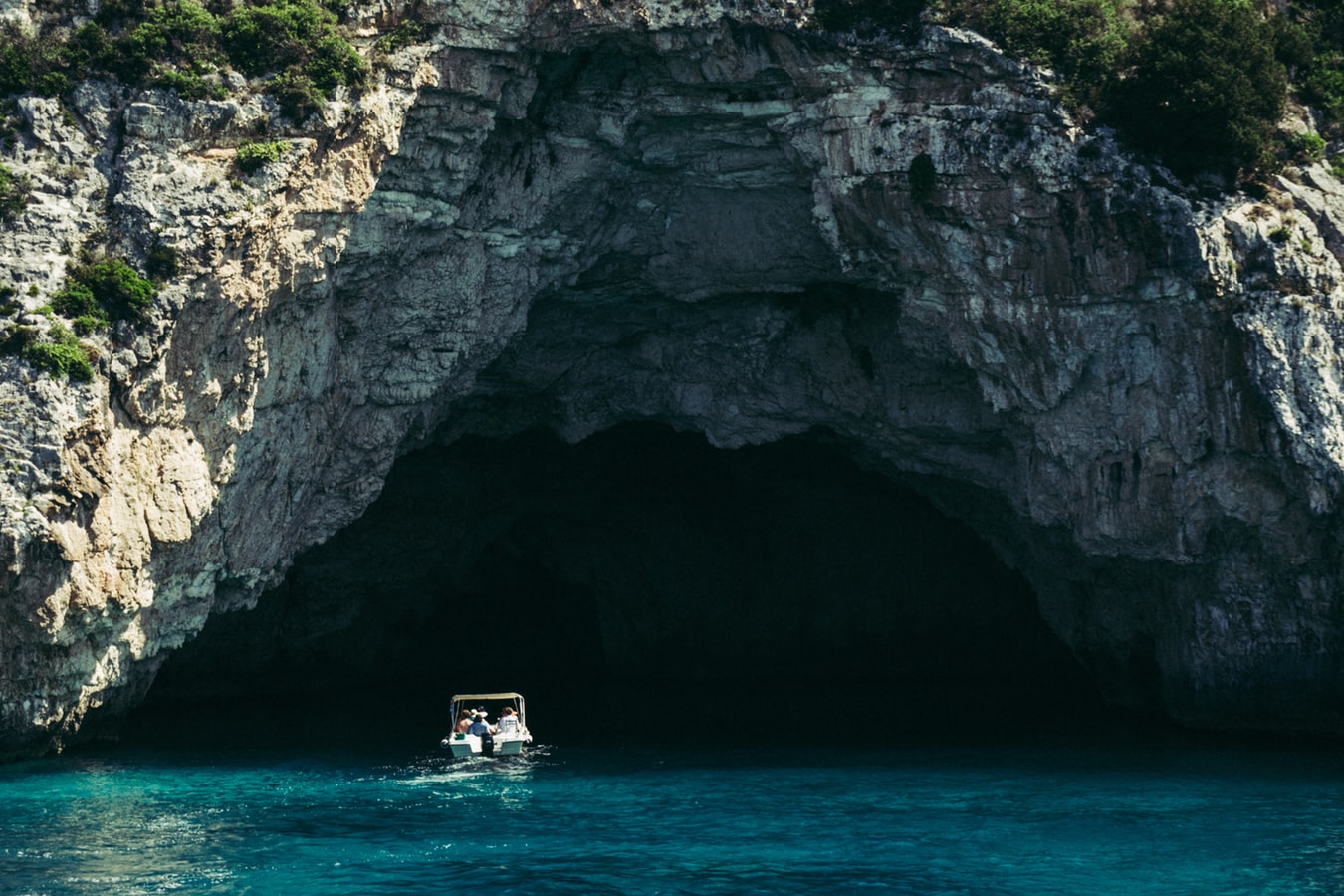
Iconic Greek Islands & Gallipoli Peninsula
Iconic Greek Islands & Gallipoli Peninsula
Cruise overview
WHY BOOK WITH US?
- ✔ The Deluxe Cruises’ team has extensive experience in ultra-luxury cruising.
- ✔ Call now to speak to our helpful and experienced Cruise Concierge team.
- ✔ Enjoy our Unique Deluxe Cruises Bonus for substantial savings.
- ✔ Our team will tailor your holiday to your exacting requirements.
- ✔ As agents, we work under the protection of each cruise lines ABTA / ATOL licences
About Venice
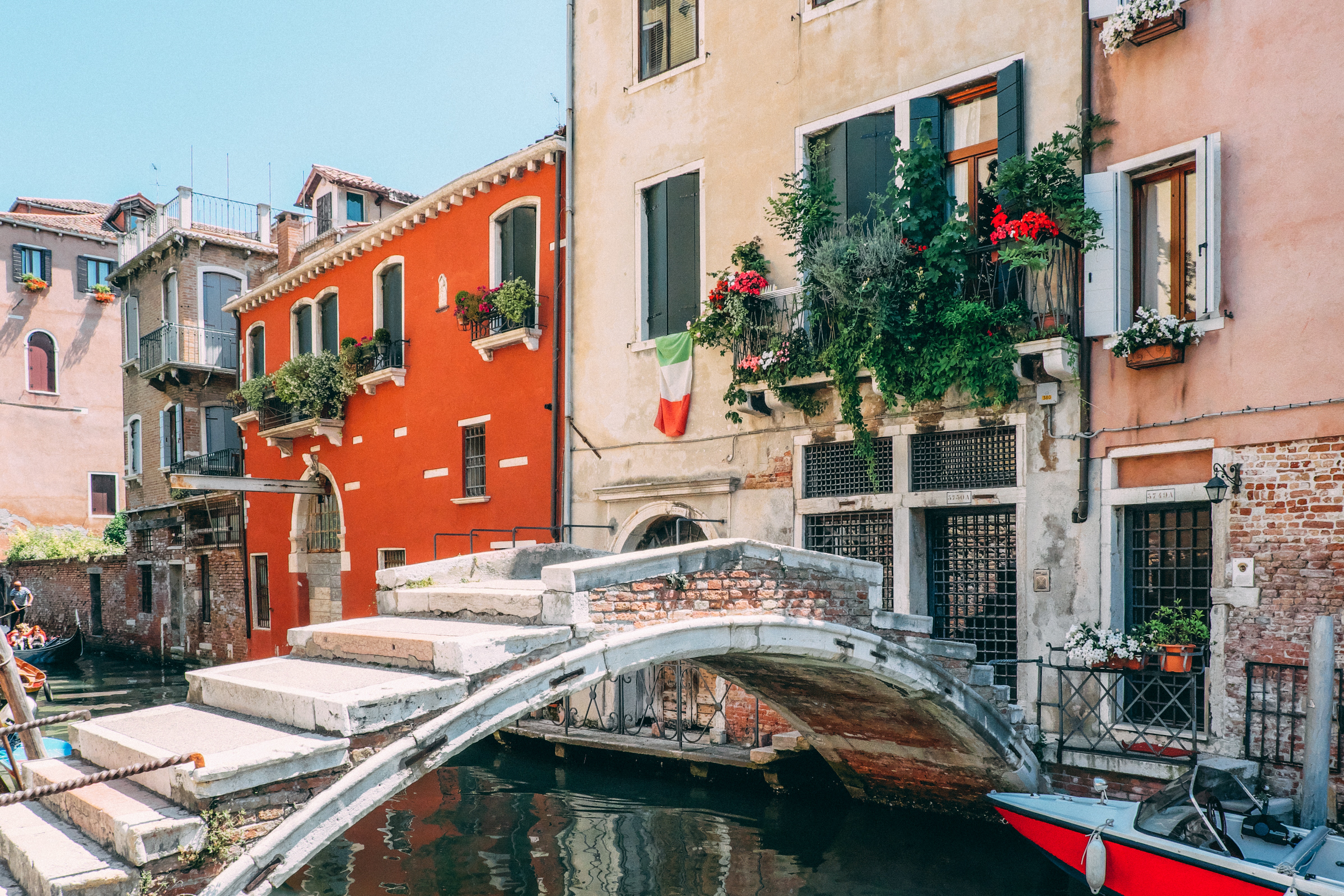
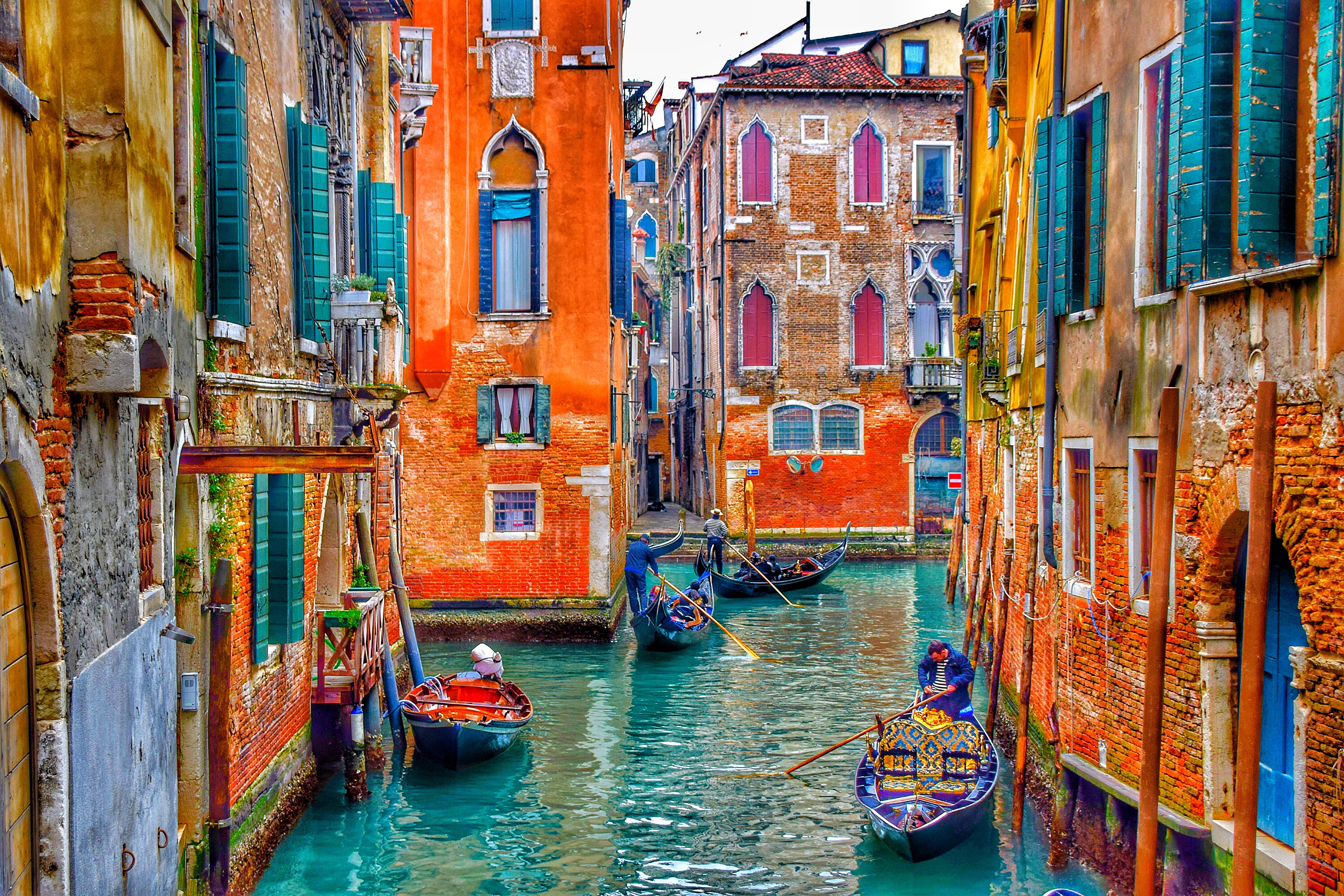
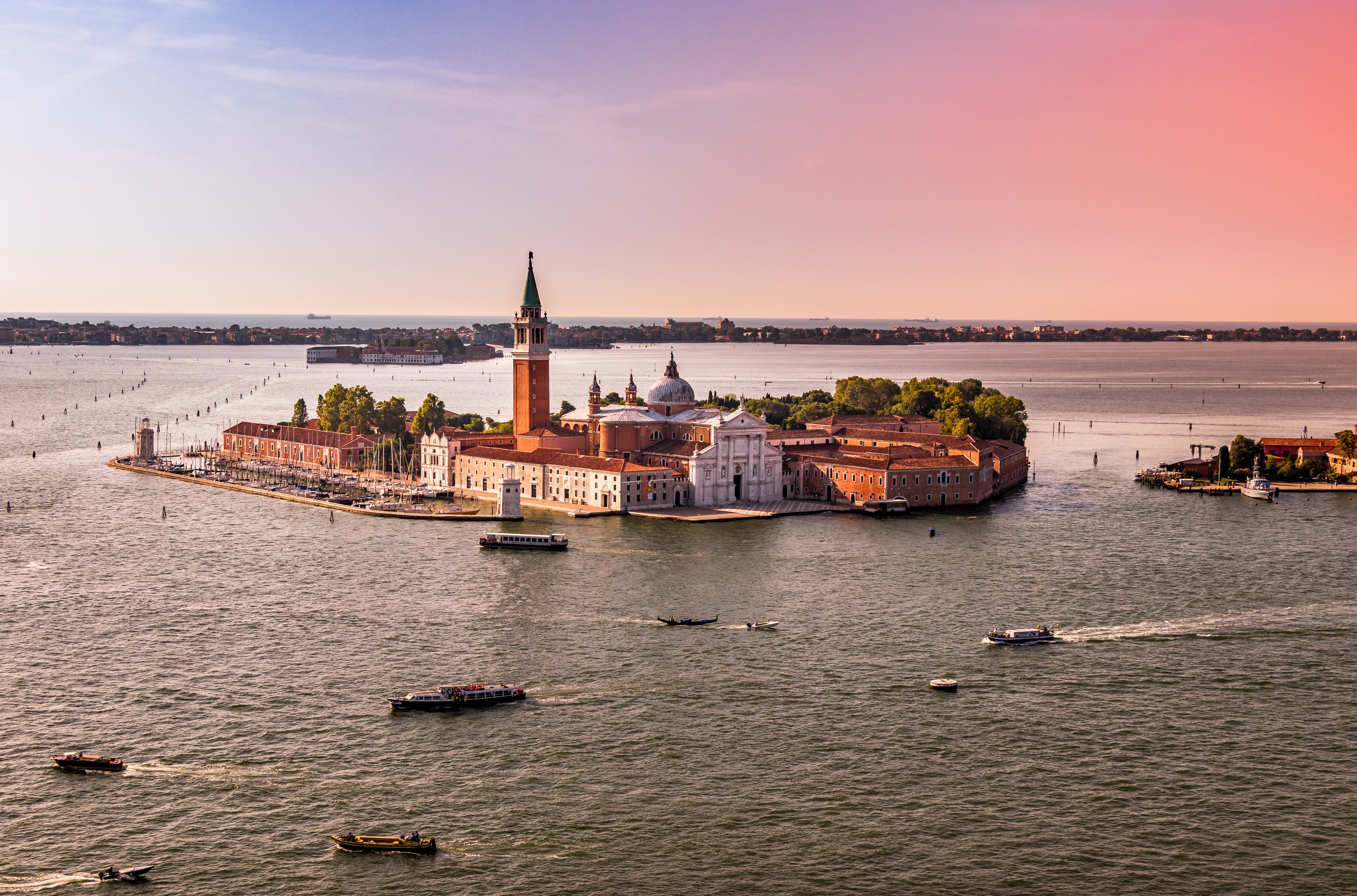
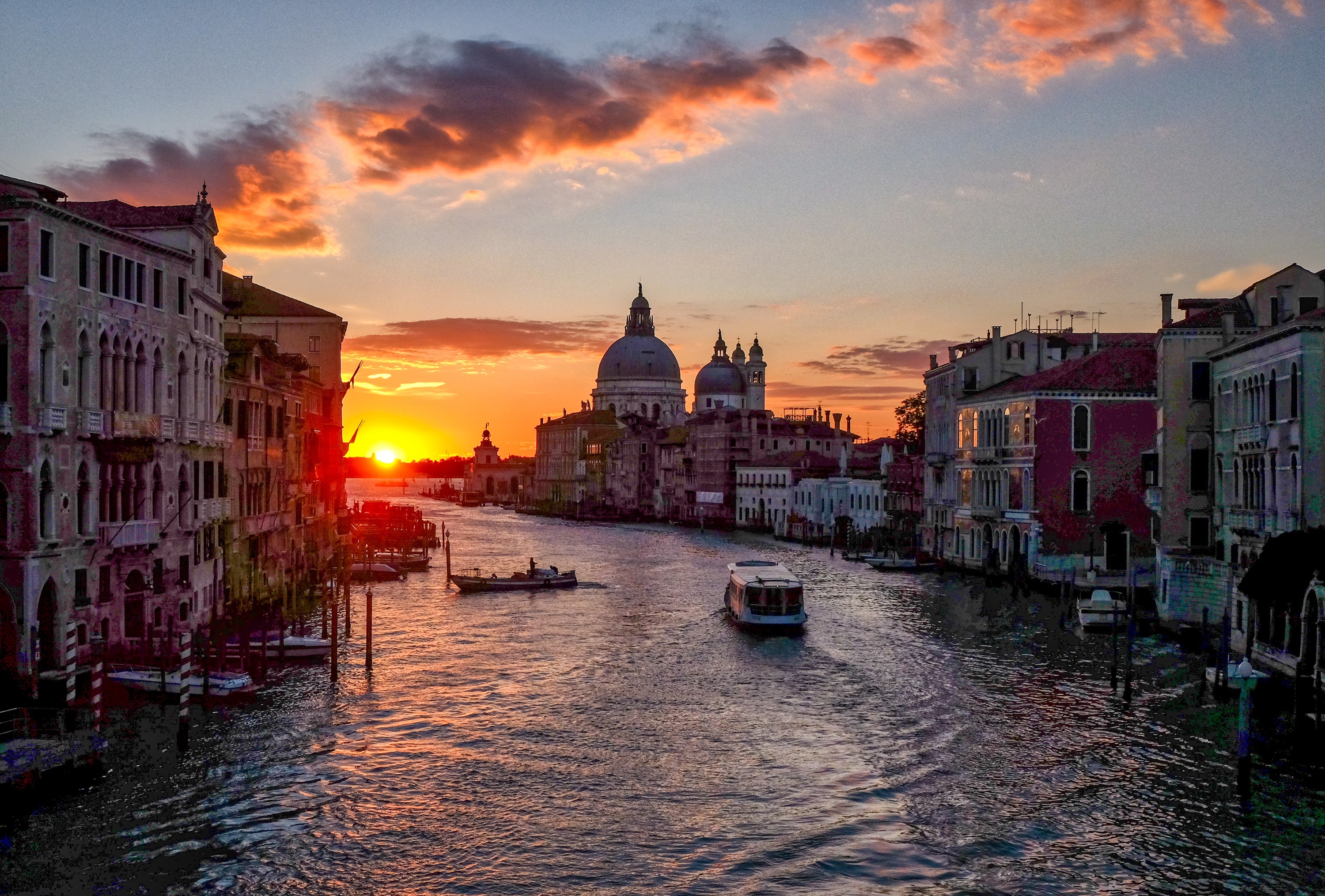
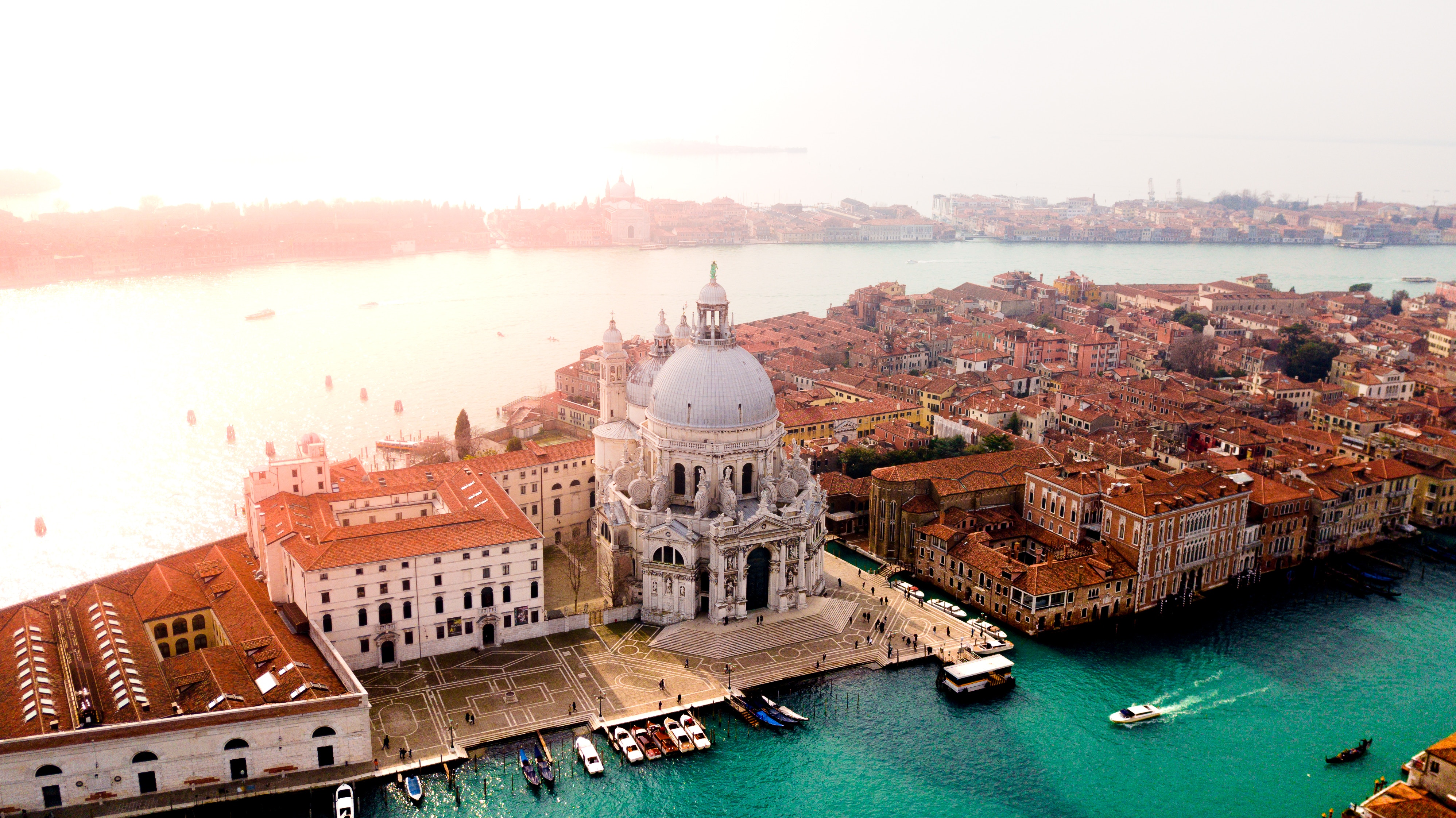
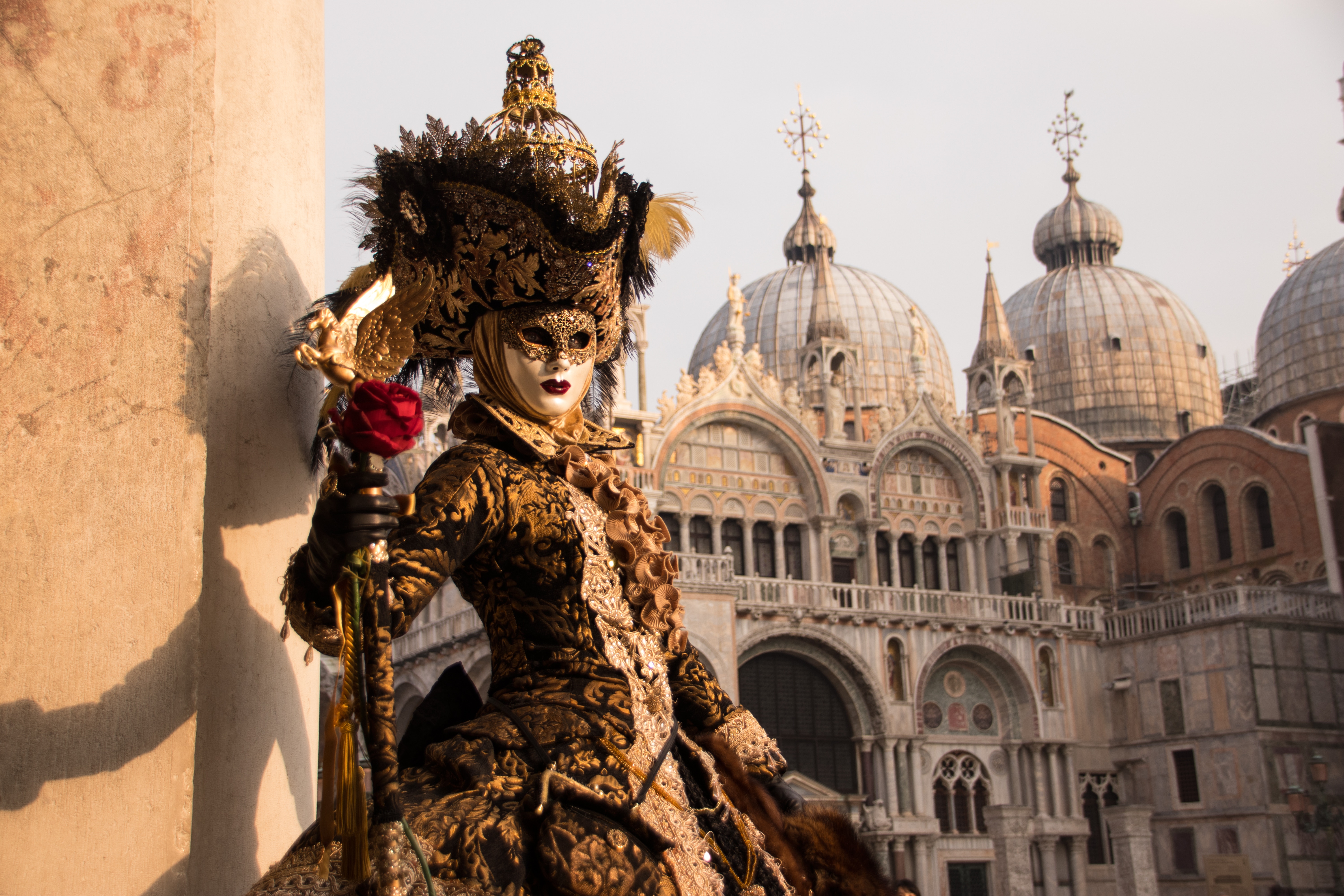
Venice is a city unlike any other. No matter how often you've seen it in photos and films, the real thing is more dreamlike than you could imagine. With canals where streets should be, water shimmers everywhere. The fabulous palaces and churches reflect centuries of history in what was a wealthy trading center between Europe and the Orient. Getting lost in the narrow alleyways is a quintessential part of exploring Venice, but at some point you'll almost surely end up in Piazza San Marco, where tourists and locals congregate for a coffee or an aperitif.
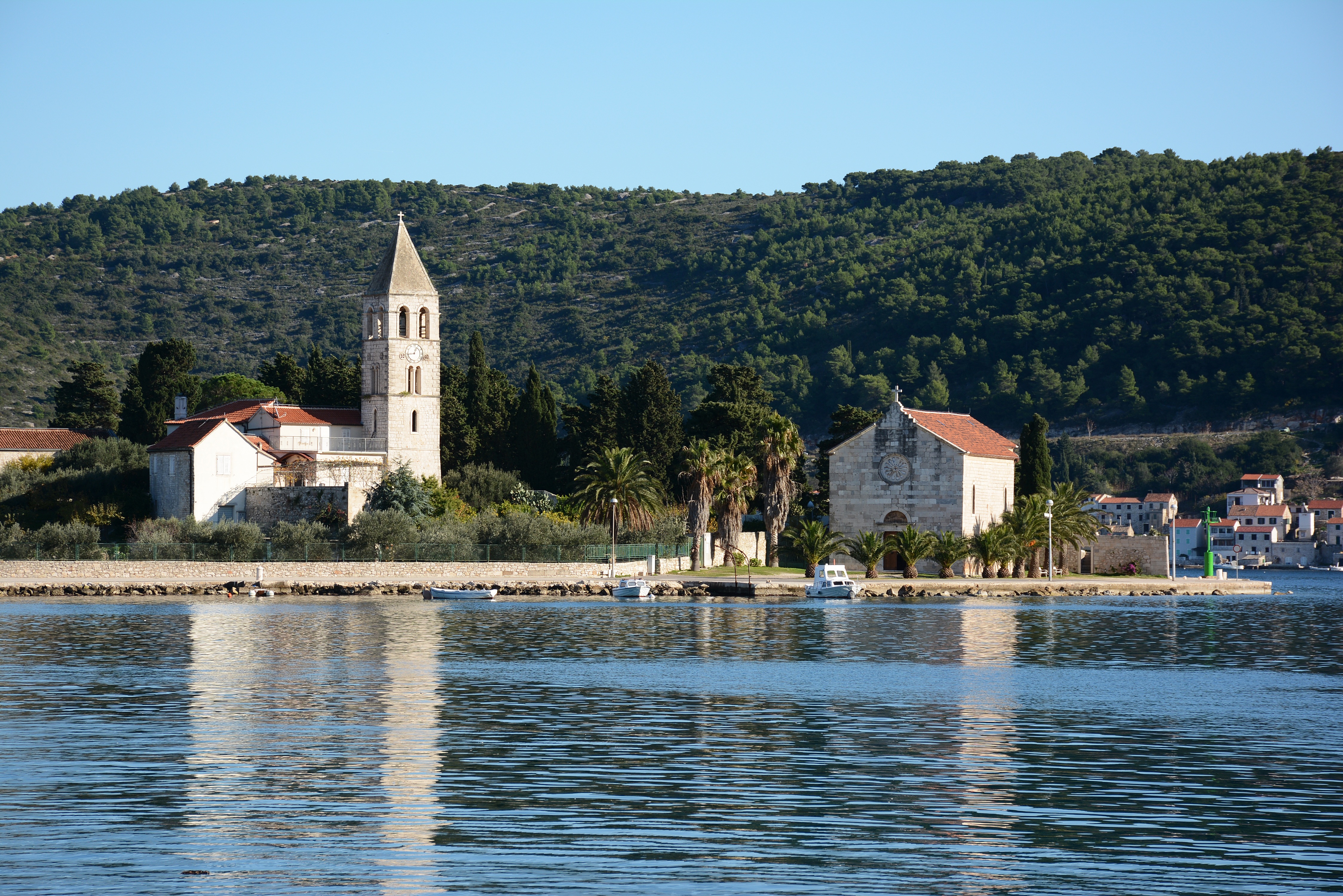
About Vis Island
About Dubrovnik
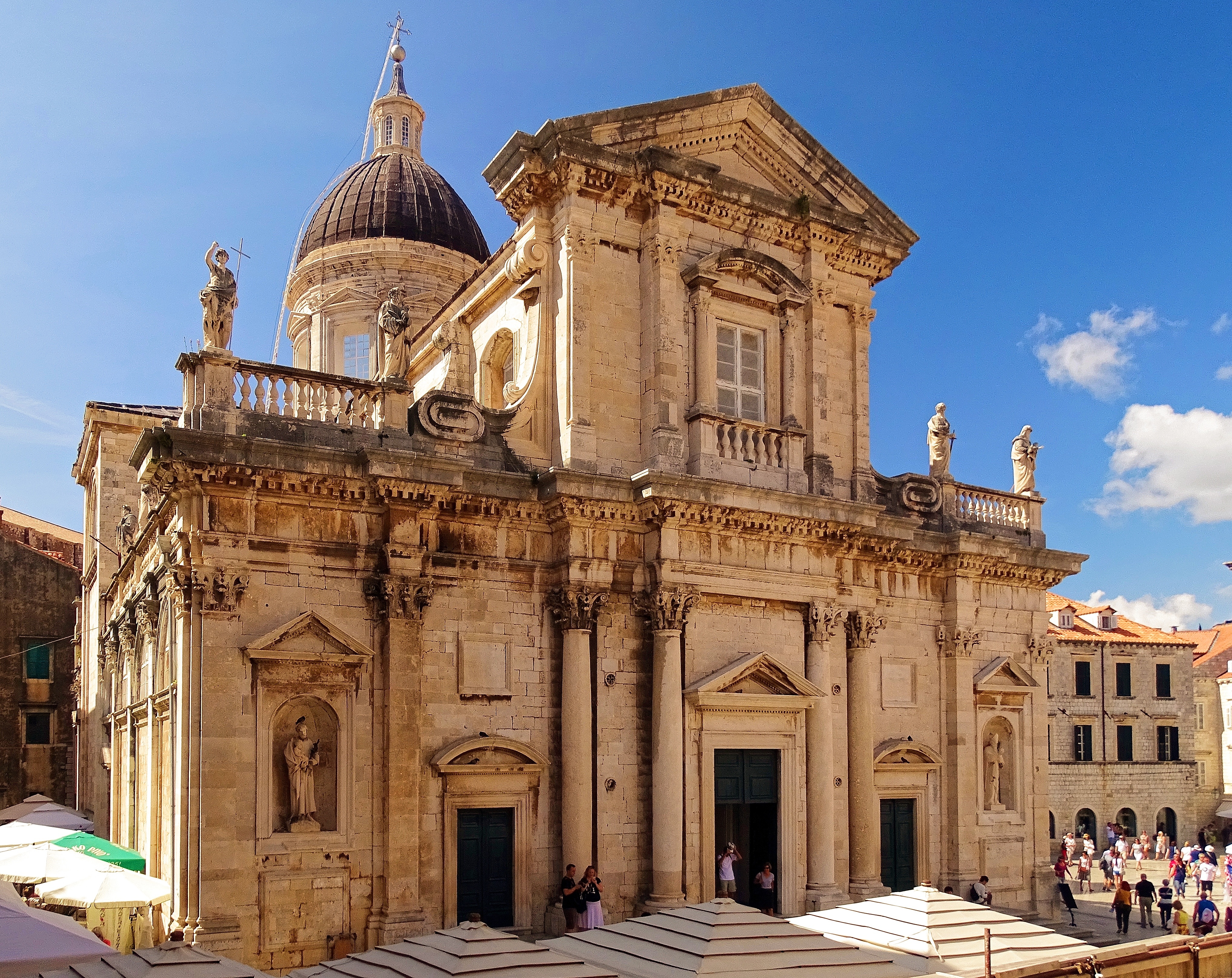
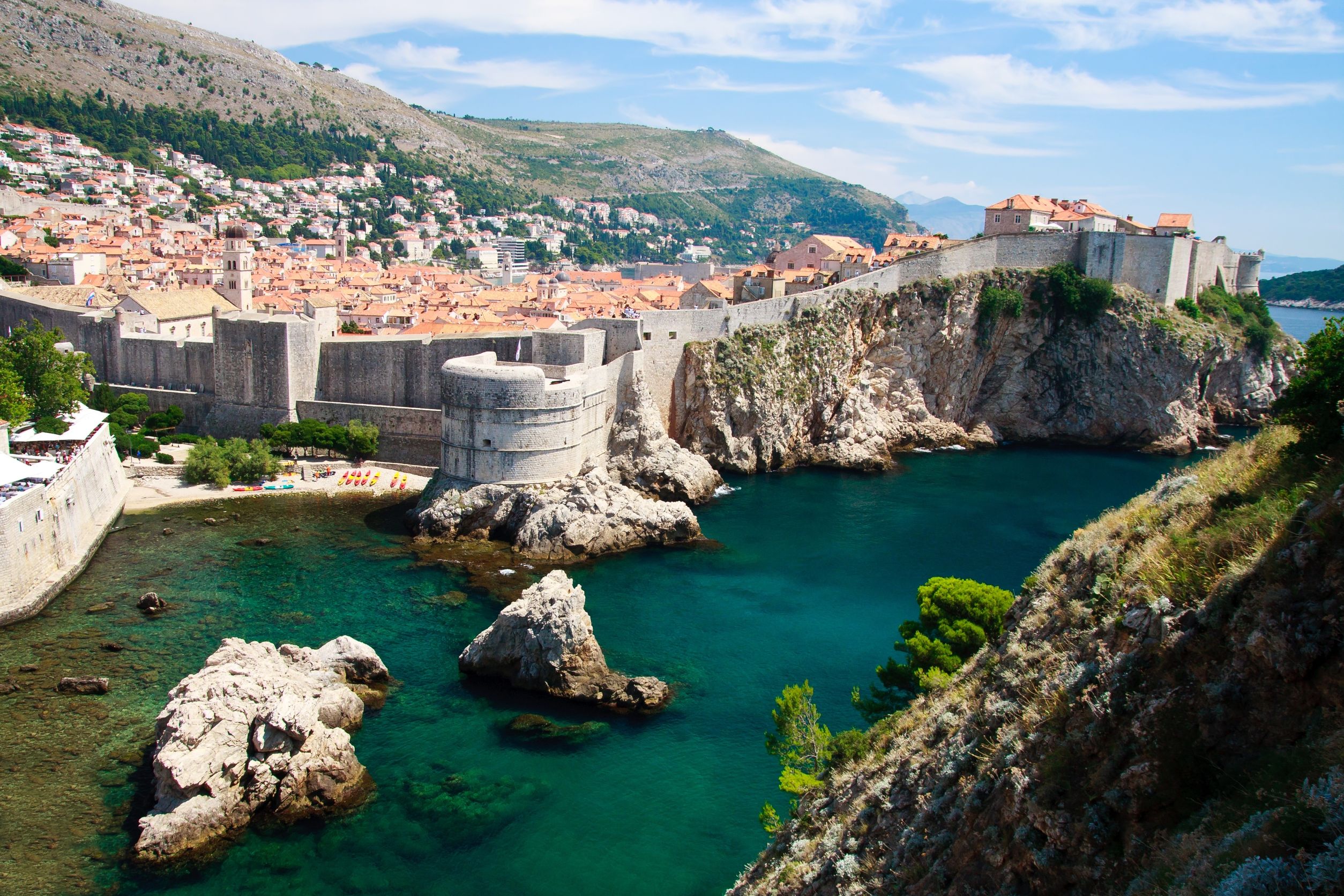
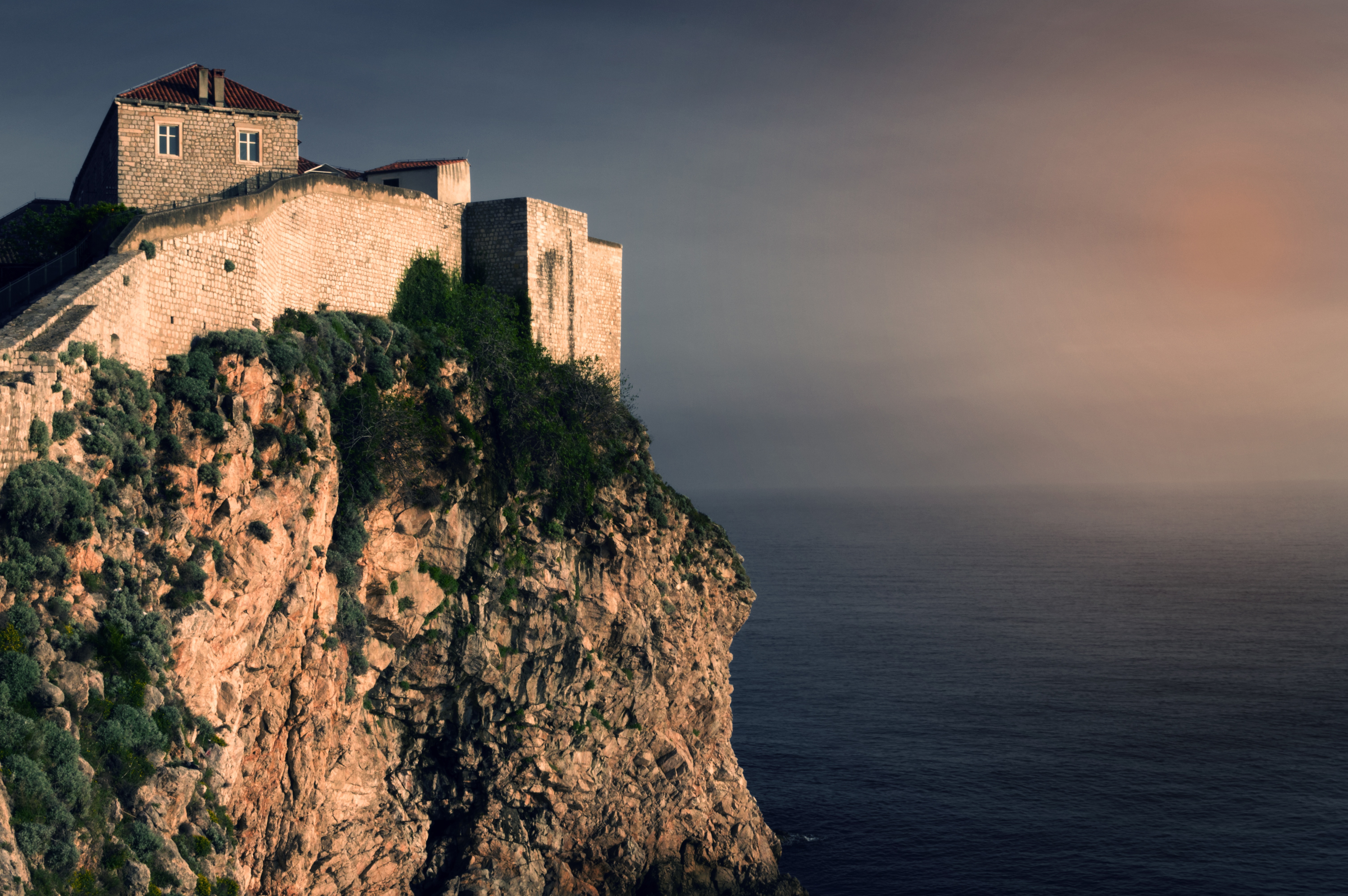
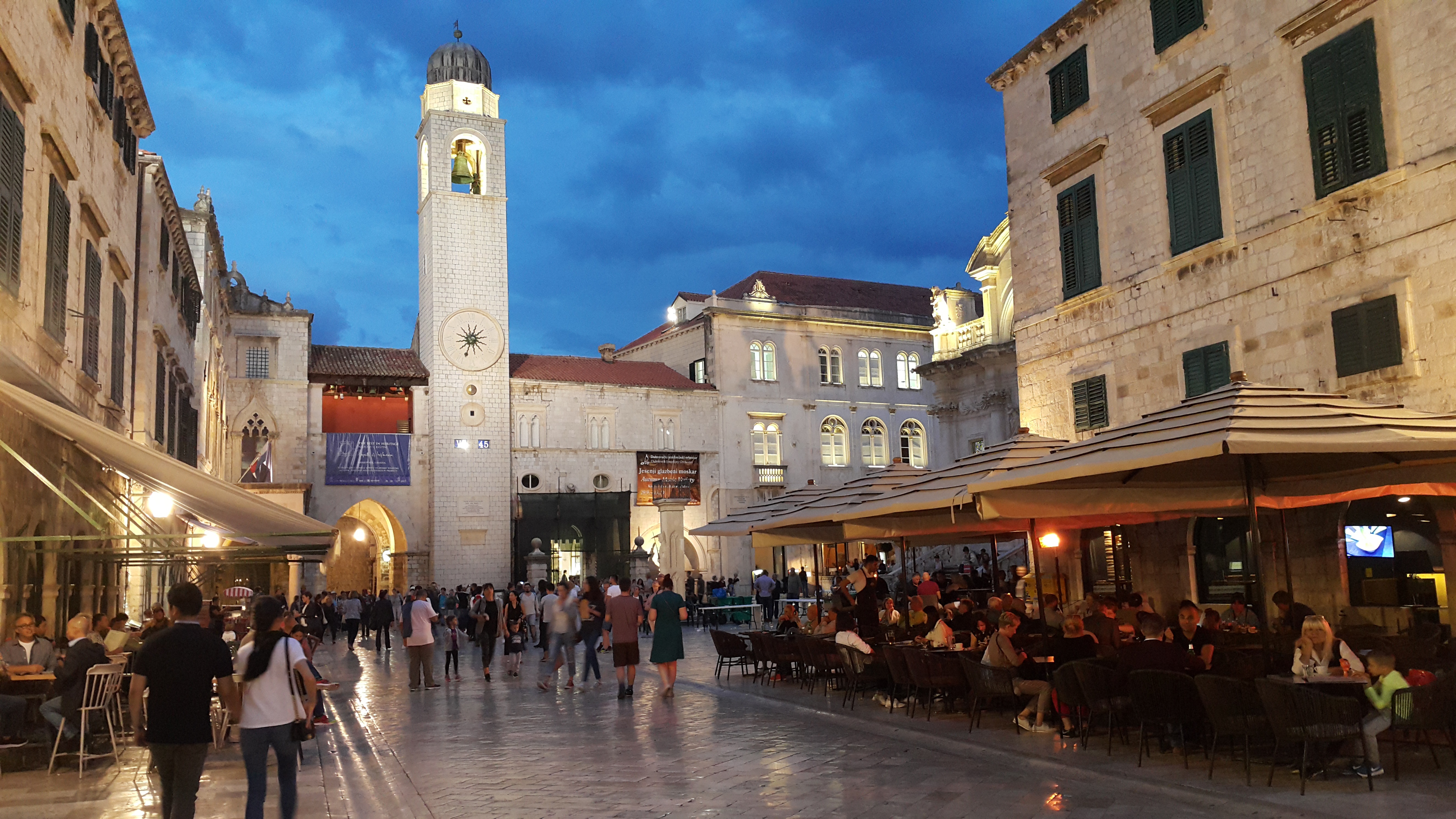
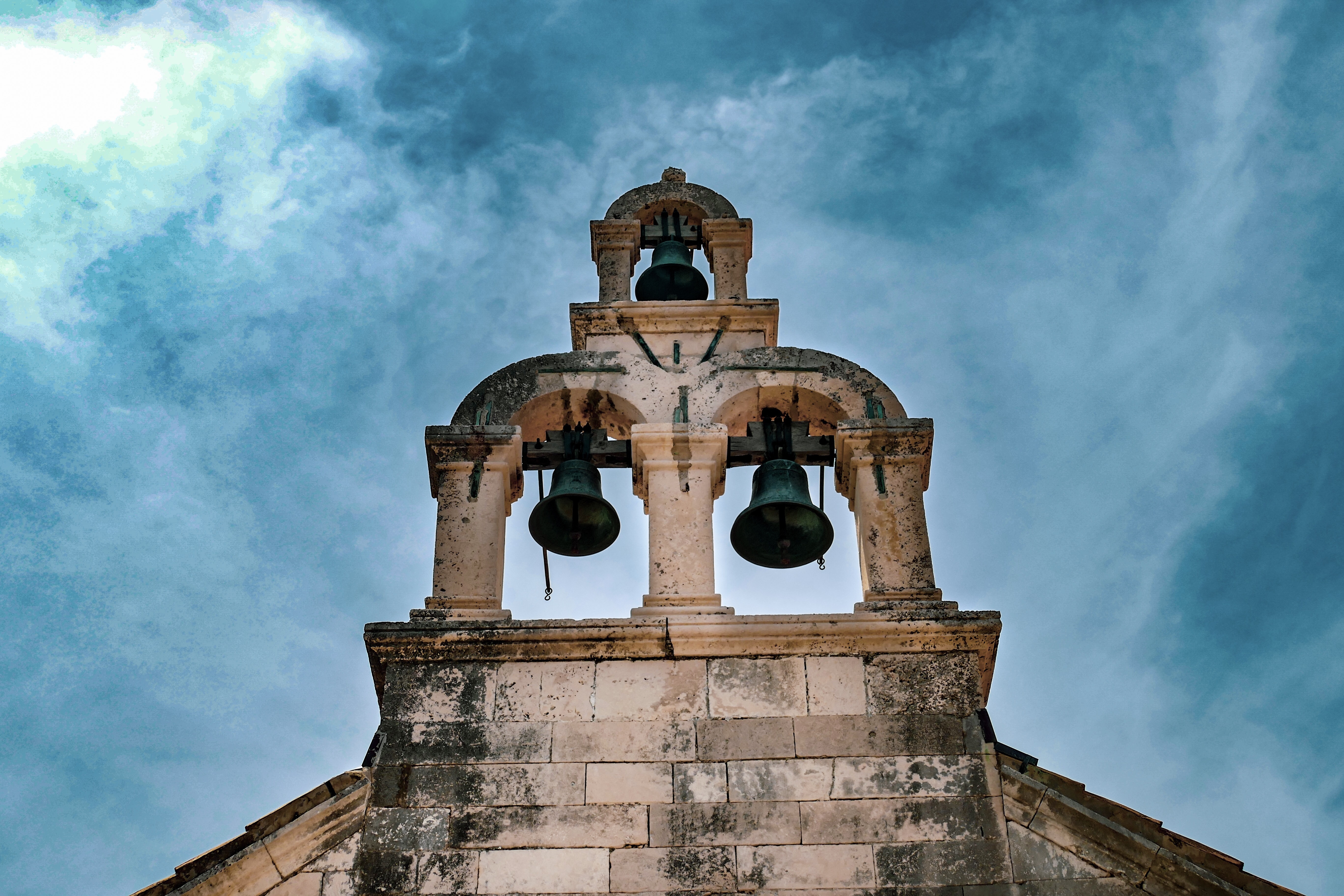
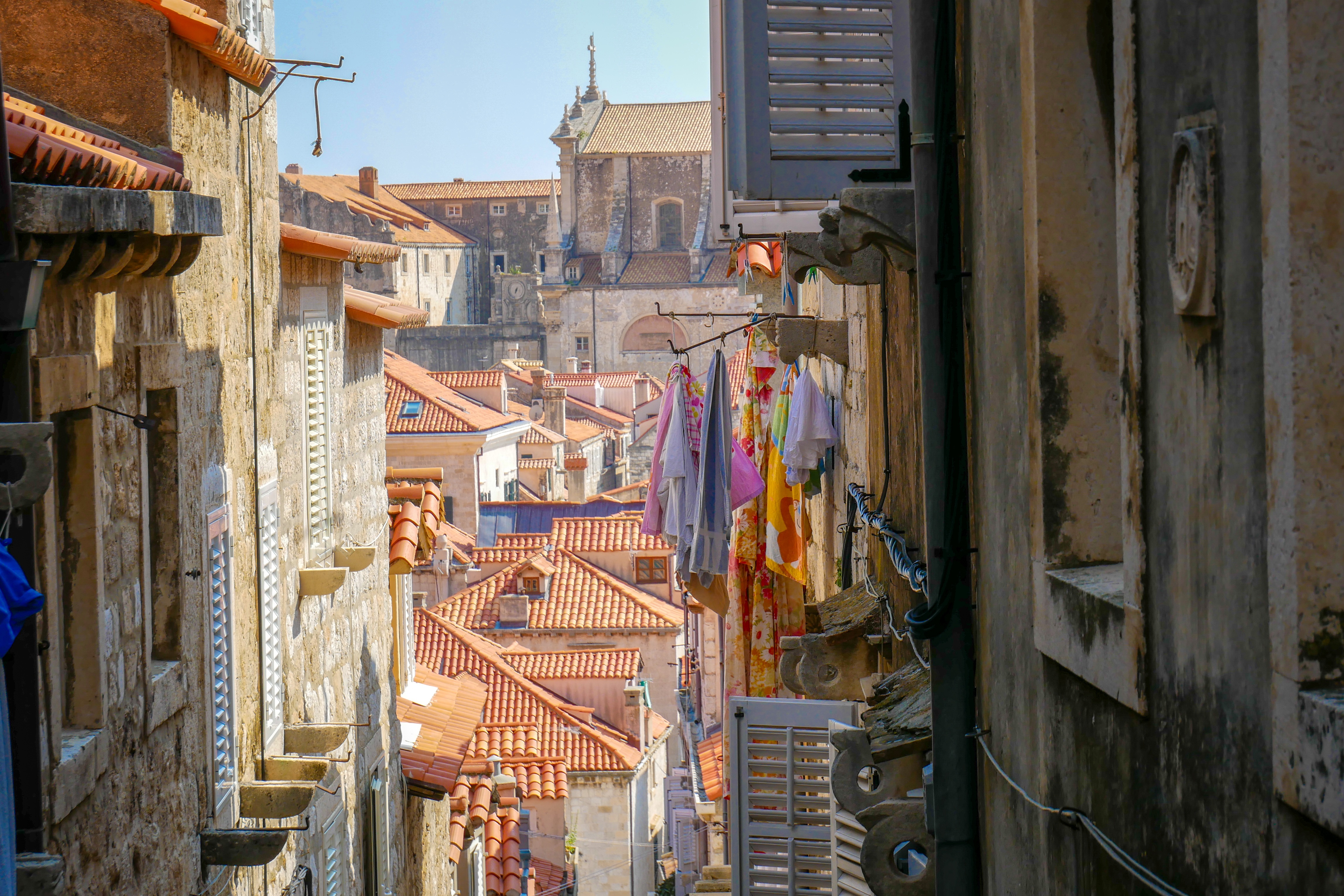
Nothing can prepare you for your first sight of Dubrovnik. Lying 216 km (135 miles) southeast of Split and commanding a jaw-dropping coastal location, it is one of the world's most beautiful fortified cities. Its massive stone ramparts and fortress towers curve around a tiny harbor, enclosing graduated ridges of sun-bleached orange-tiled roofs, copper domes, and elegant bell towers. Your imagination will run wild picturing what it looked like seven centuries ago when the walls were built, without any suburbs or highways around it, just this magnificent stone city rising out of the sea.In the 7th century AD, residents of the Roman city Epidaurum (now Cavtat) fled the Avars and Slavs of the north and founded a new settlement on a small rocky island, which they named Laus, and later Ragusa. On the mainland hillside opposite the island, the Slav settlement called Dubrovnik grew up. In the 12th century the narrow channel separating the two settlements was filled in (now the main street through the Old Town, called Stradun), and Ragusa and Dubrovnik became one. The city was surrounded by defensive walls during the 13th century, and these were reinforced with towers and bastions in the late 15th century.From 1358 to 1808 the city thrived as a powerful and remarkably sophisticated independent republic, reaching its golden age during the 16th century. In 1667 many of its splendid Gothic and Renaissance buildings were destroyed by an earthquake. The defensive walls survived the disaster, and the city was rebuilt in baroque style.Dubrovnik lost its independence to Napoléon in 1808, and in 1815 passed to Austria-Hungary. During the 20th century, as part of Yugoslavia, the city became a popular tourist destination, and in 1979 it was listed as a UNESCO World Heritage Site. During the war for independence, it came under heavy siege. Thanks to careful restoration, few traces of damage remain; however, there are maps inside the Pile and Ploče Gates illustrating the points around the city where damage was done. It’s only when you experience Dubrovnik yourself that you can understand what a treasure the world nearly lost
About Kotor
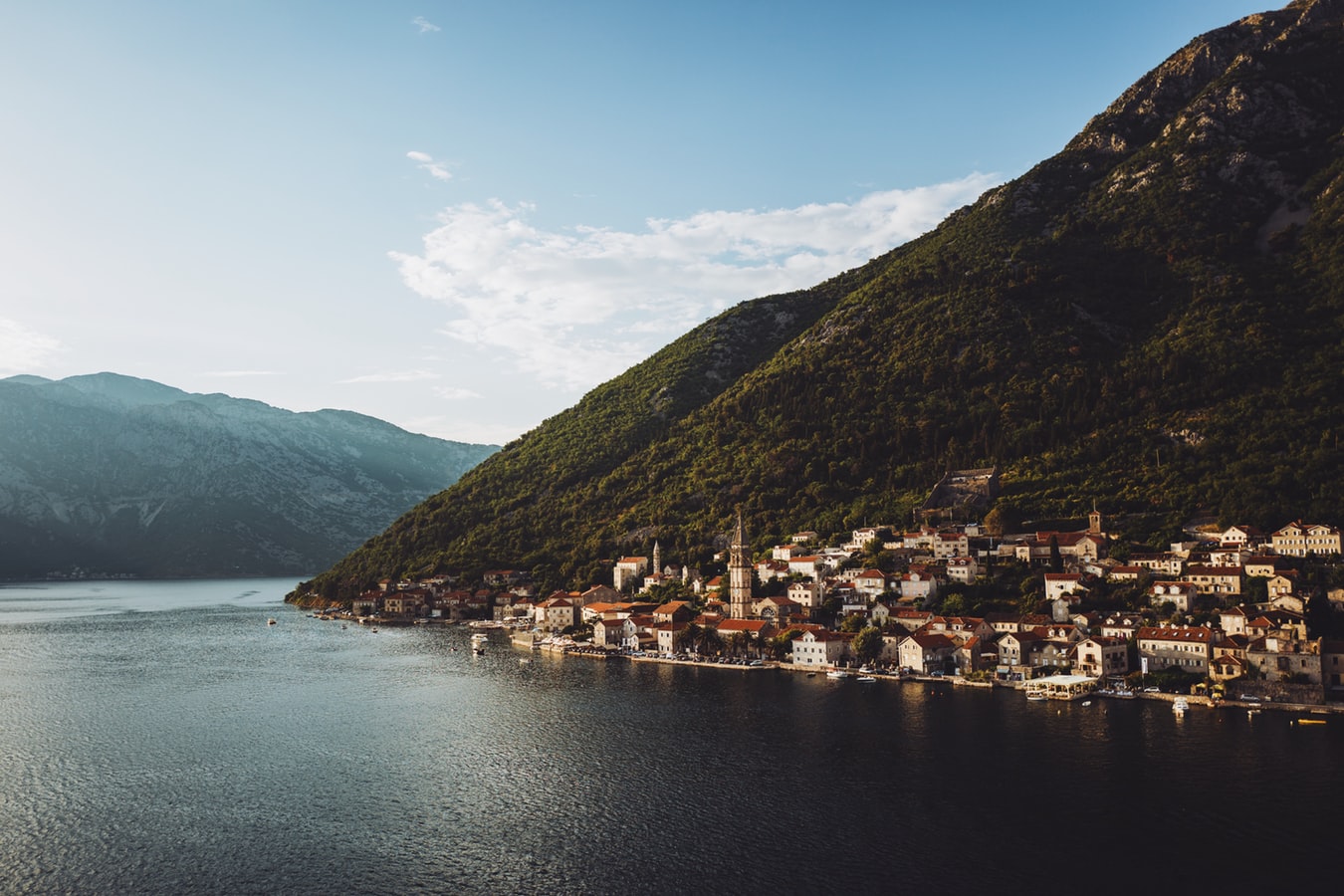
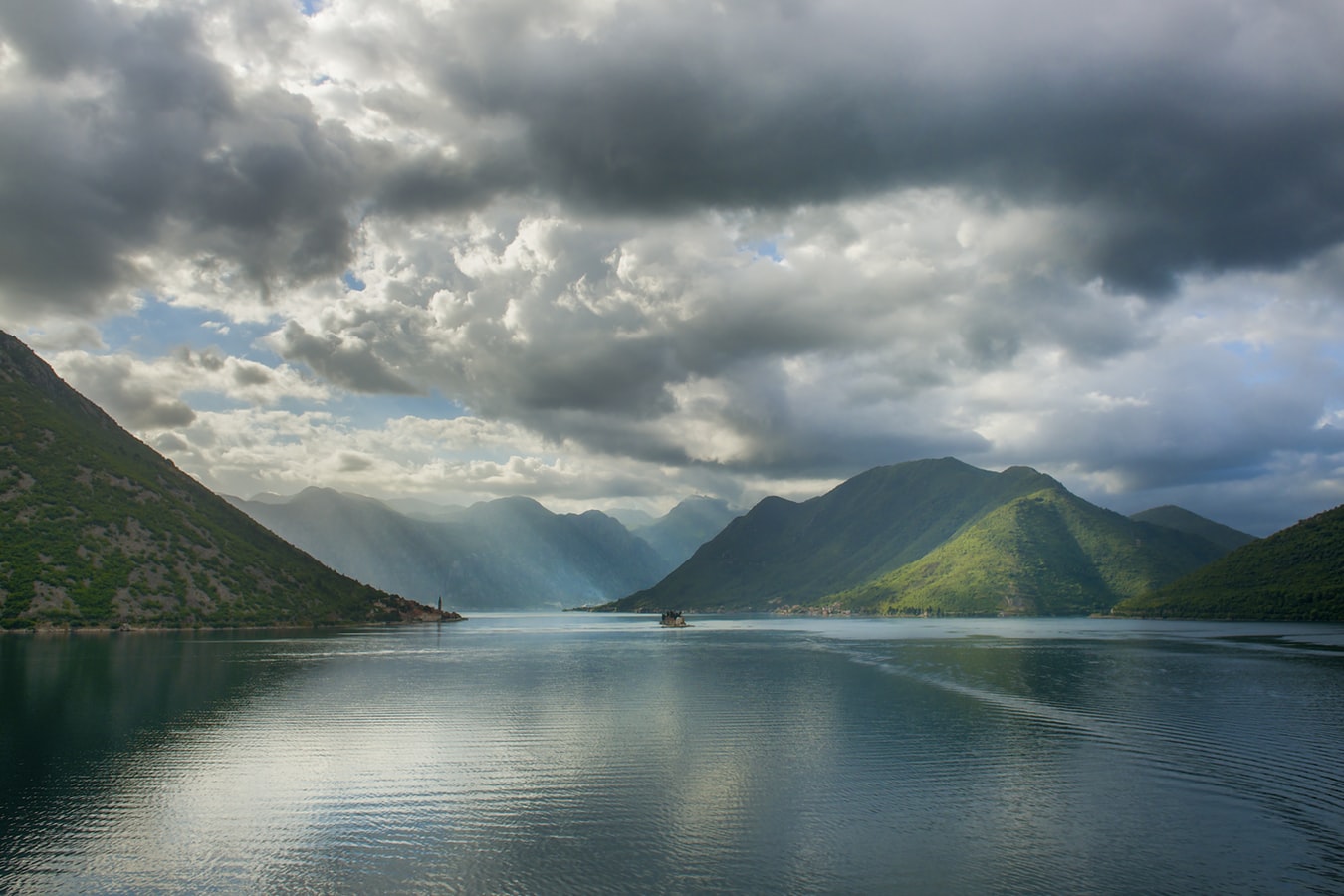
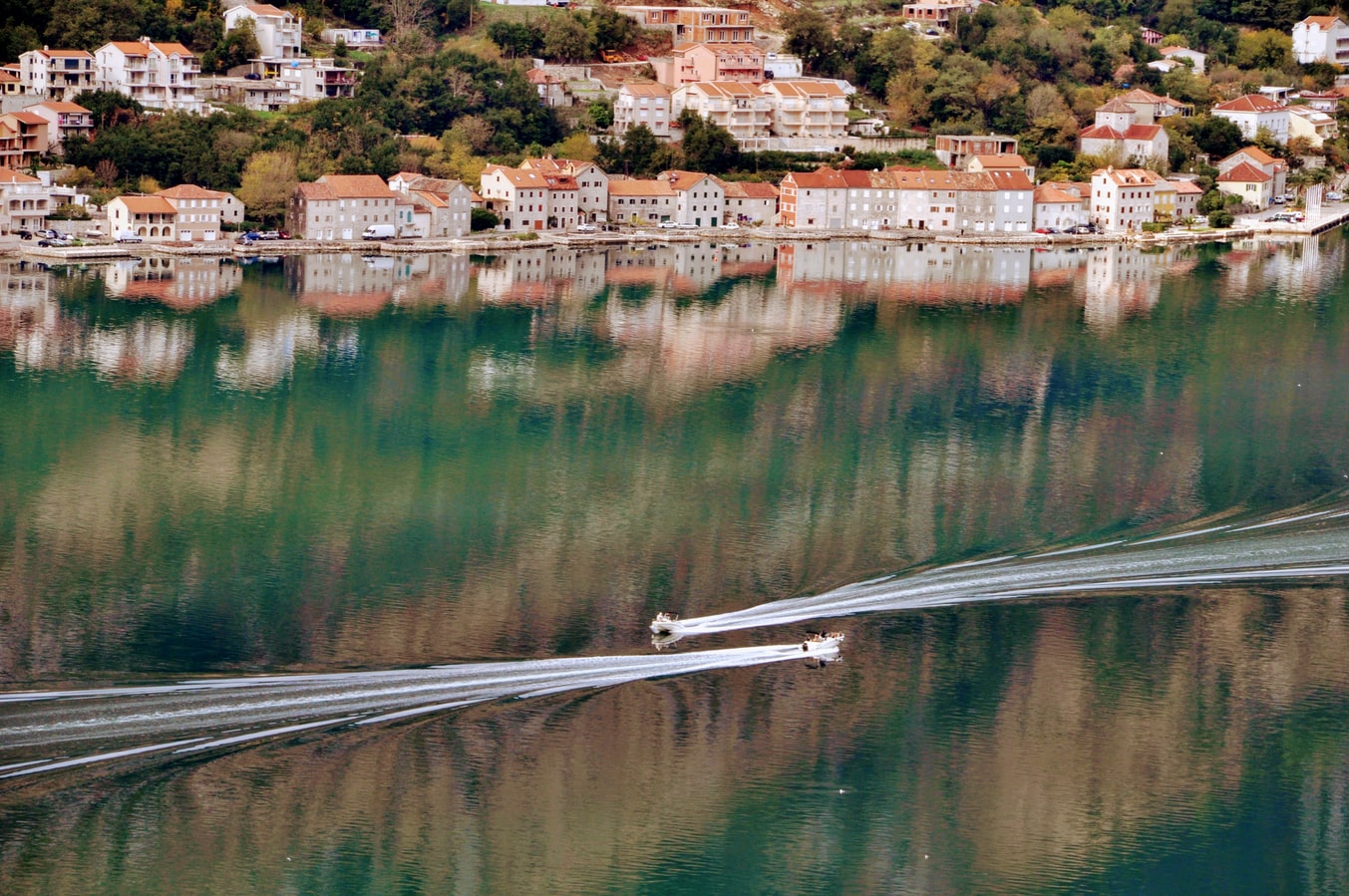
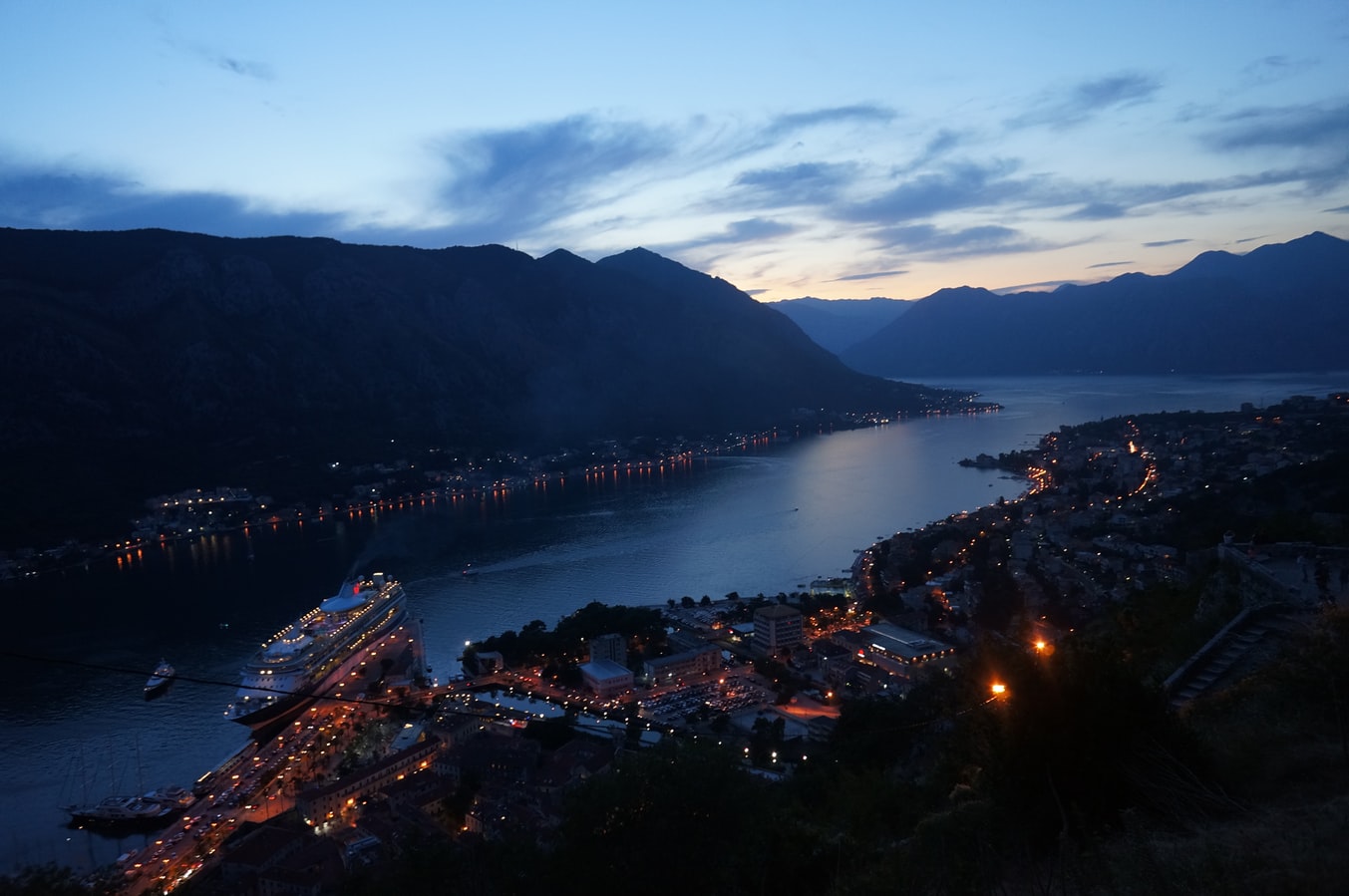
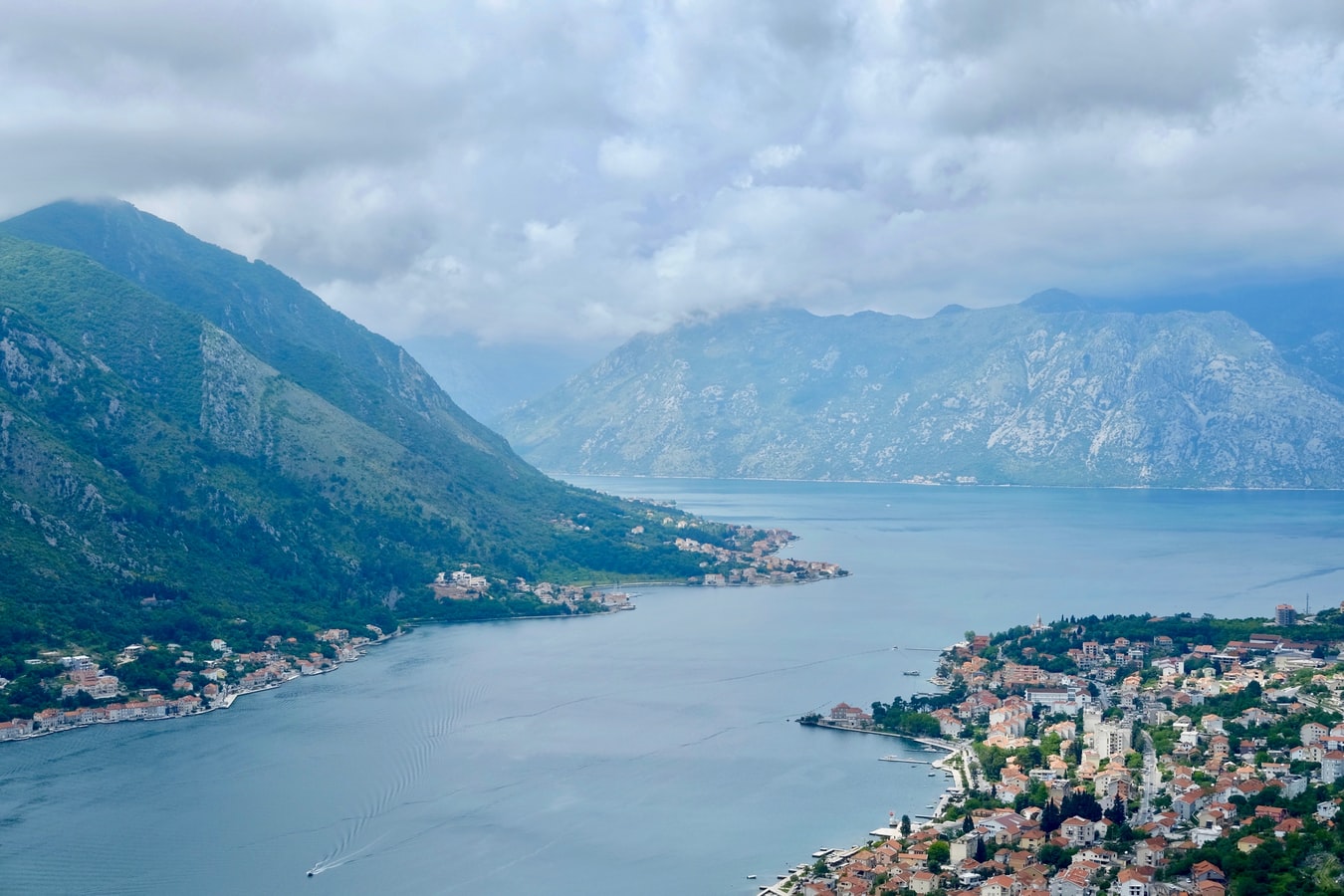
Backed by imposing mountains, tiny Kotor lies hidden from the open sea, tucked into the deepest channel of the Bokor Kotorska (Kotor Bay), which is Europe's most southerly fjord. To many, this town is more charming than its sister UNESCO World Heritage Site, Dubrovnik, retaining more authenticity, but with fewer tourists and spared the war damage and subsequent rebuilding which has given Dubrovnik something of a Disney feel.Kotor's medieval Stari Grad (Old Town) is enclosed within well-preserved defensive walls built between the 9th and 18th centuries and is presided over by a proud hilltop fortress. Within the walls, a labyrinth of winding cobbled streets leads through a series of splendid paved piazzas, rimmed by centuries-old stone buildings. The squares are now haunted by strains from buskers but although many now house trendy cafés and chic boutiques, directions are still given medieval-style by reference to the town’s landmark churches.In the Middle Ages, as Serbia's chief port, Kotor was an important economic and cultural center with its own highly regarded schools of stonemasonry and iconography. From 1391 to 1420 it was an independent city-republic and later, it spent periods under Venetian, Austrian, and French rule, though it was undoubtedly the Venetians who left the strongest impression on the city's architecture. Since the breakup of Yugoslavia, some 70% of the stone buildings in the romantic Old Town have been snapped up by foreigners, mostly Brits and Russians. Porto Montenegro, a new marina designed to accommodate some of the world’s largest super yachts, opened in nearby Tivat in 2011, and along the bay are other charming seaside villages, all with better views of the bay than the vista from Kotor itself where the waterside is congested with cruise ships and yachts. Try sleepy Muo or the settlement of Prčanj in one direction around the bay, or Perast and the Roman mosaics of Risan in the other direction.
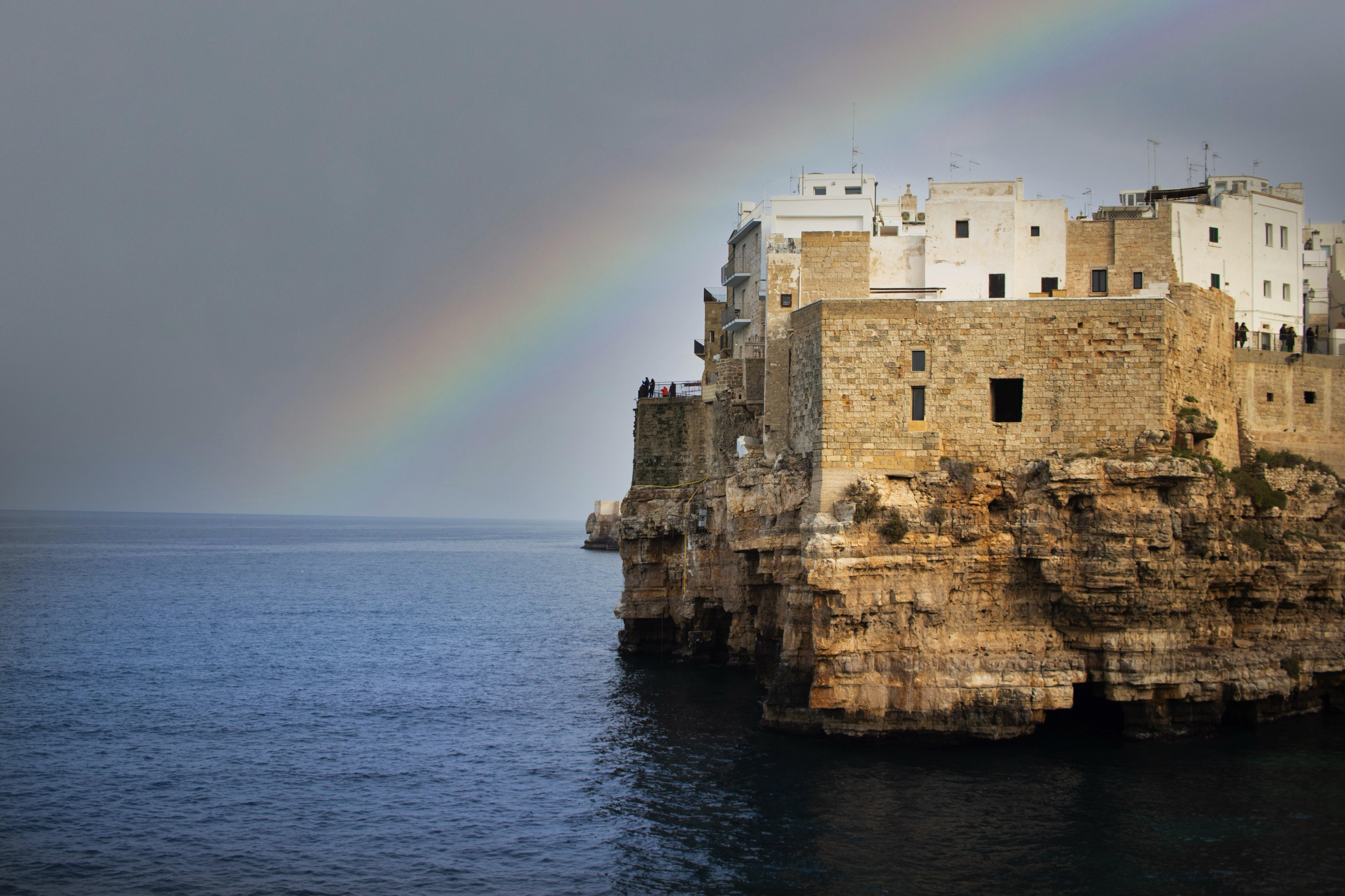
About Monopoli
About Sarandë
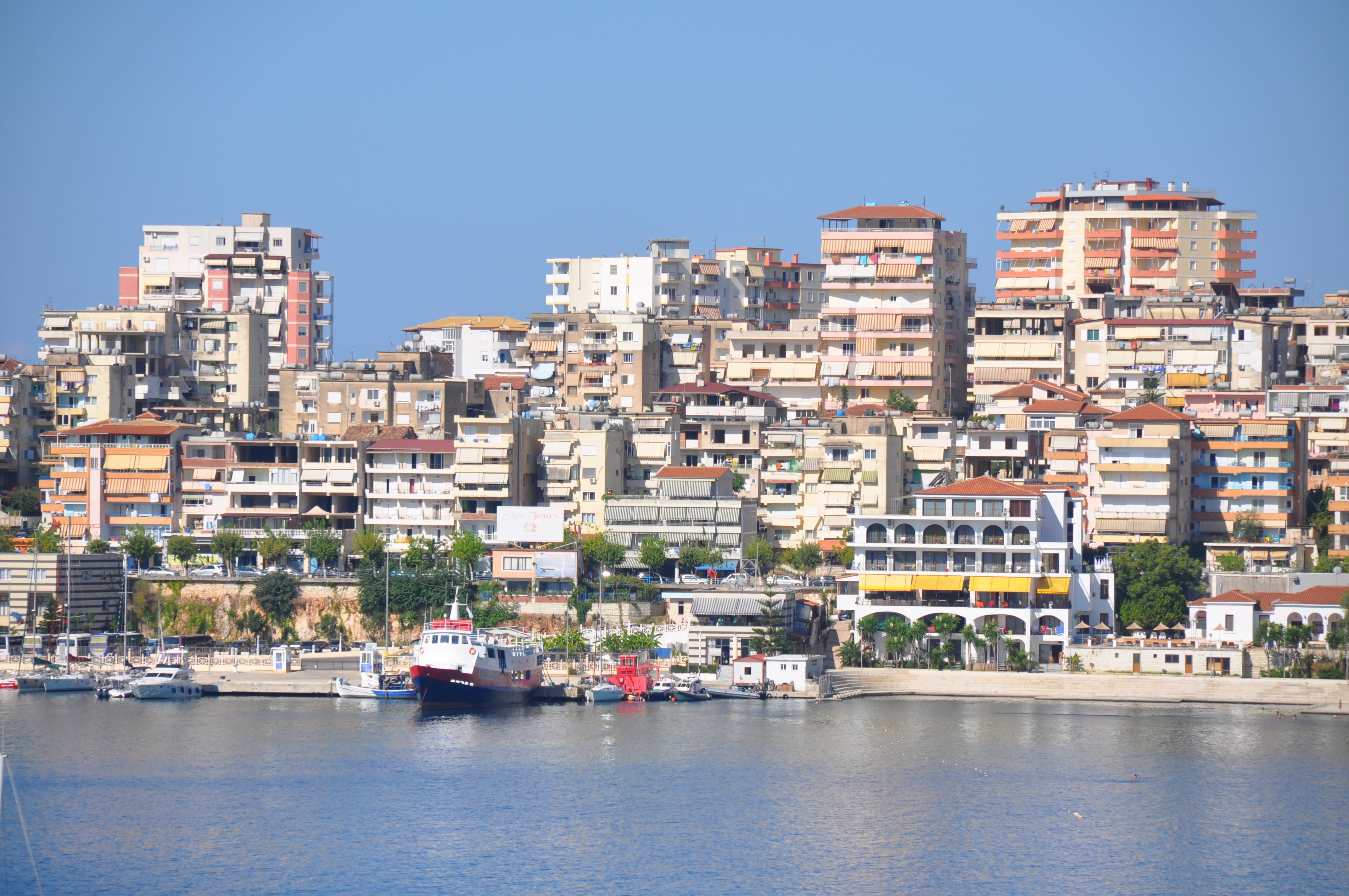
Sarandë is a city in southern Albania on the coast of the Ionian Sea. Sarandë can be reached easily from the Greek island of Corfu by ferry. An early Christian monastery dedicated to 40 saints (Santi Quaranta) gave Sarandë its name. The city center of Sarandë has been scarred by communist architecture but since the fall of communism many small shops and bars have sprung up which give it a Mediterranean feel. This southernmost harbour of Albania was once the ancient port of Onchesmos. Today, Sarandë’s main attractions are its sunny climate and the nearby ruins of Butrint. Please Note: For your convenience, shore excursions offered for this port of call are available to reserve in advance at www.silversea.com, unless otherwise noted in the description. The deadline to reserve these tours is August 19, after which they will be available for purchase on board, unless otherwise noted in the description. Pier Information The ship is scheduled to anchor at Main Pier. The town center is 875 yards from the pier. Taxis are generally available at the pier. Shopping Typical souvenirs include t-shirts, postcards, wood carvings and dolls in national costume. Cuisine Albanian cuisine has been strongly influenced by Turkey. Grilled meats like shisqubap (shish kebab), romstek (minced meat patties) and gofte (meat balls) are served all across the Balkans. Some local dishes include comlek (meat and onion stew), fërges (a rich beef stew), rosto me salcë kosi (roast beef with sour cream) and tavë kosi (mutton with yoghurt. Lake Shkodra carp and Lake Ohrid trout are the most common fish dishes. Try the ice cream (akullore), which is popular everywhere. Other Sites Blue Eye Spring The iridescent blue water gushes from the depths of the earth and feeds the Bistrica River. Catacombs Recently discovered catacombs of the church of the Forty Saints can also be explored. Private arrangements for independent sightseeing may be requested through the Tour Office on board.
About Corfu
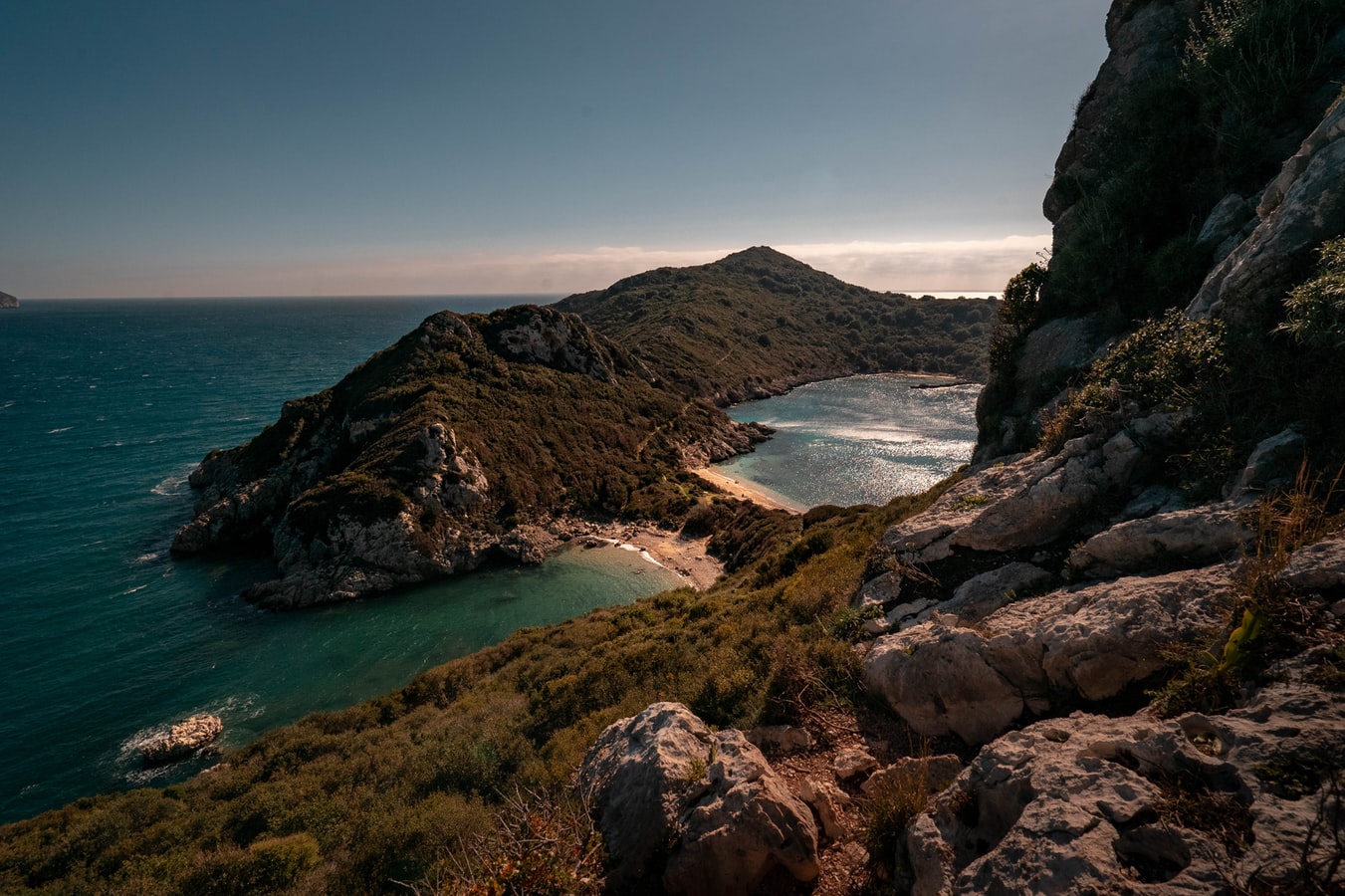
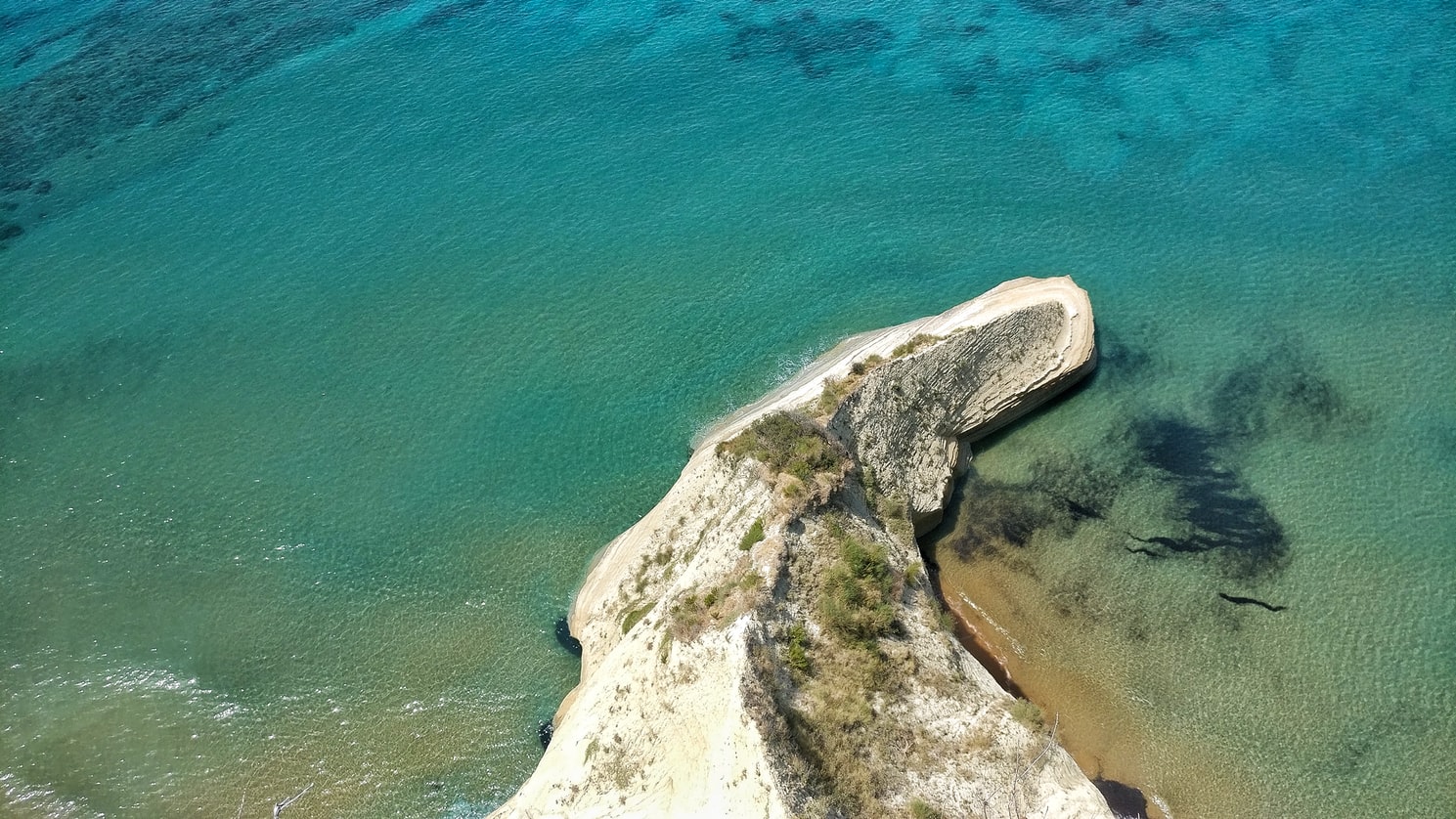
Corfu town today is a vivid tapestry of cultures—a sophisticated weave, where charm, history, and natural beauty blend. Located about midway along the island's east coast, this spectacularly lively capital is the cultural heart of Corfu and has a remarkable historic center that UNESCO designated as a World Heritage Site in 2007. All ships and planes dock or land near Corfu town, which occupies a small peninsula jutting into the Ionian Sea.Whether arriving by ferry from mainland Greece or Italy, from another island, or directly by plane, catch your breath by first relaxing with a coffee or a gelato in Corfu town's shaded Liston Arcade, then stroll the narrow lanes of its pedestrians-only quarter. For an overview of the immediate area, and a quick tour of Mon Repos palace, hop on the little tourist train that runs from May to September. Corfu town has a different feel at night, so book a table at one of its famed tavernas to savor the island's unique cuisine.The best way to get around Corfu town is on foot. The town is small enough so that you can easily walk to every sight. There are local buses, but they do not thread their way into the streets (many now car-free) of the historic center. If you are arriving by ferry or plane, it's best to take a taxi to your hotel. Expect to pay about €10 from the airport or ferry terminal to a hotel in Corfu town. If there are no taxis waiting, you can call for one.
About Corfu
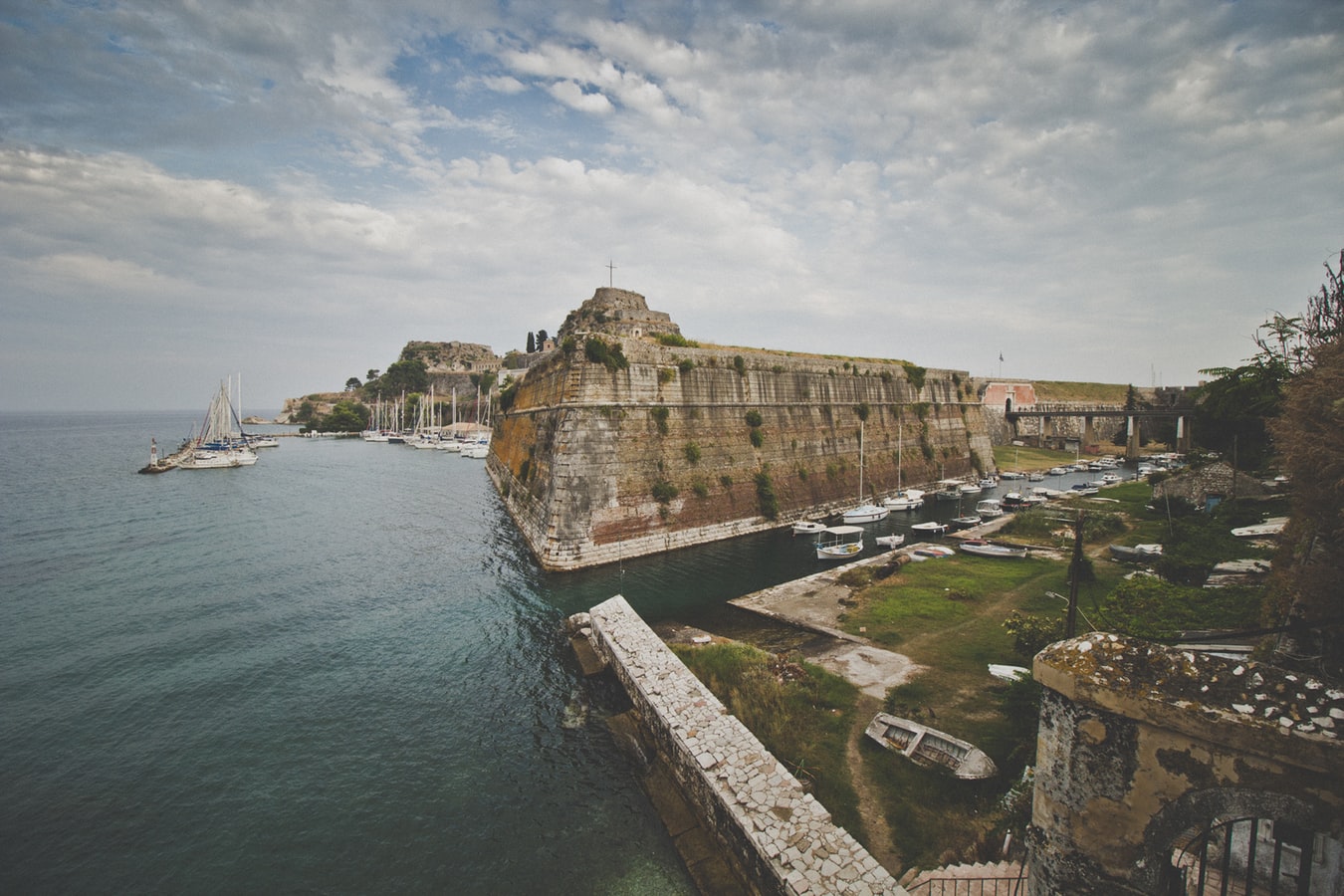
Corfu town today is a vivid tapestry of cultures—a sophisticated weave, where charm, history, and natural beauty blend. Located about midway along the island's east coast, this spectacularly lively capital is the cultural heart of Corfu and has a remarkable historic center that UNESCO designated as a World Heritage Site in 2007. All ships and planes dock or land near Corfu town, which occupies a small peninsula jutting into the Ionian Sea.Whether arriving by ferry from mainland Greece or Italy, from another island, or directly by plane, catch your breath by first relaxing with a coffee or a gelato in Corfu town's shaded Liston Arcade, then stroll the narrow lanes of its pedestrians-only quarter. For an overview of the immediate area, and a quick tour of Mon Repos palace, hop on the little tourist train that runs from May to September. Corfu town has a different feel at night, so book a table at one of its famed tavernas to savor the island's unique cuisine.The best way to get around Corfu town is on foot. The town is small enough so that you can easily walk to every sight. There are local buses, but they do not thread their way into the streets (many now car-free) of the historic center. If you are arriving by ferry or plane, it's best to take a taxi to your hotel. Expect to pay about €10 from the airport or ferry terminal to a hotel in Corfu town. If there are no taxis waiting, you can call for one.
About Monemvasía
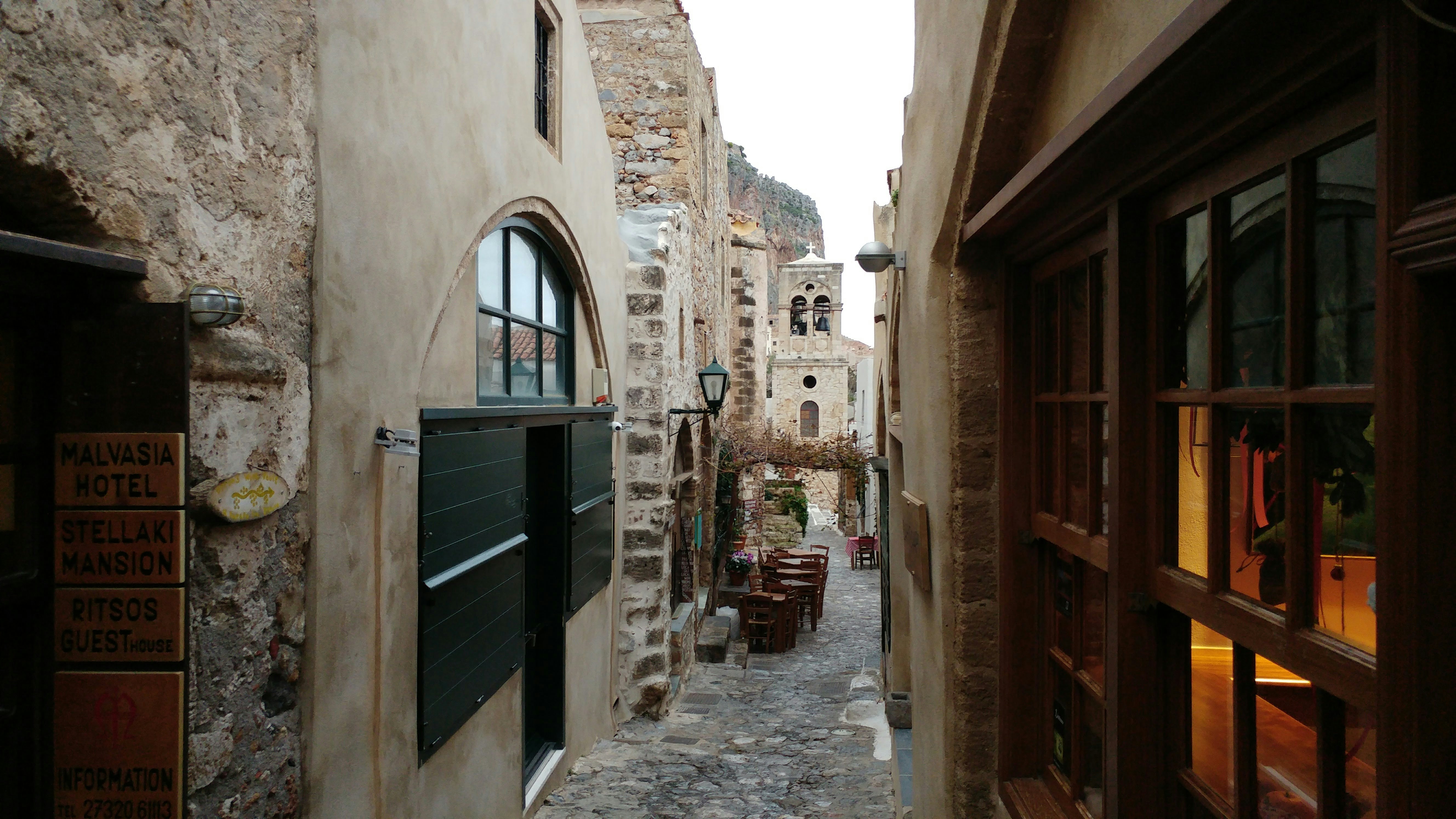
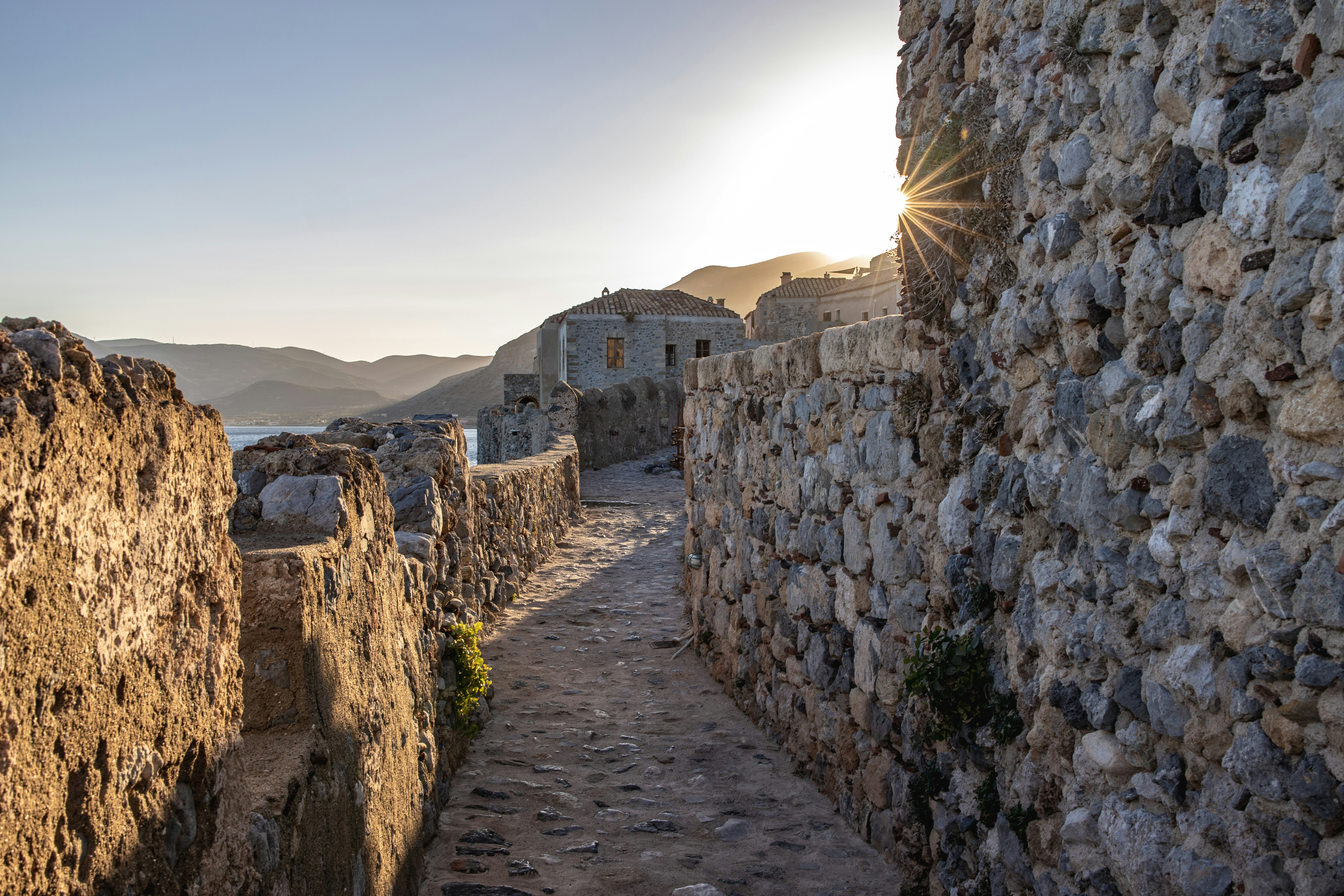
Monemvasia boasts a varied and colorful history that can be traced to the 8th-century when Greeks fleeing the Slav invasion of Lakonia found refuge here. In its heyday it controlled sea travel between the Levant and European shores. The wall-encircled Lower Town extends along the slopes of a 985-foot-high crag that projects into the sea on the east side of the Peloponnese. For centuries an impressive stronghold, population dwindled as the inhabitants moved to the mainland. But with the beginning of a restoration program aimed to preserve Monemvasia's heritage, the Lower Town experienced a new lease on life, and people have begun to return. The Upper Town is situated on top of the Rock of Monemvasia. It is reached via a zigzagging, paved lane. An almost impregnable bastion in earlier days, it has been uninhabited for centuries, but still manages to preserve its magnificent appearance. Visitors today can explore the remains of the ancient citadel-castle and visit the church of Hagia Sofia. From the summit there is also a fantastic view of the surrounding area.
About Khania
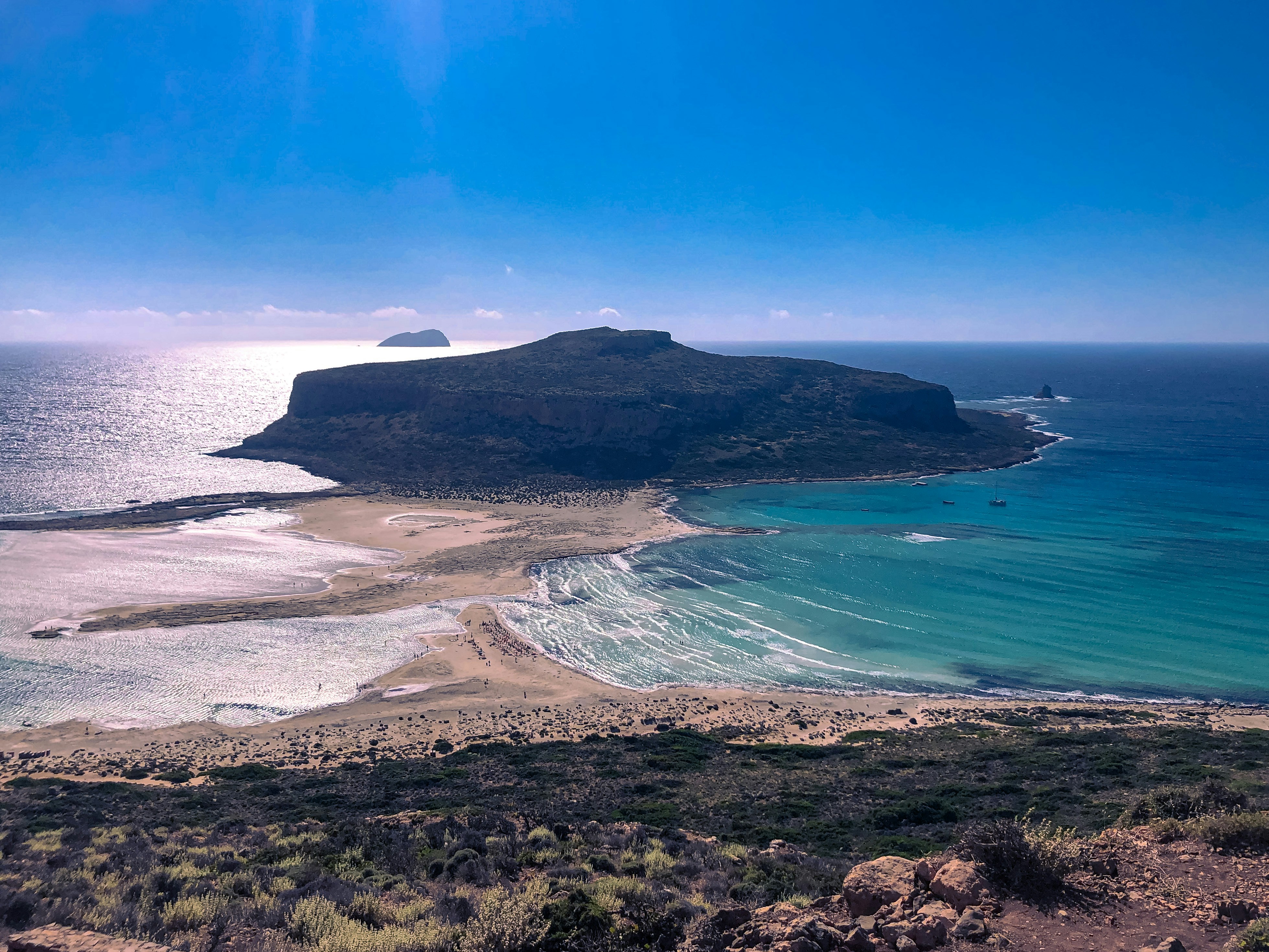
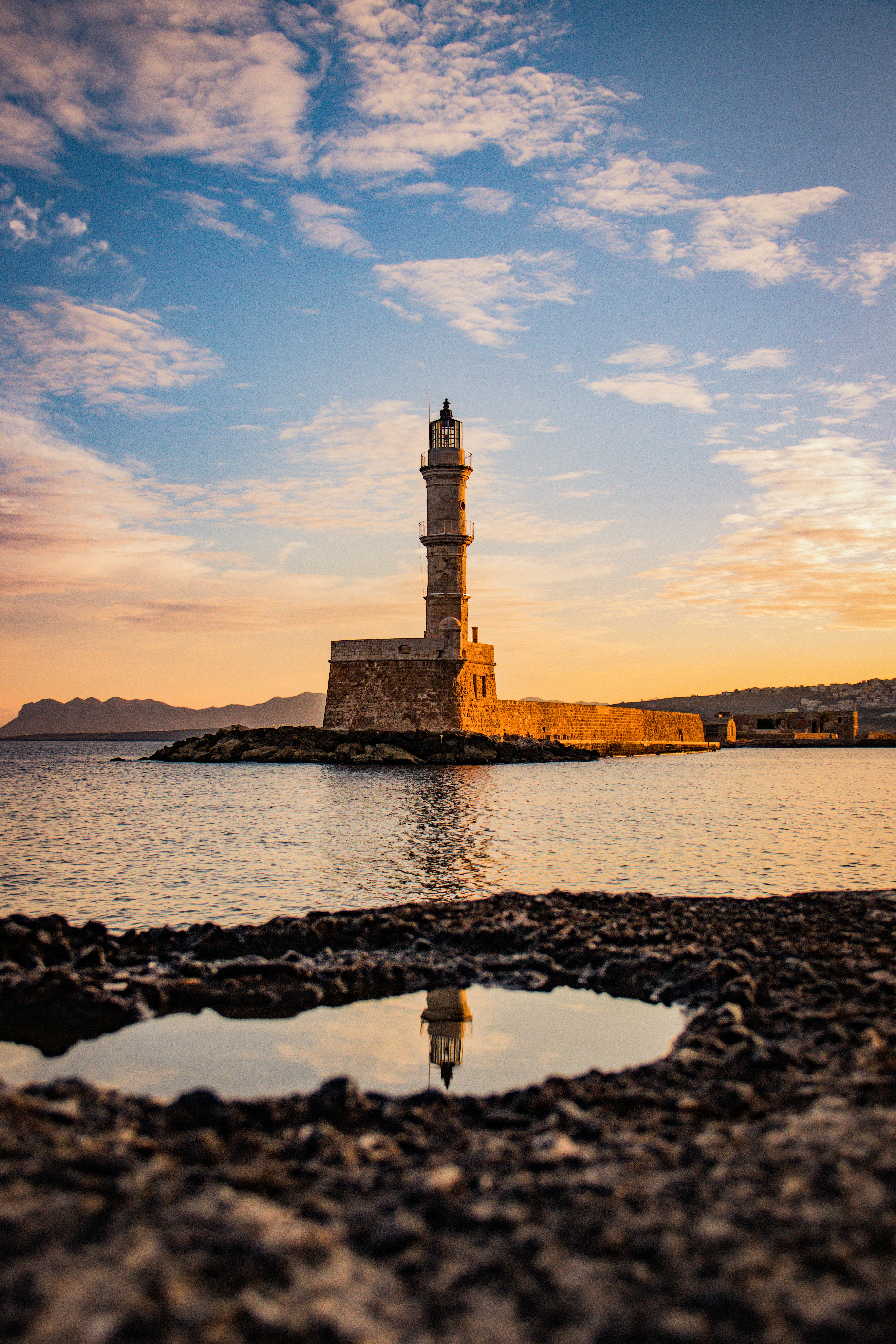
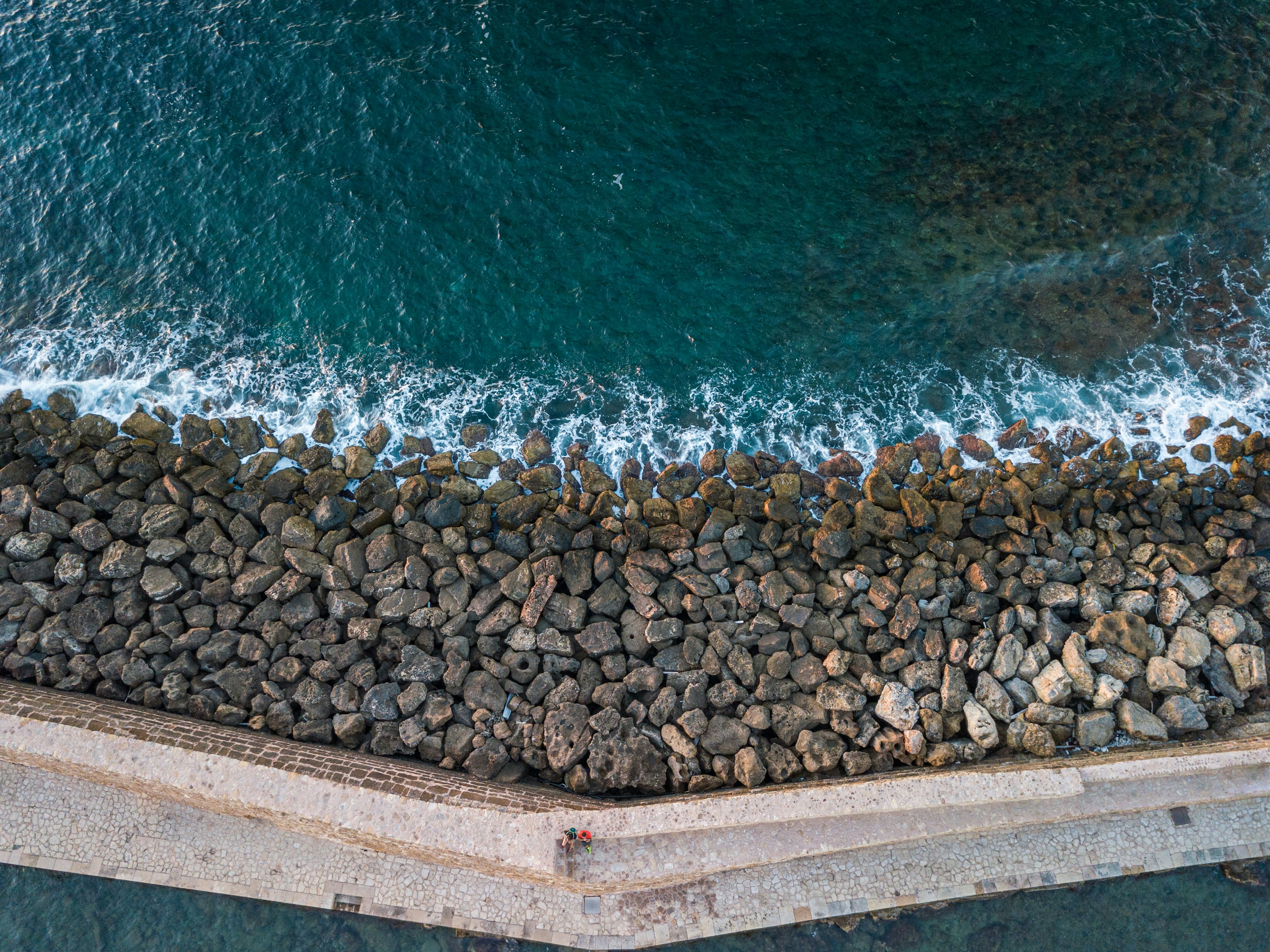
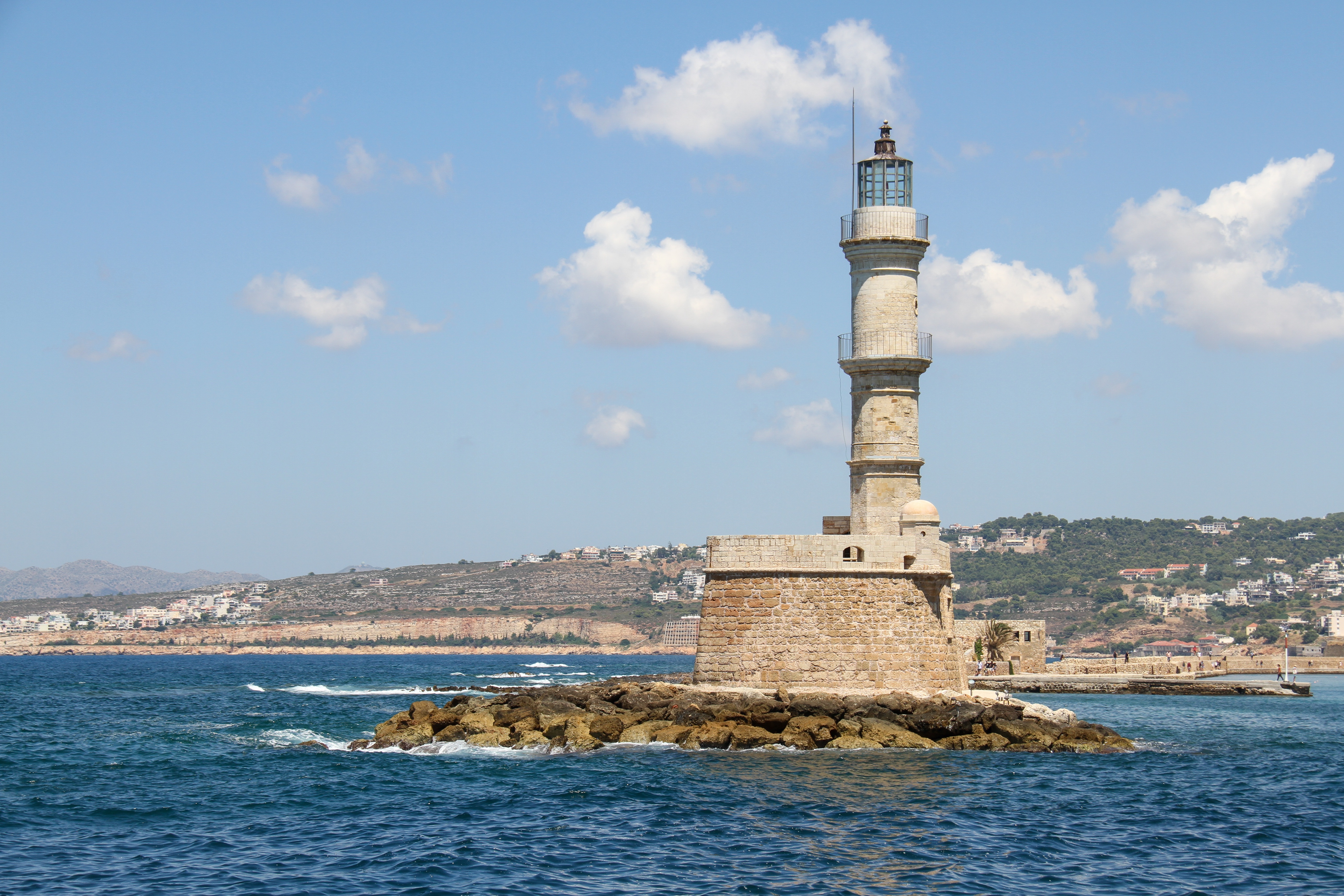
The second-largest city in Crete and capital of the Homonym Prefecture, Chania is located in Minoan Kidonia at the end of the Homonym Gulf between the Akrotiri and Onicha peninsulas. Chania City is divided into two parts; the Old Town, which is comprised of several connected districts built around the old Venetian Harbour, and New Town, a larger, more modern city whose centre is situated next to, and south of, the Old Town. The Old Town is home to Venetian buildings and Turkish elements that combine to create a unique architectural style, and is considered to be the most beautiful urban district on Crete. It was once surrounded by old Venetian fortifications that separated it from the New Town; however, only the eastern and western parts remain today. Due to its compact size, Skiathos can be easily explored in just a single day.
About Santorini
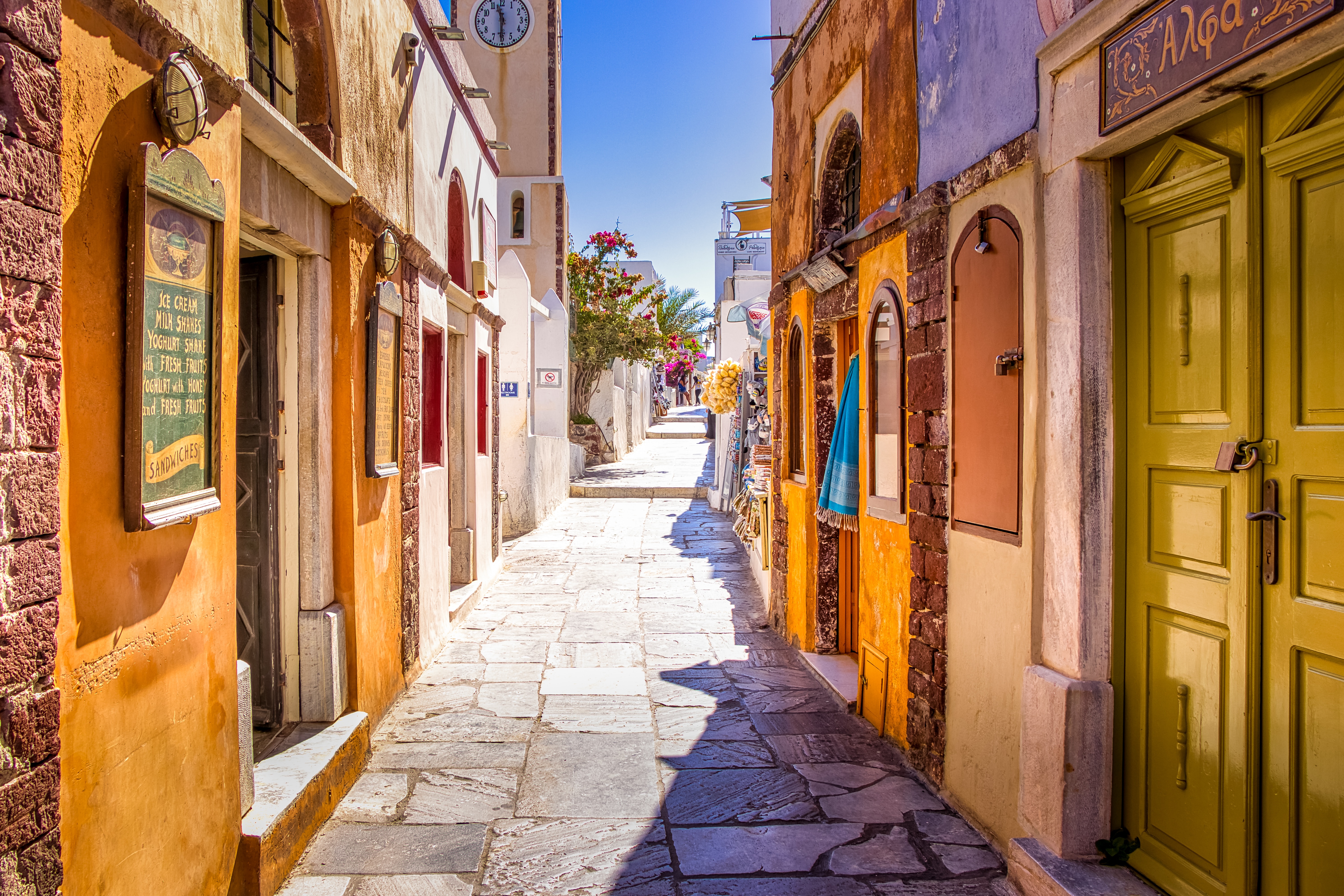
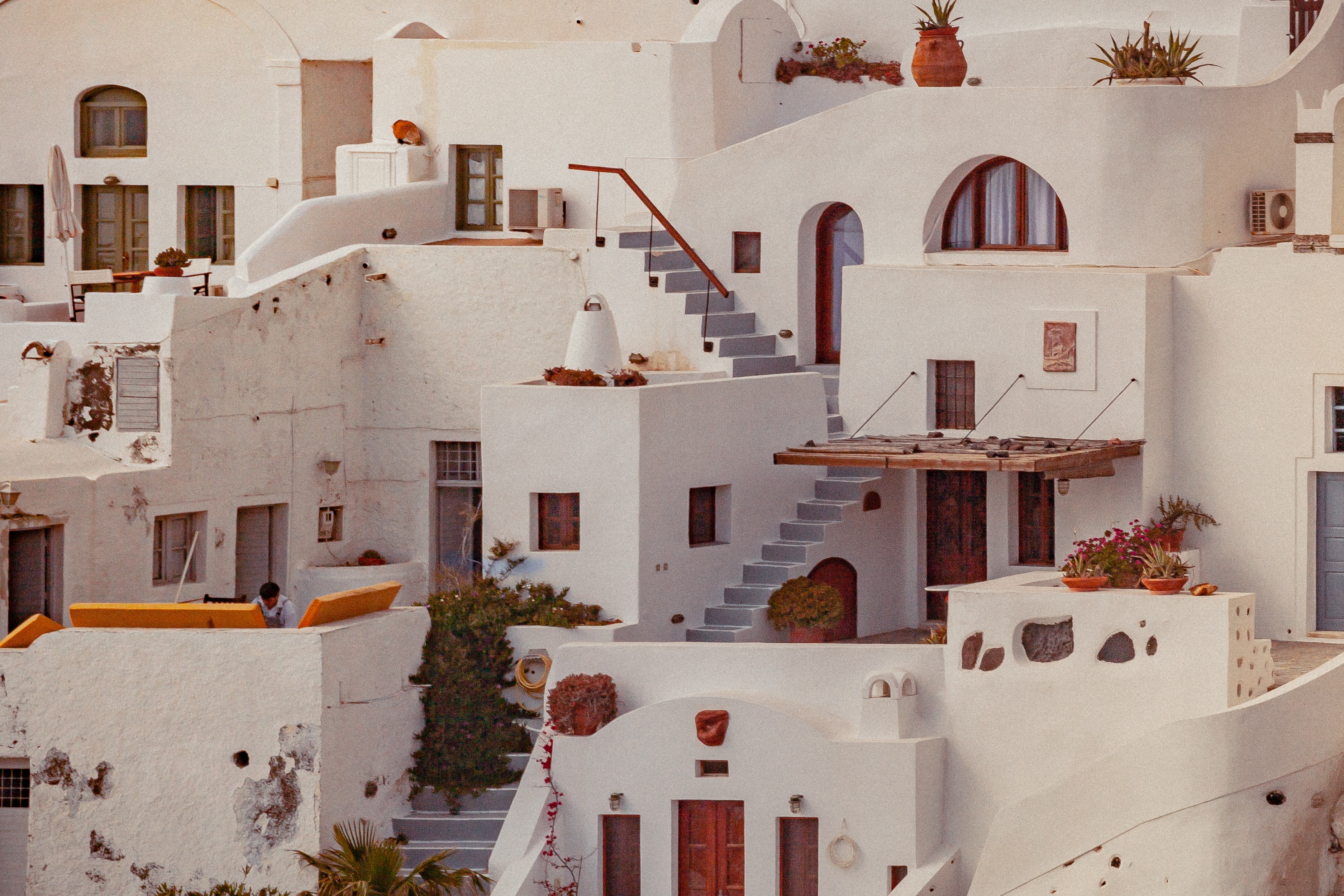
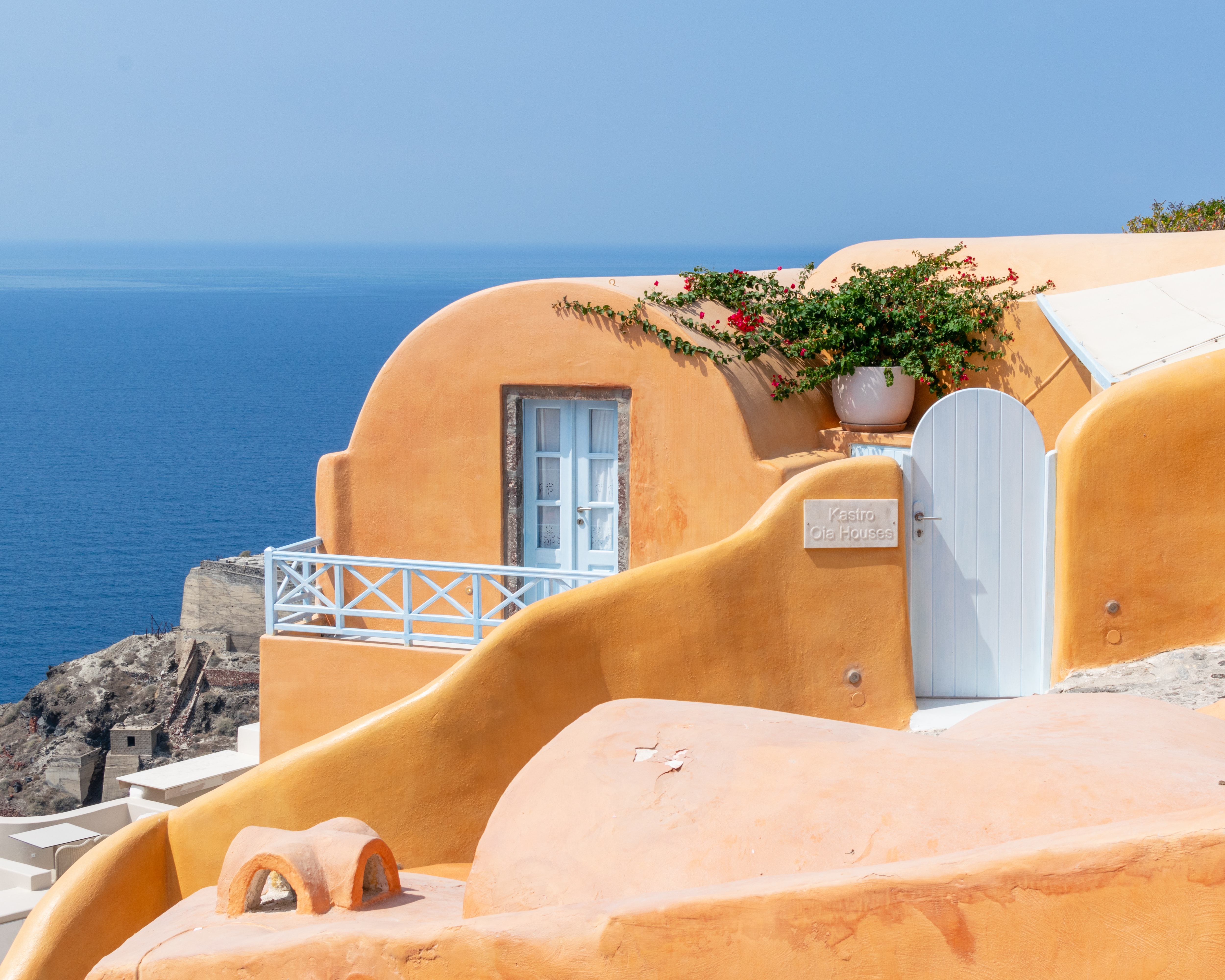
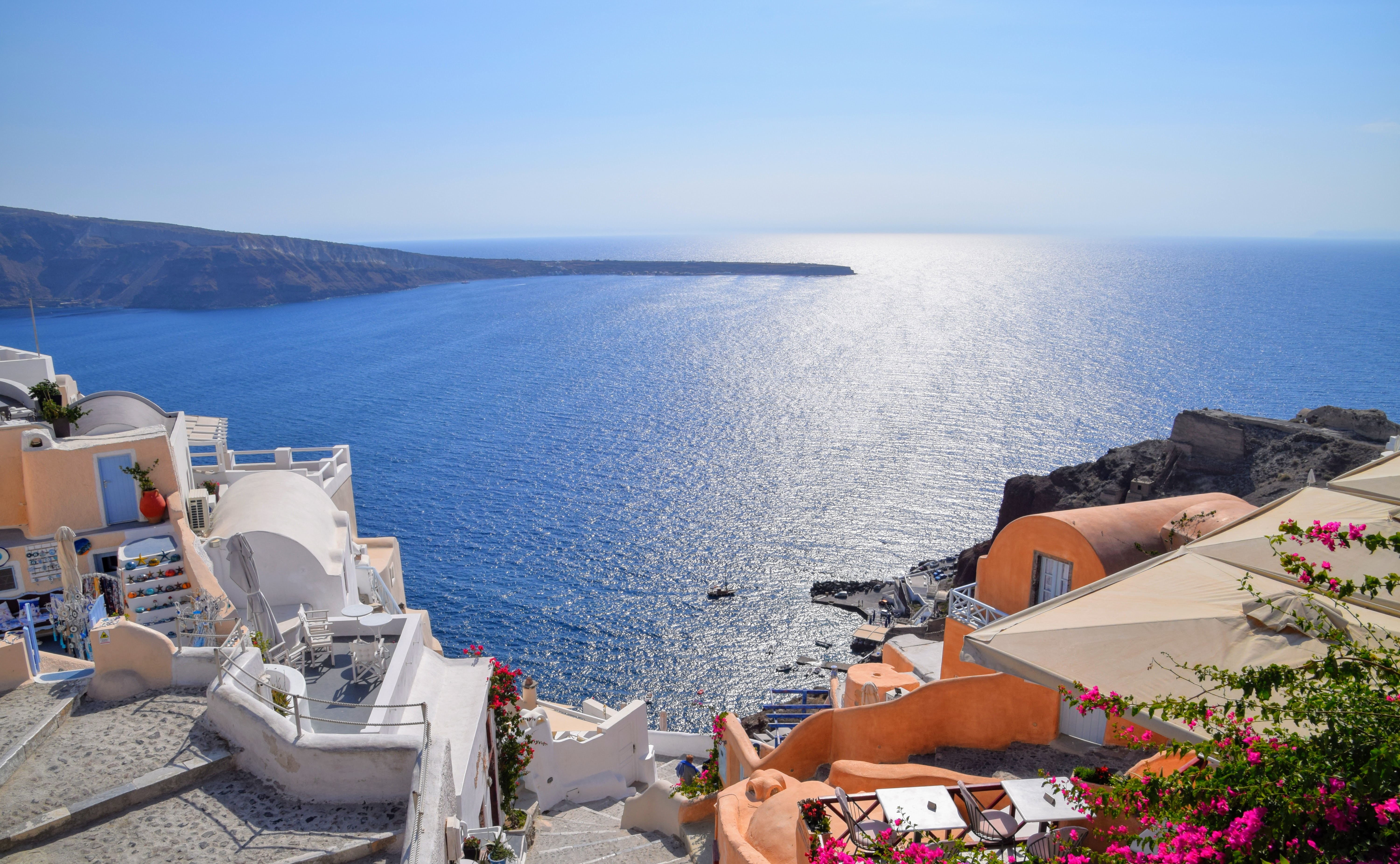
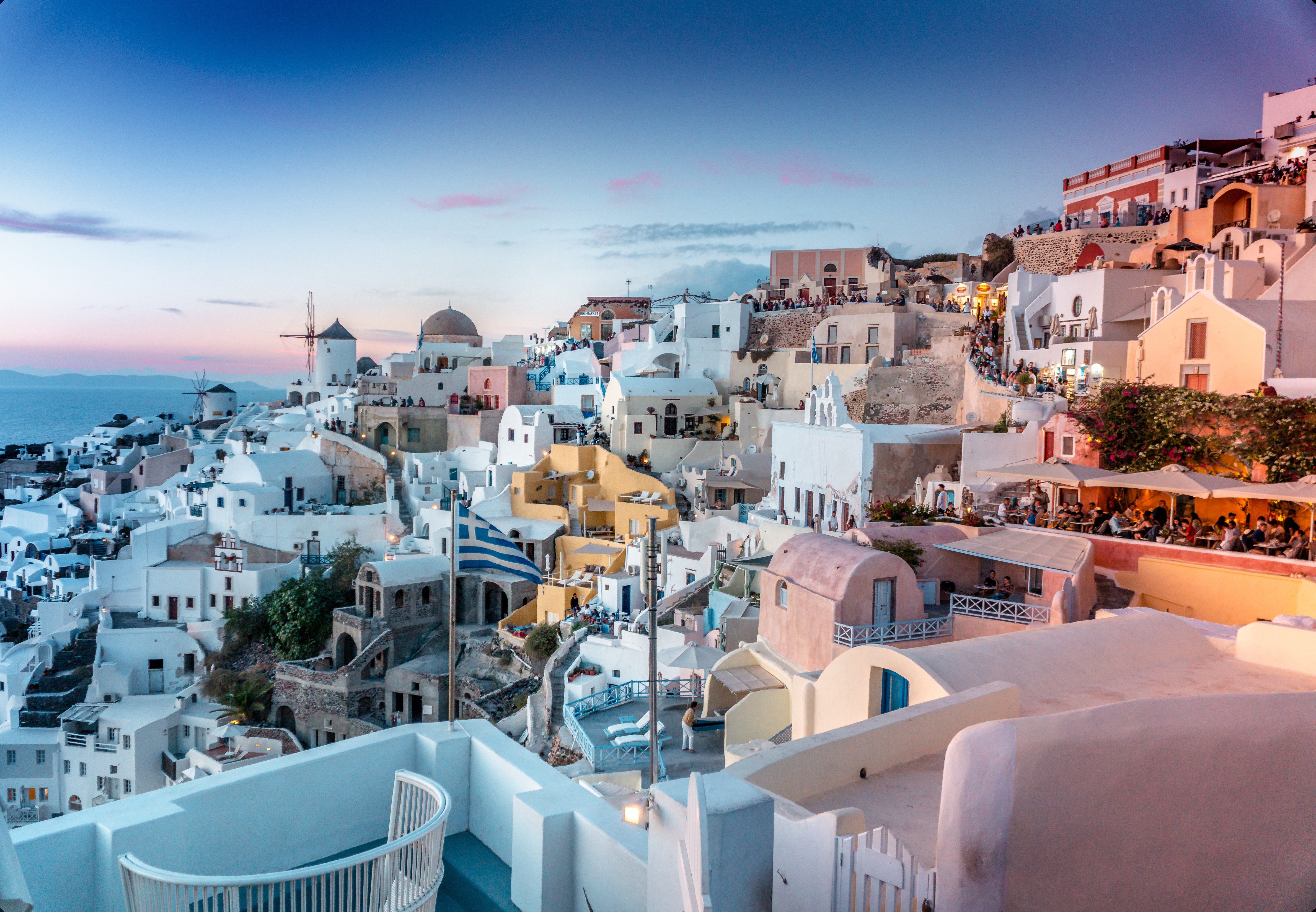
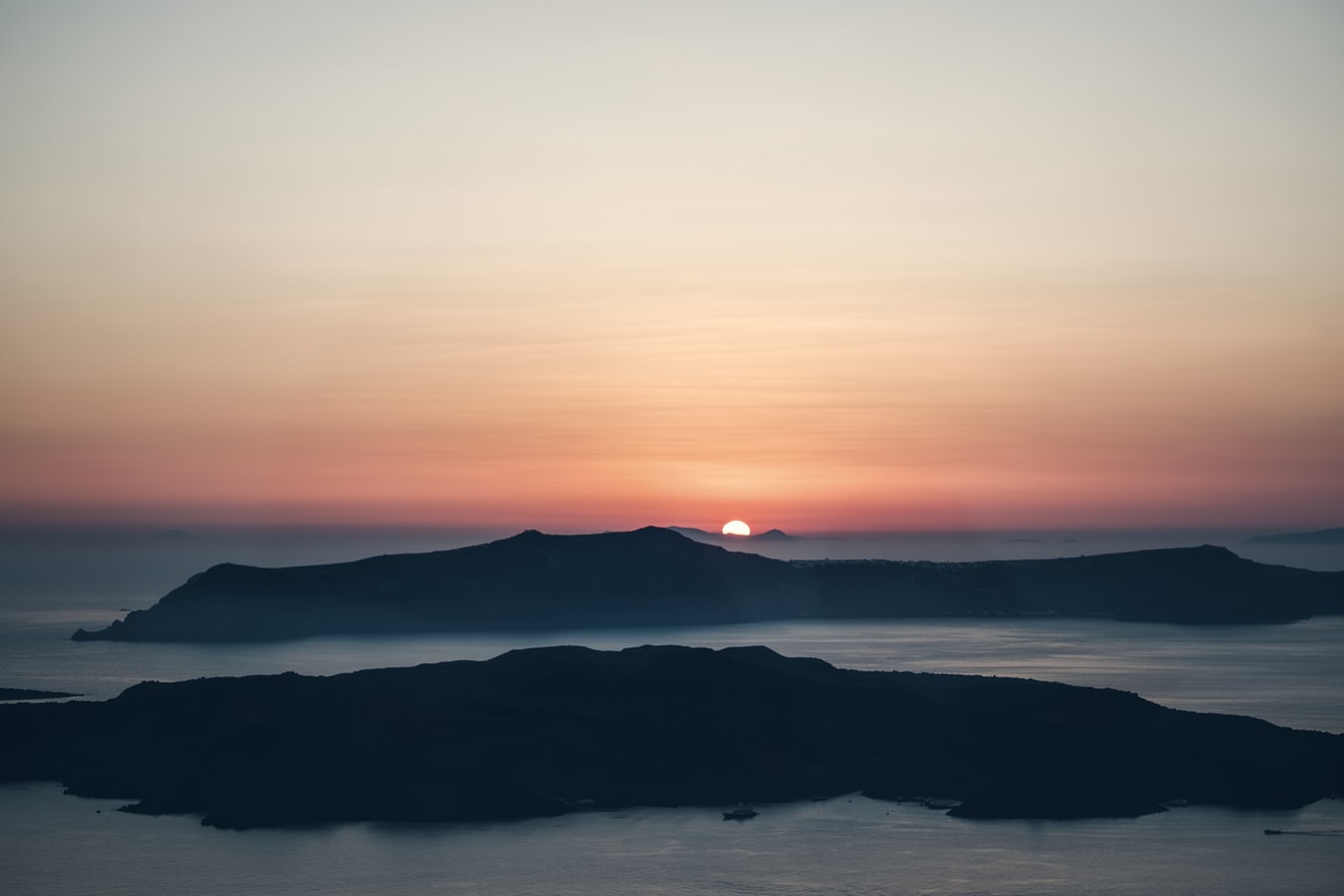
Undoubtedly the most extraordinary island in the Aegean, crescent-shape Santorini remains a mandatory stop on the Cycladic tourist route—even if it's necessary to enjoy the sensational sunsets from Ia, the fascinating excavations, and the dazzling white towns with a million other travelers. Called Kállisti (the "Loveliest") when first settled, the island has now reverted to its subsequent name of Thira, after the 9th-century-BC Dorian colonizer Thiras. The place is better known, however, these days as Santorini, a name derived from its patroness, St. Irene of Thessaloniki, the Byzantine empress who restored icons to Orthodoxy and died in 802. You can fly conveniently to Santorini, but to enjoy a true Santorini rite of passage, opt instead for the boat trip here, which provides a spectacular introduction. After the boat sails between Sikinos and Ios, your deck-side perch approaches two close islands with a passage between them. The bigger one on the left is Santorini, and the smaller on the right is Thirassia. Passing between them, you see the village of Ia adorning Santorini's northernmost cliff like a white geometric beehive. You are in the caldera (volcanic crater), one of the world's truly breathtaking sights: a demilune of cliffs rising 1,100 feet, with the white clusters of the towns of Fira and Ia perched along the top. The bay, once the high center of the island, is 1,300 feet in some places, so deep that when boats dock in Santorini's shabby little port of Athinios, they do not drop anchor. The encircling cliffs are the ancient rim of a still-active volcano, and you are sailing east across its flooded caldera. On your right are the Burnt isles, the White isle, and other volcanic remnants, all lined up as if some outsize display in a geology museum. Hephaestus's subterranean fires smolder still—the volcano erupted in 198 BC, about 735, and there was an earthquake in 1956. Indeed, Santorini and its four neighboring islets are the fragmentary remains of a larger landmass that exploded about 1600 BC: the volcano's core blew sky high, and the sea rushed into the abyss to create the great bay, which measures 10 km by 7 km (6 mi by 4½ mi) and is 1,292 feet deep. The other pieces of the rim, which broke off in later eruptions, are Thirassia, where a few hundred people live, and deserted little Aspronissi ("White isle"). In the center of the bay, black and uninhabited, two cones, the Burnt Isles of Palea Kameni and Nea Kameni, appeared between 1573 and 1925. There has been too much speculation about the identification of Santorini with the mythical Atlantis, mentioned in Egyptian papyri and by Plato (who says it's in the Atlantic), but myths are hard to pin down. This is not true of old arguments about whether tidal waves from Santorini's cataclysmic explosion destroyed Minoan civilization on Crete, 113 km (70 mi) away. The latest carbon-dating evidence, which points to a few years before 1600 BC for the eruption, clearly indicates that the Minoans outlasted the eruption by a couple of hundred years, but most probably in a weakened state. In fact, the island still endures hardships: since antiquity, Santorini has depended on rain collected in cisterns for drinking and irrigating—the well water is often brackish—and the serious shortage is alleviated by the importation of water. However, the volcanic soil also yields riches: small, intense tomatoes with tough skins used for tomato paste (good restaurants here serve them); the famous Santorini fava beans, which have a light, fresh taste; barley; wheat; and white-skin eggplants.
About Delos
About Mykonos
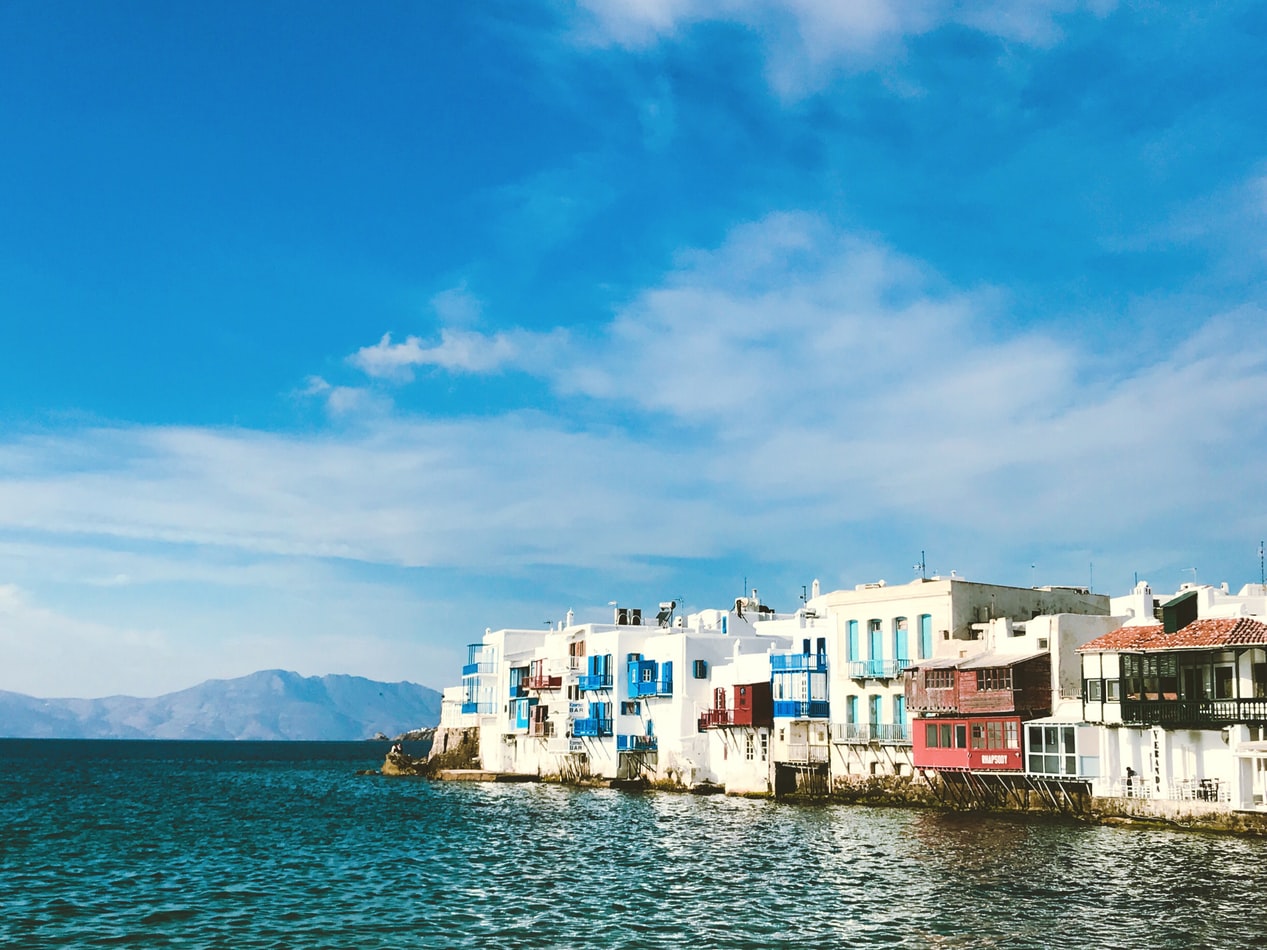
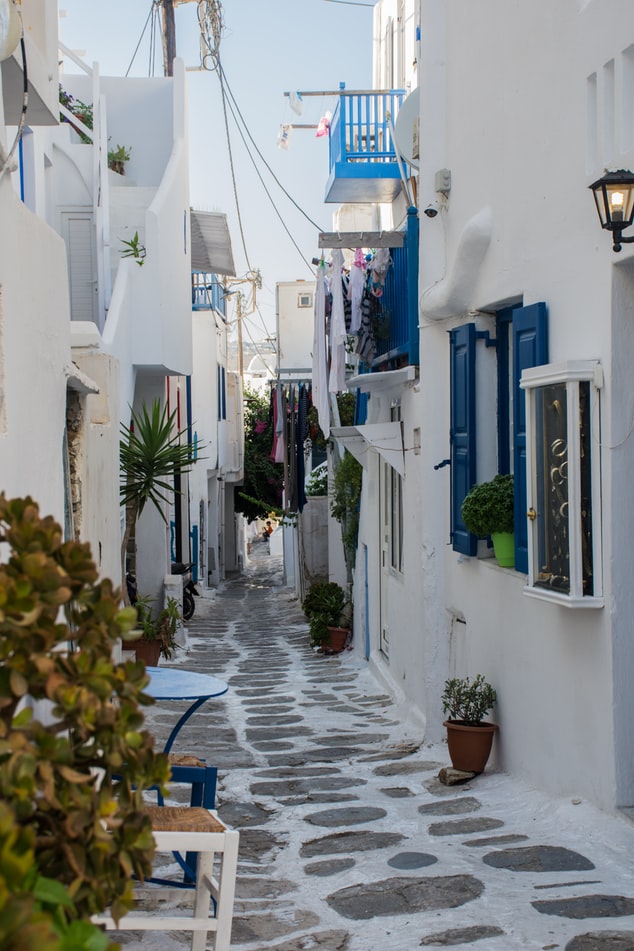
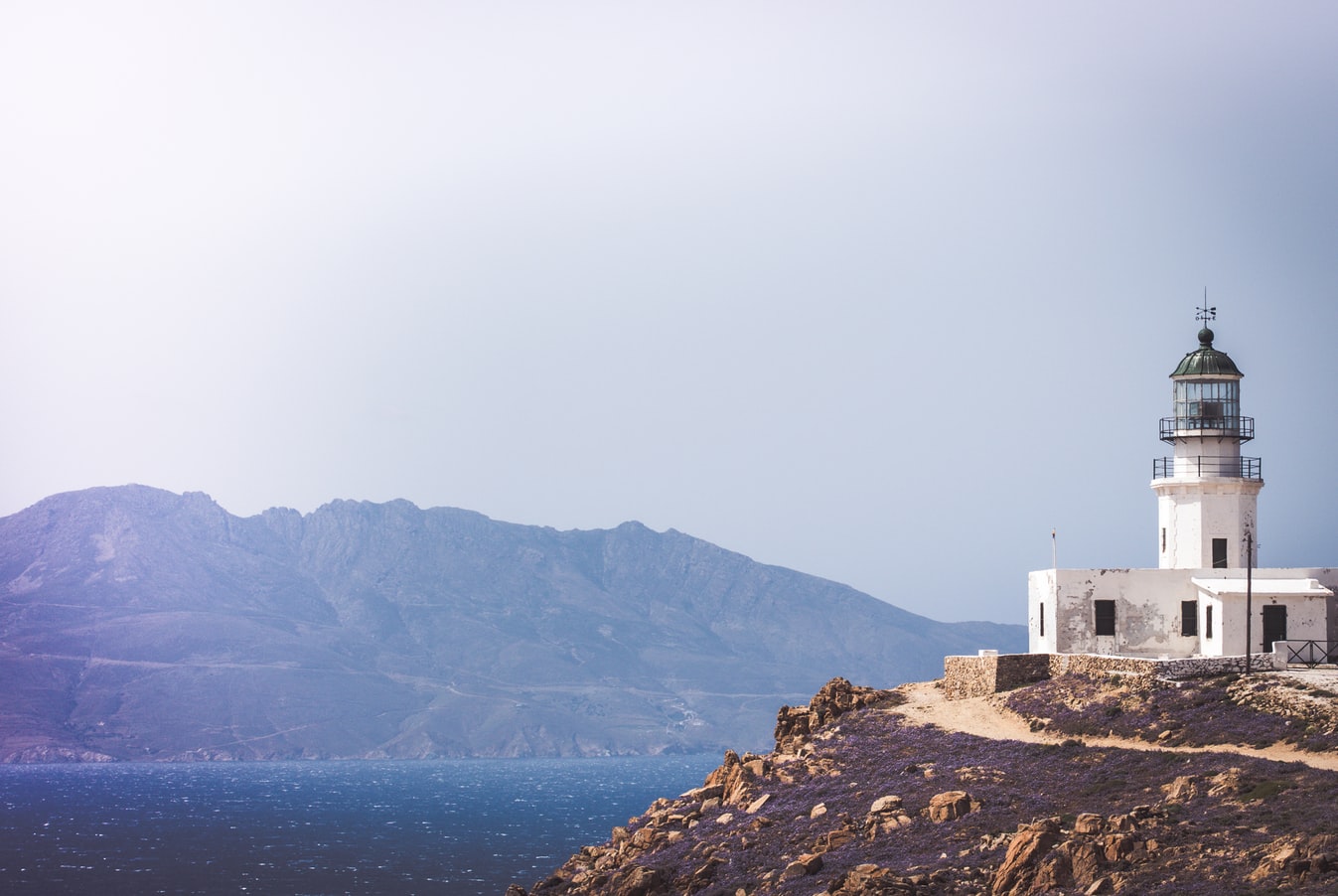
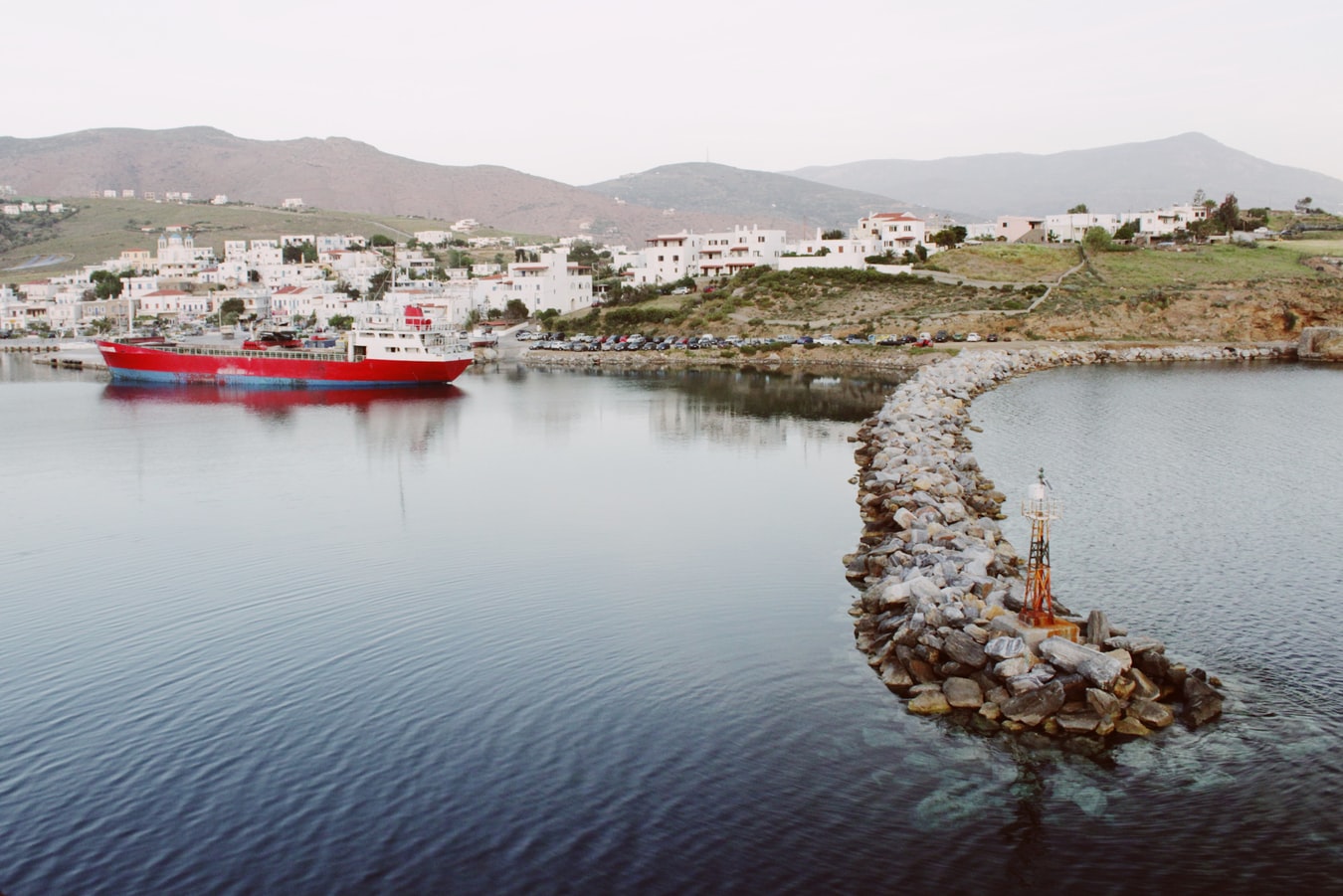
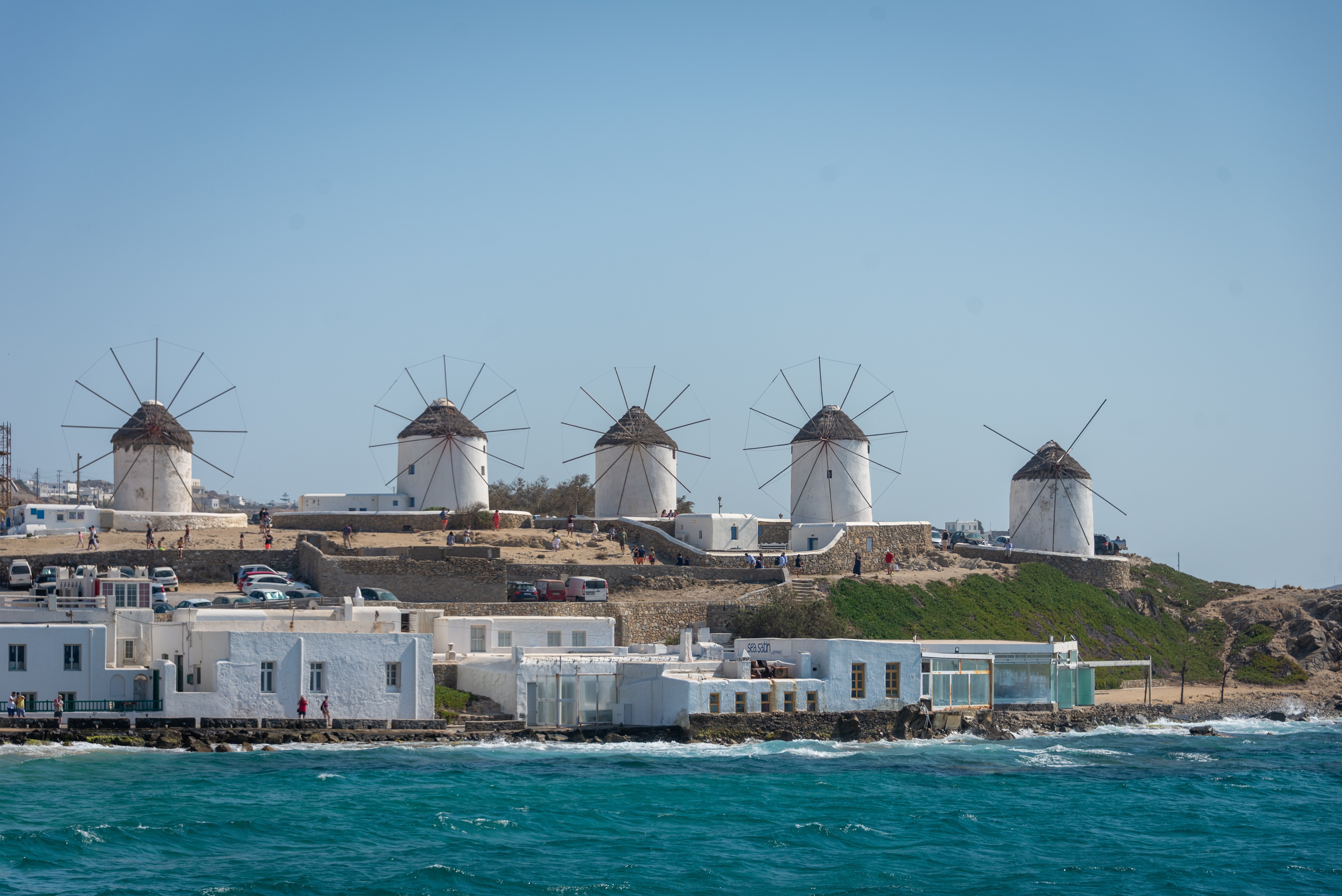
Although the fishing boats still go out in good weather, Mykonos largely makes its living from tourism these days. The summer crowds have turned one of the poorest islands in Greece into one of the richest. Old Mykonians complain that their young, who have inherited stores where their grandfathers once sold eggs or wine, get so much rent that they have lost ambition, and in summer sit around pool bars at night with their friends, and hang out in Athens in winter when island life is less scintillating. Put firmly on the map by Jackie O in the 1960s, Mykonos town—called Hora by the locals—remains the Saint-Tropez of the Greek islands. The scenery is memorable, with its whitewashed streets, Little Venice, the Kato Myli ridge of windmills, and Kastro, the town's medieval quarter. Its cubical two- or three-story houses and churches, with their red or blue doors and domes and wooden balconies, have been long celebrated as some of the best examples of classic Cycladic architecture. Luckily, the Greek Archaeological Service decided to preserve the town, even when the Mykonians would have preferred to rebuild, and so the Old Town has been impressively preserved. Pink oleander, scarlet hibiscus, and trailing green pepper trees form a contrast amid the dazzling whiteness, whose frequent renewal with whitewash is required by law. Any visitor who has the pleasure of getting lost in its narrow streets (made all the narrower by the many outdoor stone staircases, which maximize housing space in the crowded village) will appreciate how its confusing layout was designed to foil pirates—if it was designed at all. After Mykonos fell under Turkish rule in 1537, the Ottomans allowed the islanders to arm their vessels against pirates, which had a contradictory effect: many of them found that raiding other islands was more profitable than tilling arid land. At the height of Aegean piracy, Mykonos was the principal headquarters of the corsair fleets—the place where pirates met their fellows, found willing women, and filled out their crews. Eventually the illicit activity evolved into a legitimate and thriving trade network. Morning on Mykonos town's main quay is busy with deliveries, visitors for the Delos boats, lazy breakfasters, and street cleaners dealing with the previous night's mess. In late morning the cruise-boat people arrive, and the shops are all open. In early afternoon, shaded outdoor tavernas are full of diners eating salads (Mykonos's produce is mostly imported); music is absent or kept low. In mid- and late afternoon, the town feels sleepy, since so many people are at the beach, on excursions, or sleeping in their air-conditioned rooms; even some tourist shops close for siesta. By sunset, people have come back from the beach, having taken their showers and rested. At night, the atmosphere in Mykonos ramps up. The cruise-boat people are mostly gone, coughing three-wheelers make no deliveries in the narrow streets, and everyone is dressed sexy for summer and starting to shimmy with the scene. Many shops stay open past midnight, the restaurants fill up, and the bars and discos make ice cubes as fast as they can. Ready to dive in? Begin your tour of Mykonos town (Hora) by starting out at its heart: Mando Mavrogenous Square.
About Kusadasi
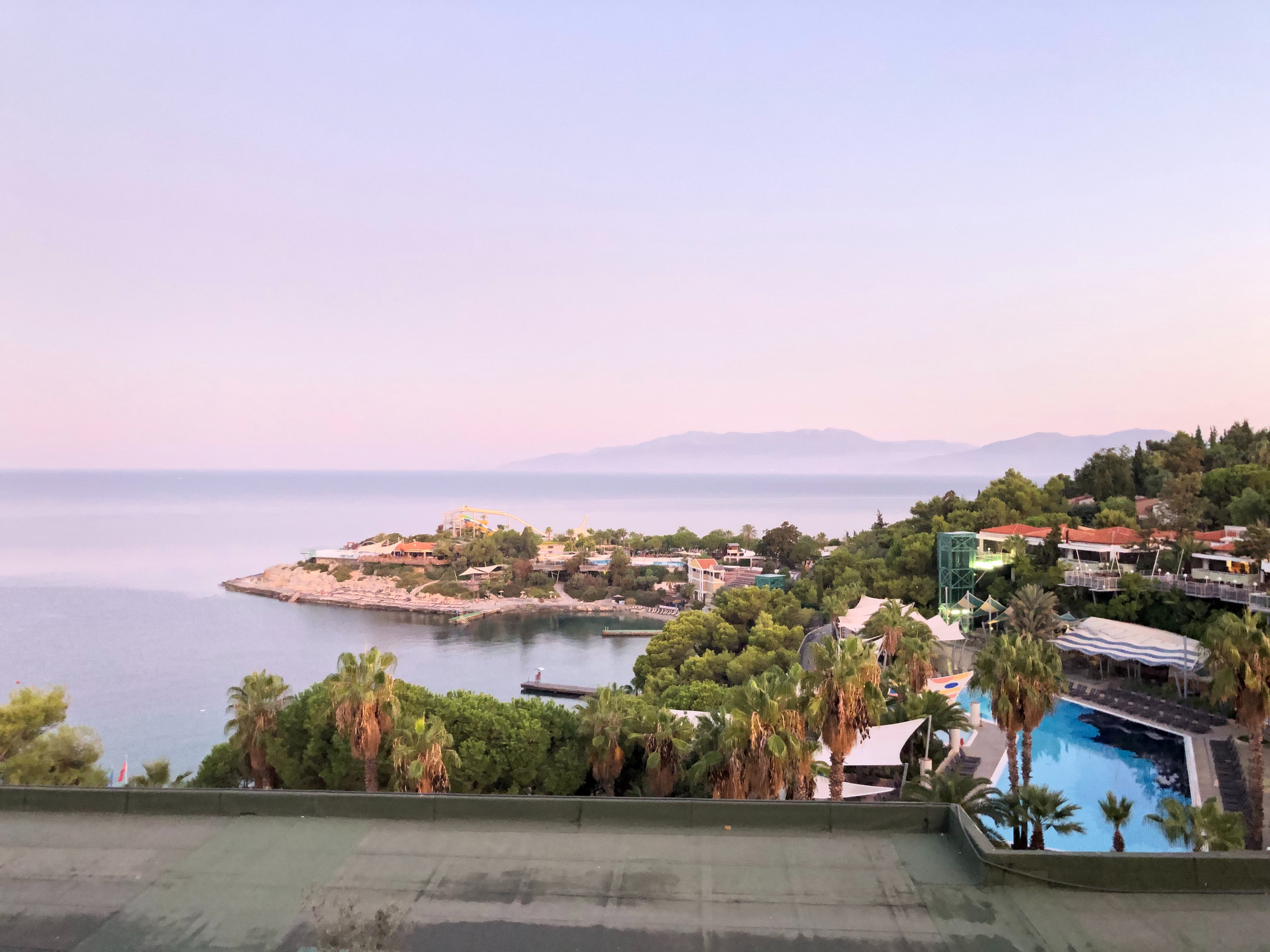
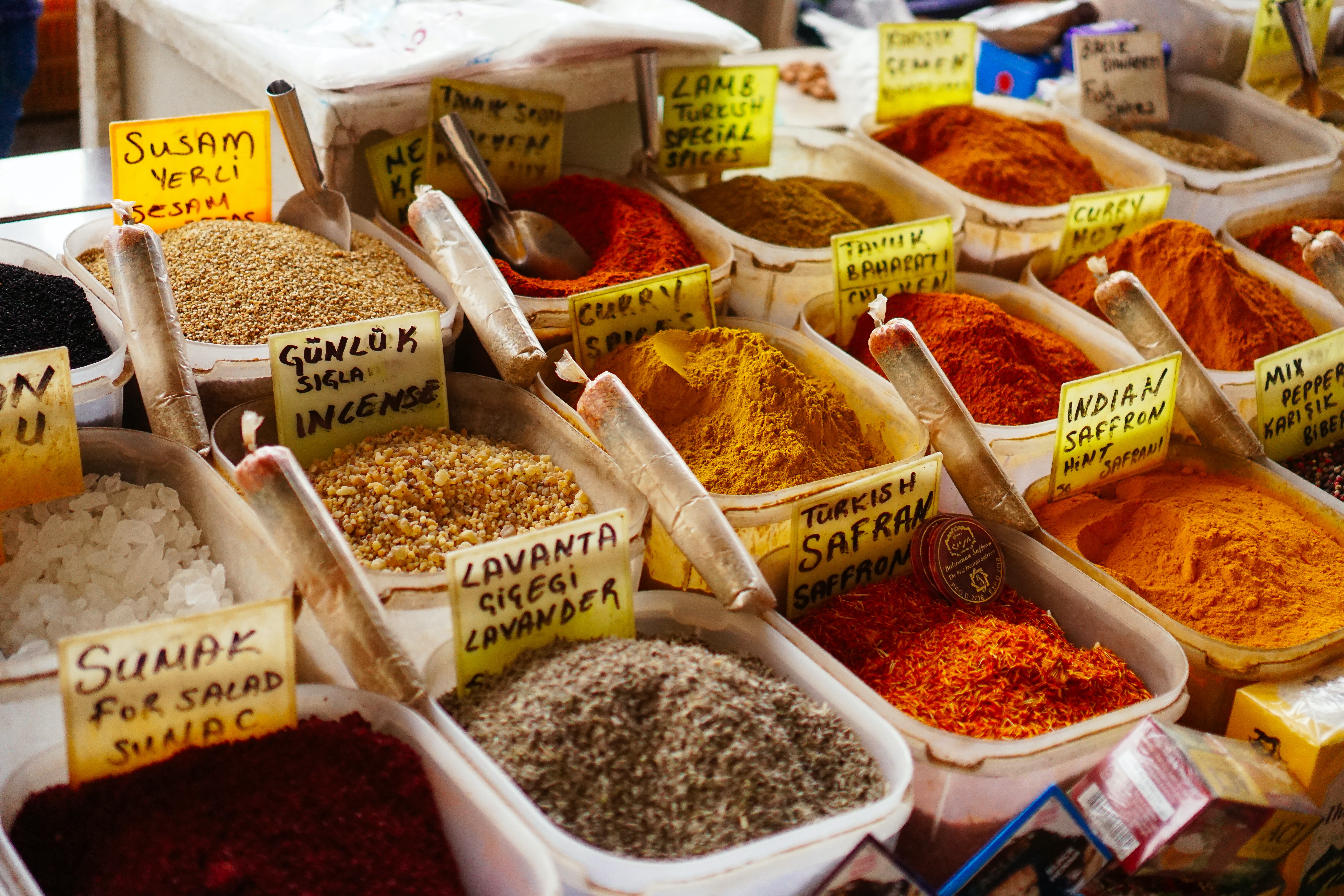
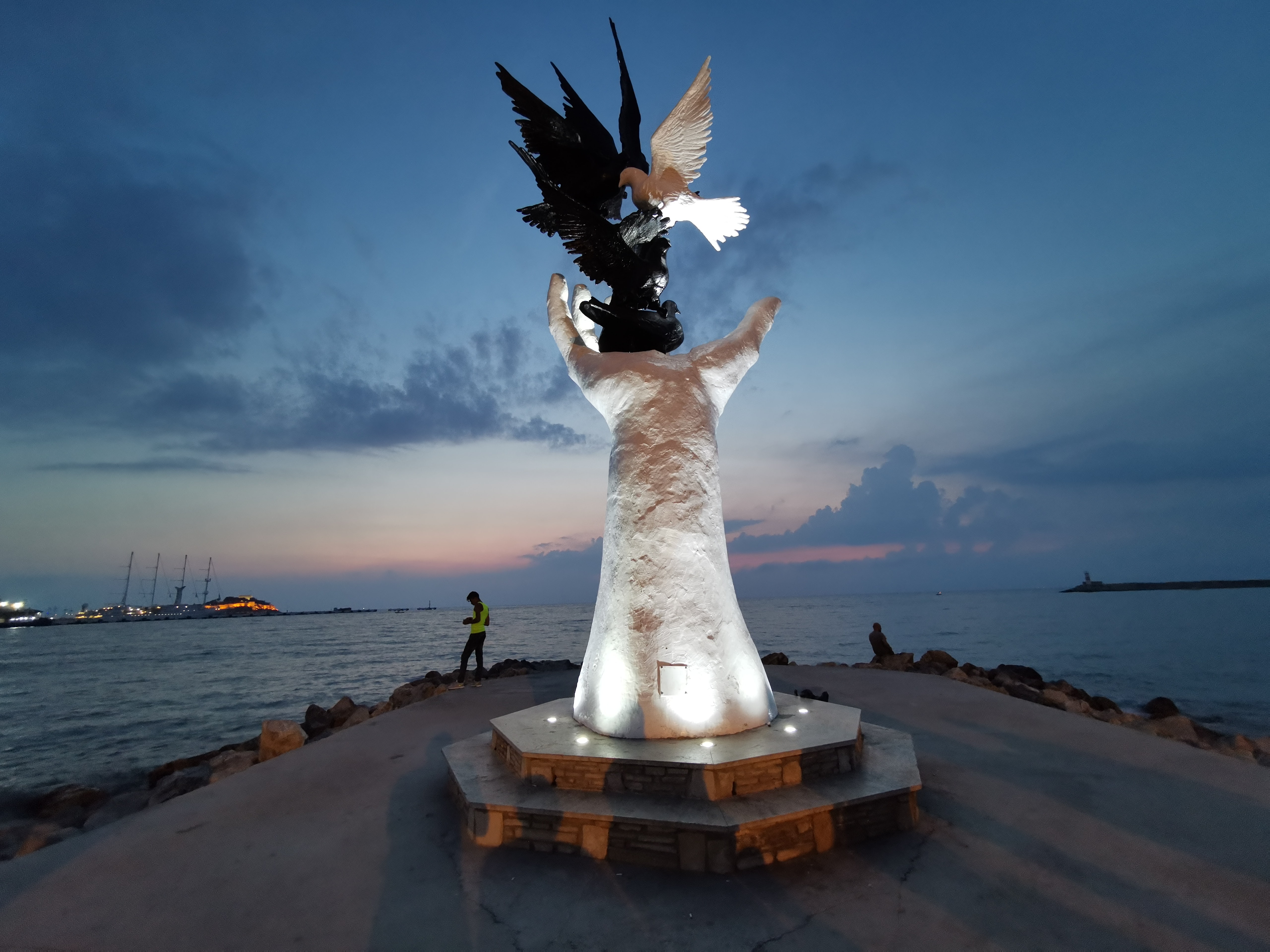
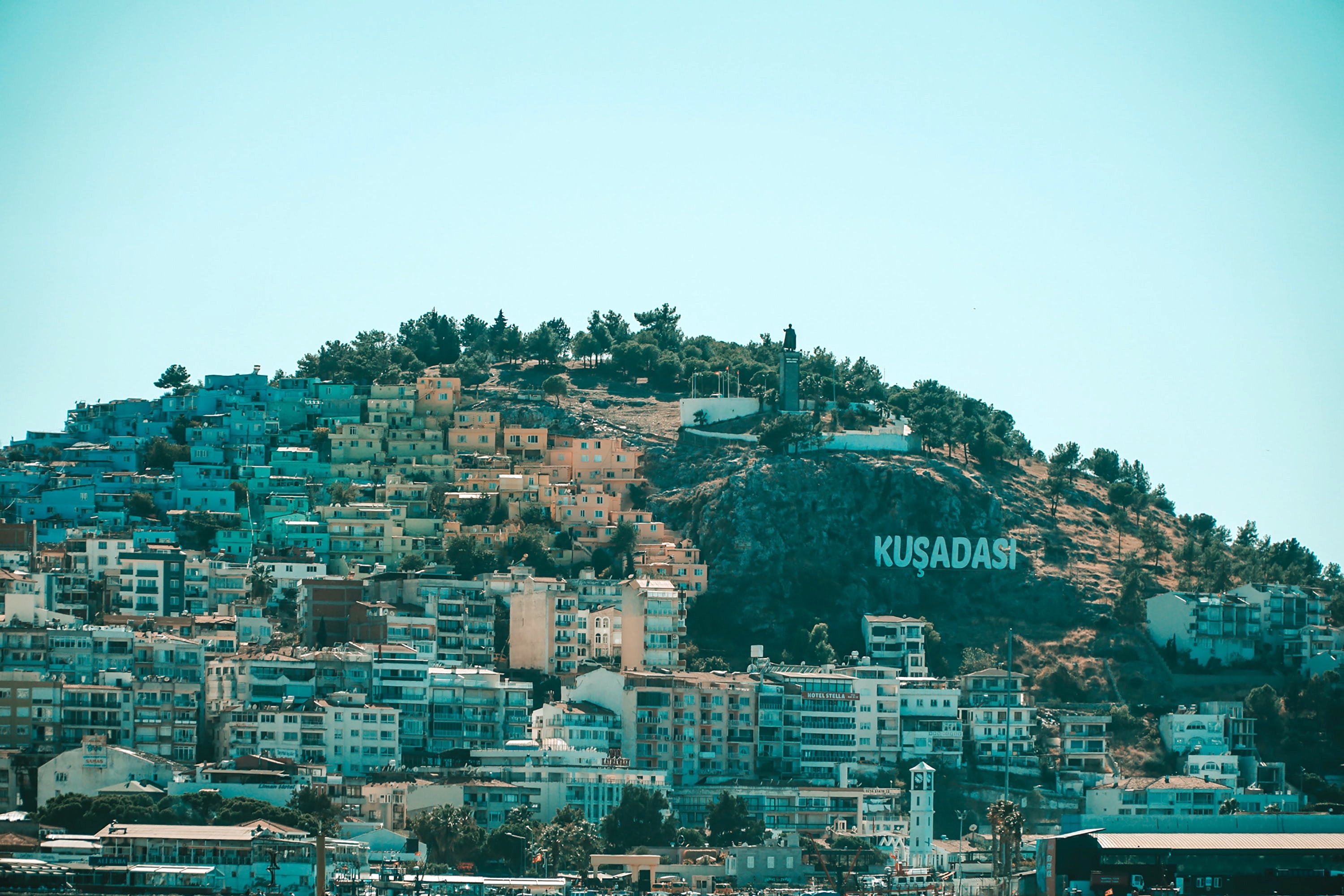
Whilst the busy resort town of Kusadasi offers much in the way of shopping and dining – not to mention a flourishing beach life scene, the real jewel here is Ephesus and the stunning ruined city that really take centre stage. With only 20% of the classical ruins having been excavated, this archaeological wonder has already gained the status as Europe’s most complete classical metropolis. And a metropolis it really is; built in the 10th century BC this UNESCO World Heritage site is nothing short of spectacular. Although regrettably very little remains of the Temple of Artemis (one of the seven wonders of the ancient world), the superb Library of Celsus’ façade is practically intact and it is one of life’s great joys to attend an evening performance in the illuminated ruins once all the tourists have left. The history of the city is fascinating and multi-layered and it is well worth reading up on this beforehand if a visit is planned. Another point of interest for historians would be the house of the Virgin Mary, located on the romantically named Mount Nightingale and just nine kilometres away from Ephesus proper. Legend has it that Mary (along with St. John) spent her final years here, secluded from the rest of the population, spreading Christianity. An edifying experience, even for non-believers. For the less historical minded amongst you, Kusadasi offers plenty in the way of activities. After a stroll through the town, jump in a taxi to Ladies’ Beach (men are allowed), sample a Turkish kebap on one of the many beachfront restaurants and enjoy the clement weather. If you do want to venture further afield, then the crystal clear beaches of Guzelcamli (or the Millipark), the cave of Zeus and the white scalloped natural pools at Pamukkale, known as Cleopatra’s pools, are definitely worth a visit.
About Dardanelles
About Istanbul
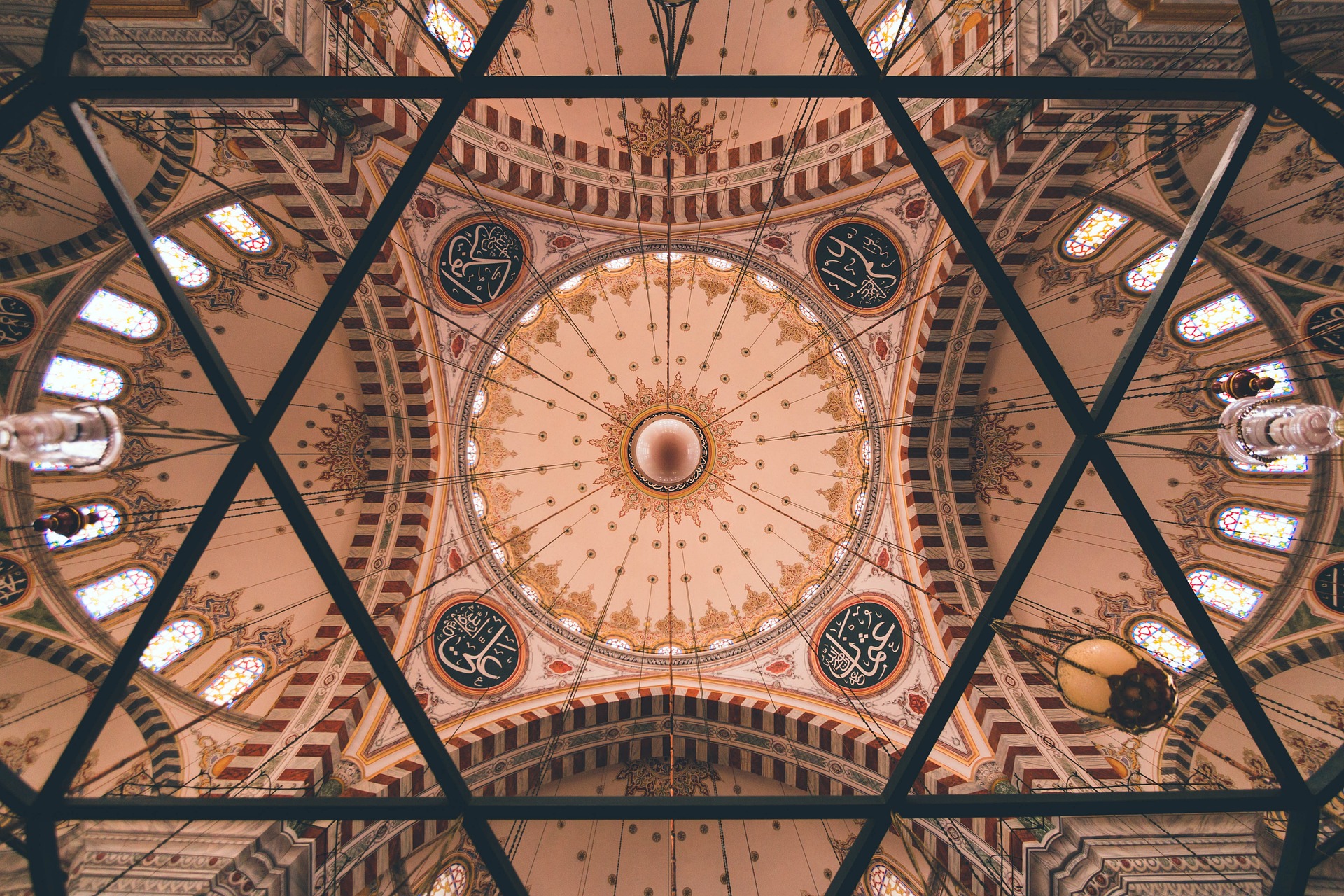
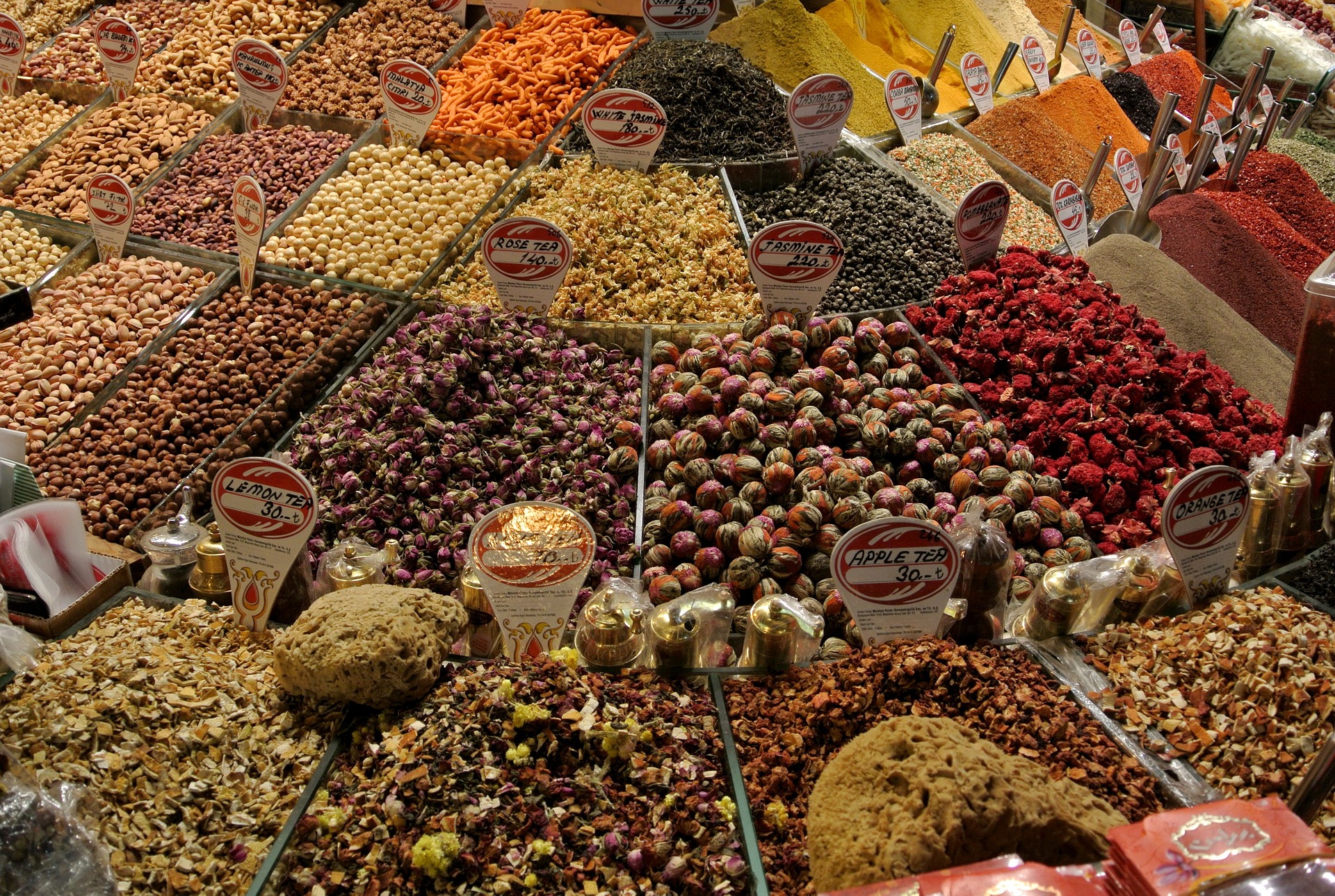
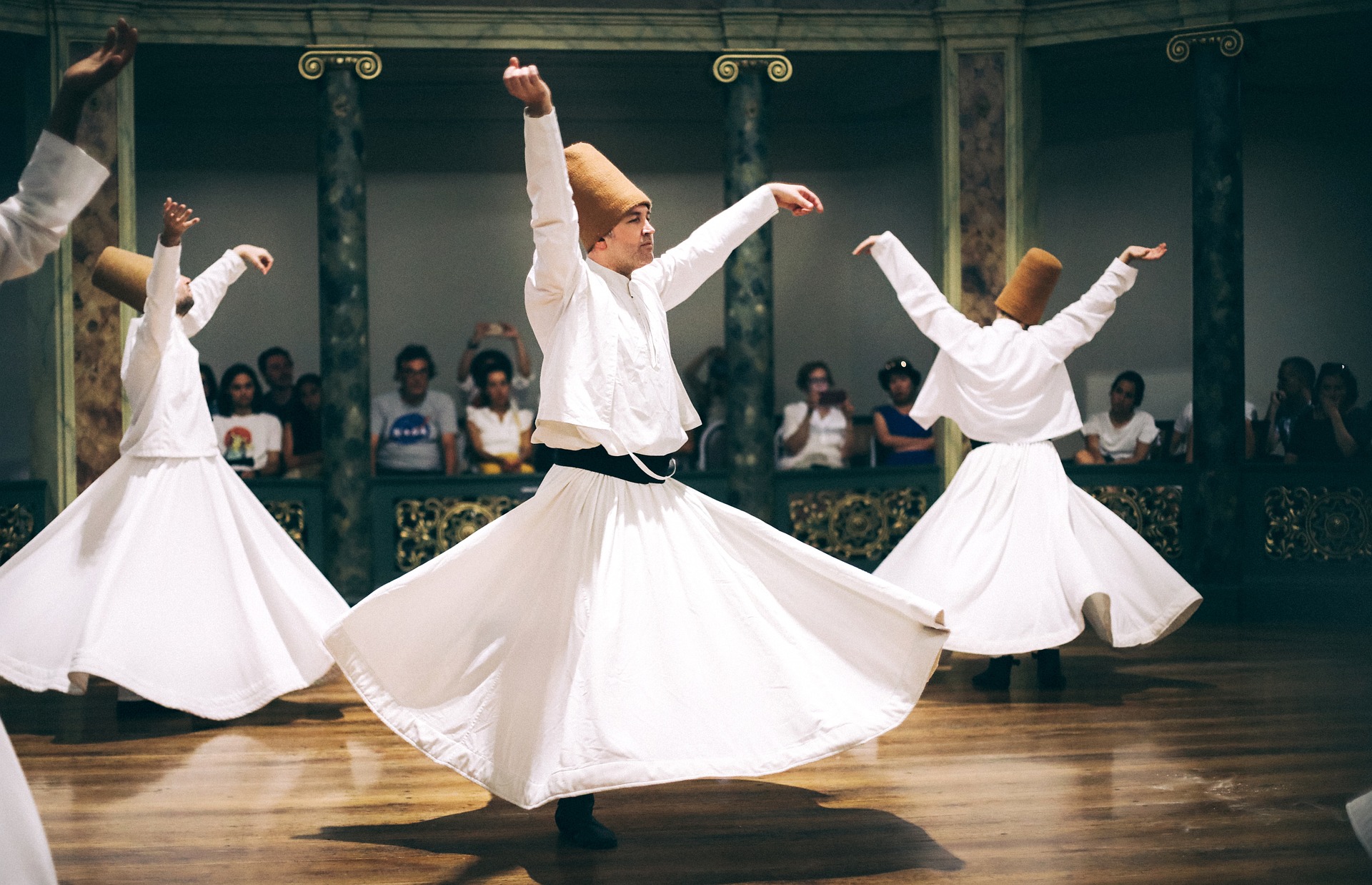
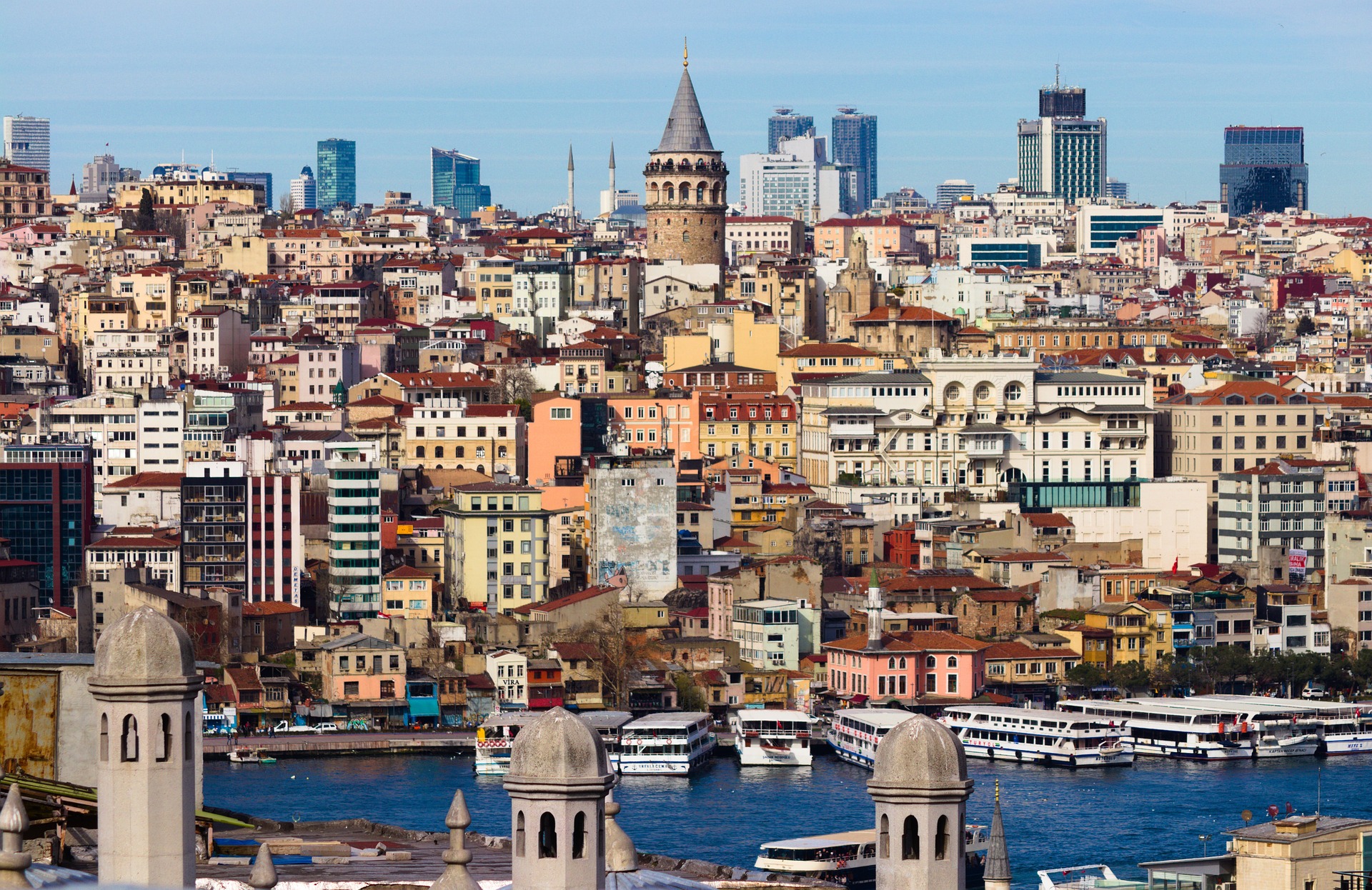
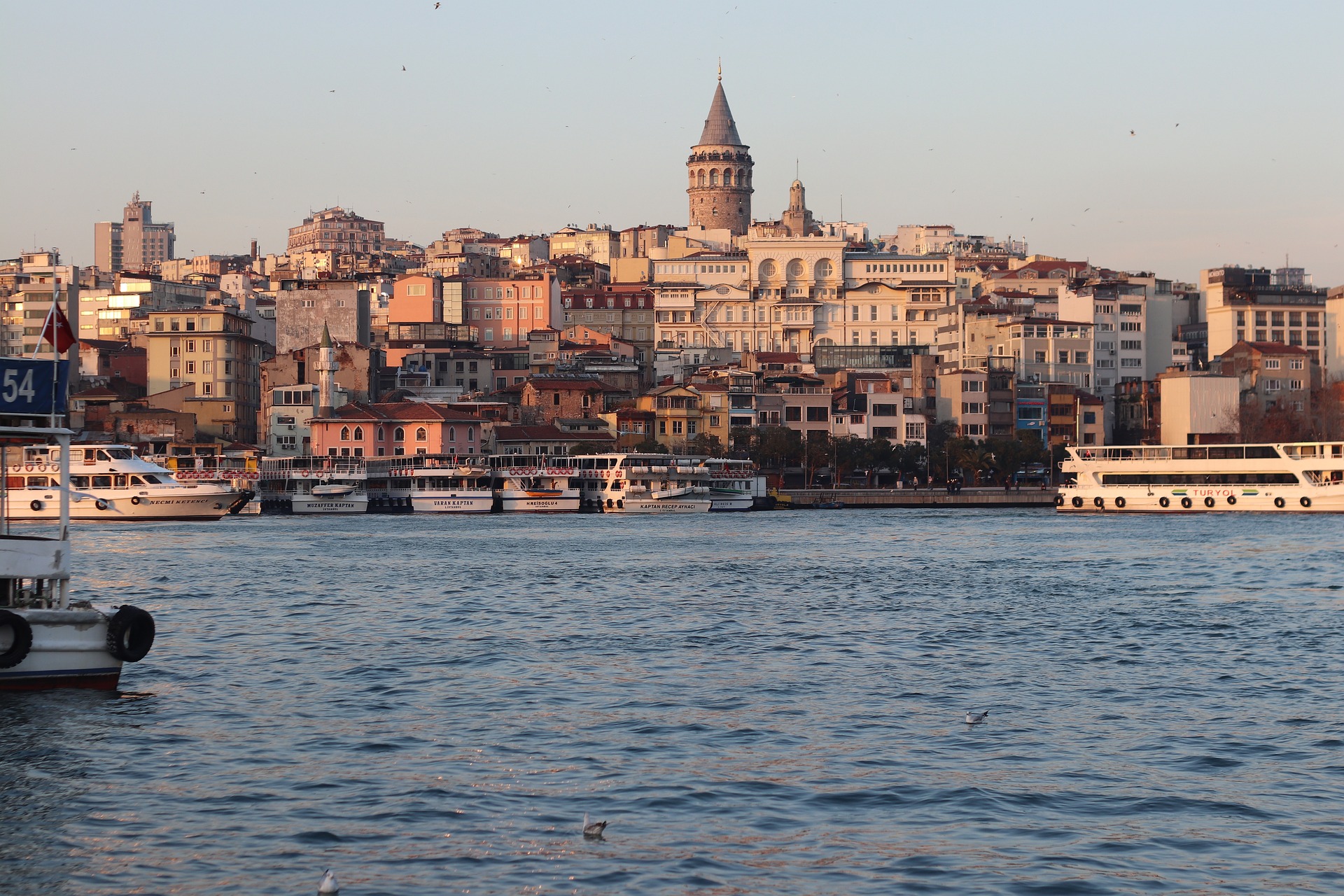
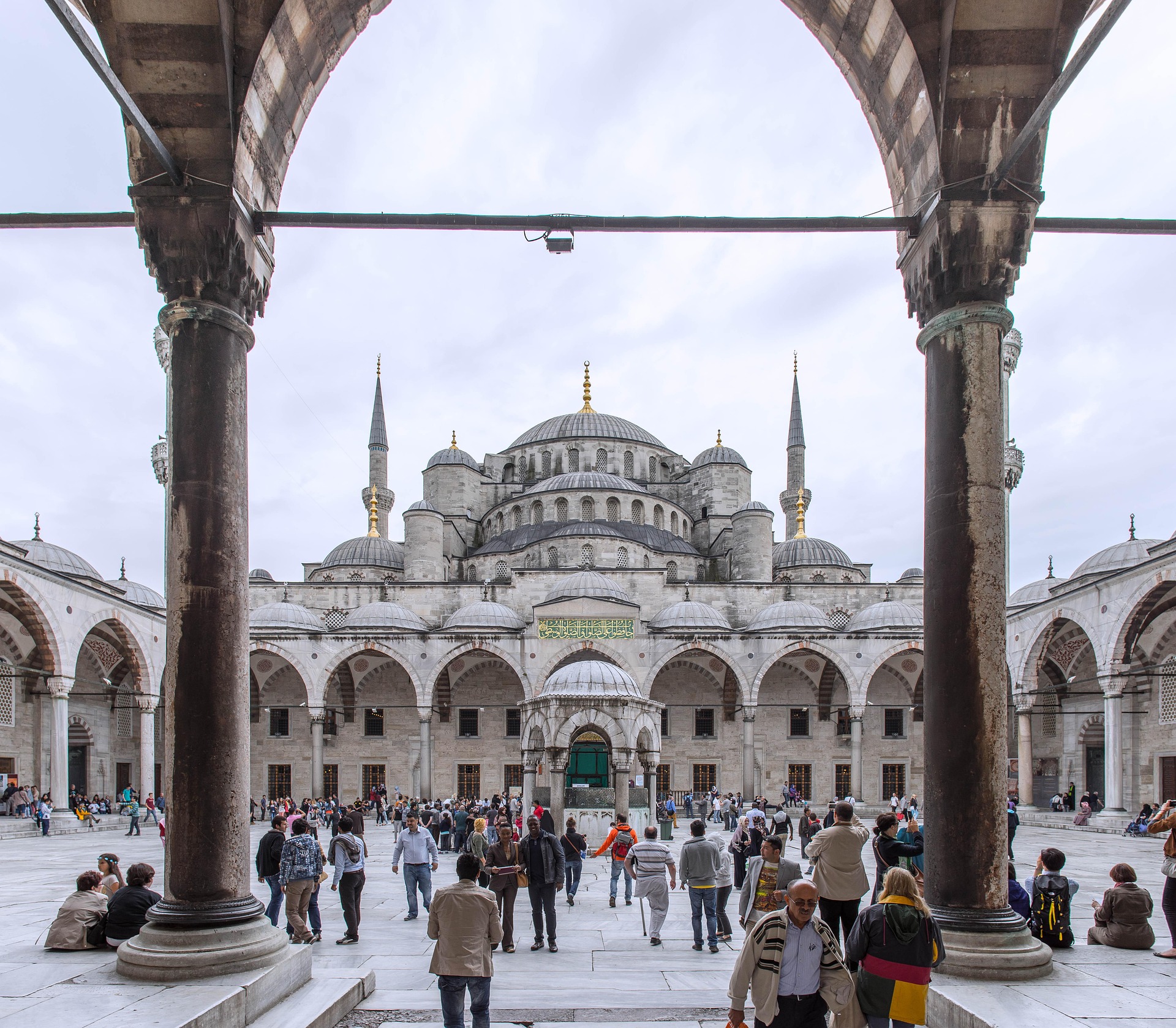
The only city in the world that can lay claim to straddling two continents, Istanbul—once known as Constantinople, capital of the Byzantine and then the Ottoman Empire—has for centuries been a bustling metropolis with one foot in Europe and the other in Asia. Istanbul embraces this enviable position with both a certain chaos and inventiveness, ever evolving as one of the world’s most cosmopolitan crossroads. It’s often said that Istanbul is the meeting point of East and West, but visitors to this city built over the former capital of two great empires are likely to be just as impressed by the juxtaposition of old and new. Office towers creep up behind historic palaces, women in chic designer outfits pass others wearing long skirts and head coverings, peddlers’ pushcarts vie with battered old Fiats and shiny BMWs for dominance of the noisy, narrow streets, and the Grand Bazaar competes with modern shopping malls. At dawn, when the muezzin's call to prayer resounds from ancient minarets, there are inevitably a few hearty revelers still making their way home from nightclubs and bars. Most visitors to this sprawling city of more than 14 million will first set foot in the relatively compact Old City, where the legacy of the Byzantine and Ottoman empires can be seen in monumental works of architecture like the brilliant Aya Sofya and the beautifully proportioned mosques built by the great architect Sinan. Though it would be easy to spend days, if not weeks, exploring the wealth of attractions in the historical peninsula, visitors should make sure also to venture elsewhere in order to experience the vibrancy of contemporary Istanbul. With a lively nightlife propelled by its young population and an exciting arts scene that’s increasingly on the international radar—thanks in part to its stint as the European Capital of Culture in 2010—Istanbul is truly a city that never sleeps. It’s also a place where visitors will feel welcome: Istanbul may be on the Bosphorus, but at heart it’s a Mediterranean city, whose friendly inhabitants are effusively social and eager to share what they love most about it.
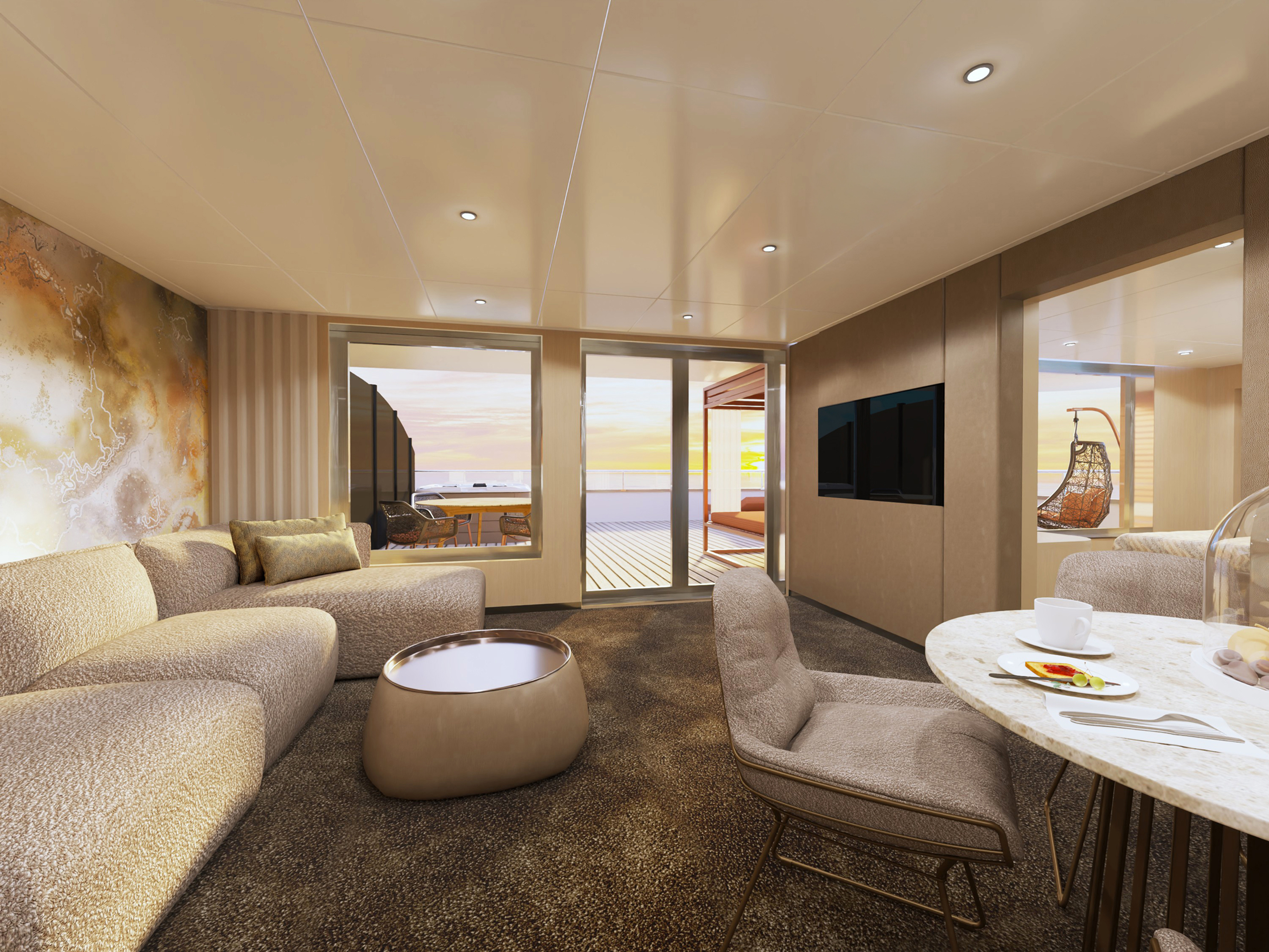
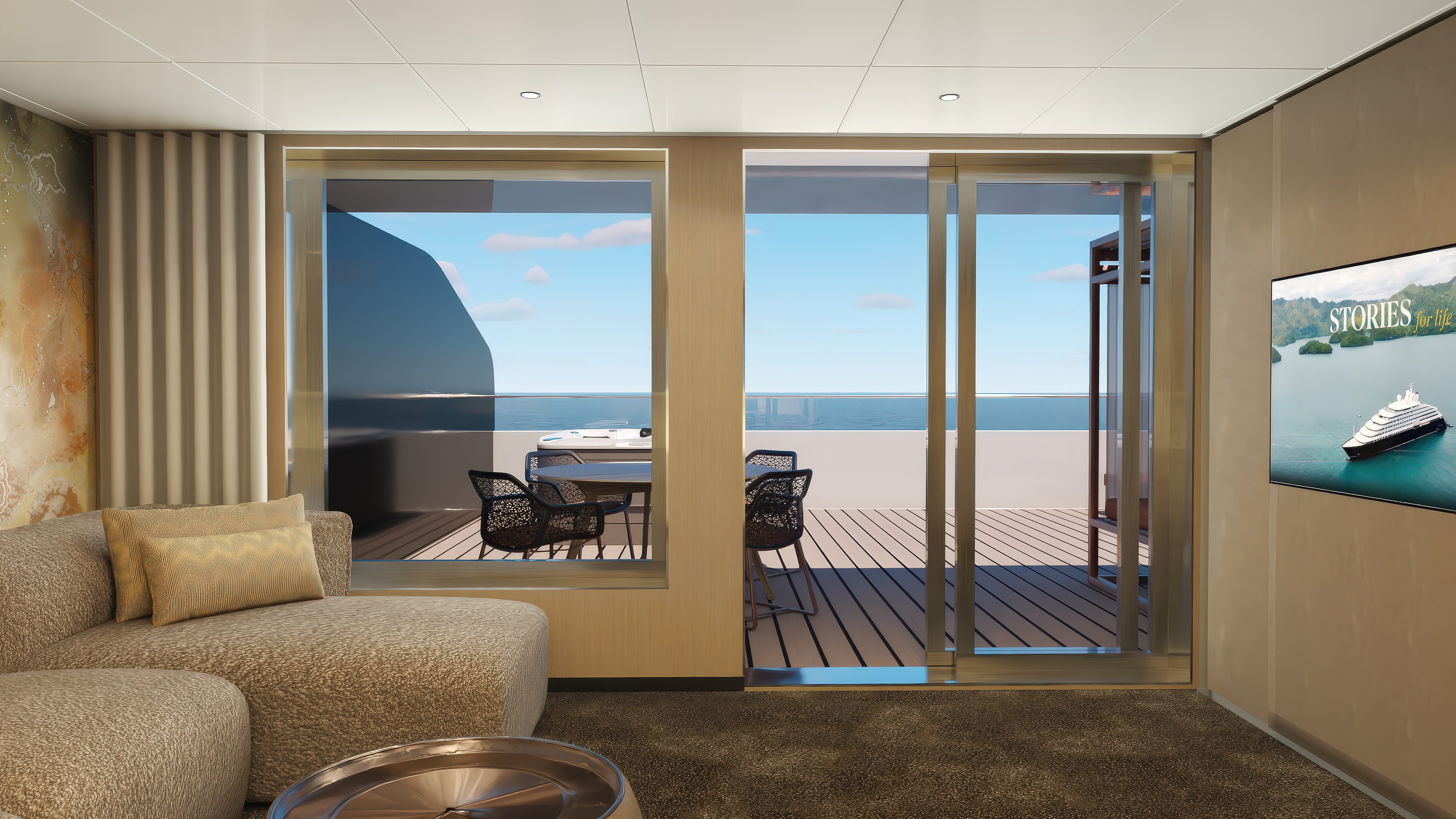
Your own private residence at sea.
The lounge is thoughtfully appointed areas for relaxation, dining, and entertaining, with a fully appointed bar island: delight in anything your heart desires — from crafted cocktails to wellness-inspired refreshments and light dining — all served discreetly by your private butler. The suite features a master bedroom plus a wellness studio with in-suite ESPA spa services and private fitness amenities. Which can transform into a second bedroom for family or guests. The bathroom is enhanced with steam and infrared experiences for ultimate wellbeing and indulgence with full-size baths and double vanities, ensuring the utmost in comfort and indulgence. A spacious walk-in wardrobe and private Glam Bar, fully appointed with Dyson’s advanced hair care tools and elevated ESPA amenities, complete the suite, offering effortless luxury and the ultimate in oceanfront living. An expansive terrace with Jacuzzi, private cabana, and outdoor lounge and dining areas provides the perfect space to relax or entertain under open skies.

Enjoy enhanced space and bespoke amenities. Each suite features spacious walk-in wardrobes and Glam Bars. These top-tier suites further elevate indulgence with expansive, fully appointed Butler Bars, offering a personalised selection of refreshments and in-suite dining options. Full-size bath, double vanity, Glam bar, and elevated ESPA amenities, delivering unparalleled comfort and refined ultra-luxury. A private terrace with jacuzzi, cabana and dining.
Enjoy enhanced space and bespoke amenities. Each suite features spacious walk-in wardrobes and Glam Bars. These top-tier suites further elevate indulgence with expansive, fully appointed Butler Bars, offering a personalised selection of refreshments and in-suite dining options. Full-size bath, double vanity, Glam bar, and elevated ESPA amenities, delivering unparalleled comfort and refined ultra-luxury. A private terrace with jacuzzi, cabana and dining.
Separate bedroom for enhanced privacy. Full-size bath, double vanity, walk-in wardrobe, and Glam Bar, ensuring every detail is designed for comfort, privacy, and indulgence.
A romantic retreat for couples, featuring a luxurious four-poster bed and indulgent wellness bathroom with a soaking spa bath, steam shower, soothing light therapy, and ocean vista, double vanity, and elevated ESPA spa amenities. Every detail is designed for shared relaxation and rejuvenation.
Separate bedrooms for enhanced privacy. Master Suite also offering adjoining suites for family accommodation. Full-size bath, double vanity, walk-in wardrobe, and Glam Bars, ensuring every detail is designed for comfort, privacy, and indulgence.
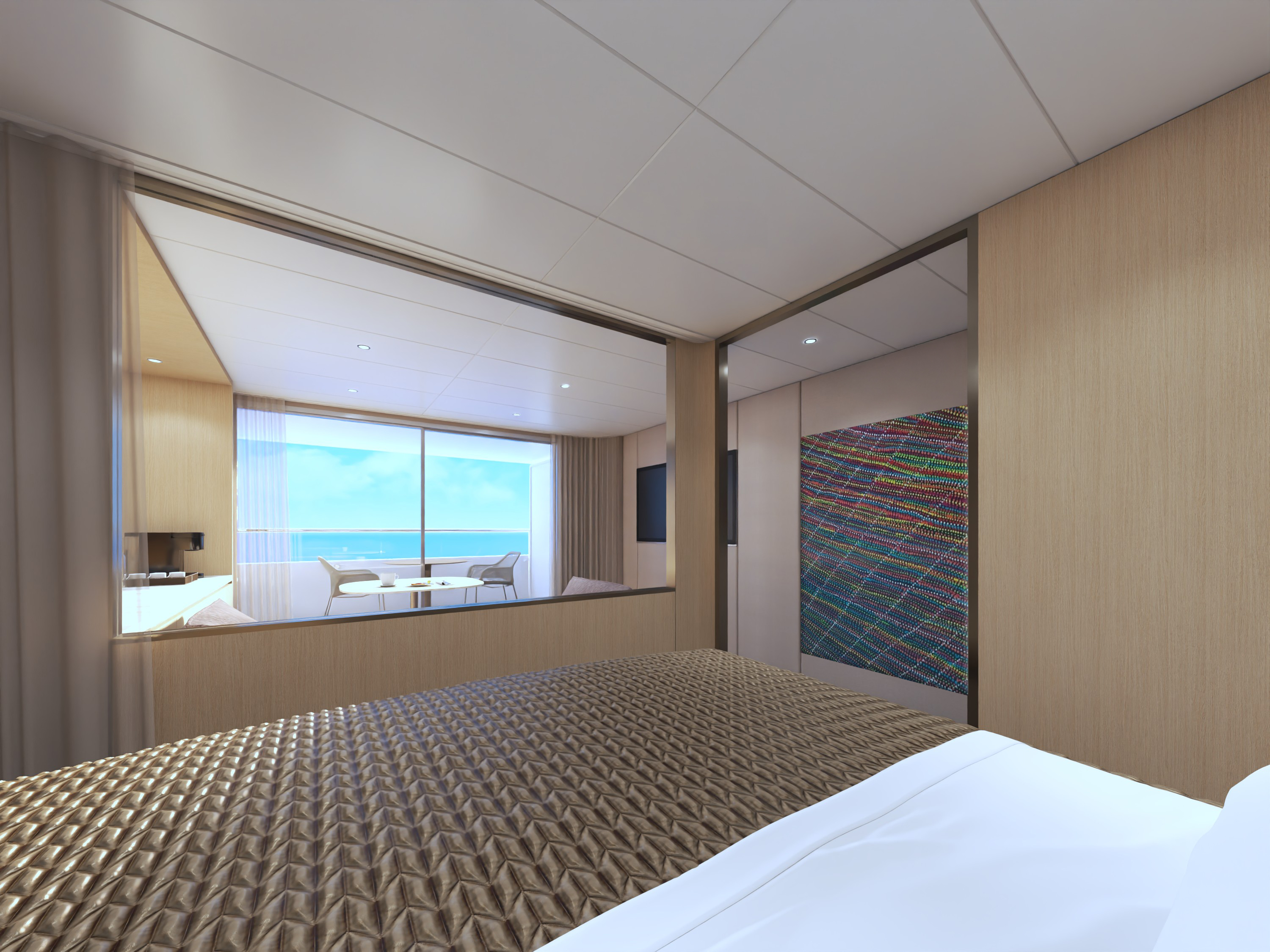
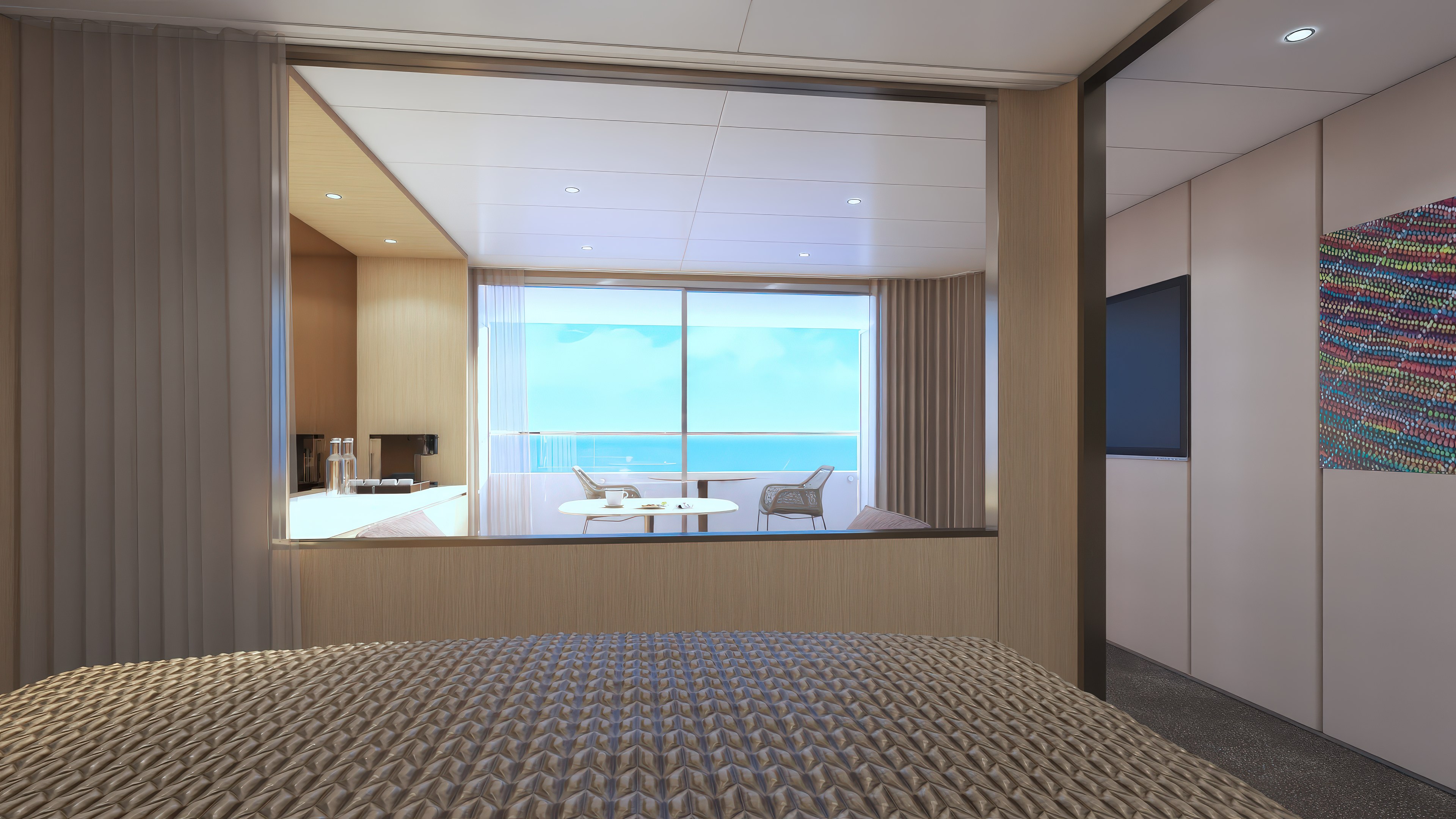
Separate sleep and lounge areas for the ultimate comfort. Enhanced spaces and elevated amenities. Walk-in wardrobes, Glam Bar, and fully appointed all-inclusive Butler Bars with custom tables for private in-suite dining.
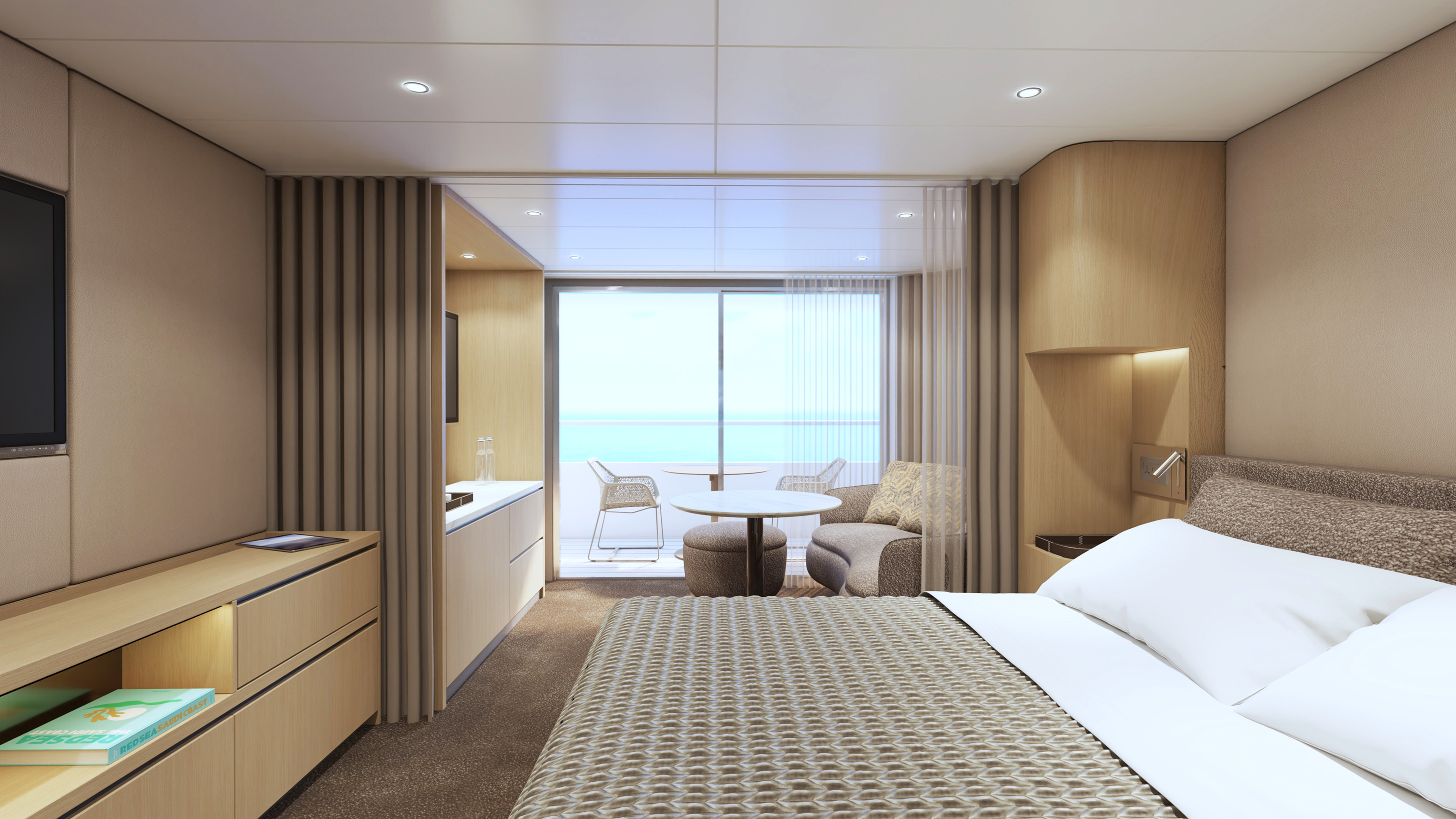
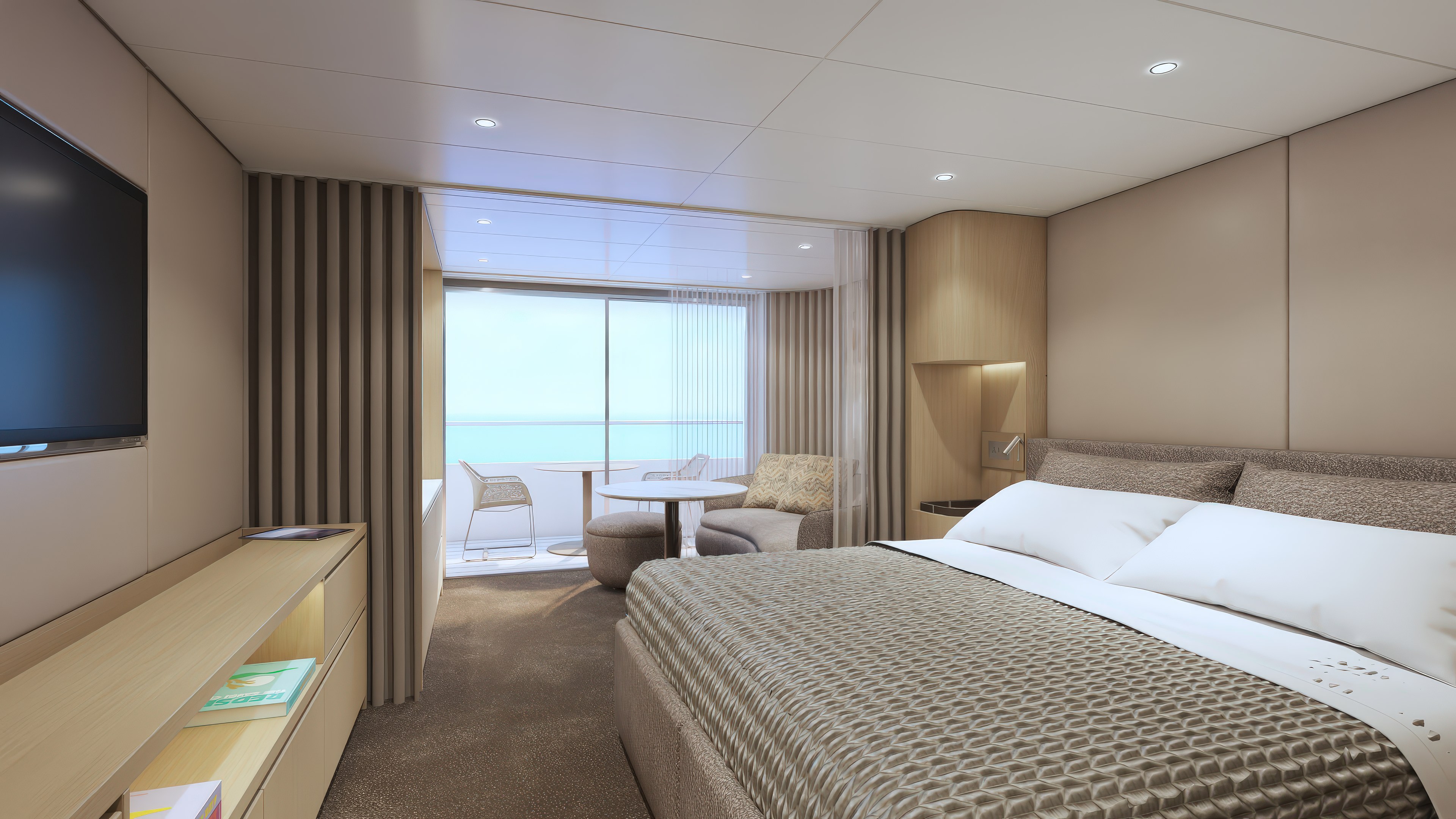
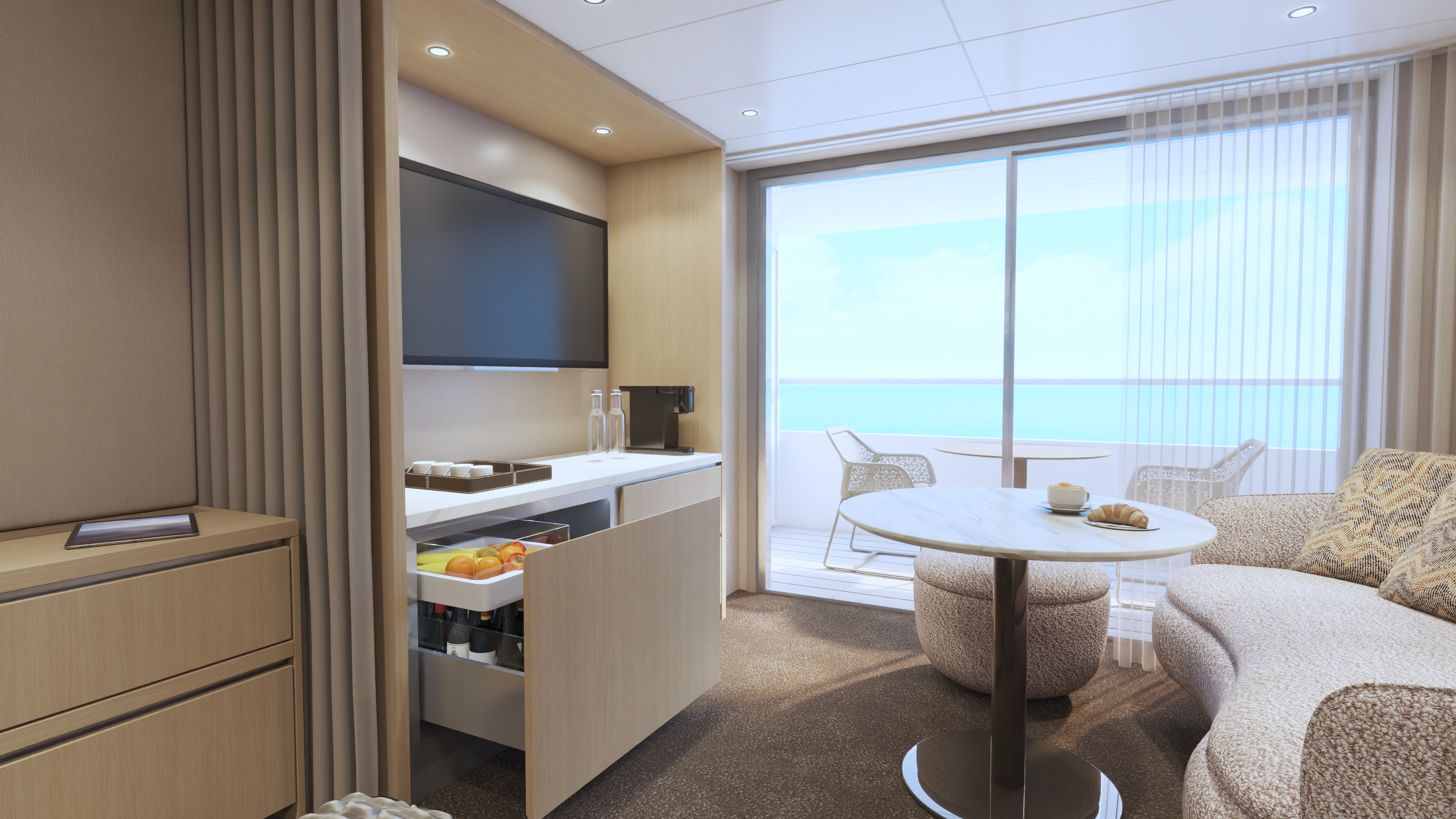
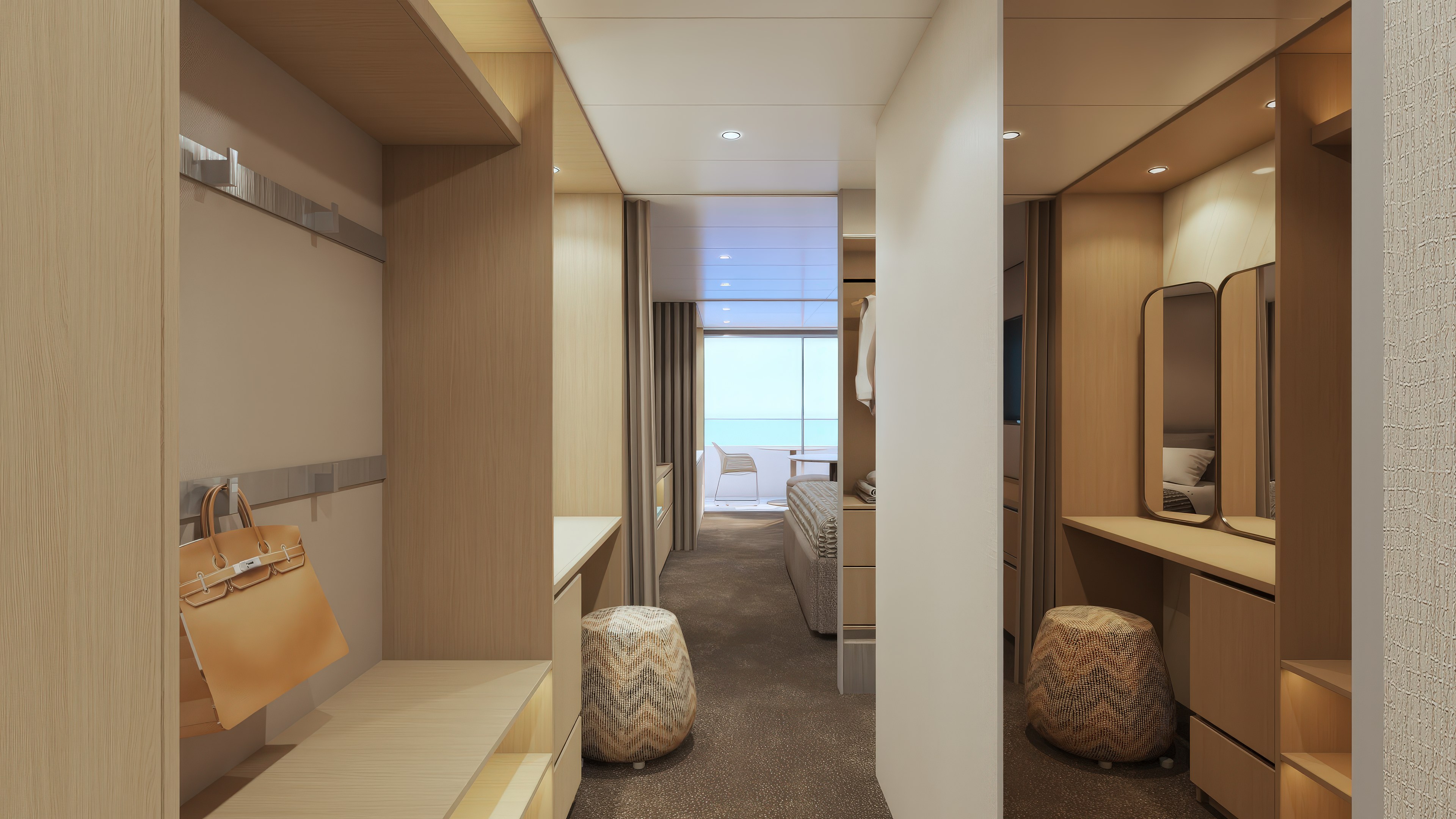
Separate sleep and lounge areas for the ultimate comfort. Enhanced spaces and elevated amenities. Walk-in wardrobes, Glam Bar, and fully appointed all-inclusive Butler Bars with custom tables for private in-suite dining.
Scenic Ikon
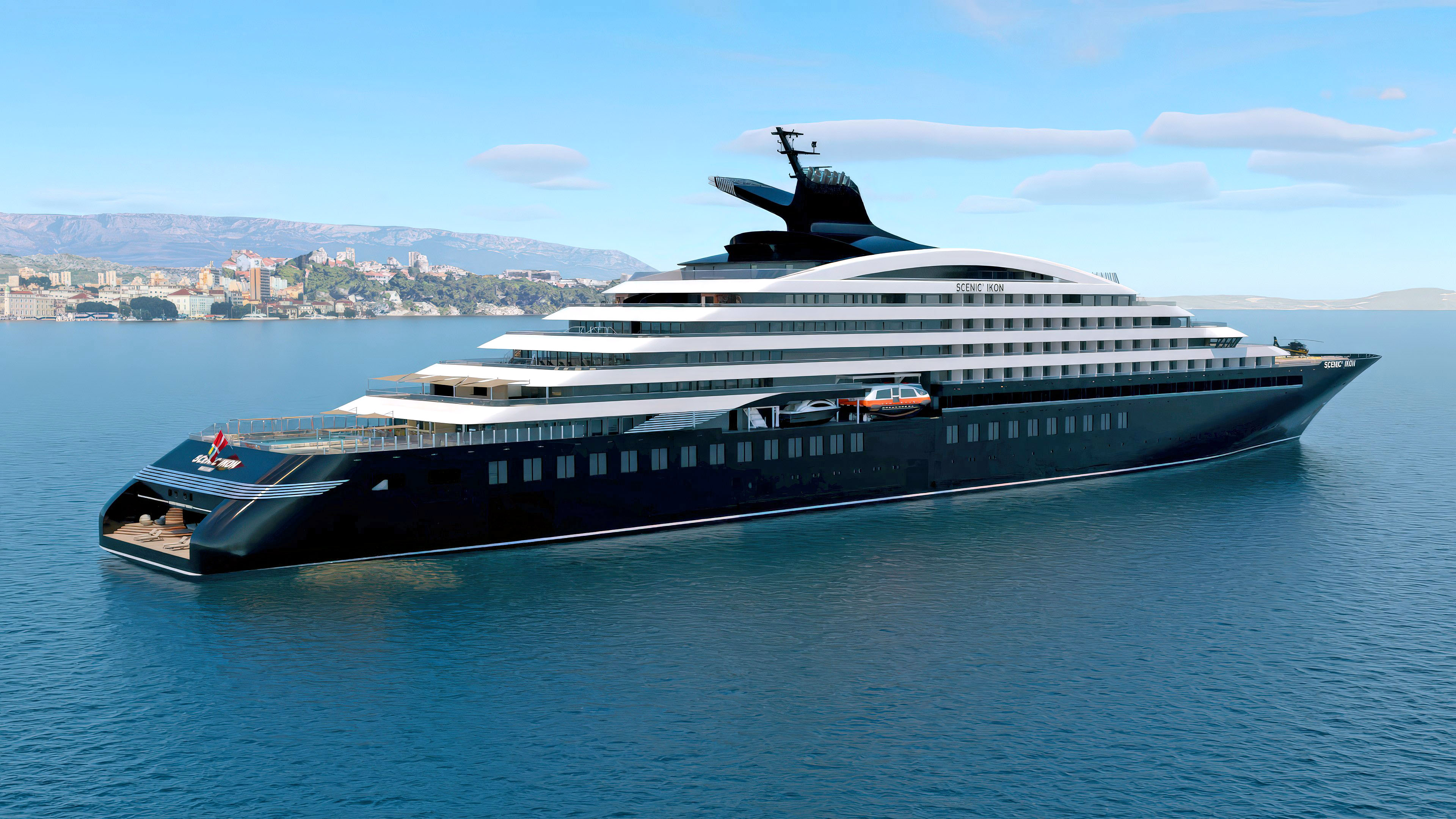
Launching in April 2028, Scenic Ikon will welcome guests into luxuriously appointed suites, 15 distinctive dining venues, expansive lounges and entertainment spaces.
Experience ultimate rejuvenation in the wellbeing oasis, featuring restorative spa treatments, hydrotherapy and thermal experiences, enhanced throughout by world-class fitness offerings.
Be enriched with the immersive excursions and exclusive events during your voyage. Elevate your discovery experiences by soaring above iconic coastlines by helicopter^, with exclusive landings at prestigious golf courses, celebrated local restaurants and special access to historic cultural sites – creating extraordinary life moments to enrich your journey.
The maiden season from April 2028 to March 2029 will span 110 ports, 21 countries, and 26 new destinations. Including the Mediterranean, Aegean and Egypt, the Cape Verde Islands, Dakar, Antarctica, the Falkland Islands and the Chilean Fjords.
Ship Facts
| Launch Year | 2028 | ||||
| Refit Year | |||||
| Language | en-US | ||||
| Gross Tonnage | 26500 | ||||
| Length | 205 | ||||
| Width | 24 | ||||
| Currency | USD | ||||
| Speed | N/A | ||||
| Capacity | 270 | ||||
| Crew Count | N/A | ||||
| Deck Count | 8 | ||||
| Cabin Count | 135 | ||||
| Large Cabin Count | N/A | ||||
| Wheelchair Cabin Count | N/A | ||||
| Electrical Plugs |
|
Deck 10
- Smoking Area
- Elevator
- Cabanas
- Sky Cocktail Bar
- Sky Deck & Pool

Deck 9
- Chairmans Club
- Elevator
- Ikon Penthouse
- Scenic Yacht Suite
- Horizon Suite
- Signature Spa Suite
- Deluxe Verandah Suite

Deck 8
- Experience Pool
- Senses Rejuvenation Spa
- Strength & Endurance Gym
- Elevator
- Grand Terrace Suite
- Master One Bedroom Suite
- Grand Deluxe Verandah Suite
- Deluxe Verandah Suite

Deck 7
- Spa Vitality Pool
- Senses Rejuvenation Spa
- Yoga & Pilates
- Elevator
- Balance & Flexibility Gym
- Wheelhouse
- Master One Bedroom Suite
- Grand Deluxe Verandah Suite
- Deluxe Verandah Suite

Deck 6
- Azure Dining Terrace
- Crustory
- Azure Bar & Cafe
- Lumiere Dining
- Alkemia
- Elevator
- Observation Lounge
- Helideck
- Observation Deck
- Deluxe Verandah Suite
- Grand Deluxe Verandah Suite
- Master One Bedroom Suite

Deck 5
- Pool & Pool Terrace
- Yacht Club Bar
- Yacht Club
- Elevator
- Master One Bedroom Suite
- Grand Deluxe Verandah Suite
- Deluxe Verandah Suite

Deck 4
- Summa Dining
- Textura Dining
- Night Market @ Koko's
- Elements Dining
- Koko's
- Chef’s Table
- Sushi Bar @ Koko's
- Elevator
- Guest Service
- Reception
- Main Lounge
- Scenic Bar
- Boutique
- Theatre

Deck 3
- Marina
- Marina Lounge
- Elevator
- Discovery Centre

Culinary Excellence at Sea
On Scenic Ikon, dining is an art form. Embark on a global culinary journey across 15 distinctive all-inclusive venues, each offering a unique experience.
Signature Scenic Discovery Yachts dining highlights culinary artistry, excellence and sustainably sourced ingredients.
Textura
Expertly prepared Italian classics, premium steaks, and fresh seafood in an elegant yet relaxed atmosphere, with sweeping ocean views, exquisite flavours meet breathtaking scenery.
Elements
Expertly prepared Italian classics, premium steaks, and fresh seafood in an elegant yet relaxed atmosphere, with sweeping ocean views, exquisite flavours meet breathtaking scenery.
Koko’s Asian Fusion, Sushi & Night Market
For a contemporary twist, these experiences reimagine Asian traditions with dynamic flavours, lively presentation, and an energetic, immersive atmosphere.
Crustory
Transforms pizza into a bold culinary exploration.
In-Suite Dining
24-hour room service for all suites.
Chef’s Table
A unique culinary concept at sea, this invitation-only dégustation experience showcases the innovative cooking techniques of the Executive Chef.
Lumière
Modern French cuisine is elevated to extraordinary heights in an intimate, refined setting, enhanced by an exclusive Champagne experience. French Fine Dining
The Yacht Club
Casual dining with a new al fresco terrace – from hot entrées to crisp salads, roast meats, seasonal seafood dishes and artisanal pastries. On special evenings, it transforms into a spectacular venue for gala celebrations, pairing exceptional cuisine with sweeping ocean views.
Azure Café & Bar
Embrace all-day dining with savoury light meals, delectable miniature desserts, hot drinks and premium beverages.
Summa
Elevates local ingredients in share-style plates.
Immersive Entertainment
Enjoy captivating performances in the innovative in-the-round theatre. Where bespoke shows, culinary masterclasses and Discovery Team presentations come to life.
Theatre
Innovative In-The-Round Theatre
Seating for all 270 guests for bespoke shows, culinary masterclassesand Discovery Team presentations come to life.
Main Lounge
The Main Lounge can be located on Deck 4
Unique Open Bridge
To meet the Captain and navigational team, gaining insights into Scenic Ikon’s cutting-edge design and technology. Whilst spending time with the Discovery Team as you search for wildlife and take in spectacular sights along your journey.
Scenic Lounge Bar
Interactive game shows, intimate performances by on board musicians and music from the in-house pianist.
Observation Lounge
Read a book, play board games or relax with a specialty tea or coffee. Spot wildlife through Swarovski telescopes.