Beautiful Bordeaux & Unforgettable Douro With Lisbon
Beautiful Bordeaux & Unforgettable Douro With Lisbon
Cruise overview
WHY BOOK WITH US?
- ✔ The Deluxe Cruises’ team has extensive experience in ultra-luxury cruising.
- ✔ Call now to speak to our helpful and experienced Cruise Concierge team.
- ✔ Enjoy our Unique Deluxe Cruises Bonus for substantial savings.
- ✔ Our team will tailor your holiday to your exacting requirements.
- ✔ As agents, we work under the protection of each cruise lines ABTA / ATOL licences
About Lisbon
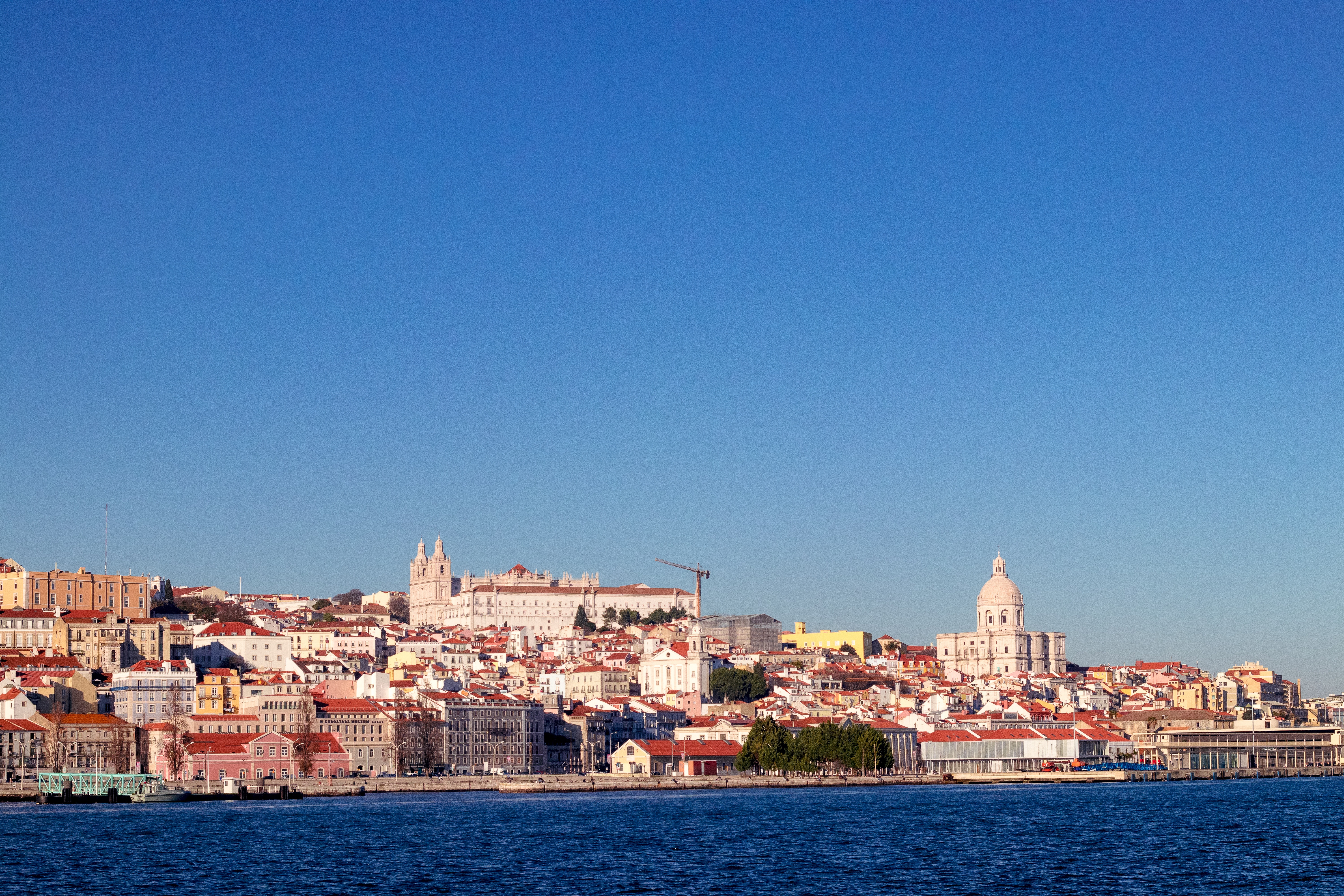
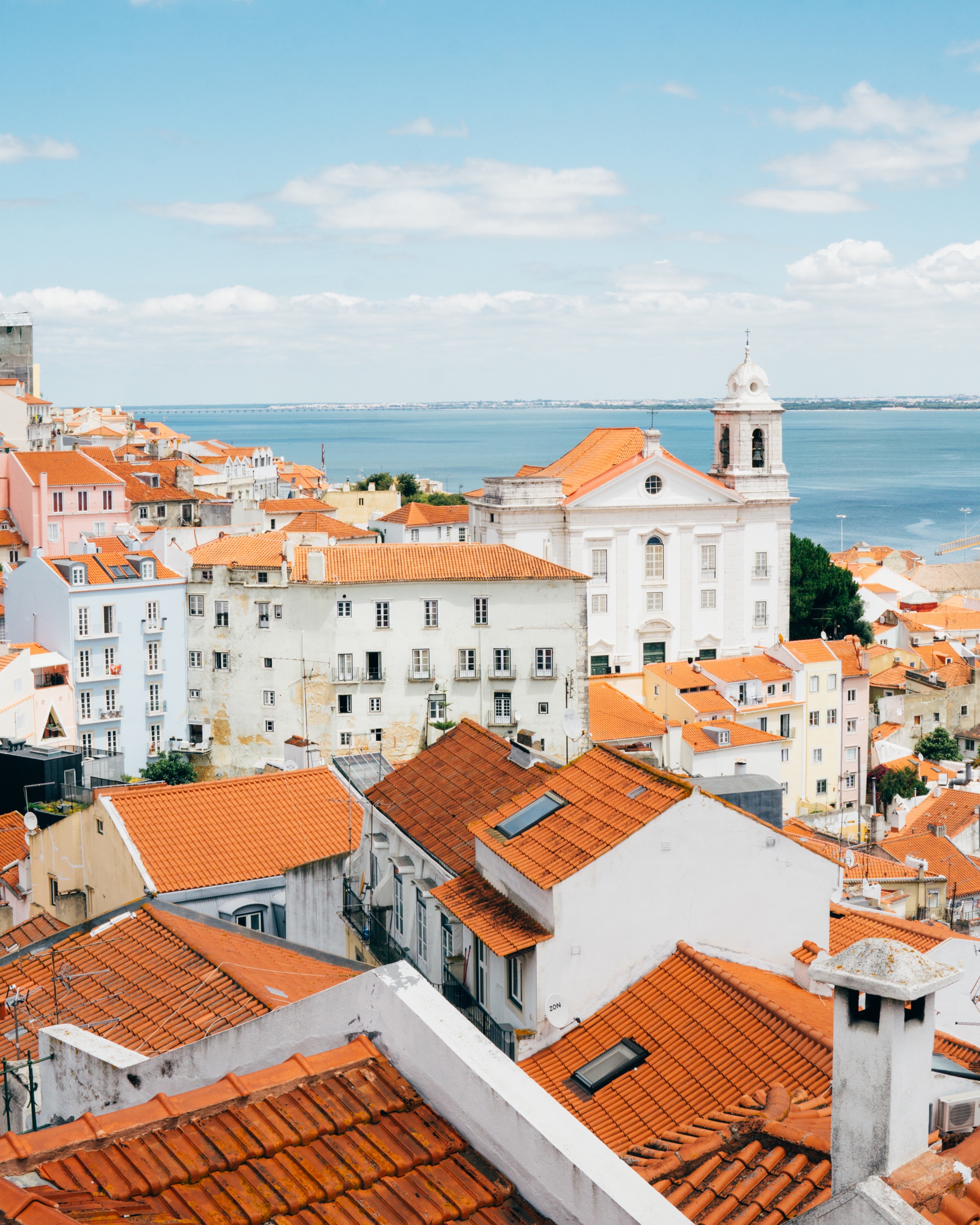
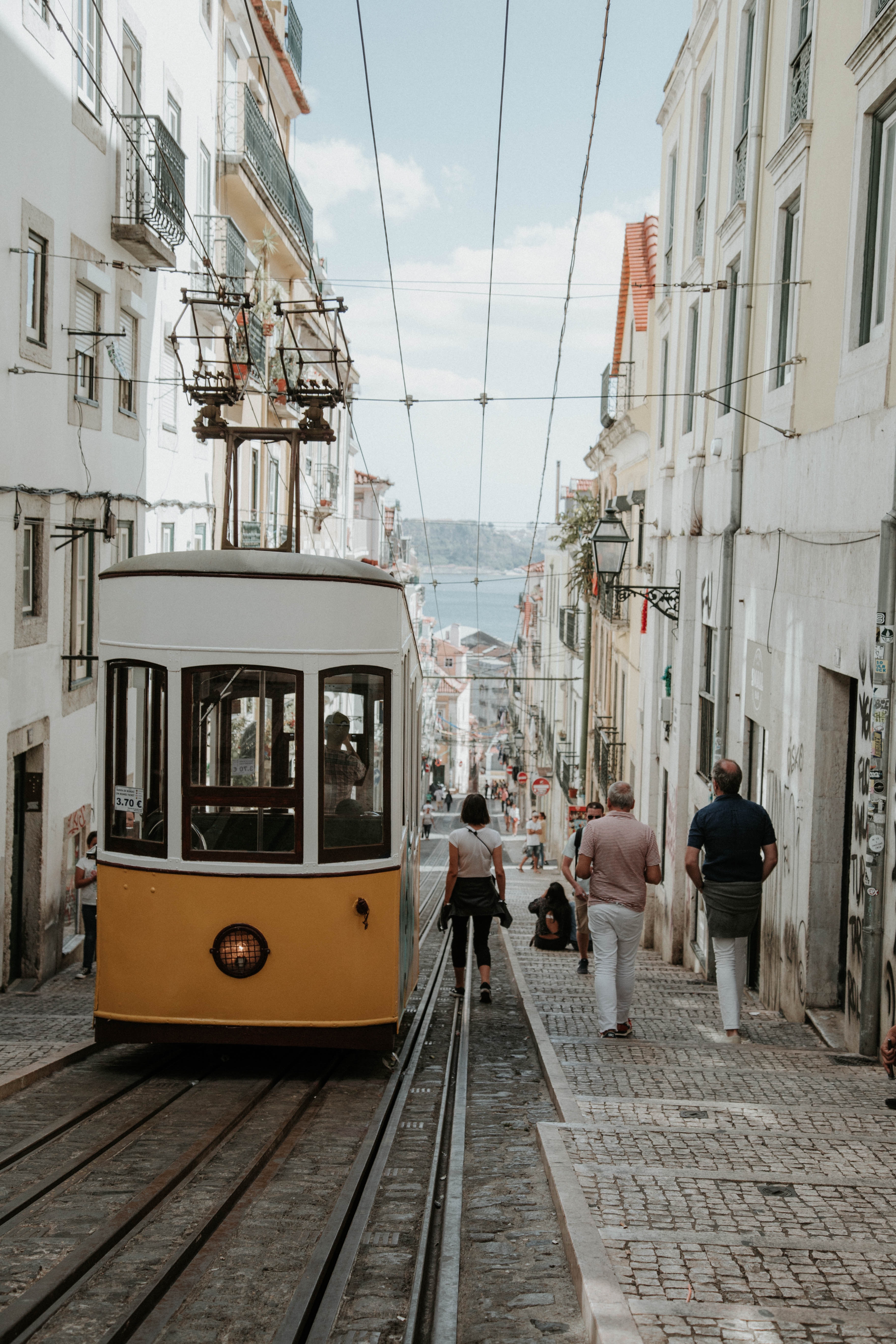
Set on seven hills on the banks of the River Tagus, Lisbon has been the capital of Portugal since the 13th century. It is a city famous for its majestic architecture, old wooden trams, Moorish features and more than twenty centuries of history. Following disastrous earthquakes in the 18th century, Lisbon was rebuilt by the Marques de Pombal who created an elegant city with wide boulevards and a great riverfront and square, Praça do Comércio. Today there are distinct modern and ancient sections, combining great shopping with culture and sightseeing in the Old Town, built on the city's terraced hillsides. The distance between the ship and your tour vehicle may vary. This distance is not included in the excursion grades.
About Lisbon
Set on seven hills on the banks of the River Tagus, Lisbon has been the capital of Portugal since the 13th century. It is a city famous for its majestic architecture, old wooden trams, Moorish features and more than twenty centuries of history. Following disastrous earthquakes in the 18th century, Lisbon was rebuilt by the Marques de Pombal who created an elegant city with wide boulevards and a great riverfront and square, Praça do Comércio. Today there are distinct modern and ancient sections, combining great shopping with culture and sightseeing in the Old Town, built on the city's terraced hillsides. The distance between the ship and your tour vehicle may vary. This distance is not included in the excursion grades.
About Lisbon
Set on seven hills on the banks of the River Tagus, Lisbon has been the capital of Portugal since the 13th century. It is a city famous for its majestic architecture, old wooden trams, Moorish features and more than twenty centuries of history. Following disastrous earthquakes in the 18th century, Lisbon was rebuilt by the Marques de Pombal who created an elegant city with wide boulevards and a great riverfront and square, Praça do Comércio. Today there are distinct modern and ancient sections, combining great shopping with culture and sightseeing in the Old Town, built on the city's terraced hillsides. The distance between the ship and your tour vehicle may vary. This distance is not included in the excursion grades.
About Lisbon
Set on seven hills on the banks of the River Tagus, Lisbon has been the capital of Portugal since the 13th century. It is a city famous for its majestic architecture, old wooden trams, Moorish features and more than twenty centuries of history. Following disastrous earthquakes in the 18th century, Lisbon was rebuilt by the Marques de Pombal who created an elegant city with wide boulevards and a great riverfront and square, Praça do Comércio. Today there are distinct modern and ancient sections, combining great shopping with culture and sightseeing in the Old Town, built on the city's terraced hillsides. The distance between the ship and your tour vehicle may vary. This distance is not included in the excursion grades.
About Porto
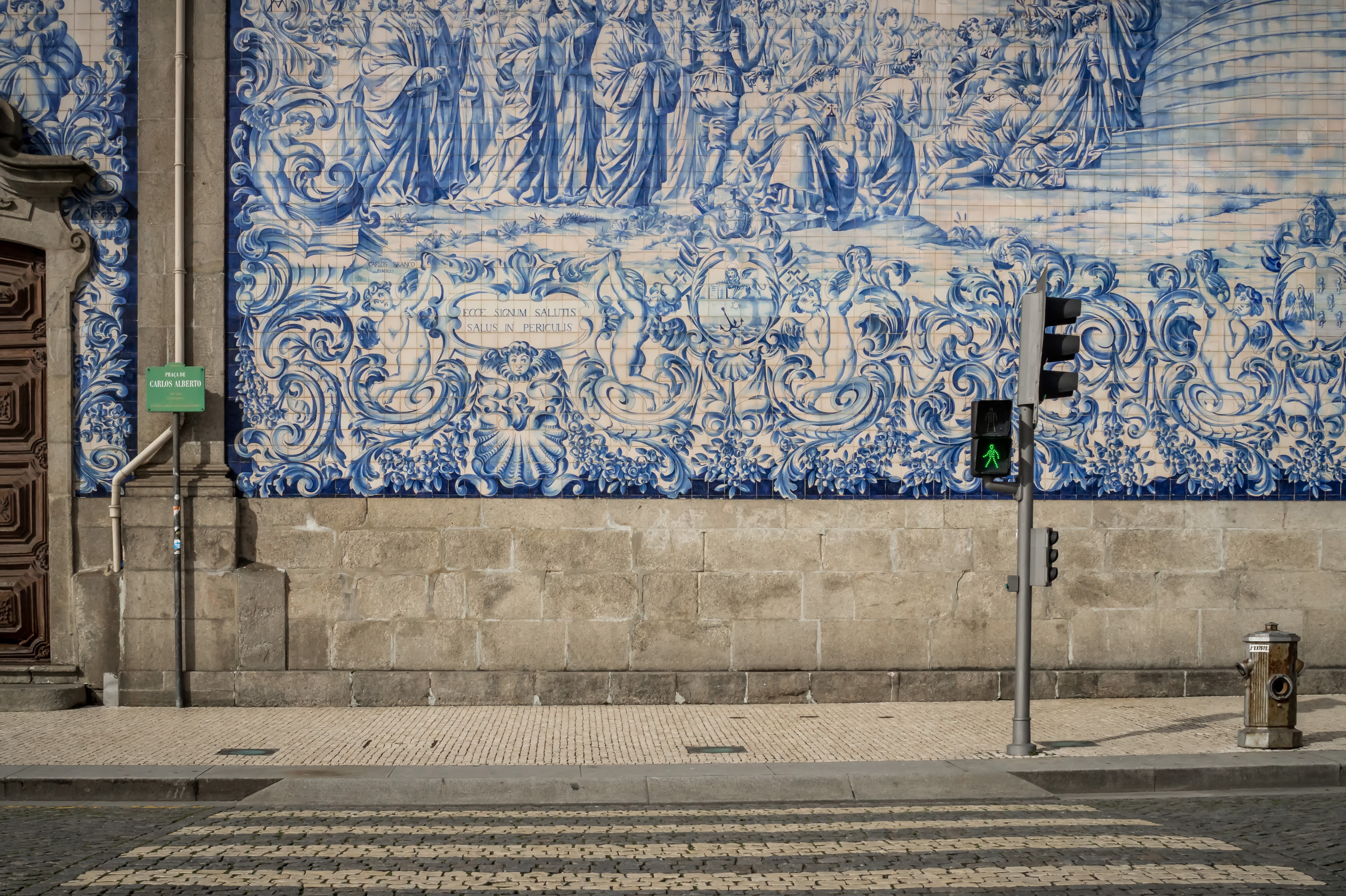
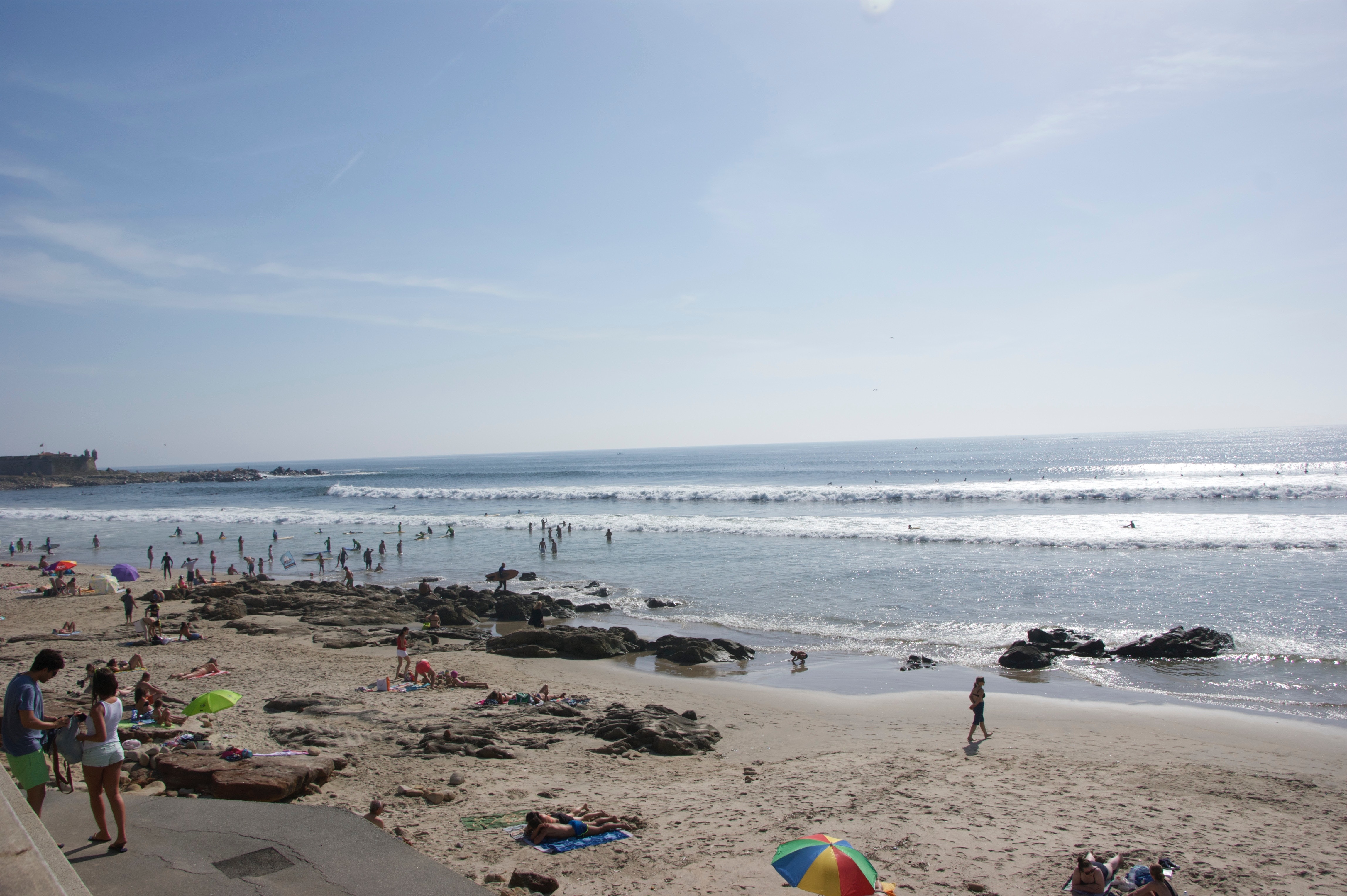
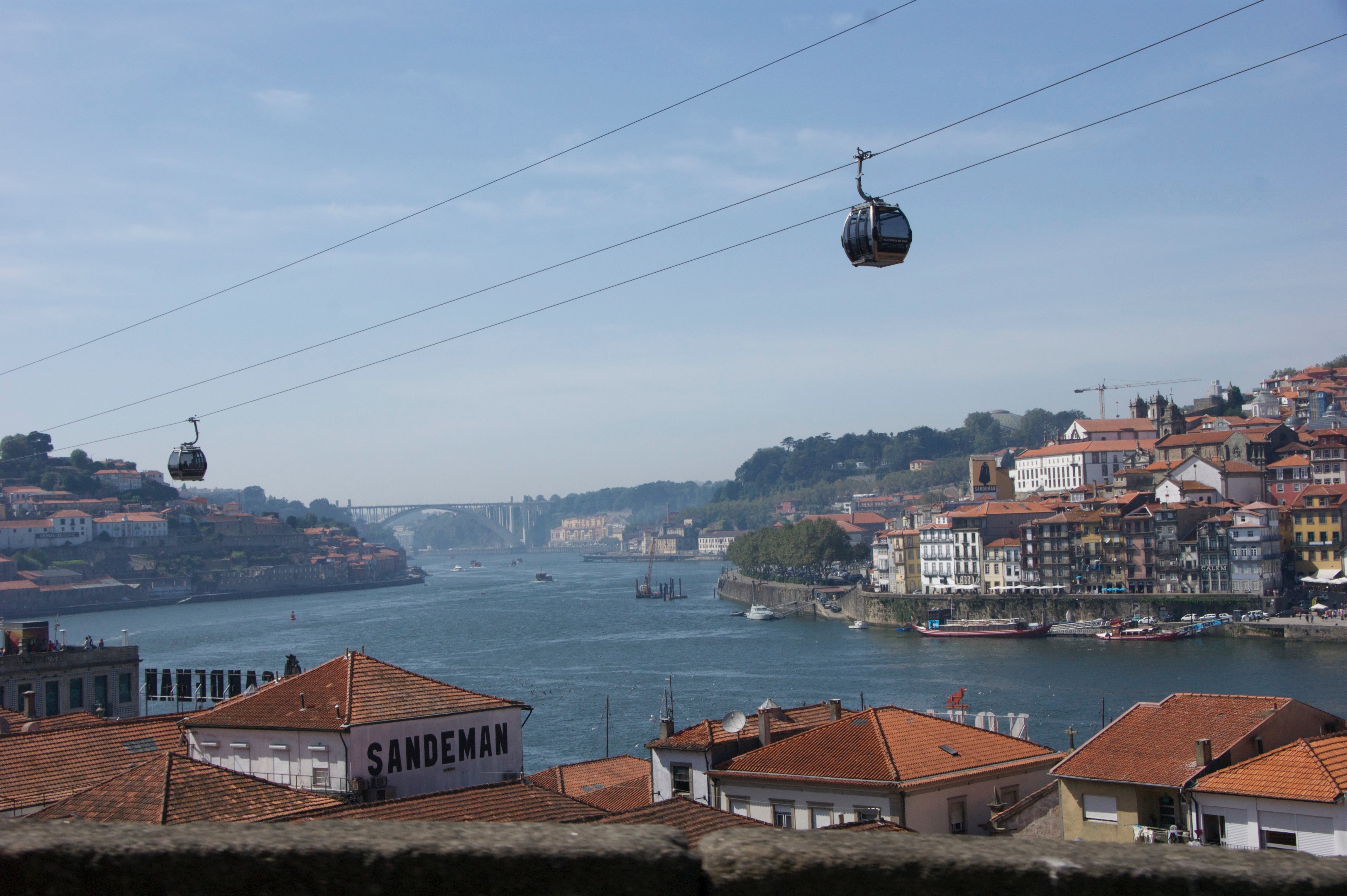
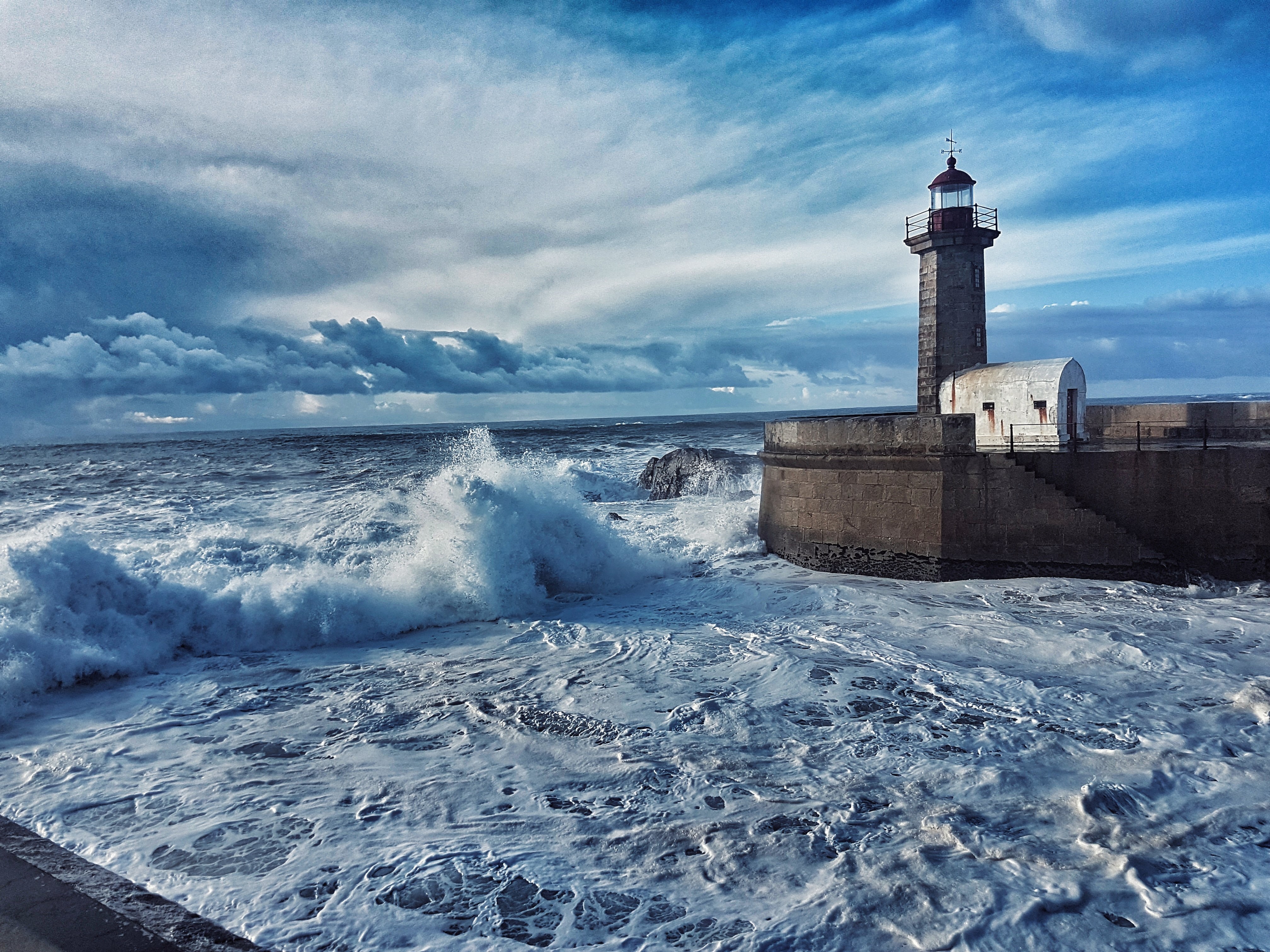
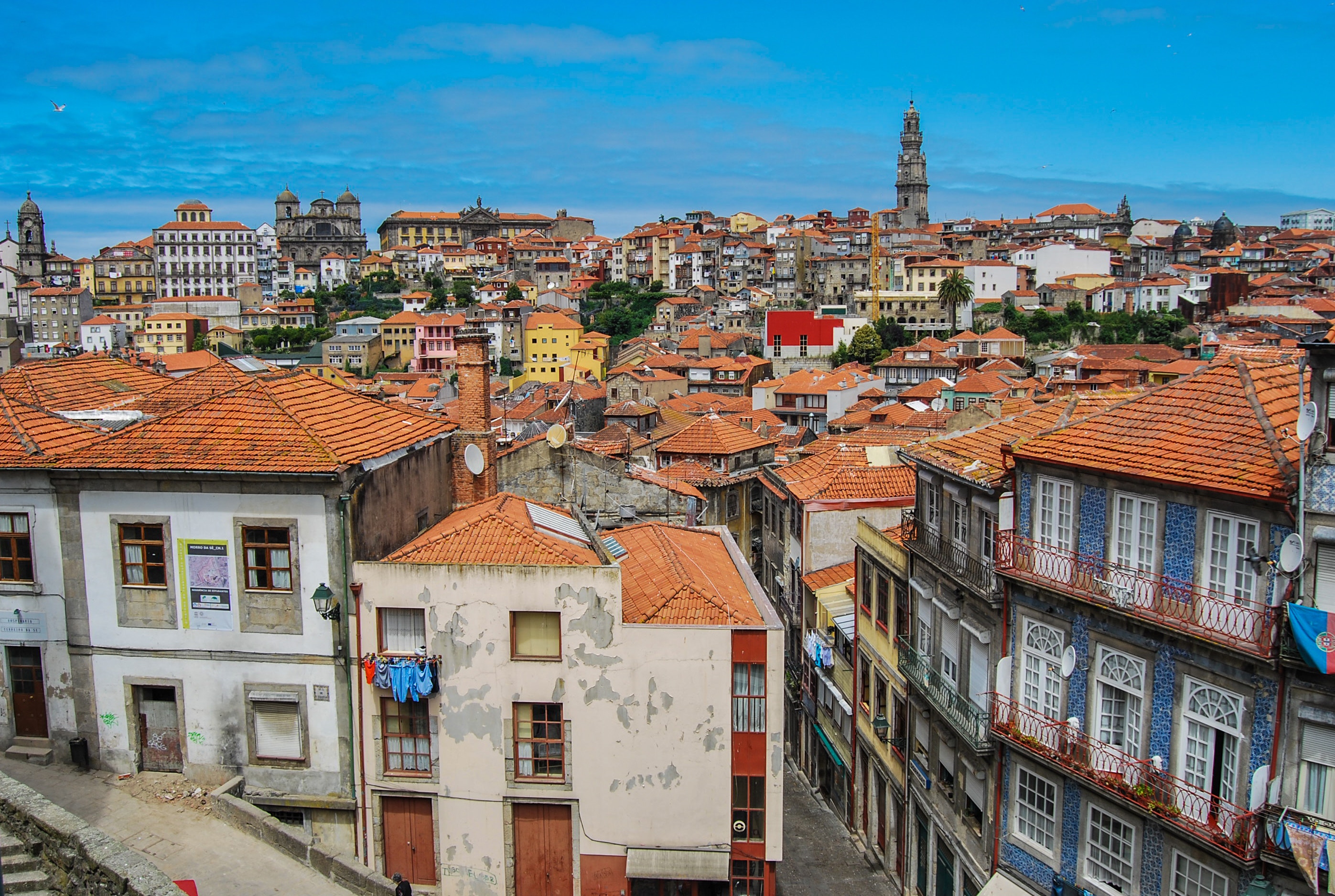
Lively, commercial Oporto is the second largest city in Portugal after Lisbon. Also called Porto for short, the word easily brings to mind the city's most famous product - port wine. Oporto's strategic location on the north bank of the Douro River has accounted for the town's importance since ancient times. The Romans built a fort here where their trading route crossed the Douro, and the Moors brought their own culture to the area. Oporto profited from provisioning crusaders en route to the Holy Land and enjoyed the riches from Portuguese maritime discoveries during the 15th and 16th centuries. Later, port wine trade with Britain compensated for the loss of the spice trade and the end of gold and gem shipments from Brazil. In the 19th century, the city went through a period of new prosperity with the rise of industries. In its wake followed the building of workers' quarters and opulent residences. Since the declaration of Oporto as a World Heritage Site by UNESCO, the city aims to build up a cultural reference that will provide it with a new image, based on deep historical roots. Among the attractions that make Oporto such an interesting place are its graceful bridges spanning the Douro River, a picturesque riverfront quarter and, most notable, its world-famous port wine lodges. Although Oporto is a bustling centre and home to many different businesses, the source of its greatest fame is the rich, sweet fortified red wine we know as port.
About Porto
Lively, commercial Oporto is the second largest city in Portugal after Lisbon. Also called Porto for short, the word easily brings to mind the city's most famous product - port wine. Oporto's strategic location on the north bank of the Douro River has accounted for the town's importance since ancient times. The Romans built a fort here where their trading route crossed the Douro, and the Moors brought their own culture to the area. Oporto profited from provisioning crusaders en route to the Holy Land and enjoyed the riches from Portuguese maritime discoveries during the 15th and 16th centuries. Later, port wine trade with Britain compensated for the loss of the spice trade and the end of gold and gem shipments from Brazil. In the 19th century, the city went through a period of new prosperity with the rise of industries. In its wake followed the building of workers' quarters and opulent residences. Since the declaration of Oporto as a World Heritage Site by UNESCO, the city aims to build up a cultural reference that will provide it with a new image, based on deep historical roots. Among the attractions that make Oporto such an interesting place are its graceful bridges spanning the Douro River, a picturesque riverfront quarter and, most notable, its world-famous port wine lodges. Although Oporto is a bustling centre and home to many different businesses, the source of its greatest fame is the rich, sweet fortified red wine we know as port.
About Entre-os-Rios
About Entre-os-Rios
About Régua
About Régua
About Régua
About Vega de Terrón
About Vega de Terrón
About Pocinho
About Pocinho
About Pinhão
About Pinhão
About Pinhão
About Porto
Lively, commercial Oporto is the second largest city in Portugal after Lisbon. Also called Porto for short, the word easily brings to mind the city's most famous product - port wine. Oporto's strategic location on the north bank of the Douro River has accounted for the town's importance since ancient times. The Romans built a fort here where their trading route crossed the Douro, and the Moors brought their own culture to the area. Oporto profited from provisioning crusaders en route to the Holy Land and enjoyed the riches from Portuguese maritime discoveries during the 15th and 16th centuries. Later, port wine trade with Britain compensated for the loss of the spice trade and the end of gold and gem shipments from Brazil. In the 19th century, the city went through a period of new prosperity with the rise of industries. In its wake followed the building of workers' quarters and opulent residences. Since the declaration of Oporto as a World Heritage Site by UNESCO, the city aims to build up a cultural reference that will provide it with a new image, based on deep historical roots. Among the attractions that make Oporto such an interesting place are its graceful bridges spanning the Douro River, a picturesque riverfront quarter and, most notable, its world-famous port wine lodges. Although Oporto is a bustling centre and home to many different businesses, the source of its greatest fame is the rich, sweet fortified red wine we know as port.
About Porto
Lively, commercial Oporto is the second largest city in Portugal after Lisbon. Also called Porto for short, the word easily brings to mind the city's most famous product - port wine. Oporto's strategic location on the north bank of the Douro River has accounted for the town's importance since ancient times. The Romans built a fort here where their trading route crossed the Douro, and the Moors brought their own culture to the area. Oporto profited from provisioning crusaders en route to the Holy Land and enjoyed the riches from Portuguese maritime discoveries during the 15th and 16th centuries. Later, port wine trade with Britain compensated for the loss of the spice trade and the end of gold and gem shipments from Brazil. In the 19th century, the city went through a period of new prosperity with the rise of industries. In its wake followed the building of workers' quarters and opulent residences. Since the declaration of Oporto as a World Heritage Site by UNESCO, the city aims to build up a cultural reference that will provide it with a new image, based on deep historical roots. Among the attractions that make Oporto such an interesting place are its graceful bridges spanning the Douro River, a picturesque riverfront quarter and, most notable, its world-famous port wine lodges. Although Oporto is a bustling centre and home to many different businesses, the source of its greatest fame is the rich, sweet fortified red wine we know as port.
About Porto
Lively, commercial Oporto is the second largest city in Portugal after Lisbon. Also called Porto for short, the word easily brings to mind the city's most famous product - port wine. Oporto's strategic location on the north bank of the Douro River has accounted for the town's importance since ancient times. The Romans built a fort here where their trading route crossed the Douro, and the Moors brought their own culture to the area. Oporto profited from provisioning crusaders en route to the Holy Land and enjoyed the riches from Portuguese maritime discoveries during the 15th and 16th centuries. Later, port wine trade with Britain compensated for the loss of the spice trade and the end of gold and gem shipments from Brazil. In the 19th century, the city went through a period of new prosperity with the rise of industries. In its wake followed the building of workers' quarters and opulent residences. Since the declaration of Oporto as a World Heritage Site by UNESCO, the city aims to build up a cultural reference that will provide it with a new image, based on deep historical roots. Among the attractions that make Oporto such an interesting place are its graceful bridges spanning the Douro River, a picturesque riverfront quarter and, most notable, its world-famous port wine lodges. Although Oporto is a bustling centre and home to many different businesses, the source of its greatest fame is the rich, sweet fortified red wine we know as port.
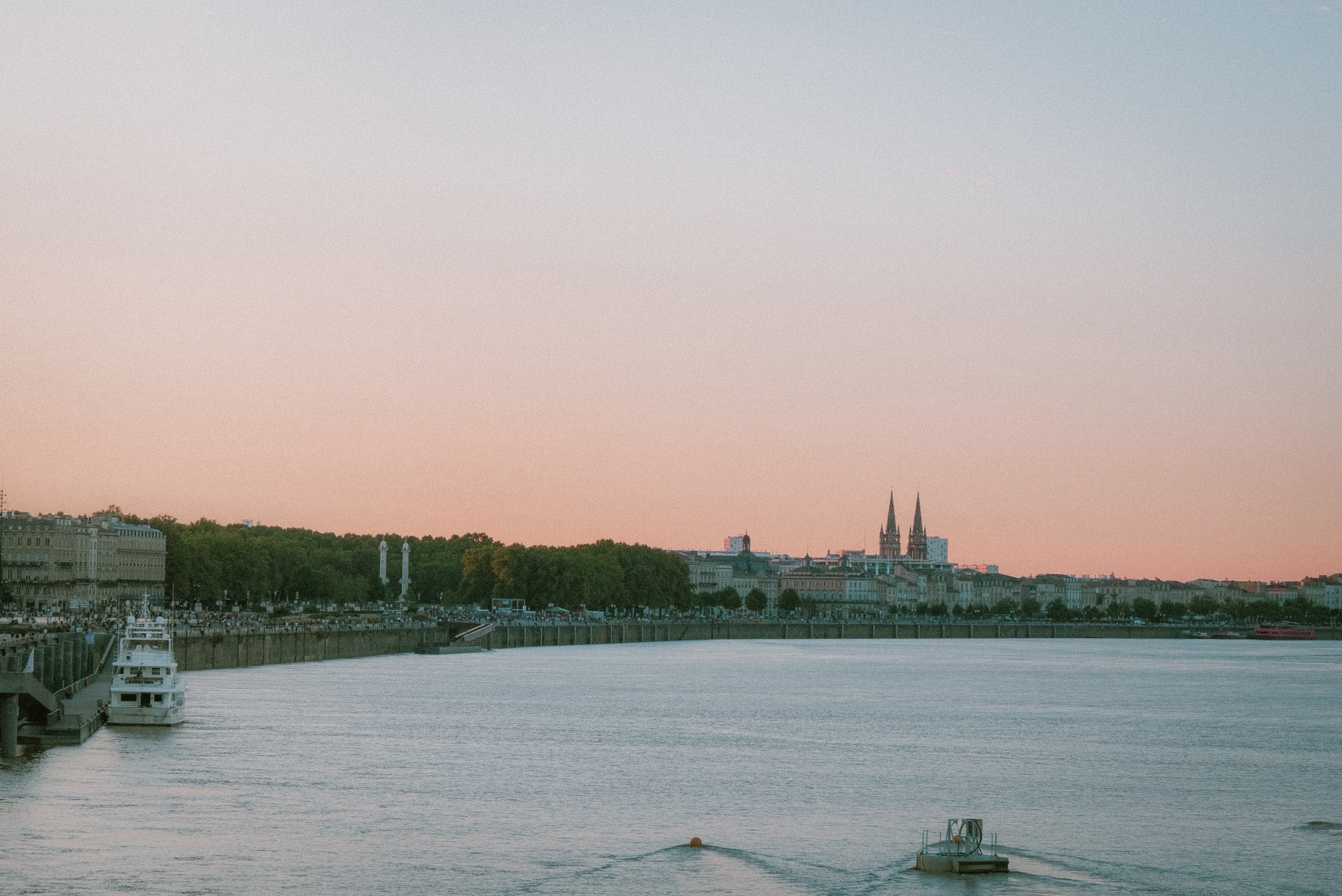
About Bordeaux
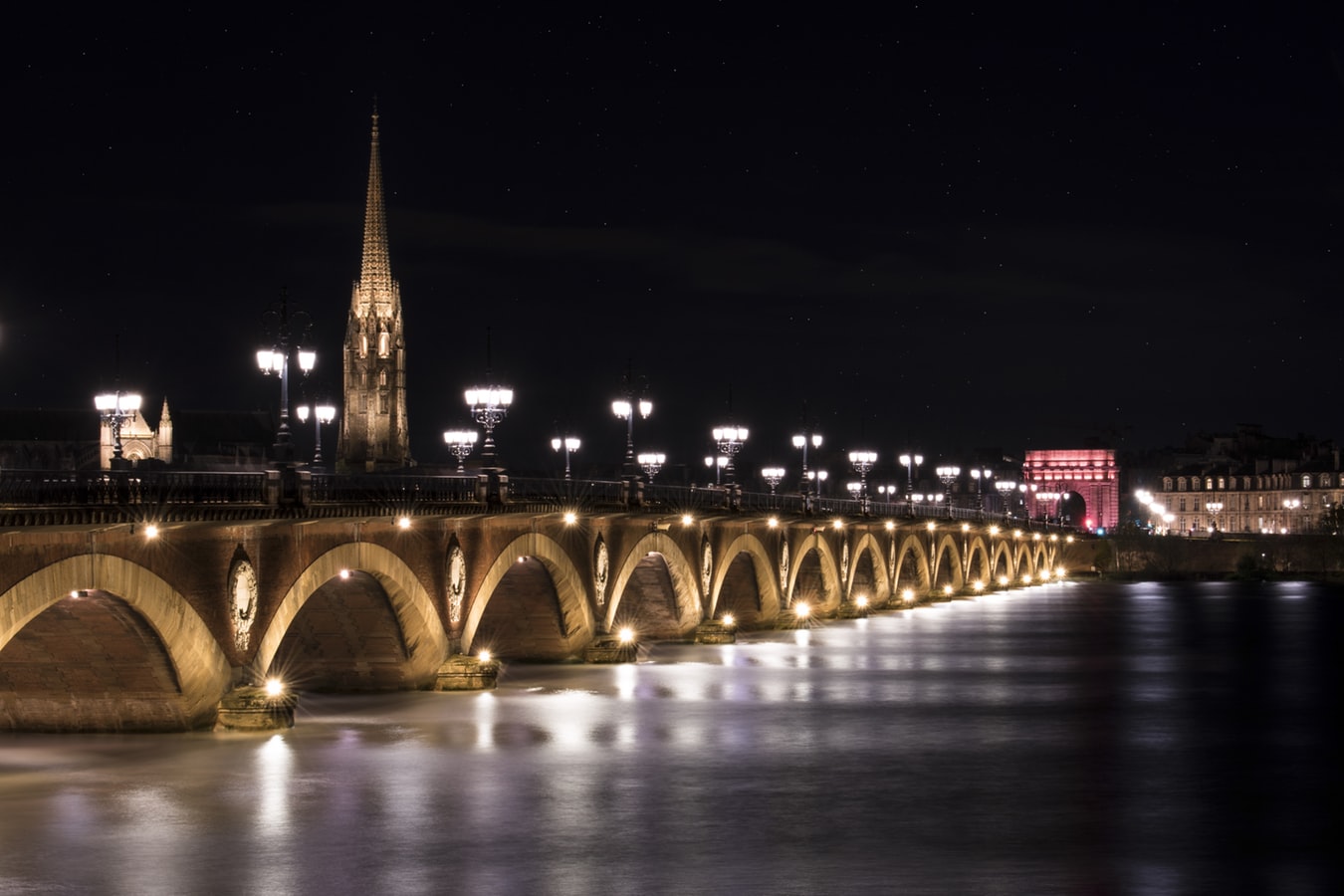
Bordeaux as a whole, rather than any particular points within it, is what you'll want to visit in order to understand why Victor Hugo described it as Versailles plus Antwerp, and why the painter Francisco de Goya, when exiled from his native Spain, chose it as his last home (he died here in 1828). The capital of southwest France and the region's largest city, Bordeaux remains synonymous with the wine trade: wine shippers have long maintained their headquarters along the banks of the Garonne, while buyers from around the world arrive for the huge biennial Vinexpo show (held in odd-number years).Bordeaux is, admittedly, a less exuberant city than many others in France, but lively and stylish elements are making a dent in its conservative veneer. The cleaned-up riverfront is said by some, after a bottle or two, to exude an elegance reminiscent of St. Petersburg, and that aura of 18th-century élan also permeates the historic downtown sector—“le vieux Bordeaux"—where fine shops invite exploration. To the south of the city center are old docklands undergoing renewal—one train station has now been transformed into a big multiplex movie theater—but the area is still a bit shady. To get a feel for the historic port of Bordeaux, take the 90-minute boat trip that leaves Quai Louis-XVIII every weekday afternoon, or the regular passenger ferry that plies the Garonne between Quai Richelieu and the Pont d'Aquitaine in summer. A nice time to stroll around the city center is the first Sunday of the month, when it's pedestrian-only and vehicles are banned.
About Bordeaux
Bordeaux as a whole, rather than any particular points within it, is what you'll want to visit in order to understand why Victor Hugo described it as Versailles plus Antwerp, and why the painter Francisco de Goya, when exiled from his native Spain, chose it as his last home (he died here in 1828). The capital of southwest France and the region's largest city, Bordeaux remains synonymous with the wine trade: wine shippers have long maintained their headquarters along the banks of the Garonne, while buyers from around the world arrive for the huge biennial Vinexpo show (held in odd-number years).Bordeaux is, admittedly, a less exuberant city than many others in France, but lively and stylish elements are making a dent in its conservative veneer. The cleaned-up riverfront is said by some, after a bottle or two, to exude an elegance reminiscent of St. Petersburg, and that aura of 18th-century élan also permeates the historic downtown sector—“le vieux Bordeaux"—where fine shops invite exploration. To the south of the city center are old docklands undergoing renewal—one train station has now been transformed into a big multiplex movie theater—but the area is still a bit shady. To get a feel for the historic port of Bordeaux, take the 90-minute boat trip that leaves Quai Louis-XVIII every weekday afternoon, or the regular passenger ferry that plies the Garonne between Quai Richelieu and the Pont d'Aquitaine in summer. A nice time to stroll around the city center is the first Sunday of the month, when it's pedestrian-only and vehicles are banned.
About Libourne
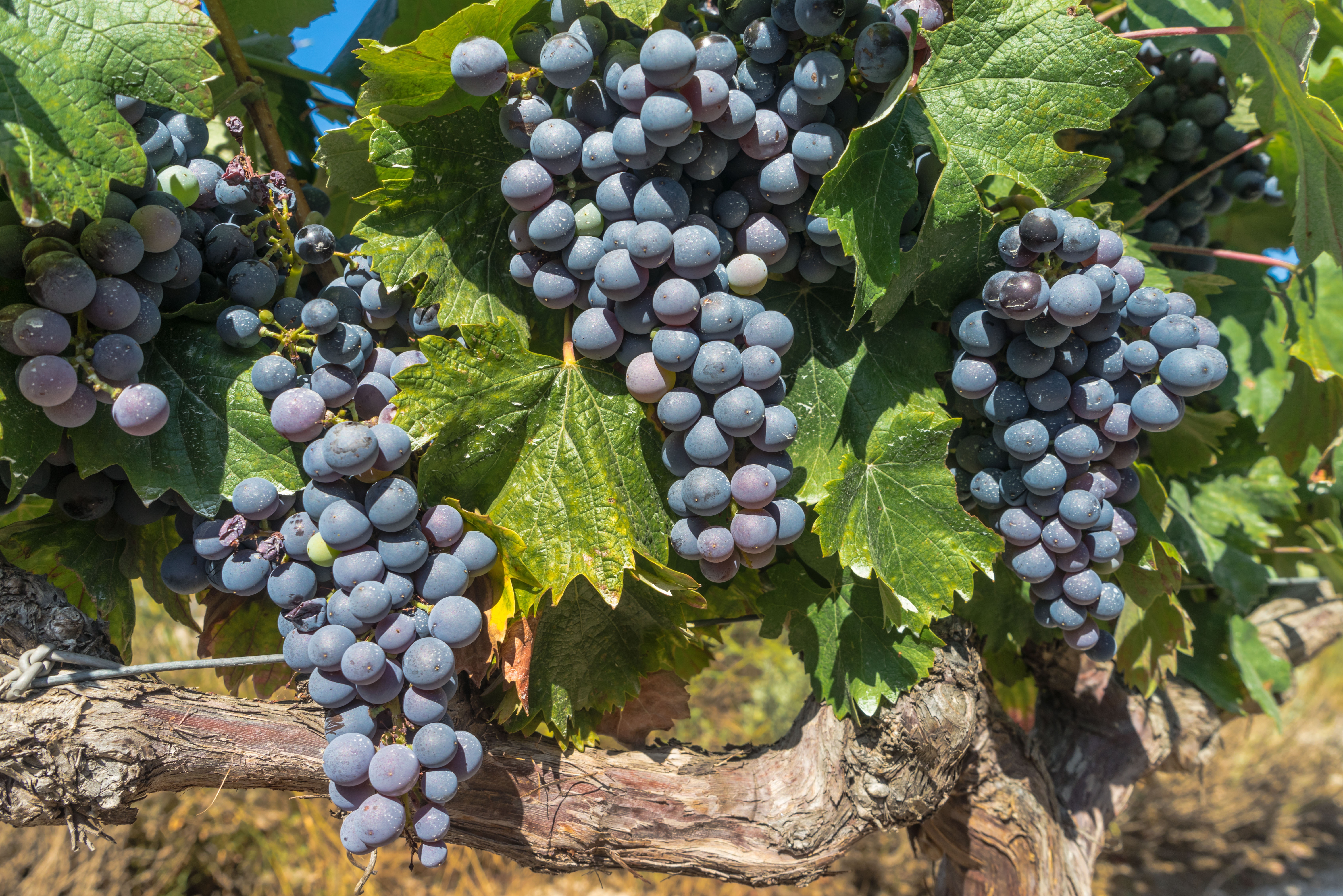
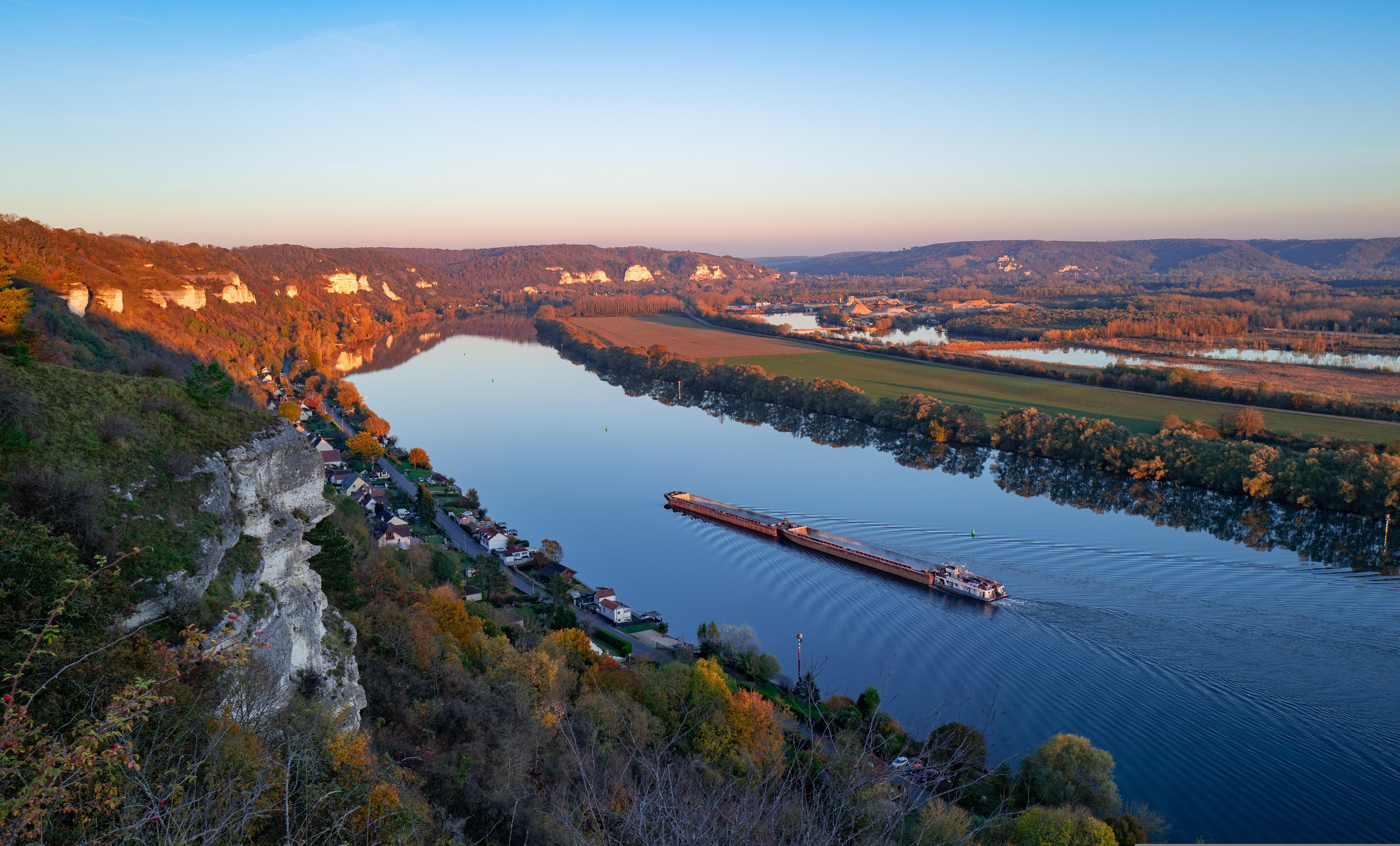
Libourne, France, is a historic town in the Bordeaux wine region, renowned for its vibrant market and beautiful architecture. Located along the Dordogne River, it features a charming blend of medieval and Renaissance buildings, including the striking Church of Saint-Jean-Baptiste. Libourne is a gateway to prestigious wine estates, including Pomerol and Saint-Émilion. The town's bustling market and scenic riverside setting offer a delightful experience for visitors interested in wine, history, and local culture.
About Libourne
Libourne, France, is a historic town in the Bordeaux wine region, renowned for its vibrant market and beautiful architecture. Located along the Dordogne River, it features a charming blend of medieval and Renaissance buildings, including the striking Church of Saint-Jean-Baptiste. Libourne is a gateway to prestigious wine estates, including Pomerol and Saint-Émilion. The town's bustling market and scenic riverside setting offer a delightful experience for visitors interested in wine, history, and local culture.
About Pauillac
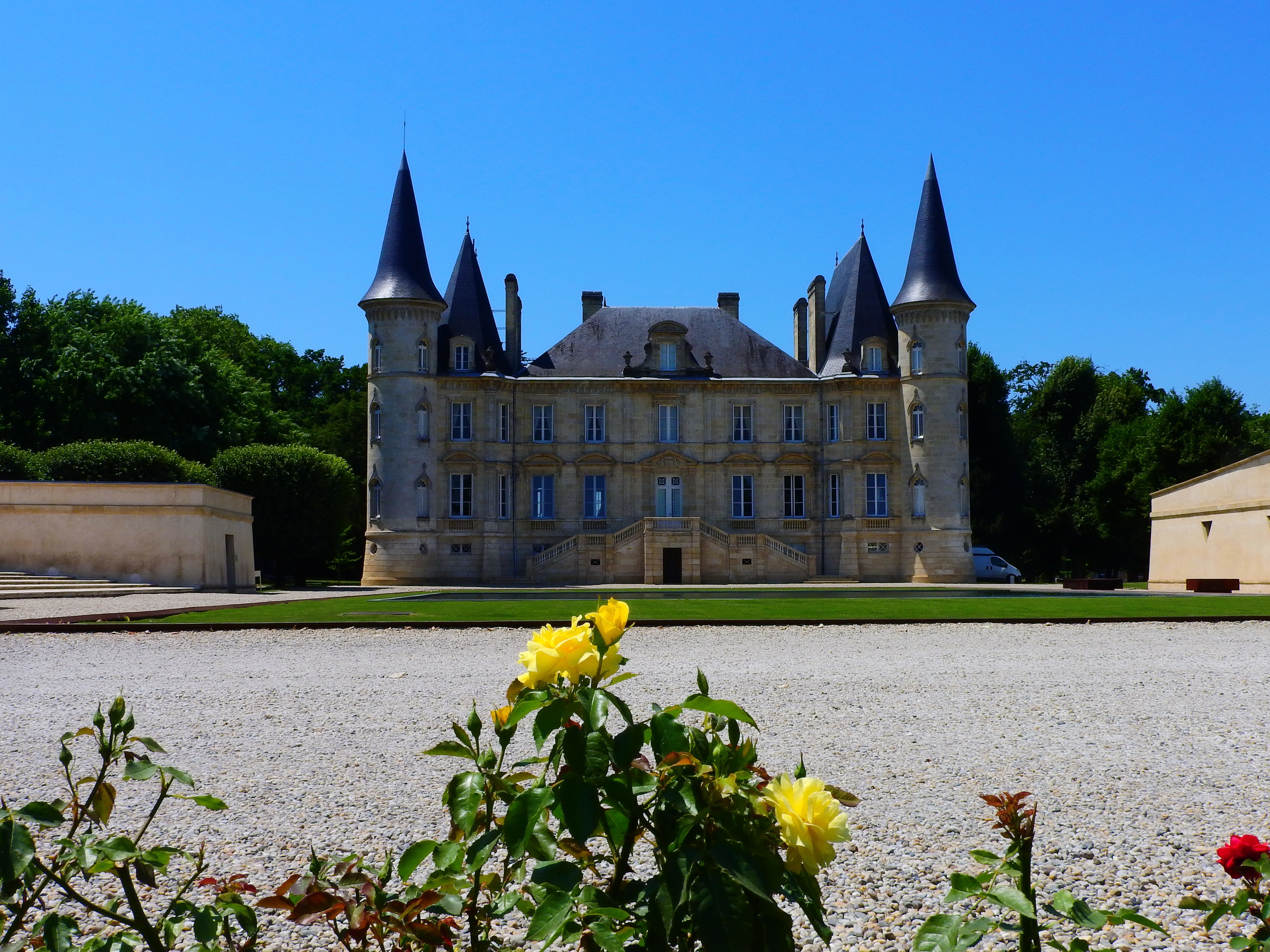
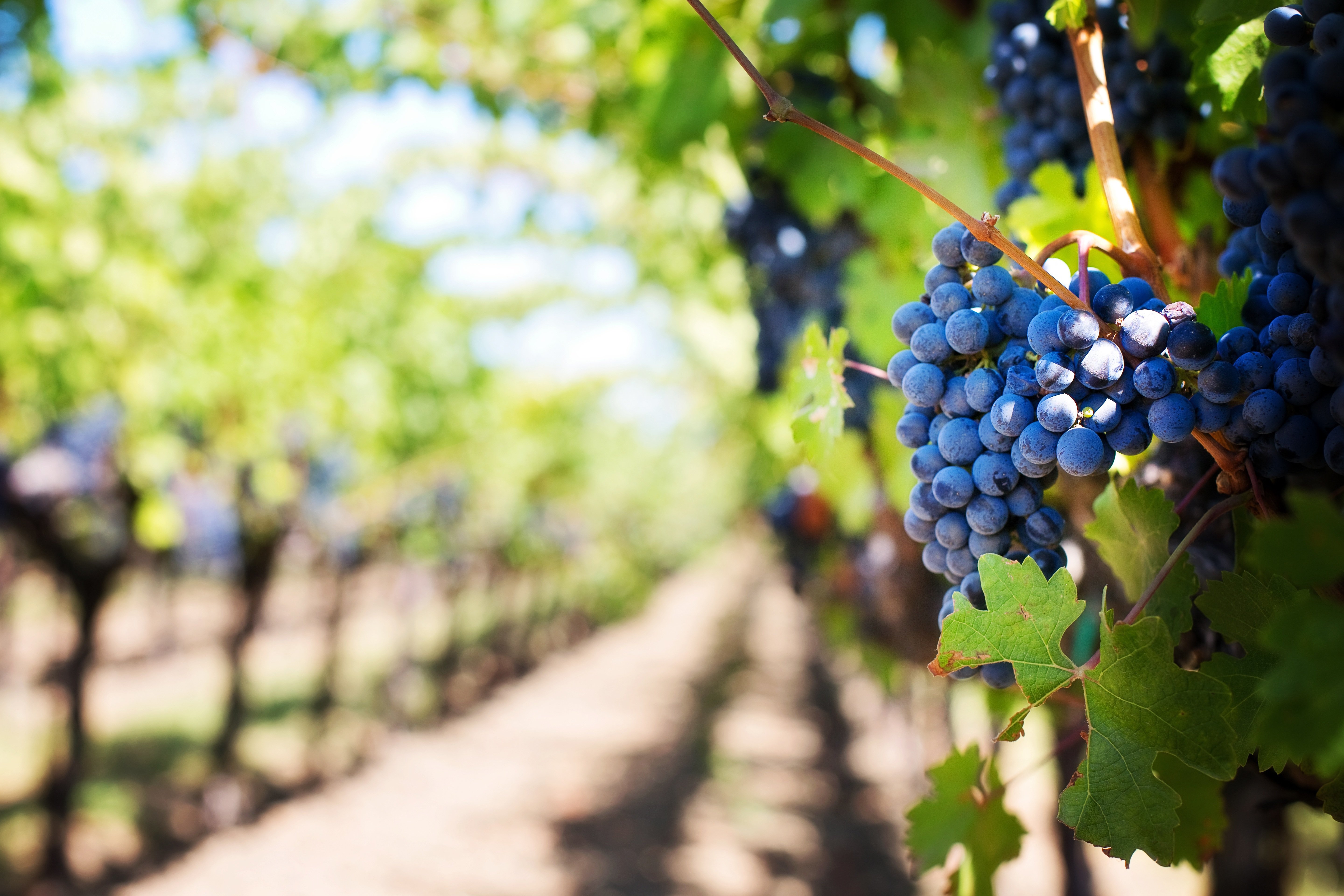
Pauillac, France, is a scenic village in the Bordeaux wine region, renowned for its prestigious vineyards and charming riverfront. Located on the Gironde estuary, it is famed for its high-quality red wines, including those from renowned châteaux like Lafite Rothschild and Mouton Rothschild. The village features historic buildings, vibrant markets, and stunning views of the estuary. Pauillac’s blend of rich winemaking heritage and picturesque landscapes makes it a delightful destination for wine enthusiasts and travellers seeking a taste of Bordeaux’s elegance.
About Pauillac
Pauillac, France, is a scenic village in the Bordeaux wine region, renowned for its prestigious vineyards and charming riverfront. Located on the Gironde estuary, it is famed for its high-quality red wines, including those from renowned châteaux like Lafite Rothschild and Mouton Rothschild. The village features historic buildings, vibrant markets, and stunning views of the estuary. Pauillac’s blend of rich winemaking heritage and picturesque landscapes makes it a delightful destination for wine enthusiasts and travellers seeking a taste of Bordeaux’s elegance.
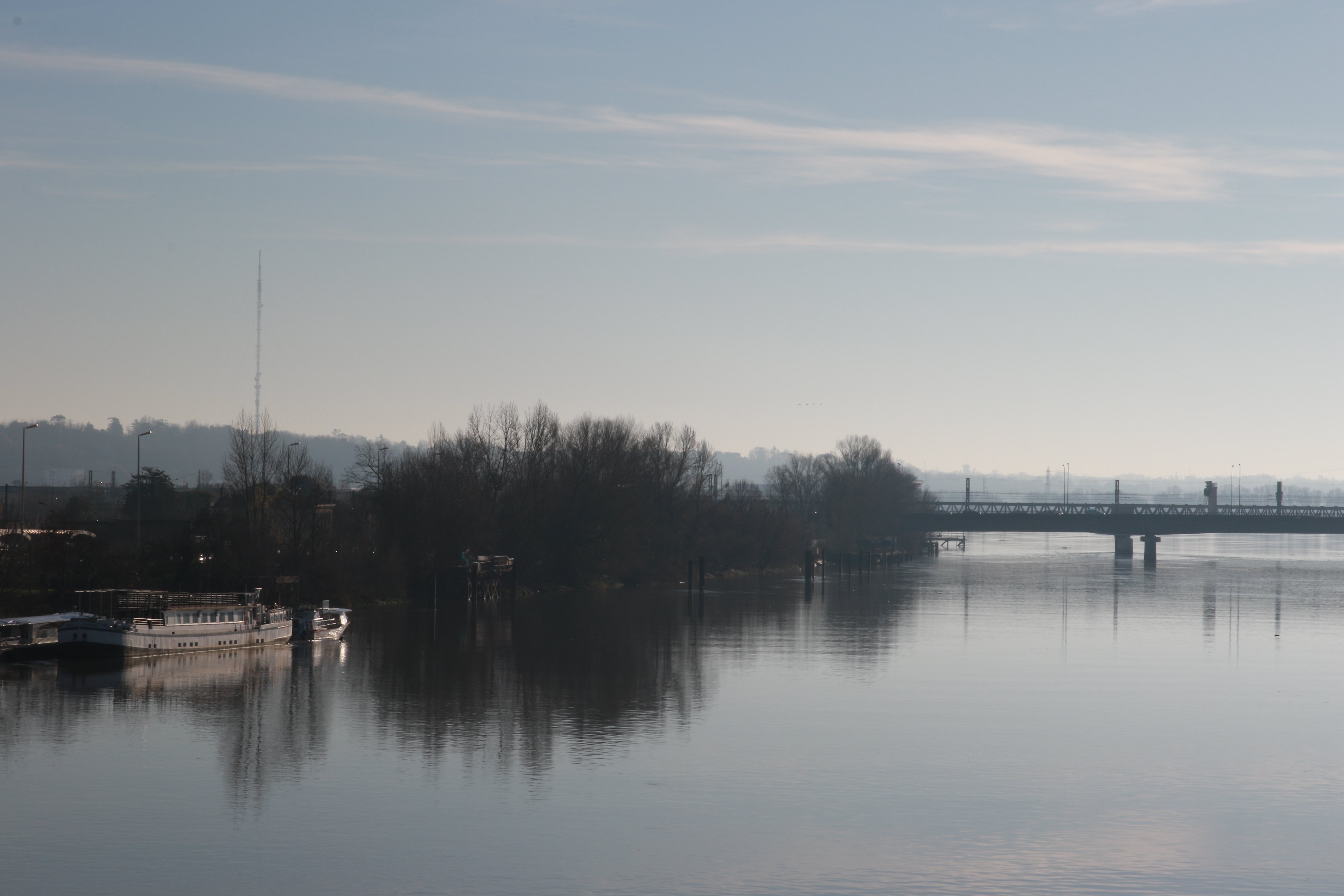
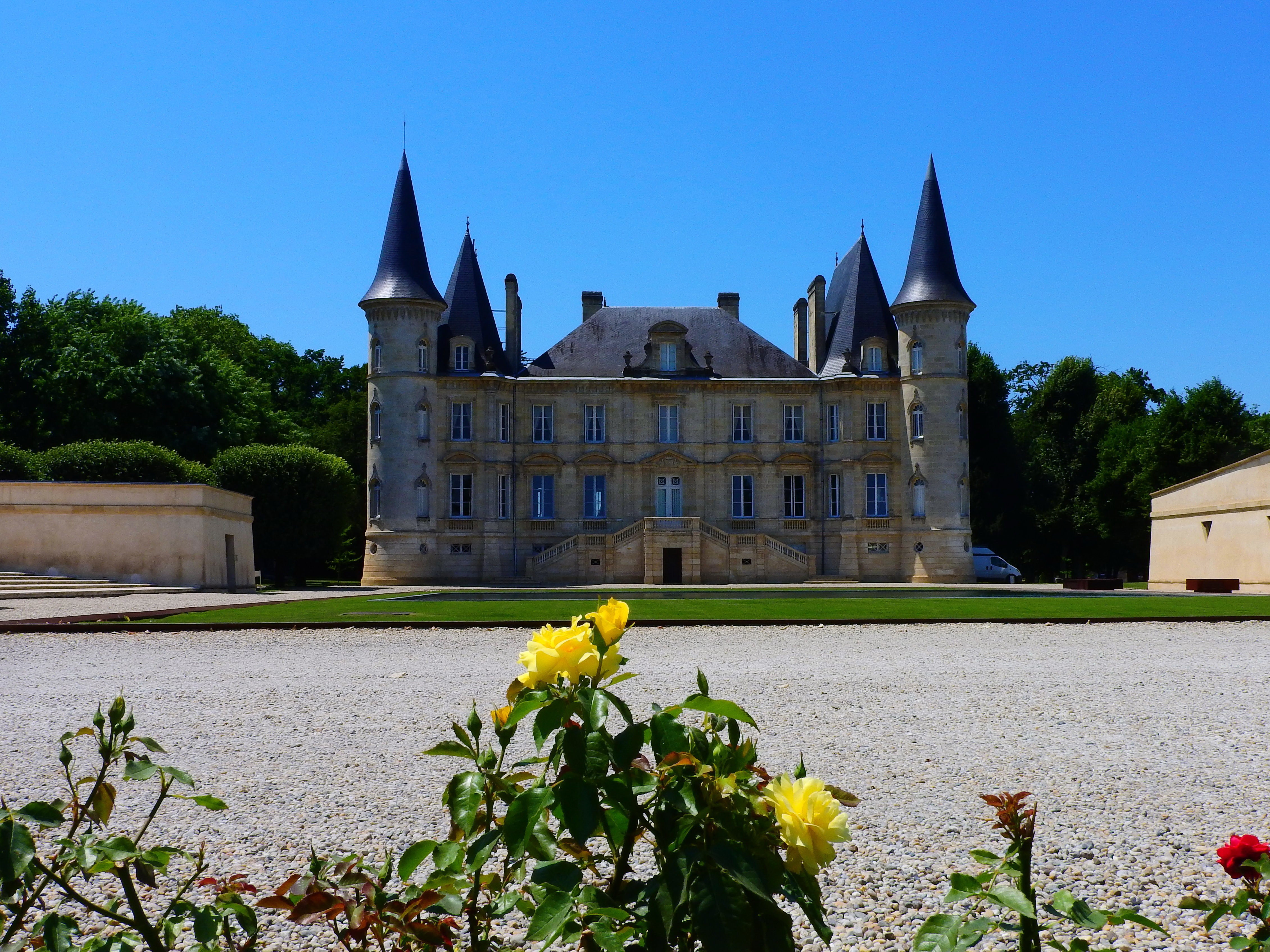
About Cussac-Fort-Médoc
About Cussac-Fort-Médoc
About Cadillac
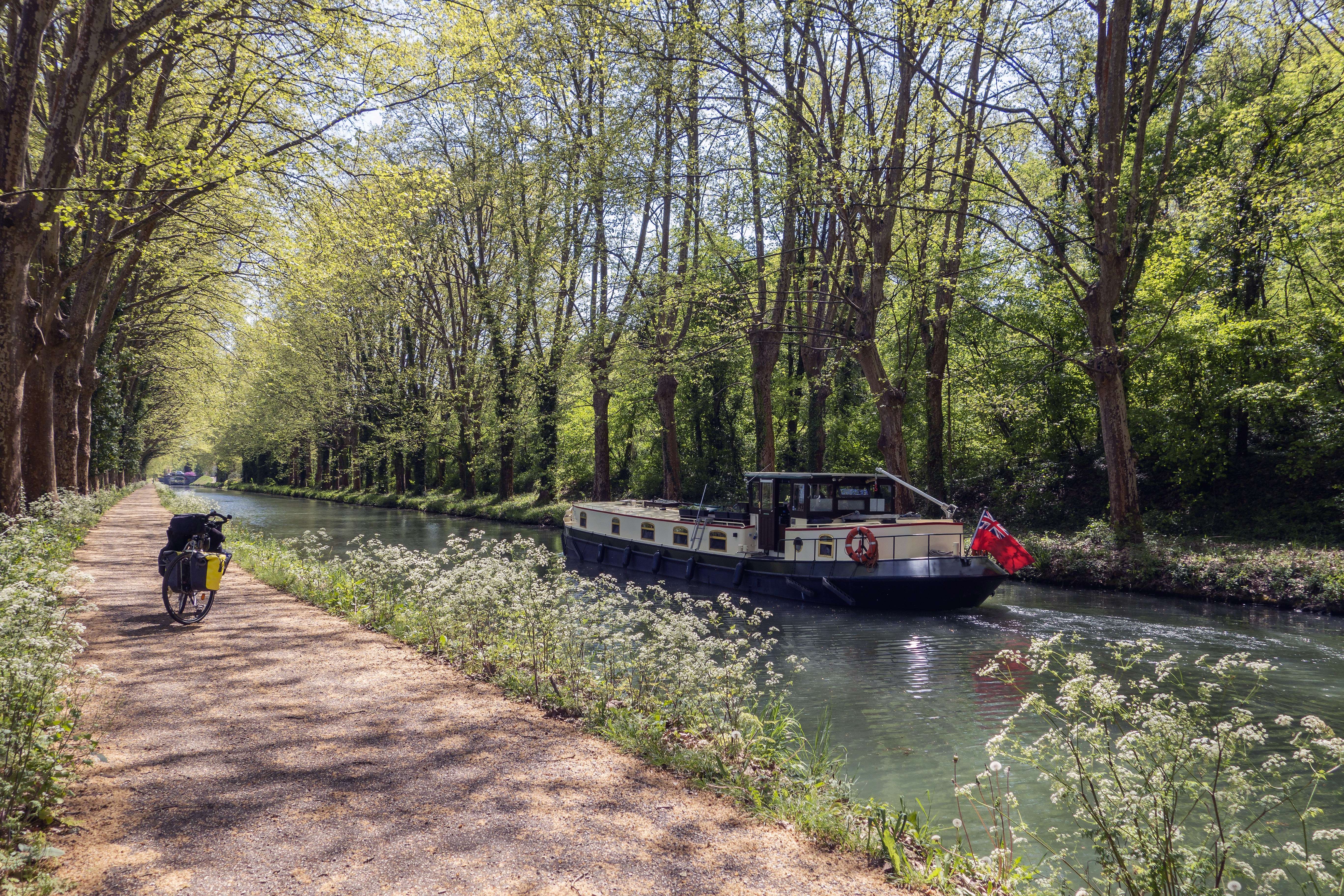
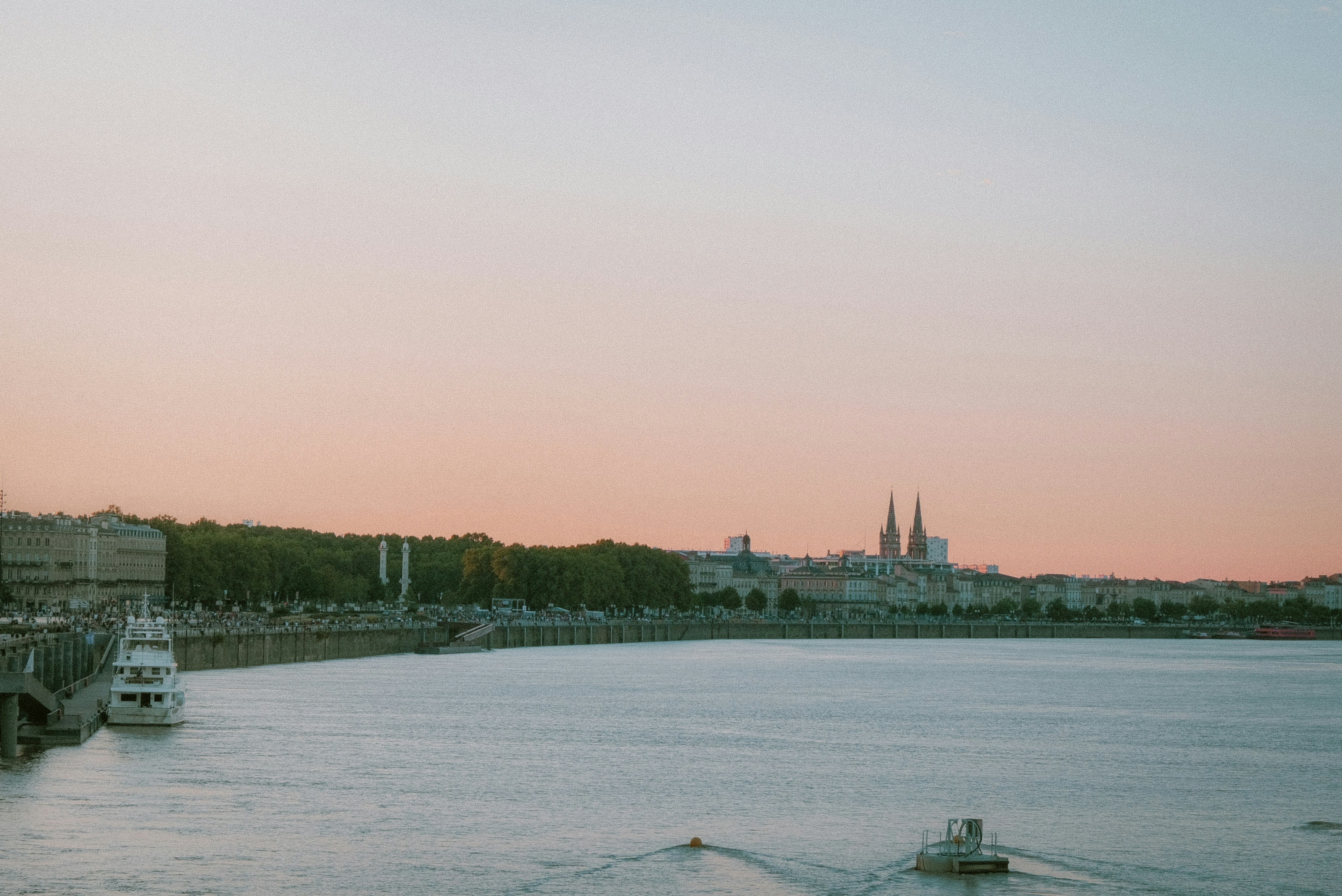
Cadillac, France, is a charming town in the Gironde department, known for its historic architecture and vineyards. Famous for its production of sweet white wines, especially Cadillac Côtes de Bordeaux, the town features a well-preserved 18th-century château and picturesque streets. Set along the Garonne River, Cadillac offers scenic views and a rich heritage, blending historical charm with local wine culture. Its vibrant markets and serene atmosphere make it a pleasant destination for those exploring the Bordeaux wine region.
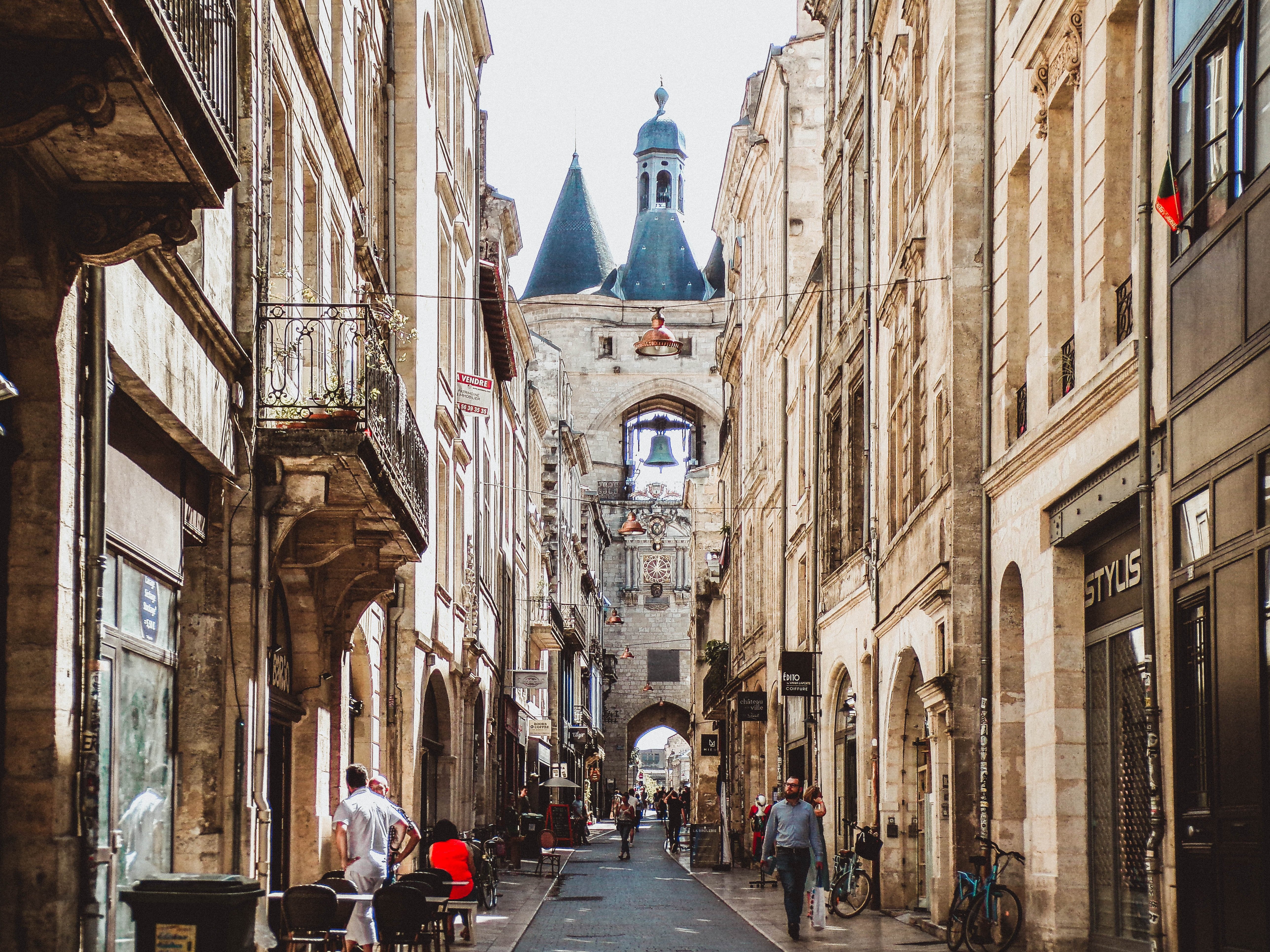
About Cadillac
Cadillac, France, is a charming town in the Gironde department, known for its historic architecture and vineyards. Famous for its production of sweet white wines, especially Cadillac Côtes de Bordeaux, the town features a well-preserved 18th-century château and picturesque streets. Set along the Garonne River, Cadillac offers scenic views and a rich heritage, blending historical charm with local wine culture. Its vibrant markets and serene atmosphere make it a pleasant destination for those exploring the Bordeaux wine region.
About Bordeaux
Bordeaux as a whole, rather than any particular points within it, is what you'll want to visit in order to understand why Victor Hugo described it as Versailles plus Antwerp, and why the painter Francisco de Goya, when exiled from his native Spain, chose it as his last home (he died here in 1828). The capital of southwest France and the region's largest city, Bordeaux remains synonymous with the wine trade: wine shippers have long maintained their headquarters along the banks of the Garonne, while buyers from around the world arrive for the huge biennial Vinexpo show (held in odd-number years).Bordeaux is, admittedly, a less exuberant city than many others in France, but lively and stylish elements are making a dent in its conservative veneer. The cleaned-up riverfront is said by some, after a bottle or two, to exude an elegance reminiscent of St. Petersburg, and that aura of 18th-century élan also permeates the historic downtown sector—“le vieux Bordeaux"—where fine shops invite exploration. To the south of the city center are old docklands undergoing renewal—one train station has now been transformed into a big multiplex movie theater—but the area is still a bit shady. To get a feel for the historic port of Bordeaux, take the 90-minute boat trip that leaves Quai Louis-XVIII every weekday afternoon, or the regular passenger ferry that plies the Garonne between Quai Richelieu and the Pont d'Aquitaine in summer. A nice time to stroll around the city center is the first Sunday of the month, when it's pedestrian-only and vehicles are banned.
About Bordeaux
Bordeaux as a whole, rather than any particular points within it, is what you'll want to visit in order to understand why Victor Hugo described it as Versailles plus Antwerp, and why the painter Francisco de Goya, when exiled from his native Spain, chose it as his last home (he died here in 1828). The capital of southwest France and the region's largest city, Bordeaux remains synonymous with the wine trade: wine shippers have long maintained their headquarters along the banks of the Garonne, while buyers from around the world arrive for the huge biennial Vinexpo show (held in odd-number years).Bordeaux is, admittedly, a less exuberant city than many others in France, but lively and stylish elements are making a dent in its conservative veneer. The cleaned-up riverfront is said by some, after a bottle or two, to exude an elegance reminiscent of St. Petersburg, and that aura of 18th-century élan also permeates the historic downtown sector—“le vieux Bordeaux"—where fine shops invite exploration. To the south of the city center are old docklands undergoing renewal—one train station has now been transformed into a big multiplex movie theater—but the area is still a bit shady. To get a feel for the historic port of Bordeaux, take the 90-minute boat trip that leaves Quai Louis-XVIII every weekday afternoon, or the regular passenger ferry that plies the Garonne between Quai Richelieu and the Pont d'Aquitaine in summer. A nice time to stroll around the city center is the first Sunday of the month, when it's pedestrian-only and vehicles are banned.
About Bordeaux
Bordeaux as a whole, rather than any particular points within it, is what you'll want to visit in order to understand why Victor Hugo described it as Versailles plus Antwerp, and why the painter Francisco de Goya, when exiled from his native Spain, chose it as his last home (he died here in 1828). The capital of southwest France and the region's largest city, Bordeaux remains synonymous with the wine trade: wine shippers have long maintained their headquarters along the banks of the Garonne, while buyers from around the world arrive for the huge biennial Vinexpo show (held in odd-number years).Bordeaux is, admittedly, a less exuberant city than many others in France, but lively and stylish elements are making a dent in its conservative veneer. The cleaned-up riverfront is said by some, after a bottle or two, to exude an elegance reminiscent of St. Petersburg, and that aura of 18th-century élan also permeates the historic downtown sector—“le vieux Bordeaux"—where fine shops invite exploration. To the south of the city center are old docklands undergoing renewal—one train station has now been transformed into a big multiplex movie theater—but the area is still a bit shady. To get a feel for the historic port of Bordeaux, take the 90-minute boat trip that leaves Quai Louis-XVIII every weekday afternoon, or the regular passenger ferry that plies the Garonne between Quai Richelieu and the Pont d'Aquitaine in summer. A nice time to stroll around the city center is the first Sunday of the month, when it's pedestrian-only and vehicles are banned.
About Bourg
About Bourg
About Bourg
About Blaye
Blaye, France, is a picturesque town in the Gironde department, renowned for its historic Blaye Citadel, a UNESCO World Heritage site with stunning views of the Gironde estuary. The town boasts charming streets, vibrant markets, and renowned vineyards producing exceptional wines, including Blaye Côtes de Bordeaux. Blaye’s blend of historical architecture, scenic river views, and local wine culture makes it an inviting destination for history enthusiasts and wine lovers alike.
About Bordeaux
Bordeaux as a whole, rather than any particular points within it, is what you'll want to visit in order to understand why Victor Hugo described it as Versailles plus Antwerp, and why the painter Francisco de Goya, when exiled from his native Spain, chose it as his last home (he died here in 1828). The capital of southwest France and the region's largest city, Bordeaux remains synonymous with the wine trade: wine shippers have long maintained their headquarters along the banks of the Garonne, while buyers from around the world arrive for the huge biennial Vinexpo show (held in odd-number years).Bordeaux is, admittedly, a less exuberant city than many others in France, but lively and stylish elements are making a dent in its conservative veneer. The cleaned-up riverfront is said by some, after a bottle or two, to exude an elegance reminiscent of St. Petersburg, and that aura of 18th-century élan also permeates the historic downtown sector—“le vieux Bordeaux"—where fine shops invite exploration. To the south of the city center are old docklands undergoing renewal—one train station has now been transformed into a big multiplex movie theater—but the area is still a bit shady. To get a feel for the historic port of Bordeaux, take the 90-minute boat trip that leaves Quai Louis-XVIII every weekday afternoon, or the regular passenger ferry that plies the Garonne between Quai Richelieu and the Pont d'Aquitaine in summer. A nice time to stroll around the city center is the first Sunday of the month, when it's pedestrian-only and vehicles are banned.
About Bordeaux
Bordeaux as a whole, rather than any particular points within it, is what you'll want to visit in order to understand why Victor Hugo described it as Versailles plus Antwerp, and why the painter Francisco de Goya, when exiled from his native Spain, chose it as his last home (he died here in 1828). The capital of southwest France and the region's largest city, Bordeaux remains synonymous with the wine trade: wine shippers have long maintained their headquarters along the banks of the Garonne, while buyers from around the world arrive for the huge biennial Vinexpo show (held in odd-number years).Bordeaux is, admittedly, a less exuberant city than many others in France, but lively and stylish elements are making a dent in its conservative veneer. The cleaned-up riverfront is said by some, after a bottle or two, to exude an elegance reminiscent of St. Petersburg, and that aura of 18th-century élan also permeates the historic downtown sector—“le vieux Bordeaux"—where fine shops invite exploration. To the south of the city center are old docklands undergoing renewal—one train station has now been transformed into a big multiplex movie theater—but the area is still a bit shady. To get a feel for the historic port of Bordeaux, take the 90-minute boat trip that leaves Quai Louis-XVIII every weekday afternoon, or the regular passenger ferry that plies the Garonne between Quai Richelieu and the Pont d'Aquitaine in summer. A nice time to stroll around the city center is the first Sunday of the month, when it's pedestrian-only and vehicles are banned.
At 39m²/420ft², this is the largest suite on the ship. Located on the Diamond Deck, both suites enjoy fantastic views of the passing scenery from your private balcony complete with Scenic Sun Lounge. Each Suite has a separate lounge area and a luxurious bathroom offering a separate bath and shower.
Suite Highlights
- A luxury queen sized Scenic Slumber Bed
- Scenic Sun Lounge, for wide-angle splendour at the press of a button
- Separate lounge area
- Oversized bathroom with separate shower and bath, and upgraded bathroom amenities.
Amenities & Features
- Exclusive invitation to dine at Table La Rive or Table d’Or
- Priority reservations at selected dining venues
- A complimentary welcome bottle of Champagne (750ml)
- €200 per suite on board credit for use in the Wellness Centre
- Private arrival and departure transfers in Europe*.
- Personalised butler service, including unlimited complimentary laundry, shoeshine and valet, early morning tea and coffee services and a daily delivery of savoury and sweet canapés or fruit
- Mini bar, replenished daily
- Pillow menu, including anti-aging, low-allergy and memory-foam neck pillows
- Nightly turndown service
- Bathrobes and slippers
- In-suite safe
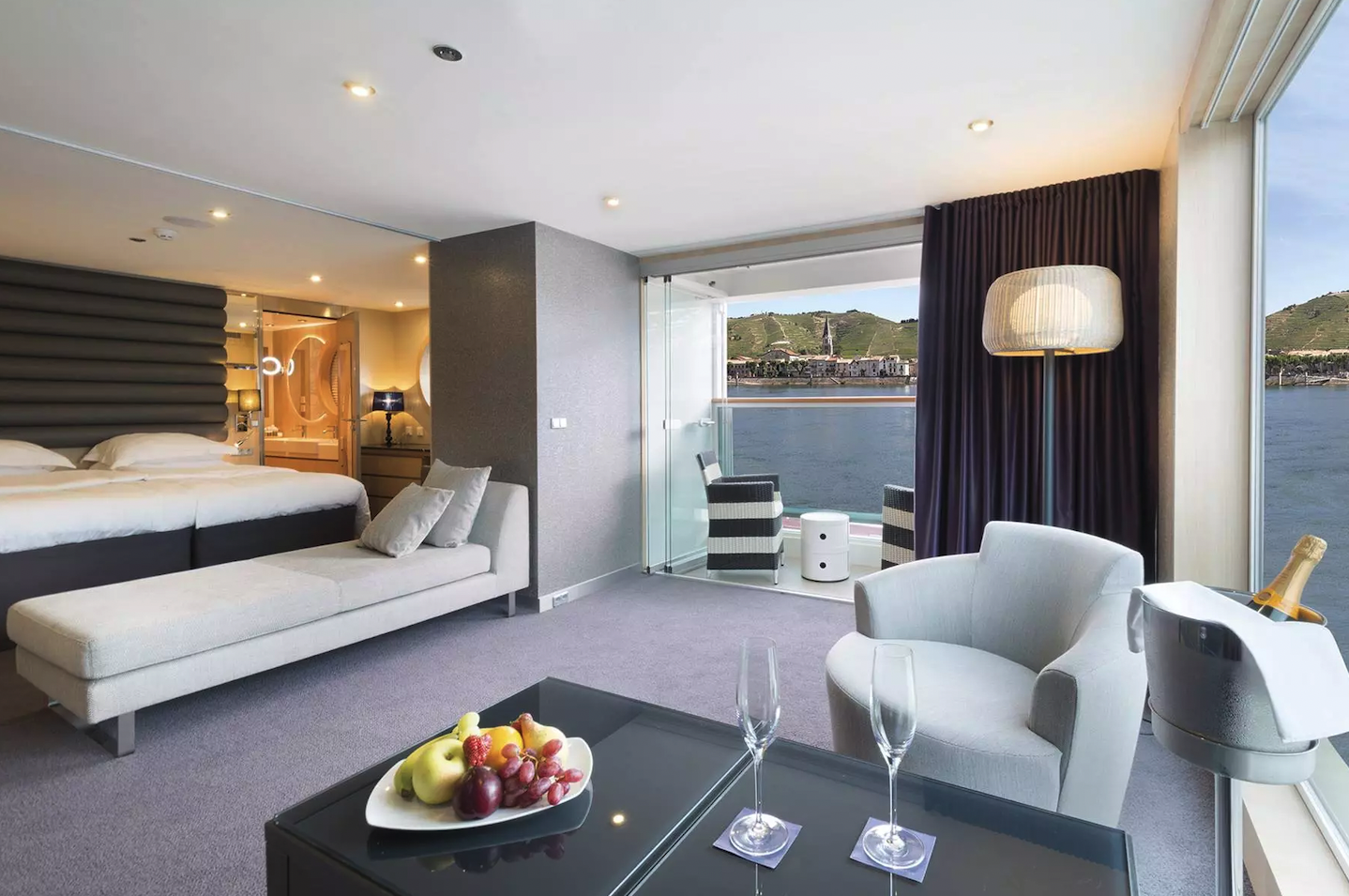
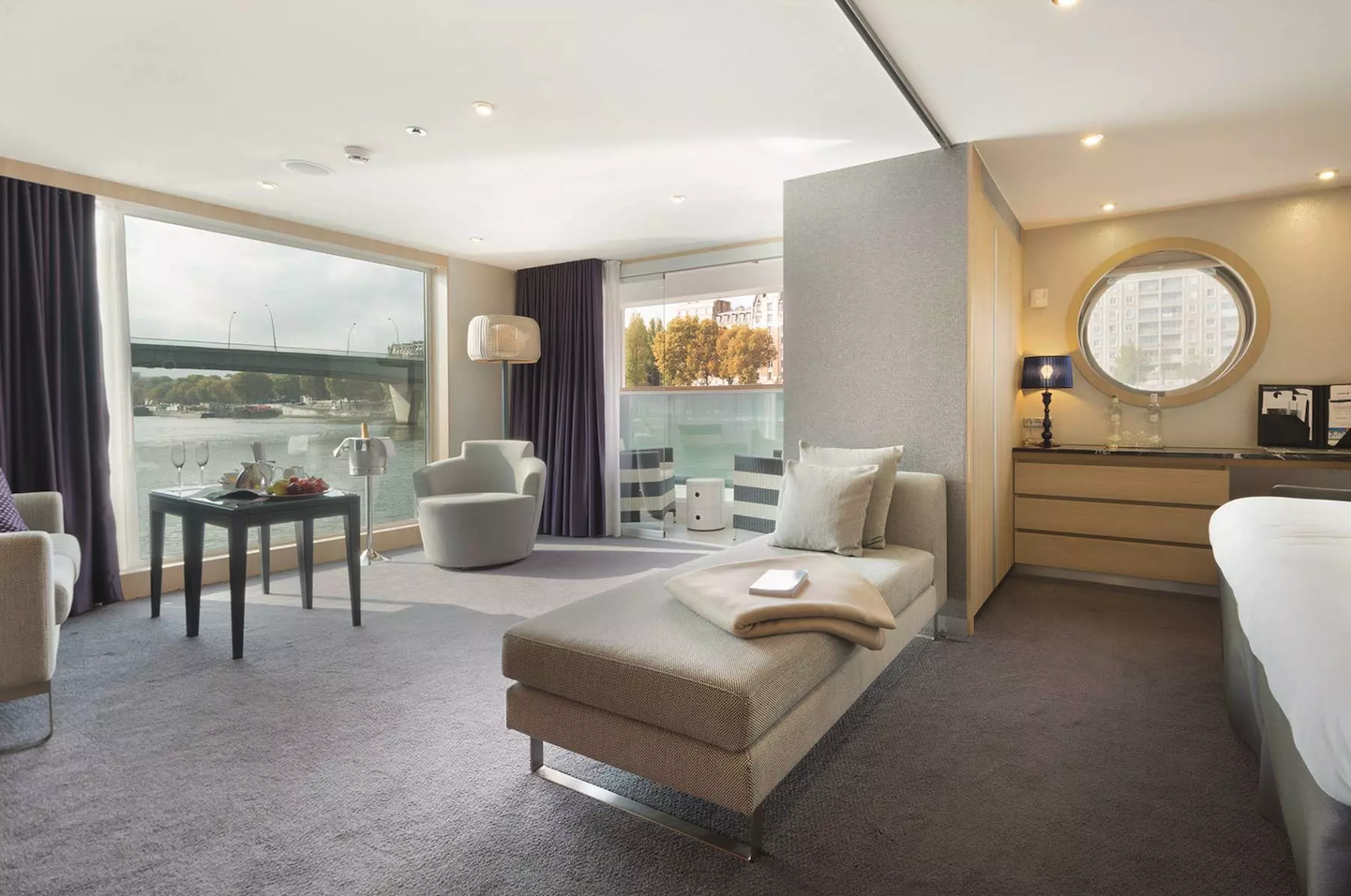
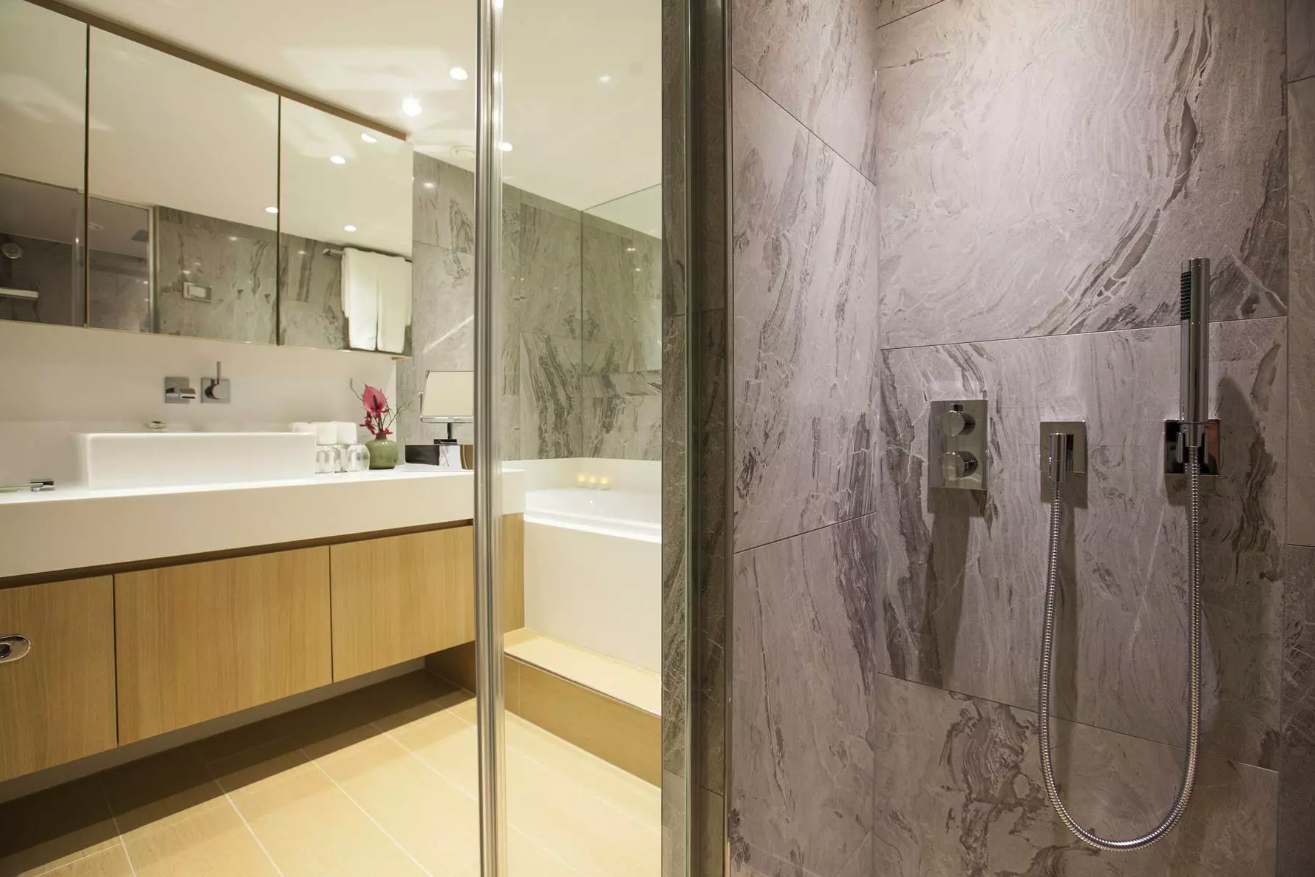
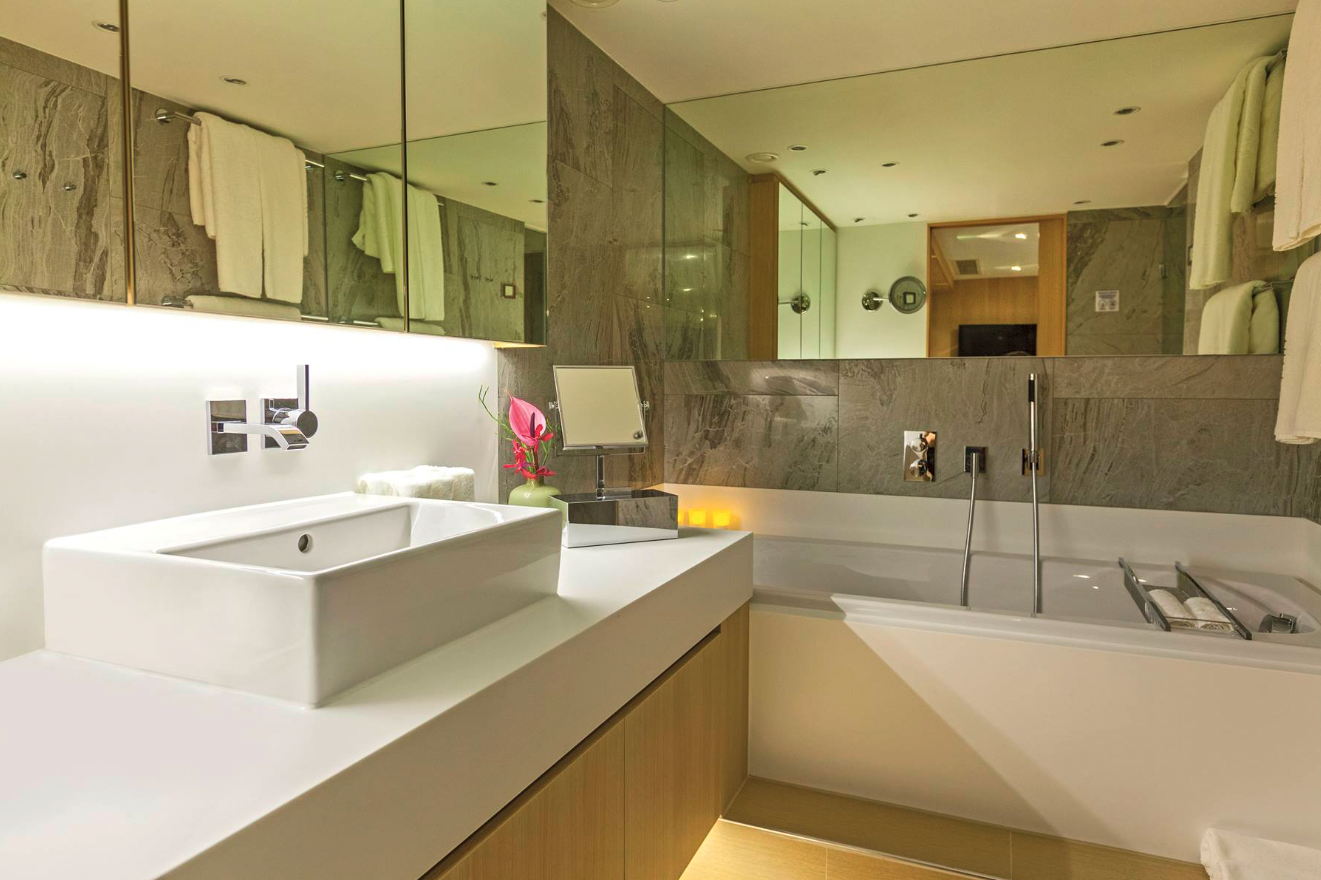
Located on the Sapphire Deck this stylishly decorated suite features a full-length Scenic Sun Lounge system, but does not include an external balcony. This suite also includes a private bathroom with a luxurious vanity basin and shower.
Suite inclusions
- Luxury queen size slumber bed with pillow menu
- Scenic Sun Lounge
- Marble bathrooms with luxurious bathroom amenities
- Complimentary mini bar
- Mac-mini infotainment system with complimentary movies on demand
- Hairdryer, alarm clock, telephone, In room safe
- International power sockets
- Luxury bathrobe and slippers
- Nordic walking sticks
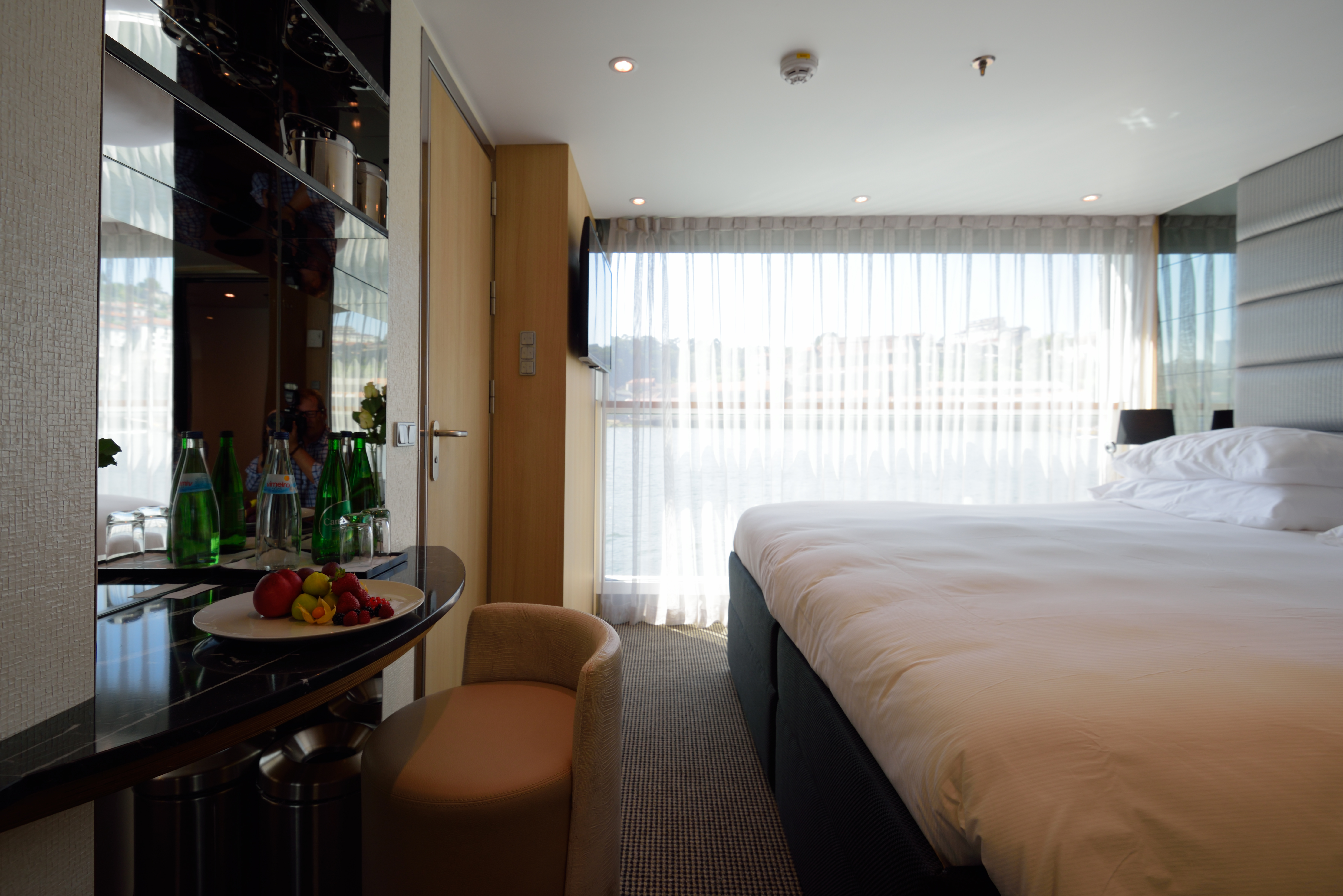
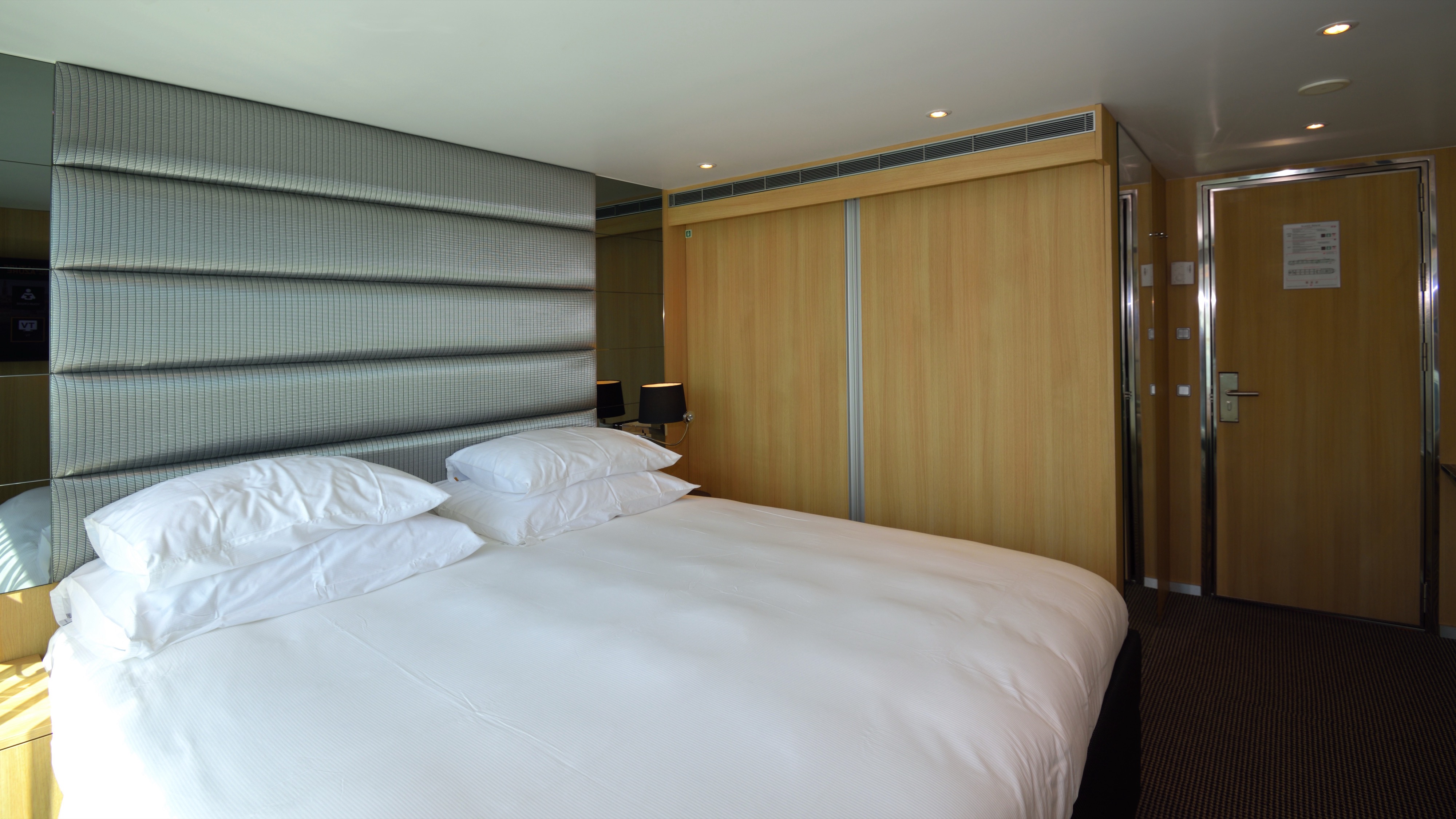
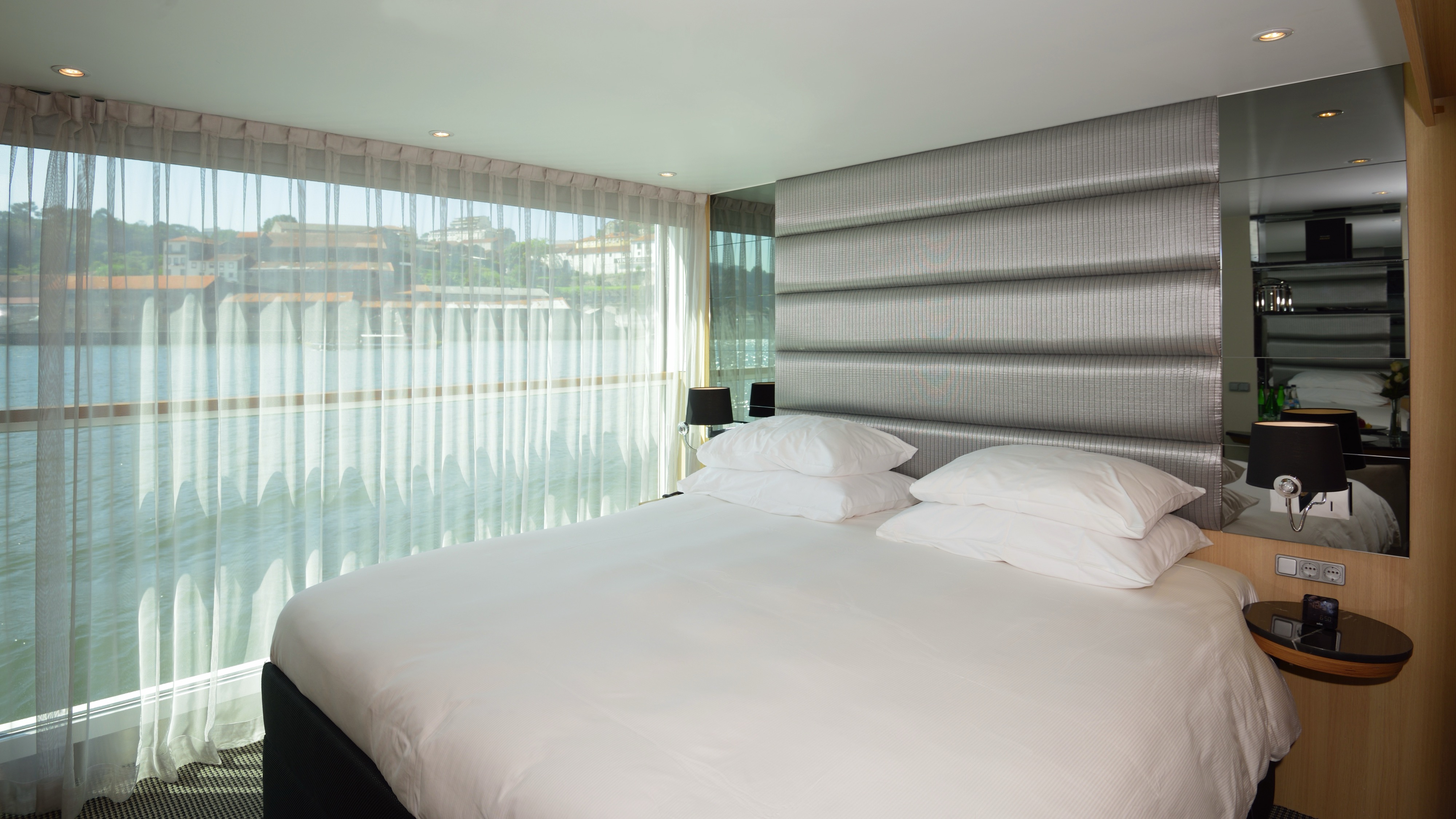
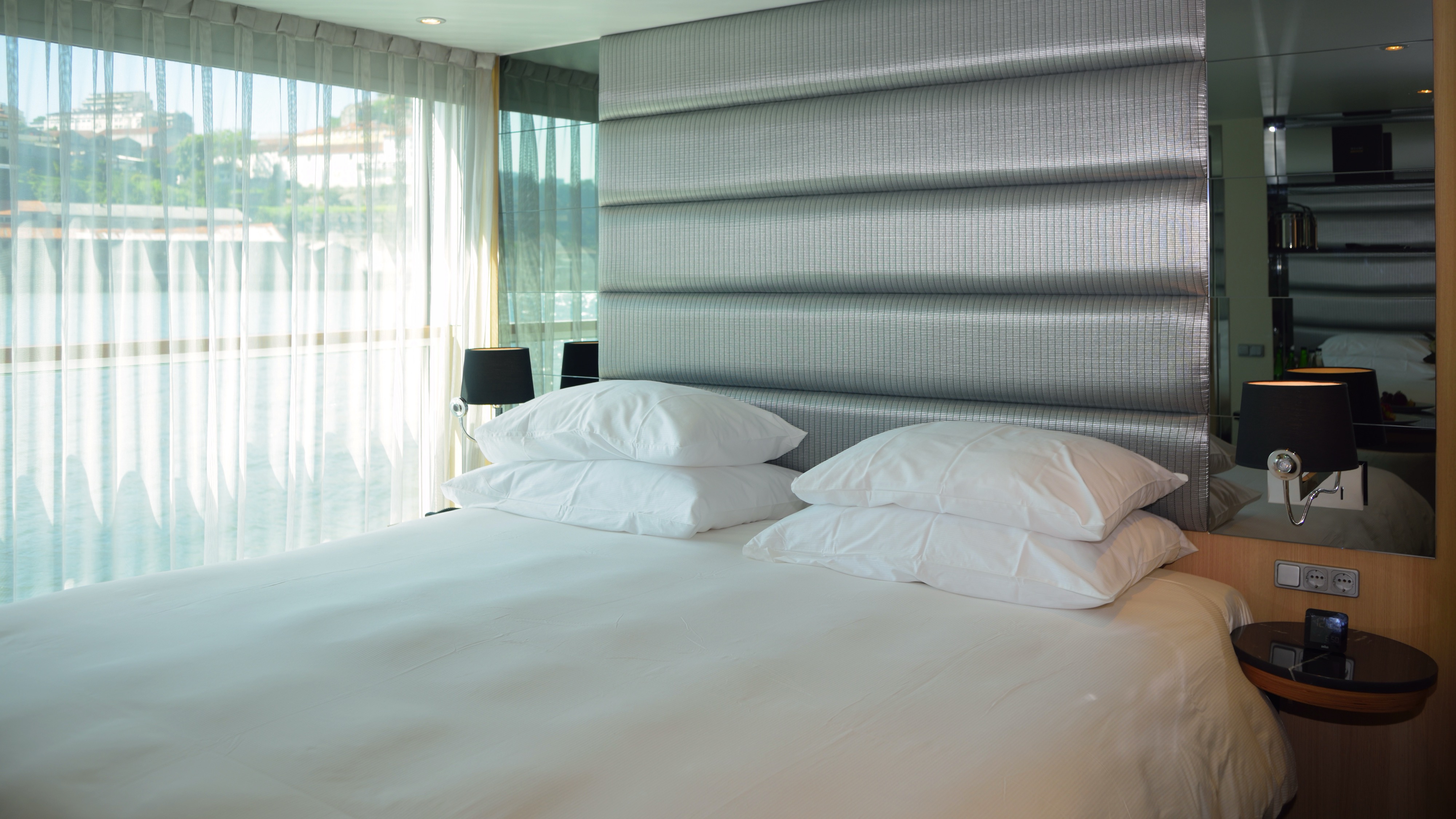
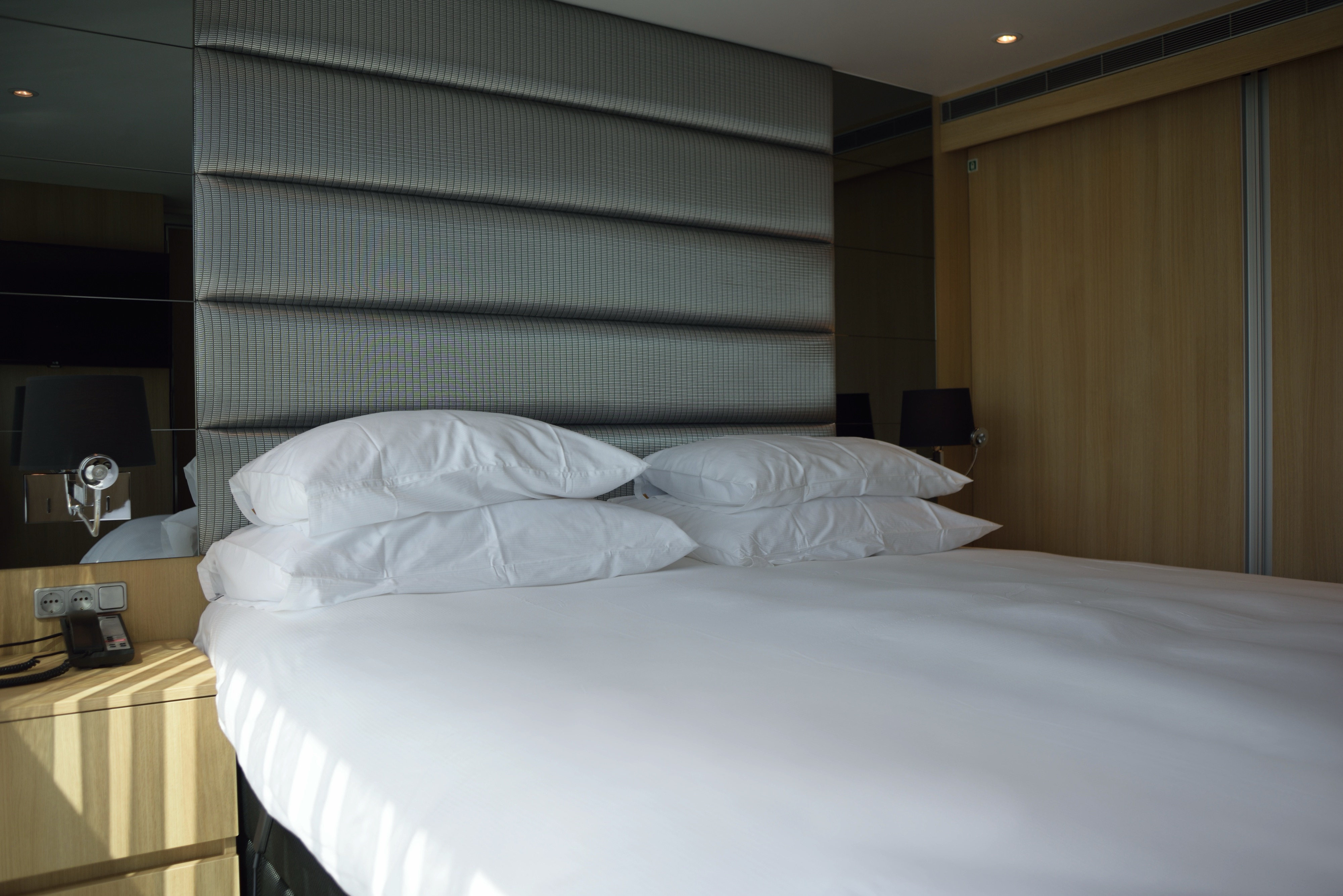
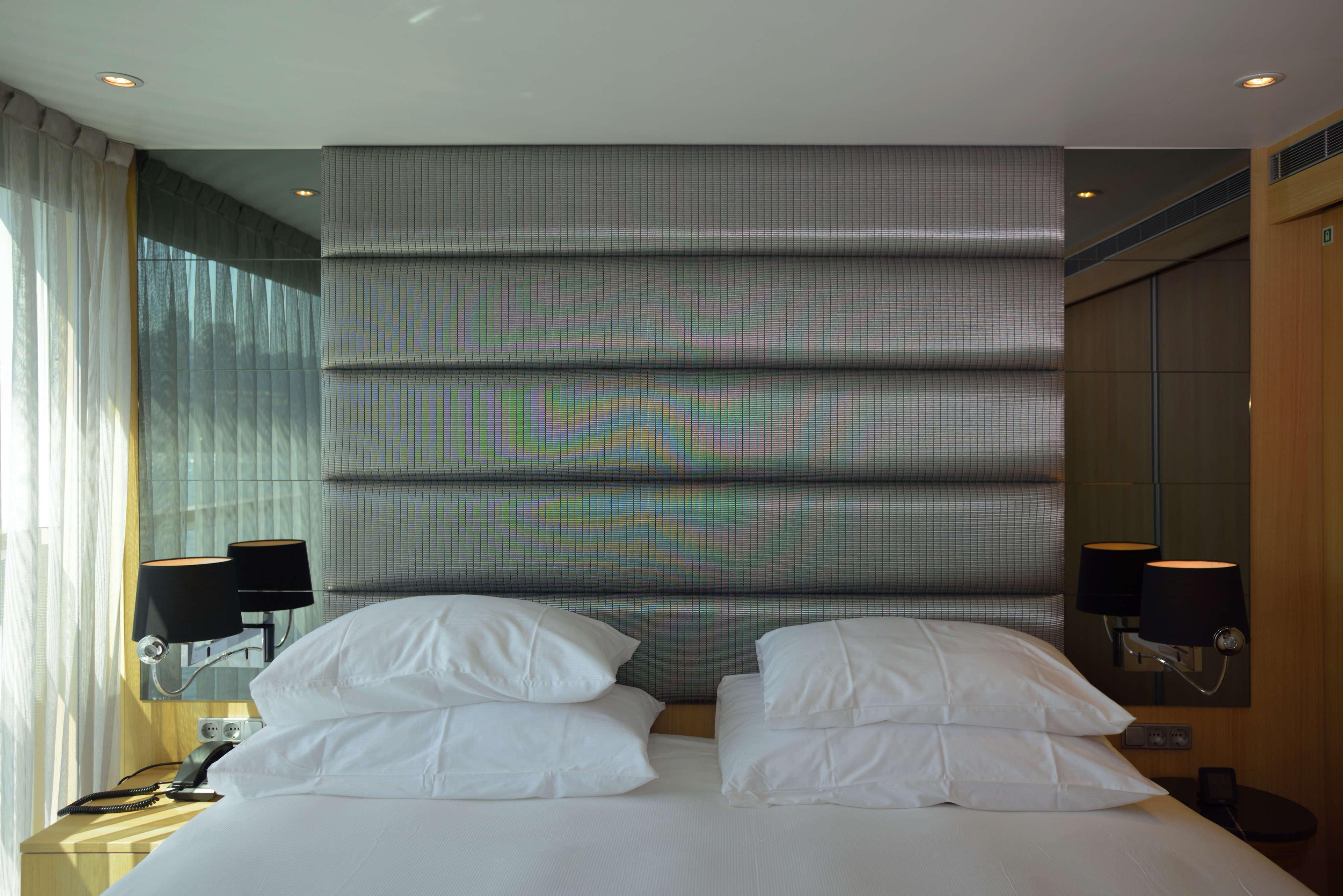
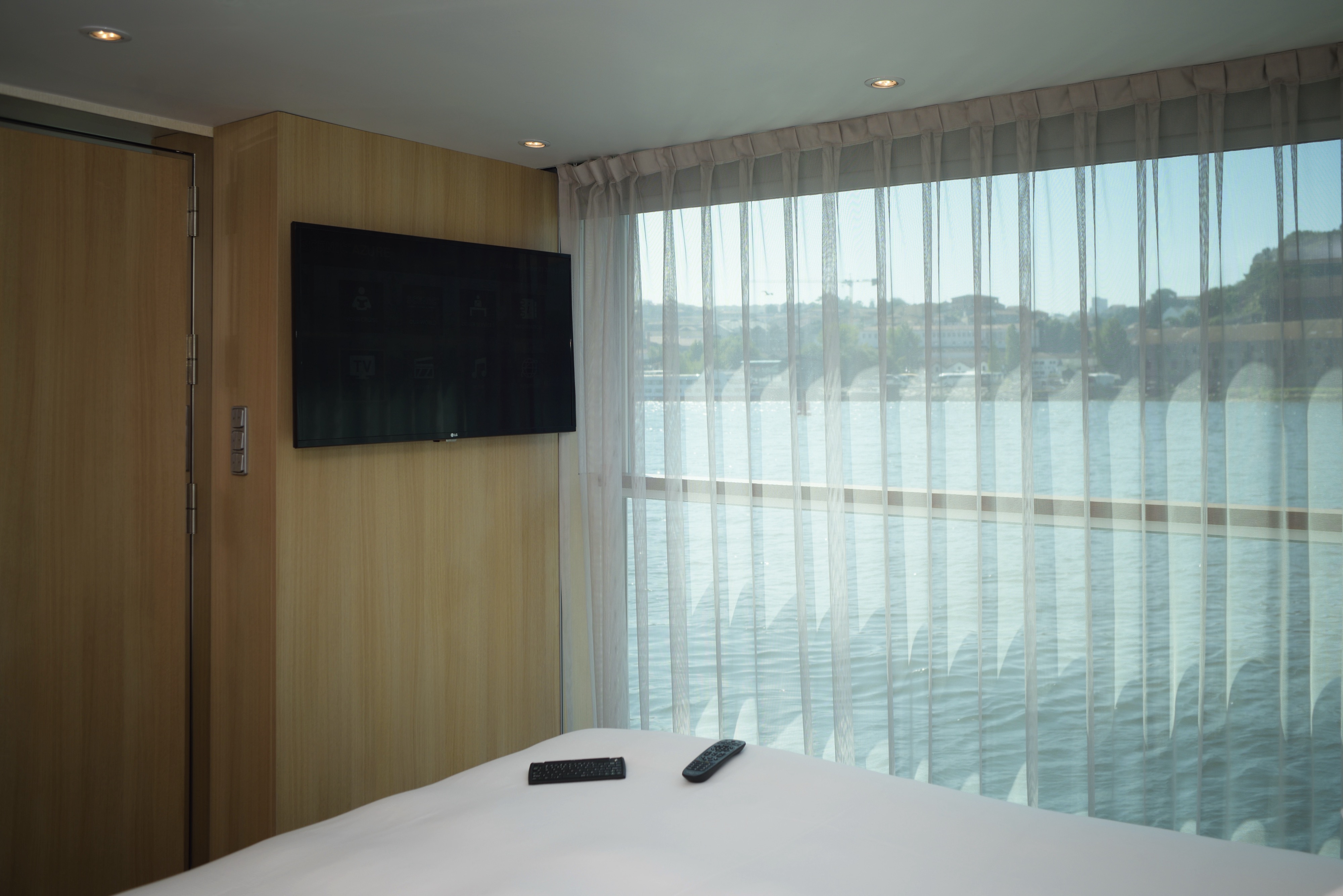
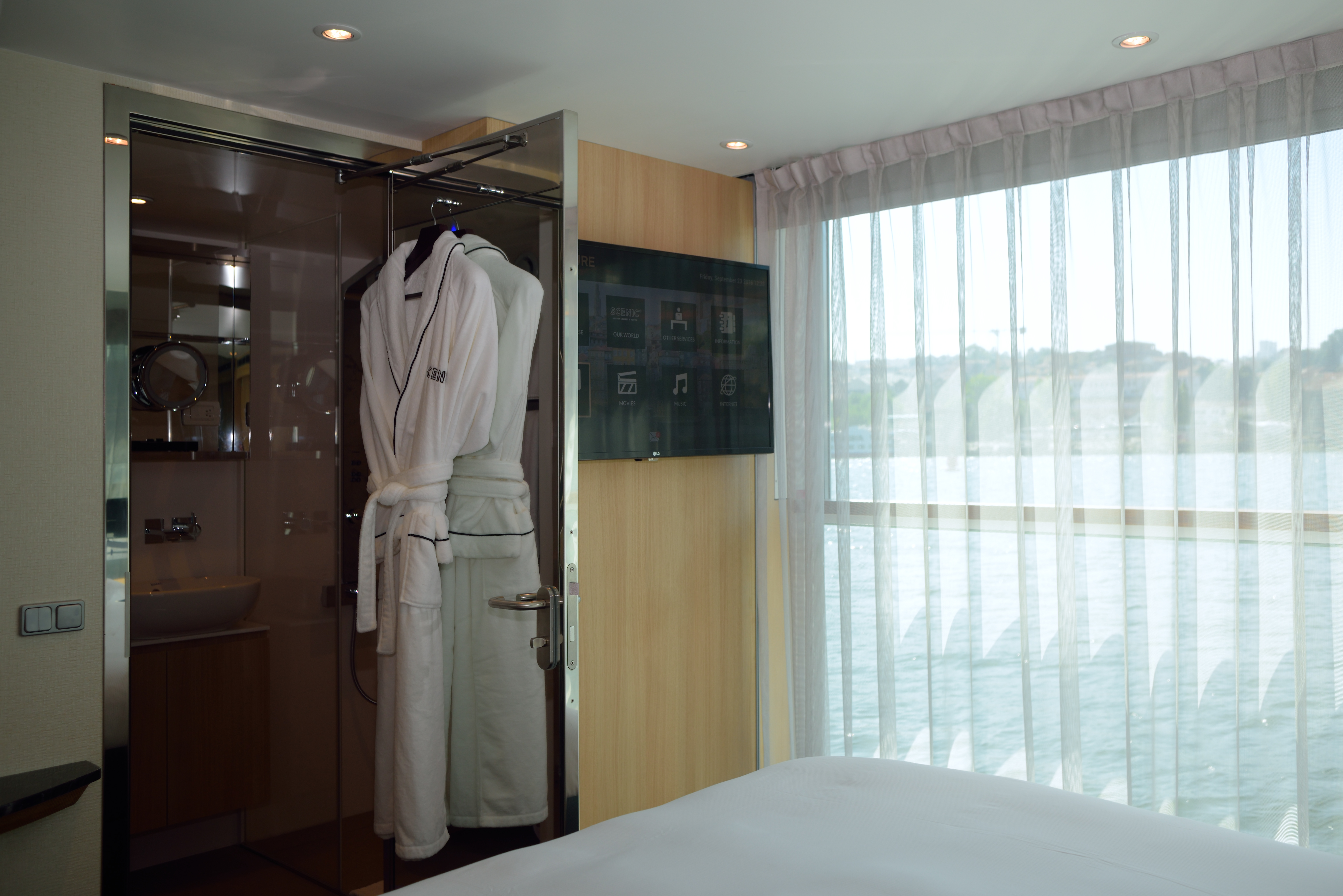
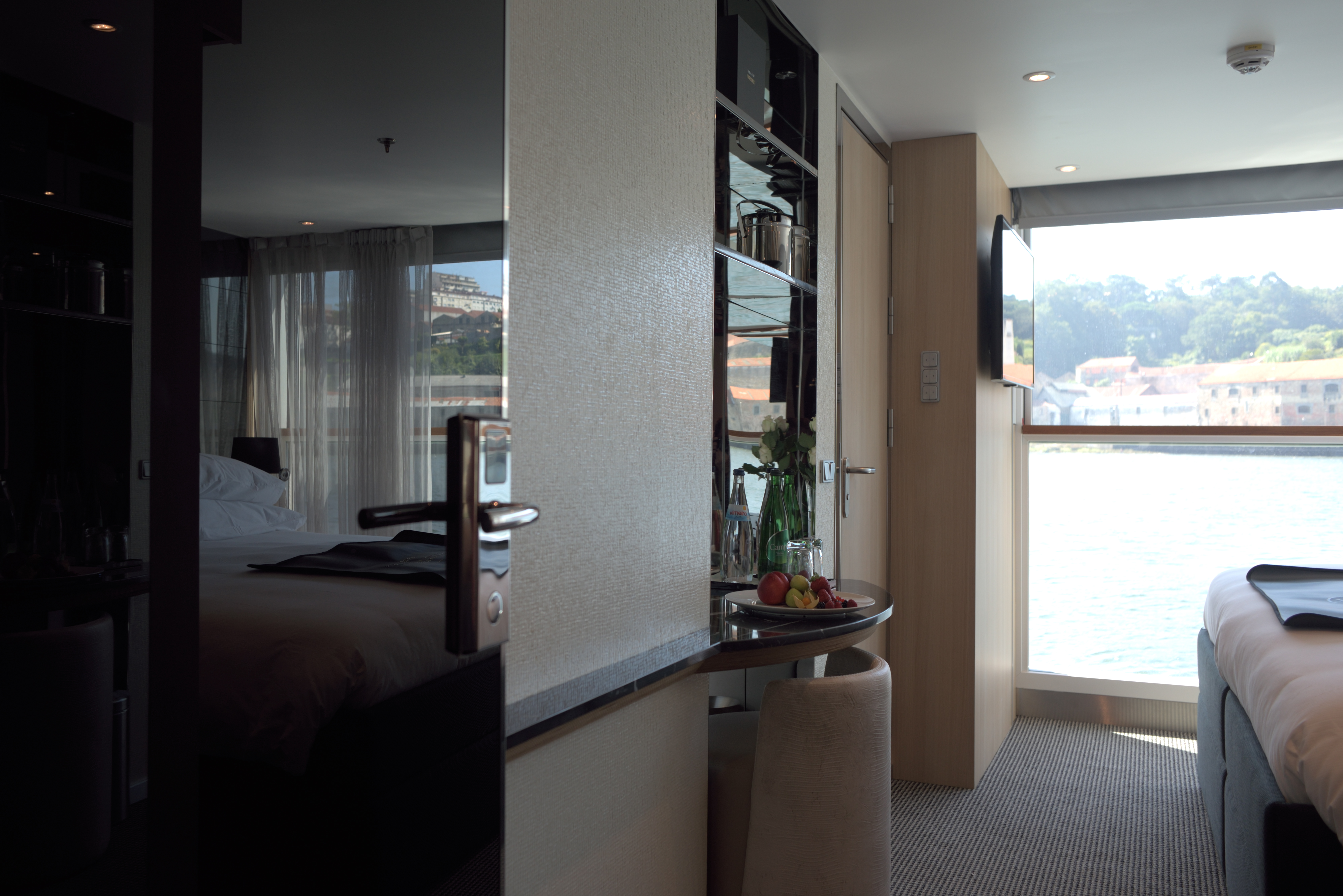
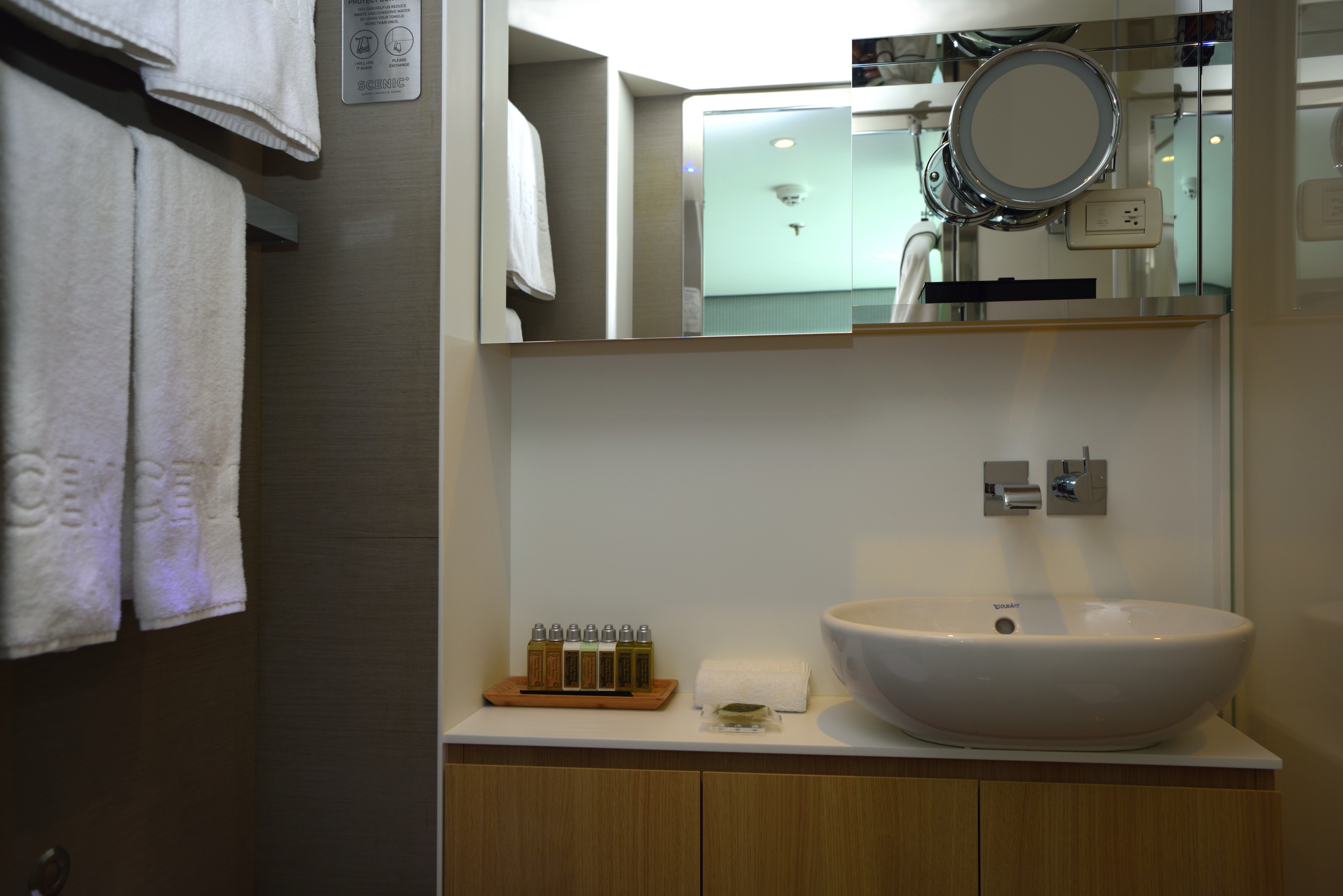
These spacious Suites, located on the Diamond Deck, have a private full-length balcony complete with a Scenic Sun Lounge and elegant en-suite bathrooms featuring a large vanity basin and shower.
Room Highlights
- A luxury queen-sized Scenic Slumber Bed
- Scenic Sun Lounge, your all weather balcony at the press of a button
- Spacious bathroom with luxurious amenities
Amenities & Features
- Exclusive invitation to dine at Table La Rive/Table d’Or
- Priority reservations at selected dining venues Personalised butler service for every suite
- Complimentary laundry service once per suite
- Daily pressing for two pieces of clothing
- In-suite breakfast with early morning tea and coffee services available
- Daily delivery of savoury and sweet canapés or fruit
- Mini bar, replenished daily
- Pillow menu, including anti-aging, low-allergy and memory-foam neck pillows
- Nightly turndown service
- Bathrobes and slippers
- In-suite safe
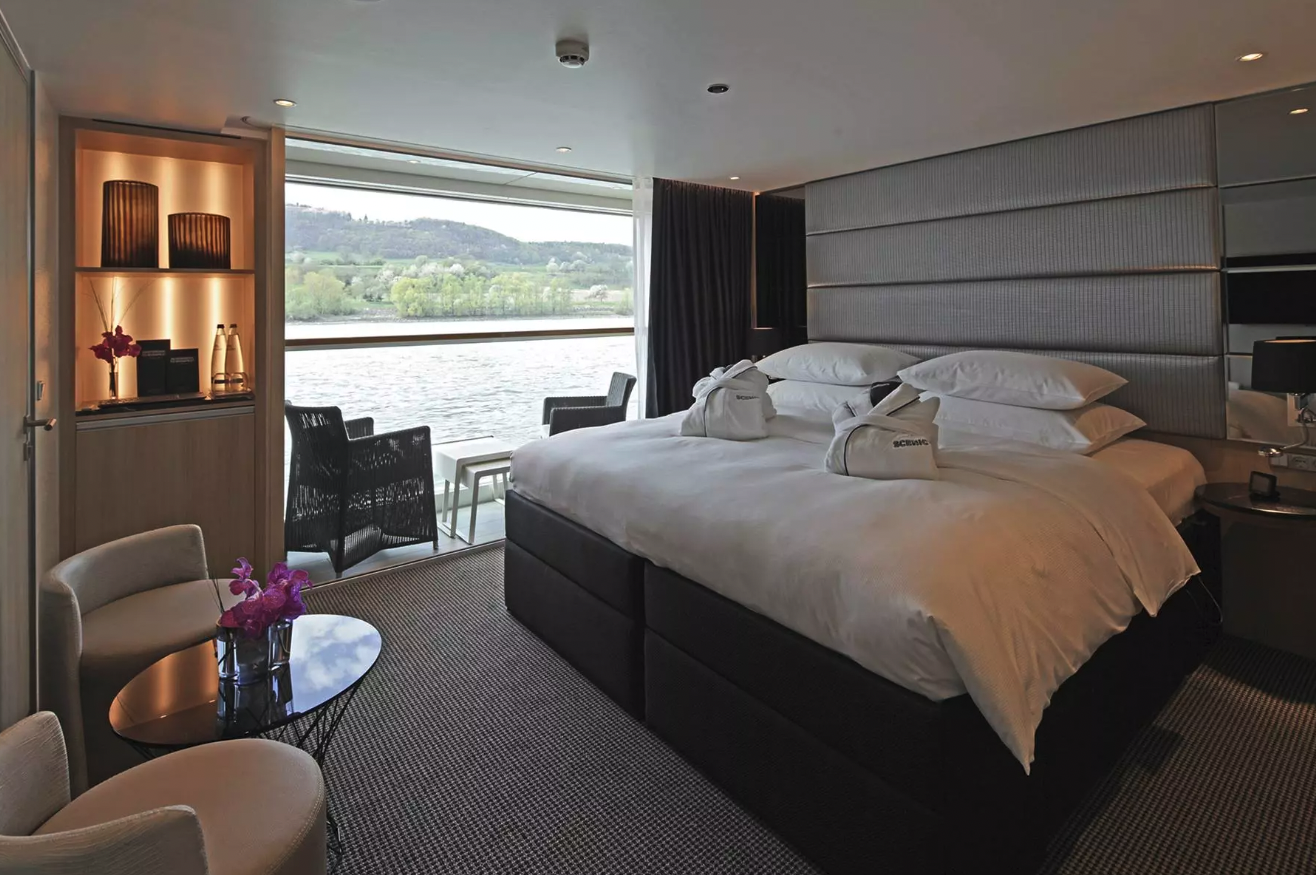
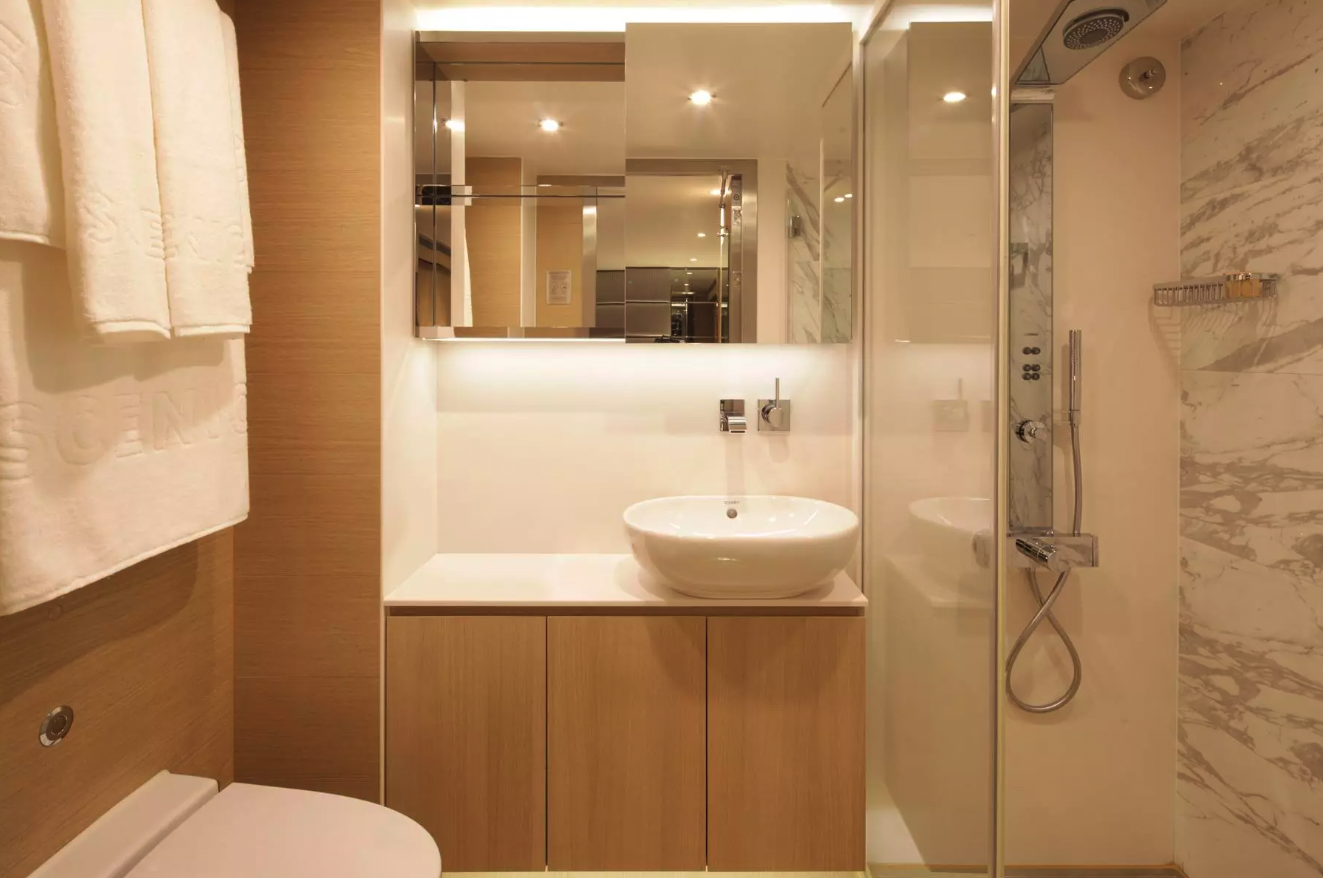
Located on the Sapphire and Diamond Decks these stylishly decorated suites feature a full-length outdoor balcony with the exclusive Scenic Sun Lounge system and offer private bathrooms with a luxurious vanity basin and shower.
Room Highlights
- A luxury queen sized Scenic Slumber Bed
- Scenic Sun Lounge, for wide-angle splendour at the press of a button
- Spacious bathroom with luxurious amenities
Amenities & Features
- Personalised butler service for every suite
- Complimentary laundry service once per suite
- Early morning tea and coffee
- Beverage service in your suite
- Mini bar, replenished daily
- Pillow menu, including anti-aging, low-allergy and memory-foam neck pillows
- Nightly turndown service
- Bathrobes and slippers
- In-suite safe
- Shoeshine and valet service.
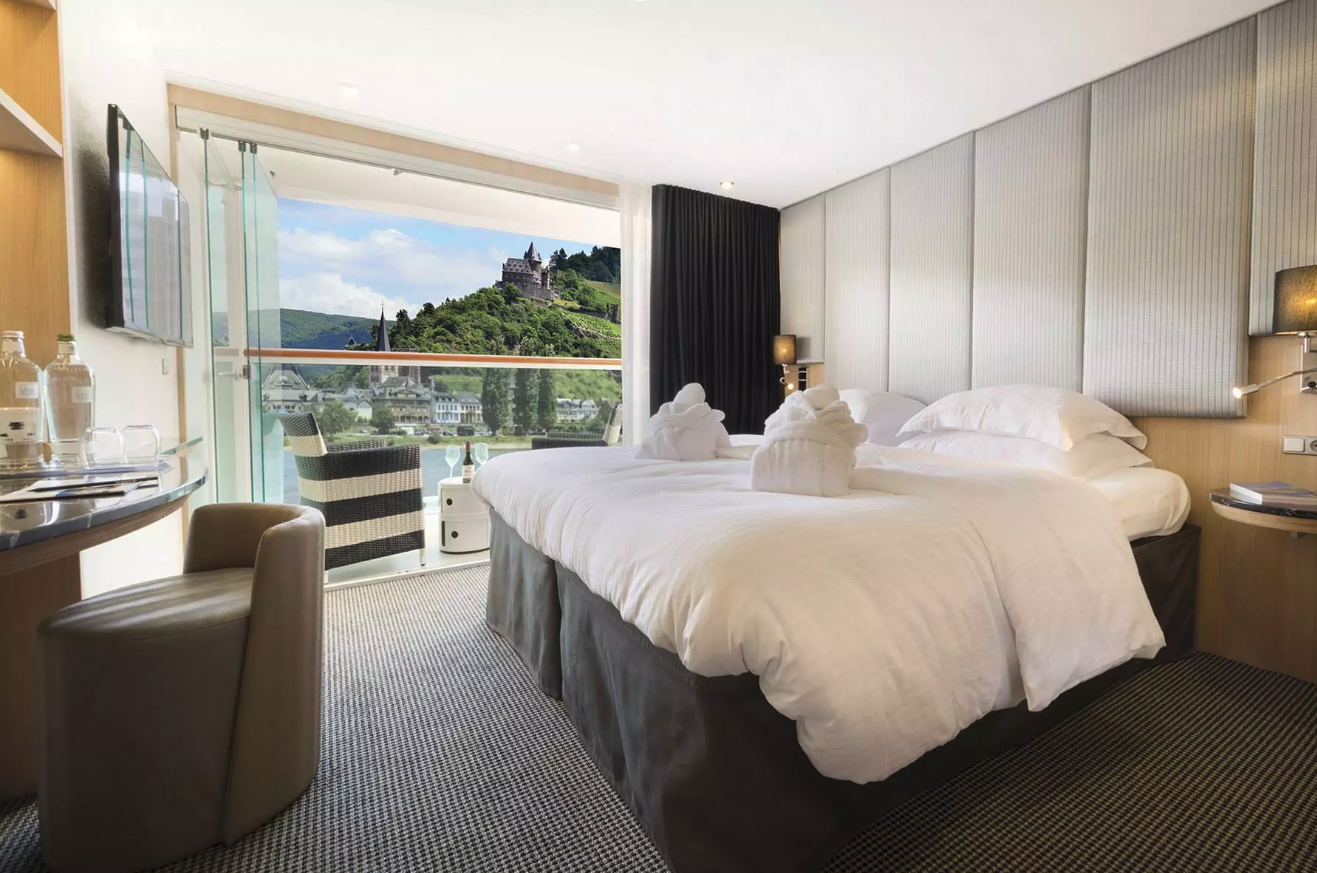
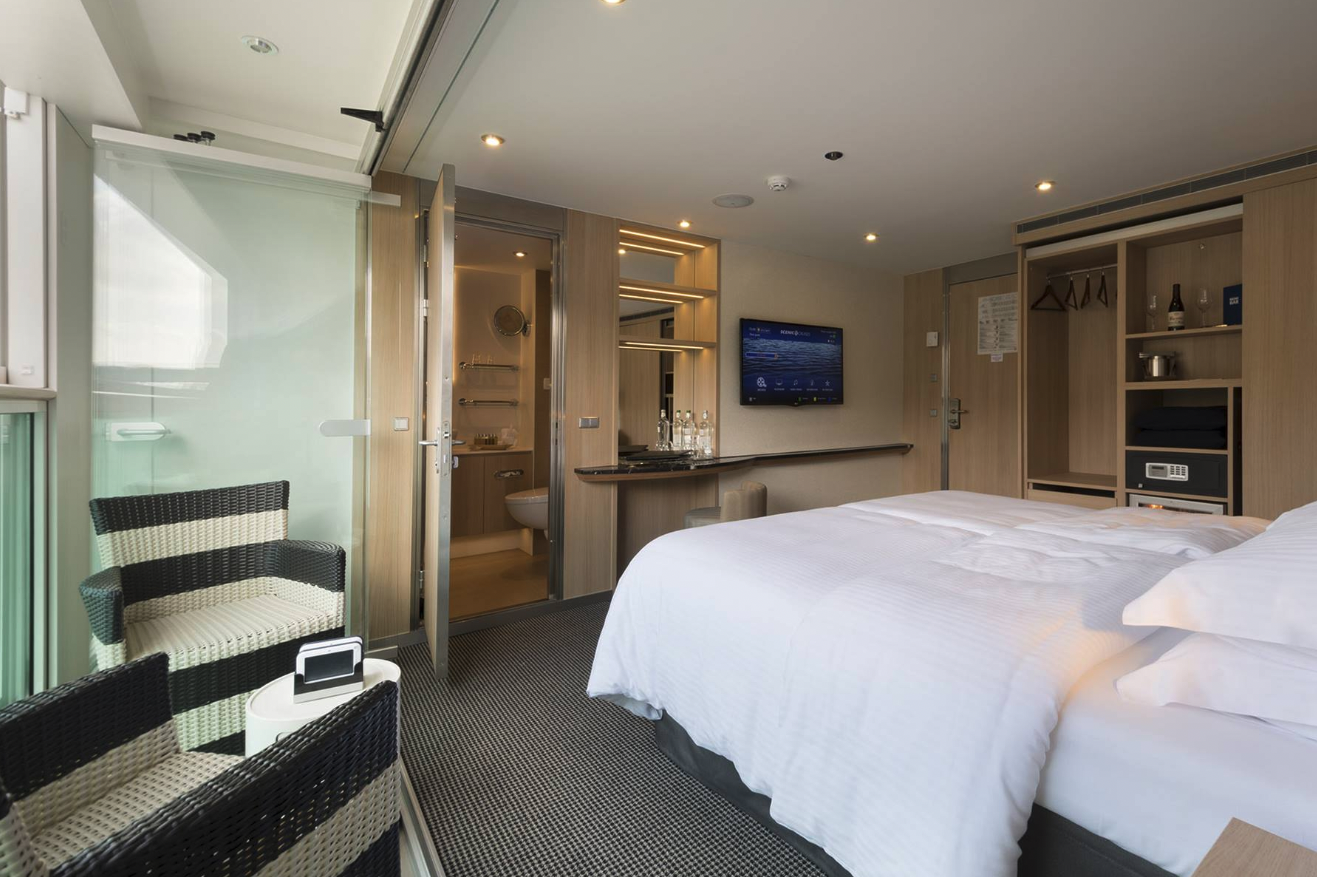
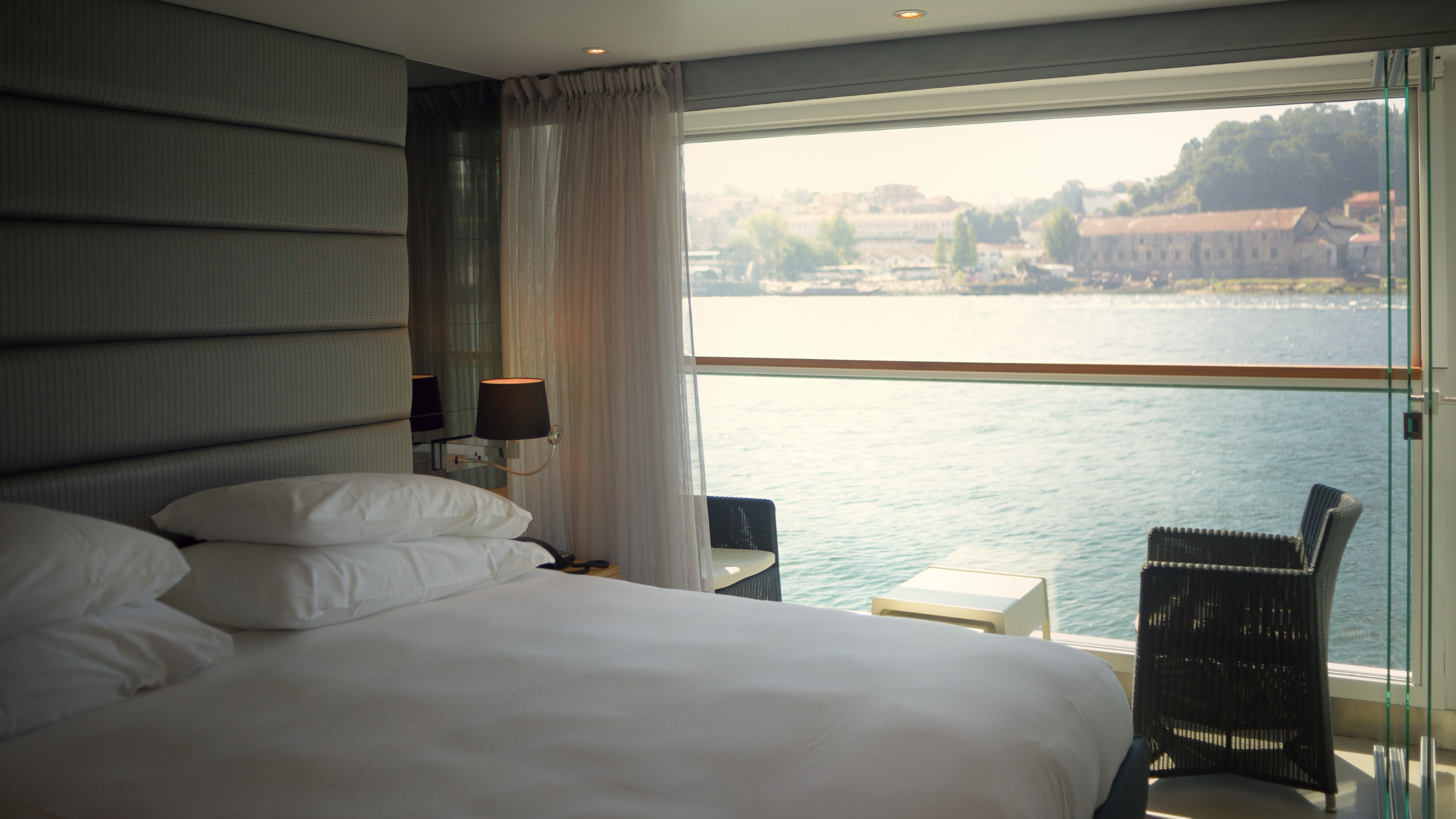
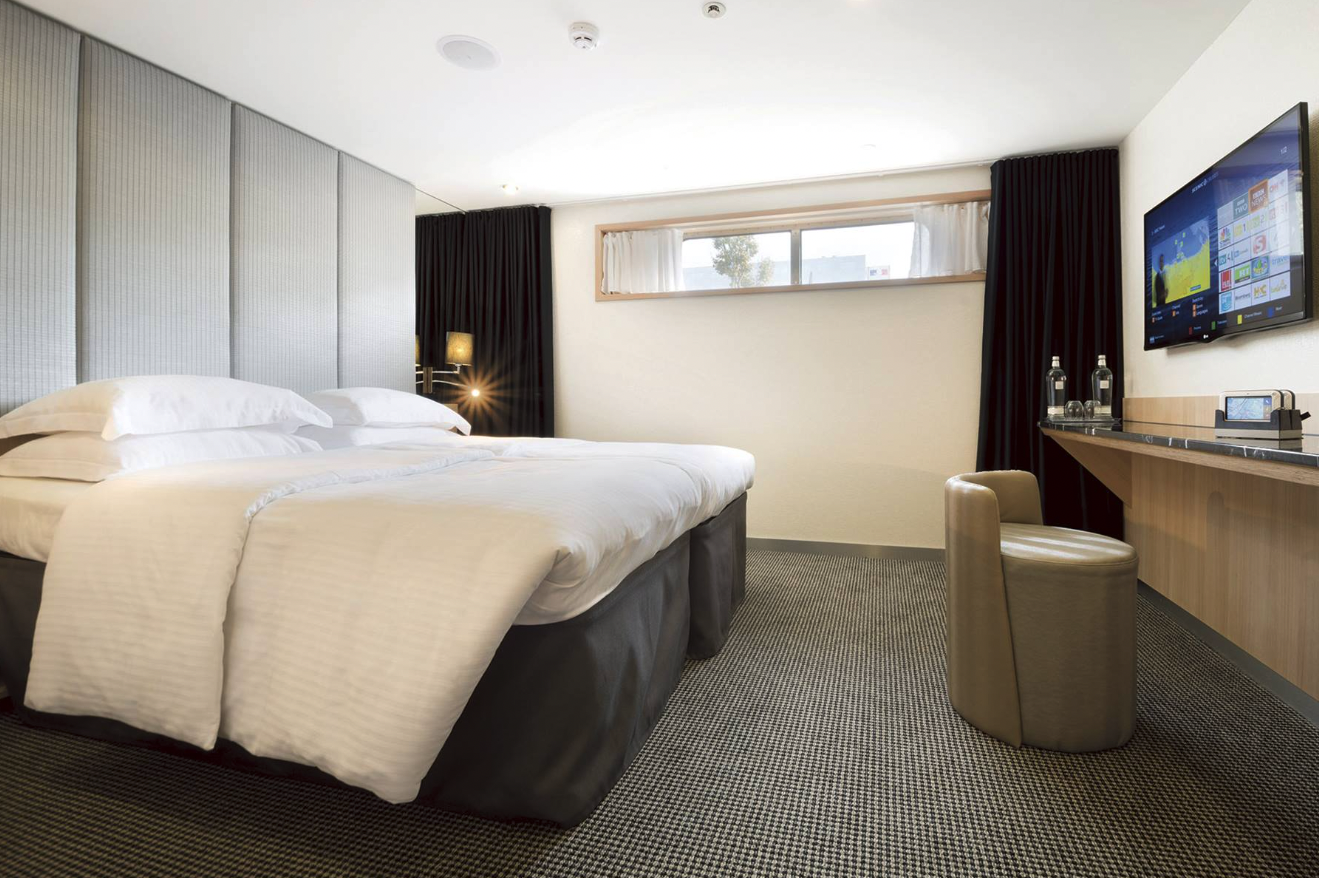
Staterooms are located on the Jewel Deck with large picture windows to ensure a great view. They have a spacious design and clever layout alongside all the usual luxurious amenities and furnishings.
Room Highlights
- A luxury queen sized Scenic Slumber Bed
- Spacious bathroom with luxurious amenities
Amenities & Features
- Personalised butler service
- Complimentary laundry service once per suite
- Early morning tea and coffee
- Mini bar, replenished daily
- Pillow menu, including anti-aging, low-allergy and memory-foam neck pillows
- Shoeshine and valet service
- Nightly turndown service
- In-suite safe.
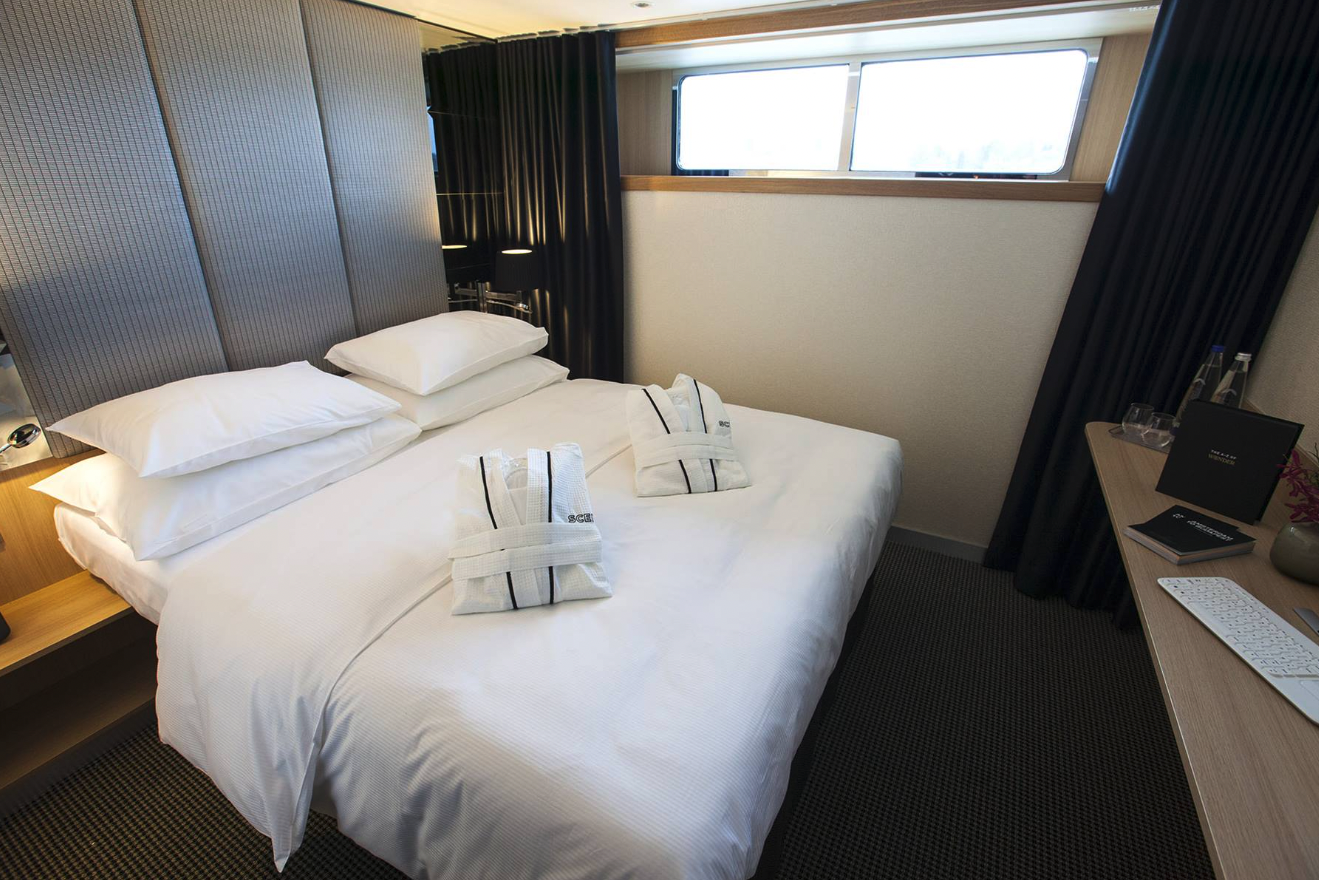
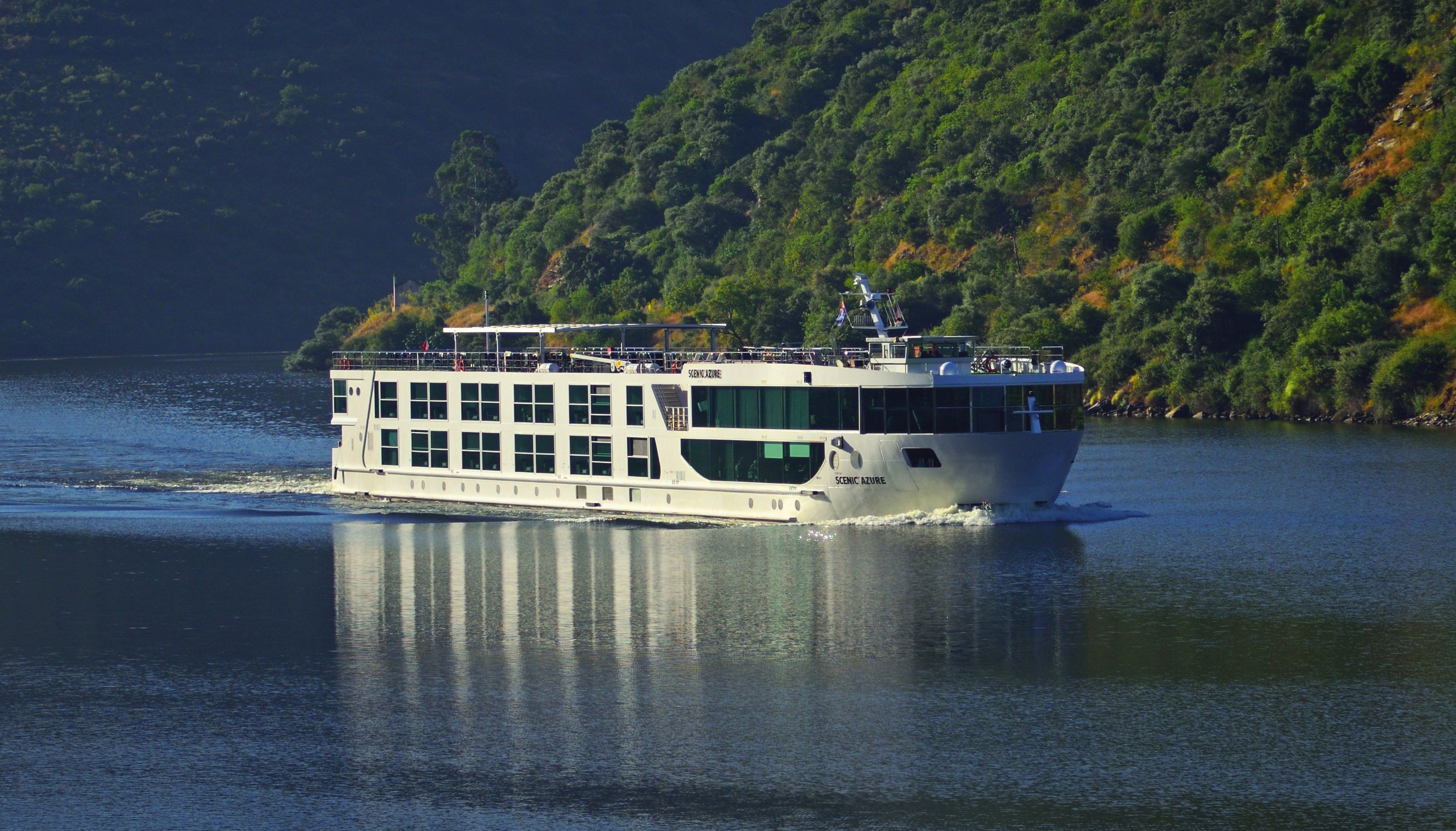
Scenic Azure
Our ultra-luxury Scenic Azure Space-Ship has been designed to be the ultimate 5-star ultra-luxury river cruise experience of a lifetime for up to only 96 guests. Designed to take you to extraordinary regions, allowing you to relax and unwind as you explore multiple magical towns and cities with ease, an all-inclusive Scenic journey will inspire and excite you.
Our 5-star ship, the Scenic Azure, has set the standard for ultra-luxury river cruising on the Douro. It has an abundance of premium experiences and luxurious outdoor, dining, and wellness areas for only up to 96 guests, along with an almost 1:2 crew-to-guest ratio. It features spacious suites, a Vitality Pool, and the ability to dock in the heart of towns, allowing you to more time to explore onshore.
Ship Facts
| Launch Year | 2016 | ||||||
| Refit Year | |||||||
| Language | en | ||||||
| Gross Tonnage | 1780 | ||||||
| Length | 80 | ||||||
| Width | N/A | ||||||
| Currency | EUR | ||||||
| Speed | N/A | ||||||
| Capacity | 96 | ||||||
| Crew Count | 43 | ||||||
| Deck Count | 4 | ||||||
| Cabin Count | 48 | ||||||
| Large Cabin Count | 0 | ||||||
| Wheelchair Cabin Count | 0 | ||||||
| Electrical Plugs |
|
Sun Deck
- Sun Deck
- Vitality Pool
- Wheelhouse
- Riverview Terrace
- Walking Track

Diamond Deck
- Portobellos Restaurant
- River Cafe
- Panorama Lounge and Bar
- Gift Shop
- Wellness Area
- Reception
- Balcony Suite Cat P
- Balcony Suite Cat PA
- Junior Balcony Suite Cat RJ
- Royal One-Bedroom Suite Cat RP

Sapphire Deck
- Crystal Dining Restaurant
- Table D'Or
- Fitness Centre
- Wellness Area
- Elevator
- Balcony Suite Cat B
- Balcony Suite Cat BB
- Junior Balcony Suite Cat BJ
- Balcony Suite Cat C
- Riverview Suite Cat C1

Jewel Deck
- Galley
- Elevator
- Standard Suite Cat E

Up to Five Dining Experiences
Discover a choice of delectable dishes using fresh local ingredients, from a range of menus on board our ultra-luxury ships. Choose from up to five dining experiences on all Europe river cruises and up to four on our South East Asia river cruises.
Crystal Dining
Enjoy à la carte menus for breakfast, lunch and dinner at Crystal Dining. Available on all Europe and South East Asia river cruises, this main restaurant offers a relaxed dining experience with local delicacies.
Portobellos
With up to only 32 guests an evening, the exclusive and intimate Portobellos or L’Amour showcase sumptuous regional specialities. The delectable five-course menu features either Italian, French or Portuguese cuisine (depending on your cruise location), paired with elegant wines, and is available on all European river cruises.
River Café
Offering a casual dining experience, you can enjoy all-day grazing options, light snacks and tasty treats to suit your schedule. The River Café is available on all Europe and South East Asia river cruises.
In-Suite Dining
Choose to dine in the comfort of your luxurious suite, while taking in the incredible views and enjoy included room service throughout your cruise.
Table d'Or
Featuring a six-course degustation, the exclusive Table La Rive on our European river cruises offers an intimate dining experience for only 10 guests per evening. Guests staying on the Diamond Deck for 10 nights or longer, as well as Royal and Junior Suite guests staying for up to nine nights, will be invited by our Executive Chef.
Riverview Terrace
Perfect for light bites or afternoon refreshments, Riverview Terrace is our Sun Deck lounge and bar area, where you can enjoy snacks and drinks during the day. Combined with our all-inclusive service, this is the ideal spot to unwind with a glass of your favourite tipple as the wonders of the Douro drift by.
When you board a Scenic Space-Ship, you’ll unpack your bags and settle into your spacious and luxurious suite. Spend your days exploring the abundant spaces with multiple dining experiences, bars and lounges. Marvel at the panorama of Europe’s captivating waterways passing by.
Panorama Lounge & Bar
Enjoy local entertainment, chat with new friends or peruse our extensive drinks list at Panorama Lounge & Bar. As the main lounge area on board Scenic Azure, this is where you can relax and enjoy a stimulating evening on the river.
The Sun Deck
Soak up the Portuguese sunshine from the Sun Deck – a spacious, open-air lounge and leisure area where you’ll spend much of your downtime on board. With deck chairs, Vitality Pool, café and games area, it’s perfect for a slice of alfresco living during your Douro river cruise.
Reception
Gift Shop
All Inclusive Beverages
Sit back and enjoy a beverage of your choice while cruising spectacular waterways, at your leisure. Sip on handcrafted cocktails or a full-bodied wine – the choice is yours.
You will enjoy:
- Unlimited complimentary premium international beverages^, including international wines, beers and spirits
- Full in-suite mini bar, restocked daily
- Refillable water bottle for all onshore excursions
- An extensive range of specialty teas and espresso coffees
- This selection is available all day, every day.
*Exclusive invitation for Diamond Deck and Junior Suite guests cruising for 10 nights or more, or Royal and Junior Suite guests for 9 nights or fewer.
^All beverages are included except a very small number of fine and vintage wines, champagnes and spirits.
Wheelhouse
Gallery
Our Gallery spaces are dedicated to showcasing works by local artists, so you feel connected to people and place in every destination. We believe little touches like this are what make our European river cruises so special.